downloadGroupGroupnoun_press release_995423_000000 copyGroupnoun_Feed_96767_000000Group 19noun_pictures_1817522_000000Member company iconResource item iconStore item iconGroup 19Group 19noun_Photo_2085192_000000 Copynoun_presentation_2096081_000000Group 19Group Copy 7noun_webinar_692730_000000Path
Skip to main content
Default Banner Image

Technology and Trends

Part 2 of 2-part series on MSEC 2019 highlights. Read Part 1. Neural Networks on ChipTo be sure, low power is king when bringing machine learning to the sensor edge. Battery-powered, always-on sensing devices require it since frequent recharging is the death knell of any electronic product. That’s why semiconductor companies are offering new ways to conserve power.“MEMS sensor suppliers have made significant strides in the power, size and performance of their devices,” said Aspinity CEO Tom Doyle. “Yet these gains deliver only incremental power improvements to the system.”Doyle advocates a new architectural model that uses an analog neuromorphic processor to analyze all sensor data at the start of the signal chain instead of sending it downstream so power-hungry chips such as DSPs can digitize it before analysis.“The technology industry wants to take advantage of the many benefits of always-on sensing applications,” said Doyle. “Before we can reach mass proliferation, however, we need to resolve the power issues that are deal-breakers for some applications. We believe the answer to this challenge is architectural. All the data gathered by always-on sensing systems is analog in nature, yet as soon as it’s captured, it’s digitized immediately for analysis. Determining which data is important up front eliminates the digitization and processing of irrelevant data so that voice-first devices such as smart speakers and wearables/hearables can run for long periods of time without requiring battery recharge.”Syntiant CTO Jeremy Holleman agreed that on-device intelligence is the future.“Did you just fall? Is your heartrate a bit off? Deep learning provides a toolset that yields vastly superior decisions,” said Holleman. “The problem is that deep learning is computationally intensive. The answer is a neural network that performs on-device edge inferencing.”Holleman added that Syntiant’s neural decision processor was recently certified as Amazon Voice Service (AVS)-compliant for wake-word detection, making it easier to design voice control in battery-powered devices such as earbuds and wearables.MSEC Technology Showcase WinnerWith the groundswell of interest in intelligence at the edge, it was no surprise that Cartesiam won top honors among all competitors in the MSEC Technology Showcase for its NanoEdge AI, software that brings AI to the edge of the signal chain, making it easier for designers to create intelligent objects that can learn and understand.“Unlike other AI algorithmic technologies for sensing devices, NanoEdge enables both learning and inference at the edge, providing accurate and adaptive intelligence,” said Cartesiam Managing Director and Co-founder Marc Dupaquier, who accepted the award. “It’s also the only tool of its kind that does not require data scientists on board for implementation, which saves a tremendous amount of money. Our clients can build a machine learning library and embed it into their own code within weeks to realize the same caliber of unsupervised neural network that was once the exclusive domain of AI cloud vendors.”MSIG 2019 Hall of FameAt this year’s conference, MSIG Director Carmelo Sansone recognized two longtime contributors to the commercialization of MEMS and sensors: Peter G. Hartwell, Ph.D., chief technology officer at InvenSense, a TDK group company; and Thomas Kenny, professor and senior associate dean of engineering at Stanford University.Hartwell leads technology strategy and the InvenSense advanced technology research group. He has more than 25 years’ experience commercializing silicon MEMS products, including advanced sensors and actuators, and developing MEMS testing techniques.Kenny’s academic accomplishments include authoring or co-authoring more than 250 scientific papers and holding 50 issued patents. He has also advised more than 50 graduated Ph.D. students from Stanford.MSEC 2020Mark your calendar for next year’s MSEC, October 12-14, at Coronado Island Marriott Resort Spa in Coronado, Calif. Get updates from MSIG on MSEC and other upcoming events including MSTC 2020.Stay in Touch with MSIGMEMS Sensors Industry Group (MSIG), a SEMI Strategic Association Partner, is the industry association representing the global MEMS and sensors supply chain. To learn how MSIG enables professionals in the MEMS and sensors industry to innovate, address common challenges and accelerate business results, visit us today.Connect with MSIG on Twitter and LinkedIn. Subscribe to SEMI Blog: Technology and Trends.Maria Vetrano is a public relations consultant at SEMI.
Read More
The SOI Industry Consortium awarded two luminaries of the semiconductor industry for pioneering advances in RF-SOI, a technology now found in all cellphones. Jim Cable (shown on the left in the photo above), Chairman and CTO of pSemi, a Murata Company, and Herb Huang, CEO and GM of Ninbo Semiconductor received the awards during a gala following the SOI Consortium's 2019 RF-SOI Workshop in Shanghai. "Thanks in large part to the innovation, dedication and perseverance of men like Jim Cable and Herb Huang, RF technology based on SOI is now ubiquitous," said Carlos Mazure (on the right in the photo), Chairman and Executive Director of the SOI Consortium. "Jim Cable drove the development of SOI and RF switches that are now in every cellphone, and Herb Huang has been a key contributor to SOI technology and a champion of the SOI foundry ecosystem in China. We are happy and honored to recognize the contributions they have made to advancing RF-SOI globally." Jim Cable joined pSemi (formerly Peregrine Semiconductor) in 1996 and held technical leadership roles before serving as CEO from 2002 to 2017. An early pioneer of SOI technology, Cable believed SOI would ultimately replace other technologies in the RF front end, and he pushed his team to innovate. Cable is a co-inventor on more than 70 semiconductor and technology patents, including breakthroughs in SOI-based processes for CMOS RF switch linearity and integration that are used by all smartphones today, and will become even more mission-critical in 5G and millimeter-wave markets. He received his B.S. in physics from UC Riverside and his master's degree and Ph.D. in electrical engineering from UCLA. Herb Huang is CEO of Ningbo Semiconductor International Corporation (NSI), which is based in Ningbo, China. A driver of the RF-SOI ecosystem in China, he spent much of his career at SMIC, the largest semiconductor foundry company in mainland China. In 2016, SMIC created NSI as a joint venture subsidiary with China IC Investment Fund, Ningbo Economic Development Zone Industrial Investment Company, Ltd. and other IC investment funds. Under Huang's leadership, NSI optimized the process and model of a 0.13um RF-SOI technology platform transferred from SMIC. Now in mass production, the RF-SOI technology platform supports customers in IC design and product development for new generations of radio communications. Huang holds both a Ph.D in Materials Science and Engineering and an MBA from the University of Minnesota.
Read More
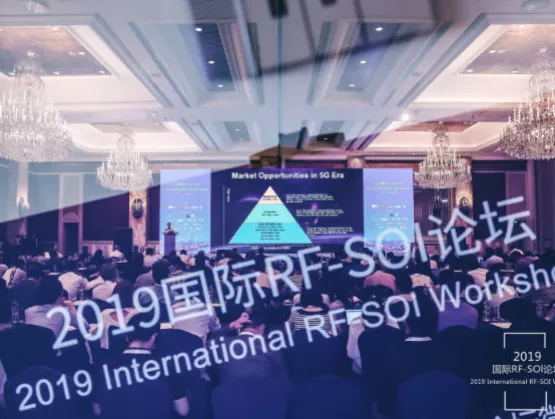
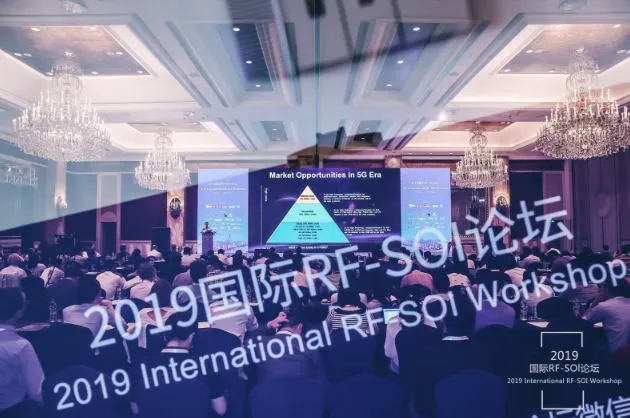
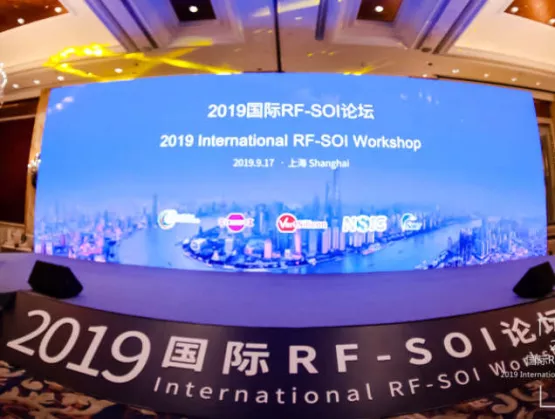
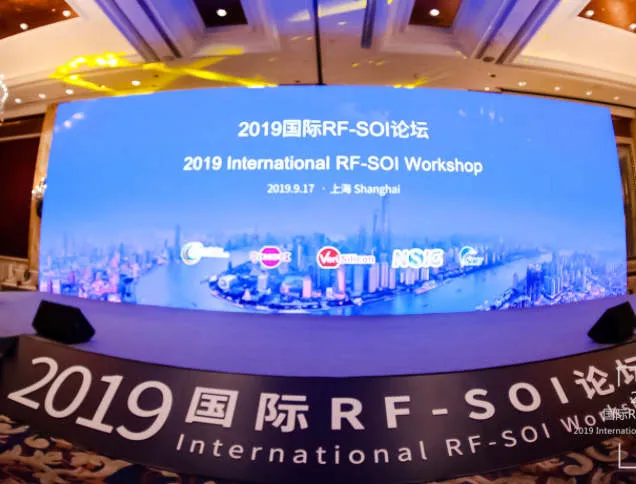
The 2019 International RF-SOI Workshop in Shanghai was packed to overflowing, with over 500 attendees, noted SOI Consortium Chairman Executive Director, Carlos Mazure. There were 16 presentations over the course of the day – every one of them excellent – so it will take two posts to cover them all. We covered Danni Song's compelling keynote in a previous post – see it here. In this post, we’ll cover the remaining keynotes and the morning session, which was dedicated to 5G deployment. In the next post, we’ll cover the afternoon sessions, which were dedicated to the China RF-SOI ecosystem, and the RF value chain. PDFs of the presentations are not yet posted, and then they will only be available to those whose companies belong to the SOI Consortium. But we’ve summarized them all for you, so read on! KeynotespSemi: 30 Years of RF-SOI – Past, Present and Future (Jim Cable, Chairman and CTO, pSemi (a Murata company))The keynote by RF-SOI legend Jim Cable chronicled his always-innovating journey from digital to RF via sapphire then SOI. (Cable's work was recognized in an award that evening.) His original vision back in the early days was for a RF front-end module (FEM) + CMOS transceiver. At the time, doing it on sapphire (an insulator) rather than bulk made it much easier, as sapphire eliminated the non-linear capacitances. That was the beginning of their UltraCMOS technology, and though it did very well, sapphire was only available in 6” wafers. So pSemi (or Peregrine, as it was known at the time), engaged with Soitec on bonded-SOS. “It was a killer technology, and the marketshare we won was staggering,” he recalled, and helped convince Soitec RF-SOI was worth looking at. The goal is to handle high RF power levels: you can use SOI to handle higher voltages than you'd think were possible. They added an invention they called HaRP, that dealt with accumulated charges and enabled them to hit the linearity specs on silicon. With that, he explained, they came to completely dominate the switch industry. UltraCMOS evolved, getting 60% smaller with 20x better linearity – but now of course you have 50 switches, not six. He heralded the great partnership they have with GlobalFoundries, noting, “We were pioneers in this field.” In fact, in 2017 they were in the top 10 for IP generation in semiconductor manufacturing. Now comes mmWave, where he says, “We see everything we believed and more.” They're currently sampling an 8-channel mmWave RFFE (RF Front End). Soitec: 5G-on-Insulator: the 5th Gear In Mobile Radio (Michael Reiha, GM, Soitec)Michael Reiha's talk centered on how SOI wafer-leader Soitec is positioning itself on 5G, which, he explained, demands a wider portfolio. Soitec looked at what they could do to make 5G ready for sub-6GHz. Massive MIMO (mMIMO) is an efficient technique to improve throughput. With SOI, you can reduce the power it takes, making it a good choice for urban environments. RF-SOI is a candidate for power amplifiers, and FD-SOI is enabling more users to be added. The concept of network sharing is an opportunity for compact, low-cost filters that can meet the requirements with simpler, lower-cost, higher-efficiency filters. That's why they've just announced a new substrate called piezo-on-insulator (POI). However, total cost-of-ownership is not just how much a product costs, but how much it costs to run it.. Currently, RF and mechanics dominate the bill-of-materials, so you need to decrease the number of RF FEM components and get savings scaled with the array size. The main challenge of SOI is in efficiency, but the advantage is that it can be used in integrating digital with analog sensing and RF. Then you can use AI sensing for tracking temperature, for example, and control for 5G optimization. In short, with RF-SOI, you apply AI to the radio head, especially for things like mMIMO. And btw, he added, Soitec currently has capacity of two million wafers per year. SESSION 1 – 5G DeploymentYole: 5G is ON. Which Impact for RFSOI Technologies? (Cederic Malaquin, Technology Market Analyst)There are over a thousand 5G networks available today worldwide, said Cederic Malaquin. Adoption is accelerating, driven by 5G cloud gaming, AR/VR/XR, 5G multi-video calling and stadiums. However, carriers need better ROI. 5G should address this so that customers are better served. MIMO and carrier aggregation (CA) are the main techniques supporting network capacity and coverage improvements. 5G NR will bring more spectrum. With each generation putting more content in phones, new spectrum is happening in sub6 and mmWave. The impact of 5G on mobile phones is huge in terms of both content and complexity. Some phonemakers (like Apple and Samsung) are moving towards increased integration. Others (like Huawei) are going more for discretes. Yole sees tuners, switches / LNA as addressable by RF-SOI, but they are less convinced about power amplifiers. They also see SiP (system in package) as prevailing over integration. The 5G mobile and base station markets will really build up in 2022-25. RF-SOI will remain the mainstream technology for switches and antenna tuners through at least 2025: they don't see anything else replacing it. There is still increasing demand for 8” wafers. 12” wafers growth comes from integrated switch/LNAs, which comes from the Tier 1's. In the front-end space, Murata leads in dollars by far, followed by Skyworks and others. Though mmWave is not yet clear, there are opportunities for RF-SOI. ST: 5G Deployment Driving RF and SOI Technology Opportunity (Laura Formenti, Sr. Director)STMicroelectronics has a long history in RF-SOI, noted Laura Formenti, dating back to 2000 when they started collaborating with Soitec and Leti. An IDM, ST also offers foundry services. For 5G, their foundry offering includes H9SOIFEM, C65SOIFEM and SOI mmW for high-performance analog, dedicated RF processes for RF switches, LNA, PA plus RFFEM. Then they have FD-SOI for RF, mixed signal and digital integration. From antennas to transceivers there's an opportunity for full integration. For infrastructure, it depends on the customer preferences. 12” C65SOIFEM was introduced in 2019, and 12” SOIMMW will be introduced in 2020. Both their fabs at Crolles and Rousset, France, are in production. H9SOIFEM is for 4G and 5G sub-6GHz RF FEMs, enabling monolithic integration of the PA, LNA and switches, which is especially good for wifi. The C65SOIFEM is high-performance. Panel: 5G Deployment in China, Jeffrey Wang, CEO, Simgui Technology, moderatorWith Danni Song (China Mobile), Jim Cable (pSemi), Peter Rabbeni (GF), YangYang Pen (SmarterMicro), Paul Hurwitz (TJ), Michael Reiha (Soitec)Q: Why sub-6GHz and not mmWave?Danni Song said its a question of available spectrum. In sub-6, you get the same level of coverage with fewer base stations; also, sub-6 is much more mature. When will mmWave be ready? It depends. In the US, yes, but in China the spectrum allocation for mmWave has not yet been done. So it's a wait and see for the industry to be ready. Peter Rabbeni agreed, adding that in the US sub-6 is crowded and conflicts with military bands. Paul Hurwitz added that mmWave is for fixed wireless access. Michael Reiha added that mmWave has advanced a lot even in the last few months (Verizon in Washington, DC, for example), so there is momentum.Q: Does China lead in the sub-6GHz opportunity?Jim Cable said that at pSemi they have two business models: mobile and infrastructure. He sees massive MIMO in base stations as huge (though in mobile their role is more supporting Murata). Peter Rabbeni added that they're working with innovative partners in China, and that GF also offers skills in services and packaging. Yangyang Peng sees big opportunites with 5G for SmarterMicro and China. Paul Hurwitz has seen an increase in the capabilities of RF companies in China, and that the market in China moves faster than elsewhere. Michael Reiha sees China as strategic, and because there is central deployment, they can plan with the right partners.Q: Data usage will be huge – what will it cost to individual users?Danni Song said 5G phones will be expensive, but consumers want them, so we need to bring down costs and increase performance – but what about power consumption? Power needs to come down, maybe levering things like sleep mode more. For 3G 4G, she noted, they had lots of time. People are pushing hard for 5G, but there's a need for patience. Yangyang Peng said he didn't want to pay more than for 4G. In summary, Jim Cable noted that mmWave will demand huge amounts of silicon, to which Paul Hurwitz agreed, and Michael Reiha said Soitec will be ready. Everybody agreed that 3D packaging would be very important, especially for mmWave. And that's it for our coverage of the morning. Next up we'll cover the presentations given during the afternoon.
Read More
Part of 1 of 2-part series on MSEC 2019 highlights. Read Part 2. MEMS and sensors are proliferating across consumer, automotive, biomedical/healthcare, robotics, industrial and agriculture applications to harvest sensory data in a hyper-connected world and meet demand from consumers and organizations alike as they clamor for more intelligence in electronics.Take the ubiquitous iPhone. Shipped in 2007, Apple’s first iPhone sported five sensors. By contrast, the most feature-packed smartphones will embed up to 20 sensors by 2021, according to Yole Développement’s Jérôme Azémar. He estimates that the devices will feature four MEMS microphones, four CMOS image sensors (CIS), a RGB color sensor, a laser rangefinder, an infrared sensor, a gas sensor, a heart rate monitor and a fingerprint sensor, not to mention the MEMS inertial sensors that device users have come to know and trust.The MEMS market is expected to reach $18.5 billion in 2024 [1], up a whopping 60 percent from $11.6 billion in 2018, according to Azémar, who presented at MEMS Sensors Industry Group’s 15th annual MEMS Sensors Executive Congress (MSEC) in late October in Coronado, Calif. Add other types of sensors to the mix – CIS, environmental sensors, LiDARs, radars, ultrasonics, and fingerprint sensors – and the market will mushroom to $93 billion by 2024, said Azémar.Since MEMS Sensors Industry Group (MSIG) joined SEMI as a Strategic Association Partner three years ago, SEMI has expanded its MEMS and sensors programs to Europe and Asia while continuing to grow its U.S. conferences. “SEMI is continually investing in MEMS and sensors innovation across the supply chain,” said Dave Anderson, president of SEMI Americas and host of MSEC. “For example, MSIG is contributing to the development of the Heterogeneous Integration Roadmap, an initiative designed to drive heterogeneous integration technology development and accelerate electronics innovation. The roadmap spans device design, test and fabrication, ecosystem development, R D, equipment and materials. “At MSEC, executives and other speakers explored how AI and blockchain are remaking the food supply chain, air transportation and other sectors as MEMS and sensors improve the quality of our lives,” said Anderson.Sensing at the EdgeThe concept of artificial intelligence (AI), that a machine can harness intelligence that rivals or outperforms humans – and act without human intervention – has been a feature of the human imagination since at least the 1968 film 2001: A Space Odyssey. MEMS and sensors facilitate intelligence in a wide range of electronics such as smartphones, healthcare wearables, robots, industrial predictive maintenance systems, and cars. AI is sure to augment that functionality.MEMS and sensors are now in their third wave of evolution, a focus on edge AI, Bosch Sensortec CEO and General Manager Stefan Finkbeiner told MSEC attendees. For its part, Bosch is working to add AI to MEMS devices. The first wave integrated software with MEMS sensors, and the second, sensor fusion, enabled designers to allocate performance and power strategically to tune MEMS for resource-constrained devices. The third wave is “an active-learning phase in which MEMS facilitates real-time learning at the edge to promote greater personalization, environmental feedback, privacy of user data and improved battery life,” said Finkbeiner.Small sensor nodes with edge AI exemplify third-wave applications. Integrating low-power environmental sensors (e.g., gas, temperature, pressure, humidity and air-flow sensors), the nodes could be deployed in fire-prone forests to assess fire risk and support early detection. Access to this real-time environmental information could prove invaluable to residents and public-safety personnel alike.Google takes another tack, applying machine learning to resource-constrained devices, said Nick Kreeger, a senior software engineer at the Internet giant. The company’s Google Brain creates machine learning models that can run on inexpensive, low-power microcontrollers using Google’s TensorFlow Lite, an open-source machine learning tool that’s been deployed on a multitude of mobile devices. Inferencing is done at the device’s edge, rather than transmitted to the cloud.Meeting the power constraints of battery-powered sensing devices is another matter that starts with minimizing energy and data waste. “Deep learning is compute-bound and runs well on existing microcontrollers,” Kreeger said. “Because it’s all arithmetic, it’s low-power compared to storage access.”Already Google has worked with Plant Village, a research unit at Penn State University, and the International Institute of Tropical Agriculture (IITA) to help farmers improve food production by using machine learning and cheap sensors to spot and manage planet diseases in developing countries. And that production chain is in dire need of a boost, according to Rajendra Rao, general manager of IBM Food Trust, an enterprise-class blockchain solution.“We are on the cusp of complete failure of the food system,” Rao said. “One out of 10 people gets sick each year from foodborne illness, 420,000 die from this annually, 80 percent of companies in the food supply chain have not digitized, one-third of all fresh food in the US is thrown away, and one in five seafood samples worldwide is mislabeled.”IBM Food Trust’s work with Sucafina, which manages a global green coffee supply chain, shows how sensors can trace food from the farm to the processing plant to the consumer. With the IBM Food Trust platform, Sucafina can track the origin of the beans used in a cup of coffee – a competitive differentiator to coffee drinkers eager to support fair-trade coffee roasters.ripe.io, one of Forbes’ 25 most innovative AgTech startups, is also tackling the challenges and complexities of the food supply chain.“Our secure blockchain platform creates a digital twin of food items, transparently aggregating foods’ journey in real-time, to provide a harmonized trustworthy platform for multiple stakeholders,” said Rachel Gabato, the company’s COO. The ripe.io blockchain-based platform collects data from various sensors – temperature, pressure, light, humidity and inertial MEMS sensors. Growers, distributors and end customers including sweetgreen – a U.S. restaurant chain that depends on fresh produce – use the information to trace the origin and quality of food.MSEC 2020Mark your calendar for next year’s MSEC, October 12-14, at Coronado Island Marriott Resort Spa in Coronado, Calif. Get updates from MSIG on MSEC and other upcoming events including MSTC 2020.Stay in Touch with MSIGMEMS Sensors Industry Group (MSIG), a SEMI Strategic Association Partner, is the industry association representing the global MEMS and sensors supply chain. To learn how MSIG enables professionals in the MEMS and sensors industry to innovate, address common challenges and accelerate business results, visit us today.Connect with MSIG on Twitter and LinkedIn. Subscribe to SEMI Blog: Technology and Trends.[1] Source: Status of the MEMS Industry report, Yole Développement, 2019Maria Vetrano is a public relations consultant at SEMI.
Read More
Healthcare has traditionally focused on one-size fits-all medication to treat populations instead of tailoring treatments to individual patients. Recent advances in stem cell technology allow researchers to create disease models for personalized medicine. SEMI spoke with Thomas Pauwelyn, Postdoctoral Researcher at imec, about trends in medical technology innovation such as organ-on-chip devices and their applications. Pauwelyn shared his views ahead of his presentation at the SEMI SMART MedTech Forum, 13-14 November, in Hall B2 (Inspiration Hub) at SEMICON Europa, 12-15 November, 2019, in Munich, Germany. Join us at the event to meet experts from imec.xpand and other key industry influencers. Registration is open. Participation is free of charge for SEMICON Europa visitors. SEMI: What triggered the healthcare move from a one-size fits-all medication to treat populations to tailored treatments? What advancements allowed researchers to create models for personalized medicine? Pauwelyn: One of the main triggers for this transition is the inefficiency of the current healthcare system. The top 10 highest grossing drugs in the U.S. are effective for only between 1 in 25 to 1 in 4 patients. Not only do most medicines only help a small share of the patients, but they are often developed in classical clinical trials with predominantly western or male participants.Recent advances in stem cell technology allow researchers to create disease models for individual patients. In other words, researchers can reprogram cells from a patient’s skin or blood sample to various cell types, including cardiac or neuronal cells, through stem cell techniques. These samples reflect the traits that make a patient unique.However, patient-in-a-dish models expose cells to very artificial environments. So these models look very different from their counterparts in the body. Organ-on-chip systems address these issues by exposing cells to physiologically relevant conditions and create more mature models. SEMI: What is exactly an organ-on-chip? Pauwelyn: Organ-on-chip devices are microfluidic cell culture chips that can revolutionize the development of drugs and personalized treatments. These devices model the pathophysiological behavior of organs and tissues. Inside these chips, cell cultures are grown and exposed to conditions that better resemble in vivo microenvironment. Different organ models can be created by exposing different cell types to an engineered microenvironment. Common examples are the heart-on-chip, lung-on-chip, gut-on-chip or brain-on-chip.SEMI: Medical technology has made astonishing advances over the years. As new medical devices emerge, what are the main challenges?Pauwelyn: Meeting stringent regulatory requirements is one of the main challenges for medical devices. Technologies related to personalized medicine do not neatly fit in existing health technology assessments and reimbursement processes.In the case of organ-on-chip devices, there are challenges related to production, qualification and adoption. Increased standardization will also help scientists compare and interpret their findings. Currently, various research groups obtain different results from own organ-on-chip systems. These systems may be fabricated from different or exotic materials, expose cells to different microenvironments or rely on other cell models. Often, only a few devices are available for testing due to limited fabrication scalability.SEMI: What did imec do to overcome those challenges?Pauwelyn: imec turned to its expertise in chip design and technology to develop a novel organ-on-chip platform in close collaboration with Micronit Microtechnologies in the InForMed project funded by the ECSEL Joint Undertaking (ECSEL2014-2-662155). The platform’s main requirements were that it could reduce handling variability by microfluidic automation, be fabricated with conventional materials compatible with production upscaling, and produce high-quality electrical recordings of cellular activity. Another essential requirement was the compatibility of the device to the standard workflow of pharmaceutical research. The user interface is based a conventional 96-well plate, and peristaltic pumps are integrated into the device.SEMI: How does the CMOS-based microelectrode array work and where do you see potential for applications in the field of personalized medicine?The imec-developed CMOS-based microelectrode array is the sensor in our organ-on-chip system that monitors the cell culture. The sensor consists of 16,384 electrodes distributed over 16 independent microfluidic wells. It detects cellular activity down to the single-cell level, including intracellular action potentials or extracellular signals from electrically active cells or impedance caused by cells growing directly over the electrode.We believe this technology has great potential for developing miniaturized patient models in the lab. By using patient cells reprogrammed to the desired cell types through stem cell technologies, we can develop patient-on-chip systems. These systems would be able to predict which treatment is best suited for a specific patient or how drugs affect certain subpopulations.SEMI: What are your expectations for the SMART MedTech Forum at SEMICON Europa 2019 in Munich? Pauwelyn: The SMART MedTech Forum brings together an interesting mixture of researchers, entrepreneurs and stakeholders in the future of healthcare. I look forward to hearing their perspectives and to discuss how personalized medicine and MedTech will help tackle current challenges.SEMI: Can you share one prediction for the future of MedTech? Pauwelyn: I believe that MedTech in the future will help us tailor treatments to each patient. Doctors will have a wide arsenal of tools available to predict which treatment will deliver both the highest chance of success and the lowest chance of adverse reactions. One of these tools could be a human-patient-on-chip system. It would consist of interlinked organ-on-chip modules with patient-derived cell models. In this way, the reaction of patients to specific treatments could be predicted without ever exposing them to potentially harmful compounds.Dr. Thomas Pauwelyn currently is a post-doctoral researcher with an Innovation Mandate grant from VLAIO, investigating strategies to valorize the results from his research. Pauwelyn’s research focuses on developing novel organ-on-chip systems for predictive toxicology and drug development. He also investigates how organ-on-chip devices may help stratify patients and help enable personalized medicine. Pauwelyn has studied at KU Leuven, Belgium, since 2008. He earned his BSc in Bioscience Engineering specializing in Catalytic Technologies in 2011 and a Master’s in Nanoscience and Nanotechnology with the Bioscience Engineering option in 2013. He completed an IWT fellowship for a PhD at KU Leuven and imec’s Life Science Technologies group in 2018.Serena Brischetto is senior manager, marketing and communications, at SEMI Europe.
Read More
The microelectronics industry is entering the era of Cloud Engineering Simulation to slash the costs and risks of new technology development and speed time-to-market in spaces like semiconductors, MEMS sensors, RF front ends, biomedical and driverless cars. In the run-up to SEMICON Europa, 12-15 November, 2019, in Munich, Germany, SEMI spoke with Ian Campbell, CEO of OnScale, about the new paradigm of Cloud Engineering Simulation. Campbell shared his views ahead of the SMART Design Forum, 14 November, 2019, 14:30 to 17:00, in Hall B1, TechARENA 1 at SEMICON Europa. Registration is open. Join the forum to meet experts from OnScale and other key industry influencers. Attendance is free of charge for all SEMICON Europa visitors.SEMI: How did your adventure with OnScale start?Campbell: I’m an engineer. When I was still in high school, I took a night class at Nashville Tech to learn AutoCAD R14, and I’ve been designing and engineering things ever since. I was introduced to Desktop Simulation in my bachelors of mechanical engineering program and used many types of simulation tools for massive design studies at the Aerospace Systems Design Lab at Georgia Tech. I’m a simulation junkie.I started my first Silicon Valley high-tech company, NextInput, in 2012 with Dr. Ryan Diestelhorst (now VP of Strategy at OnScale), to commercialize new ForceTouch and 3D Touch technologies based on our patented MEMS force sensors. At NextInput, we bought hundreds of thousands of dollars of engineering software, but were always frustrated by slow, inaccurate engineering simulation results. We dreamed about running massive simulations on Cloud Supercomputers and creating true Digital Prototypes that could replace costly, time-consuming, and risky physical prototypes.When I got the chance to join the team that became OnScale in 2017, I jumped at the opportunity. At OnScale, we took engineering simulation solvers that had been developed for the U.S. military to run on U.S. Department of Defense and DARPA supercomputers and built a cloud supercomputer platform on Amazon Web Services to run the solvers. The net-net is the world’s first on-demand, infinitely scalable Cloud Engineering Simulation platform. Now, we routinely run massive multi-billion degree of freedom simulations for Fortune 100 companies, including many from the semiconductor and MEMS industries. Since our business model is to charge per core-hour for simulations, the incredible capability we built is cost-effective and available to small startups as well. SEMI: How is the semiconductor design ecosystem evolving? How is Cloud Engineering Simulation applied to semiconductor and design industries?Campbell: The entire industry is experiencing a massive acceleration in product launch cycles and increased competition. New markets like IoT and 5G are reducing semi/MEMS product cycles from years to months. That, in turn, puts enormous pressure on semiconductor and MEMS designers. Missing a key product introduction like a flagship smartphone launch can literally make or break a company.A reliance on traditional engineering methods – schematic capture and layout of a chip, taping out (physically prototyping the chip), performing engineering validation on an e-bench, qualifying the chip (or not qualifying it and going back to the drawing board), and finally launching mass production – is no longer sustainable from a competitive perspective.Instead, market-leading firms are turning to Cloud Engineering Simulation and Digital Prototypes to explore massive design spaces, find optimum designs that beat the competition in every KPI (size, power, performance), and digitally qualify designs before ever cutting silicon, ensuring that designs are robust over their intended operating environments and performance envelopes. Large thermal analysis of a chip on a circuit board executed quickly on the OnScale Cloud Simulation Platform SEMI: Can you give us an example? Campbell: A great example is thermal analysis. Thermal effects have always had huge impacts on MEMS device performance and, more recently, they are beginning to impact performance of next-gen semiconductors, especially GaN power electronics for electric vehicles (EVs).Conducting a full system-level thermal analysis of something like an EV power management system – a power IC in a package, on a board, in an enclosure, under various loading conditions – has been a challenge from a simulation complexity perspective (degrees of freedom) and from a parametric sweep perspective (running hundreds or thousands of simulations to optimize chip placement, routing, etc.). To run these sets of simulations using legacy desktop simulation would take weeks, perhaps even a month or more. To run these massive simulations in parallel on cloud supercomputers using OnScale takes days or even hours.Our customers routinely run very large simulation studies on OnScale Cloud for thermal simulations, RF filter simulations, MEMS simulations, packaging simulations (what we call Digital Qualification), and many more use cases.SEMI: What’s one of your strategic objectives for 2020? Campbell: For 2020, we’re doubling down on MEMS and semi simulation capabilities. We will be launching additional solver capabilities like EM that will be critical in our strategic markets like 5G. We will also be launching a Cloud API so that engineers can integrate OnScale directly into their existing engineering workflows (e.g. MATLAB or EDA/CAD tools) with just a few Python commands.SEMI: Can you share one prediction for the future of semiconductor design solutions? share?Campbell: I think we will continue to see MEMS and semi designers push the envelope and bring smaller, more performant, more cost-effective solutions to market. I’d like to see more highly cost-effective flexible semi/MEMS designs come to market to enable next-gen IoT and IIoT applications. I’d also like to see more biomedical applications – biomems, microfluidics, and labs on a chip for all sorts of life-enhancing applications.SEMI: What are your expectations regarding the SMART Design Forum at SEMICON Europa 2019 in Munich? Campbell: I’m looking forward to getting back to my roots in MEMS/semi design and chatting with other designers about the future of engineering and the future of semi! Ian Campbell is a twice venture-backed Silicon Valley CEO and expert in MEMS sensors, semiconductor technology, and engineering software. Most recently, Ian co-founded OnScale, a Cloud Engineering Simulation startup backed by Intel Capital and Google’s Gradient Ventures. OnScale is revolutionizing engineering by combining world-class multiphysics solvers with Cloud supercomputers, machine learning, and artificial intelligence. Prior to co-founding OnScale, Campbell served as founder and CEO of NextInput, where he led the startup through multiple rounds of funding – totaling $12 million and an additional $4 million in research contracts with government and industry partners – and built a world-class team of engineers and scientists who developed 3D Touch and ForceTouch technologies for smartphones, wearables, industrial, and automotive interface applications. He also secured the first major smartphone OEM design wins in Asia. Campbell earned his B.S. in mechanical engineering from Middle Tennessee State University, and his MSAE in aerospace engineering and MBA from Georgia Institute of Technology.Serena Brischetto is senior manager, marketing and communications, at SEMI Europe.
Read More
Technology advancements seem to be coming at us fast and furiously. Every time you turn around, another company is introducing a breakthrough product with claims of far-reaching implications on how we live and work. But how often do consumers really experience disruptive innovation, like the kind that smartphones and cloud computing have had on our lives? Instead of astounding people, many new products that hit the market today are merely upgraded versions of their predecessor – perhaps offering smaller footprints with faster processors, more attractive packaging, or add-on features. These upgrades tend to underwhelm customers, offering no compelling reason to justify their accompanying price hikes.What consumers want is disruptive technology that truly enhances their lives, whether at work, at home or at play. And that’s exactly what product manufacturers want to deliver. So what’s holding them back?The Limits of Traditional BatteriesThe challenge doesn’t lie in envisioning exciting new offerings. Vendors are great at that. Rather, when it comes to consumer-focused, electronics-based products, the culprit is often conventional, rigid and thick batteries that limit what can be designed around them.But it doesn’t have to be this way.Advances in flexible and thin batteries can spark a whole new level of product differentiation. Even though such batteries have been available now for a few years, they are still a foreign concept to many product designers accustomed to conventional off-the-shelf energy storage that is fixed in rigidity and shape. It’s hard for some people to believe that batteries can fold and flex while maintaining their performance and safety. As a result, they design products around rigid battery parameters. The Promise of FlexibilityFortunately, flexible battery technology is available today, even for high-volume production.While the allure of flexible battery technology is strong, we find ourselves having to reassure manufacturers that flexible batteries are every bit as dependable as their rigid progenitors. Our testing shows that performance-integrity in flexible batteries is strong. They can be flexed, bent and even rolled in any direction without deteriorating performance. For instance, we tested a flexible battery by bending it 10,000 times to prove that it has essentially the same capacity as a non-bent battery. This flexibility gives designers and engineers a new level of freedom in hardware design: Manufacturers can now place batteries in spaces not possible or practical before. Take smartwatches, for instance. Instead of locating batteries in only the head case, engineers can embed a flexible, thin battery in the strap band to increase accessible energy or lengthen battery life. As market demand grows for wearables and hearables, smart apparel and other personal battery-powered products, consumers want more natural-feeling experiences. Unlike fixed off-the-shelf energy solutions offered in a limited range of form factors and capacities, flexible batteries can support customization by size, thickness and capacity, enabling development of products that are smaller, lighter and more comfortable.Rigid batteries are problematic on a whole other level, and that’s safety. Electrolyte advancements ensure flexible batteries are safer. The latest gel-polymer electrolyte is safer than liquid electrolyte because it does not contain liquid that would leak if the battery is pierced or penetrated – yet it still delivers the same high level of ionic conductivity. This is a great advantage for manufacturers of wearables in medical devices, sports equipment and fabrics, industrial applications, and consumer electronics. Knowing that their devices contain safer components not only brings peace of mind to manufacturers and consumers but also increases both adoption and usage rates. Staying competitive in any technology-driven market requires a steady stream of innovation. To rise above the pack, companies must fearlessly embrace advancements that will differentiate them in the marketplace. Your choice of battery is critical to your hardware design – especially if consumers will be in direct contact with the battery. The performance and enhanced safety inherent in next-generation flexible batteries can free you to create disruptive products that deliver a compelling user experience. To learn more about flexible batteries, visit Jenax.EJ Shin delivered an engaging presentation at 2019FLEX Japan (May 22-23, 2019, in Shinagawa, Tokyo), where she discussed Jenax’s flexible and customizable rechargeable battery, a technology that allows batteries to integrate seamlessly into a new generation of medical devices.FLEX Japan is a hosted by FlexTech and MEMS Sensors Industry Group, SEMI technology communities.EJ Shin is Global Director at Jenax Inc., a company that pioneered the next-generation flexible, thin battery that can be bent and rolled in any direction. She has been with Jenax since the company initiated its battery development. EJ helps device and wearable companies leverage Jenax’s customized battery solution for their innovative products. Earlier, she held communications consulting positions at Fleishman Hillard and G20 Summit in Korea. EJ holds an MBA from Yonsei University, South Korea, and a B.A. in International Relations from Tufts University, U.S.
Read More
The first day of the SOI Consortium’s recent China event – the 7th Shanghai FD-SOI Forum – was full to bursting in every way: the room, the networking, the level of expertise, the in-depth presentations and the overall energy. We covered the Samsung and GlobalFoundry keynotes in our previous post (if you missed it, read it here).This post will recap the rest of the presentations given during the day. (If your company or institution is a member of the SOI Consortium, you’ll be able to access the full presentations online.)International Business Strategies (IBS) – Impact of AI on Automotive and IoT, and Opportunities in China (Handel Jones, CEO) When it comes to deep insights on China + tech + analytics, and especially with a thorough understanding of FD-SOI markets, Handel Jones is arguably the world’s leading expert. Here are some of the observations he shared. Though the chip industry will see declines across the board in 2019 (he sees 13.5%), he sees a return to growth in 2020. By 2030, he sees it as a trillion dollar market, of which China will have half. AI is a key driver – and will become more prevalent at the edge. Major drivers will include preventative medicine, gaming, NB-IoT and 5G. At the chip level, FD-SOI has a lower cost/chip compared to bulk – you’ve got small chips and high yields. Sensors – especially image sensors – are a key area, and this is another place where FD-SOI is better than bulk. He sees chip shortages in the 2022-24 time frame (as opposed to the current oversupply), so now is the time that China should be establishing large FD-SOI capacity.NXP – Automotive, Industrial and IoT Solutions Leveraging FD-SOI (Ron Martino, VP GM) In terms of power consumption, computing is easy but data transmission is hard, Ron Martino reminded the audience at the onset. That’s why you need the edge. This is where FD-SOI comes in, and if you want to have leadership, you should be leveraging body biasing, he said. In terms of machine learning, a lot can happen at the edge on the smallest devices. NXP is now shipping a very wide range of products based on FD-SOI, including the i.Mx7 and 8 families and the new RT crossovers. The latest announcement is the i.Mx RT 1100 MCUs, a very low-cost processor solution for high volumes. The i.MX7 ULP is in mass production for wearables, with record low leakage and high performance. The i.Mx8 and 8x are going into a broad range of applications – from retail solutions for automated checkout to pasta makers, and automotive applications for full cockpits with vision detection, as well as things like parking, V2X and in-vehicle monitoring.Sony Semi – Low Power IoT Products with FD-SOI eMRAM Technology (Kenichi Nakano, GM) Chips built on FD-SOI with eMRAM are in production, said Kenichi Nakano. In GNSS/GPS, Sony is the #1 in lowest power consumption worldwide, thanks to FD-SOI, he continued. They’ve had 70 remarkable design wins, giving them over 50% market share in the sports and health watch markets, he said with a tip of the hat to the FD-SOI ecosystem and SOI Consortium. In GNSS, performance is very important – and now they can do it in water, which is huge. Development cycles are shorter than ever – for the latest chip it started in February 2018 and was in production by the spring of 2019, achieving decreases of 20% in power, 30% in area and 10% in cost. Integrating eMRAM was easy in terms of the design flow and manufacturing, with production yield of 97-100%. So with the GXD5605GF they’ve got the first GNSS chip with FD-SOI/eMRAM/RF in the world and it’s on 28FDS/eMRAM technology. It’s very reliable and very good, he concluded.Rockchip – Challenges of AIoT Chip (Feng Chen, SVP) At the beginning of this year Rockchip announced the launch of their RK1808, a low-power AIoT solution with built-in high performance (3TOPS) NPU fabbed in GlobalFoundries 22FDX, said Feng Chen. Their clients were very happy that Rockchip delivered the real power and performance numbers they’d promised. Because of the power/performance it delivers, FD-SOI (both 22 and 28nm) is very well suited for AIoT chips, he said. It’s very cost-effective in terms of NRE and die, and there’s room for further savings. While the ecosystem needs a unified push, FD-SOI is good for the market in China, and China has the volumes FD-SOI needs. Rockchip sees particular potential in retail and smartphones.Panel – Verticals Driving FD-SOI VeriSilicon CEO Wayne Dai moderated the first panel, asking first why China should adopt FD-SOI. Soitec CEO Paul Boudre said because it is a big, dynamic market (noting that Sony’s first FD-SOI GPS win was in China). Handel Jones said that at the wafer level, there was cost parity, but with FD-SOI chips are smaller and higher yield. The main reason it’s taken so long to get going was IP, but that’s changing now, he added. Dai’s next question was about the top application fields the panelists predicted for 2020. Sony’s Kenichi Nakano said wearables with connectivity, low power consumption, small size and high levels of integration; Rockchip’s Feng Chen agreed. NXP’s Ron Martino said FD-SOI for automotive, machine learning and edge computing was shipping now, with wearables ramping.VeriSilicon – Low Power IoT Connectivity IP Design Based on FD-SOI (Yi Zeng, Director, IoT Connectivity Platform) The “value” of IoT data is not yet being generated, noted Yi Zeng but AI can help here. The IoT industry needs innovation for both chips and networking. SiPaaS – which stands for Silicon Platform as a Service – as offered by VeriSilicon can help lower the barrier to entry. [In the SiPaaS model, VeriSilicon has its own IP-based core. Based on the company's advanced chip design capabilities and mass production service experience, it has created a variety of silicon-proven chip design platforms that can significantly reduce the customer's chip design cycle.] They have FD-SOI IP for NB-IoT, BLE, GNSS and sub-1 GHz. The BLE (Bluetooth) RF IP is a complete offering optimized for low power on GlobalFoundry’s 22FDX. The NB-IoT IP is also optimized on their 22FDX ZSPNano, an energy efficient general purpose MCU+DSP core on 22FDX. And they’ll have results of test chips for GNSS RF IP on 22FDX by the end of this year.Secure-IC – AIoT Embedded Security Using FD-SOI (Hassan Triqui, CEO) While AI enables products and services, it’s important to plan for security early in the design cycle, said Hassan Triqui. Software is not enough to protect edge-to-cloud. Secure-IC’s hardware security module, Securyzr, is an IP block that can be embedded into every device to answer security functionalities such as root-of-trust and key management. In sleep-mode/tunable cryptography, FD-SOI allows the creation of physically secure systems. (Note that designers are leveraging FD-SOI’s unique body biasing for ultra-low-power deep-sleep modes.) Because safety and privacy require a combined solution, Securyzer is particularly well-suited to IoT chips built on FD-SOI, he concluded, so that IoT adds value to AI, and not just the other way around.Soitec: FD-SOI – The 5th Gear for mm-Wave Radio (Michael Reiha, GM FD-SOI Business Unit) There are four key areas to 5G, explained Michael Reiha: coverage, number of antennas, frequency and traffic density. 5G mmW access architectures are currently inefficient in terms of power and performance, but FD-SOI is ready for 5G access as both an analog and hybrid beamformer. For MU-mMIMO (massive MIMO), the RF front-end modules (FEMs) and transceiver will fully exploit FD-SOI. Sensing, calibration and control enabling hybrid beamforming and multiple users is easy in FD-SOI. The adaptive body biasing on the horizon will reduce power of FEM mixed-signal circuitry, and be a disruptive technology.STMicroelectronics – Automotive MCUs in 28nm FD-SOI for ePCM NVM (Shan-Lin Liu, Automotive Marketing Manager) As a leader in the automotive market, ST has seen that increased data flows in automotive are driving demand for higher performance and bigger memory in automotive MCUs, said Shan-Lin Liu. ST has taken a unique approach to NVM with embedded PCM (phase change memory) on 28nm FD-SOI. This gives them energy-efficient, high-performance cores with larger NVM memories, and it’s already qualified up to auto grade-0. PCM (vs MRAM) is BEOL. It uses two cells, so it’s more reliable and is good at high temperatures, he said. With FD-SOI, they can go up to 165o, and it’s soldering compliant. The preliminary results of the first MCU chip are excellent. It’s now running in a car, replacing the previous generation 40nm eFlash product.Leti – Advanced FD-SOI for Edge AI (Emmanuel Sabonnadiere, CEO) To fully run artificial intelligence on the edge, research powerhouse Leti is working on an unsupervised learning neural network using advanced FD-SOI and a mix of other technologies. These include embedded non-volatile memory (NVM), 3D integration, and new design tools. Sabonnadière said this new approach is expected to exceed the performance levels of current digital deep learning with neural networks that are capable of handling time-domain signals, sound and speech—and may produce a first "killer app" for advanced SOI. AI will require compact and power-efficient circuits for the inference phase, when neural networks infer things based on new data they receive, close to the end user. The combination of FD-SOI, 3D integration, and NVM opens a path towards dedicated circuits with major performance improvement within the limited power budgets of distributed electronics. In Europe, he noted, privacy concerns are driving the move from the cloud to the edge. On the Leti roadmap, they’ve broken through the 10nm limit for FD-SOI, using strain and body biasing to compensate for transistor mismatch. Also of note: since 2016 Leti has had an ongoing collaboration with SITRI, the Shanghai Industrial μTechnology Research Institute, an international innovation center focused on globally accelerating the innovation and commercialization of More than Moore technologies to power IoT.GlobalFoundries – GF Fab 1 Dresden: Delivering Differentiation with FDX for the Future of Automotive (Thomas Morgenstern, SVP GM Fab 1) Dresden Fab 1, Thomas Morgenstern reminded the audience, is the biggest in Europe, where it is part of the Saxony ecosystem. GF is moving advanced mask-making to Dresden, which is the lead site and Center of Competence for FD-SOI. With the “pivot”, GF is providing platforms. Fab 1 is automotive certified for 22FDX (GF’s 22nm FD-SOI technology), with automotive tapeouts in 2019. “Automotive is a journey,” he said, of continuous improvement, and a mindset: it’s a zero defects culture. The ramp to volume production is well underway, with 26 tapeouts of 22FDX products this year – almost double that of last year. He showed high yield data of about a dozen products, adding that since the beginning of the year every tapeout was first-time right with decreased cycle time. The key specifications for 22FDX with eMRAM for Auto Grade-1 have all been demonstrated, and customer feedback has been excellent.Next: Shanghai International RF-SOI Workshop recap As you can see, it was a packed day for the FD-SOI part of the SOI Consortium’s Shanghai event. In fact the room was still packed at the very end of the day. Several hundred VIPs then headed out for the ever-popular and festive evening riverboat dinner cruise, where the non-stop networking continued.A big shout-out to our sponsors and supporters: VeriSilicon, Simgui, SIMIT, Soitec, Samsung, IBS Ion Implant, ShinEtsu, GlobalFoundries and NXP.The next day of the event was devoted to RF-SOI. That will be the subject of our next post.
Read More
Most of today’s blockbuster MEMS products – from pressure sensors and resonators to accelerometers and microphones – originated from academic research, a trend that Alissa M. Fitzgerald, Founder Managing Member, A.M. Fitzgerald Associates, expects to continue. While many of these potentially game-changing new technologies will require many more years of intensive development and up to $100 million in investment to reach full commercialization, Fitzgerald sees their potential for generating new waves of activity and opportunity in the MEMS and sensors industry.SEMI’s Maria Vetrano caught up with Fitzgerald to preview her October 23 presentation, Emerging MEMS Sensors Technologies to Watch as We Enter a New Decade, at MEMS Sensors Executive Congress, October 22-24, 2019, at the Coronado Island Marriott Resort Spa in Coronado, California.Join us at MEMS Sensors Executive Congress (MSEC) to meet Alissa Fitzgerald and other industry influencers driving innovation in the MEMS and sensors industry. Register now to connect with her at MSEC or visit her on LinkedIn.SEMI: What are your top three emerging MEMS and sensors technologies with the greatest promise?Fitzgerald: Let’s start by defining emerging. In researching this topic for MSEC, I reviewed a year’s worth of academic papers to search for compelling technologies that will emerge five to 10 years from now. While these applications are not yet commercially ready, they bear a distinct presence in academic literature, and some have even reached the proof-of-concept phase. They all have the potential to advance user functionality derived from MEMS and sensors in very meaningful ways.Next-Generation MicromirrorsI’ve noticed renewed interest in micromirrors, driven by interest in LiDAR for autonomous vehicles, in fiberoptic networking, and in VR/AR glasses and headsets as well.Newer generations of micromirrors will use piezoelectric films to enhance optical performance. Piezoelectric actuation can pivot the mirror to a much larger angle than older-generation electrostatically actuated micromirrors. This is important for wider-angle scanning for LiDAR – as well as for other applications – as it enables the creation of a larger picture image.Piezoelectric films can also be used to change the shape of the mirror surface to enable a variable-focus mirror. This is useful on two fronts: It supports depth-of-field adjustments and it alleviates the need for extreme precision in packaging of optical devices, improving both cost and yield.Event-driven sensors/zero-power/ultra-low power sensorsSensors that draw no power, or that draw just small amounts, by activating only upon a triggering stimulus, are enormously exciting. Their extremely low power consumption addresses one of the most significant obstacles to creating large-area sensor networks: the problem of too-frequent battery changes.In addition, while most sensor nodes today broadcast a large stream of data back to the mother ship by radio, these event-driven or zero-power sensors consume only a small amount of power because they activate the radio only to transmit essential data.Resolving the power-consumption problem with sensors will allow deployment of large-area sensor networks in remote or inaccessible locations, highly useful for applications such as monitoring infrastructure.Bacterial sensorsSensors that can detect the presence of bacteria, as well as the type, have widespread applicability beyond medical uses. They would be particularly useful in food-safety applications as they can identify particular strains of bacteria, such as E. coli, before the beef leaves the processing plant or the spinach ships from the warehouse. This could offer dramatic improvements in food safety over the Centers for Disease Control (CDC) and U.S. Food and Drug Administration’s (FDA’s) food safety program, which only flags foodborne illness when a cluster of people are seriously ill.Researchers are also designing bacterial sensors for rapid point-of-care (POC) diagnostics to detect, for example, sepsis early, potentially saving lives.SEMI: You’ve said that some future MEMS and sensors will use alternatives to silicon. When might we see MEMS and sensors printed on paper or other flexible materials – and for which applications are they suited?Fitzgerald: We’re seeing an enormous amount of development of sensors made on paper, plastics and even textiles, materials that are readily available, inexpensive and flexible.What’s gating our progress right now is manufacturing infrastructure. At present, researchers are using inkjet printers, 3D printers, etc. to manufacture prototype sensors, but in most cases, they would need to move to roll-to-roll printing to scale up. I think that we’re looking at a decade before we see these sensor technologies reach the mass market.When they do arrive, we’ll see sensors that we can easily affix to any kind of carton, wrapper or packaging used with food or other disposable items. Traceability and status of perishable items in particular will allow consumers to track food from the farm or factory to the warehouse, store and, finally, to the home.Implementing these kinds of sensors would also help the environment. According to the Natural Resources Defense Council, in the United States alone up to 40 percent of our food is wasted annually, in part because we fear it’s gone bad. If consumers feel assured that their food is safe, they will waste less. And wasting less means that we can grow less food to feed the same number of people. We’ll also reduce the volume of food waste that goes to landfills.SEMI: What can the MEMS industry do to promote the use of more environmentally friendly materials in its products?Fitzgerald: Some of this is already underway. More companies in our industry are adopting Restriction of Hazardous Substances (RoHS) standards to get rid of heavy metals, such as lead, cadmium or other hazardous materials, in their electronics.We could also produce disposable sensors on paper or on biodegradable plastics, which would decompose within a few months, and we could use safer metals, such as gold, magnesium or zinc, to reduce hazardous metals’ contamination in landfills. While it’s not feasible to make all sensors biodegradable, the market for such sensors could be massive.As companies (and individuals), we should also work hard to design electronics that consume less power, because this ultimately translates to fewer disposable batteries in landfills.SEMI: What would you like MSEC attendees to take away from your presentation?Fitzgerald: I’d like to make two main points. First, the trend to use other non-silicon materials to make MEMS and sensors is real and inevitable. It’s a matter of when. Anyone building a gas or chemical sensor on silicon should look at how to do it on paper or plastic because there are great future applications incorporating flexible, disposable sensors in packaging of all types. That’s the low-hanging fruit.Second, to support this technology development trend, we must look seriously at manufacturing infrastructure because we will need completely different sets of equipment, environments and consumable materials to manufacture MEMS and sensors on paper or plastic. Sensor manufacturers could prepare for this future expansion by beginning to collaborate today with companies that already produce paper and plastic goods. Alissa Fitzgerald, Ph.D., founded A.M. Fitzgerald Associates, LLC (AMFitzgerald), a MEMS and sensors solutions company, in 2003. She has over 20 years of engineering experience in MEMS design, fabrication and product development.Prior to founding AMFitzgerald, Fitzgerald worked at the Jet Propulsion Laboratory, Orbital Sciences Corporation, Sigpro, and Sensant Corporation, now part of Siemens. She received her bachelor’s and master’s degrees from MIT and her doctorate from Stanford University, in Aeronautics and Astronautics. Fitzgerald has numerous journal publications and holds eight patents. She served on the Governing Council of MEMS Industry Group from 2008-2014 and was inducted into the MIG Hall of Fame in 2013. Fitzgerald serves on the Board of Directors of both Rigetti Computing and the Transducer Research Foundation.For more information, please visit AMFitzgerald.MEMS Sensors Industry Group (MSIG), the industry association representing the global MEMS and sensors supply chain, hosts the annual MEMS Sensors Executive Congress. To learn how MSIG enables professionals in the MEMS and sensors industry to innovate, address common challenges and accelerate business results, visit us today.Maria Vetrano is a PR consultant for MSIG, a SEMI Strategic Association Partner.
Read More