downloadGroupGroupnoun_press release_995423_000000 copyGroupnoun_Feed_96767_000000Group 19noun_pictures_1817522_000000Member company iconResource item iconStore item iconGroup 19Group 19noun_Photo_2085192_000000 Copynoun_presentation_2096081_000000Group 19Group Copy 7noun_webinar_692730_000000Path
Skip to main content
Default Banner Image

Technology and Trends

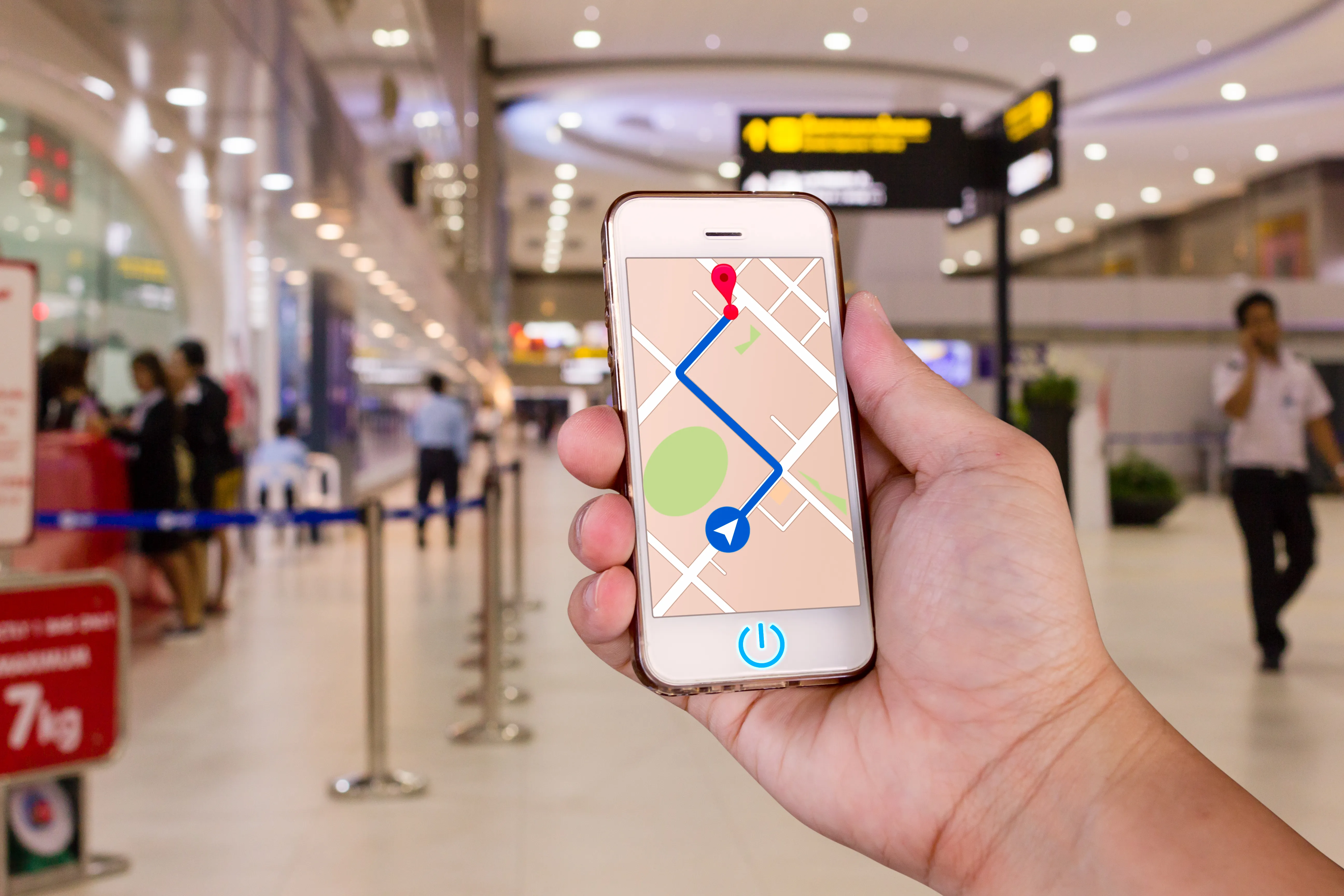
Tracking and localization technologies typically integrate with Wi-Fi and Bluetooth signals to pinpoint the location of people and objects. But what if a venue can’t install beacons or routers, or afford to deploy Wi-Fi or Bluetooth networks? Thanks to a combination of proprietary algorithms, advanced sensor fusion and the natural geomagnetic field, GipStech, a spin-off of Università della Calabria, built an indoor localization and navigation technology platform for accurate localization in the absence of an adequate GPS signal.Ahead of the SEMI MEMS Imaging Sensors Summit, 25 to 27 September 2019 in Grenoble France, Serena Brischetto of SEMI spoke with Gaetano D'Aquila, co-founder and CEO of GiPStech, about sensor fusion, augmented GPS applications and the future of indoor localization. Join us in Grenoble to learn more about GiPStech and meet other MEMS, imaging and sensors experts. Registration is open online.SEMI: Early this year GiPStech completed a test deployment of the first high-precision, infrastructure-free navigation system at Tokyo Shinjuku metro station in Japan. This is the busiest transportation hub globally! What were the main challenges you faced and how did your technology enable such a highly complex indoor localization?D'Aquila: As you mentioned, Shinjuku station in Tokyo has been registered in Guinness World Records as the busiest transportation hub globally. With 36 platforms, 200 exits and countless corridors and connections, it is easy to get lost there, especially for foreigners and tourists. On the other hand, this scale and complexity makes it unfeasible and expensive to install Bluetooth or similar infrastructure for standard indoor localization.For this reason, we needed to provide a cost-effective indoor localization technology without installing any kind of artificial supporting infrastructure. Thanks to our GiPStech patented multi-sensor-fusion localization stack and the high density of public Wi-FI networks, it’s possible to determine when passengers are inside the station. The public Wi-Fi networks signals were fused as an additional source in GiPStech's sensor-fusion platform to complement the inertial and geomagnetic engine and deliver very accurate results across the entire station. The tests performed in the station also demonstrated that the localization system can even detect the floors where travelers are walking. Now we are ready to roll out the same setup in other stations and environments.SEMI: You are not the first to pursue infrastructure-free indoor localization, but your technology platform seems to be very accurate in bringing precision, stability and consistency to the user experience. What lead to those advancements and incredible results?D'Aquila: Our key differentiating factors are built in the approach we created after years of research and development. One differentiation, of course, is related to our expertise and know-how about how the geomagnetic field can be used as a driving signal for the localization process.During R D we constructed and patented a modular multi-sensor-fusion software stack to solve any kind of localization problem, mainly in indoor environments. We started from a single-signal approach based on the employment of the geomagnetic field as a localization signal. But, mainly due to the very inaccurate devices chosen to measure the geomagnetic field, such as the smartphones that everyone carries in their pockets, we noticed that this single-signal approach is accurate but not reliable because it is strongly affected by a key weakness – the quality of sensor in the device.SEMI: How long did it take for you to solve this issue?D'Aquila: We started to integrate other signals within a few months after the first field tests related to the employment of the geomagnetic field alone. We also began to develop a software platform that could fuse any signal source (natural or artificial) available in the environment to preserve the reliability and accuracy of the localization system when some of these signals are temporarily affected by poor measurement quality. This is our differentiating factor today. We can re-configure our software platform to provide the best reliability and accuracy with the lowest artificial infrastructure in almost any context – from outdoor in a seamless way to indoor and vice versa.SEMI: GiPStech’s inertial engine is one of your cutting-edge technologies that completes your advanced indoor navigation and localization software stack. How do you see the technology evolving?D'Aquila: The inertial engine was one of our first technology modules mainly developed to enhance reliability, smooth the signals and reduce the computational power requirement of our geomagnetic localization approach.After a while, together with a third party that evaluated the performances of our module, we noticed that this module not only can be used as a self-standing localization technique, but it can also deliver high accuracy mainly in PDR (pedestrian dead reckoning) applications.Today our PDR is itself a black box with embedded subsystems. Besides some filtering modules, it includes a state-of-the-art step detector that detect steps even when the person changes the smartphone position and location (not only in the hands but also in backpacks or pockets) and an advanced step validation module that identifies and rejects fake steps.If you’ve ever used a commercial fitness tracker attached to your wrist, you know that in most cases if you move your arm the device will counts some steps that, of course, are not real. Our step validator solves this problem by detecting only real steps – a very important capability that allows our PDR to be employed as a self-standing inertial navigation system. We developed the PDR with strong attention to maintaining low requirements for the computational power and memory footprint. These additional characteristics makes the PDR very interesting even for a direct integration of the software at the silicon level in modern MEMS sensors.In a nutshell, the ability of MEMS sensors to run directly an embedded software module will drive technology enhancements that will allow some of the functionalities now available through an external application processor, such as those in smartphones, to move to a lower level (in the silicon). This, of course, reduces power consumption while even increasing the number of value-added services, including localization services, that could be built directly on top of the MEMS without requiring external software and/or application processor.SEMI: Do you think indoor localization will be more applicable in the next 10 years in areas such as Smart manufacturing, travel, healthcare, entertainment and retail?D'Aquila: Several market reports and our business development experience lead us to assess which sectors are of greatest interest for the application of indoor positioning technologies. They include the following. Industry (manufacturing logistics) Healthcare (tracking of assets, patients and doctors) Big installations (visit experience for museums, fairs) Airports stations (both for travelers and for resource and operation management) Large distribution (user profiling and influencing of the purchasing behavior) Indoor localization is a key enabling technology. Adoption, mainly in these sectors, was limited by the unfavorable tradeoff between cost and benefits. Our indoor localization technology aims to overcome those tradeoffs to make its adoption much more cost-effective while providing the best possible reliability and accuracy.SEMI: What are your expectations regarding the summit in Grenoble, and for the future of the sensors technology ahead? Where are we heading?D'Aquila: Many sectors would benefit from indoor localization technologies. MEMS, imaging and sensors are driving innovation and explosive demand for transportation, medical, mobile, industrial and other IoT applications. But these devices also constitute the basic building blocks for the development of reliable and affordable localization technologies.In outdoor environments we are pretty covered by the GPS. Indoors, where we spend more than of 80 percent of our time, similar types of services are coming to the market now and becoming more reliable over time.This Summit facilitates the direct interaction between different stakeholders to act at different points in the MEMS sensors value chain. Indoor localization was an emerging technology unrelated to the sensors ecosystem until now. Today, indoor localization must leverage MEMS sensors to be effective and reliable. In the future, localization technologies will be embedded directly in silicon to deliver the best performance at a lower cost to increase their adoption for more applications.Gaetano D'Aquila served as research fellow from 2002 to 2004 at the CNR and as an assistant teacher at the University of Calabria. From 2003 to 2014, he worked in the industry first as a security consultant for Telcos and Banking in Value Team S.p.A. and then as project manager at Infomobility S.p.A., where he coordinated research and development and strategic activities in the automotive and auto insurance industries. In 2014 he co-founded GiPStech and is its current CEO. He has published several papers in scientific journals and has filed for seven patents, three of which have been granted in the U.S. and Europe. Gaetano has a MSc in Computer Engineering and a Ph.D. in Science and Engineering of the Environment, Buildings and Energy from the University of Calabria, Italy.Serena Brischetto is a marketing and communications manager at SEMI Europe.
Read More
Would you buy your next hotdog in parts, from un-coordinated suppliers? For example: Get the bun from a baker, the sausage from a butcher, mustard and/or ketchup and veggies from the nearest supermarket? If yes, you may find the sausage being too small, the veggies too big for the bun, and, when you finally finished adding mustard/ketchup and start eating, you may “enjoy” a cold sausage on a soggy bun!This “hotdog example” is just a very simple way to highlight the advantages of a well-coordinated semiconductor supply chain. What may be a few dollars and cents wasted in this hotdog purchase, can become millions of dollars lost to delays and inefficiencies during the roll-out of a new electronic system.Complexity is Increasing the ChallengeThe very innovative semiconductor industry is continuing to develop more complete and complex building blocks for electronic system solutions, with the intent of making our customers’ lives easier. However, every new technology takes increasingly more time for technical and business interfaces to mature before all the semiconductor supply chain members can serve customers in a smooth, efficient and cost-effective manner. In particular, coordination between design and manufacturing has always turned out to be in the critical path.SEMI, the manufacturers’ trade organization, and the Electronic System Design (ESD) Alliance, representing electronic design automation (EDA) tools vendors, developers of intellectual property (IP = ready-made building blocks for ICs) and IC design service providers, both recognized these challenges. Late in 2018, these two industry organizations decided to jointly address this painful, costly and often a very frustrating, yet critical path and became Strategic Association Partners, The goal is to establish a well-coordinated semiconductor supply chain.To make the value propositions of this partnership highly visible and demonstrate the first joint accomplishments, SEMI’s well-known SEMICON West conference and, in its first year, ES Design West, will be conveniently co-located in San Francisco’s Moscone Center from July 9 to 11, 2019. The synchronized schedules and geographic proximity of these events not only outlines the multi-faceted interdependence of manufacturing and design but encourages and enables conference attendees to do, what previously would have been viewed as “forming cross-border relationships.” It’s a new word now — please join the path to success and expand your network!Navigating SEMICON West and ES Design WestJust in case you are not yet planning to come to San Francisco early July, please check the Agendas-at-a-Glance for SEMICON West and ES Design West, to see how broad and valuable these parallel conferences are for your business. In addition, every customer, partner and semiconductor industry supplier can, from July 9 –11, walk from one conference section to the other, arrange face-to-face meetings, in dedicated meeting rooms, with representatives from both camps and discuss, from the first project planning step to the final production ramp-up, the many topics that need to be coordinated across parts or the entire supply chain to minimize delays and/or cost over-runs.Who Will Lead the Discussions?Conference attendees can, in addition to meeting many important supply chain partners face-to-face, hear about the latest technologies and market trends from key executives in our industry. Featured speakers are: David Pellerin, Head of Global Business Development, Amazon Web Services Lisa Su, President, and CEO, AMD Gary Dickerson, President, and CEO, Applied Materials Laurent Le Faucheur, Principal Engineer, Digital Signal Processing and Machine Learning, Arm, Ltd. Renee St. Amant, Ph.D., Research Engineer in Emerging Technologies and US Innovator of the Year, ARM Dean Kamen, President DEKA Research Development, Founder First and First Global Jeffrey Welser, Ph.D., Vice President and Lab Director, IBM Research-Almaden Dean Drako, President and CEO, IC Manage, Inc. Oreste Donzella, Sr. VP Chief Marketing Officer, KLA Corporation Prakash Narain, President, and CEO, Real Intent, Inc. Aart de Geus, Chairman, and Co-CEO, Synopsys, Inc. Manish Pandy, Fellow, Synopsys, Inc. Nate Baxter, General Manager, Development and Production Group, TEL US Like in previous years, SEMICON West and ES Design West offer a range of special features, addressing Smart Manufacturing, Smart Transportation, Smart MedTech and Smart Workforce development in dedicated pavilions as well as an AI Design Forum. Also, the many exhibitors from both camps will give conference attendees convenient opportunities to get to know new supply chain partners and/or refresh long-term business relationships. Search for the exhibitors you want to meet early July here. Questions to Ask for a Well-Coordinated Semiconductor Supply ChainIf I may, I would like to ask my many friends in the manufacturing camp to spend some time in the ES Design West section and ask the exhibitors a few questions, like: What can you do to get me to profit faster? To reduce development and unit cost? To improve yield, product quality, and reliability? When can you visit my team to discuss how your company can contribute to our goals?Vice versa, I would like to encourage my friends in the design camp to spend time in the SEMICON West section and ask exhibitors what their companies offer. When talking to manufacturers of IC, passive components or circuit boards, assembly and test houses, please ask very specific questions like: How can we help you reduce iterations between you and your customers? How can we help to improve IC test programs? How can we increase the throughput of your manufacturing equipment? How can we apply machine learning (ML) and Artificial Intelligence (AI) to minimize equipment downtime, improve yields and/or shorten production ramp-up?I can assure you that you’ll not only win great friends “across the border” but will be very impressed by the expertise you’ll find in the other camp and the willingness for and benefits of cross-border cooperation.I look forward to meeting you at SEMICON West and ES Design West. Also, if your schedule allows, mark your calendars for the June 12 MEPTEC Luncheon at SEMI in Milpitas, June 18 for the GSA’s Silicon Summit in Santa Clara and June 25 to 27 for the IMAPS SiP Conference in Monterey, CA. Hope to see you at one or all of these important events!Article originally published in 3D InCites. Herb Reiter is president of eda 2 asic Consulting.
Read More
The SOI Consortium and member companies had a significant presence at two important events in China recently: the World Semiconductor Congress (WCS) in Nanjing and the SOI Academy, including an FD-SOI Training Day in Shanghai. Nanjing is especially known as a leading RF chip design hub in China, but WCS went well beyond RF. The three-day 2019 event was held at the Nanjing International Expo Center. It attracted over 30,000 visitors, 5000 of whom attended the various summit forums. Presenting at WCS '19 in Nanjing (clockwise from top left): Wayne Dai, CEO/Founder, VeriSilicon; Carlos Mazure, Executive Director, SOI Consortium; Giorgio Cesana, Director, STMicroelectronics; Christophe Tretz, Design Expert, SOI Consortium. (Photos courtesy: WCS)The SOI Consortium organized the SOI Forum, which was part of an afternoon Innovation Summit. Presentations were given by members of the SOI Consortium team, and by leaders from our membership, including Simgui, NXP, Incize, ST, IBM, Cadence and Xpeedic. Some of those presentations are now available from our website -- click here to get them.Earlier in the day, SOI Consortium member VeriSilicon participated in a morning session on AI and IoT Wireless Communications. They presented their low-power Bluetooth design platform for GlobalFoundries 22FDX, and CEO Wayne Dai moderated a lively round-table discussion.Following hard on the heels of the Nanjing event, the SOI Consortium team and members headed to Shanghai for the SOI Academy 2019, hosted for the second year in a row by member SIMIT (Shanghai Institute of Microsystem and IT under the Chinese Academy of Sciences). The two-day event attracted more than 250 professionals from more than 100 domestic and foreign IC companies and research institutes. Keynotes by SOI Consortium Executive Director Carlos Mazure, SITRI CEO Mark Ding and Jean-Eric Michallet, Head of the Microelectronics Components Department at Leti and bizdev director for the SOI Consortium focused on the SOI ecosystem. The SITRI and Leti talks also gave updates on their research and industrialization alliance. Further talks were given by leaders from Soitec, GlobalFoundries, VeriSilicon, IBM and Xpeedic. These addressed the growing FD-SOI ecosystem, applications in automotive electronics, 22 nm and 10 nm FD-SOI devices, advanced SOI substrate technology, China’s FD-SOI development, the FD-SOI manufacturing process, product design, EDA tools and all aspects of industry’s software and modeling value chain.Several speakers noted that more and more local Chinese customers are actively adopting FD-SOI for low-power, high-performance chips. SOI Academy, Shanghai, 2019, FD-SOI Training Day attendees.(Photo credit: SIMIT)The second day was devoted to hands-on professional training, given by experts from Leti using an actual PDK and punctuated by in-depth discussions. This helped the IC designers to fully understand the advantages and flexibility of FD-SOI in low-power logic, analog/mixed-signal and RF. All in all, “It was a great success,” concluded Jean-Eric MICHALLET, Head of the Microelectronics Components Department at Leti and bizdev director for the SOI Consortium. Plans for the next SOI Academy are already underway, with plans to extend the topics to include more on photonics, RF, power and MEMS.
Read More
The automation of semiconductor factories through digitization is reshaping Smart Manufacturing to streamline the connectivity and orchestration of manufacturing processes across the entire supply chain. But the threat of cyberattacks and viruses looms. An estimated 26 billion smart and connected manufacturing devices are expected to be online by next year. Never before has the need been greater to protect the staggering volume of manufacturing data traversing increasingly intricate supply chain networks.“We are living in the time of digital manufacturing,” said Chen Chi-Hsien, Director of TSMC’s Manufacturing Technology Center. “Processes ranging from assembling equipment and upgrading hardware and software are increasing security challenges for semiconductor manufacturers. With viruses and malware constantly evolving to pose greater threats, all members of the supply chain – from manufacturing and equipment to operating system and software/firmware providers – should work together within the SEMI Smart Manufacturing platform to establish cybersecurity standards across the industry. Doing so will also enhance the development of smart manufacturing and accelerate digitalization.” Representatives from Tongfu Microelectronics, Adlink, NSHC, ABB, TSMC, ASE and Microsoft with SEMI CMO and SEMI Taiwan president Terry Tsao (left to right) Chi-Hsien offered his insights at the SEMI Smart Manufacturing and Cybersecurity Seminar, joining speakers from other leading semiconductor manufacturers including TFME and ASE to discuss the latest smart manufacturing trends and cybersecurity challenges. The April event in Hsinchu also featured representatives from ABB, Adlink, Microsoft, Rockwell, Siemens, Delta Electronics and the National Center for High-Performance Computing (NCHC) offering their views on how the semiconductor industry can speed its digital transformation using various technologies.With its 43 years’ experience in developing international standards, SEMI is committed to serving as the platform to establish universal information security standards for silicon wafer plants and semiconductor equipment, Terry Tsao, SEMI chief marketing officer and SEMI Taiwan president, said at the seminar. Tsao added that SEMI is now in discussions with leading semiconductor manufacturers to establish a communications framework for addressing potential security risks and facilitating the development of risk management and security solutions that safeguard the semiconductor supply chain.This year SEMI will debut its SMART Manufacturing EXPO to gather key supply chain players for critical discussions about security and to feature AI manufacturing and cybersecurity solutions. Co-located with SEMICON Taiwan, September 18-20, 2019, at TaiNEX 1 (Taipei Nangang Exhibition Center, Hall 1), the SMART Manufacturing EXPO will include Smart manufacturing hardware and software providers from around the world for the interdisciplinary discussions and collaboration key to developing strong Smart manufacturing security.For more information about the SEMI Smart Manufacturing Platform, contact Emmy Yi of SEMI Taiwan at [email protected] Yi is a marketing specialist at SEMI Taiwan.
Read More
Imagine a world where there are chips in about everything we touch on a daily basis. It is not hard to do with semiconductors already at the core of many leading-edge electronic devices. These sophisticated chips are hidden from sight, but their functions are vitally significant to our daily lives.Manufactured in multibillion-dollar facilities, the production process of chips is one of the riskiest, costliest, and most technically complex feats in business. Consider the difficulties of managing contaminants during device manufacturing: A single speck of dust on a lens could cause the entire output of the plant to be scrapped.For years, these exotic fabrication facilities, called fabs, have been packing more efficiency into ever smaller chips. As new technologies continue to emerge, chip manufacturers face constant pressure to continually refine and improve their operations to meet the challenge of rising device performance and yield goals. Fab managers must optimize tool performance, improve fabrication techniques, safely handle toxic materials and design better integration flows. Layer on top of those requirements customer demand for greater innovation and quality of service, it can be difficult for manufacturers to handle everything on their own while consistently meeting necessary requirements.Align for CollaborationWith the help of the Fab Owners Alliance (FOA), a SEMI technology community, manufacturers and their suppliers don’t have to travel this road alone. Membership in this international group allows semiconductor and MEMS fab managers and industry suppliers to come together to solve common non-competitive manufacturing issues and improve business results.Founded in 2004, the group consists of 25+ device manufacturers (DMs) with over 120 semiconductor manufacturing facilities and 60+ solution providers (SPs) who supply equipment and services. Through quarterly meetings, study teams, benchmarking surveys, case studies and online forums, FOA successfully provides a collaborative, non-competitive platform to the fab management and operations community. FOA members enjoying an engaging discussion and networking event during the recent Q1 2019 Collaborative Forum at the Double Tree Resort in Scottsdale, Arizona One of the most popular FOA platforms is the annual Collaborative Forum early in the year. The goal is to bring together DMs and SPs from around the world for an open dialogue under one roof. For two days, they share success stories and discuss issues facing their fabs and the industry in general and develop collective strategies to address them.The success stories are particularly engaging as they accentuate the value and benefits of FOA membership. Presented as case studies, these stories outline how the DMs and SPs work together to improve fab efficiency and increase yields. Often, the ideas for the case studies are conceived during networking events, fab tours and programs organized by the FOA.The case studies shared at the 2019 Collaborative Forum, held at the Double Tree Resort in Scottsdale, Arizona, February 13-14, 2019, illustrate the power of collaboration within the FOA. Following are a few examples.Scheduling System Implementation Broadcom was facing a steep ramp when it decided to engage with FPS, an INFICON product line. In addition, the manual decision making, and limited real-time visibility of factory data was negatively impacting their production in its 150mm and 200mm environment. By deploying an integrated Smart Manufacturing software solution and its digital twin, FPS was able to retrofit Broadcom’s manual factory with automated decision-making capabilities.This solution offered many benefits. Constraint tool utilization increased by more than 15 percent. The automated WIP management system also eliminated many manual wafer handling issues such as lost lots, WIP storage constraints, building transfers, and time spent looking for lots. Pushing Tool Performance BoundariesAs tools in the 200mm space are hard to find, GLOBALFOUNDRIES is always looking to squeeze every wafer out of its existing resources. To drive continuous improvement and increase equipment throughput, GLOBALFOUNDRIES leveraged MAX’s knowledge with Machine Rate Models. Together, they were able to employ a modelling technique that helped them model key toolsets and develop actions to increase intrinsic machine rate performance.Based on this knowledge, 10 capacity constraints were selected, and speed models were developed for all of them. This win-win collaboration allowed GLOBALFOUNDRIES to find some real opportunities that translated into CAPEX and cost savings. On average, the companies identified a 12 percent potential improvement opportunity per toolset and created engineering task force teams to prioritize and drive the improvements.Simplifying the Chamber Matching Process Using Trace AnalyticsThe collaboration between NXP and BISTel resulted from a shared vision of achieving Smart Manufacturing using analytic solutions enabled by artificial intelligence and other advanced technologies. Chamber matching is critical in identifying process variation to ensure manufacturing quality. Traditional tools like Fault Detection Classification (FDC) often do not provide clear enough insights to pinpoint the issues and require extensive time to collect data from each chamber.Through several use cases, NXP and BISTel successfully illustrated the effectiveness of using a trace analytic solution to quickly and accurately quantify and monitor chamber-to-chamber mismatches as well as changes within a chamber over time. The full trace analyses of all parameters allowed NXP to generate better FDC models to more quickly detect similar issues in the future. In addition, NXP was able to identify the cause of a parametric shift by comparing performance of the same chamber between two different time periods. All in all, the trace analytics solution brought together and analyzed the process data efficiently, thereby reducing analysis time from days to minutes.Eagleview Inspection of SiC and Transparent Wafers X-FAB challenged Microtronic to develop a new capability for its high-throughput recipe-less macro defect inspection systems. Microtronic’s EagleView machine vision macro defect inspection system is well known for its versatility in the semiconductor industry due to its wide deployment as well as its recognition as winner of the 2017 Best of West Award at SEMICON West. But X-FAB’s requirements to inspect and image transparent wafer substrates were novel. After working closely to understand X-FAB’s needs, Microtronic made extensive hardware and software enhancements to enable high-throughput macro inspection of Silicon Carbide (SiC) and other transparent wafer substrates.Get InvolvedThe FOA meetings are held at device manufacturing sites twice a year. The next meeting will be graciously hosted by MACOM in Lowell, Massachusetts, May 22-23, 2019. The DMs and SPs will meet again at SEMICON West at the Moscone Center in San Francisco on July 11, 2019.To attend these meeting and be part of this high-impact group, please email us at [email protected]. For more information about FOA, please visit our website.Nishita Rao is a marketing manager at SEMI.
Read More
Why FD-SOI? What can you do with it that you couldn’t do before? That was the big question from IHS Markit’s Matthew Short that kicked off the first panel discussion at the SOI Consortium’s Silicon Valley Symposium. And there were some great answers.VeriSilicon, Analog Bits and Silicon Catalyst were among the consortium members with stands at the SOI Symposium, Silicon Valley 2019.Here in this final part of our coverage of the event, we’ll detail who said what in the two panel discussions, as well as the presentations by Leti, Intento Design the SOI Consortium’s IP/EDA roundup.If you missed the previous two installments of our coverage, you can catch up on the rest of the presentations in part 1 (NXP, Samsung more) here and part 2 here (Synaptics, GlobalFoundries more). Almost all of the presentations are now freely available under "events" on the consortium website - or just click here to get them.How FD-SOI Changes What You Can DoThe presentation by Matthew Short, Sr. Director of IoT Technology at IHS Markit, was not specific to SOI, but it sure did lay out out the market opportunities. Entitled IoT, 5G, ADAS and AI Market, it’s available on our website. Matt spent most of his career in chip design at NXP/Freescale, so he really has an engineer’s perspective on where this all is going. At IHS Markit, they define IoT as anything with an IP address. Over the past year more than 10 billion devices were shipped, and there were more “things” than cellular handsets, so the world has really changed. He outlined the growth drivers, suggested that 5G won’t be a “wow” thing for consumers, and noted there is a lot of debate raging regarding how smart sensors should be (the Tier 1’s want smart).He was then joined on the stage by the participants in the first panel discussion, which looked at product and application drivers. That included: NXP Fellow Rob Cosaro; Tim Dry, Director of Edge Endpoints Marketing at Samsung Foundry; ST biz dev director Roger Forchhammer; CoreAVI biz dev VP Lee Melatti; Nokia VP Michael Reiha; and Analog Bits EVP Mahesh Tirupattur.First Short asked why customers wanted more integrated solutions. For CoreAvi, it’s about safety, for ST in automotive it’s about security, for Analog Bits, it’s about integrating more analog, for Nokia it’s just a necessity.Then he asked Why FD-SOI? What can you do that you couldn’t do before? For ST, which is doing MCUs for automotive, it’s about energy efficiency, speed, the density of non-volatile memory and the robustness of the technology. For NXP, it’s back biasing, low voltage and power numbers never seen before. “FD-SOI really makes a difference in the products we can bring to market,” said Cosaro. For CoreAVI, it’s the long-term power impact. And for Analog Bits, “Customers see huge benefits,” said Tirupattur, for cost sensitive applications. He has customers selling their technology in high volumes in FD-SOI. What about edge vs. cloud? For Nokia, it’s monolithic integration for best-in-class RF, advanced memory, biasing and voltage regulation adding a layer of intelligence. Samsung sees edge as distributed cloud, and CoreAVI sees safety in the edge, because you can’t completely rely on the cloud.Where are the weak points in the FD-SOI ecosystem? For Samsung, more people need to use back biasing. “People need to use the knobs,” said Dry. For Analog Bits, the next step is innovation around back biasing, as many in logic don’t understand the benefits, so the ecosystem needs to promote the value proposition. ST suggests that with more products out there, customers will see the benefits. NXP did “a lot of the heavy lifting” at 28nm – now you need more people using these nodes, not just the cellphone nodes.How will the architecture change? For NXP, it’s all about memory bandwidth. For Samsung, it’s the promise of analog and interconnect. Nokia sees the back-end and heterogeneous integration with FD-SOI and RF enablement. Analog Bits’ Tirupattur said he’s pushing his engineers for even lower power in a still smaller form factor, noting that most analog engineers had been more focused on performance than power, but now that’s changed. For ST, it’s AI/ML throughout automotive, and FD-SOI is beneficial there.Leti the Connected Car Leti's slide 27, SOI Symposium, Silicon Valley 2019Research giant Leti’s presentation was entitled Applications Around the Connected Car. 85% of Leti’s €315M budget comes from R D contracts with its 350 industrial partners. Truly a driving force in FD-SOI, Leti is involved in a dizzying array of projects. For the connected car, they cover (much of it on SOI): high precision smart sensing, embedded processing fusion, new computing paradigms and deep learning, ultra-low power computing nodes framework, ultra-low power connectivity for IoT, energy management and scavenging, and security. They do vision at the edge, 3D technology for smart imagers, and ways to dramatically reduce power. They’ve got a Qbits platform on FD-SOI for AI at the edge, a super low power neural network accelerator, and ULP connectivity. Check out the presentation for lots of details.EDA/IP OverviewSlide 9 from SOI EDA/IP Overview.SOI Consortium Executive Co-Director Jon Cheek gave a quick round-up presentation aggregating various IP and EDA offerings entitled , SOI EDA/IP Overview. It is taken from recent member presentations including Cadence, Silvaco, VeriSilicon, Synopsys and GlobalFoundries, giving you an idea of how dynamic the ecosystem has become.Automating Analog While the logic side of the design equation has long had robust automation tools, some consider the analog side as sort of black magic. New consortium member Intento Design aims to fix that. Here at ASN we covered their work with ST briefly a few months ago here. At the SOI Symposium, the company’s CEO Dr. Ramy ISKANDER presented their solution in ID-XploreTM: A Disruptive EDA for Emerging FDSOI Applications. Intento, a partner in GlobalFoundries FDXcelerator program, has cognitive software for first-time right analog design. It determines the appropriate static and dynamic body biasing ranges to meet PVTB (Process/Voltage/Temperature/Body Bias), and is fully integrated into the Cadence Environment. They produced multiple correct-by-construction FD-SOI designs, and the total time spent to generate eight candidates FD-SOI designs took less than a day. The Tools Are in the BoxThe last panel discussion, entitled Are the Tools in the Box? was moderated by the Consortium’s Jon Cheek. Participants included: VeriSilicon SVP David Jarmon; Arm PDG Marketing VP Kelvin Low; NXP’s Stefano Pietri, Technical Director of the company’s Microcontrollers Analog Design Team; Jamie Schaeffer, who’s GF’s Sr. Product Offering Manager for 22FDX and 12FDX; and Cadence Strategic Alliances Director Jonathan Smith. 2nd panel discussion, SOI Symposium, Silicon Valley 2019Yes, the tools are in the box. Smith of Cadence said they’re providing them, and NXP’s Pietro said that they’re very well positioned in his specialty, analog. VeriSilicon has IP, and anything they don’t have in house they’ll license. So why be afraid of body biasing? NXP has proof by example – they see such huge cost advantages that they try to leverage it as much as possible. GF’s doing training, since each area (automotive, IoT, etc.) has different needs. Some VeriSilicon customers already see such substantial benefits from FD-SOI that they’re not bothering to do biasing. Cadence points out that the Arm POP announcement is huge, and Arm’s Low wondered if the SOI Consortium could do an IP portal? “Our sales departments need to explain the advantages to our customers!” said NXP’s Pietro.From the audience, NXP VP longtime FD-SOI proponent Ron Martino (who, btw, wrote some great articles for ASN when they first got into FD-SOI – read them here), asked why designers think FD-SOI means a lot of corners? How do we convince the industry that FD-SOI simplifies design? Cadence is working with GF, responded Smith, and will have some big new at Arm’s TechCon this fall. “We need more training and marketing to show it’s not scary," he added. For GF, the corners don’t get more complicated, and they’re working with Dolphin Integration on getting them covered early in the planning. Ease of access to IP will help, per Arm. And in a great concluding remark, VeriSilicon’s Jarmon said, “The craft is being automated. The more we work together, the greater success of FD-SOI.”
Read More
Join us! In partnership with our members, the SOI Consortium is co-organizing and participating in two key SOI events coming up in China over the next few weeks. On May 18th, we’ve put together an SOI Forum at the World Semiconductor Congress (WCS) in Nanjing. And on May 23rd 24th, we’ve teamed up with our members SIMIT, Sitri and Leti for another in our series of SOI Academies, including an FD-SOI Training Day. (The last one this past winter was a terrific success – read about that here if you missed our coverage at the time.) QR code for WCS, Nanjing '19At WCS, the SOI Forum (sub-forum #8) is part of the afternoon Innovation Summit. We’ll cover the broader SOI ecosystem, including both RF-SOI and FD-SOI – from wafers to design through manufacturing. Presentations will be given by members of the SOI Consortium team, and by leaders from our membership, including Simgui, NXP, Incize, ST, IBM, Cadence and Xpeedic. Click here or scan the QR code for the full program and registration information. Also at WCS, SOI Consortium member VeriSilicon will be participating in a morning session on AI and IoT Wireless Communications (sub-forum #4). They’ll be giving a presentation on their low-power Bluetooth design platform for GlobalFoundries 22FDX, and their CEO Wayne Dai will be moderating a round-table discussion. You can get more information on that (in Chinese only, tho) here, or follow VeriSilicon on WeChat. QR code for SOI Academy and FD-SOI Training, Shanghaid 2019The SOI Academy in Shanghai is an opportunity for experienced designers to gain solid expertise in FD-SOI. The event begins in the afternoon of May 23rd with a series of informative plenary talks by members of the SOI Consortium team, and by experts from our members Leti, Soitec, VeriSilicon, GlobalFoundries and NXP. The FD-SOI Training starts the next morning, on May 24th.. This is a hands-on event lead by top experts from Leti. The morning is devoted to digital design in FD-SOI, and the afternoon to RF design (including for 5G) in FD-SOI. Attendees will get a comprehensive understanding of design techniques for low-power chips leveraging the multiple benefits and flexibility of FD-SOI technology. Get more information here, or from the WeChat QR code.We've got a busy schedule! To keep up to date with where we and our members will be promoting the SOI ecosystem, be sure to check our Events page regularly.
Read More
Why Is Smart Parking a Hot Topic? Poorly managed parking resources have a substantial negative impact on cities — one that has been well-documented. According to industry studies, poorly managed parking: Increases Traffic Congestion: 30% of traffic is caused by ongoing circling for parking. Increases Pollution: In Westwood, California, cruising for parking burned 47,000 gallons of gas and generated 730 tons of carbon dioxide in one year. Frustrates Drivers: Urban drivers spend an average of 20 minutes per trip looking for parking. Stifles Economic Opportunities: Traffic congestion cost Americans $124 billion in 2013, and this is predicted to rise to $186 billion by 2030. These problems are getting worse. As a result of growing urban populations, cities account for more than 80% of carbon emissions globally. Unplanned or inadequately managed urban expansion leads to rapid sprawl, pollution and environmental degradation. Due to the lack of parking-space availability, for example, Japan is ranked among the most expensive countries for paid parking. If left unaddressed, poor parking management will continue to plague cities, both large and small. Fortunately, Smart City Internet of Things (IoT) initiatives are helping cities to address their parking issues. IoT to the RescueThere are three key drivers of Smart City IoT initiatives. Cities want to: Improve the overall quality of life and mobility in urban environments Leverage technology to augment and improve existing infrastructure and services that citizens rely on every day Foster both economic and environmental improvements The availability of high-accuracy vehicle detection sensors coupled with affordable, low-power connectivity has enabled a new generation of Smart Parking technology. However, choosing the right Smart Parking solution is essential.High-accuracy vehicle detection sensors can provide valuable data to city planners and parking managers. This information includes: Parking availability Traffic flow Parking occupancy rate and historical data Turnover For parking management to effect change, city traffic managers, parking managers and urban planners need a holistic view of parking availability and usage patterns, and users need real-time information about available parking spaces.Sensors, cameras and communication networks form the basic infrastructure for Smart Parking. To deliver on the promise of IoT and to help cities improve the overall quality of life for residents and visitors, cities need a complete smart parking solution that provides: Accurate real-time vehicle detection and location of available parking spaces – significantly reduces the amount of time spent cruising for parking spaces, giving drivers the precise location of available spaces Connectivity from the sensor to the cloud – facilitates real-time parking data that city planners, parking enforcement and traffic managers can use to reduce traffic congestion Parking applications for cities, parking-lot owners and drivers — enables navigation to available parking and supports mobile payment, streamlining the parking process. Parking applications can also direct traffic enforcement personnel to parking violations as they occur, helping to alleviate traffic bottlenecks, such as double parking in loading zones. Such applications also improve the efficiency of other city services such as public transportation and garbage collection. Complete Smart Parking Solution – Sensor to Cloud (Source: PNI Sensor) To learn how cities are using Smart Parking sensors to improve the services they offer to residents and visitors, come see PNI at SEMI’s 2019 FLEX Japan MEMS Sensors Forum (May 22-23, Toyko, Japan). PNI President and CEO Becky Oh and PNI’s partner, Macnica Networks, will share Smart Parking use cases from innovative cities, corporate campuses and universities (Smart Parking presentation, May 22 from 16:55-17:25). Register for the conference today. For more information about PNI Sensor, visit the PNI Sensor website. Becky Oh is the president and CEO of PNI Sensor. Throughout her 20 years with the company, Ms. Oh has held a range of senior-level positions, from operations to technical business development. She received an M.S. degree in Electrical Engineering from Cornell University and a B.S. in Electrical Engineering and Computer Science from MIT. Ms. Oh holds multiple patents in the area of devices with multi-sensing and reporting capabilities.
Read More