downloadGroupGroupnoun_press release_995423_000000 copyGroupnoun_Feed_96767_000000Group 19noun_pictures_1817522_000000Member company iconResource item iconStore item iconGroup 19Group 19noun_Photo_2085192_000000 Copynoun_presentation_2096081_000000Group 19Group Copy 7noun_webinar_692730_000000Path
Skip to main content
Default Banner Image

China

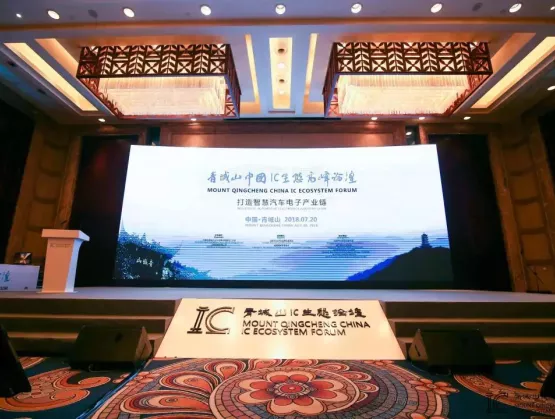
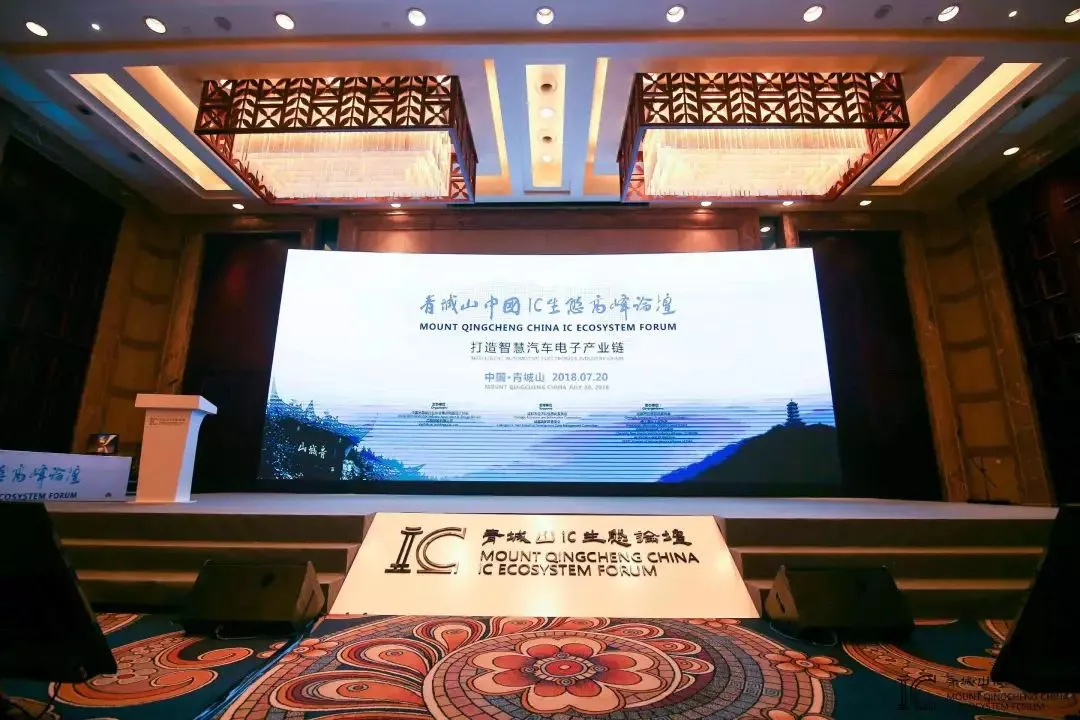
FD-SOI was a very important topic during the recent Mount Qingcheng China IC Ecosystem Forum. To situate things, Mount Qingcheng, with its lush hills and waterways, is located just outside of Chengdu. That of course is where GlobalFoundries is building its new fab, which will be the first in China to run FD-SOI. Chengdu is also a key city in China's automotive electronics landscape. [caption id="attachment_12236" align="alignright" width="300"] (Image Courtesy: VeriSilicon)[/caption] The theme of the forum was Building a Smart Automotive Electronics Industry Chain. Over 260 decision-makers from government, academia and industry attended – and the SOI Consortium had a significant presence. The event was chaired by Wayne Dai, CEO/Founder of consortium member VeriSilicon, and tireless champion of the the FD-SOI ecosystem in China and worldwide. Morning keynotes were given by: Carlos Mazure, Soitec CTO and SOI Consortium Executive Co-Director; Mark Granger, GF's VP of Automotive Product Line Management; and Tony King-Smith, Executive Advisor at AImotive, a GF 22FDX customer. BTW, transcripts of all the talks are available through Gasgoo, China's largest automotive B2B marketplace. You can click here to access them. (They're in Chinese – but you can open them in the language of your choice using the major translation websites.) Chengdu Officials Affirm Support for FD-SOI Fan Yi, Deputy Mayor of Chengdu, spoke extensively of FD-SOI in his keynote on the importance of rapidly developing smart cars. He heralded the “spectacular” new GlobalFoundries fab there. Following a meeting with the company's top brass the day before, he affirmed GF's confidence in their investment. There is a solid roadmap for FD-SOI, he noted, and efforts are underway to accelerate the move into production and expand education and training. He cited the benefits of FD-SOI for the entire supply chain, from design through package and test, raising the level of the entire IC industry to new heights. The government, he said, attaches great importance to this enterprise. Their thinking regarding intelligent transport in China is integrated with the overall approach to smart cities. SOI Consortium Leads Industry Keynotes [caption id="attachment_12232" align="alignleft" width="300"] Wayne Dai, VeriSilicon Founder and CEO (Photo courtesy VeriSilicon)[/caption] In his opening remarks, Wayne Dai emphasized the need for China to seize the advantage in the next round of development opportunities in the automotive electronics industry. This year's Qingcheng forum, he noted, brought together key representatives from across the supply chain, from of the highest to the deepest reaches of the smart car electronics industry, and across markets, technologies, solutions, industrial ecosystem, standards and regulations. In his talk on how FD-SOI is boosting the accelerated development of automotive electronics, Carlos Mazure presented the SOI Industry Consortium. He noted that the Consortium promotes mutual understanding and development across the ecosystem. SOI is already present throughout automotive applications, he noted. There are currently about 100mm2 of SOI per car, in such diverse areas power systems, transmissions, entertainment, in-vehicle networking and more. SOI will experience especially high growth in electrification, information/entertainment, networking, 5G, AI/edge computing and ADAS. He then went on to give some history and an extensive overview of the major trends and highlights we've seen over recent years. He finished by giving examples of convergence across the supply chain with IC manufacturers working with automakers to lower power, increase processor performance and advance 5G. [caption id="attachment_12233" align="alignright" width="665"] Carlos Mazure, Soitec CTO and SOI Consortium Executive Co-Director; Tony King-Smith, Executive Advisor at AImotive and Mark Granger, GF's VP of Automotive Product Line Management (Photo courtesy VeriSilicon)[/caption] GF's Mark Granger addressed the rapid development of automotive electronics. In certain areas, he said, he sees growth rates of over 20%. They are working on building the Chengdu ecosystem, especially for design, and in cooperation with the rest of the supply chain. Furthermore, he reminded the audience, when you talk about cars, travel implies that you also talk about IoT as well as things like infotainment and integrated radar ICs. In addition to cost and power efficiencies, the AEC-Q100 standard for IC reliability in automotive applications is also pushing designers to turn to FD-SOI. In the GF meeting with Chengdu government officials (referenced above in deputy mayor Fan Yi's talk), he too confirmed their support of FD-SOI as a key technology for China. GF is currently cooperating with about 75 automotive partners, he said, and the company is looking to increase cooperation with partners in the Chengdu region. Tony King-Smith talked about the 22FDX test chip AImotive is doing with Verisilicon and GF. In case you missed it, in June 2017 AImotive announced its AI-optimized hardware IP was available to global chip manufacturers for license. AiWare is built from the ground up for running neural networks, and the company says it is up to 20 times more power efficient than other leading AI acceleration hardware solutions on the market. In the same announcement, they revealed that VeriSilicon would be the first to integrate aiWare into a chip design,and that aiWare-based test chips would be fabricated on GF's 22FDX. The chip is expected to debut this year. While the afternoon agenda was not specific to FD-SOI, it did focus on the "smart cockpit" and "intelligent driving", with talks by nine leading players in China's automotive IC and investment communities. ~ ~ ~Note: Many thanks to the folks at VeriSilicon, who wrote up this event for their WeChat feed, and shared photos with us here at ASN.
Read More
IntroductionStarting July 4, 2022, PFOA (Perfluorooctanoic acid) levels in semiconductor manufacturing and related equipment (SMRE), including replacement parts, entering the European Union (EU) will be restricted to 25 ppb per component (or any part thereof). Semiconductor equipment components (and the parts thereof) of particular concern include fluid tubing and fittings, pipe/seal tape, wire and cable insulation, filters, valves, tanks, panels, reaction vessels and o-rings; if they are made from fluoropolymers or fluoroelastomers.When PFOA is used as an aid to the manufacture fluoropolymers such as PTFE, PFA, PVDF or fluoroelastomers such as FKM and FFKM (collectively referred to as fluoromaterials), an unintended PFOA residue can be trapped within the fluoromaterial. Buyers of components used in SMRE are usually unaware of the processing method used for any fluoromaterials they may contain, and, as a consequence, the potential for PFOA residue. This lack of information about potential PFOA residues could result in regulatory enforcement actions and restricted market access, particularly in the EU.The impact of restrictions on fluoromaterials used in SMRE has been introduced in previous SEMI articles ‘Fluorinated Compound Restrictions May Trigger Costly Equipment Changes’ and ‘Fluorinated Substance Restrictions Triggers Costly Equipment Changes.’PFOA and its related compounds, such as the ammonium salt APFO (collectively called PFOA in this article), are recognized internationally as hazardous chemicals and are now targeted for regulatory restriction in the U.S., Taiwan, Canada and the EU. The UN Stockholm Convention on Persistent Organic Pollutants (POPs) is also considering listing PFOA, which could lead to additional international restrictions.The SEMI EHS Division PFOA Compliance Working Group has been working to understand: The likelihood of PFOA residue entering the supply chain of new components The residual level of PFOA in fluoromaterials produced prior to the phase out of PFOA by some manufacturers The impact of PFOA residue on the secondary equipment market This SEMI resource page, ‘Elimination of PFOA from the Equipment Supply Chain,’ and the supporting FAQ contain the Working Group’s key findings and conclusions.PFOA in the Fluoromaterial Supply ChainSignatories to the U.S. EPA Stewardship Program, which include FluoroCouncil members, eliminated PFOA from their manufacturing processes by 2013. However, other fluoromaterial manufactures – particularly in China, Russia and India – might still use PFOA and pose a significant risk to the worldwide supply chain.China, the world’s largest fluoromaterial producer, accounts for 53 percent of global production of PTFE and 38 percent of worldwide production of PVDF, FEP and FKM. An estimated 75 percent to 85 percent of fluoromaterials are manufactured using PFOA in China. Fully 25 percent of these fluoromaterials are exported, primarily to the U.S, Japan, EU and India. What’s more, finished goods made from or containing fluoromaterials that might be used as components in SMRE are exported from China.Documentation that traces fluoromaterials through the supply chain back to the original fluoromaterial manufacturer is key to meeting the PFOA regulatory requirements. This traceability can be straightforward in cases when an SMRE manufacturer directly specifies the use of a fluoromaterial in a custom-fabricated fluoromaterial component. However, for off-the-shelf components (e.g., cable ties, wiring insulation, tubing) or the components assembled from these components (e.g., controllers), the complexity and dynamics of the supply chain makes traceability back to the original fluoromaterial producer almost impossible.Residual PFOA Levels If, or how much, PFOA/APFO residue is contained in a fluoromaterial depends on the manufacturing process. Details of the manufacturing processes are proprietary and vary widely. Post manufacturing thermal treatments, such as sintering, extrusion, and molding, can result in the rapid thermal decomposition of APFO above 250C, but PFOA is significantly more stable. The temperature and time of thermal treatments is also proprietary and varies depending on the type of fluoromaterial and what is being made.This variability makes it impossible to estimate the likely level of trapped PFOA or APFO in a finished component or a part thereof. It is unwise to use data on the level of residue made known for one case to extrapolate the level of residue across the fluoromaterial industry. However, an industry-wide range on the order of 1ppm-10ppm (nearly 1000 times the EU limit) is suspected. Testing for the presence of PFOA/APFO at 25ppb in components is also problematic as there is no standard test method, and results among the custom methods developed in each test lab may vary.Given this uncertainty in test methods, a system of supplier declarations warrants consideration.Impact on Secondary (Used) EquipmentThe EU REACH restrictions apply to SMRE and replacement parts placed on the market at any time (not just initial placement – known as “first placing on the market”). For fluoromaterial components manufactured prior to 2013, there is a higher likelihood of residual PFOA/APFO levels exceeding the 25ppb limit of EU REACH. In principle all the SMRE components containing fluoromaterials should be investigated, and those containing PFOA above 25ppb must be replaced before the SMRE can be legally placed again on the EU market. Companies (e.g., semiconductor manufacturers) in the EU who wish to sell used equipment within the EU will be required to demonstrate the used equipment is in compliance. Selling older used equipment would likely be unprofitable after necessary investigations and component replacements are completed.Next StepsWhile the EU semiconductor manufacturing industry heavily depends on the secondary (used) equipment market, EU regulators may be unaware of the PFOA restriction’s damaging impact to this market. The EHS Division PFOA Working Group, in conjunction with SEMI Europe, is now considering how to bring this concern to the attention of regulators and to collaborate and lobby for effective changes including possible modifications to the EU Persistent Organic Pollutants (POPs) regulation.
Read More
U.S.-China Trade War Heats UpThe U.S. Trade Representative (USTR) yesterday released a 25 percent tariff on $16 billion in imports from China, including 29 tariff lines that represent the heart of the semiconductor industry. These tariff lines include semiconductor products such as machines and spare parts used to make, wafers, flat panel displays, masks and chips, and will cost SEMI’s 400 U.S. members an estimated more than $500 million annually in additional duties.SEMI, along with hundreds of companies, including Lam Research and KLA-Tencor, submitted written comments, requesting the removal of tariff lines from the proposed list. SEMI also testified on behalf of the semiconductor industry, joining more than 80 other companies, including Applied Materials, in opposing the duties before an U.S. government interagency panel in late July.This trade action is on top of the already imposed $34 billion U.S. tariff list, which will cost SEMI’s U.S. members tens of millions of dollars annually. In the coming days, USTR will publish details on how U.S. companies can request the exclusion of products from the $16 billion tariff list, much as it did for the first round of $34 billion.In a swift retaliation, China announced a 25 percent tariff on $16 billion in U.S. exports, including products vital to semiconductor manufacturing such as chemicals, test equipment and other parts. Both U.S. and China tariffs will take effect on August 23.The new tariffs come as China considers tariffs on $60 billion of U.S. imports, and the U.S. weighs additional duties on $200 billion of Chinese imports – a wave that would inflict even deeper damage on the U.S. semiconductor industry. This latest round of U.S. tariffs would cover goods used in microelectronics manufacturing, including chemicals, glass products and spare parts. SEMI will testify against the $200 billion tariff list later this month. If your company expects to be impacted by the proposed tariffs on $200 billion worth of goods, please contact SEMI staff.SEMI stands firm in its belief that none of the tariffs address U.S. concerns over China’s trade practices. Instead, they harm companies in the semiconductor supply chain by increasing business costs, introducing uncertainty and stifling innovation. SEMI will continue to engage with policymakers as both the U.S. and China $16 billion tariff lists are implemented. We will also be evaluating the products covered by the $200 billion U.S. list and the $60 billion Chinese list as both are further considered. We encourage members to review these lists to determine impact on their companies. For more information, please contact Jay Chittooran, Public Policy Manager at SEMI, at [email protected].
Read More
Two months after opposing $34 billion in U.S. trade tariffs on behalf of the U.S. semiconductor manufacturing industry, Jonathan Davis, global vice president of industry advocacy at SEMI, this week spoke out against an additional $16 billion in duties on Chinese goods. Testifying before the same U.S. interagency panel mulling the tariffs, Davis called for the removal of 29 tariff lines covering items critical to semiconductor manufacturing including machines and spare parts used to make, wafers, flat panel displays and masks.In his testimony to the panel, Davis stressed that while SEMI supports stronger protections against the theft of valuable intellectual property (IP), tariffs do little to address U.S. concerns over IP loss. Over the past month, SEMI has also submitted written comments and opposed the tariffs in public testimony. The panel includes representatives from the U.S. Trade Representative (USTR), Departments of Treasury, Commerce, State and Defense, and the Council of Economic Advisers.Also testifying, Joe Pon, corporate vice president at Applied Materials, explained that the proposed tariffs will harm small and midsized companies and other U.S. business interests. Describing the tariffs as a tax on exports of high-value U.S. goods, Pon said the duties give non-U.S. firms an unfair competitive advantage.In a parallel push to Davis’s testimony, SEMI, with more than 10 representatives from six member companies, met with 16 congressional offices this week to underscore the damage the tariffs would wreak on the U.S. semiconductor industry. The fallout would include higher operating costs, fewer exports and slower innovation. The tariffs would also curb industry growth and put thousands of high-paying, high-skill jobs at risk. SEMI pressed congressional leaders to reject the tariffs and support a push for congress to re-assert itself on trade policy.Tariffs to Cost U.S. SEMI Members More than $500 MillionSEMI estimates that the second list of proposed tariffs, covering about $16 billion in Chinese goods, will cost its 400 U.S. members more than $500 million annually in additional duties.The tariffs on $34 billion in Chinese goods, which took effect July 6, impact products such as test and inspection equipment as well as spare parts that enter the U.S. from China. That round of tariffs will cost SEMI member companies and estimated tens of millions of dollars annually. SEMI Public Policy Team Asks Members to Review Tariff ListLooking ahead, SEMI encourages members to review the newly released $200 billion tariff list, determine any impact to their businesses and share their findings with SEMI’s public policy team.The U.S. Trade Representative (USTR) has published the exclusion process for products subject to the China 301 tariffs. If your company’s products are subject to tariffs, you can request an exclusion.In evaluating product exclusion requests, the USTR will consider whether a product is available from a source outside of China, whether the additional duties would cause severe economic harm to the requestor or other U.S. interests, and whether the product is strategically important or related to Chinese industrial programs (such as “Made in China 2025”).The deadline for submitting product exclusion requests to USTR is October 9, 2018. Approved exclusions will be effective for one year upon approval and retroactive to July 6, 2018.More information including the process for submitting the product exclusion request can be found here.Any SEMI members with questions should contact Jay Chittooran, Public Policy Manager at SEMI, at [email protected].
Read More
Storage and memory chipmaker and SEMI China member Tsinghua Unigroup is gearing up to meet burgeoning product demand with huge investments in its manufacturing plants. But the high-tech enterprise under Tsinghua University is eyeing a much bigger prize – growth of the region’s semiconductor industry and the realization of its ambition to become a more prominent force on the global stage.Inspired by the national strategy, the Tsinghua Unigroup’s big spends include USD 24 billion in Wuhan (Yangtze Memory Technologies Co., Ltd.,) USD 30 billion in Chengdu, USD 30 billion in Nanjing and USD 100 billion in Chongqing, said Liu Hongyu, senior vice president of Tsinghua Unigroup, speaking at the SEMI China Equipment and Materials Committee meeting last month.Advanced packaging is another rich vein of opportunity the region is tapping for expansion, said Liu Hongjun, vice president of China Wafer Level CSP Co., Ltd., another SEMI China member attending the event, hosted by NAURA in Beijing. Hongjun sees strong growth for Fan-in, Fan-out, FCBGA, 2.5D and 3DIC, with Fan-out out front. Liang Sheng, administrative commission director at BDA, a business advisory firm supporting high-technology manufacturing in the E-Town economic development zone, pointed to 5G chips and smart, networked electric automobiles as drivers of the next growth phase of Beijing’s integrated circuit (IC) industry.Global tailwinds are lifting China’s semiconductor industry and the region’s hopes, with SEMI and major industry analysts raising their semiconductor industry growth projects for 2018 to between 9 percent and 16 percent. According to SEMI’s latest market report, global semiconductor industry manufacturing equipment revenue reached USD 17 billion in the first quarter of 2018, logging all-time highs after jumping 12 percent from the previous quarter and 30 percent year-over-year. Korea was the top-performing region at USD 6.26 billion, followed by China at USD 2.64 billion.Tighter integration with the rest of the global semiconductor industry is critical to the growth of China’s chip sector, and SEMI China is squarely focused on this assimilation, said SEMI China president Lung Chu. The spearhead of this effort is the SEMI Innovation Investment Platform (SIIP) China, established by SEMI China last year to help grow China’s pool of skilled workers, promote advanced technology, generate industry capital, and expand China’s semiconductor industry while developing stronger connections with chip sectors in other regions. To strengthen ties with other regions, SIIP China will stage a number of innovation and investment forums this year including Chinese Night at SEMICON West (July 10-12) and a SIIP China Forum in Silicon Valley (July 15). In August, representatives from the Korea chip industry will visit counterparts in China (August), and a China delegation will travel to Japan for meetings (October). SIIP China is also strengthening the region’s links with Germany and Israel as SEMI serves as a crucial bridge between China’s semiconductor sector and the global industry.At the invitation of Shanghai authorities and the Ministry of Commerce of the People’s Republic of China, SEMI China in November will join the China International Export Import Exposition in Shanghai, an event that will underscore China’s commitment to the openness and cooperation of its semiconductor industry with the international chip community. As part of the exposition, SEMI will work with the Ministry of Commerce and domestic chip manufacturers to begin development of a special integrated circuit (IC) zone. SEMI China members are welcome to participate.With workforce development no less vital to the future of China’s semiconductor industry, the Equipment Materials Committee offered potential solutions to the industry’s talent gap. Measures included targeting university students and engineers with industry lectures and courses in key cities, campus recruiting, talent training that members said they are willing to help SEMI coordinate and stage and, much like the push to better integrate China with the global semiconductor industry, mobilizing member resources around a campaign to polish the image of the industry to make it more attractive to students and young workers. Members of the SEMI China Equipment Material Committee gathered at NAURA in Beijing in June for a warm and lively discussion about global semiconductor industry cooperation and growing China’s semiconductor sector.Cherry Sun is a marketing manager at SEMI China.
Read More
Powerful winds of change are re-shaping the semiconductor industry as it flexes and re-positions to power a new wave of growth on the back of emerging applications. Today, the industry is thriving, with growth expected to continue through 2019 even as Moore’s Law – the trusty doubling of transistors roughly every two years – begins to pump the brakes. Product mix and production technology are shifting as the dominant smartphone and PC markets, having seen their growth peaks, start to give way to large markets with relatively low semiconductor penetration, such as automotive.What’s more, new potentially ubiquitous technologies and platforms such as AI, blockchain and smart manufacturing are redefining market dynamics and the semiconductor ecosystem that underlies them.Troublingly, the most significant threats to the continued growth of the semiconductor industry are not of its own making. Macroeconomic trends and trade policy disputes loom.These were some of the key takeaways from the SEMI Market Symposium kicking off SEMICON West in San Francisco this week. Following is a deeper look.Semiconductor MarketThe consensus view, reflected in forecasts presented by Clark Tseng of SEMI and Bob Johnson of Gartner, is that the semiconductor industry could top $500 billion in 2019 after reaching $400 billion in 2017. According to Gartner, smartphones and PCs will continue to account for large parts of the market, but will be displaced as major drivers of market growth by the emergence of industrial, automotive and, to a lesser extent, storage, from 2017 to 2022. Johnson noted that while communications and data processing applications drive logic device demand, average sales prices (ASPs) are a bigger contributor to revenue growth than unit growth.Leading-edge processors are a big part of the ASP picture, with equipment costs increasing ~20 percent per node. One challenge is that as Moore’s Law loses steam, leading logic producers are increasingly going their own way with new production technology. The volatile DRAM market – now in a “super cycle,” according to Tseng, and expected to peak in 2019 – has been stoking memory market growth.Initially, supply shortages fueled memory price increases as three of the four leading memory makers invested in flash rather than DRAM capacity. However, memory prices have been more recently been lifted by technology complexity, particularly as DRAM has moved to 3D architectures. The good news is that pricing, at long last, appears to be driven by value.Automotive MarketWith automotive accounting for less than 10 percent of semiconductor demand, there is room for growth. Rudy Burger of Woodside Partners noted that while the end market for automobiles is growing slowly, at 3 percent CAGR, the market size is nearing 100 million units. In market segments such as electric vehicles, the semiconductor content exceeds $1,000 but can be much higher.For example, the BMW i3 sports over $4,000 in semiconductor content. Burger said connectivity, autonomous driving and shared mobility services are also key opportunities for semiconductors to deepen their penetration in automobiles. For instance, the auto market for cameras, is expected to grow from $2 billion in 2017 to $6 billion in 2022.On average, high-end vehicles feature over $1,000 in semiconductor content, whereas low-end vehicles hover in the $400 range, said Anand Srinivasan of Bloomberg. Because the automotive market is segmented by function or subsystem, with different suppliers focusing on different areas, there is little supply concentration. Srinivasan also pointed out that because of significant differences in their objectives, automotive safety and automation systems should be developed separately.BlockchainThe chief benefit of blockchain is the trust it begets among all parties to a digital transaction through four fundamental features, said David Treat of Accenture: The tracking of provenance (knowing who has touched data, and what has happened to it) Tamper evidence (knowing if someone has tried to change the data) Control (which data elements to share with which parties) Security at the data element level While most of the hype over blockchain focuses on tokenized assets and ledgers (bitcoin and other cryptocurrencies), the fundamental application in the semiconductor industry is sharing trusted access to reference data at the data element level. This ability to provide shared trust can reduce costs throughout the supply chain and across enterprises. For example, future blockchain implementations will offer a full ecosystem view to any supply chain participant. While blockchain has typically been deployed through centralized control or platforms, peer consortia, such as SEMI, could help weave the benefits of blockchain through various ecosystems by enabling equipment and material suppliers, device manufacturers, designers and system integrators to share business and technical information securely and, if desired, anonymously.Global and Macroeconomic TrendsThe biggest threats to the continued growth of the semiconductor industry are exogenous. After a decade of steady recovery since the financial crisis, the global economy appears to be heading for a slowdown. Duncan Meldrum of Hilltop Economics made the case that the global economy is at or just past the peak of the business cycle, and semiconductor equipment is past the peak.A key indicator of a looming recessionary is the movement toward an inverted yield curve, in which long-term interest rates fall below short-term rates – a phenomena that could materialize this year or next.The increasingly heated trade climate, marked by high-stakes confrontations between the U.S. and China, threatens complex supply chain arrangements, though mercurial policy statements could do even more harm than stiffer trade tariffs. Underscoring competing interests between the U.S. and China and the unpredictability of their relations, Robert Maire of Semiconductor Advisors pointed out that, in 2019, 60 percent of all semiconductors are expected to be used in China, deepening the dependency of several U.S. semiconductor companies on China.Paul Semenza, for SEMI Industry Research and Statistics
Read More
Strong global semiconductor industry growth is helping power rapid expansion of China’s IC manufacturers in 2018, and continuing technology innovation is inspiring the region’s optimism over the long term, said Du Shanshan, senior analyst of SEMI China, at the recent SEMI China Member Day. The chief driving force behind this year’s growth of China’s IC industry is its equipment and materials market, with the sector riding a wave of a strengthening industrial infrastructure, a rapid increase of wafer manufacturing capacity, global leadership in new fab projects and large memory investments, Shanshan added. NAURA, a leading domestic provider of high-end IC equipment, is seeing robust growth after its push to recruit highly skilled talent and bolster its technology infrastructure, customer service system and supply chain, said Zhou Yang, vice president of Procurement at NAURA, which hosted the event. Yang said the key to NAURA’s success has been its unblinking focus on technology, product quality, fast product delivery, responsiveness to customer needs, cost controls, and environmental and social responsibility. Before visiting a NAURA factory, attendees reflected on how China’s IC manufacturers, using equipment and materials sourced domestically, seized the opportunity of global semiconductor growth to drive rapid local expansion. Excited about the growth potential of China's chip industry, members expressed their commitment to contributing to its independence and self-reliance. SEMI China Membership Grows Opening SEMI China Member Day, SEMI China president Lung Chu highlighted another expansion – SEMI China’s membership growth to nearly 400 companies, behind only the U.S. and Japan. Chu credited the increase, in part, to the steady growth of the global semiconductor industry. Chu said the increase also stems from the recognition that SEMI China is the China semiconductor industry’s best partner for fulfilling its ambition of becoming a more prominent player on the world stage. SEMI China’s member services platform that includes exhibitions and conferences, industry technical standards, industry research and analysis, a publicity apparatus and a talent development initiative provides powerful ways for the industry to Connect, Collaborate and Innovate. The platform enabled SEMICON China 2018 to set a booth and visitor record for the event, with attendees numbering 91,252, a highly successful 32 percent year-over-year growth. More than 50 SEMI member companies attended the 2018 SEMI China Member Day on June 6th in Beijing to explore opportunities for the global and Chinese semiconductor industry. Cherry Sun is a marketing manager at SEMI China.
Read More
Christian G. Dieseldorff, Industry Research Statistics Group, SEMI (June 12, 2018)The semiconductor industry is nearing a third consecutive year of record equipment spending with projected growth of 14 percent (YOY) in 2018 and 9 percent in 2019, a mark that would extend the streak to a historic fourth consecutive growth year, according to the latest update of the World Fab Forecast report published by SEMI. The industry last saw four consecutive years of equipment spending growth in the mid 1990s.Korea and China are leading the growth, with Samsung dominating global spending and ascendant China on a fast, steep rise, surging ahead of all other markets. See figure 1.Figure 1: equipment spending by region (includes new and refurbished)Samsung is expected to reduce equipment investments in 2018. Despite the ebb, the company still accounts for a dominant 70 percent of all investment in Korea. At the same time, SK Hynix is increasing its equipment spending in Korea.China’s equipment spending is forecast to jump a whopping 65 percent in 2018 and 57 percent in 2019. Notably, 58 percent of investments in China in 2018 and 56 percent in 2019 stem from companies with headquarters in other regions such as Intel, SK Hynix, TSMC, Samsung, and GLOBALFOUNDRIES. Domestic, Chinese-owned companies – backed by large government initiatives – are building an impressive number of new fabs that will start equipping in 2018. The companies will double their equipment investments in 2018 and again in 2019.Meanwhile, other regions are also ramping up investments. Japan is beefing up equipment spending by 60 percent in 2018, with the largest increases by Toshiba, Sony, Renesas and Micron.The Europe and Mideastern region will boost investments by 12 percent in 2018, with Intel, GLOBALFOUNDRIES, Infineon and ST Microelectronics as the largest contributors. Southeast Asia will increase investments by more than 30 percent in 2018, although total spending is proportionately smaller than in other regions owing to its size. The main contributors are Micron, Infineon and GLOBALFOUNDRIES, though companies including OSRAM and ams are also increasing investments.The SEMI World Fab Forecast, which also includes information on other companies, covers data and predictions through the end of 2019, including milestones, detailed investments by quarter, product types, technology nodes and capacities down to fab and project level.Learn more about the SEMI fab databases at:www.semi.org/en/MarketInfo/FabDatabase and www.youtube.com/user/SEMImktstats.
Read More
Hope springs eternal. And it was with collective open arms that many U.S. businesses welcomed the recent talks between U.S. and Chinese officials to resolve their trade differences and downplay the specter of a full-blown trade war. Treasury Secretary Steven Mnuchin went so far to say that trade war with China was “on hold.”Hope and optimism soon fizzled. On May 29th, the White House released a statement contradicting Sec. Mnuchin, announcing that the Trump Administration would indeed move forward with a 25 percent tariff on $50 billion worth of goods imported from China. Besides focusing on goods that the U.S. has deemed are tied to “Made in China 2025” – the Chinese initiative to produce more advanced manufacturing goods domestically – the Administration also announced stiffer investment restrictions and enhanced export controls related to the acquisition of industrially significant technology. The final tariff list will be published by June 15th, and the proposed list of investment restrictions and export controls will be announced by June 30th.Tariffs and New Focus on Export ControlsAll of this comes as the White House and Capitol Hill have heated up their activity in recent months to curb commerce with China through tariffs and investment restrictions.The Section 301 investigation, a key component of this push, has zeroed in on China’s trade practices related to intellectual property violations. Following a months-long inquiry, the Office of the U.S. Trade Representative (USTR) determined in March 2018 that China’s forced transfer of technology and intellectual property has discriminated against U.S. firms. The finding prompted President Trump to respond with a number of remedial actions including a proposed 25 percent tariff on $50 billion worth of U.S. imports from China.More than 100 lines of the proposed tariff list directly impact the semiconductor supply chain, hitting fundamental components of the semiconductor manufacturing process. SEMI has fought back, strongly urging the removal of these tariff lines from the proposed tariff list. At a bare minimum, the tariffs against China will cost the U.S. tens of millions annually in additional taxes, create lost revenue as a result of reduced exports, threaten thousands of high-paying U.S. jobs, stifle innovation and curb U.S. technological leadership – all while not directly addressing U.S. concerns with China.These tariffs, plus the new focus on export controls, is particularly troubling for the semiconductor supply chain. The recent move comes on the heels of other trade actions, including tariffs on steel, aluminum, and solar cells that will not only limit trade and opportunities for U.S. economic growth, but also will introduce significant uncertainty for U.S. businesses. CFIUS Reform Moves Ahead, But Concerns RemainAt the same time, other government efforts that could encumber investment continue. Both the Senate Banking and House Financial Services Committees unanimously passed the Foreign Investment Risk Review Modernization Act (FIRRMA). The legislation aims to upgrade the Committee on Foreign Investment in the United States (CFIUS) – the interagency body that reviews inbound foreign investment for national security concerns. With such rare bipartisan agreement on a major bill, it is expected to be passed by both chambers and signed into law later this year.The current version of the bill is certainly an improvement on earlier drafts. The legislation no longer contains problematic language that would have given CFIUS the authority to review joint ventures between U.S. and foreign companies. The language would have, for the first time ever, expanded CFIUS’s jurisdiction to include outbound foreign investment. Given the semiconductor industry’s deep reliance on expansive global supply chains, this language was particularly concerning to our industry.However, broad concerns remain about how CFIUS functions. In recent months, CFIUS has been used seemingly to evaluate transactions based on economic security, rather than the Congressional intent of national security. Should this trend continued, we worry that this could curb otherwise acceptable investments, stifling innovation and limiting growth, especially in the semiconductor industry.SEMI Educates Lawmakers on Industry ImpactsWith tensions likely continue to rise and efforts to wall off commerce with China ongoing, SEMI is engaging with policymakers to educate them on how these restrictions will potentially undermine the long-term health of the semiconductor industry. SEMI will continue to meet with policymakers about the critical importance of trade and investment to the continued success of the semiconductor industry. If you are interested in more information on trade, or how to be involved in SEMI’s public policy program, please contact Jay Chittooran, Public Policy Manager, at [email protected].
Read More
“GlobalFoundries, TowerJazz, TSMC and UMC are expanding or bringing up RF SOI processes in 300mm fabs in an apparent race to garner the first wave of RF business for 5G, the next-generation wireless standard,” writes Mark Lapedus of Semiconductor Engineering. His recent piece, RF-SOI Wars Begin, explains why demand across the supply chain is currently tight. Rest assured, the supply situation is being addressed fast. By next year, 300mm-based RF-SOI manufacturing (vs. 200mm) will increase from 5% to 20%. But with insatiable end-user demand for greater throughput, overall RF-SOI device demand is increasing in the double-digit range, so 200mm-based manufacturing is also expanding fast. [caption id="attachment_11905" align="alignleft" width="300"] The front-end modules in all smartphones are built on Soitec's RF-SOI wafer technology. The most advanced, for LTE/LTE-A, are built on Soitec's RFeSI-SOI wafers, which have four layers to meet the demands of devices with high linearity requirements. (Courtesy: Soitec)[/caption] SOI wafer manufacturer Soitec has 70% of the RF-SOI wafer market share. The other RF-SOI wafer manufacturers – Shin-Etsu, GlobalWafers and Simgui – all use Soitec's RF-SOI wafer manufacturing technology. This is an excellent, comprehensive piece, that clearly explains the complexities of the markets, the devices, the manufacturing and the supply chain. It's a highly recommended read. BTW, the SOI Consortium is organizing a 4G/5G SOI supply chain workshop during Semicon West (July '18). Sign up or get more information on that under the Events tab here on the consortium website. Of course, here at ASN, we've been covering RF-SOI for over a decade. You can use our RF-SOI tag to access most of the pieces we've done over the years.
Read More