downloadGroupGroupnoun_press release_995423_000000 copyGroupnoun_Feed_96767_000000Group 19noun_pictures_1817522_000000Member company iconResource item iconStore item iconGroup 19Group 19noun_Photo_2085192_000000 Copynoun_presentation_2096081_000000Group 19Group Copy 7noun_webinar_692730_000000Path
Skip to main content
Default Banner Image

semiconductors

Environment, Health and Safety (EHS) has steadily evolved to become a key element within SEMI’s Advocacy and Standards activities. On November 29th, 2018, nearly 60 members representing equipment, materials and device manufacturers gathered at SEMI’s Milpitas headquarters for our first EHS Summit. The main agenda for the day was related to discussing the new “EHS 2.0” strategy – and priorities – to better align with the current landscape facing members in various parts of the world. “SEMI will not compromise our commitment to EHS,” said SEMI president and CEO Ajit Manocha in is kickoff speech at the Summit, calling on members to rise to the challenge. “We also understand the importance of EHS for our industry. SEMI EHS staff is here to facilitate a program that achieves the highest priorities of our members – but we need you, our members, to be clear on your priorities.” SEMI’s EHS program has had many successes globally, including a strong suite of safety standards, since it launched in the 1980’s. Since then, exponential growth of EHS regulatory requirements worldwide has intensified pressure on members to become more transparent on environmental and social issues. The pressure to disclose on EHS performances has become more visible and challenging for members to manage across the entire supply chain. During facilitated breakout sessions, members were invited to share their views on various industry issues. Some of the most pressing raised related to changes in the REACH European Regulations, or implications from the Stockholm Convention that will affect what products or hazardous chemicals can be used. Some of the topics identified throughout the day included: Circular economy/green/sustainability Global RoHS and REACH regulations Used equipment machine safety Current and future prohibited substances tracking such as Perfluorooctanoic acid (PFOA) After the summit’s success, SEMI is now planning three EHS summits in 2019 and other events to further address the various issues facing members. To receive invitations and stay abreast of SEMI’s EHS activities, please join our EHS interest list by clicking here. Olivier Corvez is senior manager of Environment, Health, Safety and Sustainability at SEMI.
Read More
Meeting Attended by More than 100 Tech Company RepresentativesOver the past decade, China has become a central market for the semiconductor industry. China is now home to more than 30 percent of semiconductor end users worldwide. All semiconductor companies, regardless of size, operate in China. The rise of China’s semiconductor market has been enabled by global commerce and a vast network of supply chains that span the globe.With China now a prominent player in the industry, it has become critically important for semiconductor companies to effectively engage with China. In order to help our member companies better understand the challenges and opportunities and navigate what can be a complex landscape, SEMI hosts annual trade compliance conferences in China for trade professionals. This year, SEMI, with CompTIA and U.S. Information Technology Office (USITO), hosted two global trade seminars in China, one in Shanghai on October 30th and the other in Beijing on November 1st.Over 120 representatives from more than two dozen technology companies attended the 2018 trade compliance seminars. Over the course of the two sessions, speakers from government, business, and law firms highlighted the most pressing trade issues in China. Speakers included thought leaders, trade practitioners and senior Chinese government officials.Sessions included a deep dive on China’s draft customs reform law, a panel discussion on U.S. export controls, and a briefing on how best to engage with China Customs and how China’s products are classified. Another well-received session focused on the status of China’s export control law, which has been in the drafting process for years.However, the overarching question for many attendees was U.S.-China economic relations, which are undergoing a sea change, with the U.S. having imposed or threatened tariffs on all imports from China – totaling more than $500 billion in goods – over the past six months. As a speaker noted during a session on the U.S.-China tensions and the surrounding broader geopolitical impacts, the environment is becoming increasingly complex and volatile. In fact, on the morning of the first session, Fujian Jinhua Integrated Circuit was added to the U.S. Commerce Department’s entity list, which effectively restricts exports to the company.As a result of the trade actions, ranging from tariffs to enhanced export controls, U.S. semiconductor companies are beginning to increase prices, reduce research and development (R D) budgets, restructure supply chains and take other mitigation actions that will ultimately slow innovation. Certain export controls and other regulations that prohibit U.S.-companies from conducting business with targeted companies will put the U.S. at a competitive disadvantage.In fact and as we speak, some companies with China-based operations have cancelled orders from U.S. companies and shifted to suppliers that are not subject to U.S. actions to reduce the associated risks of supply interruption and cost increases. Ultimately, U.S. trade policy could backfire, threatening jobs, curbing growth, cutting U.S. R D investments and compromising the competitiveness of U.S. firms.SEMI will begin planning next year’s Global Trade Seminar in the coming months. If you would like to be involved in the planning, or would simply like more information about the seminar, please contact Jay Chittooran, Public Policy Manager at SEMI, at [email protected].
Read More
With (most of) the election results in from the U.S. midterms, the expected Democratic takeover of the House and the Republican’s maintaining control of the Senate is now a reality. The day of the election, DC insiders expected that the House would go to the Democrats by a margin of +/- 20, with the Republicans gaining 2-3 seats in the Senate. Not a bad prediction, which is a far cry from what the same insiders called in advance of the 2016 Presidential election.What does that mean for our members and the tech sector in general? Will there be an ease of trade tensions or less of a chance of tighter export controls? Some believe that with the midterm elections over, President Trump will have some room to take a less aggressive stance against China, setting up a “win” that he can carry into 2020. With the recent more aggressive stance by North Korea against the U.S. regarding its nuclear program, China may well have some leverage at the trade table … and the U.S. may want to make a deal that provides a path for a “win” on both fronts. Indeed, there are the makings of a potential win-win leading into the G20 meeting in Argentina when President Xi Jinping and President Trump are scheduled to meet on Dec. 1.One can see a scenario where there is a meeting of the minds and some degree of lessening tariffs; that does not mean that the effort to enhance export controls will go away. The need for tighter restrictions on export controls is driven to a great degree by the U.S. Department of Defense (DoD) and is a follow on from the previous FIRRMA legislation and attempts to curb the loss of U.S. technology critical to global competitiveness and national security. This issue will not go away anytime soon, and cases like the recent one involving Jinhua only add fuel to the fire. In addition, given how these cases can be leveraged at the negotiating table, they will continue to surface.SEMI’s approach has been to educate governments, lawmakers and administration officials on the strategic importance of the globally connected and highly complex semiconductor supply chain, and how some of the approaches will not achieve the attended goals. This approach helps to ensure that when and if it comes time to make decisions based on merit, the principals are informed. It also helps SEMI and its members develop and maintain important relationships and positions SEMI as an industry leader and spokesperson, making it a more effective advocate. As an example, on Nov 8th SEMI released its Global Trade Principles with the intention of providing a framework to all governments to guide various trade talks. It also helps to inform member companies and others from the broader tech sector of our industry position(s) so we are able to speak with one voice. These principles are aligned with our fundamental advocacy pillars of promoting free trade and market access, respect for IP, cybersecurity and national security.Will the fact that power is now split between the two chambers of Congress help or hurt? Will the House focus on investigations limit the ability to move productive legislation? Besides taking time, it may well put them at increasingly worse odds with the Senate and the President (if that is possible), creating deadlock. Some argue that if nothing moves, no harm can be done. Some also say that it may drive the President to take independent and more aggressive actions in order to demonstrate (his) effectiveness to his base. There is another view: that with the Democrats, the President may be able to lead in the advancement of legislation that will show he can get things done when others couldn’t in areas that benefit the greater good…some of which may impact our industry…such as investments in education and infrastructure development. This would be a way that he could pull in some of the votes from the middle that he has lost in his first two years in office. They say “politics makes for strange bedfellows”; one never knows what might happen in this case.Regardless of what happens, some things will not change: the global nature of our business and the needs of our members to have access to markets…and to be able to safely and efficiently leverage their technologies in the way they see fit in order to grow their business. SEMI will continue to advance the interests in what is an extremely challenging and dynamic global policy environment today. As ruling parties and representatives change around the globe, we will continue to build new relationships and educate lawmakers so they are able to make informed decisions that benefit our members. Mike Russo is VP of Public Policy and Talent Advocacy at SEMI.
Read More
Last week, the Office of the U.S. Trade Representative (USTR), on instruction from President Trump, notified Congress that the administration intends to begin bilateral trade negotiations with Japan, the European Union (EU), and the United Kingdom.SEMI stands strong for free trade and open markets, and roundly supports efforts to increase market access and tap into more foreign economies, especially economies like Japan and the EU, both of which are central to the semiconductor industry. The semiconductor industry, which enables the $2 trillion electronics market, is built on global commerce. SEMI members rely on a vast network of supply chains that span the globe, bringing together components and tools made all around the world and assembled into a single sub-system that is then integrated into a larger tool used in the chipmaking process.These free trade agreements will reduce tariffs, which will result in cost savings and productivity gains, and allow SEMI members to expand and grow. But the benefits of modern free trade agreements extend well beyond tariff reduction. Indeed, these trade deals will establish and enhance global trade rules that enable companies to innovate and compete fairly on a level playing field. Trade agreements strengthen certainty and further business continuity.While the exact nature and negotiation timelines for the talks remain unclear, SEMI will engage the administration, urging it to maintain high standards in these agreements, such as: Maintain strong respect for intellectual property and trade secrets through robust safeguards and significant penalties for violators Remove tariffs and non-tariff barriers on semiconductor products as well as products that depend on semiconductors Simplify and harmonize the customs and trade facilitation processes Combat any attempts of forced technology transfer Prevent use of data localization measures and enable the free flow of cross-border data flows End discriminatory and/or burdensome regulatory practices Ensure standards in all forms are market-oriented Create rules for state-owned enterprises to ensure fair and non-discriminatory treatment of all companies According to Trade Promotion Authority (TPA), the U.S. law that guides trade votes in Congress, negotiations with each country can only begin 90 days after last week’s notification. During that period, there will be intensive consultation with Congress and stakeholders. This means, at the earliest, talks can start on January 14, 2019. (Bear in mind that discussions with the UK can only begin in earnest once the UK has formally left the European Union on March 29, 2019.)The Trump administration’s announcement comes after the U.S. imposed or threatened tariffs on imports on all trading partners, including the EU and China. All told, the U.S. has imposed tariffs on more than $300 billion worth of goods. SEMI has weighed in on the detrimental nature of tariffs, arguing that tariffs on China will ultimately do nothing to address the concerns with China’s trade practices. This sledgehammer approach will introduce significant uncertainty, impose greater costs, and potentially lead to a trade war, ultimately undercutting the ability of semiconductor companies to sell overseas, stifling innovation and curbing U.S. technological leadership.Elsewhere, the Comprehensive and Progressive Agreement for Trans-Pacific Partnership, the multilateral trade deal that links 11 Asia-Pacific economies, is well on its way to taking force. Canada will be taking its final steps to ratify the deal, joining Mexico, Japan and Singapore. The deal, formerly known as the Trans-Pacific Partnership, should take effect by the first half of 2019.SEMI will continue tracking ongoing trade developments. Any SEMI members with questions should contact Jay Chittooran, Public Policy Manager at SEMI, at [email protected].
Read More
Tensions between the U.S. and China have reached fever pitch as the Trump administration imposed higher tariffs on $200 billion of Chinese goods last Monday, adding to the $50 billion in goods hit with higher duties earlier this year. Bloomberg News reported that “the combined $250 billion in products facing levies is almost half the value of imports from China last year.”China countered by meting out stiffer tariffs on $60 billion in U.S. goods, on top of the $50 billion already levied, and canceling planned trade negotiations with the Trump administration.Days before the sharp escalation of the trade conflict, SEMI president and CEO Ajit Manocha joined SEMI China president Lung Chu in hosting a closed-door round table with 16 senior semiconductor industry executives in Shanghai. The goal: An update from the China semiconductor sector on its needs as the chip industry braces to weather the conflict. Manocha and Chu then met with influential China media outlets including Semiconductor Manufacturing, China Integrated Circuit, Silicon Semiconductor and IC Café to reiterate SEMI’s position on trade.“The basic principles of SEMI are free and fair trade, open markets, cooperation for mutual benefit, and protection of intellectual property rights,” Manocha told the reporters. “Tariffs and trade frictions are bound to harm the industry’s development.”Manocha highlighted efforts over the past few months by the SEMI advocacy team to educate U.S. policymakers on the impact of tariffs on the development of the semiconductor industry. Last month, the office of the U.S. Trade Representative (USTR) held a hearing in Washington, D.C. to solicit public comment on then-proposed tariffs on $200 billion of Chinese imports to the U.S. Testifying on behalf of the semiconductor industry, SEMI stressed that tariffs on more than 100 tariff lines covering items critical to semiconductor manufacturing “will harm companies in the semiconductor supply chain by increasing business costs, introducing uncertainty, and stifling innovation.” SEMI had testified twice before this year – the first time in May, opposing levies on $34 billion in Chinese goods, and the second in July to speak out against higher duties on $16 billion worth of Chinese products.SEMI China president Lung Chu made clear the consensus of China’s semiconductor sector: The trade war will profoundly impact the global semiconductor industry. He also stressed that SEMI, as a global industry organization linking the global electronic semiconductor industry chain, will continue to promote win-win cooperation between the U.S. and China.Manocha reaffirmed SEMI’s longstanding commitment to promote cooperation among nations and policies that foster industry growth.“For the growth of the semiconductor industry, SEMI is focused on four important factors, and we call them the 4 T’s, namely Tax, Technology, Talent, Trade,” Manocha told the media. “All are indispensable for the development of the industry.” SEMI president and CEO Ajit Manocha and SEMI China president Lung Chu host press conference in Shanghai.Because the semiconductor industry is international, with key features spread across a number of regions, cross-border cooperation is an eternal theme, Chu told the gathering. To maintain the vitality of China's semiconductor industry, the region must deepen its integration with the international semiconductor ecosphere. He acknowledged that there will be no quick answers to easing trade tensions between the U.S. and China but that SEMI would continue to press ahead in efforts to help improve relations. Despite the conflict, the industry remains optimistic about the growth of China’s semiconductor industry, he said."However, we need to face up to the fact that there is still a certain gap between the domestic semiconductor industry and that of international advanced level,” Lu said. “Therefore, international cooperation is the key to industry growth."Of the four cornerstones of the semiconductor industry – design, manufacturing, testing and equipment materials – China in recent years has narrowed the gap with its international counterparts in testing capabilities, Chu said. For China’s semiconductor industry to flower, the region must build strengths in design, manufacturing and materials too.“The semiconductor industry needs long-term investment, persistence and patience, and also needs win-win cooperation, continuous innovation and product applications across the entire industry,” Chu said. “Money is not the only incentive.”Manocha emphasized the theme of international cooperation, with the global semiconductor industry working in harmony.“The global semiconductor industry chain is inseparable, and each region has its own advantages,” Manocha said. “So, we will continue to work hard to create a win-win, inclusive global industrial atmosphere.”For its part, SEMI China is focused on becoming the best partner for China to realize its semiconductor dream by continuing to provide services that encourage international cooperation. That role will grow in importance with SEMI’s expansion into application areas such as smart manufacturing, smart transportation, smart data and smart automotive – all requiring tighter integration of the electronics industry supply chain.Cherry Sun is a marketing manager at SEMI China.
Read More
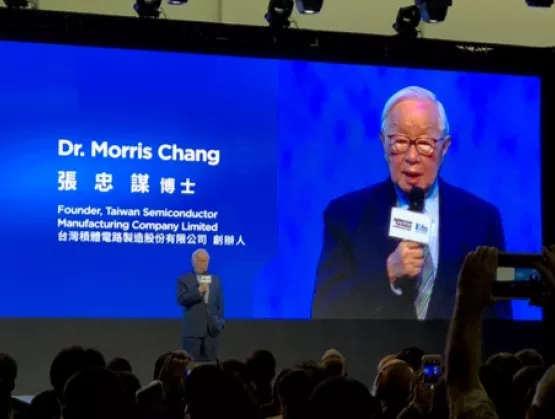
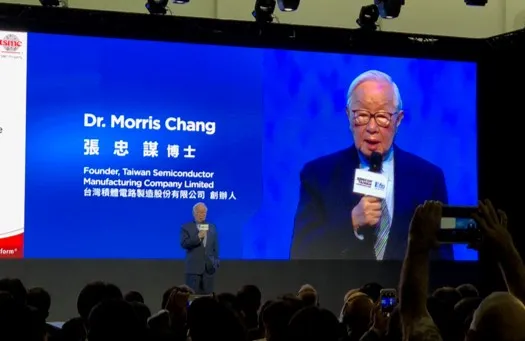
Over the past three decades, most of the world’s innovations have centered largely on business models and involved iterative advances of existing technologies, with none matching the global impact of the top 10 semiconductor industry discoveries and advances, Dr. Morris Chang, founder of TSMC and the IC foundry model, said at SEMICON Taiwan 2018 this week.Few have as clear a perspective on the transformative power of semiconductors as Dr. Chang, founder of TSMC and father of the IC foundry model. Keynoting the IC60 Master Forum celebrating the 60th anniversary of the invention of the integrated circuit (IC), Dr. Chang listed what he considers the 10 key semiconductor industry innovation milestones since 1948:1. Invention of the transistor by Shockley, Bardeen, and Brattain – 19482. Silicon transistor – 19543. Integrated circuit – 19584. Moore’s Law – 19655. MOS technology MOS FET – 1964 Silicon gate – 1967 CMOS – 1970 6. Memory DRAM – 1966 Flash – 1967 7. Outsourced assembly and test (OSAT) – 1960s8. Microprocessor – 19709. VLSI systems design – 1970-1980 IP and design tools – 1980-present 10. Foundry model – 1985 Among the most consequential semiconductor advances may be yet to come, Dr. Chang said, citing innovations including artificial intelligence (AI) and machine learning, new device architectures, Extreme Ultraviolet lithography (EUV), 2.5D/3D packaging, and new materials such as graphene and carbon nanotubes.Dr. Chang argued that because bringing an innovation into production is immensely more expensive than proving a theory in a lab, innovators are not always the ones to implement and benefit from their novel ideas. Today, innovation costs are skyrocketing, driving more consolidation across the supply chain.Michael Droeger is director of marketing at SEMI.
Read More