downloadGroupGroupnoun_press release_995423_000000 copyGroupnoun_Feed_96767_000000Group 19noun_pictures_1817522_000000Member company iconResource item iconStore item iconGroup 19Group 19noun_Photo_2085192_000000 Copynoun_presentation_2096081_000000Group 19Group Copy 7noun_webinar_692730_000000Path
Skip to main content
AI is redrawing the map of semiconductor innovation, challenging the industry to enable rapid advancements in high-performance computing. The next leap in computing will not come from a single breakthrough device but from how effectively the industry integrates logic, memory, photonics, packaging and software into complete systems, and ultimately, how quickly it can move those systems from lab to fab.Few organisations sit as close to this shift as imec. As one of the world’s leading research and innovation hubs in nanoelectronics and digital technologies, imec works with partners across the entire value chain, including materials and equipment suppliers, chip designers, foundries and system companies. Since April 2026, imec has been led by CEO Patrick Vandenameele, whose career spans senior industry roles at imec, research and deep-tech entrepreneurship. Ahead of his imec ITF Chip into the Future session on 10 November at SEMICON Europa 2026, taking place 10 to 13 November in Munich, SEMI Europe spoke with Vandenameele about the trends reshaping the industry, why collaboration matters more than ever, and the role Europe can play in global semiconductor competitiveness.What are the most significant technology and market trends shaping the semiconductor industry today?Vandenameele: The semiconductor industry is entering a new phase. For decades, progress was largely driven by scaling individual devices. Today, innovation increasingly happens at the system level, where advances in logic, memory, photonics, packaging, software and system architecture need to come together to deliver meaningful gains in performance, energy efficiency, and functionality. This shift is being accelerated by AI, which is creating unprecedented demand for computing power while raising the bar for sustainability and efficiency.At the same time, we are seeing growing opportunities at the intersection of different technology domains. Technologies such as chiplets, heterogeneous integration, silicon photonics, and advanced memory are becoming essential building blocks for future computing platforms. The challenge is no longer optimising individual components in isolation but orchestrating them into complete solutions that address real-world needs. To translate system-level breakthroughs into impact, the industry also needs a clear path from research and prototyping to scalable manufacturing, so that new technology platforms can be validated, industrialised and ultimately adopted in real-world products.Why is collaboration across the semiconductor ecosystem more important than ever?Vandenameele: The growing complexity of future systems is increasing the need for collaboration across the ecosystem. No single company, university, or country has all the expertise needed to address the challenges ahead. Future breakthroughs will depend on how effectively we combine knowledge and capabilities from across the value chain.This is particularly true in the age of AI. Developing the next generation of computing platforms requires close collaboration between material suppliers, equipment companies, chip designers, manufacturers, system companies, software developers, start-ups, and research organisations. CMOS 2.0 is a good example of this shift, requiring innovation and optimisation across the entire stack rather than within individual technology domains.The semiconductor industry has always been a highly interconnected ecosystem, but the need for collaboration is becoming even more important as technologies become increasingly heterogeneous and system-driven.What role does Europe play in strengthening global innovation and competitiveness in semiconductors?Vandenameele: Europe’s role is defined by its ability to connect complementary strengths across the semiconductor value chain. The region combines excellence in research, semiconductor equipment, manufacturing capabilities, chip design and system architecture, communications infrastructure, automotive technologies, and industrial systems. Together, these capabilities create an ecosystem where innovation can move efficiently from early-stage research to industrial deployment and societal impact. This must also include an environment in which deep-tech ventures can emerge from Europe’s research base, access advanced infrastructure and manufacturing pathways and scale into globally competitive companies.Europe’s opportunity is not to replicate what already exists elsewhere, but to build on its own strengths and connect them more effectively. That also means creating the conditions for a new generation of European innovators to emerge, scale and bring breakthrough technologies to the global market. Initiatives such as the NanoIC pilot line, which bridges semiconductor research and industrial deployment, demonstrate how Europe can bring together research organisations, industry and policymakers to accelerate innovation and strengthen competitiveness across the semiconductor ecosystem.What key message would you like attendees to take away from your imec ITF session at SEMICON Europa?Vandenameele: The future of computing will not be defined by a single breakthrough technology. It will be shaped by how effectively we integrate advances across the full stack, from devices and architectures to software and applications. The question is no longer how to build a better chip, but how to bring together multiple innovations into scalable solutions that address real-world needs, with a clear path from research and prototyping to manufacturing and industrial adoption.That shift requires a new level of collaboration across the ecosystem, and it is exactly what we want to explore at SEMICON Europa and ITF Chip into the Future session.Looking ahead, what opportunities and challenges do you see for the industry over the next five years?Vandenameele: The biggest opportunity lies in the transformative potential of AI and intelligent systems. We are only at the beginning of a technology cycle that will influence virtually every sector, from healthcare and mobility to telecommunications, manufacturing and scientific discovery. The semiconductor industry will play a central role in enabling these advances. Realising that potential will require breakthroughs that make AI systems more scalable and energy efficient. Technologies such as silicon photonics and CMOS 2.0 are helping address critical bottlenecks in performance, bandwidth and power consumption, paving the way for the next generation of computing platforms.At the same time, the challenges are significant. We need to continue improving performance while reducing energy consumption. We need to manage escalating system complexity. We need to ensure access to talent and strengthen pathways from research to industrial adoption. Start-ups can play a critical role in bringing disruptive semiconductor innovations to new markets, provided they have access to advanced infrastructure, deep-tech expertise, manufacturing capabilities and growth capital.Most importantly, we need to maintain the collaborative spirit that has driven innovation in our industry for decades.I am optimistic because the industry has repeatedly shown its ability to reinvent itself. The future will not be defined by a single technology, but by how effectively we bring together multiple innovations into scalable solutions that create value for industry and society.Closing ThoughtsVandenameele’s message is clear: the era of optimizing components in isolation is giving way to an era of system-level orchestration. Delivering on the promise of AI will depend on whether the industry can combine advances across the full stack, keep energy consumption in check, and build reliable pathways from research to industrial adoption. For Europe, the opportunity lies in connecting its complementary strengths to create the conditions for the next generation of deep-tech innovators to scale.These themes sit at the heart of SEMICON Europa 2026. Under the theme “Europe’s Next Era: Navigating the Perfect Storm,” the event brings together the full electronics manufacturing supply chain to explore how collaboration can turn technological complexity into competitive advantage.Join Patrick Vandenameele at the imec ITF Chip into the Future session at SEMICON Europa 2026, Tuesday, 10 November, Hall C1, Messe München.Patrick Vandenameele has served as Chief Executive Officer at imec since April 2026. He has played a pivotal part in shaping imec’s R D strategy and innovation agenda, ensuring the organisation’s research aligns with emerging market needs and technological developments. Patrick holds a PhD from KU Leuven and started his career at imec in 1996. In 2000, he transitioned to entrepreneurship, founding several deep-tech ventures, after which, he held senior positions at leading semiconductor companies, driving successful product launches and large-scale commercialisation. Upon returning to imec in 2017, he was instrumental in expanding imec’s venturing activities. Since 2022, he consecutively served as Chief Portfolio Officer and as Co-COO, spearheading strategic initiatives spanning business development, and portfolio management.Sitong He is communications manager at SEMI Europe.
Read More
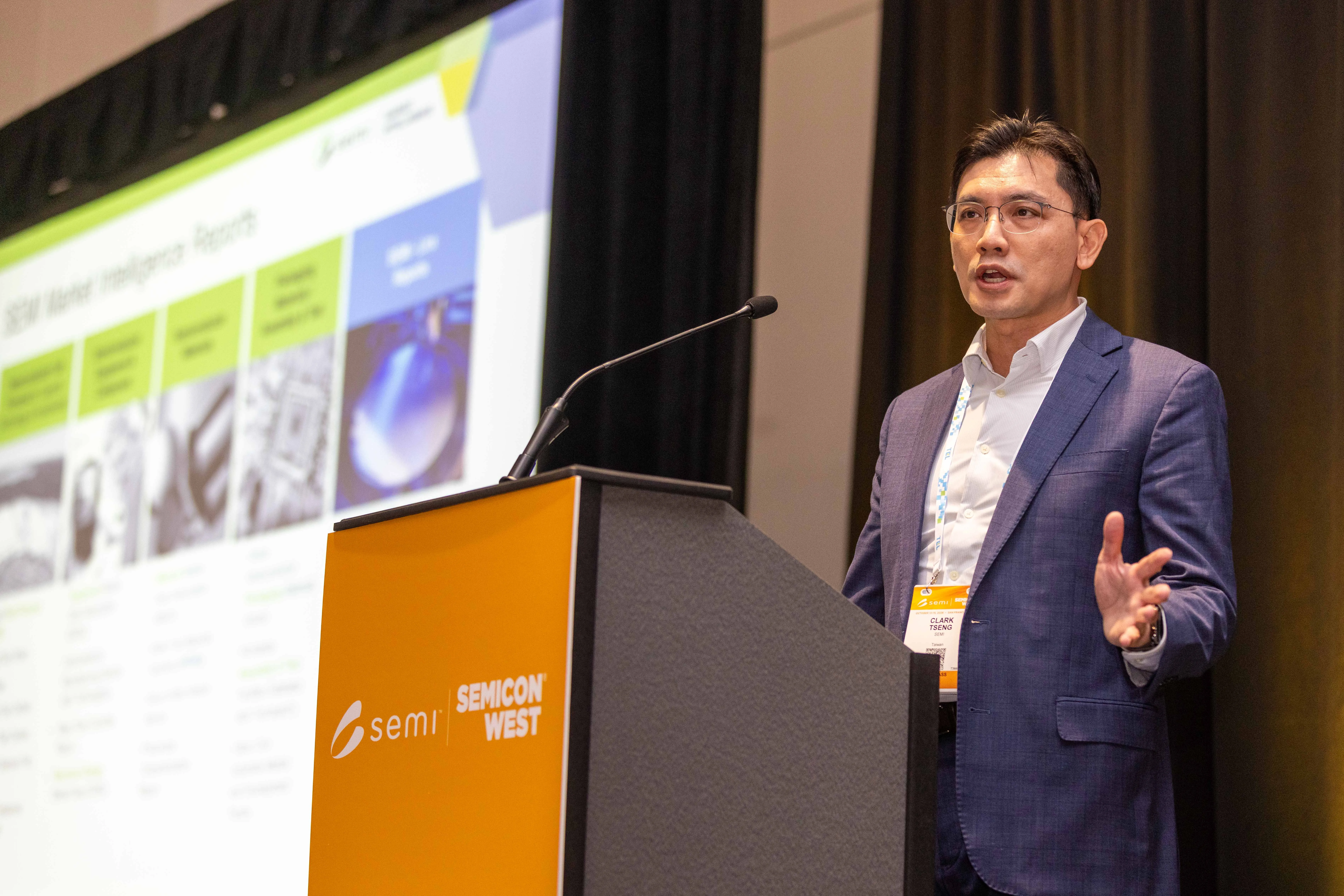
Held at the Moscone Center in San Francisco on October 12, SEMI’s annual Market Symposium kicked off SEMICON West 2026, setting the tone of the show for the week. The Market Symposium was hosted by Clark Tseng, senior director of SEMI Market Intelligence. The agenda focused on the pressing issues facing the semiconductor industry, enabling the leading analysts and strategists to gain insight into the drivers influencing the semiconductor industry and to guide the day-to-day decisions needed to grow their businesses. While the 2025 symposium focused on the geopolitical landscape, trade policy, and AI-driven investment, the 2026 talks centered on the influence that AI is having on the semiconductor industry, and how it will drive the industry and economics past the $1.5 trillion mark to $3 trillion in revenue over the next decade.This year’s topics covered how semiconductors are building the critical infrastructure of AI, and what to expect in the near future, from chip types to power consumption to how AI is influencing the global engineering and supply chain—and, of course, what types of revenue the industry might expect as AI continues to scale. Speakers and talk titles this year includedBill J. Wiseman – McKinsey Company “Beyond Moore’s Law to Win the Race for AI Inference”Duncan Meldrum – Hilltop Economics “Macroeconomic Cross Currents: Are Semiconductors Vulnerable?”Kunjan Sobhani – Bloomberg Intelligence“AI Demand in the Next Semiconductor Cycle: GPU, ASICS and Beyond”Jean-Christophe Eloy – Yole Group “Powering the Next Phase of AI: The Role of Next-Generation Chips in Driving Industry Transformation”Syed Alam – McKinsey Company “Building the Backbone of the AI Revolution: The Semiconductor Technologies Powering Next-Generation Data Centers”Joseph C. Fitzgerald – Boston Consulting Group (BCG)“Scaling Artificial Intelligence, Reshaping Supply: How AI Is Transforming Semiconductor Demand, Engineering, and Global Footprints”Clark Tseng – SEMI“AI Demand Meets Manufacturing Reality: Capacity, Equipment, and Supply Chain Outlook”Economic InfluencesAs the talk titles suggest, the semiconductor market is being driven by the economics of AI. Clark Tseng and Duncan Meldrum pointed out that AI capital spending is driven by the top four hyperscaler companies. It is estimated that they will spend $750 billion in 2026 on data centers. The total market will be somewhat higher, as was highlighted by Kunjan Sobhani, suggesting the total capex for data centers would be $1.2 trillion in the US by 2027. According to Meldrum, economic growth is facing two competing forces moving in opposite directions. Inflation is having a negative impact, and AI is having a positive impact. Meldrum's research on AI shows that it is steadily being adopted, but companies are not seeing measurable results they can talk about. He sees a strong continuing AI investment in the U.S., with the risks being changes in policy or disruptions by society as the buildout continues. This suggests that AI will continue its robust growth for at least the near future, with Sobhani predicting a $2.8 trillion total available market (TAM) in 2030, which also includes behind-the-grid power requirements. The Dynamics and Drivers of AI The speakers agreed that the industry is moving into the agentic AI era, with inference becoming the dominant driver of AI growth and models for the foreseeable future. Bill Wiseman believes that as AI moves into the agentic era, it will further reshape AI demand. Wiseman’s colleague Syed Alam pointed out that inference will account for 42% of AI demand in 2030. Strong token demand will drive chips, data centers, and power exponentially over the next several years, according to Wiseman, Alam, Sobhani, and Joseph Fitzgerald.This will place a tremendous strain on the industry as it struggles to keep pace with the demand. Fitzgerald pointed out that AI demand is exceeding supply by 60%. Wiseman stated that AI is growing exponentially while supply, or current processes, are growing linearly, and each of the speakers gave thoughts on ways to deal with the bottlenecks and cost. There is a consensus that the cost per token per joule needs to come down considerably. To achieve lower token cost, the speakers agreed that the industry needs to think differently. Alam suggested using six interconnecting dimensions that will drive a systems-level approach for the future of AI.By addressing each of these six dimensions as an interconnected system, the industry can address and reach solutions for the pressing issues challenging AI growth. Wiseman had slightly different ideas regarding the approach to meeting demand. Using a Peter Drucker quote—"The greatest danger in times of turbulence is not the turbulence; it is to act with yesterday’s logic”—Wiseman then summarized: AI is growing exponentially, and the supply chain is linear. The industry needs visionary thinking that is not business as usual but instead challenges the fundamentals of how integrated circuits currently work together to achieve the needed growth. Practical Use of AI and Supply Chain ShiftsFitzgerald dealt with some of the more practical aspects of how AI is transforming design. AI has demonstrated gains particularly in product design and design verification. The process moves from sequential to continuous, and engineers are used for final validation, where judgment is required. It is crucial to explore model and agent costs, as they are coming down and differ by model, and the cost savings can be significant.Fitzgerald also shared information on the supply chain, which is shifting due to tariffs, geopolitical concerns, and the host-nation environment. He concluded by noting that the supply chain will not reset; this means that supply chain leaders should continue to optimize for regional networks through 2030, and likely beyond. The integrated global supply chain will not return. Regional hubs are replacing it, and winners will pick a clear position, commit early, and execute with disciplineNow, down to why the symposium is a must-attend event: the industry outlook. The AI and Semiconductor OutlookIt's no secret AI is driving the semiconductor industry to new heights. How the industry thinks about forecasting is changing to gigawatts (GW) and tokens per joule. The rapid increase in AI activity and models, along with the rising average selling prices (ASP) of DRAM and accelerators, has made forecasting a moving target, according to Jean-Christophe Eloy. In 2031, the AI market is estimated to be demanding between 245-300 GW of power, according to Fitzgerald and Alam. The high side will see an accelerated market; the low side of 245 GW will be constrained by power and memory supply. AI inference is expected to be the key growth driver, with inference accounting for 70% of AI in 2025, growing to 90% of AI compute in 2040, according to Wiesman. This will drive a $2.8 trillion data center TAM, which does not include China, according to Sobhani. He also reported that the accelerator market, which includes GPUs and high-bandwidth memory (HBM), will grow from $400 billion in 2026 to $1.4 trillion in 2030. GPUs and ASICs will expand together in this market. Eloy is in close agreement, citing $464 billion in data center processor revenue in 2026, which includes GPUs, CPUs, networking, and ASICs. This expands to $1,631 billion in 2030.Total semiconductor chip revenue in 2026 is forecast to be $1.5 trillion by SEMI and $1.7 trillion by Yole. As mentioned earlier, these are revisions from Q2, and the increases are driven by the rapidly growing ASP of DRAM, as well as accelerators. The market for 2030 is forecast to be $2.3 trillion by SEMI; Yole’s prediction is $3.5 trillion. While the bulk of the growth is attributed to accelerators and HBM, according to Yole, power semiconductors are expected to see significant growth—from $15,000 per AI rack to $100,000 by 2030. To drive this growth in semiconductors, SEMI forecasts that 300mm equipment spending will grow from $149 billion in 2026 to $227 billion in 2029, thanks to double-digit growth each year over the time period. The global wafer fab equipment market will rise from $117 billion in 2025 to $220 billion in 2028. Foundry/logic remains the largest segment, increasing from $65.6 billion to $116 billion as AI/HPC and advanced-node ramps continue. DRAM investment expands strongly, reaching $63 billion by 2028, supported by HBM and advanced-node migration and capacity expansion. The growth in AI is also driving packaging and assembly to new heights. Growing from $6.1 billion to 10 billion in $2028. Materials are expected to grow in 2026 and 2027 by 12.85 and 11.4%, reaching $92 billion in 2028. Wrap-upThe SEMI Market Symposium laid out the industry journey that AI is piloting. While there are discussions of a bubble, the information shared suggests strong growth for the semiconductor industry through 2030, with semiconductor revenue potentially surpassing the $3 trillion mark by then. Equipment and material revenues will keep pace, albeit at a slightly slower growth rate due to market dynamics. SEMI would like to thank Market Symposium speakers and attendees for their participation at the SEMICON West 2026. For additional market insights, explore the latest SEMI Market Intelligence reports, covering historical reporting, actionable foresight into emerging trends, and technology investments to make confident, forward-looking decisions across the semiconductor and microelectronics value chain.Please join us in Phoenix on March 29 for the SEMI Market Symposium at SEMICON West 2027. Dean Freeman is Technology Advisor at Bodewell Group.
Read More
Global silicon wafer shipments are forecast to grow 11.8% in 2026, according to the Q3 2026 SEMI Silicon Wafer Market Monitor. This increase is primarily due to strong demand for AI, which is projected to drive shipments through 2029. Alongside AI, rising process material sales are also supporting recovery. The positive correlation between material sales and silicon wafer demand not only reflects growth in manufacturing complexity, but it also points to greater material consumption per wafer. Finally, increases in memory demand, precautionary inventory building, and global fab capacity expansions are boosting silicon wafer shipments as well. To better understand today’s landscape, it’s helpful to revisit past silicon wafer demand curves. From 2018 to 2019 and from 2022 to 2023, silicon wafer shipments rose ahead of major increases in memory work-in-process (WIP) inventories, or unfinished memory chips undergoing fabrication. However, shipments lagged at the same time WIP inventory peaked. Because fabrication lines were already producing at full capacity, their need for silicon wafers slowed. While this pattern provides historical context for today’s demand recovery, the high number of new and upcoming production lines is a unique factor influencing this particular cycle. Silicon Wafer Shipments and Memory WIP: Historical Lead–Lag Pattern. Both series use four-quarter moving averages. Sources: SEMI SMG and financial disclosures from Samsung Electronics, SK hynix, and Micron. Data for 3Q26–2Q27 are forecasts. Fab Investments Support Wafer DemandSEMI’s fab investment outlook predicts continued growth in planned equipment spending beyond 2026. So long as investment plans remain broadly on track, ongoing equipment installation and capacity ramps are likely to support silicon wafer demand. The report also demonstrated a widening gap between YoY growth rates for semiconductor fab equipment spending and silicon wafer manufacturing equipment spending, suggesting that investment support for wafer demand may persist longer than initially expected. This also helps explain why the historical relationship between wafer shipments and WIP does not necessarily imply an imminent slowdown. Wafer procurement momentum can moderate before WIP inventories peak, although investment support may slow if moderation becomes visible in wafer shipments.Investment Spread: A Signal of a Later Wafer-Cycle Slowdown. Spread between the YoY growth rates of semiconductor fab equipment spending and silicon wafer manufacturers' equipment spending, compared with silicon wafer shipment trends. Sources: SEMI Silicon Wafer Shipment Statistics and SEMI WWSEMS. Shipment data are updated through 2Q26, while equipment spending data are updated through August 2026. The Next Test is Inventory AbsorptionSEMI projects continued wafer shipment growth in 2027, although growth will likely be more moderate than it was in 2026. As inventory stockpiles subside, ongoing production will be important for sustaining demand. If planned capacity expansions continue and customers buy the resulting chips, semiconductor companies can gradually reduce their wafer inventories while also maintaining their purchase rate. However, investment delays or weaker demand for semiconductors would slow this absorption and increase the risk of declining silicon wafer orders.While AI-related investment is a critical source of support, broader semiconductor recovery is still uneven. Because of this, the key to maintaining demand growth will be how quickly fabs can use wafers purchased in advance. Doing so will help shape the duration of this recovery period and the depth of any subsequent wafer inventory adjustments.The Q3 2026 SEMI Silicon Wafer Market Monitor provides a deeper analysis of these dynamics. Its Market Update section offers insights from eight analysts and a scenario table that examines how inventory rebuilding, forward procurement, and fab investment may shape the wafer cycle through 2029. The full report package also includes a comprehensive market presentation and supporting Excel chart data.Additional details on the Q3 2026 SEMI Silicon Wafer Market Monitor and purchasing information are available at: www.semi.org/en/products-services/market-data/si-wafer-monitor. Sungho Yoon is a Principal Analyst on the SEMI Market Intelligence team.
Read More
The excitement was apparent leading up to the SEMI Foundation’s micro-credential development meeting at GateWay Community College in Phoenix. In preparation, we met with several industry leaders to determine which skills they believed were most essential for their entry-level workforce. In addition, we invested in a job task analysis and a field test for our Equipment Maintenance Technician certification.We felt ready for just about anything, until the massive 5 a.m. thunderstorm hit in the middle of the desert. That was something we hadn’t planned for. We thought about our carefully scripted agenda for the next three days. Would educational institutions and companies openly discuss their struggles with curriculum, hiring, and retention? Also, would they really share their industry knowledge, best practices, and internal training documents with us? Through our experience, we know that educators and private sector leaders sometimes speak different languages. Could we bridge that divide and reach an agreement on a pathway that ultimately leads to rewarding careers in semiconductors? Even more fundamentally, could we come together for the good of the industry? We couldn’t help but wonder: would lightning really strike twice in the desert?A Better Way to Evaluate TalentWeather notwithstanding, we could immediately tell this wouldn’t be just another meeting. For starters, the cross-sector engagement was incredible. The meeting convened industry leaders from Advantest, Amkor, EMD, FM Industries, Intel, and TSMC, along with workforce development and training experts, college educators, and SEMI Foundation employees.Guiding the process was Dr. Tina Koepf from the National Occupational Competency Testing Institute (NOCTI), the leading provider of industry credentials and technical education resources across the United States. Dr. Koepf is a psychometrician with expertise in manufacturing credentials and a doctoral dissertation on high-quality assessments.For many of the organizations represented, this was their first exposure to the relatively new concept of micro-credentials. Ultimately, the goal of micro-credentials is to help verify an individual’s knowledge and skill level in specific disciplines that have practical, real-world relevance.To best understand the role of micro-credentials, imagine being a hiring manager trying to choose an entry-level maintenance technician. You’d likely review a series of resumes and hold interviews with candidates that seem promising on paper. But right off the bat, you’re at a disadvantage. You might see a transcript for a mechatronics program, but that person went to a school you’ve never heard of. Another candidate might not have much academic preparation but appears to have related experience in auto mechanics. A third might have military training and experience. It’ll quickly become apparent that conventional hiring evaluations can only go so far to answer what you really want to know: Which candidate is most prepared to be a productive team member from the start? It’s also important to understand which candidate has the biggest inclination to learn, grow, and succeed.This is where relevant credentials come in. When credentialing programs are created through industry-wide collaboration, they’re better positioned to offer the knowledge and skills needed for today’s jobs, including process and maintenance technicians, supervisors, and engineers.Credentials take various forms, with certificates being the most common. Certificates show that an individual has completed a course or program; however, they don’t necessarily communicate what was learned and to what level of mastery. From there, certifications add another level of verification. Unlike certificates, certifications are based on a standardized assessment of a core body of knowledge. The highest-quality certifications are industry-recognized and third-party validated. In the case of SEMI CredentialingTM, that third party is NOCTI. Like certifications, micro-credentials still involve rigorous exams set to industry standards, but as the name implies, they’re smaller and focused on specific areas of knowledge and readiness. SEMI’s micro-credentials complement SEMI Certifications and provide another way for job seekers to demonstrate readiness for semiconductor careers. Based on a survey of semiconductor manufacturers and interviews with HR professionals, training leaders, and subject matter experts, we prioritized four areas of learning for our new and upcoming micro-credentials. These areas include:Cleanroom Operations and Safety Fab Maintenance, Tools, and MetrologyVacuum Technology Gas and Chemical Distribution SystemsSubject matter experts from industry and academia came together to develop SEMI micro-credentials.Micro-Credential Development ProcessOn the day of our meeting, we leveraged the subject matter expertise in the room to build lists of key competencies, prioritize the most important areas for assessment, and write test questions for each of the four micro-credentials. Everyone was amazed at the progress made in just three days.For Ron Mueller, an engineer at FM Industries and 41-year industry veteran, the workshop exceeded his expectations. “The collaborative discussions and real-world examples presented in the meeting helped me better understand how micro-credentials can be applied across different technical roles and career pathways while supporting the labor force needed,” he said. Kate MacArevey-Colello, an engineering instructor based in California, saw equal benefit from her vantage point in higher education. She explained, “I was really impressed at the coordination of the process and the high level of constructive collaboration among the participants. Micro-credentials can help industry by creating clearer pathways into technical careers. For MiraCosta Technology Career Institute, I see micro-credentials as a way to strengthen connections between our programs and a broader range of employers. Micro-credentials can also give students new ways to demonstrate the skills they've developed and help convince employers at semiconductor-related companies that they are good employment prospects.”GateWay Community College is building a Future48 Workforce Accelerator in Central Phoenix to provide hands-on training in semiconductors. Set to open in 2027, it will be a new resource for Arizona fabs.Representatives from FM Industries, GateWay Community College, Advantest, Intel, TSMC, NOCTI, MiraCosta TCI, Amkor (not pictured), and EMD (not pictured) provided technical expertise to develop credentials of value.What Comes Next?The SEMI Foundation’s micro-credentials are in the final phases of development. Two of the micro-credentials debuted at SEMICON West, along with the highly anticipated Equipment Maintenance Technician certification. Want to get involved? Job seekers can complete this form to learn more about the Equipment Maintenance Technician certification and SEMI Foundation micro-credentials.Colleges and training centers can apply to become testing sites for the Equipment Maintenance Technician certification.Employers can provide technical subject matter expertise to our two upcoming micro-credentials: Vacuum Technology and Gas and Chemical Distribution Systems.Brent Weil is a workforce development consultant and president of Strategic Workforce Partners. Anissa Hamdon-Morison manages curriculum development and training initiatives at the SEMI Foundation.
Read More
For decades, the MEMS and sensors industry competed on specifications: smaller, cheaper, more accurate. That race is not over, but it is no longer the whole game. Industry leaders explained the shift during the 2026 MEMS Sensors Technical Congress (MSTC) at SEMI headquarters in Milpitas, California, and here are seven themes that are transforming the industry.1. Sensors Become the Context Layer for AIAI is only as useful as its picture of the physical world. The winning sensor platforms will turn raw signals into context about a user, a device and an environment, all without burning through power. Qualcomm's Ana Londergan described a sub-milliwatt, always-on sensing hub that fuses data without waking the CPU, GPU or NPU, making proactive personal AI possible within tight power, latency and privacy limits. Realistic training data matters too: S. Siddharth of STMicroelectronics showed a Sim2Real IMU model that adds real-world noise and drift to simulation data, reaching more than 97% correlation with physical sensors. The advantage is shifting from capturing signals to interpreting them.2. Physical AI Is the Next Growth EngineHumanoid robots turn sensing into a volume story. Uma Krishnamoorthy of TDK InvenSense noted that a single humanoid may carry more than 100 sensors and pointed to a potential market approaching 400 million sensors a year by about 2035. The obstacles are just as clear: reliability, standards, cybersecurity, functional safety and public trust. Whoever solves them alongside the hardware will define the category.3. Touch Is the Hardest FrontierRobots can see far better than they can feel. Sondra Hellstrom of Bosch Sensortec explained that reliable manipulation depends on grip force, slip and shear, and a capable robotic hand may need 80 to 200 pressure sensors. Soft gripping materials drift and wear, and touch data is much harder to simulate or transfer than vision data. Synchronized multimodal sensing, accurate error models and self-calibration will become real differentiators.4. MEMS Is Expanding Beyond SensingAI creates physical problems, and MEMS is well placed to solve them. Curtis Ray of Omnitron Sensors showed MEMS micromirrors forming reconfigurable optical paths in AI data centers, a market expected to exceed $8 billion by 2030. Vincent Destefanis of CEA-Leti presented a photonics demonstrator with 12 to 18 nanoseconds of latency. At the edge, Kevin Hughes of xMEMS tackled heat, with a piezoMEMS microcooler that lowered AI-glasses case temperature by about 13°C. Optical routing, cooling and control are all open territory.5. Trust Comes From Co-Designing Hardware and AnalyticsAlgorithms cannot rescue weak measurements. Radislav Potyrailo of GE Vernova described gas sensing that pairs multi-response transducers, controlled excitation, ASIC readout and edge analytics, delivering 20 to 100 times greater sensitivity than conventional resistance measurement. Hossain Fahad of Serinus Labs showed a chemical-sensitive transistor that detects trace hydrogen from early lithium-ion battery failure, giving more than 20 minutes of extra warning over a thermal-conductivity sensor. The best intelligent systems start with hardware designed to expose useful physical information.6. BioMEMS Borrows Semiconductor DisciplineBiology increasingly depends on dimensions that wafer-scale manufacturing already controls. Bryan Rice of Exokeryx presented a chip that isolates extracellular vesicles using electrically controlled capture and release, with no labels needed. A 20-nanometer change in hydrogel thickness could drop recovery to the noise floor, so process control, down to roughly one-nanometer metrology, becomes part of the product. Jochen Hoffman of Bosch Research applied the same logic to point-of-care diagnostics: miniaturization, automation and repeatability.7. The Dataset May Be the New MoatSensors create data, data improves algorithms, and deployed algorithms generate more data. Shasha Jumbe of Level 42 AI presented the Vibrome, which separates cardiac, respiratory and other signals from skin vibrations; tuberculosis validation across 2,583 participants in five countries reported an externally validated AUC of 0.926. Manny Singh of SensTek Diagnostics described a reusable reader with disposable cartridges, growing from hardware into recurring revenue, licensing and data. Companies that own this loop may capture more value than component suppliers alone.The Bottom LineIndividual sensor performance remains essential, but it is no longer enough. Winning products will combine differentiated transduction with sensor fusion, contextual intelligence, simulation, self-calibration, functional safety, advanced packaging and scalable manufacturing.That points to real collaboration opportunities for the SEMI MEMS Sensors Industry Group (MSIG) community: multimodal sensor modules, tactile sensing and training data, calibration and diagnostics, safety frameworks, and the path from prototype to high-volume production.The industry is moving from building sensors that measure the world to building intelligent systems that understand it and act on that understanding.
Read More
Artificial intelligence (AI) and high-performance computing (HPC) are driving unprecedented demand for data movement. As bandwidth requirements climb and conventional electrical interconnects encounter limitations in power consumption, latency and reach, silicon photonics, near-packaged optics (NPO), and co-packaged optics (CPO) are becoming increasingly important technologies for next-generation data centers.Much of the industry’s attention has focused on photonic device innovation. But demonstrating a high-performance photonic integrated circuit (PIC) is only part of the challenge. Turning these devices into products that can be manufactured reliably and economically at high volume requires a test infrastructure that can keep pace.This represents a significant shift. Semiconductor manufacturing has benefited from decades of refinement in automated electrical test. Silicon photonics adds an optical dimension that brings new requirements for fiber alignment, coupling efficiency, polarization management, and optical instrumentation—while still requiring conventional electrical characterization.As silicon photonics moves from development environments toward high-volume production, test becomes more than a quality gate. It is an integral part of the manufacturing strategy.An HVM-ready test solution requires a full complement of supporting hardware and software.Bringing precision optical alignment to productionOne of the most fundamental challenges is establishing a reliable optical connection to the device under test. Unlike electrical probing, where physical contact provides a relatively straightforward interface, optical testing depends on precisely coupling light into and out of very small structures.That coupling must be repeatable from device to device and wafer to wafer. Even small variations in fiber position or angle can affect insertion loss and measured optical performance, potentially making it difficult to distinguish actual device variation from variation introduced by the test setup.For this reason, high-volume testing requires automated alignment capabilities that can quickly locate the optical interface and optimize coupling. This can involve visual or image-based positioning to bring a fiber array unit close to the grating couplers, followed by area scans and gradient-search techniques to identify the optimal position via feedback loops – a technique typically referred to as “active alignment.” The process may also require optimization across six degrees of freedom—X, Y, and Z positioning plus three rotational axes—to maximize coupling efficiency and minimize channel-to-channel variation.The problem becomes more complex as optical interfaces add channels. Alignment must not simply maximize one channel's performance; it must produce consistent coupling across multiple channels. Rotational alignment, for example, can influence how evenly an optical beam overlaps multiple grating couplers. Other angular adjustments can affect both insertion loss and center wavelength.Polarization presents another variable. Because photonic structures can respond differently depending on the polarization state of incoming light, polarization must be characterized and controlled as part of a repeatable production methodology. Together, these requirements make alignment an active measurement and optimization process rather than a simple mechanical positioning step. The manufacturing challenge is to automate these functions without allowing alignment time to become a throughput bottleneck.Combining electrical and optical test without sacrificing throughputAlignment is only one part of the equation. A PIC may incorporate photodetectors, modulators, and other components requiring combinations of optical and electrical measurements. Typical characterization can include insertion loss, channel-to-channel uniformity, optical attenuation, photodetector responsivity, and wavelength-dependent behavior.Performing these measurements sequentially can add substantial test time. A more scalable approach is to integrate electrical and optical capabilities so that operations can occur concurrently wherever possible. For example, electrical alignment can occur before optical alignment, while continuity and other electrical tests may run during automated optical probe alignment rather than waiting for that process to finish. This type of parallelism becomes increasingly important as device complexity and test coverage grow.The same principle applies to optical instrumentation. Rather than treating each instrument as an isolated resource, high-volume environments benefit from integrated control of lasers, power meters, and other optical equipment, enabling parallel operation of multiple instruments or channels. Automated calibration and compensation are also important for maintaining measurement consistency as the test cell becomes more complex. Advantest’s development work in this area supports multiple optical instruments and parallel power-meter operation within a common test environment.The broader objective is familiar from semiconductor test: maximize useful test coverage while minimizing test cost. What changes with silicon photonics is the number of physical and measurement domains that must be coordinated to achieve it.Collaboration will be essential to ecosystem scalingNo single supplier controls all of the elements required for high-volume PIC test. The complete solution can span automated test equipment, wafer probing, optical positioning, fiber interfaces, optical instrumentation, device design, and manufacturing processes.That makes ecosystem collaboration particularly important. Test equipment providers need to work with probe and positioning specialists, photonic device developers, foundries, and manufacturers so the interfaces among these technologies function as an integrated production system rather than individual laboratory instruments.As an example, Advantest has collaborated closely with FormFactor to develop a wafer-level photonics test environment that combines electrical test instrumentation with wafer handling, optical instruments, and automated fiber alignment capabilities. The significance lies less in individual components than in the integration required to create a repeatable manufacturing workflow.As silicon photonics, NPO and CPO move toward broader adoption, these collaborative efforts will become increasingly important. The industry must develop practical test methodologies that accommodate evolving device architectures while delivering the repeatability, throughput, and economics expected of semiconductor manufacturing.Numerous photonics developments on the horizon will require broad industry effort to bring to fruition.The transition from promising photonic technology to high-volume commercial products will depend on more than advances in the devices themselves. Test must evolve alongside them. By treating optical alignment, electrical and optical measurement, automation, and ecosystem interoperability as parts of a single manufacturing challenge, the industry can build the infrastructure needed to bring silicon photonics fully into the era of high-volume production. About the AuthorDr. Clemens Leichtle is Senior Director and V93000 Photonic Business Lead for Advantest Corp. He has more than 25 years of experience in the semiconductor industry, with companies including Siemens, Agilent and Verigy, specializing in testing and developing respective application solutions for emerging technologies. For more than 15 years, he has been leading the V93000 Center of Expertise at Advantest; more recently, he co-led test solution development for silicon photonics and co-packaged optics targeting data center applications. Dr. Leichtle holds a Ph.D. in physics from the University of Ulm, Germany.
Read More
As Taiwan’s semiconductor, high-tech, artificial intelligence, and export-oriented sectors continue to grow, renewable energy has evolved from an ESG option into an increasingly important consideration for supply-chain competitiveness, decarbonization commitments, and long-term business planning.Surplus Renewable Energy Does Not Mean “Too Much Renewable Energy”One distinction is essential when discussing Surplus Renewable Energy (Surplus RE): its existence does not mean that Taiwan has too much renewable energy, nor does it indicate system-wide market oversupply.Recent RE100 observations continue to identify high costs and limited supply as key barriers to corporate renewable energy procurement, indicating that corporate demand remains clear while both supply and procurement pathways still have room to expand. Data presented by Taiwan’s Executive Yuan Office of Energy and Carbon Reduction at the September 4 Energy Collaborative Forum likewise showed that renewable electricity generation increased from 4.8% of Taiwan’s power mix in 2016 to approximately 13.1% in 2025, underscoring the growing role of renewables in the electricity system.Two distinct phenomena are at work: Taiwan’s overall market still needs more renewable energy, while individual companies may experience unmatched electricity as long-term procurement expands. The first concerns whether Taiwan’s renewable energy supply is sufficient to meet corporate demand. The second arises when contracted generation profiles and procurement volumes do not align with a company’s electricity load within the applicable time periods.In this article, Surplus RE refers to renewable electricity that has already been procured but cannot be wheeled as originally intended because generation and consumption do not align within the applicable time parameters. Its occurrence and scale vary according to corporate load profiles, procurement volumes, energy mix, and project commercial-operation schedules. It does not mean that all companies currently face a Surplus RE issue. Rather, it reflects a market-matching and institutional-design challenge that becomes increasingly relevant as corporate renewable energy procurement expands—not an oversupply of renewable energy across Taiwan.Taiwan has also recently made concrete institutional progress in corporate renewable energy matching and Surplus RE treatment, including greater flexibility in wheeling allocation and continued policy work on the treatment of unmatched electricity and its associated environmental attributes. These developments are more than technical refinements: they increasingly respond to practical considerations in long-term corporate procurement, project investment and financing, and the continued development of Taiwan’s renewable energy market.Rigorous Matching and Certificate Rules Are an Important Foundation of Taiwan’s Renewable Energy MarketTaiwan applies a relatively rigorous framework to corporate renewable energy wheeling and recognition. Under the current arrangement, generation and consumption are matched primarily using 15-minute metering data. Once renewable electricity is successfully wheeled, Taiwan Renewable Energy Certificates (T-RECs) are issued based on the actual wheeled volume. This closely links certificate issuance to electricity delivery, strengthening the traceability of environmental attributes, the connection between generation and consumption, and the credibility of corporate renewable energy claims.This differs from some international markets, where certificates are generally issued against eligible renewable electricity generation and may subsequently be traded separately from the physical electricity. In the U.S., Renewable Energy Certificates (RECs) are created when renewable electricity is generated and delivered to the grid, while in the U.K., one Renewable Energy Guarantee of Origin (REGO) is issued for each 1 MWh of eligible generation. Taiwan, by comparison, more directly links certificate eligibility to actual wheeling outcomes. Time matching therefore affects both whether electricity can be wheeled as intended and whether the corresponding environmental attributes can be obtained and recognized.Where contracted renewable electricity cannot be matched as intended because of differences between generation and load, the unmatched volume does not, under the existing treatment, receive the corresponding certificates in the same manner as successfully wheeled electricity. The matching and certificate framework itself does not cause Surplus RE; rather, it turns underlying timing differences between generation and consumption into practical market issues involving certificate access, cost allocation, and commercial arrangements.Recent RE100 data provide another useful perspective. While the share of recognized renewable electricity among RE100 members in Taiwan still has room to grow, the gap between reported and ultimately recognized renewable electricity remains relatively limited. This suggests that a substantial share of reported corporate renewable energy procurement meets the applicable recognition requirements.The next stage for Taiwan is therefore not to lower existing standards for recognition or environmental integrity, but to increase flexibility in how companies allocate and use renewable energy while preserving credibility and traceability — allowing market efficiency and environmental integrity to advance together.The Nature of Renewable Electricity Makes Perfect Matching DifficultSurplus RE is closely related to both renewable electricity generation characteristics and corporate consumption patterns. Solar has a distinct daytime generation profile, wind output varies with wind conditions, and hydropower has its own supply characteristics. At the same time, different companies, facilities, and manufacturing processes have different electricity-load profiles.Companies can combine wind, solar, hydropower, and projects across different locations to improve the match between renewable electricity supply and their own load. Even so, generation and consumption profiles are unlikely to align perfectly at all times. Where contracted renewable electricity exceeds the company’s matchable load during a particular period, part of that electricity may be unable to complete the originally intended wheeling arrangement and become Surplus RE.The actual scale of Surplus RE depends on the volume of renewable energy procurement relative to the company’s load, its energy mix, project generation profiles, and project commercial-operation schedules. Where current procurement volumes can still be fully absorbed by the company’s own load, Surplus RE may remain limited. As long-term procurement volumes increase or medium- and large-scale renewable energy projects progressively reach commercial operation, time-matching issues may become more material.Surplus RE is therefore not a fixed percentage faced by all companies at the same time. It is a market-design issue that becomes increasingly relevant as corporate procurement and new renewable energy supply expand.When Take-or-Pay Meets Time MatchingFor corporate buyers, Surplus RE is more than a technical settlement issue. It is closely tied to the commercial structure of corporate power purchase agreements and the financing of renewable energy projects. Medium- and large-scale CPPAs are typically long-term contracts and may include take-or-pay provisions. These commitments improve revenue predictability for developers and are an important factor in financial institutions’ assessment of project cash flows and bankability.Under a take-or-pay structure, however, a company may still be contractually required to pay even if part of the renewable electricity cannot be wheeled as intended because of time-matching constraints. Under the original framework, the unmatched portion was also unable to receive the same certificate and environmental-attribute recognition as successfully wheeled electricity. As procurement volumes increase, corporate buyers therefore need to consider not only how much renewable energy they contract, but also how much electricity can actually be wheeled and utilized, and how any unmatched portion will be treated.To avoid conflating statutory renewable energy obligations with voluntary corporate procurement, the following simplified scenario illustrates the potential commercial scale of unmatched electricity under a long-term CPPA. The assumptions are illustrative only and do not represent average procurement volumes, an average Surplus RE ratio, or a forecast for the Taiwan market.Assume that a company enters into a CPPA for 50 GWh per year to support its renewable energy and supply-chain objectives. At an illustrative energy price of NT$6 per kWh, the annual notional purchase value would be approximately NT$300 million. If, after load management, portfolio diversification, and cross-facility allocation, 20% remains unmatched, approximately 10 GWh per year would fail to complete the intended wheeling arrangement, corresponding to a notional purchase value of approximately NT$60 million per year.This article uses 25 years as an illustrative contract term, reflecting the midpoint of approximately 20- to 30-year CPPA terms already seen in Taiwan’s large-scale offshore wind market. This does not imply that all CPPAs use the same tenor. Assuming price, generation volume, and the unmatched share remain constant, and excluding discounting, price adjustments, and other contractual terms, the cumulative notional value associated with the unmatched portion would be approximately NT$1.5 billion over 25 years.Table: Illustrative Long-Term Corporate CPPA Scenario:ItemAssumption / FormulaResultAnnual CPPA procurement volumeIllustrative assumption50 GWh/yearCPPA energy purchase priceIllustrative assumptionNT$6/kWhAnnual notional contracted purchase value50,000,000 kWh × NT$6/kWhApprox. NT$300 million/yearIllustrative unmatched shareIllustrative assumption20%Annual unmatched electricity volume50 GWh × 20%10 GWh/yearNotional value associated with unmatched volume10,000,000 kWh × NT$6/kWhApprox. NT$60 million/yearIllustrative CPPA termMidpoint of 20–30 year long-term offtake arrangements25 yearsCumulative notional value of unmatched portionNT$60 million × 25 yearsApprox. NT$1.5 billionNote: The 20% unmatched share is an illustrative assumption informed by scenarios reflected in industry discussions. It does not represent the average Surplus RE ratio among Taiwan companies or a future market forecast. The 25-year term is based on the midpoint of approximately 20- to 30-year long-term CPPAs already seen in Taiwan’s large-scale offshore wind market and does not represent a standard market tenor. Actual outcomes will vary according to corporate load profiles, procurement volumes, energy mix, project generation characteristics, contractual terms, and commercial-operation timing. NT$6 per kWh is likewise an illustrative energy purchase price and does not represent the full cost of corporate renewable energy procurement.This calculation should not be read as treating unmatched electricity as a direct “market loss.” Its purpose is to show how Surplus RE treatment can affect long-term procurement decisions. Where treatment mechanisms, environmental attributes, and related costs lack sufficient predictability, companies may reflect those risks in procurement volumes, pricing, or contractual terms.These decisions can in turn affect developers’ offtake arrangements and revenue predictability, with implications for project investment and financing. The significance of Surplus RE therefore lies not only in reducing unmatched volumes, but also in improving predictability for long-term procurement and financing, supporting continued growth in corporate renewable energy procurement and new supply.Public-Private Collaboration Is Gradually Improving Market DesignSurplus RE intersects with corporate procurement contracts, renewable energy certificates, project finance, transmission and distribution costs, and power-system operations. It is therefore a cross-institutional, multi-stakeholder market-design issue that cannot be addressed by any single mechanism or participant.The public-private collaboration approach recently articulated by Taiwan’s Executive Yuan Office of Energy and Carbon Reduction is consistent with this need. Relevant government agencies, Taiwan Power Company, and industry participants have held multiple rounds of discussion on flexible allocation, Surplus RE certificates, cross-time treatment of unmatched electricity, and tariffs, bringing policy objectives, corporate needs, commercial conditions, and power-system constraints into a common framework.The SEMI Energy Collaborative has also contributed through member input and policy dialogue, bringing corporate procurement practices, project commercial conditions, and market experience into policy discussions. This helps stakeholders examine practical issues together and identify arrangements that balance market efficiency, investment viability, environmental integrity, and system stability.Monthly Matching Within the Same Time-of-Use Period Is an Important StepOn September 3, 2026, Taiwan Power Company revised the Flexible Allocation Pilot Program for the Renewable Energy Market and its related operating rules. Under the existing pilot framework, the revision introduced monthly matching by time-of-use period and extended the pilot through September 30, 2028. This represents a further step in improving matching and allocation flexibility in Taiwan’s corporate renewable energy market. The revised mechanism continues to use the original 15-minute metering data as its underlying basis, aggregating generation and consumption into four time-of-use periods—peak, semi-peak, off-peak, and Saturday semi-peak—before conducting wheeling-volume matching and flexible allocation within the same month and the same time-of-use period.Table: Key Adjustments to the Flexible Allocation Mechanism for Renewable EnergyAspectPrevious FrameworkDirection After the AdjustmentUnderlying metering data15-minute generation and consumption dataStill based on 15-minute dataMatching approachMatching based on the existing time-based rulesMonthly matching within the same month and the same time-of-use periodTime-of-use periods—Peak, semi-peak, off-peak, and Saturday semi-peakAllocation modelsExisting wheeling arrangementSingle legal-entity allocation; electricity retailer allocationMain objectiveMaintain traceability and recognition qualityImprove matching and allocation flexibility while preserving traceabilityPilot periodExisting pilot frameworkExtended through September 30, 2028Note: The adjustment does not eliminate 15-minute metering. Rather, it builds on the existing metering basis by introducing monthly matching and flexible allocation within the same time-of-use period.The program retains two allocation models: “single legal-entity allocation” and “electricity retailer allocation.” This gives companies greater flexibility to allocate renewable electricity across different facilities, electricity account numbers, and load profiles, while allowing electricity retailers to play a role in electricity-volume aggregation and allocation.The core value of the mechanism lies in improving the matching and use of existing renewable electricity while preserving traceability. The longer pilot period also gives the market more time to build operating experience, validate practical needs, and inform further refinement.The Next Step for Surplus RE Goes Beyond “Eliminating Surplus”Monthly matching within the same time-of-use period can improve flexibility in matching generation and consumption. Even after flexible allocation, however, differences between generation and consumption profiles may remain across time periods. The next question therefore becomes how unmatched electricity should be treated and how its associated environmental attributes can be preserved, valued, and effectively used.There has also been concrete progress on the certificate framework. In April 2026, Taiwan’s Bureau of Standards, Metrology and Inspection (BSMI) proposed draft amendments to the Regulations Governing the Implementation of Renewable Energy Certificates. Under the proposal, renewable energy generators that have not entered into a surplus-electricity purchase and sale agreement with Taiwan Power Company could still obtain renewable energy certificates for Surplus RE, while certificates that have not been used or claimed could be transferred to other recipients.Subsequent policy discussions have also moved toward treating physical electricity and environmental attributes separately. Under the approach being examined, physical electricity that does not complete its intended wheeling arrangement would be handled through the power system, while corresponding certificate issuance based on actual unmatched volumes remains under consideration, with certificate ownership determined by contractual arrangements. The core concept is to separate the treatment of physical electricity from the preservation of environmental attributes, so that failure to complete time matching does not necessarily mean losing the associated environmental value.This does not weaken the traceability established under the existing wheeling and certificate framework. Rather, policy discussions are examining how environmental attributes associated with unmatched electricity can be treated appropriately while keeping the status of different electricity volumes clearly distinguishable. Note: The accompanying illustration reflects the current direction of policy discussion. It does not indicate that all rules governing the issuance, transfer, or compliance use of Surplus RE certificates have been finalized.Even if a future framework allows corresponding certificates to be issued for Surplus RE, two issues will still require clarification. The first is market value. Under take-or-pay contracts, corporate payment obligations generally do not change with the final matching outcome. If the unmatched portion primarily retains its environmental attributes, its cost and value structure may differ from that of a conventional certificate transaction, while the time value of electricity and the value of environmental attributes will still need to be clarified through market practice.The second is regulatory use. How such certificates should be identified, and whether they may be used for domestic greenhouse-gas inventories, carbon-fee offsets, or other environmental-management purposes, will require further coordination among the relevant energy, certificate, and environmental authorities.Cross-time unmatched electricity may require additional market tools. Energy storage is one possible pathway, but its economics, transaction structure, and practical operation still require market validation. It is therefore better considered as one of several possible solutions rather than the single answer.Beyond Market Efficiency, Cost Predictability Also MattersSurplus RE treatment also involves costs associated with power-system balancing, dispatch, transmission, and distribution. For industry, the issue is not to challenge reasonable user-pays principles, but to clearly define the costs reflected in different tariff components and the logic used to calculate them, while improving the transparency and predictability of tariff adjustments. Recent policy and industry discussions have also begun reviewing these system costs alongside the existing wheeling-tariff framework, with the aim of developing clearer and more predictable charging arrangements.This is particularly important for long-term CPPAs. Corporate renewable energy procurement is typically built on multi-year cost assumptions, headquarters approvals, and financial planning. Reasonable recovery of system costs and greater cost predictability are not conflicting objectives. A transparent, phased, and predictable tariff framework can support longer-term procurement, investment, and financing decisions by companies, developers, and financial institutions.From Market Matching to System ReadinessAny discussion of the next step for Surplus RE also needs to distinguish between today’s market-matching issue and the power-system challenges that may emerge at higher levels of renewable energy penetration. The Surplus RE discussed in this article is fundamentally a matter of matching, allocation, and environmental-attribute recognition under existing renewable energy procurement and wheeling arrangements. It should not be equated with physical electricity oversupply at the system level.As renewable energy supply and new electricity demand grow in parallel, however, differences in when and where electricity is generated and consumed will place increasing demands on power-system capacity and flexibility. The current market-matching issue and future system-level challenges should therefore remain conceptually distinct, while still being connected within long-term energy-transition planning.Table: From Current Market Matching to Future System ReadinessAspectCurrent Surplus RE IssueSystem Issue at Higher Renewable Energy PenetrationCore issueGaps in corporate wheeling, matching, and recognitionSystem-level differences in when and where electricity is generated and consumedNature of the issueMarket and institutional matching issuePhysical power-system issueMain toolsMatching mechanisms, flexible allocation, certificate treatment, and contractual arrangementsGrid capacity, substations, storage, and other system-flexibility resourcesMain focusImprove the use and allocation efficiency of existing renewable electricitySupport higher levels of renewable energy penetrationShould not be interpreted asTaiwan already having too much renewable energy—Note: The current Surplus RE issue primarily concerns market matching and recognition under existing procurement and wheeling arrangements. It should not be confused with physical electricity oversupply at the power-system level.Recent BNEF analysis identifies data centers as a major driver of global electricity-demand growth, while stable and sufficient grid access has become an important consideration in large-scale data-center siting. As facilities grow in scale, requirements for power supply, connection capacity, substations, and overall system resilience also increase.Taiwan’s energy transition presents similar system-planning needs. Solar and wind are variable, and new generation may not always be located where new electricity demand emerges. At the same time, growth in AI, semiconductor manufacturing, and other high-tech industries is reshaping existing demand patterns. Future policy discussions therefore need to address grid capacity, substations, energy storage, and other system-flexibility resources alongside continued improvements in renewable energy supply and market design.These infrastructure requirements are better understood as a necessary evolution in response to changing generation and consumption patterns, rather than as evidence that the existing grid itself is somehow “the problem.” Just as the digital economy’s transition from traditional networks to cloud computing, streaming, and artificial intelligence has required continued upgrades to fiber networks, data centers, and network capacity, the energy transition likewise requires market mechanisms and physical power infrastructure to evolve with new generation and consumption patterns.Improving Surplus RE treatment therefore addresses today’s market-efficiency challenge, while strengthening the grid, energy storage, and system flexibility prepares Taiwan for the next stage of higher renewable energy penetration.An Important Milestone, Not the EndpointRecent institutional progress builds on years of policy dialogue and practical experience among government, renewable energy developers, corporate users, utilities, and other market participants. More than a year of engagement on Surplus RE has also reinforced an important lesson for the SEMI Energy Collaborative: the maturation of the corporate renewable energy market requires integrated consideration of corporate procurement, electricity matching, certificate recognition, cost structures, power-system operations, and project investment and financing.Improving Surplus RE treatment is not simply about reducing unmatched electricity in particular time periods. It is about establishing clearer and more predictable treatment mechanisms so that companies, developers, and financial institutions can more effectively assess long-term procurement, project revenues, and investment and financing conditions. Continued discussions among government, Taiwan Power Company, and industry on flexible allocation, Surplus RE certificates, cross-time treatment, and related tariffs are also building practical market experience and providing a foundation for further institutional refinement.This remains an interim milestone. Questions surrounding the value of physical electricity and environmental attributes associated with Surplus RE, certificate recognition for compliance purposes, cross-time treatment, and system readiness at higher levels of renewable energy penetration will continue to require validation through practical implementation and cross-agency coordination.For the SEMI Energy Collaborative, the next step is to continue bringing industry needs, international market developments, and Taiwan’s energy-transition conditions into the same dialogue, helping stakeholders identify workable shared pathways. This milestone is not the endpoint, but the starting point for the next stage of market development. Ultimately, the objective is not simply to ensure that companies can procure renewable energy, but to build a market in which renewable electricity can be used effectively, costs are predictable, and corporate investment and renewable energy supply can continue to scale.AcknowledgementsThe Surplus RE issues and related institutional developments discussed in this article build on long-term dialogue and practical experience accumulated across government, industry, research institutions, and other market participants.The SEMI Energy Collaborative sincerely thanks the Executive Yuan, the Executive Yuan Office of Energy and Carbon Reduction, the Ministry of Economic Affairs, the Energy Administration, the Bureau of Standards, Metrology and Inspection, Taiwan Power Company, the SEMI Green Energy and Sustainability Alliance (GESA), the Taiwan Green Energy Public Welfare Development Association, and Energy Collaborative member companies for their valuable input and support through policy exchanges, technical discussions, sharing of market experience, and institutional deliberations.Special thanks are extended to Dr. Jing-Ming Wang and Dr. Chung-Shun Chen of the Green Economy Research Center, Chung-Hua Institution for Economic Research (CIER), for their professional insights and discussion on relevant research, policy context, and market developments during the preparation of this article.These long-term, cross-sector exchanges have deepened shared understanding of corporate needs, policy objectives, and power-system operations, while supporting the continued improvement and maturation of Taiwan’s corporate renewable energy market.Key ReferencesPresentations by the Executive Yuan Office of Energy and Carbon Reduction, RE100, and BloombergNEF at the Energy Collaborative Forum on September 4, 2026. The 2016–2025 renewable electricity generation-share figures cited in this article are drawn from the presentation by the Executive Yuan Office of Energy and Carbon Reduction.Bureau of Standards, Metrology and Inspection, proposed amendments to the Regulations Governing the Implementation of Renewable Energy Certificates, announced on April 10, 2026.Policy exchanges among the SEMI Energy Collaborative, relevant industry representatives, government agencies, and Taiwan Power Company, together with the author’s synthesis.Taiwan Power Company, Flexible Allocation Pilot Program for the Renewable Energy Market and related operating rules, latest revised version.Ørsted, 2025, official project information for the Greater Changhua 2b 4 Offshore Wind Farms; the project is supported by a 20-year fixed-price corporate PPA arrangement.Northland Power, 2026, official announcement regarding the Hai Long Offshore Wind Project; the project includes a 30-year corporate PPA arrangement.U.S. Environmental Protection Agency, Renewable Energy Certificates (RECs); one REC is created for each MWh of renewable electricity generated and delivered to the grid, and the certificate may be traded separately from the underlying physical electricity.Ofgem, Renewable Energy Guarantees of Origin (REGO) – Guidance for Generators, Agents and Suppliers; one REGO is issued for each MWh of eligible renewable electricity generated, and the certificate may be transferred with or separately from the underlying electricity.David (Ta-Wei) Chiang is SEMI Energy Collaborative Lead at SEMI Taiwan.

Read More