
AI is redrawing the map of semiconductor innovation, challenging the industry to enable rapid advancements in high-performance computing. The next leap in computing will not come from a single breakthrough device but from how effectively the industry integrates logic, memory, photonics, packaging and software into complete systems, and ultimately, how quickly it can move those systems from lab to fab.
Few organisations sit as close to this shift as imec. As one of the world’s leading research and innovation hubs in nanoelectronics and digital technologies, imec works with partners across the entire value chain, including materials and equipment suppliers, chip designers, foundries and system companies. Since April 2026, imec has been led by CEO Patrick Vandenameele, whose career spans senior industry roles at imec, research and deep-tech entrepreneurship.
Ahead of his imec ITF Chip into the Future session on 10 November at SEMICON Europa 2026, taking place 10 to 13 November in Munich, SEMI Europe spoke with Vandenameele about the trends reshaping the industry, why collaboration matters more than ever, and the role Europe can play in global semiconductor competitiveness.
What are the most significant technology and market trends shaping the semiconductor industry today?
Vandenameele: The semiconductor industry is entering a new phase. For decades, progress was largely driven by scaling individual devices. Today, innovation increasingly happens at the system level, where advances in logic, memory, photonics, packaging, software and system architecture need to come together to deliver meaningful gains in performance, energy efficiency, and functionality. This shift is being accelerated by AI, which is creating unprecedented demand for computing power while raising the bar for sustainability and efficiency.
At the same time, we are seeing growing opportunities at the intersection of different technology domains. Technologies such as chiplets, heterogeneous integration, silicon photonics, and advanced memory are becoming essential building blocks for future computing platforms. The challenge is no longer optimising individual components in isolation but orchestrating them into complete solutions that address real-world needs. To translate system-level breakthroughs into impact, the industry also needs a clear path from research and prototyping to scalable manufacturing, so that new technology platforms can be validated, industrialised and ultimately adopted in real-world products.
Why is collaboration across the semiconductor ecosystem more important than ever?
Vandenameele: The growing complexity of future systems is increasing the need for collaboration across the ecosystem. No single company, university, or country has all the expertise needed to address the challenges ahead. Future breakthroughs will depend on how effectively we combine knowledge and capabilities from across the value chain.
This is particularly true in the age of AI. Developing the next generation of computing platforms requires close collaboration between material suppliers, equipment companies, chip designers, manufacturers, system companies, software developers, start-ups, and research organisations. CMOS 2.0 is a good example of this shift, requiring innovation and optimisation across the entire stack rather than within individual technology domains.
The semiconductor industry has always been a highly interconnected ecosystem, but the need for collaboration is becoming even more important as technologies become increasingly heterogeneous and system-driven.
What role does Europe play in strengthening global innovation and competitiveness in semiconductors?
Vandenameele: Europe’s role is defined by its ability to connect complementary strengths across the semiconductor value chain. The region combines excellence in research, semiconductor equipment, manufacturing capabilities, chip design and system architecture, communications infrastructure, automotive technologies, and industrial systems. Together, these capabilities create an ecosystem where innovation can move efficiently from early-stage research to industrial deployment and societal impact. This must also include an environment in which deep-tech ventures can emerge from Europe’s research base, access advanced infrastructure and manufacturing pathways and scale into globally competitive companies.
Europe’s opportunity is not to replicate what already exists elsewhere, but to build on its own strengths and connect them more effectively. That also means creating the conditions for a new generation of European innovators to emerge, scale and bring breakthrough technologies to the global market. Initiatives such as the NanoIC pilot line, which bridges semiconductor research and industrial deployment, demonstrate how Europe can bring together research organisations, industry and policymakers to accelerate innovation and strengthen competitiveness across the semiconductor ecosystem.
What key message would you like attendees to take away from your imec ITF session at SEMICON Europa?
Vandenameele: The future of computing will not be defined by a single breakthrough technology. It will be shaped by how effectively we integrate advances across the full stack, from devices and architectures to software and applications. The question is no longer how to build a better chip, but how to bring together multiple innovations into scalable solutions that address real-world needs, with a clear path from research and prototyping to manufacturing and industrial adoption.
That shift requires a new level of collaboration across the ecosystem, and it is exactly what we want to explore at SEMICON Europa and ITF Chip into the Future session.
Looking ahead, what opportunities and challenges do you see for the industry over the next five years?
Vandenameele: The biggest opportunity lies in the transformative potential of AI and intelligent systems. We are only at the beginning of a technology cycle that will influence virtually every sector, from healthcare and mobility to telecommunications, manufacturing and scientific discovery. The semiconductor industry will play a central role in enabling these advances.
Realising that potential will require breakthroughs that make AI systems more scalable and energy efficient. Technologies such as silicon photonics and CMOS 2.0 are helping address critical bottlenecks in performance, bandwidth and power consumption, paving the way for the next generation of computing platforms.
At the same time, the challenges are significant. We need to continue improving performance while reducing energy consumption. We need to manage escalating system complexity. We need to ensure access to talent and strengthen pathways from research to industrial adoption. Start-ups can play a critical role in bringing disruptive semiconductor innovations to new markets, provided they have access to advanced infrastructure, deep-tech expertise, manufacturing capabilities and growth capital.
Most importantly, we need to maintain the collaborative spirit that has driven innovation in our industry for decades.
I am optimistic because the industry has repeatedly shown its ability to reinvent itself. The future will not be defined by a single technology, but by how effectively we bring together multiple innovations into scalable solutions that create value for industry and society.
Closing Thoughts
Vandenameele’s message is clear: the era of optimizing components in isolation is giving way to an era of system-level orchestration. Delivering on the promise of AI will depend on whether the industry can combine advances across the full stack, keep energy consumption in check, and build reliable pathways from research to industrial adoption. For Europe, the opportunity lies in connecting its complementary strengths to create the conditions for the next generation of deep-tech innovators to scale.
These themes sit at the heart of SEMICON Europa 2026. Under the theme “Europe’s Next Era: Navigating the Perfect Storm,” the event brings together the full electronics manufacturing supply chain to explore how collaboration can turn technological complexity into competitive advantage.
Join Patrick Vandenameele at the imec ITF Chip into the Future session at SEMICON Europa 2026, Tuesday, 10 November, Hall C1, Messe München.
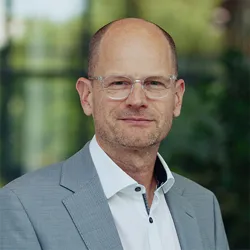 Patrick Vandenameele has served as Chief Executive Officer at imec since April 2026. He has played a pivotal part in shaping imec’s R&D strategy and innovation agenda, ensuring the organisation’s research aligns with emerging market needs and technological developments. Patrick holds a PhD from KU Leuven and started his career at imec in 1996. In 2000, he transitioned to entrepreneurship, founding several deep-tech ventures, after which, he held senior positions at leading semiconductor companies, driving successful product launches and large-scale commercialisation. Upon returning to imec in 2017, he was instrumental in expanding imec’s venturing activities. Since 2022, he consecutively served as Chief Portfolio Officer and as Co-COO, spearheading strategic initiatives spanning business development, and portfolio management.
Sitong He is communications manager at SEMI Europe.


