downloadGroupGroupnoun_press release_995423_000000 copyGroupnoun_Feed_96767_000000Group 19noun_pictures_1817522_000000Member company iconResource item iconStore item iconGroup 19Group 19noun_Photo_2085192_000000 Copynoun_presentation_2096081_000000Group 19Group Copy 7noun_webinar_692730_000000Path
Skip to main content
Default Banner Image

Serena Brischetto

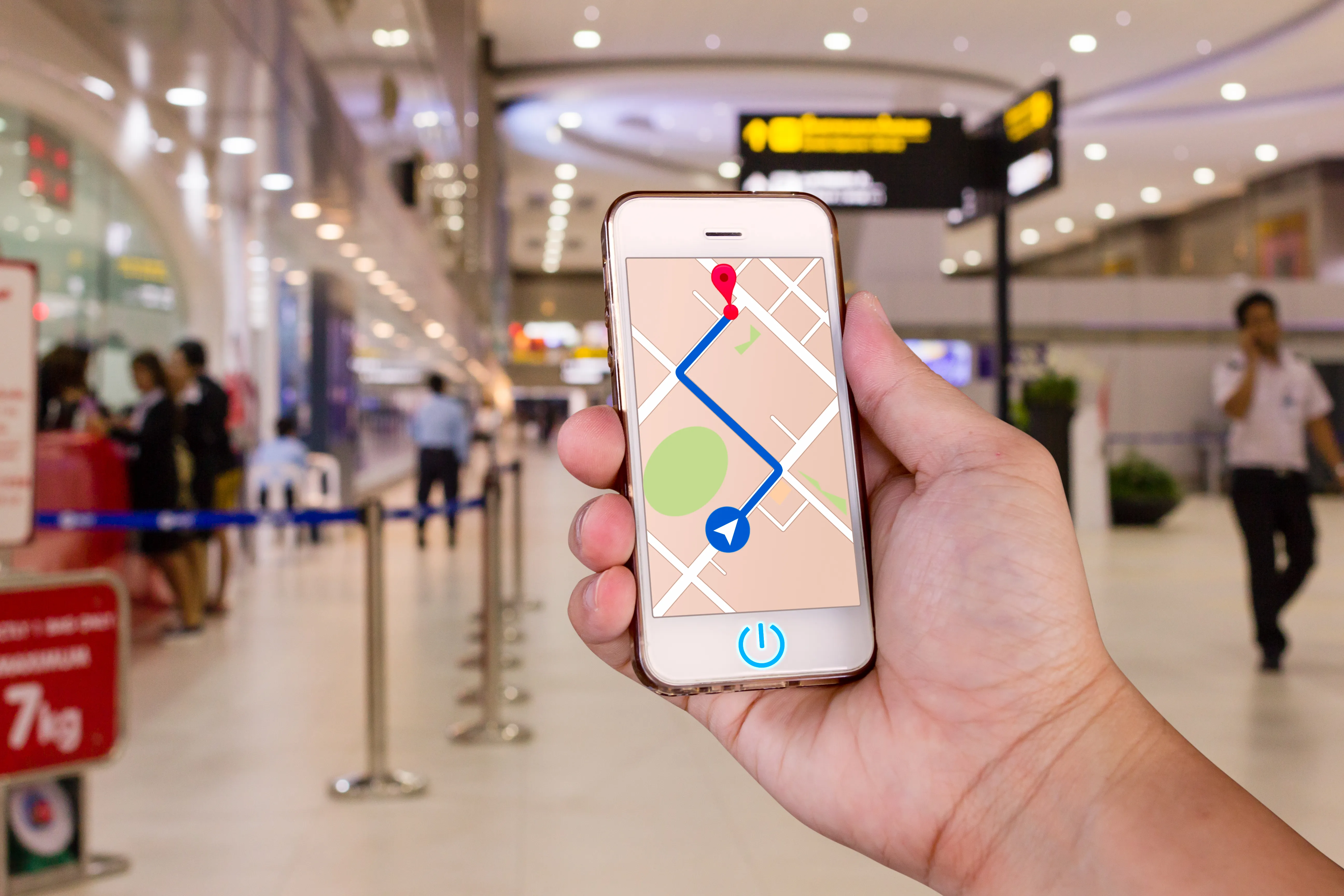
Tracking and localization technologies typically integrate with Wi-Fi and Bluetooth signals to pinpoint the location of people and objects. But what if a venue can’t install beacons or routers, or afford to deploy Wi-Fi or Bluetooth networks? Thanks to a combination of proprietary algorithms, advanced sensor fusion and the natural geomagnetic field, GipStech, a spin-off of Università della Calabria, built an indoor localization and navigation technology platform for accurate localization in the absence of an adequate GPS signal.Ahead of the SEMI MEMS Imaging Sensors Summit, 25 to 27 September 2019 in Grenoble France, Serena Brischetto of SEMI spoke with Gaetano D'Aquila, co-founder and CEO of GiPStech, about sensor fusion, augmented GPS applications and the future of indoor localization. Join us in Grenoble to learn more about GiPStech and meet other MEMS, imaging and sensors experts. Registration is open online.SEMI: Early this year GiPStech completed a test deployment of the first high-precision, infrastructure-free navigation system at Tokyo Shinjuku metro station in Japan. This is the busiest transportation hub globally! What were the main challenges you faced and how did your technology enable such a highly complex indoor localization?D'Aquila: As you mentioned, Shinjuku station in Tokyo has been registered in Guinness World Records as the busiest transportation hub globally. With 36 platforms, 200 exits and countless corridors and connections, it is easy to get lost there, especially for foreigners and tourists. On the other hand, this scale and complexity makes it unfeasible and expensive to install Bluetooth or similar infrastructure for standard indoor localization.For this reason, we needed to provide a cost-effective indoor localization technology without installing any kind of artificial supporting infrastructure. Thanks to our GiPStech patented multi-sensor-fusion localization stack and the high density of public Wi-FI networks, it’s possible to determine when passengers are inside the station. The public Wi-Fi networks signals were fused as an additional source in GiPStech's sensor-fusion platform to complement the inertial and geomagnetic engine and deliver very accurate results across the entire station. The tests performed in the station also demonstrated that the localization system can even detect the floors where travelers are walking. Now we are ready to roll out the same setup in other stations and environments.SEMI: You are not the first to pursue infrastructure-free indoor localization, but your technology platform seems to be very accurate in bringing precision, stability and consistency to the user experience. What lead to those advancements and incredible results?D'Aquila: Our key differentiating factors are built in the approach we created after years of research and development. One differentiation, of course, is related to our expertise and know-how about how the geomagnetic field can be used as a driving signal for the localization process.During R D we constructed and patented a modular multi-sensor-fusion software stack to solve any kind of localization problem, mainly in indoor environments. We started from a single-signal approach based on the employment of the geomagnetic field as a localization signal. But, mainly due to the very inaccurate devices chosen to measure the geomagnetic field, such as the smartphones that everyone carries in their pockets, we noticed that this single-signal approach is accurate but not reliable because it is strongly affected by a key weakness – the quality of sensor in the device.SEMI: How long did it take for you to solve this issue?D'Aquila: We started to integrate other signals within a few months after the first field tests related to the employment of the geomagnetic field alone. We also began to develop a software platform that could fuse any signal source (natural or artificial) available in the environment to preserve the reliability and accuracy of the localization system when some of these signals are temporarily affected by poor measurement quality. This is our differentiating factor today. We can re-configure our software platform to provide the best reliability and accuracy with the lowest artificial infrastructure in almost any context – from outdoor in a seamless way to indoor and vice versa.SEMI: GiPStech’s inertial engine is one of your cutting-edge technologies that completes your advanced indoor navigation and localization software stack. How do you see the technology evolving?D'Aquila: The inertial engine was one of our first technology modules mainly developed to enhance reliability, smooth the signals and reduce the computational power requirement of our geomagnetic localization approach.After a while, together with a third party that evaluated the performances of our module, we noticed that this module not only can be used as a self-standing localization technique, but it can also deliver high accuracy mainly in PDR (pedestrian dead reckoning) applications.Today our PDR is itself a black box with embedded subsystems. Besides some filtering modules, it includes a state-of-the-art step detector that detect steps even when the person changes the smartphone position and location (not only in the hands but also in backpacks or pockets) and an advanced step validation module that identifies and rejects fake steps.If you’ve ever used a commercial fitness tracker attached to your wrist, you know that in most cases if you move your arm the device will counts some steps that, of course, are not real. Our step validator solves this problem by detecting only real steps – a very important capability that allows our PDR to be employed as a self-standing inertial navigation system. We developed the PDR with strong attention to maintaining low requirements for the computational power and memory footprint. These additional characteristics makes the PDR very interesting even for a direct integration of the software at the silicon level in modern MEMS sensors.In a nutshell, the ability of MEMS sensors to run directly an embedded software module will drive technology enhancements that will allow some of the functionalities now available through an external application processor, such as those in smartphones, to move to a lower level (in the silicon). This, of course, reduces power consumption while even increasing the number of value-added services, including localization services, that could be built directly on top of the MEMS without requiring external software and/or application processor.SEMI: Do you think indoor localization will be more applicable in the next 10 years in areas such as Smart manufacturing, travel, healthcare, entertainment and retail?D'Aquila: Several market reports and our business development experience lead us to assess which sectors are of greatest interest for the application of indoor positioning technologies. They include the following. Industry (manufacturing logistics) Healthcare (tracking of assets, patients and doctors) Big installations (visit experience for museums, fairs) Airports stations (both for travelers and for resource and operation management) Large distribution (user profiling and influencing of the purchasing behavior) Indoor localization is a key enabling technology. Adoption, mainly in these sectors, was limited by the unfavorable tradeoff between cost and benefits. Our indoor localization technology aims to overcome those tradeoffs to make its adoption much more cost-effective while providing the best possible reliability and accuracy.SEMI: What are your expectations regarding the summit in Grenoble, and for the future of the sensors technology ahead? Where are we heading?D'Aquila: Many sectors would benefit from indoor localization technologies. MEMS, imaging and sensors are driving innovation and explosive demand for transportation, medical, mobile, industrial and other IoT applications. But these devices also constitute the basic building blocks for the development of reliable and affordable localization technologies.In outdoor environments we are pretty covered by the GPS. Indoors, where we spend more than of 80 percent of our time, similar types of services are coming to the market now and becoming more reliable over time.This Summit facilitates the direct interaction between different stakeholders to act at different points in the MEMS sensors value chain. Indoor localization was an emerging technology unrelated to the sensors ecosystem until now. Today, indoor localization must leverage MEMS sensors to be effective and reliable. In the future, localization technologies will be embedded directly in silicon to deliver the best performance at a lower cost to increase their adoption for more applications.Gaetano D'Aquila served as research fellow from 2002 to 2004 at the CNR and as an assistant teacher at the University of Calabria. From 2003 to 2014, he worked in the industry first as a security consultant for Telcos and Banking in Value Team S.p.A. and then as project manager at Infomobility S.p.A., where he coordinated research and development and strategic activities in the automotive and auto insurance industries. In 2014 he co-founded GiPStech and is its current CEO. He has published several papers in scientific journals and has filed for seven patents, three of which have been granted in the U.S. and Europe. Gaetano has a MSc in Computer Engineering and a Ph.D. in Science and Engineering of the Environment, Buildings and Energy from the University of Calabria, Italy.Serena Brischetto is a marketing and communications manager at SEMI Europe.
Read More
In 2016, the then-Secretary-General of the United Nations, Ban-Ki Moon, stated “Saving our planet, lifting people out of poverty, advancing economic growth. These are one and the same fight. We must connect the dots between climate change, water scarcity, energy shortages, global health, food security and women’s empowerment.” The SEMI Talent Forum, 2-3 May, 2019 in Bristol, UK will explore new opportunities and challenges of the digital era and the industry’s need for talent and the knowledge and skills in automation, computerization and digitization to drive tech innovation. Serena Brischetto of SEMI spoke with professor Michael Czerniak, Environmental Solutions Business Development Manager at Edwards, about how digitalization impacts all these key areas and will be instrumental in helping humanity shape the future. SEMI: The preservation of the global environment and the talent shortage are probably two of the most critical challenges confronting the semiconductor industry. What is the Edwards position on these issues? Czerniak: When I started in the industry, climate change was a new concept and scientific investigation was in its infancy. Now it is a well-understood phenomenon and its impacts will only be minimised by the implementation of better technologies, nearly all of which depend on digital technology and a talented workforce to drive new innovation. This is mission-critical not only to Edwards, but also to the digital industry, and indeed our common future.SEMI: Edwards celebrates 100 years of empowering innovative people. How do you help electronics shape the future and advance life standards? What is your secret recipe?Czerniak: Edwards plays a key role in enabling semiconductor manufacturers by making the electronic circuits, also commonly known as chips, on which the Digital Age is built. Our secret recipe is: nothing! We literally have no molecules at all, i.e. vacuum, which enables the intricate processes like plasma chemistry taking place. Those are the processes used to sequentially deposit and remove the thin films that constitute a modern semiconductor device. We also remove harmful and global-warming gas exhausts from these processes to minimise the environmental impact of this amazing industry.SEMI: What is stimulating about semiconductors and could you give us an example of how Edwards is helping remove harmful and global-warming gases?Czerniak: I work in environmental science both at Edwards and also here in Bristol in the School of Chemistry. My least-favorite gas is called CF4. Not only is it thousands of times more impactful as a global warming gas, but also it has an atmospheric lifetime of 50,000 years. Using abatement technology pioneered by Edwards, emissions of this gas into the atmosphere produced by this industry, have been reduced by up to 95%. That’s certainly something to make you feel good about after a day at work!SEMI: Edwards was honored with the SEMI Diversity and Inclusion award and also for the company's 100th anniversary at the Industry Strategy Symposium (ISS) Europe in Milan in early April. What is particularly exciting about Edwards?Czerniak: Edwards is and always has been a very inclusive place to work, not least because it is a global company, reflecting the scope and geographical reach of the semiconductor industry as a whole. This provides a great variety of career paths locally at one of our many global manufacturing sites, or on a global scale, as we need to be where our customers are.SEMI: What are your expectations regarding the forum in Bristol, and for the future ahead? What is the status of the semiconductor workforce development scenario in your opinion? What can we do more?Czerniak: My main hope for the Talent Forum in Bristol is that the profile of the semiconductor industry will be raised amongst students considering their future career options to the point where they seriously consider applying for positions in this field. This applies to students from all disciplines as they are all needed to help develop the Digital Age, and more events like this can only help spread the message about the exciting opportunities and challenges available.Michael Czerniak started his professional career in the semiconductor industry with Philips, initially in the company’s UK R+D labs and subsequently in the fab in Nijmegen, Holland. He then held marketing roles at UK-based OEMs Cambridge Instruments, VSW and VG Semicon before joining Edwards 21 years ago. Michael has authored numerous published articles and patents, co-chairs a SEMI standards committee, participates in the IRDS, is a UK PFC expert on IPCC and has authored chapters on Vacuum and Environmental issues in the Semiconductor Manufacturing Handbook. Michael became a Professor in the School of Chemistry at the University of Bristol in September 2018. Serena Brischetto is a marketing and communications manager at SEMI Europe.
Read More
MedTech, autonomous driving and other disruptive technologies will be in focus at the SEMI Industry Strategy Symposium (ISS Europe), 31 March - 2 April 2019 in Milan, Italy, as top European executives, researchers and academics gather to explore solutions to the region’s most pressing strategic, economic and social challenges. Ahead of ISS Europe, SEMI spoke with Mark Purdy, managing director and chief economist at Accenture Research, about Accenture’s Business Futures – four different future worlds set in 2025 based on the collision of trends across demographics, geopolitics, technology, and economics – and what these futures will mean for markets, workforces, operating models and industry value chains. SEMI: At ISS Europe in Milan, you will kick off the symposium highlighting market opportunities of the digital economy and how companies must adapt to competitive challenges. What inspired Accenture’s Business Futures four world scenarios?Purdy: The impetus for our Business Futures really stemmed from a certain dissatisfaction with current approaches to thinking about the future. We were struck by the following puzzle. First, there is no shortage of techniques for looking at the future, from forecasting to trends analysis to conventional scenarios. Second, most decision-makers have more or less the same access to information on global trends. Yet, time and again, we hear stories of businesses going bust or facing major challenges precisely because they failed to anticipate major changes in their industry.The paradox is that we have so much information, but so little real understanding of how the future actually unfolds. So that set us thinking about how to develop a new approach, based on a combination of detailed trend analysis, expert input and creative storytelling – which is what we call “Business Futures.” SEMI: Of demographics, geopolitics, technology, and economics, which trend do you see as particularly critical?Purdy: Actually, the essence of our Business Futures thinking is that it is the collision or combination of different trends – across economics, technology, demography, etc. – that shapes future outcomes, rather than individual trends per se. To a certain extent we tend to become fixated on specific trends and this can lead us astray or cause bad decision-making. For example, in the early 2000s many people saw very favorable trends in the U.S. economy – strong capital inflows, rapidly rising consumer spending, surging stock markets, and rising home ownership rates. Each trend in isolation looked strong and sustainable. But we failed to see how the combination of these trends was fueling risky financial innovation that would eventually lead to the financial crisis and great recession.Technology of course is a key trend. We are seeing tremendous advances in next-wave technologies such as robotics, machine learning, intelligent objects, 5G and virtualization. But we can only truly understand the impact of the technologies – and the business opportunities and challenges they create – by viewing them against a wider backdrop of changes in society, demography, geopolitics and economics. That is what Business Futures strives to do.SEMI: What will these different futures mean for markets, workforce, operating models and industry value chains?Purdy: There will be profound changes in how we think about all of these areas. Markets will become much more personalized and interactive. Technology will be increasingly integrated with humans, fueling innovation in areas such as personalized healthcare and preventative medicine. Our notions of distance and capacity will be upended, as new virtualized services enable new ways of reaching underserved customers. Consumers will become increasingly involved in the creation and design of products and services. New methods of innovation, powered by AI and virtualization, will come to the fore. New entrants will come from unexpected quarters, enabled by new technology. The upshot will be massive disruption and disintermediation of value chains across many sectors.SEMI: What can Europe do to prepare?Purdy: There are no simple answers, and the correct course will vary by country, but there are some basic things to get right. First, different countries need to understand their comparative advantage – for example, whether it is in services, new technologies, advanced manufacturing or resources – and work with the grain of these different futures. Second, countries need to ensure that they have the basic conditions – regulation, organizational adaptability, workforce flexibility, skills, and innovation infrastructure – to capitalize on the productive potential of new technologies such as AI, virtual reality, and the Internet of Things (IoT). Third, we need to create educational systems and workforce learning methods that emphasize creativity, problem solving and innovation – precisely the skills that will be most needed in an age of intelligent machines. SEMI: What are your expectations for the summit in Milan and for the future?Purdy: I’m very much looking forward to the ISS Europe Summit in Milan. As an economist, I believe we are at a pivotal moment in the semi-conductor industry, driven by waves of technological change and rising geopolitical frictions and uncertainty. With so many industry leaders and experts coming together at the Summit, I’m confident that our discussions will help point a way forward!Mark Purdy is managing director of economic research at Accenture Research. His research examines issues at the intersection of economics, technology and business. He has published widely in tier-1 media and specialised publications on topics such as China’s economy, emerging-market geographic strategy, inclusive economic growth, business futures and the economic impact of new technologies such as the Internet of Things and artificial intelligence. A graduate of Trinity College Dublin, he speaks on these topics at conferences and seminars around the world.Serena Brischetto is a marketing and communications manager at SEMI Europe.
Read More
The SEMI Europe Industry Strategy Symposium (ISS Europe) returns in Milan, Italy, this year from 31st March to 2nd April, 2019 to explore new opportunities and challenges in the digital economy. Serena Brischetto of SEMI spoke with GreenWaves Technologies CEO and co-founder Loïc Lietar about the semiconductor start-up and its Internet of Things (IoT) ultra-low-power processing technology ahead of the summit.SEMI: What are the mission and vision of GreenWaves Technologies? Lietar: GreenWaves Technologies is a fabless semiconductor start-up that is designing disruptive ultra-low power embedded solutions for image, sound and vibration artificial intelligence (AI) processing in sensing devices. It was founded in late 2014 with the mission to enable the market for intelligent in-device sensors using ultra-low energy and cost-efficient computing solutions. As a result, the GreenWaves GAP8 is the industry’s first ultra-low-power processor to enable battery-operated AI in Internet of Things (IoT) applications.SEMI: How did you move from the semiconductor industry to the start-up ecosystem?Lietar: I worked 25 years for STMicroelectronics then four years ago left because a project didn’t materialize. At the same time, I became involved a bit by chance in the founding of GreenWaves, which turned out to be an amazing journey that I rapidly got entirely – and deadly – committed to.SEMI: Semiconductors are usually not associated with the idea of start-up. What is the key to the success of GreenWaves and its positioning? Lietar: Start-ups have played a significant role in the formation of our industry and in bringing innovations and disruptions to the market. But as it became more complicated to finance start-ups because of exploding development costs, the number of semiconductor start-ups shrank significantly in the past 10 years.At GreenWaves we develop and sell IoT application processors – processors tuned for a given class of applications. In our case, we focused on machine learning inference processors and more generally signal processing and IoT for ultra-low power. We typically process and analyze images, sounds and vibrations and our technology is more than one order of magnitude more energy efficient than existing processors. For example, our processor, coupled with an infra-red sensor, can count the number of people present in a room once a minute for more than five years on a single charge. Our architecture uses RISC-V cores. This free and open Instruction Set Architecture is seeing huge momentum and a rapidly growing community. Second, we leverage an open source project called PULP developed by the Italian Università di Bologna and the Federal Polytechnical School ETH in Zurich. While open source is a well-established model for software, this is pretty unchartered territory in the semiconductor industry. It is working very well for us, as we benefit from robust technology we can incrementally innovate on. This is why we have been able to develop our first product with 4 million Euro.Competition is now emerging, and this is a good sign: We are not alone in believing in this market but we remain very differentiated!SEMI: One of the reasons why semiconductor start-ups were no longer attractive to VCs is the amount of capital that start-ups need to invest. Did public funding help you too?Lietar: Yes, public funding played a crucial role at the beginning. We received rather classically 300K Euro of French grants and then we were lucky enough to win a very selective H2020 grant, the SME instrument, for 1.2M€. In France there is a very powerful scheme of research tax credit that covers more than 30 percent of our R D costs and French banks know how to lend money to start-ups, with a state warranty.SEMI: What is particularly exciting about GreenWaves?Lietar: When we defined the target market more than three years ago, frankly, we were alone in the market. Now, it sounds obvious, but we have a three-year time advantage over our competitors. The technology is really impressive and great in serving this market, and it goes beyond what we had thought about it at the beginning. And finally, the open source model that we are validating is yet another rather unique attribute of ours. The combination of those three aspects is thrill!SEMI: Can you name some applications?In the consumer space we can name, autonomous nano-drones, smart toys, home surveillance and wearables. We also enable important applications in smart buildings and smart cities related to counting people and things, and within the industry 4.0 with applications in advanced fault detection.SEMI: What are your expectations regarding the summit in Milan, and for the future ahead? What is the status of the semiconductor funding ecosystem?Lietar: I look forward to comparing my recent entrepreneurial experience with other colleagues and peers in the industry. It is true: Financing a semiconductor start-up is a challenge, but things are improving. Ironically, in the U.S. and China, we are in the middle of an over-heated hype around AI, which will ultimately burst and make it even more difficult to fund semiconductor start-ups than it was before. But we are used to it in this industry. Loïc Lietar is a co-founder and CEO of GreenWaves Technologies, a fabless semiconductor start-up that develops GAP8, the industry's first loT application processor featuring ultra-low power for images, sounds and motion. Prior to co-founding GreenWaves Technologies, Loïc worked 25 years for STMicroelectronics, where he led several product divisions. He also served as Chief Strategy Officer and co-founded and managed the corporate venture fund at STMicroelectronics. Serena Brischetto is a marketing and communications manager at SEMI Europe.

Read More
SEMI met with Martin Schrems, director of Strategy and Business Development at AT S AG, to discuss Fan-Out technology trends ahead of SEMI 3D Systems Summit in Dresden, Germany.SEMI: What are the AT S AG mission and vision and your role within the company?Schrems: AT S AG is evolving from a pure PCB manufacturer towards an interconnect solution provider. We can clearly see a continued trend towards miniaturization and modularization by (3D) integration of components such as integrated circuits and passives. Module sizes tend to increase by integrating more functions and system-level requirements. As a PCB maker, we have served such system-level requirements for a long time. Further integration offers opportunities to embed components in PCBs or substrates, offer layout and simulation services, as well as provide assembly and test services depending on specific customer requirements. As director of Strategy and Business Development, I work with my colleagues in AT S, customers, and partners across the industry towards understanding and leveraging this major transformation in the electronics industry.SEMI: What project are you currently working on that you think will make a difference in 2019?Schrems: There are number of very exciting projects, many of them already involving AT S contributions to module integration. Some of these projects involve key customers directly. We see exciting opportunities for integration of larger multi-function modules by combining PCB, substrate, and embedding core competences.SEMI: The focus of your presentation at the 3D Systems Summit will be on "Fan-Out System-in-Board technology enabling module and system-level integration.” What do you see as the key trend in this area?Schrems: Fan-Out technologies are used to distribute I/O pad connections of nanoCMOS ICs over a larger area. This relaxes bump pitch and feature size requirements for subsequent system-level PCB interconnects. In some cases, Fan-Out layers already provide a substitute to currently used Flip-Chip substrates. Well-known examples are Fan-Out packages for application processors for smartphones. There is definitely a trend in the market towards Fan-Out for high-end processor applications. Advantages of such Fan-Out packages are shorter electrical connections and a reduced thickness.However, one weakness of current Fan-Out packages is that only a limited number of components can be integrated due to mechanical stability challenges – a barrier to further component integration in larger modules. Currently, the only way to integrate more components is to use laminate-based PCBs and substrates with conventional Surface Mount Technology. Recent proposals like our “Fan-Out System-in-Board” (FO-SiBTM) technology are expected to provide an alternative Fan-Out packaging option at the board-level in the future.SEMI: Please elaborate. Schrems: Fan-Out capability and integration of more components – typically up to the 100 and more needed for electronics integration at system level – can be achieved simultaneously by combining technologies from the PCB and the packaging world. PCB laminates such as glass particles and organic materials provide mechanical stability for large boards. The recent introduction of substrate-like PCBs (mSAP) has already paved the way to cover applications that were reserved for substrates and classical packaging in the past.With FO-SiBTM technology, we have taken it a step further and offer the option to integrate SAP substrate layers onto the PCB with lines/spaces below 10µm. FO-SiBTM makes it possible to directly contact nanoCMOS chips on PCBs without any intermediate substrates. Further adding Cu pillar technology at panel level will enable Fan-Out structures even for surface-mounted components, making recent R D on panel-level Cu pillar technology very important. Through joint R D, we can drive progress in the industry to further enable cost-effective heterogeneous 3D integration.SEMI: What are your expectations for the 3D Systems Summit in Dresden, and why do you recommend your members and other industry leaders to attend?Schrems: The 3D summit is the high-level conference where key electronics industry players discuss major heterogeneous integration trends. Therefore, we very much appreciate the opportunities to exchange ideas across the supply chain including users, developers of integrated electronics hardware and tool manufacturers. Serena Brischetto is a marketing and communications manager at SEMI Europe.
Read More
SEMI met with Jay Zhang, business development director at Corning Incorporated, to discuss recent innovations at Corning that allow fine granularity CTE engineering as well as high Young’s modulus. We also talked about the impact of this work on in-process warp control, as well as the associated production methodology that provides rapid prototyping and high-volume manufacturing. We spoke ahead of his presentation at the 3D Systems Summit, 28-30 January, 2019, in Dresden, Germany. To register for the event, please click here.SEMI: What is Corning’s mission and vision and your role within the company?Zhang: Corning is one of the world’s leading innovators in materials science with a track record of 165+ years of life-changing innovations. We excel in glass science, ceramics science, and optical physics and succeed through sustained investment in RD E. Our products include Corning® Gorilla® glass, a durable material used on more than six billion mobile devices worldwide, and industry-leading LCD glass for display applications. We have recently dedicated a unit of the company called Precision Glass Solutions to address the emerging need for glass in the semiconductor industry. Here we apply Corning’s long history of glass science expertise and deep customer relationships in consumer electronics to support cutting-edge applications like wafer-level optics for precise 3D sensing and carrier solutions for temporary bonding applications in semiconductor manufacturing. It’s our most recent work in the Carrier Solutions product line that I’m excited to present: a new carrier glass product optimized for fan-out, called Corning Advanced Packaging Carriers.SEMI: What projects are you currently working on that you think will make a difference in 2019?Zhang: My team is excited to introduce Corning Advanced Packaging Carriers this year. This is a new line of product within our portfolio of Carrier Solutions. These ultra-flat glass carriers are specially developed to reduce customers’ challenge of in-process warp by up to 40 percent, which in turn helps advanced packaging customers achieve better yield.Corning Advanced Packaging Carriers feature high-stiffness properties and are available in a wide range of coefficients of thermal expansion (CTE) in fine granularity. These attributes help customers select an ideal glass carrier that will minimize in-process warp for their package. Furthermore, we make sample quantities of these carriers available in just four to six weeks to help maximize efficiency during customers’ R D process.My team is excited about the potential of this new product, but also encouraged by our results. We have already supplied this product and have heard from one of the largest semiconductor companies in Taiwan that it has reduced in-process warp by as much as 150μm.SEMI: Your presentation at the 3D Systems Summit will focus on Agile Manufacturing of Glass Carriers for Advanced Packaging. What exactly will you be sharing?Zhang: There is a lot of interest right now in using glass as a carrier substrate in temporary bonding applications in advanced semiconductor packaging – especially in fan-out processes. We also know that in-process warp is a significant challenge to companies pursuing advanced packaging because different CTE materials are added during the process. My team has done a lot of work to understand the impact that an ideal CTE glass carrier substrate can have on minimizing in-process warp. We have studied the available levers – both theoretical and in real-life fab environments – that can help address this challenge. I will present our findings on how it is possible to select a glass carrier with the ideal CTE and Young’s modulus to reduce in-process warp by up to 40 percent, and how Corning has developed an agile manufacturing platform to support customers with these ideal carriers from their R D stage through mass production.SEMI: What do you think will be a hot topic in the next few years?Zhang: We expect high-end fanout technology to address more applications beyond just mobile APs. There is also an interesting dynamic playing out between wafer-level and panel-level fan-out technologies. Corning is active in both areas. In developing and offering high performance glass carriers, we hope to help enable our customers to expand the fan-out applications space.SEMI: What are your expectations regarding the summit in Dresden, and why do you recommend your members and other industry leaders to attend the 2019 3D Systems Summit?Zhang: Europe is where some of the most advanced packaging technologies are born. Fan-out also saw early commercialization there. I hope to meet many scientists and technologists at 3D Systems Summit and exchange technical and business ideas. We also hope to get early feedback from other attendees about the value of our new product offering. Serena Brischetto is a marketing and communications manager at SEMI Europe.
Read More
SEMI met with Erez Halahmi, vice president at 0eC SA, to discuss a new way to transfer information not only between chips but also between servers to reduce power consumption while boosting performance. The two spoke ahead of his presentation at the 3D Systems Summit, 28-30 January, 2019, in Dresden, Germany. To register for the event, please click here.SEMI: What is Zero energy connection’s (0eC) mission and vision and your role within the company?Halahmi: Prof. Naaman of the Weizmann institute of Science (Israel) and I founded OeC SA and invented the Zero energy connection (0eC) technology. OeC SA offers a completely new and innovative solution for interconnections, which dovetails with the current technological trend of “less is more.” In fact, we constantly search for a reduction in energy consumption in favor of capacity, all while simplifying manufacturing processes. We try to look at things differently. This is why our technology is so out of the box. It is a completely new way to transfer information, not only between chips but also between servers.SEMI: What projects are you currently working on that you think will make a difference in 2019?Halahmi: I am working on several diversified exciting projects including the development of a planar field emitter and a rechargeable battery with energy density higher than 1KWh/Kg. Planar field emission is a field emitter made with standard FAB processes that enable a pixelized matrix of emitters at the resolution of photolithography. The rechargeable battery is a novel battery type that delivers unprecedent energy density.SEMI: Your presentation at the 3D Systems Summit will focus on a new way to transfer data. Why is this a key topic?Halahmi: Metals have been used to transfer data since the realization of the first integrated circuit by Jack Kilby in 1958. What happened next? Photonics slowly entered the market supported by huge investments, and the global market grew over the years. However, even with such enormous growth, photonics is not easily integrated with CMOS processes and the market also faces the conversion energy issue on top of the rising costs of process change. Integrating photonics with CMOS requires converting an electrical signal to a photonic signal and back. This costs energy and adds circuitry complexity. What to do? We identified a need to create something out of the box – on one hand using the same CMOS processes without conversion, and on the other hand significantly increasing performance. More details will be released at my presentation at the 3D Systems Summit in Dresden. I am certain that you will find our invention very intriguing. SEMI: What do you think will be the main focus in the future?Halahmi: My belief regarding many aspects of our life is that history repeats itself. Look for example at the comparison Gallium Arsenide (GaAs) versus Silicon (Si). GaAs was never able to defeat the simplicity of Si. The same applies to data transfer. However, for a solution to overtake the metal interconnect, it is not enough to offer many advantages, but the same order of production simplicity should apply. Consequently, big companies will continue to focus on metal solutions for transferring data, though some smaller companies might adopt our technology due to its relative simplicity of production and great benefits.SEMI: What are your expectations for the summit in Dresden, and why do you recommend other industry leaders to attend the 2019 3D Systems Summit?Halahmi: The summit is a great opportunity to learn about new technologies and meet the people behind these innovations. It is a unique chance to meet and question the inventors themselves and learn more about your competitors. See you soon in Dresden!Serena Brischetto is a marketing and communications manager at SEMI Europe.

Read More
SEMI spoke with Antoine Amade, Regional Senior Director EMEA at Entegris, about the challenges set by the car industry, and the concept of “zero defect” and the need for a collaborative approach ahead of his presentation at the Strategic Materials Conference at SEMICON Europa 2018, 13-16, November 2018, in Munich, Germany. To register for the event, click here.SEMI: The automotive industry is setting new challenges. This is very exciting source of growth for the global supply chain, but what are in your opinion the automotive requirements of the future?Amade: By 2030, 50% of the car cost will be electronics related. With the autonomous cars, there will be no tolerance for any type of chip defects because it will have a direct impact on human safety. With that in mind, higher reliability, increased efficiency and control across the supply chain will be the main requirements of the automotive industry.SEMI: Is the New Collaborative Approach the solution to overcome the challenges related to the automotive requirements of the future such as defects and contamination? What can you tell us about this approach?Amade: The automotive industry presents a great challenge to all of us, reaching the ppb level in terms of defectivity. In other words, this zero defects objective requires a collective awareness and understanding: Within an aging and more complex manufacturing environment, we all need to challenge the status quo and go for a new collaborative approach.SEMI: What does Entegris propose?Amade: We trust that contamination control has a major role to play to reach the zero defects. We are now in the 3rd generation of contamination control. After the focus on the cleanroom environment and equipment, materials are now at the center of the attention. With Entegris offering the broadest portfolio in terms of advanced chemicals, filtration and purification, and materials handling, we’re uniquely positioned to address precision, purity, integrity, and safety challenges.SEMI: How could this support fab managers in their daily challenges and mid-term future objectives?Amade: The new collaborative approach is a journey. It is a consultative process to provide a fresh set of eyes and expertise on the key areas of concerns in the fabs. It is a multidisciplinary approach with zero defectivity as the main goal. It is focused on base line improvement, better process control, more uniformity and prevention of excursions.SEMI: What do you expect from SEMICON Europa Strategic Materials Conference?Amade: It's the perfect platform to deliver our message in front of the whole ecosystem. It obviously concerns the fabs, but also material suppliers, and even carmakers. We expect this new view of collaboration will create an engagement from all parties. It is not a coincidence that this is called New Collaborative Approach. Antoine Amade joined Entegris in 1995 as an application engineer in its semiconductor business. In his current role as EMEA Sr. Regional Director, Mr. Amade manages a sales, customer service and marketing team responsible for growing the semiconductor business in Europe and Middle East.Mr. Amade held leadership positions at Entegris including gas microcontamination market management, strategical account management and regional sales management. He has a degree in Chemical Engineering from ENS Chimie Lille and is a member of Semi Electronic Materials Group for Europe. Serena Brischetto is a marketing and communications manager at SEMI Europe.

Read More
SEMI spoke with Udo Gómez, senior vice president at Robert Bosch GmbH, about MEMS technology requirements relative to standard IC design and manufacturing. Gómez highlighted solutions to challenges of MEMS technology development and manufacturing ahead of his presentation at the 22nd Fab Management Forum at SEMICON Europa 2018, 13-16, November 2018, in Munich, Germany. To register for the event, click here.SEMI: Regarding standard processes for MEMS, the situation used to be known as the MEMS law: "one product, one process." Today, the variety of MEMS sensors and their application requirements have drastically increased. What is the status of process standardization today?Gómez: Today, standardization in MEMS is certainly not as advanced as it is for conventional semiconductor processes and model environments. However, MEMS technology has developed very much in recent years. The understanding of the numerous interactions between mechanical, chemical and electrical parameters has grown enormously. Improved process tolerances and optimized simulation tools already allow the design of standard components and their manufacture using largely standardized processes and systems.This also enables standardized MEMS process platforms in foundries for fabless suppliers, since adapting process parameters to standard designs no longer means maximum effort. But the situation changes significantly if you want to implement more powerful MEMS components for demanding applications. In this case, much effort is still required in technology development to bring new and innovative designs to mass production readiness.SEMI: How does this situation interfere with the need for a fast, market-driven product development and production ramp-up?Gómez: The constant advancement of (MEMS) technology to new limits requires enormous efforts and time. Thus, fast product cycles in consumer electronics (CE) pose particular challenges. Close interaction between product and technology development is a key success factor here, as well as a deep understanding of the cause-effect relationships. This is the only way to identify and minimize process risks at an early stage.However, the steep product ramp-ups usually required in CE also offer advantages, since learning curves are run through at much shorter time-intervals than, for example, the comparatively slow ramp-ups in the automotive industry. In this way, automotive products benefit directly from the results of CE components. Conversely, CE products benefit from the higher requirements in the automotive sector, whose technologies can be developed and tested on longer time scales.SEMI: What are the critical and different design and manufacturing requirements for MEMS products versus standard IC products, which typically run in highly standardized processes?Gómez: A very special feature of MEMS devices is their multi-physics character – mechanical, electrical, magnetic, fluidic, and even chemical and/or optical effects may play a role. This is very different from standard semiconductors. Depending on the type of sensor or actuator, dedicated and often quite sophisticated models need to be developed to ensure proper function of the device – and not least to ensure full functionality after misuse. For example, shocks or drop events are usually not relevant for standard ICs but they may be extremely relevant for MEMS devices with their fragile mechanical structures.Similarly, the influence of packaging effects like bending or thermomechanical stress may be much more significant in MEMS devices than for standard semiconductors. And last but not least, a physical/magnetic/chemical/optical … stimulus usually needs to be applied when testing MEMS devices. All of this adds complexity to the manufacturing flow and requires dedicated know-how both during the engineering stage and in mass production.SEMI: BOSCH is working to extend the process platform to include complex 3D structures. What are the advantages and benefits of using 3D structures compared to standard 2D structures? Are there 3D structured products already in mass production?Gómez: We have recently extended our well-established surface micromachining process for MEMS inertial sensors (which basically uses one functional silicon layer for the movable MEMS device) to an advanced process using a second functional micromechanical layer. This opens up a large variety of design options and allows the realization of entirely new sensor topologies. For example, our most recent z-axis accelerometers for automotive and CE applications have 3D-like structures for the movable mass.This has several advantages: Firstly, the sensors can be further miniaturized as they now have fixed electrodes for capacitive readout above and below the movable mass, i.e. a larger capacitance per area. Secondly, due to their improved symmetry, these sensors have greatly improved immunity against several parasitic effects, e.g. mechanical stress from soldering or bending on a PCB. Overall, this technology enables us to offer better performance at still very competitive product size and cost. Both automotive and CE sensors are in high volume production for different applications and customers. SEMI: What do you expect from SEMICON Europa 2018 and why do you recommend attending the Fab Management Forum?Gómez: After our very positive impressions of SEMICON Europa 2017, we are convinced that SEMICON 2018 will again meet with widespread interest within the semiconductor industry. SEMICON is an excellent opportunity for us to meet our customers and partners. The Fab Management Forum, which ideally takes place parallel to SEMICON, is a highly valuable addition for us to exchange ideas with leading industry partners and to gain new insights into current trends and technical progress. Within that context, the Forum will make a valuable contribution toward strengthening the European position in semiconductor and MEMS manufacturing. As senior vice president of Robert Bosch GmbH, Dr. Gómez heads Sensor Engineering at Bosch Automotive Electronics (AE/NE-SE) in Reutlingen, Germany, the world’s largest MEMS supplier serving the Automotive, Consumer Electronics and IoT industry. Dr. Gómez started his career at Robert Bosch GmbH in 1999 at Corporate Sector Research and Advanced Engineering (MEMS technology) after completing his doctorate in physics. Before joining Bosch Automotive Electronics in April 2018, he worked in various management positions at Bosch and also held the position of Chief Expert for MEMS sensor technology. From 2013 to March 2018, he was Chief Technical Officer of Bosch Sensortec GmbH - a fully-owned subsidiary of Robert Bosch GmbH, responsible for research and development of micro-electro-mechanical sensors (MEMS) for consumer electronics, smartphones, security systems, industrial technology and logistics.Dr. Gómez has served as Deputy Chairman of the Board of VDE/VDI-Society Microelectronics, Microsystems and Precision Engineering (GMM) since 2014 has been a member of the GSA (Global Semiconductor Alliance) EMEA Leadership Council since 2015.Serena Brischetto is a marketing and communications manager at SEMI Europe.

Read More
SEMI met with Heinz Martin Esser, managing director at Fabmatics GmbH, to discuss how existing 200mm semiconductor fabs can master the challenges of a 24x7 production under highest cost and quality pressure by implementing intralogistics automation solutions. The two spoke ahead to his presentation at the Fab Management Forum at SEMICON Europa 2018, 13-16, November 2018, in Munich, Germany. To register for the event, click here. SEMI: Looking at the latest production capacity data for 2018 – it is a 200mm fab boom. Growing demand for analog, MEMS and RF chips continues to cause acute shortages for both 200mm fab capacity and equipment. Do you think this trend will continue the next years or is it only a short term run on 200mm fabs?Esser: We at Fabmatics believe in a long-term trend. The emergence of the Internet of Things and growing digitalization in all areas of life will continue to increase demand for integrated circuits (ASICs), analog ICs, high-performance components and micro-mechanical sensors (MEMS) in the coming years. Many of these semiconductor elements should be produced in 200 mm fabs.SEMI: How does Fab automation contribute to increase capacity of existing, mature 200mm fabs?Esser: We are convinced that fab automation is one of the greatest potentials for older 200mm factories to effectively master increased demand, increasing efficiency, quality assurance and flexibility at the same time. In particular, material flow automation, which is often the missing link between existing equipment in different production areas, can help increase productivity in an elementary way.If you analyze how long valuable tools typically wait for loading and unloading, you can see a direct effect of the intralogistics automation system, which leads to a significantly higher utilization of process equipment by making the material flow independent from human performance. Additional side effects such as reduced cycle time, stable fab flow factor or flattened WIP shafts further increase the contribution of material flow automation to get the most out of existing mature factories. Older does not mean obsolete.SEMI: What are the biggest challenges for a successful implementation?Esser: There is no single challenge when you automate an existing mature fab. Instead, you face a whole variety of challenges you have to tackle, ranging from historically grown non-aligned fab layouts over non-linear material flows and older non-standardized equipment to “automation unfriendly” fab environment. Also you should not underestimate the efforts to overcome the practice manual fab operation people in the cleanroom are so familiar with for many years. Before doing automation you have to think automation, i.e. you have to question all processes to make them ready for automation.SEMI: What are the key drivers to automate a mature fab today: costs, process stability, quality or a combination of them?Esser: This question should be better asked to our customers, but we believe it is a mix of many impacts. Most likely everybody sees the cost reduction at first, but we get more aware of process and performance stability as well as quality requirements – and here our customers’ play the most important role – become more and more focused.SEMI: What do you expect from SEMICON Europa 2018 and why do you recommend attending the Fab Management Forum?Esser: This year SEMICON Europa will co-locate with electronica. So it`s going to be the greatest trade fair for electronics manufacturing in Europe. We will meet innovators and decision-makers across the whole electronics supply chain. The Fab Management Forum addresses a highly topical question that concerns all semiconductor manufacturers not only in Europe - how to handle complexity and enable the necessary flexibility to cope with customers' needs. High-ranking speakers will give an insight into the latest technologies and best practices. I am looking forward to the lively exchange with the participants and taking away new impulses for our business. Heinz Martin Esser is managing director at Fabmatics GmbH, responsible for sales and marketing, customer service and administration. He studied supply engineering at the University of Applied Sciences in Cologne and later earned a university degree in business administration. Serena Brischetto is a marketing and communications manager at SEMI Europe.

Read More