downloadGroupGroupnoun_press release_995423_000000 copyGroupnoun_Feed_96767_000000Group 19noun_pictures_1817522_000000Member company iconResource item iconStore item iconGroup 19Group 19noun_Photo_2085192_000000 Copynoun_presentation_2096081_000000Group 19Group Copy 7noun_webinar_692730_000000Path
Skip to main content
Default Banner Image

Serena Brischetto

This blog series explores how collaboration between industry and academia can empower the next generation of semiconductor innovators. Through insights from leaders, educators, and students, we’ll showcase effective strategies for bridging the talent gap, fostering innovation, and creating meaningful career pathways in the semiconductor industry.As innovation accelerates and new challenges emerge, the industry’s greatest breakthroughs will come from bold, curious students, young professionals, and lifelong learners ready to build what comes next. SEMI spoke with Professor Antonio Costa of the University of Catania about attracting the next generation to STEM, the emerging skills required in the semiconductor industry, and examples of impactful collaboration with local industry, along with many other insights.Costa shared his perspectives following his participation in the SEMI on Campus program, held on April 16, 2026, in Catania, Italy. SEMI: What emerging skills do you believe will be most essential for the next generation of semiconductor innovators, and how can industry and academia work together to nurture them?Costa: I firmly believe in the role of interdisciplinary skills. The next generation of semiconductor innovators will need a blend of deep technical expertise, cross-disciplinary thinking, and adaptability to rapidly evolving technologies specifically based on artificial intelligence. The future semiconductor innovator isn’t just a circuit designer. They’re a systems thinker, data scientist, and materials engineer rolled into one. The most successful ecosystems will be those where academia teaches fundamentals, and industry provides real-world constraints, tools, and scale. So, university and industry should work together to share their knowledge and technological infrastructures with the aim of supporting the next generation of semiconductor innovators. SEMI: In your work with young engineers and researchers, what approaches have you found most successful in nurturing creativity and sustaining curiosity in such a technically complex field? How do you think we can attract the next generation to enter the STEM studies?Costa: Curiosity and creativity are two major features for researchers and engineers in general. Over the years of teaching and coordinating research activity, I have been able to observe that students are increasingly drawn to challenges coming from the industrial world. In a way, one could say that complexity often stimulates curiosity, and when this happens, students are able to deliver their best performance in terms of creativity and quality of results. In my courses, students have always been required to tackle an industry-inspired project work to be eligible to pass the exam. Every year, I invite industry representatives from local manufacturing companies to present real case studies to the classroom, describing their key elements, constraints, and objectives. Students are then asked to solve the industrial case study by applying the problem-solving techniques learned during the course. Based on my experience, I believe that a greater intensity in the relationship between the industrial and academic worlds can further stimulate students' curiosity and the interest of new generations.SEMI: What do you believe are the most significant barriers for students entering the semiconductor industry today, and how can academia help bridge these gaps?Costa: As usual, the main barriers for students concern the gap between the theoretical study mindset developed during university courses and the demands of the industrial world in terms of teamwork skills, problem-solving abilities, and soft skills. Universities and industry should find greater opportunities for collaboration, for example by establishing shared laboratory activities or seminars during which managers from semiconductor companies, and beyond, illustrate the essential aspects of working life and the primary needs of the semiconductor industry. At the same time, it would be advisable to emphasize the employment and career opportunities that the semiconductor industry is currently able to offer. Hackathons, that have a competitive orientation, could also represent a valid stimulus that companies and universities could pursue jointly and on a regular basis.SEMI: How can universities and industry partners collaborate more effectively to create learning experiences that truly unlock students’ potential and prepare them for the sector’s evolving demands? Professor Antonia Costa, University of Catania and Daniele Pagano, STMicroelectronicsCosta: Shared laboratories, curricular and extracurricular internships scheduled on a continuous basis, and periodic seminars held by company representatives with diverse areas of expertise can make a positive contribution to rapidly and robustly unlocking the learning potential of today's students and tomorrow's new hires. In December 2021, the University of Catania and STMicroelectronics signed a framework agreement to strengthen collaboration in the field of power electronics, with a focus on advanced research and training. The agreement aims to support technological innovation and the development of professional skills in the semiconductor sector, including:Research and development: the launch of projects focusing on increasing power density, efficiency, and reliability of power modules. Training and talent: funds for students’ awards, mentorship programs, internships, thesis projects.Innovation: support for technological growth and the development of professional expertise in power electronics. Regional ties: consolidation of Catania's role as a hub for semiconductor research, with strong synergy between the university and the local ST production site. Curricular internships linked to Master’s degree theses, supervised by faculty members across disciplines, primarily within Engineering, Computer Science, Physics, and Chemistry programs.SEMI: Can you share other examples of collaborations? Costa: Over the past decade, the University of Catania has been an active partner in multiple European consortia, supporting the development of research projects funded through highly competitive national and European programs. Currently, the University of Catania is engaged in collaborative research with STMicroelectronics through two Horizon Europe projects.In the first project, HiCONNECTS, the Department of Engineering is developing a digital twin architecture aimed at optimizing wafer lot dispatching at STMicroelectronics’ manufacturing facility in Catania.The second project, GENESIS, brings together the Department of Engineering and the Department of Chemical Sciences to pursue an ambitious sustainability objective: the development of innovative methods to identify and reduce per- and polyfluoroalkyl substances (PFAS) generated by semiconductor manufacturing processes, thereby mitigating environmental impact."The role of universities is to help students recognize their potential and guide them toward fields where their abilities can truly flourish. Initiatives like SEMI on Campus are invaluable, as they inspire students through direct engagement with professionals, helping bridge the gap between theory and industrial practice." -- Professor Antonio Costa, University of Catania .custom-quote-block { border-left: 4px solid #d9d9d9; padding-left: 26px; margin: 24px 0; } .custom-quote-block blockquote { margin: 0; padding: 0; border: none; } .custom-quote-block p { margin: 0; font-size: 18px; line-height: 1.6; font-style: italic; color: #000; } SEMI: Looking ahead, what role do you see educators playing in shaping the future of semiconductor innovators? Costa: The role of educators, both in schools and, above all, in universities, is to help students recognize their own potential and develop the maturity needed to identify and pursue those fields of knowledge that best highlight their abilities.The SEMI on Campus initiative was immediately embraced by many universities and by myself, as it offers students from diverse academic backgrounds the opportunity to understand the key skills sought by players in the semiconductor industry, while also highlighting the employment and career paths available in this field.The opportunity to hear directly from prominent speakers who work daily in semiconductor design and manufacturing represents a powerful way to stimulate students’ curiosity and potential, while helping to bridge the gap between the theoretical knowledge acquired in university classrooms and the practical, results‑oriented approach required in an industrial environment.The benefits for students are broad and significant, as they can assess their own aptitudes and ambitions against the real demands of semiconductor companies, drawing inspiration and insight from firsthand accounts shared by industry professionals.Antonio Costa is a full professor at the University of Catania (DICAR Department). He teaches Production Planning and Control in the Master’s degree in Engineering Management, and Advanced Technologies for Manufacturing Processes in the Master’s degree in Mechanical Engineering.His research activities are mainly focused on production scheduling, supply chain dynamics, manufacturing process optimization and Statistical Process Control (SPC). He is area editor for Computers Industrial Engineering, member of the Italian Association of Manufacturing Technologies (AITeM) and leads several research collaborations with STMicroelectronics.Interested in bringing SEMI On Campus to your institution or welcoming an industry expert as a guest speaker?Reach out to [email protected]. Let’s work together to inspire the next generation of semiconductor leaders!Related Initiatives:SEMI 20 Under 30: The SEMI 20 Under 30 Awards recognize exceptional young leaders in the semiconductor industry who are making significant contributions and driving innovation. Nominations are open!ChipQuest: The ChipQuest Challenge promotes the microelectronics industry to students to build future talent. University and high school students can participate and win amazing prizes! Serena Brischetto is Director Marketing and Digital Engagement at SEMI Europe.
Read More
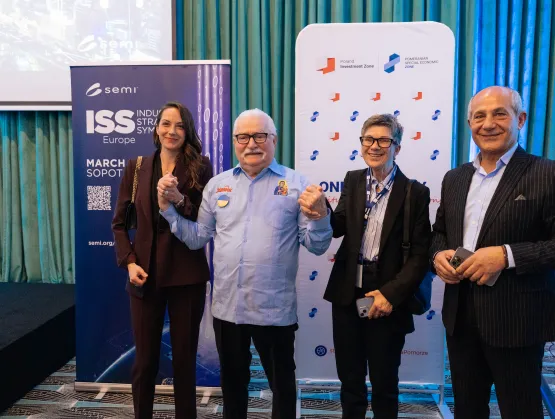
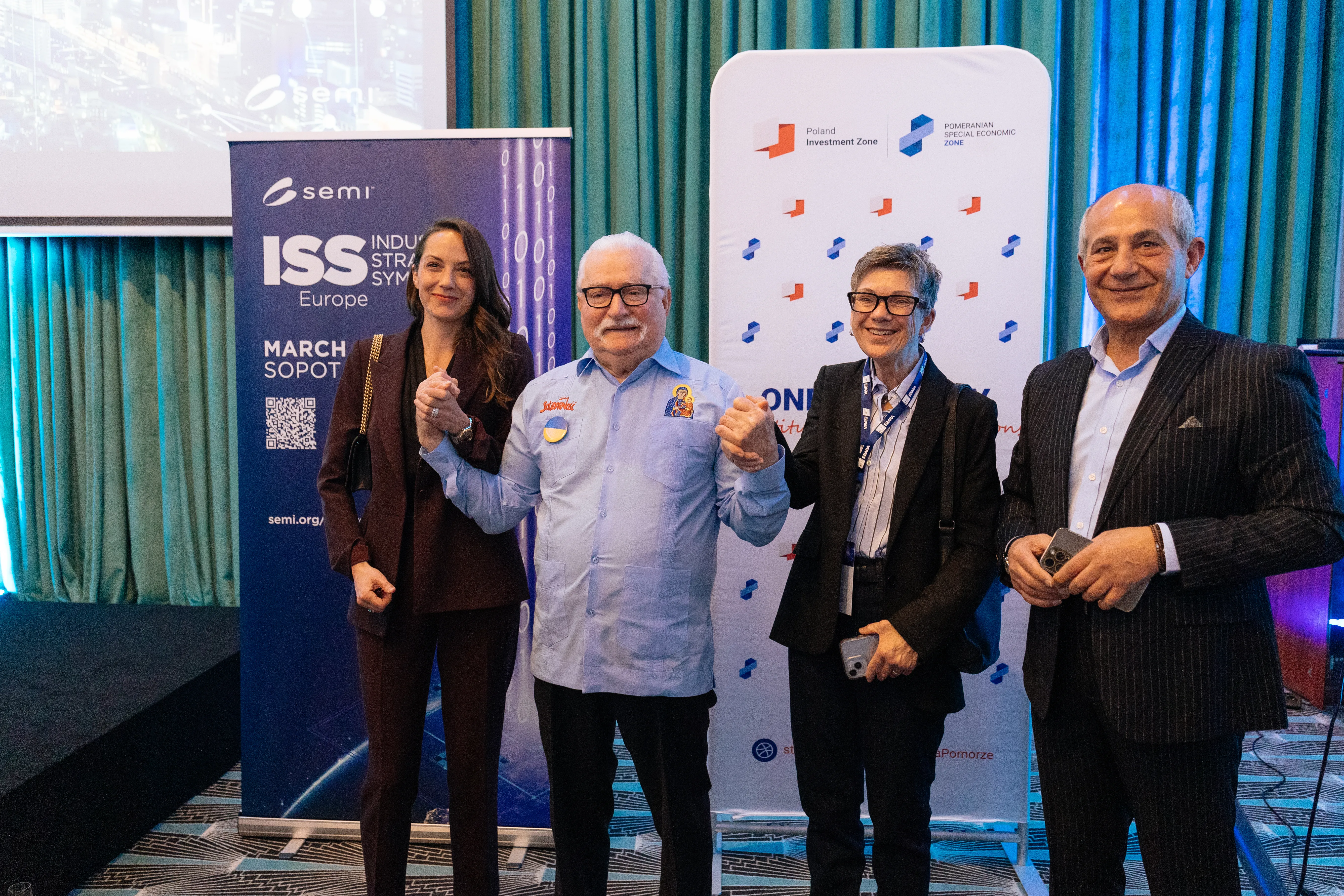
As competition within the semiconductor industry continues to intensify, the need for Europe to strengthen its current position within the global supply chain and develop new partnerships are more important than ever. How can Europe forge a unified semiconductor strategy amidst geopolitical tensions, fast‑moving technological change, and ongoing supply‑chain challenges? These dynamics set the stage for the 2026 Industry Strategy Symposium (ISS) Europe taking place in March in Sopot, Poland for the second consecutive year, bringing together leaders from across the semiconductor ecosystem to assess a rapidly shifting global landscape and define Europe’s path toward greater competitiveness and resilience.The symposium opened with a welcome speech featuring Lech Wałęsa, Nobel Peace Prize Laureate and former leader of the Solidarnosc movement which led Poland’ s resistance to its authoritarian Communist regime in the 1980s. Wałęsa shared a strong message on the importance of collaboration: “Old geopolitical structures and the bipolar world order have reached their limits, and as we transition toward a new global order, it is essential to rebuilding a system better suited to today’s realities”. In this uncertain moment, the Nobel Peace Prize called for peaceful dialogue and collective action to shape a new, more suitable world order rather than relying on conflict.Lech Wałęsa, Nobel Peace Prize LaureateAmidst geopolitical tensions, accelerating technological change, and intensifying global competition, a clear message emerged: semiconductors are now foundational to European economic security and technological leadership. As Laith Altimime, President of SEMI Europe, emphasized, “Semiconductors are the infrastructure of the modern world, and only through close collaboration can we master the challenges ahead and strengthen Europe’s technological leadership.”Laith Altimime, President, SEMI EuropeEurope plays a vital role in this industry, with global revenues expected to reach $2 trillion by 2035. As Altimime noted, “Europe has strong foundations, leading in manufacturing equipment and innovation. We must maintain this leadership while reducing dependencies.”A central theme throughout the symposium was how Europe can build on its leadership positions while strengthening its role across the value chain. As Leonard Hobbs, Director of Government Affairs at Intel Ireland, said, “No region controls the entire supply chain. Europe has to figure out how to differentiate itself within the various parts of the supply chain.” Marc Hijink, author of the book Focus – The ASML Way highlighted Europe’s deep supplier ecosystem, and explained that “more than 80% of the value in the products that ASML makes comes from suppliers who are mostly based in Europe.” Marc Hijink, Author of Focus – The ASML WayAt the same time, significant investments are reshaping Europe’s manufacturing footprint. Joerg Recklies, Executive Vice President Frontend at Infineon, drew the audience’s attention to Infineon’s upcoming Smart Power fab opening in summer 2026 “six months ahead of schedule.” Recklies added, “The new ESMC facility in Dresden is expected to produce 40,000 300mm wafers per month, and will provide the first FinFET capability in Europe.” Joerg Recklies, Executive Vice President Frontend, Infineon TechnologiesLooking at opportunities in advanced semiconductors, Cesc Guim, CEO of Open Chip, said, “25 years ago, the only way to learn how to do advanced chip design was in one of the large US companies. That’s no longer the case. Europe now has the capabilities, supported by RISC-V and a full supply chain backed by the wealth of hardware and software engineering talent in regions such as Pomerania.” Left to Right: Mikołaj Trunin, Deputy Director, Invest in Pomerania and Cesc Guim, CEO, Open ChipTo reinforce the sense of opportunity in a changing world, futurist Christian Kromme gave a whirlwind tour through the revolutions to come in technology and society. He described how each wave of technological change, from the internet to AI to autonomous machines, is arriving faster than the one before. “The internet wave commoditized media and knowledge. In the AI wave, we will see the same value compression, but this time squeezing out human skills such as problem-solving and system design,” said Kromme.Kromme urged delegates to “shift from hard skills to heart skills: imagination, empathy, curiosity and integrity, this is where the value of humans lies, because machines cannot do these things.”Christian Kromme, FuturistTrade tensions and international conflictGeopolitics and supply chain dynamics were central to the discussions. Martin Zech, Senior Director at FTI Consulting, described how the US’s approach to the semiconductor industry had shifted from incentives to restrictions. Zech warned that “a new section 301 investigation into the European semiconductor industry could lead to new tariffs.” Johan Rauer, Partner at McKinsey, added that the threat extends beyond tariffs. “Regions will apply a range of measures, including export controls and IP protection.”Martin Zech, Senior Director, FTI ConsultingJohan Rauer, Partner, McKinsey CompanyChristopher Frieling, Director of Advocacy and Public Policy at SEMI Europe, outlined the EU’s response, including its evolving economic security framework and the concept of “trusted chips,” reflecting a preference for products with strong European involvement.Christopher Frieling, Director of Advocacy and Public Policy, SEMI EuropeThe question of technological leadership was addressed by Carlos Pardo, CEO of KD, who stated, “If Europe wants a relevant position in semiconductors, it needs to invest more.” He added that even in automotive semiconductors, European players hold relatively limited shares. Carlos Pardo, CEO, KDProviding another perspective, Dr. Rafał Bugyi, CEO of TRUMPF Huettinger said, “We don’t need to cover the entire supply chain, but we must be indispensable.” Dr. Rafał Bugyi, CEO, TRUMPF Hüttinger GmbH Co. KGSpeakers also addressed how Europe could adapt to the new reality of supply chain dependency. Benoit Chassagne, End-to-End Supply Chain Manager at Edwards, presented a model of a systems response which his company has implemented to mitigate its exposure to supply chain volatility, while David Forrest, Director of Sustainability and Criticality at Vital Materials, emphasized the role of waste materials recovery, saying that “circularity is an industrial mechanism for supply chain resilience, not an environmental add-on.”Benoit Chassagne, End-to-End Supply Chain Manager, EdwardsDavid Forrest, Director of Sustainability and Criticality, Vital MaterialsCarl van Vugt Luning, Chief Commercial Officer at Resilicon, highlighted the need for greater resilience in polysilicon supply, noting Europe lacks dual sourcing. “Polysilicon is often seen as a commodity, but it is critical. Sovereign chips require a resilient polysilicon supply chain,” said van Vugt Luning.Carl van Vugt Luning, Chief Commercial Officer, ResiliconTurning innovation into commercial revenueIn the session ‘From lab to fab’, speakers examined how Europe can improve its track record in converting innovation into commercial success, for example, by companies such as NVIDIA and Qualcomm.An important part of the EU’s strategy was the creation of technology pilot lines. Jari Kinaret, Executive Director of the Chips Joint Undertaking (Chips JU), told the symposium that the pilot lines are an example of successful collaboration between the state and the private sector. Kinaret said, “The total cost of the NanoIC pilot line (for advanced semiconductor fabrication) is €2.5 billion, but this includes €1 billion of funding from ASML.”Jari Kinaret, Executive Director, Chips Joint Undertaking (Chips JU)The role and value of the pilot lines was the subject of a panel discussion at the symposium. Panelist Anne Van den Bosch, Vice President of Public R D Policies and Programs at imec, said the pilot lines “give the European semiconductor ecosystem faster access to advanced process technology.” Patrick Bressler, Director of Fraunhofer Mikroelektronik, agreed. “Pilot lines are a lab-to-industry scheme to give access to prototype manufacturing for SMEs, start-ups and fabless companies which would not otherwise be able to afford advanced manufacturing,” he said.Moderating the discussion, Laith Altimime asked, “How do we ensure that the products which emerge from innovations developed thanks to the pilot lines get manufactured in Europe? Are boutique fabs the answer?” Kevin Williams, Deputy Director of the PIXEurope pilot line, responded: “There are certainly opportunities in building new types of chips and new types of fabs. We have the know-how in the pilot lines, and the equipment for them is made in Europe.” Bruno Paing, Vice President Europe at CEA-Léti, added, “We need to aim for indispensability, replicating what we have with ASML in the EUV field. For instance, the world needs better memories and better interconnects. There are many opportunities in AI. It is not just about the GPU.”Left to Right: Moderator, Laith Altimime, President, SEMI Europe; Panelists: Anne Van den Bosch, Vice President of Public R D Policies and Programs, imec; Bruno Paing, Vice President Europe, CEA-Léti; Patrick Bressler, Director, Fraunhofer Mikroelektronik; Kevin Williams, Deputy Director, PIXEurope.The symposium also highlighted examples of European innovation from two startups developing new technologies. Antonio Mesquida Küsters, Strategic Advisor to Euclyd, presented a processor system combining 16,384 cores with ultra-high bandwidth memory using advanced 2.5D and 3D packaging, offering an alternative to GPUs for AI inference. As he said, “We want to break the hyperscaler/cloud model of AI to build sovereign AI capability for Europe by 2030.”Antonio Mesquida Küsters, Strategic Advisor, EuclydJekaterina Viktorova, Founder and CEO of Syenta, introduced additive manufacturing technology enabling denser interconnects for advanced AI systems, noting, “Our roadmap is set to produce a 20x increase in bandwidth over the next 10 years.”Jekaterina Viktorova, Founder and CEO, SyentaNew strategies for competitiveness in semiconductor manufacturingIf these types of innovative products are to be manufactured in Europe, the region’s fab operations will need to combat the growing competition from China and elsewhere. Giovanni Notarnicola, Partner at Porsche Consulting, said, “Our position in Europe is under attack. The next threat is not from a new product, but from how chips are designed and produced.”Giovanni Notarnicola, Partner, Porsche ConsultingThomas Altenmüller, Vice President of Manufacturing Analytics at Infineon, highlighted the role of automation: “We get more automation in the transition from 8” to 12” wafers, which gives us an advantage in Europe because of our higher labor cost compared to China. But to compete, we still need more AI smart workflows to increase the automation.” Carina Lainer, Principal at Roland Berger, added, “Today we optimize operations with tools built for a human-centric process, which has reached its limit. We can instead use digitalization and AI to fundamentally change the way that semiconductor innovation takes place.”Thomas Altenmüller, Vice President of Manufacturing Analytics, InfineonLeft to Right: Carina Lainer, Principal, and Thomas Kirschstein, Partner, Roland BergerOded Tal, CEO of MAX Group, cautioned that the barrier to increased implementation of automation was not technical but social. “Humans can be very flexible, but leadership is crucial. “You have to give training and clear instructions. It’s about structure, making people’s roles and responsibilities crystal-clear,” he said.Oded Tal, CEO, MAX GroupThe symposium closed with a panel discussion about the implementation of AI and automation in the fab. Moderator Cassandra Melvin, Senior Director of Business Development and Operations at SEMI Europe, pointed out that “intelligence is moving beyond the tool to the control room, a development which is powered by AI.” The panelists were quick to acknowledge the radical impact that AI is having on fab operations. Dirk Drescher, Plant Manager at Bosch Semiconductor, said, “We built the Bosch fab in Dresden around a standardized data architecture, which is what enables us to implement AI. That is a contrast to a 20 year old fab, which can only see a patchwork of different data systems.”Thomas Richter, Senior Vice President and Managing Director at Infineon, added, “digitalization is about much more than just AI. We have had great success in getting rid of boring, routine tasks through digitalization. This makes a huge difference, and helps our fabs to stay competitive.”The panel also debated the potential impact of humanoid robots on the scale and impact of automation. Richter said, “In our fabs, I can see rooms in which it has never been possible to automate before, but humanoid robots give me hope that we can automate more in future.”Matthias Bonkass, Vice President of Advanced Manufacturing Engineering at GlobalFoundries, agreed. “By 2035, we will see collaboration between humans and humanoids. This wave is coming!” Going even further, Dirk Drescher looked forward to an era of total automation. He said, “We will see a lights-out fab by 2035. This is definitely a tailwind for the European semiconductor industry, making it faster, reducing cost, and giving us more opportunity to build semiconductors in Europe.”Thomas Morgenstern, Executive Vice President of Manufacturing at STMicroelectronics, concluded, “We must not let culture be a barrier to AI. Technical strategies to implement AI are all very well, but you need people to buy in. Morgenstern added, “The name of the game is productivity. The most advanced fabs have to be dark, with remote operating centers somewhere in the world, running clusters of fabs. I am extremely confident that by 2035, if not before, the first dark fab will be in operation.”Left to Right: Moderator, Cassandra Melvin, Senior Director of Business Development and Operations, SEMI Europe; Panelists, Dirk Drescher, Plant Manager, Bosch Semiconductor; Matthias Bonkass, Vice President of Advanced Manufacturing Engineering, GlobalFoundries; Thomas Morgenstern, Executive Vice President of Manufacturing, STMicroelectronics; Thomas Richter, Senior Vice President and Managing Director, Infineon.During the event, SEMI Europe announced recipients of the SEMI European Award and Special Service Award for 2025. Dr Peter O’Brien, Head of Research in Photonics Packaging and Systems Integration at Tyndall National Institute, was honored with the SEMI European Award and, Eric Beyne, Senior Fellow at imec, with the Special Service Award. Peter O’Brien, Head of Research in Photonics Packaging and Systems Integration, Tyndall National InstituteAnne Van den Bosch, Vice President Public R D Policies and Programs, imec receiving the award on behalf of Eric Beyne, Senior Fellow, imecOn behalf of SEMI, the SEMI Europe team and ISS Europe committee, we would like to thank all speakers, sponsors, and attendees for making the event a great success. ISS Europe 2027 will take place in Dresden, Germany from March 8-10.Serena Brischetto is Director, Marketing and Digital Engagement at SEMI Europe.
Read More
The drive to scale nodes towards physical limits, known as "More than Moore," and the adoption of 3D architecture in chip integration strategies for advanced logic and memory applications has led to unprecedented demand for high-quality dependable materials solutions. With the aid of digital solutions, the process is expedited with higher quality and efficiency.SEMI spoke with Thorsten vom Stein, Director, Head of Process Design Semiconductor Materials at Merck KGaA, Darmstadt, Germany, about how materials innovations and advanced packaging can contribute to smarter supply chain solutions for a sustainable ecosystem.More insights into key aspects of 3D architecture in chip integration and heterogeneous integration will be shared at the Advanced Packaging Conference (APC) during SEMICON Europa 2024, Nov. 12-15 in Munich, Germany. Registration is open.SEMI: What makes the digitalization of chemical process design for semiconductor materials manufacturing so challenging at a technology level? Vom Stein: The primary challenge in digitalization of process design is achieving data rich experimentation and design flexibility from the start. When we begin the process design for a novel material solution, the freedom of design needs to be very high for optimal outcomes. For example, to identify the best sequence of unit operations to achieve best process intensification, do we need a distillation or extraction after the reaction to meet the purity requirements? At the same time, the samples from these early process trials need to have purity levels and process reliability standards for high-volume manufacturing of routine production in order to meet the requirements of our customers’ leading-edge chip integration strategies. We address this need by executing data rich experimentation starting with first trial, and thereby establish “production ready” data density in the lab.To avoid confining our design space, we therefore need highly “sensorized” and automated modular lab equipment that can give us the data density we need and flexibility at the same time.SEMI: Are data-driven approaches also applied to streamline manufacturing processes? Vom Stein: Yes, data-driven approaches are key to driving cost, quality, process reliability and sustainable excellence. As we scale up from lab experiments to high-volume manufacturing—often times increasing volumes by two or three orders of magnitude—we scale the process model virtually ahead of its physical twin to de-risk these major scale-up steps. An example of this is simulating the effect of reactor geometry on the impurity profile.Establishing this handshake between the physical asset and the process model early in the development has a lot of benefits for sustained cost efficiency of the future manufacturing process. For instance, it allows for optimization of yield and cycle times to the existing asset infrastructure. Furthermore, we can achieve quality reliability critical to our customers by establishing end-to-end correlation models that link the quality of incoming raw materials to finished good impurity profiles.Finally, we can achieve the lowest possible carbon footprint and minimize waste streams and energy intensity via process intensification by matching the unit operation sequence to the specific thermodynamics and kinetics of the process.SEMI: How can advanced packaging contribute to the pursuit of net zero? Vom Stein: Ultimately in a successful process design, we aim to achieve the maximum yield of value-added product with minimal input of resources and raw materials. So, there is an intrinsic synergy between highly intensified processes and their carbon footprint. The digitalization of process design allows us to track the CO 2 footprint during every iteration of the design. Establishing this tracking as a routine design KPI is one of the key initiatives to drive net zero semiconductor material solutions.In addition, advanced process design is a key enabler for circular value streams. We are currently working on multiple projects to recycle waste streams and re-feed them as raw materials in our processes. We are also exploring how our chemical process technology can aid our customers’ recycling efforts such as reusing lithography cleaning solvent waste streams.SEMI: In your previous talks, you emphasized the importance of diversity, equity and inclusion (DE I). How is this related to the digital revolution? Vom Stein: In the not-so-distant past, my team consisted mainly of process chemists and engineers. Now, we are working with data scientists, model developers, automation experts and many more substance matter experts on our projects. This work requires an inclusive culture to maximize the impact of these diverse sets of insights and disciplines.We also must acknowledge that, in many instances, we are exploring unchartered territory that requires a “leap of faith” culture trusting in digital models. Imagine, for example, a production plant director who is used to a stepwise physical scale-up, now being onboard with skipping physical scale-up steps by using predictive process models. It takes time to really establish a trust in the “power of data.” This type of culture is championed at Merck KGaA, Darmstadt, Germany on all levels: from CEO to the production operator. Our DE I Report showcases how we continuously build belonging for over 64,000 employees across the globe.SEMI: Merck KGaA, Darmstadt, Germany is a key contributor to semiconductor innovations. How important is it for Merck KGaA, Darmstadt, Germany to collaborate with other industry leaders to achieve goals in matters such as sustainability and DE I? Vom Stein: Collaboration with our customers and OEM partners is a key piece of achieving the molecular precision necessary to drive technology evolution that serves as the backbone to society. More and more, we need to link our material solution manufacturing process to the process parameters of the tools in the fab, ultimately improving the chip yield of our customers. To transition from the nanometer era to the angstrom era, we must establish these process correlations end to end along the value chain, which is why we are heavily engaged on our Athinia collaboration framework.Besides technology enablement, sustainability is the next avenue where cross value chain collaboration is a must to lower the CO 2 and energy footprint of our industry. To this end, we have started a joint program with Intel on AI-enabled sustainable semiconductor processes.The importance of industry collaboration is why I was so honored to participate at SEMICON Europa together with representatives from leading companies.SEMI: What did enjoy about SEMICON Europa 2023 that you would like to experience again in 2024? Vom Stein: I was really impressed by the SEMICON Europa 20 Under 30 recognition program launched during the show. The program honored the brightest young leaders who have demonstrated success in their careers in the microelectronics supply chain. We were very happy with the acknowledgement of one of our brightest minds at Merck KGaA, Darmstadt, Germany, Balazs Bordas, Digital Twin Implementation Lead. He has been instrumental for many of our pioneering efforts in this space.Such recognition programs are very important for our industry and can make a significant difference in the perception of the semiconductor industry and its ability to motivate and attract more talent. I personally hope to see similar programs in the years to come.Additional resources:Learn more about diversity and inclusion at Merck KGaA, Darmstadt, Germany.Learn more about Merck’s KGaA, Darmstadt, Germany modular lab automation approach.Merck KGaA, Darmstadt, Germany sponsored SEMICON Europa and SEMI Advanced Packaging Conference in 2023. Thorsten vom Stein is Director, Head of Process Design Semiconductor Materials at Merck KGaA, Darmstadt, Germany. Based in Darmstadt, Germany, he holds a PhD in Chemistry from the RWTH Aachen University and has extensive experience in Catalysis, Materials Science, Process Development and Value Chain Innovation.Serena Brischetto is Director of Marketing and Digital Engagement at SEMI Europe.

Read More