
AI Power Constraints Drive System-Level Integration
SEMICON Taiwan 2026 Spotlights Breakthroughs in Design, Memory, and Optical Interconnect
HSINCHU, Taiwan — Aug 6th, 2026 — Frontier AI training compute is growing four-to fivefold annually, pushing power and data movement to the center of the performance race. As competition shifts from individual chips to system-level integration, SEMICON Taiwan 2026 will feature three dedicated technology platforms this September: the AI Technology Zone focusing on ASICs and AI chip design, the Memory Executive Summit exploring high-bandwidth memory (HBM), and the Silicon Photonics Pavilion showcasing high-speed interconnect technologies and applications, connecting the critical building blocks of next-generation AI computing.
Power Sets the Performance Ceiling, Driving System-Level Collaboration
“Data movement in today’s AI systems could consume more energy than computation itself, making system architecture, not individual chip performance, the new bottleneck,” said Terry Tsao, Global Chief Marketing Officer and President of Taiwan, SEMI. “Breaking through power constraints requires compute, memory and interconnect to be co-designed as one system. No company can solve a challenge of this scale alone. The next wave of AI innovation will depend on collaboration across disciplines and the entire value chain, embodying this year’s exhibition theme, ‘Transform Tomorrow’.”
Design: ASIC Demand Diversifies; AI Technology Zone Turns Innovation into Deployment
As cloud service providers (CSPs) accelerate in-house chip development, the AI accelerator market is becoming more diverse. With power limiting compute growth, workload-specific chips offer a path to greater efficiency. TrendForce expects global AI server shipments to rise more than 28% in 2026, with ASIC-based systems reaching 27.8% of shipments, the highest share since 2023. GPUs will remain dominant, but ASIC systems are set to grow faster. Rather than replacing one another, general-purpose and custom architectures serve different workloads, making the right chip-to-task match a key design priority.
Now in its third year, the AI Technology Zone will bring together ASE, AAEON, Egis Technology, MICH and Zhen Ding Technology to showcase the full AI value chain, from core computing and chip design to semiconductor manufacturing, edge AI and physical AI. Featuring advanced packaging, high-performance AI hardware, edge AI platforms, enterprise AI and intelligent robotics, the zone will demonstrate how chip-level intelligence is powering smart manufacturing, autonomous systems and real-world applications, underscoring semiconductors as the engine of the AI era.
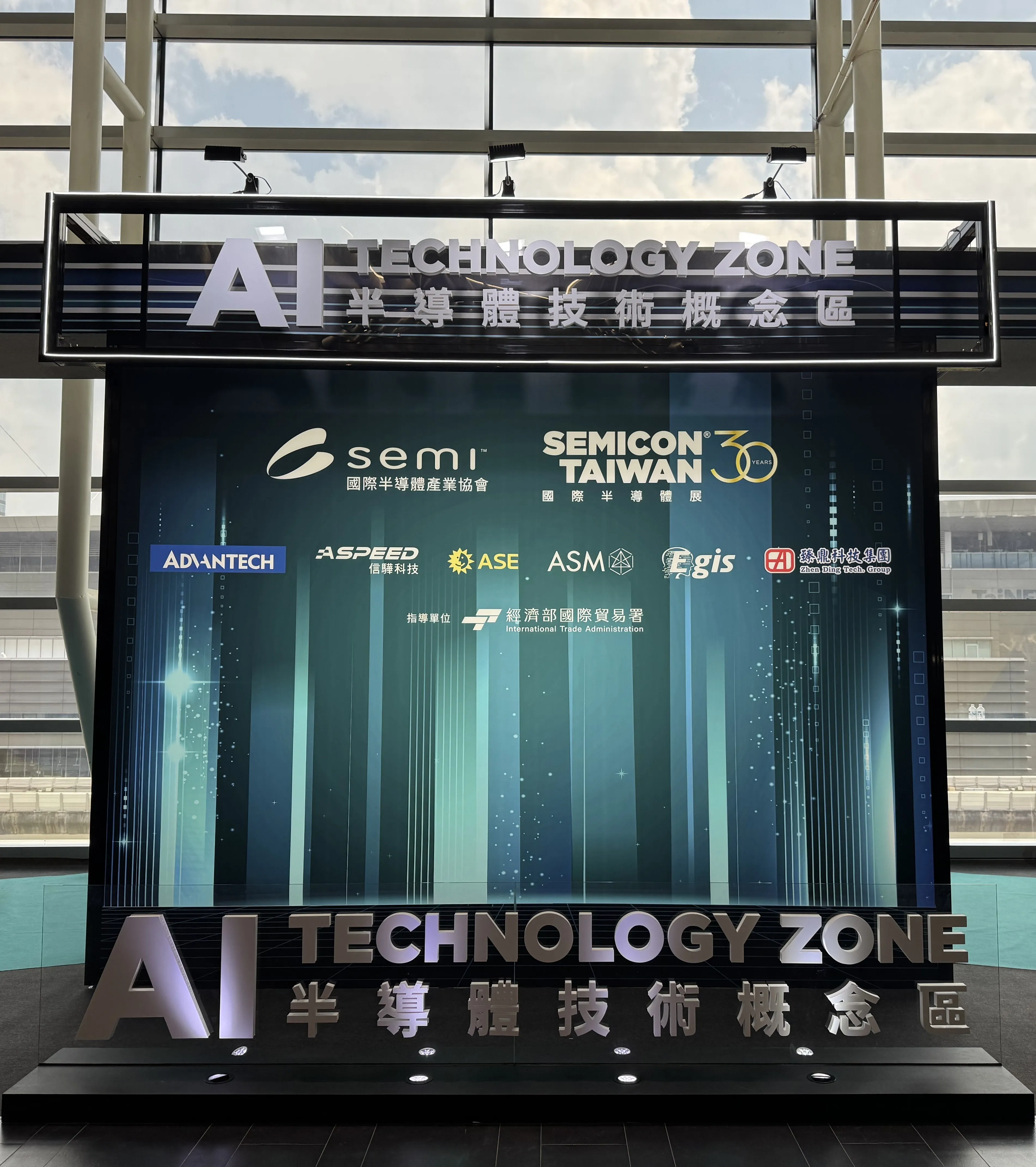
▲ SEMICON Taiwan 2026 AI Technology Zone will showcase the full AI value chain
Memory: HBM Turns Strategic as the Memory Executive Summit Spotlights Co-Design
Tightly integrated AI systems depend on moving data to compute engines quickly and efficiently. As a result, HBM has evolved from a standardized component into a strategic cornerstone of AI system design, driving memory suppliers, chip designers and system companies toward deeper hardware-system co-design. According to SEMI’s latest report, global 300mm memory equipment spending is set to exceed US$50 billion for the first time in 2026, rising 29% on strong demand for HBM and DDR5 in GPUs and other AI accelerators.
SEMICON Taiwan 2026 will host the Memory Executive Summit on September 1 under the theme, “The Co-Design Era: Memory as the Strategic Heart of AI Intelligence”. Technology leaders from Google, Samsung, SK hynix, SanDisk, Solidigm, Phison and d-Matrix, alongside academic experts, will address memory performance and power challenges and explore next-generation technologies including HBM4, CXL, AI SSDs, computational storage, in-memory computing and MRAM. Spanning AI system requirements, memory and storage innovation, the summit will unite perspectives across the value chain and chart the technology roadmap for next-generation AI computing.
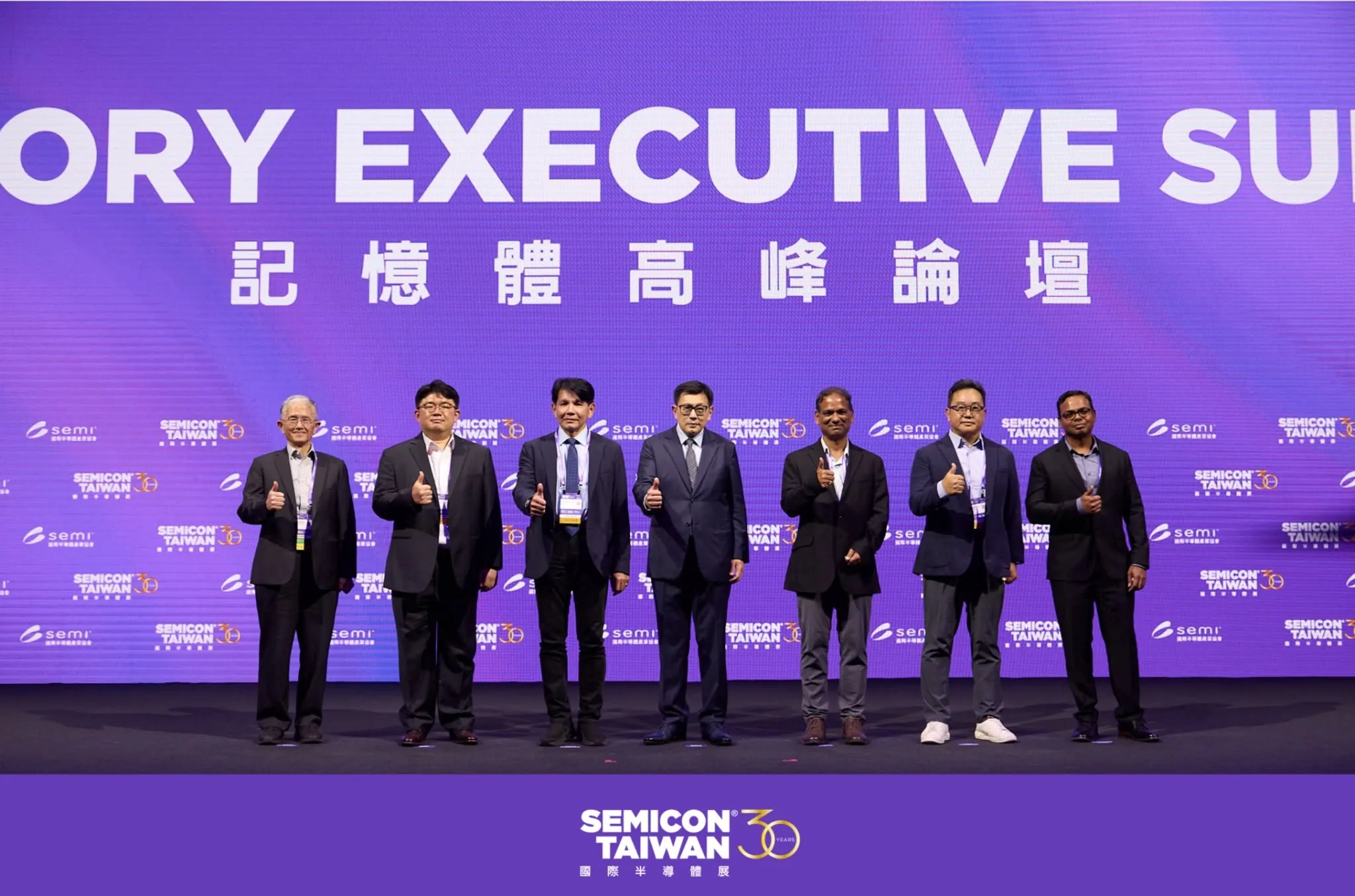
▲ SEMICON Taiwan 2026 Memory Executive Summit will explore next-generation memory technologies
Interconnect: As Copper Hits Its Limits, Silicon Photonics Takes Center Stage
The energy cost of data movement extends well beyond the chip. As AI clusters scale from single racks to multi-rack systems, copper interconnects are approaching their limits in bandwidth, power efficiency and reach, accelerating the shift to optical connectivity. By transmitting data with light rather than electrical signals, silicon photonics can sharply reduce the power required for high-speed data movement, making it a critical technology for more efficient AI infrastructure.
The SEMICON Taiwan 2026 Silicon Photonics Pavilion will bring together Enlitech, FAVITE and other exhibitors across the full technology chain, from silicon photonic chip design and photonic-electronic integration to advanced packaging, co-packaged optics (CPO) and optical modules, showcasing the ecosystem’s depth from design to high-volume manufacturing.
Held alongside the Pavilion, the Silicon Photonics Global Summit will spotlight the technology’s growing role in next-generation AI infrastructure. As AI and HPC push data centers beyond traditional bandwidth and power limits, the summit will convene leaders from Cisco, Marvell, TSMC, Lumentum, ASE, UMC and Lightmatter to explore die-to-die and rack-to-rack optical interconnects, CPO, heterogeneous integration, high-volume manufacturing, testing and supply chain collaboration. Taiwan’s only international summit dedicated to AI infrastructure and silicon photonics will chart the industry’s path from innovation to large-scale deployment.
SEMICON Taiwan 2026 will kick off with a series of pre-show forums beginning August 31, followed by the exhibition, which will take place from September 2 to 4 at TaiNEX. Registration for exhibition visits and forums is now open. For more details and registration information, please visit the official website.
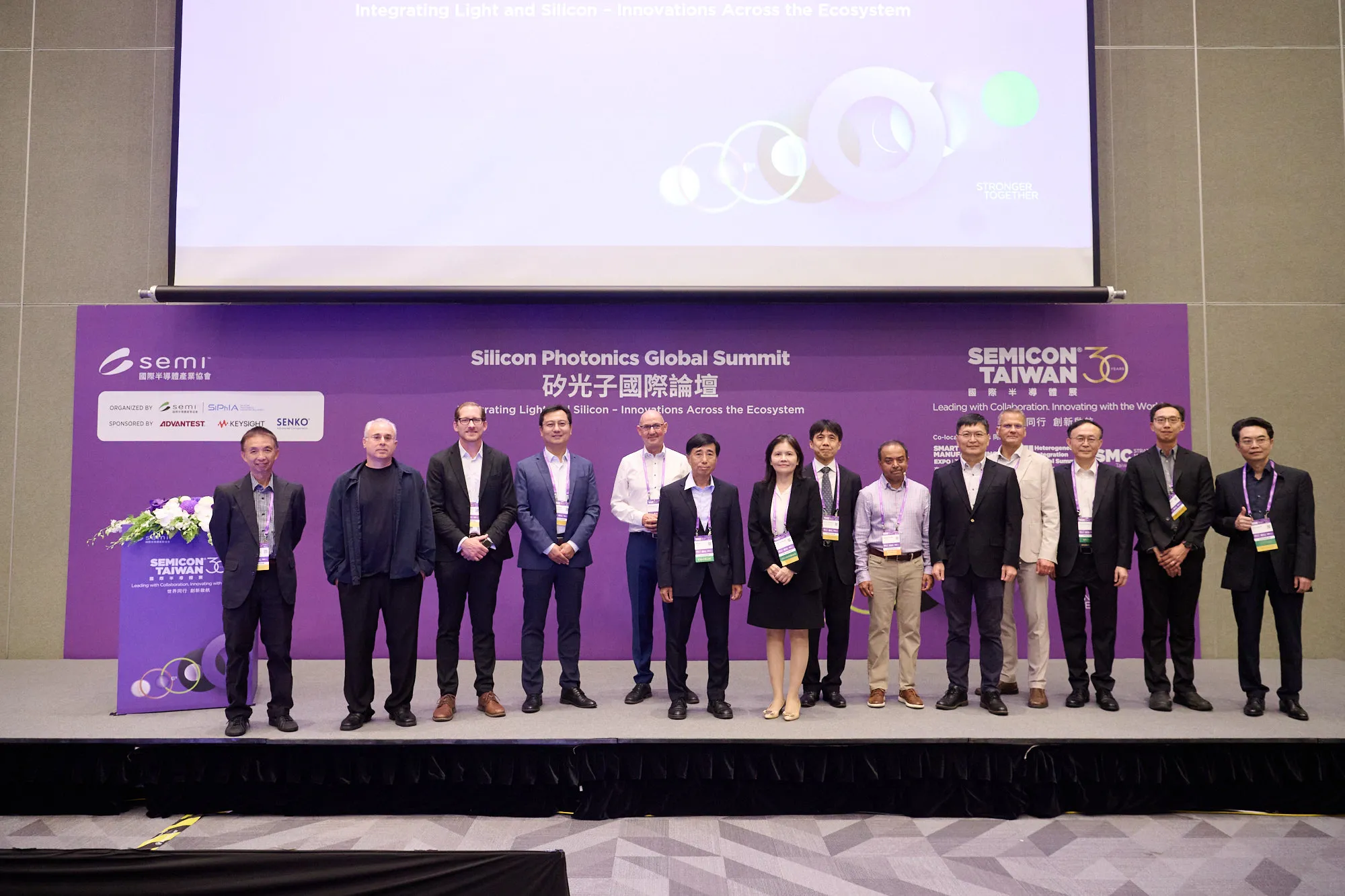
▲ SEMICON Taiwan 2026 Silicon Photonics Pavilion & Global Summit will spotlight AI infrastructure
About SEMI
SEMI® is the global industry association connecting more than 4,000 member companies and 1.5 million professionals across the semiconductor and electronics design and manufacturing supply chain. SEMI helps members address critical industry challenges through advocacy, workforce development, sustainability, supply chain management and other programs. SEMICON® Taiwan events, technology communities, standards and market intelligence support business growth and innovation across design, devices, equipment, materials, services and software - advancing smarter, faster and safer electronics. Learn more at www.semi.org or follow SEMI on Facebook, LinkedIn and LINE.


