downloadGroupGroupnoun_press release_995423_000000 copyGroupnoun_Feed_96767_000000Group 19noun_pictures_1817522_000000Member company iconResource item iconStore item iconGroup 19Group 19noun_Photo_2085192_000000 Copynoun_presentation_2096081_000000Group 19Group Copy 7noun_webinar_692730_000000Path
Skip to main content
Default Banner Image

McKinsey & Company

U.S. consumers are flush with cash, the American economy is hurtling back from the depths of the COVID-19 pandemic, and the semiconductor industry is flying high on skyrocketing chip demand, with chip equities soaring since the initial outbreak in early 2020 as virus outbreaks worldwide supercharged demand for the digitization of everything from factories to home offices. “Wow, what a difference a year makes,” said Jennie Raubacher, Global Head of Semiconductor Electronics Investment Banking at Wells Fargo, speaking at a recent SEMI webinar. The two rounds of government stimulus payments in 2020 and 2021 gave many U.S. households the safety net to withstand the heaviest blows dealt by the COVID-19 pandemic and stoked consumer spending that has helped lift a hobbled economy. Durable goods spending in the U.S. has also seen a sharp rebound, surging more than 60% from its April 2020 trough, Raubacher said. The twin forces have driven a blistering U.S. economic recovery after GDP shrunk about 10% by the second quarter of 2020 only to bounce back in the first quarter of this year to roughly $19 trillion, regaining the lost ground to match the GDP charted at the end of 2019. With the U.S. economy continuing to gain steam, inflation has, as expected, edged higher, with price increases particularly acute in used vehicle and lumber markets. Despite surging prices, Wells Fargo sees inflation moderating as durable goods demand slows, easing pressure on interest rates, Raubacher said. Equity Valuations at Record Highs Heady semiconductor stock prices are not new. Over the past 15 years, equity prices of chip companies in the S P 500 have grown more than 460%, outpacing the 230% jump in value of the S P 500 index overall, Raubacher said. And chip stocks continue to shine. Since early 2020, when the spread of COVID-19 hit its rapid clip, the recognition of the growing importance of chips to economies around the world has exploded. That dynamic joined secular technology trends including autonomous driving development, industrial and factory automation, 5G infrastructure buildouts, data center expansions, and smart city and smart home innovation fueled by the Internet of Things (IoT) as key drivers of semiconductor stock valuations. With its price/earnings (PE) ratio now at more than 21x, the S P 500 is well above its historical average of 15x PE. “The S P 500 valuation is at record high any way you look at it, and valuation multiples across the board, currently at 3x Next Twelve Months revenue, have increased dramatically from historical averages,” Raubacher said. Semiconductor stock valuations are on similar trajectory, with the SOXX index now at 15x Next Twelve Months EBITDA (earnings before interest, taxes, depreciation and amortization). “While semiconductor stocks may seem highly valued compared to historical levels, the chip industry has grown faster and expanded profitability by a wider margin than S P 500 companies,” Raubacher said. With that differential, “semiconductor equities are not as expensive as they may seem at first glance.” Earnings expansion and valuation multiple increases for the chip industry over the past 15 years have translated into a more than 500% jump in market capitalization, compared to a 300% increase for the S P 500 excluding chip companies, she said. Chip company revenue growth in the first quarter of 2021 was predictably low due to seasonality, dipping 2.4%, though dropped less than the historical average, Raubacher said. Second-quarter revenue growth for the industry is expected to hew to the historical average of 6%. Semiconductor growth forecasts by market analysts for 2021 range widely from 6% to 17% year-over-year, she added. Chip Companies Raise Capital at Record Pace In 2020 and 2021, semiconductor companies have raised an unprecedented $82 billion in capital to finance maturing debt and acquisitions, a wave that will “likely catalyze further consolidation in the sector,” Raubacher said. None of the financing has stemmed from liquidity crunches. Since Raubacher joined Wells Fargo 10 years ago to lead its semiconductor practice, the group has executed more than 175 transactions including $40 billion in mergers and acquisitions and $360 billion of financing for its semiconductor industry clients. “With a strong macroeconomic backdrop and demand environment, relatively low interest rates, semiconductor companies showing strong business fundamentals and robust valuations, we expect a pickup in M A activity,” she said. Growth Forecast Across Most Semiconductor Applications The next four years will see the chip industry grow across most applications including wireless communications, consumer electronics, transportation and medical. Automotive and industrial/aerospace will lead the way, expanding at an expected compounded annual growth rate of 14% and 10%, respectively, from 2020 to 2025 to “drive a significant portion of the TAM expansion during that period,” Raubacher said. Across all applications, the semiconductor industry is expected to grow at a 6.8% CAGR from 2020 through 2025, adding $183 billion in revenue by the end of the forecast period, she said. ESG Rises in Importance For their part, investors now focus on more than pure business performance when valuing individual companies. The ability of businesses to reduce their carbon footprint, promote workplace diversity and take other steps to serve the greater good as part of Environmental, Social and Governance (ESG) programs are carrying more weight in valuation models. “Investors are paying more and more attention to ESG initiatives and targets,” Raubacher said. “On the debt side, we’re seeing things like green bonds and interest rate reductions tied to ESG targets. Only a few semiconductor companies have incorporated ESG measures into their financing, so it’s still early days. It really comes down to the metrics you can track in your companies and the goals and targets you can commit to. It will be a very company-specific approach rather than an industry standard.” In the chip industry, Raubacher noted that ESG targets are geared not only to manufacturing equipment and processes in fabs and other semiconductor facilities throughout the supply chain, but increasingly also to chips themselves. As technology innovation continues to spur the development of chips to power more electronics for consumers and businesses, their proliferation comes at a cost: greater energy consumption. The upshot is that semiconductor makers are becoming more focused than ever on power-efficient designs to bolster their ESG initiatives, Raubacher said. Many semiconductor players across the supply chain are reducing their carbon footprint by switching to energy-saving equipment and reducing water waste, Raubacher said. At the same time, more semiconductor executives are recognizing the rising importance of highlighting corporate achievements across all aspects of ESG. More Governments See Vital Importance of Semiconductors As shelter-in-place orders took hold in countries worldwide after the initial COVID-19 outbreak, work-from-home offices, online shopping, virtual classes and remote doctor’s visits became the norm. The electronics at the heart of this connectivity – born of both necessity and convenience – and the chips that power them took on outsized importance around the world. Geopolitical skirmishes intensified and supply chains across the semiconductor industry were reimagined and redrawn. Governments jockeyed for advantage in the race to build new semiconductor manufacturing facilities and upped their chip investments. An acute chip shortage that started in the automotive industry and quickly spread to other sectors magnified just how pervasive and vital semiconductors had become in making the world go round. “There’s no question that the semiconductor industry is vitally important to global and national economies as governments around the world now recognize its strategic importance,” Raubacher said. That puts the industry in an even stronger position to help lay the regulatory groundwork for its own future. “There’s a unique opportunity for semiconductor industry executives to shape the public policies that could impact the direction of the industry for the next 30 years,” she said. More than 750 people attended the June 2nd webinar, Surging Chip Demand, Digital Transformation, and the Pandemic – What’s Next?, sponsored by SEMI members Brooks Automation, Hitachi, JECT, KLA and TEL. Sven Smit of McKinsey Company also delivered his talk Leading in COVID-19 Exit at the event.
Read More
Traditionally, defect classification is done manually by operators or using Automated Optical Inspection (AOI) machines, often leading to classification inconsistencies. Also, rules-based AOIs may at times be unable to fully satisfy project requirements due to the rigidity of inspection recipes. SixSense – Breaking the Status Quo with Artificial Intelligence Enter SixSense, an AI-powered defect classification software platform that has been making breakthroughs in defect detection and classification for semiconductors to make manufacturing smarter and more efficient. Founded in 2018, SixSense has already amassed a wealth of experience and chalked up a number of successes such as automating the manual image classification process, reducing manufacturing false rejects, and capturing escapees. Infineon Technologies and GlobalFoundries were amongst the early adopters of SixSense’s platform: classifAI. With Infineon, classifAI has allowed over-rejection rates to be precisely quantified. classifAI – Simple UI, Easy Usage, Powerful Models As a UI-based assistive software platform, classifAI, SixSense’s automated defect classification platform is built with the defect and yield engineer in mind. SixSense takes care of all the back-end complexities – such as coding, algorithm modelling and deployment – to enable end users to get started and use the platform with a simple GUI. The simplified end-to-end AI pipeline offered on the platform includes data labelling to make data AI-ready, model training, and model testing. Ultimately, models are deployed on the production floor for 24/7 inferencing of hundreds of millions of images every year, at scale, across processes, tools and sites. Machine learning models built by the SixSense team have seen strong results, with model accuracy of up to 98% in certain use cases. Track Record of delighting IDMs, Foundries and OSAT Customers SixSense has consistently solved visual inspection problems and enabled the success of IDMs, foundries and OSATs since its inception. The AI technology has helped a range of customers across 100mm-300mm wafer standards, both pure silicon and compound wafers, and caters to specific end-use market requirements such as RF and automotive. Partnerships between startups and established manufacturers are key to actualizing the value of AI in manufacturing. “Our collaboration with AI startup SixSense has enabled us to explore opportunities in yield gain, improving cycle time, and real-time monitoring of process shifts,” said Dato’ Tan Soo Hee, Executive Vice President, Global Backend Operations at Infineon Technologies Asia Pacific. “SixSense has been very attentive to the needs of our engineering team, addressing project requirements using a customer-first approach evident in the design of the intuitive software platform,” said Melvyn Peh, Principal Engineer, Automation-Scan-Pack, Infineon Technologies Asia Pacific. The intelligent annotation module is one of many offered by SixSense, which uses AI to train AI and accelerate the data annotation process by focusing on the semiconductor-specific requirements. Another valuable module in classifAI is advanced analytics that capture the heatmap for defect distribution on the images. Images are stacked on top of each other, with the location of defects aggregated to provide the defect heatmap. Through this, systematic failure patterns were identified that allowed defect engineers to zero in on key sources of failure and assist in root-cause analysis. Infrastructure – Scale Fast, Adapt Quickly, Accelerate Value Creation In the dynamic world of technology, machine learning and AI projects must meet changing infrastructure demands. A cloud-first approach is often favored for the plethora of benefits it offers. “We’re looking forward to a great partnership with SixSense, treading together hand in hand exploring fresh ideas and possibilities,” said Manju Jalali, Vice President of digital manufacturing at GlobalFoundries, who oversees the company-wide roll out of classifAI. For use cases where on-premise deployments are preferred, SixSense offers such options for infrastructure integration, satisfying all possible infrastructure requirements in the market. Contributing to a vibrant innovation ecosystem SixSense was mentioned by Singapore’s Deputy Prime Minister Heng Swee Keat during an event that marked Infineon’s 50th anniversary in Singapore: “I am heartened that Infineon will be investing more than $27 million over three years on an AI initiative in Singapore. Under this initiative, Infineon Singapore will be partnering academia, industry, and local startup SixSense AI to develop new AI solutions and courses.” Explosive Growth of AI in Chip Manufacturing According to a McKinsey Company report, AI contribution to semiconductor company earnings is projected to rise to between $85 billion and $95 billion per year in the coming years. SixSense has been taking great strides in creating value for their semiconductor customers. “SixSense offers tremendous value in a high-growth vertical in the semiconductor industry, marrying the latest deep learning algorithm with the compute power of the cloud,” said Rajan Rajgopal, CEO of DenseLight Semiconductor. “This leads to faster root-cause analysis that helps reduce the cost of non-conformance and improve quality.” Dominic Teo is Enterprise Business Development Representative at SixSense. He can be reached at [email protected].
Read More
At the SEMI Foundation, we’re taking steps to support a big, audacious goal – achieving gender parity in the microelectronics industry. Dating to its roots at Bell Labs, Fairchild Semiconductor, and Intel in the late 1950s and 1960s, the semiconductor industry was pioneered by men at a time when far fewer women were in the workforce. While women have made major workforce gains since those early days, we’re still far from achieving anything close to an equitable representation of women. According to the U.S. Bureau of Labor, only 11.8% of electrical and electronics engineers – and just 8.7% of mechanical engineers – are women. What’s more, research from the American Association of University Women (AAUW), a non-profit that champions equity for women and girls through advocacy, education, and research, tells us that women drop out of engineering careers more steadily and quickly than men. According to AAUW research, just 30% of women working in engineering are still in the field after 20 years compared to 35% of men. By the time women have been in the field for 30-34 years, that number falls to 19% – while it increases to 39% of men among the same cohort. The small number of women in engineering careers and the fewer still who stay in engineering long term illustrate the troubling gender disparities in the industry. Even with these low numbers, however, there are still women who have managed to not just stay in the industry, but to thrive and lead within it. I talked with four of these women about their professional journeys and how they believe women can be best supported in careers in our industry. The AAUW research report Solving the Equation: The Variables for Women’s Success in Engineering and Computing shows that attrition in engineering is higher among women than men. Passion for math and scienceLam Research VP Gowri Kamarthy took her Ph.D. in chemical engineering from UC Berkeley directly to Lam Research, where she’s spent the past 22 years in technical positions. Today she heads the company’s conductor etch product line.Coming from a family of engineers, including her father and siblings, Dr. Kamarthy had a built-in support system that was essential to her success. She never felt intimidated by male peers after spending her formative years pursuing her passion for math and science.“I may have stood out as a minority in the field of engineering, but there was also a silver lining in standing out,” she said. “People notice you.”Kamarthy realizes that engineering careers are generally perceived as being less compatible with family life, for both women and men.“Anyone who wants work-life balance in an engineering career will have to navigate its special challenges, including the need to work long hours to match the rapid pace of innovation,” Kamarthy said.Drawing from her own experience, Kamarthy offers some career advice. “Perseverance and grit are key to success,” she said. “The other ingredient is luck. I was fortunate to have great bosses at Lam who didn’t see gender first and foremost. Instead, they recognized my ability to deliver on projects and encouraged me to perform at my best.” A love for math and science. The confidence to excel in those subjects. A support system to help her through the bumpy times. These were also truths for Sandy Vos, Ph.D., director of R D at NXP Semiconductors.“I was always good at figuring things out,” says Dr. Vos. “I remember feeling enthralled when I got my first internship because it combined engineering, math, science and manufacturing.” Like Kamarthy, Vos was aware of her status as a woman in a male-dominated field, but it didn’t stop her.“If anything, my gender drove me to prove myself,” Vos said. “And I’ve been fortunate because everywhere I’ve worked, I’ve been a part of a smart and collaborative team.”That doesn’t mean gender never came into play. Whenever it did become an issue, Vos didn’t shy away from hard conversations. She recalls having a conflict on the plant floor with two men who each stood over six feet and were about 100 pounds heavier.“I had a conversation with them, and we figured it out,” she said. “But for a while there, my heart was racing.”Gender felt like a bigger issue when Vos was younger. “Now that I have gray hair, it’s not much of a concern,” Vos said. “But earlier in my career, I started putting Ph.D. on my business card so people would know I could talk technical details.”Though just one of three women in an undergraduate class of 35 engineering students – and with a teaching cohort of all-male professors – Debbie Gustafson anticipated equitable treatment in her college engineering program. She had the same outlook when she began her career in semiconductor manufacturing. But the belief that she’d receive the same treatment as her male peers went largely unfulfilled. This didn’t slow her down. During her first year as CEO of Energetiq, she grew the company’s revenues and valuation. A year later, she steered the company through a successful acquisition by Hamamatsu Photonics. Today Gustafson continues to lead Energetiq as a wholly owned subsidiary, but the road to the top job wasn’t without hurdles. Gustafson muscled through the tough times.“When I started out, I traveled to Japan and Korea when there weren’t other women in technical roles,” she said. “My first meetings were extremely frustrating. I was the only woman in the room, and the men wouldn’t address me. This went on for a year, but I kept coming back and built the relationships.”Now a member of the SEMI Foundation Board of Trustees, Gustafson credits mentors with helping her navigate the nuances of doing business across cultures during those early years.A rocket scientist among usAlissa Fitzgerald might tell you that MEMS isn’t rocket science. But that’s only because she has a Ph.D. in Aeronautics and Astronautics, which actually is rocket science. Dr. Fitzgerald worked at a government laboratory and a large defense contractor before she got her Ph.D. and moved to a MEMS industry startup. Though gaining valuable experience, she found the environments too hierarchical and lacking in career development opportunities for young female engineers. As one of the few women engineers at these heavy-duty engineering firms where, in the 1990’s, there were no women in leadership roles, Dr. Fitzgerald sensed that opportunities for her to advance were remote. Fitzgerald started her own firm rather than climb up the ladder of another company, but it turns out, her motivation had nothing to do with gender.“It was the way engineers were treated like Dilbert,” she said. “I felt like a cog in the wheel, working for corporations that weren’t nurturing or appreciative of engineers.”After years of working for other companies, Fitzgerald founded the eponymous AMFitzgerald Associates, a developer of innovative MEMS and sensor solutions for specialty applications. When gender did come up for Fitzgerald, it manifested in men questioning her technical abilities.“Early in my career, I felt like I had to prove myself worthy, even though my degrees were from MIT and Stanford,” she said.Over 3,000 respondents to the Workplace Experiences Survey, sponsored by the Society of Women Engineers and the Center for WorkLife Law at UC Hastings Law, validate Fitzgerald’s experience. 61% of women vs. 35.1% of white men surveyed cited Prove-It-Again Bias – “having to prove themselves repeatedly to get the same levels of respect and recognition as their colleagues.” For engineers of color, that disparity was even worse. 68% of engineers of color (both women and men) reported Prove-It-Again Bias vs. 35% of white men.“For women and people of color, there’s rarely an assumption of competence,” Fitzgerald said.It’s sad but true that we can’t decouple the challenges women face from the challenges people of color face. Both are dramatically underrepresented as chip companies, and women of color represent the smallest percentage of the industry’s workforce and leadership.Inclusivity mattersWorking toward gender equity isn’t just a case of doing what’s right. It’s a case of doing what’s profitable. Research shows that companies with more women on the board perform better.“Given the pace of innovation in semiconductors, we need people from different backgrounds and perspectives to solve the hard problems challenging our industry,” Kamarthy said.Vos appreciates the fact that SEMI is creating a forum of inclusion.“Inclusion starts when you’re young,” she said. “School-aged kids are already making decisions about a future they see as exciting and possible. Our job is to make sure they have the opportunities to pursue what they envision.”Change won’t come magically, though. Fitzgerald believes companies need to make a concerted effort to attract a diverse population.“While I see a disproportionate number of female applicants, I’m more the exception than the rule,” she said. “When male executives call and ask, ‘How are you finding all these amazing female engineers?’ I say, ‘they’re finding me.’”Elevate the storyAchieving gender parity in microelectronics is a daunting task. Fortunately, access to SEMI’s global membership puts us in a unique position to make this deeply complex story clear and relevant to our members, so we can help support the shift.We’re looking at both the stark numbers of women working in microelectronics and at the lack of longevity of women in engineering. We’re elevating the conversation about childhood education. Why are girls passed over in math and science classes in early grade school, and what is the effect of teachers’ lowered expectations for girls taking these classes? What does it mean to be the only in the room? The only woman, or the only woman of color, on a team or in a meeting room. Feelings of isolation or disengagement – or frustration with Prove-It-Again bias – often lead to turnover in an industry that already struggles with retention.Reverse the trendThere’s much SEMI members can do to work toward gender parity in our industry. Look at recruitment, hiring, retention and promotion processes to see how women fare in them. Consider how to create a company culture of self-awareness and inclusion. Ensure equitable pay. Suggest and request women speakers for keynotes and panels at conferences. And offer workplace flexibility to allow women – who often bear most family responsibilities – to take time off or reconfigure schedules so they can help care for children or ailing parents.It’s time for our industry to reverse the trend of gender inequality. Research shows that companies with greater gender and racial parity are more productive, innovative, and profitable. If we welcome and support women in our companies, we will help women – and our industry – reach their full potential.Get involved with SEMIRegister for the Women in Semiconductors (May 3, 2021). This virtual event will include interactive exploration and discussion on strengthening the roles of women in hybrid and remote work environments. Everyone managing teams or experiencing the gender parity challenges and opportunities will benefit from the fresh thinking and best practices that the Women in Semiconductor program is known for.Participate in the SEMI Mentoring Program. By matching mentees with industry leaders and professionals, SEMI Foundation facilitates one-on-one mentoring relationships that benefit all participants. Whether you are a recent university graduate or growing in your microelectronics career and looking for support, participating in the SEMI Mentoring Program will put you on the right track.Participate in the McKinsey Company 2021 Women in the Workplace Study, which looks at representation and the experience of women in companies across the U.S. and offers recommendations on how to retain and support women. Email [email protected]. Shari Liss is executive director of SEMI Foundation. Connect with her on LinkedIn.
Read More
International Women’s Day (IWD) is a global day celebrating the social, economic, cultural and political achievements of women. The day is not only the centerpiece of the movement for women’s rights but a unique opportunity to recognize the contributions of women to the semiconductor industry. The first International Women’s Day took place in 1911 when more than a million people in Austria, Denmark, Germany and Switzerland marched to demand equal rights for women including the right to vote and to protest employment sex discrimination. In 1977, the United Nations General Assembly invited member states to proclaim March 8 the UN Day for women's rights and world peace. In recent years, organizations and companies worldwide have sought to use IWD to celebrate the contributions of women to our homes, families, workplaces and communities. The IWD theme for 2021 is Choose to Challenge – a call to draw attention to women’s inequality. It’s also an excellent opportunity for all SEMI members to choose to challenge deep-rooted thinking and behavior in order to grow diversity and collectively commit to increasing the representation of women and women-owned businesses in the semiconductor industry. The double-edged challenge for the chip industry is to grow the ranks of women while retaining those now in the workforce. One in four women are considering leaving their workplaces or downshifting their careers due to work-life challenges stemming from COVID-19, SEMI noted in a recent blog highlighting the Women in the Workplace 2020 study by McKinsey Company and LeanIn.org. One in four! In 2021 it’s important for us to recognize and work to reverse this trend by taking time to encourage, support and celebrate women in the face of COVID-19. A shining example of the enormous contributions to semiconductor industry by women is Dr. Suvi Haukka, a pioneer of atomic layer deposition (ALD) technology. Thirty years ago, Dr. Haukka spied a small note on a university noticeboard that led to her pursuit of a long and highly distinguished career in our industry. The note was a job opportunity with ASM International to research ALD, a role she landed. Upon joining ASM, Dr. Haukka investigated the use of ALD for catalysis applications to modify porous high-surface area materials used in oil refining and polymerization. What was initially a niche application to modify the surfaces of microporous substances and silicon solar cells evolved over time to become a critical materials technology and manufacturing method for coating semiconductor wafers. Working systematically in the lab, Dr. Haukka and her coworkers made fundamental materials and manufacturing process discoveries that advanced ALD material science and manufacturing technologies. An accomplished inventor and technical contributor, Dr. Suvi Haukka was named ASM’s very first Fellow of the Technical Staff in 2018. “Being named an ASM Fellow was a huge moment that made me very, very proud,” Dr. Haukka said. “I have spent my entire professional career working with ALD, and I have been very fortunate to work with many talented colleagues at ASM. “Together we have dedicated ourselves to introducing ALD as a standard means of manufacturing in the semiconductor industry. I believe the award is in recognition of all the valuable work we’ve done over the years.” Dr. Haukka is ASM’s most prolific inventor with more than 100 patents to her name. Her remarkable contributions to the development of ALD chemistry and semiconductor manufacturing process technologies over her three-decade career have made her a highly respected, internationally recognized researcher in the semiconductor manufacturing industry. Bill Olson is the corporate responsibility and conflict materials lead at ASM International N.V. in Phoenix, Arizona. He graduated from the University of Wisconsin-Madison with a Ph.D. in Inorganic Chemistry. Bill has 23 U.S. patents and has published more than 40 technical articles. He can be reached via LinkedIn at www.linkedin.com/in/williamolson.
Read More
Connectivity. Electrification. Shared Mobility. Autonomous Driving. McKinsey Company cites these four disruptive trends behind future mobility — dynamics that could help to transform quality of life for hundreds of millions of people.McKinsey Company predicts that by 2030, mobility innovation could dynamically alter everything from safety in human locomotion to air quality, public spaces and power systems. Much the same way that tiny plankton in our oceans sustain aquatic animals, MEMS and sensors, while small, are crucial building blocks of integrated mobility.As partner at McKinsey Company, Andreas Breiter will explore this connection during his MSEC 2020 presentation, Future Mobility Enabled by Sensorization. SEMI recently caught up with Breiter to preview his October 7 talk at SEMI’s first virtual MEMS Sensors Executive Congress, October 6-8 and 13-15, 2020.Register now for MSEC 2020 and explore this topic with Breiter during the live Q A portion of his presentation.SEMI: You play a dual role at McKinsey Company, advising clients in advanced industries on capital investments and serving on the leadership team of the McKinsey Center for Future Mobility (MCFM). What is the relationship between them?Breiter: Mobility has become so much more than the auto sector. Today when we say future mobility, we’re talking about the convergence of many exciting developments influencing the ways that people and goods move around. Cars have become computers, and we now have to contemplate new frontiers, such as air taxis and electric vehicle infrastructure.Mobility is changing so quickly that it’s inspiring decision-makers from other market sectors to explore what implications it will have for them. We’re helping mining companies think about their haulers, retailers think about their footprints, and insurance companies plan for autonomous vehicles. The MCFM exists as a global think tank to focus on these frontier topics, helping to ensure we are ready for the future. During my MSEC presentation, I’ll explore how those future topics are influencing automotive mobility in the short- and long-term. The MCFM is even more forward-looking, so we’re just starting to build scenarios for what might come in 2040 and beyond.SEMI: How are changes in the mobility ecosystem affecting the automotive value chain?Breiter: In the past, the automotive value chain was clearly structured. We had sensor companies selling to Tier 1 suppliers, who would in turn sell to OEMs, who would sell directly to end customers.The value chain has grown more complex, however. In the future, we might see fleets of robotaxis, which will be owned by companies instead of by individual consumers. Already today, rideshare companies are game-changers because consumers can travel by car without owning one.Plus we see companies offer parts of the user experience such as user interfaces for automotive infotainment. In the past, everything in the car was branded by the OEM, but now we have third-party platforms that let us control some of our automotive infotainment options.SEMI: How are MEMS and sensors suppliers participating in this new value chain?Breiter: The pervasive use of sensors in cars has driven automotive OEMs and Tier 1 suppliers to work directly with suppliers, whose close involvement eases the complexity of integration. Just think about the sensors used in autonomous driving. Getting that right is safety-critical.We’re also seeing suppliers go beyond the individual component level to provide complete systems-level solutions. Advanced driver-assistance systems (ADAS) are a good example.SEMI: Automotive applications tends to have some of the longest design-to-delivery cycles in industry. Will this ever change?Breiter: The automotive product lifecycle was typically five-plus years, with a few years of development before that and continued service after the end of the lifecycle. That gives MEMS and sensors suppliers a 10+ year timeline on one model.With so much innovation taking place, this slow cycle won’t work forever. Over-the-air (OTA) updates, for example, enable new features when they become ready for deployment. I expect we’ll see OTA updates from many end manufacturers in coming years. SEMI: What changes do you foresee in ADAS and autonomous driving?Breiter: ADAS and autonomous features will become much more common. We’ve already witnessed this progression, with introductions first in premier models and later rolling out in more affordable vehicles. Lane-change assist and rear camera followed this path and are now pretty standard. Collision avoidance, as a safety-critical feature, is likely next in line for more widespread adoption.As for fully autonomous driving, consumers will accept that only when it becomes safer than a human driving a car.SEMI: Where is the greatest opportunity in the next five years?Breiter: Electrification of vehicles is number one. When it comes to engines, we’re moving from internal combustion to hybrid and then to electric. Since OEMs are adding sensors for the battery system, for battery management, and for electric motors, this progression represents growth opportunity for sensors suppliers – in particular for hybrid vehicles that contain both powertrain technologies.But that’s not all when it comes to sensors. Outside of powertrains, new sensors are added to enable a variety of functions, including, for example, ADAS and autonomy, as well as increased interior content, such as mood lighting.SEMI: Is there anything surprising coming, sensor-wise, in mobility?Breiter: To enable intelligent traffic systems, you need to make infrastructure smarter — which brings us to sensors. We’re going to see roads and other assets in infrastructure sense the state of traffic, sense what traffic participants are doing, and support connectivity between, for example, the infrastructure, vehicles on the ground, pedestrians on walkways and drones in the air.SEMI: What would you like MSEC attendees to take away from your presentation?Breiter: We’re living in a transformative era for the mobility industry. During the last 100 years of mobility, the ecosystem barely changed. In recent years, however, we’ve seen massive technological gains, largely enabled by semiconductors, MEMS and sensors. Instead of serving as just one of many suppliers, I’d encourage MSEC attendees to anticipate future mobility challenges so they can offer solutions to OEMs and Tier 1 suppliers accordingly.For more information, visit McKinsey Center for Future Mobility. MEMS Sensors Industry Group® (MSIG), a SEMI technology community that connects the MEMS and sensors supply network in established and emerging markets, enables members to grow and prosper. Visit us today.Andreas Breiter leads McKinsey’s capital-investment work for advanced industries in North America as well as its Center for Future Mobility on the West Coast. In his advisory work, Breiter serves a broad range of companies in the automotive sector, including car and truck manufacturers and their suppliers, as well as companies in the utilities and renewables space. He helps executives make strategic choices around product development and helps companies stay ahead of emerging trends, such as autonomous driving, connectivity, electric vehicles, and shared mobility.Andreas holds a Ph.D. in Operations Management and studied in Germany, France, the U.S. and Canada.Nishita Rao is product marketing manager at SEMI.
Read More
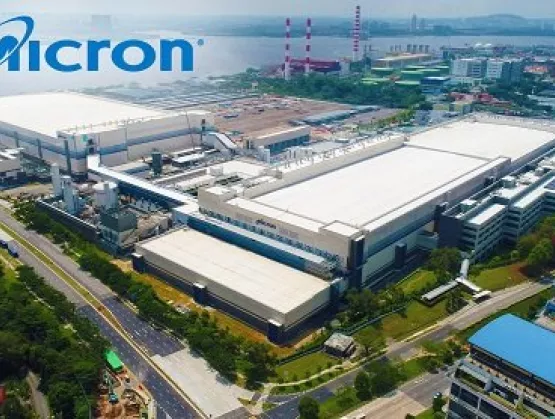
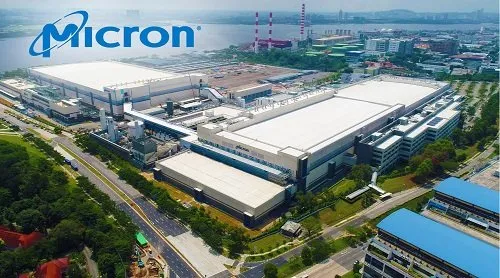
Making Strides TogetherKnowledge is power – especially when it is shared. This principle formed the foundation for Micron’s Go and See virtual visit of its Singapore manufacturing plant on 26 August 2020 as 27 companies including GLOBALFOUNDRIES, ST Microelectronics, Infineon, TEL, ViTrox , IBM, HP and UTAC joined the first-of-a-kind virtual factory visit. The chip industry powerhouses gathered to see how Micron’s Lighthouse frontend wafer fabrication facility leverages Fourth Industrial Revolution technologies to drive new production and cost efficiencies.They saw clear markers of a transformed organisation and spoke with working-level staff, managers and front-line employees. Company representatives also met virtually with Micron management teams from organisations that led its digital transformation – from pilot programs to integration at scale – to realise significant financial and operational benefits. The mix of technologies they deployed to make it all happen included artificial intelligence (AI), big data analytics and the Industrial Internet-of-Things (IIoT).Micron’s Singapore-based fab facility earned Lighthouse certification earlier this year from the World Economic Forum’s Global Lighthouse Network. The Go and See tour was co-sponsored by SEMI Southeast Asia and McKinsey Company.Transformation is CrucialBy embracing Lighthouse principles, semiconductor sectors and companies can accelerate their digital transformation to boost operational and financial efficiency while helping increase productivity across the electronics supply chain. It will take time for Southeast Asia semiconductor manufacturers to transform to digital operations, though we’re seeing growing interest in Industry 4.0 practices as they begin to understand that the deployment of new technologies and applications will help them better understand real-world benefits of smart manufacturing use cases and solutions. SEMI believes shining the spotlight on companies like Micron can illuminate the way forward for other companies to help drive the industry’s digital transformation. We look forward to seeing companies build on this momentum as they start to leverage leading-edge technologies to improve efficiencies and promote sustainability.Bee Bee Ng is president of SEMI Southeast Asia.
Read More