downloadGroupGroupnoun_press release_995423_000000 copyGroupnoun_Feed_96767_000000Group 19noun_pictures_1817522_000000Member company iconResource item iconStore item iconGroup 19Group 19noun_Photo_2085192_000000 Copynoun_presentation_2096081_000000Group 19Group Copy 7noun_webinar_692730_000000Path
Skip to main content
Default Banner Image

SEMI News

Europe is facing an acute shortage of skilled microelectronics workers that undermines the growth potential of not only the electronics industry but the European economy as a whole. Nearly 1.1 million job advertisements for electro-engineering workers were placed in the EU between mid-2018 and the end of 2019 (CEDEFOP, 2020). The shortfall looms large as a skilled and diverse workforce that can continuously innovate is the oxygen of microelectronics. In light of the critical importance of microelectronics to Europe’s ability to fulfill its growth potential, SEMI Europe participated in the high-level roundtable hosted by Commissioner Nicolas Schmit and Commissioner Thierry Breton on October 5. The discussion’s key takeaway: The skills challenge facing the microelectronics industry is too complex for one organization to tackle, and reskilling and upskilling its workforce should be a common priority for Europe. Only with a diverse, substantial and skilled microelectronics workforce can Europe achieve its R D, design and manufacturing ambitions while ensuring its sovereignty in the digital age. The roundtable highlighted the EU Pact for Skills as a key means to narrow the industry’s skills gap.An ever-growing part of our lives, microelectronics, with their ability to run billions of computations per second and store vast quantities of data, are the brains of modern technology. The digital sovereignty of nations around the world today relies on advanced microprocessors to collect, transfer, analyze and store immense amounts of data used in key end-user sectors such as mobility, telecommunications, energy, security and healthcare. Information and communication technologies (ICT) enabled by microelectronics are helping much of the world’s population to work and study from home and remain safe during the COVID-19 pandemic.According to the Smarter2030 Report, further deployment of ICT, including electronic components in critical sectors such as transportation, manufacturing, agriculture, construction and energy, could eliminate the equivalent of 12.1 billion tons of CO2 per year globally. These are some of the reasons why nations worldwide are making large-scale investments to advance a homegrown microelectronics R D, design and manufacturing base. It is no surprise, then, that semiconductors are now at the center of the so-called global techno-trade wars.Clearly, Europe urgently needs to mobilize and pool resources to develop effective lifelong learning programs for all workers and continue investing in microelectronics innovation. We need to instill the passion for creating technology among current and future workforce, in particular women and people with challenged backgrounds, and build a highly diverse talent pool. Working together, we can better demonstrate how computing technologies, including quantum, high-performance and edge AI, provide solutions to grand societal challenges and attract talented people to the fascinating world of electronic components and systems.Against this backdrop, the microelectronics industry finds the Pact for Skills very timely and crucial to advancing the talent pool underpinning Europe’s deep digital ecosystem. The Pact will play an instrumental role in improving the scope and the quality of training partnerships at regional, national and European levels, sharing best practices and helping the microelectronics industry and workforce adapt to the effects of COVID-19.The microelectronics industry is committed to building on the momentum created by the METIS Erasmus+ collaborative project and to mobilizing our ecosystem and education partners for a successful Pact for Skills in Microelectronics starting this year.The High-Level Roundtable: Skills for Microelectronics was hosted by Commissioner Thierry Breton and Commissioner Nicolas Schmit. Participants included Paul Boudre, CEO, SOITEC; Lars Reger, CEO Germany and CTO, NXP; Frits van Hout, Executive Vice-President and Chief Strategy Officer, ASML; Françoise Chombar, CEO, Melexis; Emmanuel Sabonnadiere, CEO, CEA-Leti; Luc Van den hove, President and CEO, imec; Sabine Nietzsche, Board member, Silicon Saxony and Vice President, GlobalFoundries; Laith Altimime, President, SEMI Europe (coordinator of METIS); Yolande Berbers, President, European Society for Engineering Education (SEFI); James Calleja, President, European Forum for Technical Vocational Education and Training (EFVET); Ludovic Voet, Confederal Secretary, European Trade Union Confederation (ETUC).Emir Demircan is director of Advocacy and Public Policy at SEMI Europe. To learn more about SEMI Europe advocacy, contact Emir at [email protected].
Read More

TAIPEI, Taiwan – October 13, 2020 – Energy Taiwan today hosts a pre-show press conference with government and industry opinion leaders sharing the latest perspectives on domestic policies, energy industry trends, corporate energy consumption, and domestic green energy transformation goals and opportunities. The largest renewable energy event in Taiwan, Energy Taiwan connects the global green energy supply chain for three days of technology demonstrations, theme forums, business networking, and expert insights into the latest technologies and business opportunities in PV, wind energy, hydrogen energy, smart energy storage, and green finance and insurance.

Energy Taiwan Logo 2020

Hosted by SEMI and the Taiwan External Trade Development Council (TAITRA), Energy Taiwan is expected to draw more than 10,000 visitors from Taiwan and abroad to the Taipei Nangang Exhibition Center, Hall I (TaiNEX 1), October 14-16, 2020.

Today’s press conference features insights on Taiwan’s renewable energy development, promoting renewable energy in Taiwan, environmental sustainability, revitalization of the domestic economy and other topics addressing how Taiwan can establish its green energy competitive edge and become the Asia-Pacific green energy center. Speakers at the press conference include:

Energy Taiwan Theme Forums

Energy Taiwan features 15 theme forums on renewable energy to promote industry dialogue and business matching opportunities. The forums include the following:  

  • PV Executive Summit
  • PV Technology Symposium
  • Global Renewable Energy Supply Chain Summit
  • International Forum on Offshore Wind Talent Training and Underwater Technology Trends
  • Smart Energy Storage and System Integration Forum
  • Offshore Wind Industry Summit
  • Hydrogen Energy Industry Trend Forum

Industry Powerhouses to Showcase Latest Green Energy Technologies

  • PV – AUO, Motech, TSEC, URE, Win Win Precision Technology and YSOLAR
  • Wind energy – Copenhagen Infrastructure Partners (CIP), EnBW Asia Pacific, Hai Long Offshore Wind Farm Project, Formosa 3 (Haiding) Offshore Wind Farm Project, Ørsted, RWE, Swancor and WPD
  • Energy Storage Products – Billion Watts, Mobiletron, Samsung, Siemens, Sysgration and Yulon Motor

“We have seen impressive growth in the renewable energy industry in Taiwan the past four years,” said Wen-Sheng Tseng, Vice Minister, Ministry of Economic Affairs, R.O.C., emphasizing the government’s determination to develop renewable energy. “To echo the goal of promoting renewable energy highlighted by President Tsai Ing-wen in her second-term inaugural speech this year, the government, the industry, and the private sector need to work together to seek a consensus and strive to reach the milestone of green energy sources in electricity generation share by 20% in 2025. Looking to the future, the government will try to do its best to create diverse green energy applications, build industry clusters, develop a comprehensive green power system, and attract more international talent to help Taiwan transform into a smart green energy technology island.”

“According to the latest survey of PV Policy Position Paper from the SEMI PV Public Advocacy Committee, nearly 75% of the people support the energy transition, 2.5% higher than last year, while up to 80% of the people hope to see acceleration of the development of the PV industry,” said Terry Tsao, Global Chief Marketing Officer and President of SEMI Taiwan. “SEMI has long been committed to fostering communication between the government and the industry and has been deeply involved in the PV industry for 14 years through exhibitions, forums, policy advocacy and various business matching events. Last year, we joined hands with eight offshore wind energy developers to launch the Taiwan Offshore Wind Industry Association (TOWIA) that vows to promote sound development of the energy industry and assist Taiwan’s renewable energy industry to reach the next level.”

“We see a lot of growth momentum for renewable energy due to policy support and rising
domestic demand,” said Leonor F. M. Lin, President and CEO of TAITRA. “Taiwan's goal is to raise its offshore wind energy capacity to 5.7 GW by 2025. Investments up to NT$1 trillion (US$34.8 billion) as well as 20,000 new jobs are expected. Energy Taiwan 2020 is joined by top players in PV, wind energy, and energy storage from home and abroad. Through technology exchanges with international counterparts and immersion in the latest Internet of Things (IoT) and artificial intelligence (AI) related application technologies, we believe the industry can find a way to maintain its flexibility while adjusting to the rapidly changing energy world, and create more comprehensive renewable energy solutions.”

“PV is an important alternative source of energy that Taiwan government has been promoting to reach its goal of becoming a less coal-use and nuclear free country,” said Dr. Wen-Whe Pan, CEO, United Renewable Energy Co., Ltd. “However, policy inconsistency and implementation gaps of different government agencies and the pushback from environmental groups make it difficult to acquire the lands needed, and the consequences of failing to carry out the green energy policy will be shared by the government, developers and environment groups. To make abolition of nuclear energy and reduction of coal power possible, all stakeholders from different sectors of society must work together. Moving forward, the government must take the lead in solving issues concerning land acquisition and distribution feeders. Only by doing so is there a chance for us to achieve 20GW of PV installations by 2025 and accomplish the energy transition goal in Taiwan.”

“As one of the global leaders in offshore wind energy, Ørsted really appreciates the opportunity to be working with Taiwan to make our shared green energy vision possible, and to facilitate sustainable development of Taiwan's offshore wind energy industry,” said Christy Wang, General Manager of Ørsted in Taiwan. “We started to proactively invest in wind energy in Taiwan in 2016 and committed to supporting the development of the local supply chain and nurturing and hiring local talent. Our Asia-Pacific team has grown from only two members to 140! It is vital for Taiwan to maintain its growth momentum and launch the next stage of bidding as early as possible next year to secure its leading position in the Asia-Pacific market and ensure that key industrial resources such as regional talent and shipping and supplier capacity are in place. More importantly, local suppliers should be given sufficient time for preparation. Only by doing so can Taiwan sustain its competitive edge in Asia-Pacific. Ørsted will continue to deepen its relationship with the local community and work with the industry, government and academia partners to turn the green energy vision into reality.”

Most foreign buyers are unable to visit to Taiwan due to travel restrictions stemming from the pandemic. To overcome that challenge, Energy Taiwan offers a variety of virtual platforms to ensure continued exchanges between exhibitors and international buyers. Online trade meetings will include buyers from Spain, Poland, Romania, Bulgaria, the United Arab Emirates (UAE) and Singapore. International buyers plan to work with Taiwanese companies to develop more energy products during the post-COVID-19 pandemic era. In addition, a live tour will guide international buyers through the show in English, exploring the latest services and solutions at Energy Taiwan 2020.

Renewable Energy Week, organized by the Bureau of Energy, Ministry of Economic Affairs, R.O.C. is co-located with Energy Taiwan this year.

For more information about Energy Taiwan, please visit the event website.

About SEMI

SEMI® connects more than 2,400 member companies and 1.3 million professionals worldwide to advance the technology and business of electronics design and manufacturing. SEMI members are responsible for the innovations in materials, design, equipment, software, devices, and services that enable smarter, faster, more powerful, and more affordable electronic products. Electronic System Design Alliance (ESD Alliance), FlexTech, the Fab Owners Alliance (FOA) and the MEMS & Sensors Industry Group (MSIG) are SEMI Strategic Technology Communities, defined communities within SEMI focused on specific technologies. Visit www.semi.org to learn more, contact one of our worldwide offices, and connect with SEMI on LinkedIn and Twitter.

Association Contacts
Jo-ann Su
SEMI Taiwan
Email: [email protected]
Phone: 886.3.560.1777 ext. 202

Connie Lin
SEMI Taiwan
Email: [email protected]
Phone: 886.3.560.1777 ext. 211

MILPITAS, Calif. ─ October 13, 2020 ─ Global silicon wafer shipments are set to increase 2.4% year-over-year in 2020, with growth continuing in 2021 and shipments reaching a record high in 2022, SEMI reported today in its annual silicon shipment forecast for the semiconductor industry.
semi logo

“Silicon wafer shipments are recovering this year despite pressure from geopolitical tensions, the shifting global semiconductor supply chain and the COVID-19 pandemic," said Clark Tseng, director of Industry Research and Statistics at SEMI. “With the pandemic accelerating digitization to transform businesses and their delivery of services worldwide, we expect continued growth over the next two years.”

2020 Silicon* Shipment Forecast (MSI = Millions of Square Inches)


Actual

Forecast


2018

2019

2020

2021

2022

2023

MSI

12,541

11,677

11,957

12,554

13,220

13,761

Annual Growth

8.0%

-6.9%

2.4%

5.0%

5.3%

4.1%

*Total Electronic Grade Silicon Slices – Excludes Non-Polished Wafers
*Shipments are for semiconductor applications only and do not include solar applications
Source: SEMI (www.semi.org), September 2020

Silicon wafers are the fundamental building material for semiconductors, which in turn, are vital components of virtually all electronics goods, including computers, telecommunications products, and consumer electronics. The highly engineered thin round disks are produced in various diameters (from one inch to 12 inches) and serve as the substrate material on which most semiconductor devices or chips are fabricated.

All data cited in this release includes polished silicon wafers such as virgin test wafers and epitaxial silicon wafers shipped by the wafer manufacturers to the end-users but not non-polished or reclaimed wafers.

For more information, please visit SEMI Worldwide Silicon Wafer Shipment Statistics.

About SEMI

SEMI® connects more than 2,400 member companies and 1.3 million professionals worldwide to advance the technology and business of electronics design and manufacturing. SEMI members are responsible for the innovations in materials, design, equipment, software, devices, and services that enable smarter, faster, more powerful, and more affordable electronic products. Electronic System Design Alliance (ESD Alliance), FlexTech, the Fab Owners Alliance (FOA) and the MEMS & Sensors Industry Group (MSIG) are SEMI Strategic Association Partners, defined communities within SEMI focused on specific technologies. Visit www.semi.org to learn more, contact one of our worldwide offices, and connect with SEMI on LinkedIn and Twitter.

Association Contact

Michael Hall/SEMI
Phone: 1.408.943.7988
Email: [email protected]
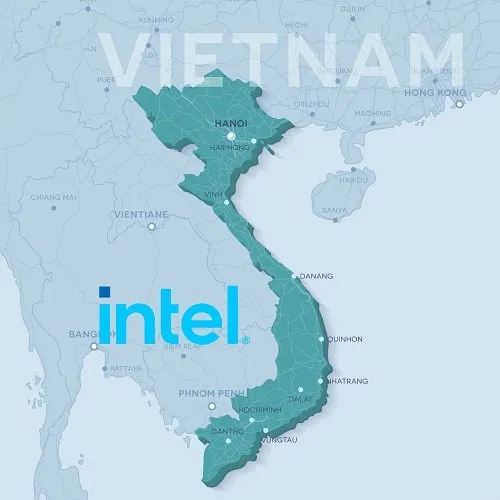
A 500,000 ft2 (~47,000 m2) state-of-the-art cleanroom facility still towers as the largest U.S. high-technology investment in Vietnam 10 years after starting operations in Saigon High Tech Park in District 9, Ho Chi Minh City. The structure built by Intel Products Vietnam (IPV) on the back of a $1 billion investment is the largest assembly and test manufacturing facility (ATM) in the Intel assembly and test network. IPV turns out products that are helping power cutting-edge applications along with the next wave of semiconductor industry growth as it homes in on 5G, Internet of Things (IoT), desktop and mobile. And it has been a boon to the local economy, generating more than 5,000 high-skill jobs across a number of assembly and test disciplines since launching operations in 2010. It has also contributed to over US$37 billion in exports from 2010 to 2019, accounting for over 60% of Saigon High-Tech Park’s annual export values in 2019. With its vision “to create the future of Intel and Vietnam,” Intel continues to be a strong long-term partner in Vietnam. I recently spoke with Kim Huat (KH) Ooi, vice president of Manufacturing and Operations and General Manager at Intel Products Vietnam (IPV), about the facility’s vital role in Intel’s overall manufacturing operations, its support for the E E ecosystem in Ho Chi Minh City, and measures it has implemented to reduce the impact of the COVID-19 pandemic on the facility and protect employees. Ooi leads and manages the site to support Intel’s business in Vietnam. His responsibilities include overseeing factory operations and employee relations; enriching the Intel image and brand; building strategic relationships with communities, media, governments, and local authorities; and working with the industry ecosystem and government. IPV employees celebrate Intel’s 50th anniversary in 2018. Ng: How does IPV campus complement the rest of Intel manufacturing sites and be nearer your customers and supplier base?Ooi: Intel Vietnam is an important part of Intel’s manufacturing presence worldwide. IPV has been operating for nearly 14 years in Vietnam and has celebrated multiple milestones along the way. As a site, we have matured and grown over the years. In March this year, we celebrated a proud milestone – the rollout our 2 billionth unit – that reflects the value of IPV to Intel Corporation as these Made in Vietnam products support its customers worldwide. One of our philosophies is to work with and grow local ecosystems in countries where we operate. In Vietnam, Intel has been offering technical and managerial expertise to many local suppliers in Vietnam to help them expand their business and services to other foreign direct investment (FDI) customers in the industry. Over the past 10 years, Intel’s supplier list has grown 10-fold from 20 in 2010 to about 180 suppliers in 2020.In today’s world of fast-changing consumer preferences and expectations, we need to help drive development of the latest products and technologies to support strong customer demand and new product portfolios such as 5G. To support evolving customer requirements, our workforce frequently upgrades its skills to work on new products and technologies.Intel as a company is also evolving as it transforms from a PC-centric to a data-centric organization, a shift behind the more than US$70 billion in record revenue Intel posted in 2019. Intel’s data-centric business accounted for more than half of that revenue. IPV plays a key role in Intel’s expansion into new market segments.Ng: What are the key differentiating elements (talent, tax, technology, trade, EHS) in Vietnam that have been instrumental in supporting the E E ecosystem in Ho Chi Minh City?Ooi: Vietnam’s stable political environment and increasingly liberalized trade and investment policies are great for businesses. The region’s young, talented workforce is also one of many competitive advantages that enables it to attract foreign investment. Intel’s announcement to invest in Vietnam in 2006 has played a large part in helping put Vietnam on the map of the global IT and semiconductor industry. The news helped attract industry suppliers and service providers, bolstering Vietnam’s economy and creating jobs. The Vietnam government also figured prominently in sparking the boon by establishing the right policies and incentives to attract foreign investment. Since starting operations, we have seen significant improvements in infrastructure such as roads, ports, airports, broadband and power supply. Vietnam’s standing in the global business community is even stronger today after the government successfully combatted the COVID-19 pandemic early on and introduced policies to help businesses restart operations. We expect all these factors to continue to make Vietnam an attractive relocation target for companies around the world. Ho Chi Minh City People’s Committee Vice Chairman Mr. Duong Anh Duc (center) visited Intel Vietnam to tour the state-of-the-art facility. Ng: What measures have you implemented to reduce the impact of the COVID-19 pandemic and protect employees? Ooi: COVID-19 has taken the world by storm and changed the way we work and live in many ways. It has unquestionably pushed the world to build stronger partnerships among individuals, organizations, businesses and communities. Intel’s manufacturing operations have continued to run at full capacity. Since the outbreak emerged, we have strictly followed required Intel safety measures as well as the Vietnam’s health guidelines. We have also implemented a number of other safety initiatives and protocols to ensure our business runs smoothly. We’re doing everything possible to ensure the well-being of our employees and help them better respond to the pandemic.In coordination with our strategic partners, we have been donating thousands of Personal Protective Equipment (PPE) to the Fatherland Front and Department of Health (DoH) since early March. Recently, in partnership with AmCham Vietnam, Intel donated an imported ambulance with built-in essential equipment to the Ho Chi Minh City 115 Emergency Center. Intel has also teamed with Saigon Hi-Tech Park management to donate two ventilators and N95 masks to DoH.Our employees are also helping out by donating to Vietnam’s Coronavirus Donation Matching campaign. We collected US$13,000 from Intel employees and included matching funds from Intel Foundation to support three non-profit organizations (NPOs) – Saigon Children’s Charity, Kidspire Vietnam and Teach for Vietnam. All told, Intel Products Vietnam has donated US$200,000 to COVID-19 relief efforts, demonstrating our long-term commitment to communities where we operate. Intel Products Vietnam teamed with AmCham Vietnam to donate a fully equipped ambulance to Ho Chi Minh City’s 115 Emergency Center, demonstrating IPV’s long-term corporate social responsibility commitment. In early May, Intel unveiled our 2030 Corporate Strategy and goals to accelerate progress against the world’s critical challenges and help drive positive global outcomes. Part of our 2030 goals, our RISE (Responsible, Inclusive, Sustainable, Enabling) strategy focuses on the company’s commitment to its corporate social responsibility (CSR) initiatives to create a more responsible, inclusive, safe and sustainable world through technology and collective action. IPV has also committed to implementing the RISE strategy in Vietnam with local community initiatives and technology interventions. Bee Bee Ng is president of SEMI Southeast Asia.
Read More

MILPITAS, Calif. — October 6, 2020 — Aiming to accelerate the adoption of smart manufacturing across the worldwide microelectronics supply chain, the first SEMI Global Smart Manufacturing Conference will gather Industry 4.0 experts October 20-23 to share best known methods (BKMs) for improving data capture and analysis in microelectronics manufacturing. Registration for the virtual conference featuring keynotes, case studies and tutorials is open.

semi logo

Smart manufacturing practices could increase productivity by as much as 12% through line efficiency gains, quality improvements, and reductions in energy and direct labor costs, according to Deloitte. Industry 4.0 is also a significant driver of IC devices, accounting for $49 billion in sales in 2020, according to Gartner.

Smart manufacturing is the science of digitizing manufacturing data to maximize microelectronics yield and production efficiencies while increasing return on investment in equipment, processes and people. Members of the SEMI SMART Manufacturing initiative collaborate to drive advances and a higher return on investment faster.

The SEMI Global Smart Manufacturing Conference will feature six sessions on three topics – sensing, connecting and predicting – and experts from companies including BisTEL, Bosch, Broadcom, Deloitte, Doople, Micron, Schneider Electric, Texas Instruments, TDK and Yamaha. With two live sessions each day, the virtual conference will be easy to access during working hours in the major microelectronics manufacturing regions.

“There is a growing need across the world for more insights on effective smart manufacturing strategies and tools that lead to high ROI,” said Dr. Bobby Mitra, IEEE Fellow, worldwide director of Smart Manufacturing at Texas Instruments, and chair of the SEMI Smart Manufacturing Americas Chapter. “The first SEMI Global Smart Manufacturing Conference will bring together global experts with real-world experience who will outline the critical concepts in each smart manufacturing domain with best practices and returns.”

SMART Manufacturing

“The microelectronics industry’s urgency to drive greater manufacturing efficiencies has never been greater as foundational production technologies remain key enablers of advances in artificial intelligence (AI), 5G, machine learning and other smart technologies that promise to help the world overcome some of its greatest challenges including the current COVID-19 pandemic,” said Tom Salmon, vice president of Collaborative Technology Platforms and lead of the Smart Manufacturing Initiative at SEMI. “With the sharp reductions in worldwide air travel, SEMI is taking the lead with a virtual conference that will connect microelectronics manufacturing customers with solution providers via a new AI engine to provide a novel method of information sharing and networking that could be more effective than a face-to-face event.”

The global SEMI Smart Manufacturing Technology Community, which includes Smart Manufacturing committees in the Americas, China, Europe, Japan, Korea, Southeast Asia and Taiwan, identified the industry experts who will present as speakers and instructors at the conference.  

The SEMI Global Smart Manufacturing Conference programs committee consists of representatives from Applied Materials, Arizona State University, Inficon/FPS, IBM, Lam Research, Veracity Protocol, Rockwell Automation, Sapphire Automation, TEL, and Texas Instruments.

SEMI launched its Smart Manufacturing Initiative in 2016 to explore strategies and share best implementation practices among its members while meeting the needs of SEMI International Standards committees for data sharing.

For more information on the SEMI Global Smart Manufacturing Conference, please visit its website.

About SEMI

SEMI® connects more than 2,400 member companies and 1.3 million professionals worldwide to advance the technology and business of electronics design and manufacturing. SEMI members are responsible for the innovations in materials, design, equipment, software, devices, and services that enable smarter, faster, more powerful, and more affordable electronic products. Electronic System Design Alliance (ESD Alliance), FlexTech, the Fab Owners Alliance (FOA) and the MEMS & Sensors Industry Group (MSIG) are SEMI Strategic Technology Communities, defined communities within SEMI focused on specific technologies. Visit www.semi.org to learn more, contact one of our worldwide offices, and connect with SEMI on LinkedIn and Twitter.

Association Contact

Michael Hall/SEMI
Phone: 1.408.943.7988
Email: [email protected]
Industry Reports 12.6% Revenue Growth Overall; Most Categories Log Double-Digit Increases

MILPITAS, Calif. — October 5, 2020 — Electronic Design Automation (EDA) industry revenue increased 12.6% in Q2 2020 to $2,783.9 million, compared to $2,472.1 million in Q2 2019, with most categories logging double-digit increases, the Electronic System Design (ESD) Alliance Market Statistics Service (MSS) announced today. The four-quarter moving average, which compares the most recent four quarters to the prior four quarters, increased by 6.7%. The ESD Alliance is a SEMI Technology Community.

SEMI ESDA Logo

“The EDA industry reported a double-digit revenue increase for Q2 2020, compared to Q2 2019,” said Walden C. Rhines, Executive Sponsor, SEMI EDA Market Statistics Service. “Individually, Computer Aided Engineering (CAE), IC Physical Design and Verification, and Semiconductor IP (SIP) reported double-digit increases in Q2. Further, all geographic regions reported revenue increases.”

The companies tracked in the MSS report employed 46,579 people in Q2 2020, a 5% increase over the Q2 2019 headcount of 44,372 and up 1.4% compared to Q1 2020.

The quarterly MSS report containing detailed revenue information with category and geographic breakdowns is available to ESD Alliance members.

Revenue by Product Category in Q2 2020

  • CAE revenue increased 16.1% to $922 million compared to Q2 2019. The four-quarter CAE moving average increased 7.1%.
  • IC Physical Design and Verification revenue increased 16.8% to $584.1 million compared to Q2 2019. The four-quarter moving average for the category rose 4.8%.
  • Printed Circuit Board and Multi-Chip Module (PCB and MCM) revenue decreased 0.3% to $243.5 million compared to Q2 2019. The four-quarter moving average for PCB and MCM increased 12.4%.
  • SIP revenue increased 13.6% to $948.2 million compared to Q2 2019. The four-quarter SIP moving average grew 8.5%.
  • Services revenue decreased 12.8% to $86.2 million compared to Q2 2019. The four-quarter Services moving average decreased 14.3%.

Revenue by Region in Q2 2020

  • The Americas, the largest reporting region by revenue, purchased $1,155.6 million of EDA products and services in Q2 2020, an 11.4% increase compared to Q2 2019. The four-quarter moving average for the Americas increased 4.6%.
  • Europe, the Middle East, and Africa (EMEA) revenue increased 5.2%, to $377.5 million compared to Q2 2019. The four-quarter moving average for EMEA grew 12.2%.
  • Japan revenue increased 9% to $240.4 million compared to Q2 2019.
  • APAC revenue increased 18.1% to $1,010.3 million compared to Q2 2019. The four-quarter moving average for APAC increased 6.3%.

About the MSS Report
The ESD Alliance Market Statistics Service reports EDA, IP and services industry revenue data quarterly and is available to Alliance members. Both public and private companies contribute data to the report. Each quarterly report is published approximately three months after quarter close. MSS report data is segmented as follows:

  • Revenue type (product licenses and maintenance, services, and SIP)
  • Application (CAE, PCB/MCM Layout, and IC Physical Design & Verification)
  • Region (the Americas, Europe Middle East and Africa, Japan, and Asia Pacific)

In addition, the report provides many subcategories of detail and lists total employment of the tracked companies.

About the Electronic System Design Alliance
The Electronic System Design (ESD) Alliance, a SEMI Technology Community, is the central voice to communicate and promote the value of the semiconductor design ecosystem as a vital component of the global electronics industry. As an international association of companies providing goods and services throughout the semiconductor design ecosystem, it is a forum to address technical, marketing, economic and legislative issues affecting the entire industry. For more information about the ESD Alliance, visit http://esd-alliance.org.

About SEMI
SEMI® connects more than 2,400 member companies and 1.3 million professionals worldwide to advance the technology and business of electronics design and manufacturing. SEMI members are responsible for the innovations in materials, design, equipment, software, devices, and services that enable smarter, faster, more powerful, and more affordable electronic products. Electronic System Design Alliance (ESD Alliance), FlexTech, the Fab Owners Alliance (FOA) and the MEMS & Sensors Industry Group (MSIG) are SEMI Strategic Association Partners, defined communities within SEMI focused on specific technologies. Visit www.semi.org to learn more, contact one of our worldwide offices, and connect with SEMI on LinkedIn and Twitter.

The information supplied by the ESD Alliance is believed to be accurate and reliable, but the ESD Alliance assumes no responsibility for any errors that may appear in this document. All trademarks and registered trademarks are the property of their respective owners.

Press Contacts
Paul Cohen
ESD Alliance
A SEMI Strategic Technology Community
978-769-2106

Jack Taylor
Mentor, a Siemens Business
512-560-7143

Like so much else these days, career mentoring in the semiconductor industry has gone virtual. And, among hiring managers, for good reason: Chip companies are facing a new urgency to hire skilled workers as recent SEMI forecasts spanning packaging materials and fab equipment spending show strong growth in 2021 – a trajectory that puts even more pressure on an industry confronted with a worker shortage to attract and recruit new talent.Enter SEMI Korea, which early this month gathered nearly 4,000 sheltered-in-place South Korea university students to offer tips from semiconductor industry insiders on how to kick-start their careers in the chip business. In 14 sessions over three days, industry powerhouses offered guidance across topics ranging from educational preparation and job skills to resume writing and interviewing. Like last year’s on-site event, students from Seoul accounted for the bulk of those online for Campus Outreach On-Air. But this year saw a far higher turnout of students in provincial cities thanks to the ease and convenience of virtual communications – a silver lining in the age of COVID-19.Establishing a successful career in the semiconductor industry starts with a mix of soft and hard skills, according to Changjin Kang, CEO of SEMES, one of the top 10 global semiconductor equipment companies. Keynoting the event, Kang pointed to six key attributes in particular – caring, resilience, execution, analysis, tenacity and experience – under the acronym C.R.E.A.T.E.Caring means empathy for colleagues, understanding their unique work environment and challenges, and building strong relationships. To help cope with the stress that can come with working in the industry, workers must be also be resilient by managing the emotional demands of a job and getting enough rest. Execution comes down to thorough, methodical planning. Carefully analyzing information to make data-driven decisions is a critical aspect of successful outcomes, while having the tenacity to push through difficult technical challenges helps engineers develop the right solutions. And getting out from behind the desk to learn from colleagues is important in building experience.Human resources representatives and engineers from Applied Materials, ASML, Dongjin Semichem, EO Technics, Jusung Engineering, KLA, Lam Research, Merck KGaA, Darmstadt, Germany, PSK, SEMES, SK Siltron, TEL and Wonik IPS shared with the students the key competencies needed to forge a career in the semiconductor industry. Engineers pointed to the benefits of improving their English skills through language training and continuing their education by pursuing engineering certificates. Human resources representatives stressed the importance of a global mindset since, as part of the global semiconductor ecosystem, engineers and other staff often communicate via conference calls with colleagues around the world.In a post-event survey, the students – all digital natives – awarded the event 4.3 out of 5 points for overall satisfaction and made clear that they prefer online Campus Outreach to the on-site event.“Thanks to SEMI and the companies for providing a great opportunity to meet experts and HR managers,” one student pointed out in the survey. “It was very useful because it opened up opportunities for many students to communicate with semiconductor companies.”“It was nice to know what works semiconductor engineers do,” said another, “and how as university students they prepared for employment.”SEMI Korea thanks the nine semiconductor companies that sponsored Campus Outreach On-Air to help build the industry’s talent pipeline and the students for their invaluable participation.Jaegwan Shim is a marketing specialist at SEMI Korea.
Read More
As the semiconductor industry continues to grapple with the widespread effects of the COVID pandemic, at the SEMI Foundation we continue to build programs and initiatives that inspire the next generation of STEM workers and drive new and diverse talent to all of our member companies.Our work to build out the semiconductor workforce centers on creating more diversity, equity, and inclusion within the industry. We want everyone to win. We want students and workers to benefit from these excellent jobs. We want our industry to diversify to increase our productivity, innovation, and our bottom lines. And we want to fulfill the extraordinary potential of electronics to help people around the world in the way they work and live. COVID-19 is hitting certain populations – women, veterans, and Black, Indigenous and other people of color – particularly hard, so our work has never been more timely or important for local communities and the global economy.To that end, we’re going big by generating funding and designing initiatives that will benefit the industry over the long term. The SEMI Foundation’s SEMI VetWorks Program, currently in development, will help U.S. veterans better understand our industry, the careers available to them, and how their skills will transfer to working in microelectronics. The program also provides training portals and mentorship support to smooth their transition to the industry.We’re also working to fund our Women In Industry Network, a major new initiative designed with national partners to significantly increase the representation of women, who today account for just 10-25% of the semiconductor workforce across all roles and functions. What’s more, the SEMI Foundation’s global industry image and awareness campaign is inspiring more young people to enter high-school and university STEM programs and ultimately pursue careers in microelectronics while encouraging current workers to re-skill or up-skill and join the tech workforce.Meanwhile, your High Tech U team continues to connect semiconductor companies with students all over the globe. While we’re eager to get back on the road to meet and inspire students in person, we are excited to provide updates about two of our programs:HTU in the ClassroomWith the transition to online and hybrid learning classrooms, we seized the opportunity to combine STEM activities from SEMI High Tech U with discussion sessions and other projects to help students explore and deepen their understanding of the semiconductor manufacturing process. The 16-week pilot program, called HTU in the Classroom, will launch late next year to introduce high-school students to four key areas of chip production: patterning and layering, the chemistry involved in photolithography, logic gate systems, and computational thinking. These interviews with SEMI member companies will give students a chance to share their new knowledge gained from the class and to ask questions about what life is really like as an engineer, HR professional, or manager in industry.From Sand to SiliconWith silicon the lifeblood of our industry, it is impossible to understand what makes the semiconductor/microelectronics industry tick without knowing more about the companies, processes and technologies that all make it possible. That’s why we are developing a self-guided online journey through the chip manufacturing process for students and educators. This will go beyond reading like a Wikipedia site. Instead, the learning and exploration will feature interactive elements including company videos and links to resources such as fact sheets as well as university and company websites. At each stage, students will get details about the companies and individuals who do the work and the paths the professionals followed to these roles. The big-picture look will show how all the production stages come together to build working devices that power everything from smartphones to data centers.The SEMI Foundation is grateful for your support and partnership as we all work through these unprecedented times and roll out new programs to help build the talent pipeline. To learn more about or support our workforce development programs, please contact Shari Liss, SEMI Foundation’s Executive Director, at [email protected].
Read More
On 21 September, SEMI and a coalition of 40 industry organisations sent a letter to European Commission President Ursula von der Leyen calling for decisive action to solve implementation issues within the European Union Waste Framework Directive, specifically the Substances of Concern in Products (SCIP) database.The signatories, who represent a very significant part of the European economy, are requesting urgent resolution of implementation issues for the SCIP database, which is designed to support the circular economy as defined in the European Green Deal. The database is required under Article 9.1 of the updated Waste Framework Directive.In the letter, the signatories ask President von der Leyen to take immediate action to: Postpone the SCIP notification deadline of 5 January 2021 to at least one year after finalization of the database; Conduct a study on the usefulness, feasibility, proportionality and impact of the database; Instruct the European Chemicals Agency (ECHA) to adapt the SCIP database according to the outcome of the proposed study. ECHA failed to complete development of the database by the January 2020 deadline required by the Waste Framework Directive, leaving companies insufficient time to develop, test and adapt their own systems to meet the January 2021 SCIP notification deadline.Over the last two years, the signatories have repeatedly shared their serious concerns regarding the viability, proportionality and value of the SCIP database with the European Commission and the ECHA, yet those concerns remain unresolved.Contrary to the EU Better Regulation principles that call for open and transparent decision making, Article 9.1 was added to the revised Waste Framework Directive during the final stage of the co-decision process without any prior stakeholder consultation or impact assessment. A proper impact study should help shape the way forward to deliver on the EU ambition of driving a circular European economy.Coalition PartnersEmir Demircan is director of Advocacy and Public Policy at SEMI Europe.
Read More