downloadGroupGroupnoun_press release_995423_000000 copyGroupnoun_Feed_96767_000000Group 19noun_pictures_1817522_000000Member company iconResource item iconStore item iconGroup 19Group 19noun_Photo_2085192_000000 Copynoun_presentation_2096081_000000Group 19Group Copy 7noun_webinar_692730_000000Path
Skip to main content
Default Banner Image

IoT

A short trip to Monterey, California provided an exciting glimpse into what is in store for the future. Along with 550 attendees and 60 exhibitors, I took a quick visit through the aisles and conference venue to find several exciting developments this year!So many exciting new products are on the horizon. Dr. Peter G. Hartwell, CTO of InvenSense, A TDK Group Company, provided a view future of the way sensors including optical, audio, balance, direction, location, and chemical will provide improvements over human capabilities. A glimpse into our future experiences with a 360-view winter wonderland experience of riding a snow mobile using two 180°C fisheye lens cameras with his presentation “Sensors: Where Reality Meets Virtual.” The only warning was that with so many cameras and social media privacy is lost!Dr. Hans Stork, CTO, ON Semiconductor discussed some of the recent investigations his company has made on the many LiDAR sensors. He enlightened listeners with more details of the optical/LiDAR Fusion with FUSE ONE that was unveiled at CES 2019. Future cars will have a combination of cameras, LiDAR, radar, and ultrasonics. No one sensor has it all. There are many companies offering LiDAR for automotive applications, but the products are still too expensive and the market will shake out over the next few years. Douglas Hackler, CEO, American Semiconductor presented the company’s achievement in flip chip on flex circuit assembly for a variety of applications, including pharmaceuticals, wearable wristbands, and IoT communications. Interconnects supported include ACA, ACF, advanced z-axis materials, and low temperature solder. He also described flexible hybrid electronics using printed electronics and a wafer CSP assembly for sensors. With this operation located in Idaho, products can be assembled in the U.S. Jean-Charles Souriau from CEA-Leti described the organization’s detailed research in developing in flip chip assembly on a flexible label with a thin die. A gold stud bump flip chip and thermo-compression bonding with glue is used to attach the die to a flex substrate. A polymer fabricated on thin glass was also demonstrated. Clearly, much progress has been made in flexible printed electronics in the last year with many presentations describing progress. Results of a benchmark study conducted at Cal Poly examined some of the key developments in bump materials and interconnect methods. Key areas such as antennas, batteries, PV and energy harvesting, a variety of sensors, and audio technology were investigated. Dr. Pradeep Lall presented work examining developments in conductive inks for 3D printed electronics.Dr. Subu Iyer and his student, Arsalan Alam, of UCLA presented some exciting research on heterogeneously integrated foldable display on elastomeric substrate, FlexTrate™, using vertically corrugated interconnects. This can be considered fan-out wafer level packaging. The work holds much promise for applications including foldable displays, wireless powered systems and surface electromyography systems. Fine pitch ≤40 micron interconnects bendable to 1 mm bending radius passed more than 6,000 bending cycles. Dr. Mark Poliks of Binghamton University described their work on the development of a wearable flexible hybrid electronics ECG monitor. While the work is in the early stages, human trials will soon begin and the results look promising. New materials will be key in the future products. Reliability test data was also presented on aerosol-jet printed traces on Upilex-S, including tensile, peel and bend testing, as well as “healing” of the damage. New product introductions included U.K’s Peratech’s EDGE force-sensing solution targeted form smartphones, wearables, and tablets. In this HMI solution, Peratech’s thin sensors are mechanically integrated into key areas of the smartphone to capture a user’s natural single-handed grip, ergonomic finger movements, intuitive pressure sand squeezes to control key functions. It even works with the users has wet hands or is wearing gloves! This eliminates the need for physical button openings and allows the implementation of a thinner, more contoured device with a rigid-metal chassis. Next year’s event will be in San Jose during the last week of February. Stay tuned to SEMI’s website for more details.Jan Vardaman is president and founder of TechSearch International, Inc., which has provided market research and technology trend analysis in semiconductor packaging since 1987. She is the co-author of How to Make IC Packages (by Nikkan Kogyo Shinbunsha), a columnist with Printed Circuit Design Fab/Circuits Assembly, and the author of numerous publications on emerging trends in semiconductor packaging and assembly. She is a senior member of IEEE EPS and is an IEEE EPS Distinguished Lecturer as well as a member of SEMI, SMTA, IMAPS, and MEPTEC.
Read More
GlobalFoundries and Dolphin Integration are collaborating on the development of a series of adaptive body bias (ABB) solutions to improve the energy efficiency and reliability of SoCs on GF’s 22nm FD-SOI (22FDX®) process technology for a wide range of high-growth applications such as 5G, IoT and automotive. The goal of the IP is to accelerate energy-efficient SoC designs and push the boundaries of single-chip integration. The design kits with turnkey ABB solutions will be available starting in Q2 2019. As part of the collaboration, Dolphin and GF are working together to develop a series of off-the-shelf ABB solutions for accelerating and easing body bias* implementation on SoC designs. ABB is a unique feature of FD-SOI that enables designers to leverage forward and reverse body bias techniques to dynamically compensate for process, supply voltage, temperature (PVT) variations and aging effects to achieve additional performance, power, area and cost improvements beyond those from scaling alone. The ABB solutions in development by GF and Dolphin consist of self-contained IPs embedding the body bias voltage regulation, PVT and aging monitors and control loop as well as complete design methodologies to fully leverage the benefits of corner tightening. GF says its 22FDX technology offers the industry’s lowest static and dynamic power consumption. With automated transistor body biasing adjustment, Dolphin Integration can achieve up to 7x energy efficiency with power supply as low as 0.4V on 22FDX designs. “We have been working with GF for more than two years on advanced and configurable power management IPs for low power and energy efficient applications,” said Philippe Berger, CEO of Dolphin Integration. “Through our ongoing collaboration with GF, we are focused on creating turnkey IP solutions that allow designers to realize the full benefit of FD-SOI for any SoC design in 22FDX.” “In order to simplify our client designs and shorten their time-to-market, GF and our ecosystem partners are helping to pave the way to future performance standards in 5G, IoT and automotive,” said Mark Ireland, vice president of ecosystem partnerships at GF. “With the support of silicon IP providers like Dolphin Integration, new power, performance and reliability design infrastructures will be available to customers to fully leverage the benefits of GF’s 22FDX technology.” As STMicroelectronics Fellow and Professor Andreia Cathelin has beautifully noted, “Body biasing is not an obligation. It’s an opportunity.” And GF/Dolphin clearly aim to make that opportunity a much easier and more powerful one to take advantage of. ~ ~ ~ *A note on terminology: the terms back bias and body bias are used interchangeably. Likewise the terms adaptive and dynamic when used in the FD-SOI context. Here is a quick explanation of how it works, from an ST paper from several years ago: Back-biasing consists of applying a voltage just under the BOX of target transistors. Doing so changes the electrostatic control of the transistors and shifts their threshold voltage VT, to either get more drive current (hence higher performance) at the expense of increased leakage current (forward back-bias, FBB) or cut leakage current at the expense of reduced performance. While back-bias in planar FD is somewhat similar to body-bias that can be implemented in bulk CMOS technology, it offers a number of key advantages in terms of level and efficiency of the bias that can be applied. Back-biasing can be utilized in a dynamic way, on a block-by-block basis. It can be used to boost performance during the limited periods of time when maximum peak performance is required from that block. It can also be used to cut leakage during the periods of time when limited performance is not an issue. In other words, back-bias offers a new and efficient knob on the speed/power trade-off. For another good discussion of body biasing in FD-SOI, you might want to check out The Return Of Body Biasing by Semiconductor Engineering's Ann Steffora Mutschler from a couple years ago.
Read More
Since about a third of all IoT devices are expected to be connected by Bluetooth, chip designers need IP solutions that will help reduce system cost and greatly improve battery life. And that's just what VeriSilicon has announced for GlobalFoundries' 22FDX® (FD-SOI) process. “By taking advantage of integrated RF capabilities of FD-SOI, in particular GF’s 22FDX, our BLE 5.0 RF IP will significantly reduce the system cost and greatly boost the growth momentum of wearable products such as wireless earplugs,” said Dr. Wayne Dai, Founder, Chairman, President and CEO of VeriSilicon. 22FDX enables efficient single-chip integration of RF, transceiver, baseband, processor, and power management components. GF and VeriSilicon are working on an SoC using VeriSilicon's BLE 5.0 RF IP in GF’s 22FDX process. The latest iteration of Bluetooth is 5, which (like its predecessor 4) has a Low Energy (LE) RF option – but with big improvements. According to the Bluetooth website, “With 4x range, 2x speed and 8x broadcasting message capacity, the enhancements of Bluetooth 5 focus on increasing the functionality of Bluetooth for the IoT.” BLE 5.0 was designed for very low power operation and is optimized for the sorts of short burst data transmissions you'll get with IoT. On the strength of VeriSilicon’s innovative RF architecture and by leveraging GF’s 22FDX technology, VeriSilicon says the new IP product achieves significant improvements in power, area, and cost compared to current offerings, so it will better serve the emerging and increasing wearable devices and IoT applications space. "VeriSilicon's BLE IP complements GF's 22FDX FD-SOI capabilities and is well positioned to support the explosive growth of low-power IoT and connected devices," said Mark Ireland, vice president of ecosystem partnerships at GF. "Together, we broaden our IP and services to further enable our mutual clients to provide power and cost efficient solutions." VeriSilicon BLE 5.0 RF IP includes a transceiver that is compliant with the BLE 5.0 specification and supports GFSK modulation and demodulation. The silicon measurement shows that the sensitivity can be tested up to -98dBm with less than 7mW power dissipation in typical conditions. It largely improves battery life for low power IoT applications. In addition, the RF transceiver saves 40% area compared to a similar implementation on 55nm bulk CMOS. Besides the RF transceiver, this IP integrates on-chip balun, TX/RX switch and 32K RC OSC driver to save the BOM. Moreover, high efficiency DC/DC and LDOs are also available for power management. You can read the full press release in Chinese here and in English here.
Read More
Excellent news and exciting applications made headlines at the recent FD-SOI and RF-SOI events in Shanghai. During the FD-SOI day, Amazon/Blink and Intellifusion shared news about their new chips, and we got updates from GF and Samsung. The RF-SOI day featured a great talk with details about China Mobile's 5G plans, and peeks at Nokia's groundbreaking approach and Qorvo's outlook. [caption id="attachment_12354" align="alignright" width="300"] (Photo courtesy: Verisilicon)[/caption] The hall was absolutely full – with over 300 people attending each day. The FD-SOI event was by invitation only, and there were far more people wanting to attend than there was room for, even given the big room in which the events were held. The events got excellent coverage in the China tech press. For example, EEWorld started with an overview article and added five supporting pieces zooming in on key presentations and companies: one on GlobalFoundries, one on Samsung, one on Verisilicon, and two on Soitec (CEO and top exec interviews). These pieces are in Chinese, but just open the links through your favorite translation site. Many of the key slides are captured in these articles, so if you can't wait for the ppts to be posted on the SOI Consortium website, you can get some quick previews now. The Verisilicon PR folks also wrote up highlights of the FD-SOI event in real time with lots of great pictures – you can read that here. Many thanks to that team, too, for flagging the coverage in the China press and posting it on their WeChat account. On the RF-SOI side, the Simgui folks wrote that up – you can read it here. They also sponsored a gala dinner with awards given to Qorvo and SmarterMicro – you can read about that here. Most of the presentations will be posted on the SOI Consortium website over the next few weeks, at which point we'll cover them in-depth here at ASN. But for now, here's a quick round-up of some of the highlights. FD-SOI Highlights [caption id="attachment_12347" align="alignright" width="300"] (Courtesy: Blink, Verisilicon)[/caption] Boston-area based Blink, which makes very popular home security systems, was recently bought by Amazon (see their current product page here). They just taped out a new chip on Samsung's 28FDS FD-SOI technology, and they're really happy about it. “I believe for battery powered devices at home, FD-SOI is the way to go,” said Yantoa Jia, Head of ASIC China Ops at Blink. Their goal in the move from 55nm bulk to 28nm FD-SOI was to double battery life, add features and control costs: and they did it. Even adding two more CPU cores and lots more features, “The power drop is fantastic,” he said. Design was no problem, he continued, and there was plenty of IP. Once the new generation is officially announced, he promised to sit down with ASN and give us more details. Attendees also heard about a new chipset from Intellifusion, which is putting its face recognition technology onto GlobalFoundries' 22FDX FD-SOI with design house Verisilicon. CEO Nin Chen gave an impromptu talk about how their technology is used to find missing people and property. The new chip, which is especially designed for use in cities, is network-to-cloud leveraging AI. For his part Thomas Morgenstern, GlobalFoundries SVP and GM of the Dresden Fab 1, said they're seeing high yields and increasing capacity for 22FDX. The marketing and manufacturing ecosystem has been built around the fab in Europe. Now, he said, the key is to build an FD-SOI ecosystem in China. The market needs of China largely parallel those of Europe, he noted, for performance and efficiency at the right cost point. The ecosystem enables fast time-to-market and 1st-time-right. [caption id="attachment_12343" align="alignleft" width="300"] (Photo courtesy: Cadence)[/caption] Samsung SVP Gitae Jeong sees their FD-SOI technology as the right solution for the 4th Revolution, which includes everything from energy harvesting to self-driving cars. They've just taped out their first 5G mmWave cellular chip on 28FDS, he revealed. eMRAM is looking very good, only requiring three additional masks and getting stable yields from -40o to 105oC. 18FDS is on schedule, with PDK 0.5 now being released, and 1.0 on track for release in March 2019. They expect a very fast ramp, and are looking at a 35% area reduction, power cut in half and performance up 22% compared to 28FDS. RF-SOI Highlights [caption id="attachment_12350" align="alignright" width="300"] China Mobile, Project Manager Danni Song (Photo courtesy: Simgui)[/caption] When China Mobile talks, the world listens. Project Manager Danni Song presented again this year (she gave a great talk last year, too). China has a very ambitious 5G project underway, and under two years in which to roll it out. The biggest challenges are power consumption and cost (a problem made worse by the additional power amplifiers needed for MIMO). Can RF-SOI help solve these challenges, she asked? One thing she did clarify during the panel discussion was with respect to the mmWave part of the 5G puzzle. Their initial 2020 rollout will only focus on sub-6GHz, with mmWave following a year or two later. Michael Reiha, Head of RFIC R D at Nokia Mobile Networks clarified the worldwide 5G rollout during the panel discussion. Different locations on the planet have different histories and needs, so will rollout 5G in different ways. For historical reasons (and a lack of choice), the US will lead with mmWave, he said. Europe, meanwhile, will focus on 24GHz to meet the needs of automotive radar. In his presentation, Reiha described Nokia's approach to power amplifiers (PA), which is very different from what others are doing. With RF-SOI, he said, you can add sensors and logic for a level of preventative care, so you can gauge and protect your equipment using AI. He believes this disruptive approach will put them two years ahead of the industry, enabling massive MIMO to be deployed in dense urban areas with 60% lower power consumption and 50% savings in material costs. Go read about their Reefshark tech, he urged, which he says will beat GaAs. “The future is very bright with RF-SOI,” he concluded. “I can state that with confidence.” [caption id="attachment_12351" align="alignleft" width="300"] Julio Costa, Director of Technology Development, Qorvo (Photo courtesy: Simgui)[/caption] Julio Costa, Director of Technology Development at Qorvo sees it differently. Traditionally a GaAs house, all their RF-SOI work is fabless. While RF front end modules (FEMs) are loaded with RF-SOI, he said, and are a big winner for antenna tuning, Qorvo still sees GaAs for high-efficiency amplifiers and envelope tracking. But, he said, it will be a battle. GaAs wins in terms of area and power consumption he contends, but adds that SOI wins in terms of cost. Power levels, he predicts, will be the determining factor. So that's the quick overview – we'll drill down into the presentations as they're posted, so stay tuned!
Read More
That FD-SOI can be a key to achieving near-threshold voltage design was an important point made during a #55 DAC expert panel. Entitled How Close to Threshold-Voltage Design Can We Go Without Getting our Fingers Burnt? the session was organized by Jan Willis of Calibre Consulting. Turnout was excellent. Btw, Jan (herself an EDA expert) was one of the original advisors in the formation of the SOI Consortium, and while this DAC panel was not meant to be about FD-SOI, it turned out be a focal point. Near-threshold voltage design* is an especially hot topic for IoT and edge-computing designers, for whom balancing performance, reliability and extremely low power is generally challenge #1. For them, the ability to get chips working at very low voltages translates into battery life savings. The original goal of the panel was “...to explore how far below nominal voltage we can design, in what applications it makes sense and in what ways it will cost us.” The description in the #55 DAC program noted that “Energy consumption is the driving design parameter for many systems that must meet 'always-on' market requirements and in IoT in general. For decades, the semiconductor industry has attempted to leverage the essential principle that lowering voltage is the quickest, biggest way to reduce energy for a SoC. Some today contend sub-threshold voltage design is viable while others argue for near-threshold voltage design as the minimum.” (Update 2 August 2018: a complete video of this panel is now available on YouTube -- click here to view it.) [caption id="attachment_12035" align="alignnone" width="958"] #55 DAC Expert Panel: How Close to Threshold-Voltage Design Can We Go Without Getting our Fingers Burnt? Left to right: Brian Fuller, Arm (moderator); Scott Hanson, Ambiq Micro; Lauri Koskinen, Minima Processor; Mahbub Rashed, GlobalFoundries; Paul Wells, sureCore. (Organized by Jan Willis of Calibre Consulting)[/caption] The panelists included: Scott Hanson - Ambiq Micro Mahbub Rashed - GLOBALFOUNDRIES Lauri Koskinen - Minima Processor Paul Wells - sureCore Ltd., Sheffield Brian Fuller of Arm served as moderator. [caption id="attachment_12033" align="alignright" width="200"] Panel organizer Jan Willis, Calibre Consulting[/caption] Following the panel Jan published the following excellent recap on LinkedIn. She graciously agreed for it to be reprinted here in ASN, for which we thank her. So without further ado, read on! #55DAC Expert Panel on Near-Threshold Voltage Sees Growing Opportunity Despite ChallengesFirst published on LinkedIn, June 27, 2018 by Jan Willis, Strategic Partnerships Marketing Executive Brian Fuller, Arm, skillfully guided a group of experts through the challenges of near-threshold design to conclude that the adoption is going to start gathering pace in a panel session at the 55th DAC in San Francisco on Monday, June 25. Scott Hanson, CTO of Ambiq Micro, led off by saying the list of what's not challenging is a much shorter list but that by taking an adaptive approach, they have been successful. It's required innovating throughout the design process including test where Scott said they had create their own "secret sauce" to make it work. Later on in the panel, Scott described designers in near-threshold as "picojoule fanatics" to overcome the limitations in design tools which are geared towards achieving performance goals. Lauri Koskinen, CTO of Minima Processor, agreed that adaptivity is key. Minima says it has to be done in situ in the design to make it robust for manufacturing while useful across more than one design. Later in the panel, Lauri indicated that FD-SOI is like having another knob available for optimizing energy in the Minima approach to near-threshold design. Mahbub Rashed, head of Design and Technology Co-Optimization at GlobalFoundries, highlighted the need for more collaboration between EDA, IP, and foundries to support near-threshold design but noted a lot of progress has been made on FD-SOI processes. Mahbub cited models down to 0.4V for FD-SOI processes are available now and GlobalFoundries is able to guarantee yield. Paul Wells, CEO of sureCore, validated that sureCore has bench marked their memories on GlobalFoundries FD-SOI with success. He reflected that FD-SOI has rapidly established itself as cost effective for a number of emerging markets. The panel all agreed that achieving quality on the memory at near-threshold voltage was much tougher than for digital IP. [Editor's note: sureCore's CTO wrote an excellent summary of their SRAM IP for FD-SOI in ASN back in 2016 – you can still read it here.] Paul went on to summarize at the end of the panel that near-threshold voltage is the way of the future and that it's gathering pace. Mahbub called upon the EDA community to step up to improve the tools for low energy design. Lauri and Scott both summarized that there were drivers emerging that will grow the addressable market for near-threshold voltage design. Lauri pointed to growth coming from the applications that require edge computing which he thinks will require near-threshold voltage design. Scott concluded the panel by pointing out that there's been a tremendous increase in performance of near-threshold voltage designs which will increase the addressable available market in the future. ~ ~ ~ This piece was first published by Jan Willis on LinkedIn, June 27, 2018. Here is the original. * As explained by Rich Collins of Synopsys in the TechDesign Forum: "Operating at near-threshold or sub-threshold voltages reduces static and dynamic power consumption, at the cost of design complexity. [...] A transistor’s threshold voltage (Vth) is the voltage at which the transistor turns on. Most transistor circuits use a supply voltage substantially greater than the threshold voltage, so that the point at which the transistors turn on is not affected by supply variations or noise. [...] In sub-threshold operation, the supply voltage is well below the Vth of the transistors. In this region, the transistors are partially On, but are never fully turned. Near-threshold operation happens between the sub-threshold region and the transistor threshold voltage Vth, or around 400 – 700mV for today’s processes.
Read More
Dolphin Integration, a partner in the ENIAC THINGS2DO European FD-SOI project, showcased its achievements with PowerStudio™ during the project final review. Power Studio is Dolphin's cutting-edge EDA tool for safe Power Regulation Networks implementation. THINGS2DO, which stands for THIN but Great Silicon to Design Objects, was a 4-year, €120 million EU project (85% industry-funded) with over 40 partners that just finished up at the end of 2017. The goal was to build a design development ecosystem for FD-SOI. The project funded and supported the development of major FD SOI-based IPs and ASICs as well as EDA tools. (Another recent THINGS2DO announcement was Dream Chips’ ADAS SoC fabbed in GlobalFoundries’ 22FDX technology -- read about that here.) “Being involved in the THINGS2DO project was an opportunity for Dolphin Integration to start introducing FD-SOI in its automatic design methodologies,” said Frederic Poullet, Dolphin Integration’s CTO (read the press release here). “Dolphin Integration plans to offer a full suite of tools allowing its customers to implement right-on-first-pass Power Regulation Networks.” The company notes that THINGS2DO also proved that low power consumption makes FD-SOI a perfect fit for IoT and automotive applications. For instance, dynamic control of threshold voltage can be used to compensate for temperature variations, and to drive speed improvements by 200% in ultra-low voltage applications. Dolphin Integration provides energy efficient IPs and ASIC services dedicated to the low-power application market and supports its internal teams with tailor-made software tools. To address the specific needs of its customers in low-power design, Dolphin developed PowerStudio™, a global solution for the optimization of Power Regulation Networks (PRNet) to be used at an early stage of the SoC design process. In particular, it addresses new design challenges in noise and power supply integrity. The first module of PowerStudio™ will also embed architecture optimization features at the schematic level, in terms of FoM-based cost optimization, mode management, margin cuts and integrability rate-based risk optimization. Btw, Dolphin Integration Director Frederic Renoux gave an excellent great presentation at an SOI Consortium event in Nanjing, China last year, entitled Embedding power regulation activity control networks for best SoC PPA. Dolphin Integration joined Global foundries’ FDXcelerator™ Program last year (read the press release here) to streamline design in 22FDX®. "Our comprehensive and robust library of voltage regulators, power gating cells and logic modules, enables to deal cost-effectively and securely with power distribution, power gating, power monitoring and power control of any SoC design in 22FDX," Michel Depeyrot, Dolphin Integration's Chairman, said at the time. "As connected devices sleep most of their time, users of 22FDX also benefit from our ultra-low power and accurate oscillators to design an always-on RTC which consumes as little as 60 nA." See the Dolphin Integration website for the full catalog of their IP, EDA and ASIC/SoC service offerings, including for GF's 22FDX.
Read More
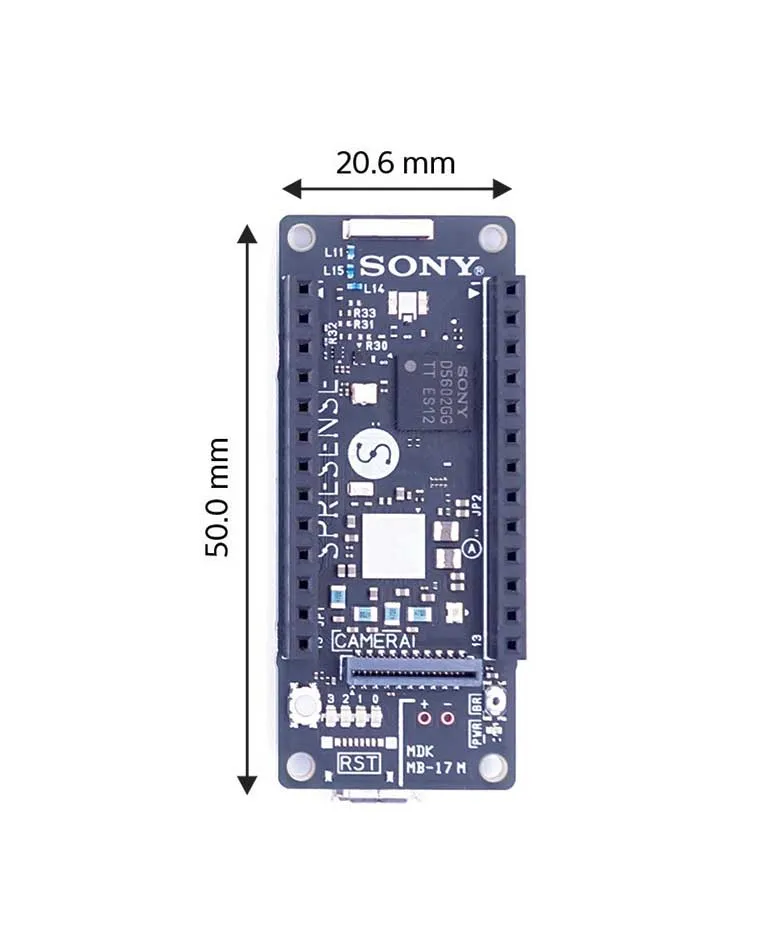
The MCU at the heart of Sony's new smart-sensing SPRESENSE™ for IoT is built on FD-SOI. Why? Low operating voltage and low power consumption, of course! Sony's got two cool new products going on sale in July 2018: the SPRESENCE main and extension boards for IoT applications, equipped with a smart-sensing processor (read the full press release here). A CXD5602PWBCAM1 camera board for sensing cameras will go on sale in August. All were on display at the SF Maker Fair '18, where they were an instant hit. [caption id="attachment_11931" align="alignright" width="300"] Here are the main features of Sony's CXD5602 MCU for IoT, which is built on FD-SOI. (Courtesy: Sony Semiconductor Solutions)[/caption] The main board (it's open source, btw) will run about US$50. You'll find the specs and main features here. Spresense is powered by Sony's FDSOI-based CXD5602 MCU (ARM Cortex-M4F × 6 cores), with a clock speed up to 156 MHz. The main board utilizes a multi-CPU structure equipped with Sony's state-of-the-art GNSS (Global Navigation Satellite System – which they talked about at the most recent SOI Symposiums in SF and Tokyo) receiver. A variety of systems for diverse applications, including drones, smart speakers, sensing cameras and other IoT devices, can be built by combining these boards and developing the relevant applications. The new board can be used to control a drone, for example, using GPS positioning technology and a high-performance processor, voice-controlled smart speakers, low-power consumption sensing cameras and other IoT devices, etc. It can also be combined with various sensors for use in systems that detect errors in production lines on the factory floor.
Read More
Good news: there are far fewer bigoted extremists out there when it comes to FD-SOI vs. FinFETs. People want the best technology for their application. It's that simple. That's a key piece of news from the updated survey by Dan Hutcheson, CEO of VLSI Research, which he presented in the afternoon session of the SOI Consortium's 2018 SOI Symposium in Silicon Valley The afternoon then featured presentations by foundry partners, which I'll cover here. Also in the afternoon were presentations by wafer-maker Simgui, some innovative start-ups leveraging FD-SOI for custom SoCs and the final panel discussion. I'll cover those in Part 3 of this series. BTW, if somehow you missed my coverage of the morning sessions about very cool new products and projects from NXP, Sony, Audi, Airbus and Andes Technology, be sure to click here to read it. The presentations are starting to be posted on the SOI Consortium Events page – but some won't be. Either way, I'll cover them here. VLSI Research A couple years ago at the annual SOI Symposium in Silicon Valley, Dan Hutcheson presented results of a survey he did (ASN covered it – you can still read about it here). At the 2018 event, he presented an update, which is now posted. You can get it here. The FD-SOI roadmap and IP availability are no longer issues for decision makers, he found. The 14nm branch – do you go FinFET or FD-SOI? – is gone. “Fins and FD are complementary,” he observed. Most people said they'd consider using both and running two roadmaps, choosing whichever technology is appropriate to a given design. [caption id="attachment_11841" align="alignnone" width="1000"] (Courtesy: VLSI Research, SOI Consortium)[/caption] From a transistor viewpoint, the top reasons to choose FD-SOI is that it's better for analog and has lower leakage/parastics. It's perceived as better for complex, high mixed-signal SoCs, and especially for RF and sensor integration. In fact, people see RF as the new mixed-signal, wherein FD-SOI is uniquely positioned for 5G and mmWave. From a business viewpoint, FD-SOI is perceived to have real advantages. In particular, FD-SOI wins when it comes to keeping down design costs, manufacturing costs and time-to-market. IoT is still the hottest target market for FD-SOI, to which he adds high growth expected in automotive and medical. Samsung With 20 tape-outs in 2018, Samsung is seeing an acceleration in its FD-SOI business. “The trend is healthy,” said Hong Hoa, SVP of the company's foundry business. FD-SOI, he continued, is on a “differentiation path.” Samsung's 28nm FD-SOI process, called 28FDS is at full maturity with very strong yields. They're seeing more customers and a wider range of applications. The design infrastructure, silicon-verified IP and methodologies are also all mature. They have optimal implementation and verification guidelines for body bias design, a body bias memory usage guide, and a body bias generator integration guide. The process supports Grade 1 automotive, and will be qualified for Grade 2 in a few weeks. FD-SOI, Hoa reminded the audience, offers superior RF performance compared to both planar bulk and 14nm FinFET. The Samsung strategy is to first provide a base for for the FD-SOI process, then add RF and eMRAM. The base for 28nm was done in 2016; they added RF in 2017 and eMRAM this year. The Samsung platform for IoT applications integrates both RF and eMRAM to support multi-function needs in a single platform. Lead customers are already working with eMRAM in their designs, he added. (BTW, Samsung has a really nice video explaining their eMRAM offering – you can see it on YouTube here.) The basic PDK for the Samsung 18nm FD-SOI process (18FDS) will be available in September 2018, with full production slated for fall of 2019. It will deliver a 24% increase in performance, a 38% decrease in power, and a 35% decrease in area for logic. RF for the 18FDSplatform will be ready by the end of this year, and eMRAM beginning in 2019. GlobalFoundries With design wins from 36 customers underway, 12 of which are taping out in 22FDX (GF's 22nm FD-SOI process) this year, the market has validated FDX for differentiation, said GF SVP Dr. Bami Bastani. And indeed, designers are using it for a wide array of applications across North America, Europe, Asia/Pacific and Japan. Customers in the North America are designing in 22FDX for NB-IoT, industrial, RF/analog, mobile, network switches and cryptocurrency applications. In Europe, it's more or less the same plus automotive/mmWave, optical transmission, wireless BTS and AI/ML. In Asia Pacific/Japan the mix is similar to Europe. Bastani sees the three big enablers as the the strengths of the roadmap, the ecosystem and multi-sourcing from Dresden and Chengdu (where they're already equipping the cleanrooms). He also tipped his hat in acknowledgment to the partnership with FD-SOI wafer supplier Soitec, noting that they have gone the extra mile to match GF's requirements. So that was the first part of a great afternoon. As mentioned above, my next post (part 3) will cover a very informative presentation by wafer-maker Simgui on the markets in China, plus talks by some innovative start-ups leveraging FD-SOI for custom SoCs and the final panel discussion.
Read More
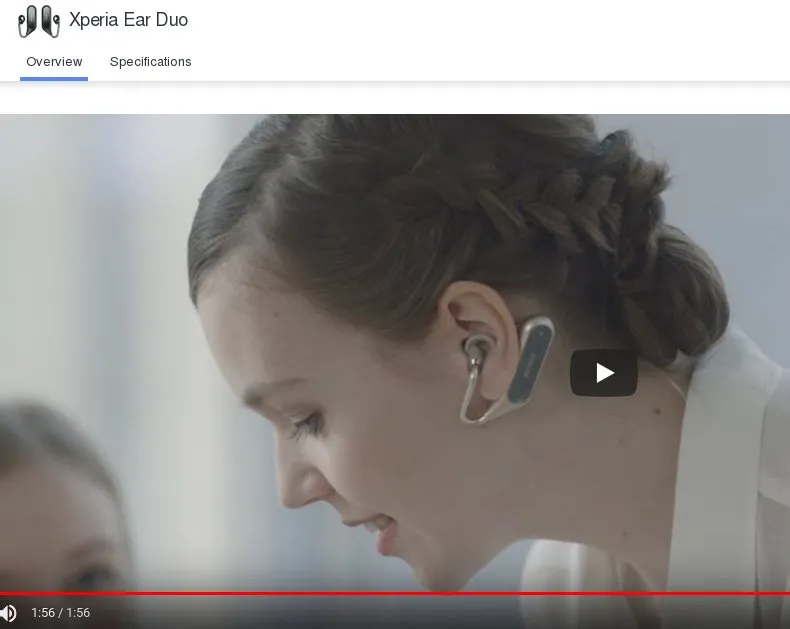
“The ecosystem is ready. The focus is now on applications and products.” And with those words, SOI Consortium Executive Director Carlos Mazure opened the annual Silicon Valley SOI Symposium. As promised, the day was packed with presentations about products on FD-SOI – some from big players like NXP and Sony, some from names new to the FD-SOI ecosystem like Audi and Airbus, and some from start-ups just getting into the game. The event got excellent coverage in EETimes/EDN – including in their editions across the globe in China, Japan, Taiwan, India and more. Samsung, GF Ramp FD-SOI, heralded the headlines. It was a full day of excellent presentations. In this post, I'll chronicle the morning presentations. The next post(s) will cover the afternoon session. Note that as of this writing, the ppts are not yet posted on the SOI Consortium website, but many will be. Keep checking back under the Events tab, and look under “past Events”. Andes Technology As semiwiki noted a few years back, Andes Technology is “...the biggest microprocessor IP company you've never heard of.” Based in Taiwan, Mediatek is one of their big customers; they've got a strong client base across Asia/Pacific, and are now making inroads into North America. Last year they announced with GF their 32-bit CPU IP cores had been implemented on GF's 22FDX® FD-SOI technology. In his symposium keynote, CEO Frankwell Lin said that in the test chip they're doing with GF and Invecus, they're seeing a 70% power savings compared with what they'd gotten in 28ULP. Their newest products are the N25 32bit and NX25 64bit RISC-V based cores, and in July they'll announce a core that runs on Linux. NXP “With FD-SOI we're enabling the future of embedded processing,” the always-quotable (and keynote speaker) NXP VP/GM Ron Martino told us. NXP's i.MX7ULP, i.MX8, i.MX8X and i.MXRT are all FD-SOI based. They all share fundamental building blocks, so NXP can build platforms, scale and re-use IP. “It's better than any technology I've worked on in my 30 years in the industry,” he said. They're seeing much higher performance with on-chip flash. And the RT “crossover” processor boasts 3x higher computing performance than today's competing MCUs. This is going to be critical for edge computing going forward, to which end NXP is working very closely with foundry partner Samsung. FD-SOI is not just helpful for the logic part of these chips – memory technologies also share in the benefits. They get much higher performance with on-chip flash. Leakage is cut by a factor of ten with biasing techniques, and the enhancements mean that memory can operate at very low voltages. NXP is increasingly sophisticated with how they use body biasing, applying high-granularity techniques to independent domains in different parts of the chips. Getting sub-0.6 Vmin delivers value at multiple levels: on battery life, on total system cost, and on system enablement. Invest in body biasing if you want to get leadership results, advised Martino. Edge computing – including machine learning and neural networks for things like image classification – is a big target, he continued. At the last CES they did a proof-of-concept “foodnet” where two appliances talked to each other without having to go to the cloud. In that case it was an i.MX8 in a fridge and an i.MXRT in a microwave, but he explained that the same concept can be applied to a car for driver awareness, where you don't want to take the extra time for or don't have a connection to the cloud. iMX and FD-SOI enable scalable solutions, he concluded. Audi What's a metal-bending company doing talking about electrons? asked Audi Project Manager Dr. Andre Blum. And why SOI? Well, for Audi, he said, SOI stands for Solutions, Opportunities and Innovation. [caption id="attachment_11790" align="alignleft" width="300"] Audi Project Manager Andre Blum says SOI stands for Solutions, Opportunities and Innovation -- at the 2018 SOI Symposium in Silicon Valley.[/caption] Audi is working on the various levels of autonomous driving, and they want it to be without design limitations. That means being able to hide sensors wherever they're needed. They'll create a cocoon around the car for the best driver experience. He showed a fun video Audi's made to illustrate their concept – it's the Invisible Man video, which you can check out on YouTube. But those new architectures can't up the power budget (think heat): rather they need to cut power drastically while increasing performance. And with FD-SOI, they see an opportunity to do just that, he said, while integrating the sensors. Audi is one of 25 partners in a heavily funded ( 100 million Euros) brand new EU Horizon 2020 program called Ocean12 (lead by Soitec). The launch was only May 1st 2018 (so as of today it doesn't even have a website yet), and it will run for about 4 years. It is described by ECSEL (a public-private entity that puts together the big EU research projects) as an “opportunity to carry European autonomous driving further with FDSOI technology up to 12nm node”. One to watch! Airbus For Airbus, it's all about increased connectivity and communications that are trusted and secure, said company expert Olivier Notebaert. Since their chip runs are low, NRE – non-recurring engineering costs – are very important; and they need flexible systems. SOI has a long history in aerospace – in fact that's originally where it got its start, since it can handle radiation and is immune to latch-up. Notebaert says that even for Airbus, IoT is their future. The developments they pioneer will be part of it. Airbus is a partner in the EU Horizon 2020 DAHLIA project – which stands for Deep sub-micron microprocessor for spAce rad-Hard appLIcation Asic. The project is, “...developing a Very High Performance microprocessor System on Chip (SoC) based on STMicroelectonics European 28nm FDSOI technology with multi-core ARM processors for real-time applications, eFPGA for flexibility and key European IPs, enabling faster and cost-efficient development of products for multiple space application domains. The performance is expected to be 20 to 40 times the performance of the existing SoC for space.” According to another recent presentation, DAHLIA is prototyping an FPGA this year that will be in production in 2019. Sony For Sony GM Kenichi Nakano, FD-SOI has big potential for low-power products. And he should know. Sony has been an FD-SOI pioneer, using it as the basis for GPS chips that are now in a growing number of cool products, especially watches. They're getting good feedback from the market and see good opportunities across a diversified global customer base, he said. Their CXD5603, for example, is the lowest power GNSS (GPS) chip worldwide. In mass production since 2015, it is now dominating world wearable markets like trackers -- such the popular Amazfit line. Running through their various FD-SOI based GPS offerings, he noted that the GPS is a pretty simple chip. But now customers are asking for more, like for it to work in the water (where a GPS typically doesn't). So Sony has partnered with triathalon teams and are seeing good results. With success, of course, comes greater demands: for greater accuracy, for more precise positioning in motion, for increased height accuracy, for even lower power – and Sony is meeting these demands with FD-SOI, in solutions like the new CXD5602. The CXD5602 product configuration covers audio/video/communications: key factors in IoT. A camera version is releasing this summer, as are main and extension boards. An LTE module will be released at the end of 2018. And now they're using those FD-SOI chips in audio applications. You'll find it in the Xperia™ Ear Duo, he said. The MWC press release noted that Xperia Ear Duo “... is driven by Sony’s ultra-low power consuming “CXD5602” chip and a sophisticated multi-sensor platform, the “Daily Assist” feature will recognize time, location and activities to offer relevant information throughout the day – reminding you what time your next meeting is when you reach the office or narrating the latest news headlines.” Also in that PR, Hiroshi Ito,Deputy Head of Smart Product Business Group at Sony Mobile Communications, said, “Ear Duo is the first wireless headset to deliver a breakthrough Dual Listening experience – the ability to hear music and notifications simultaneously with sounds from the world around you.” The highly anticipated wireless “open-ear” stereo headset started rolling out to select markets in Spring 2018. There's a great info page with video here. https://youtu.be/1lKo9acJDPs So that's what we heard in the morning. My next post (or posts?) will cover the afternoon. That includes Dan Hutcheson's excellent talk updating his FD-SOI survey, presentations from Samsung, Globalfoundries and Simgui, plus some from very cool start-ups, and the final panel presentation.
Read More
FD-SOI has hit Q1 with terrific momentum, both in terms of visibility into products and in press coverage. In case you missed them, here are three articles you should definitely read: FD-SOI Adoption Expands – Technology shifts direction after years of competing directly with CMOS at advanced nodes (by Ed Sperling at Semiconductor Engineering) 22FDX Shows IoT Traction at MWC 2018 (by David Lammers for GF's Foundry Files) The Future of Silicon: An Exclusive Interview with Dr. Gary Patton, CTO of GlobalFoundries (by Ian Cutress at AnandTech) But, if you don't have time to read them all right away, here are some highlights to tide you over til you do. Expanding Adoption Ed Sperling at SemiEngineering sees FD-SOI adoption “... gaining ground across a number of new markets, ranging from IoT to automotive to machine learning, and diverging sharply from its original position as a less costly alternative to finFET-based designs.” After recounting the advantages (with which ASN readers are well familiar), he notes that two things have changed in our industry. First, fewer and fewer companies can afford to design in the most advanced FinFET nodes. And second: there are enough emerging markets where power is critical, but there won't necessarily be the billions of units per chip needed to amortize exorbitant design costs. In particular, for FD-SOI adoption he cites, “...the inferencing stage of machine learning [note: that happens in “edge” devices], base-stations, IoT and IIoT, bitcoin mining, 5G, radar, and a variety of automotive applications.” (GF's Jamie Schaeffer makes the technical case in the article for NB-IoT and automotive if you want more info.) ST's Giorgio Cesana makes an interesting point about body biasing (that I hadn't hear before) re: uni-direction vs. bi-directional. Currently, he explains, body biasing is uni-directional – although you can use it now in such a way that is effectively bi-directional. However, after the 22nm node, it will become truly bi-directional, which will enable wider swings for power savings. (For those concerned about pre-mature chip aging, see the full article for explanations by experts from Soitec who explain why that's not a problem after all.) Cesana also points out that the kind of chips leveraging FD-SOI are not the kind of chips that will need to move to a new node every year. They're looking for power savings, not shrink. Sperling goes on to make an interesting observation about Intel/MobileEye and power savings vs. shrink – by all means read what he has to say about that.... In conclusion, Sperling asserts that we are now witnessing a shift in the semi supply chain essentially dovetailing with the expansion of FD-SOI adoption and its ecosystem, wherein “...as new markets open up, chipmakers are finding themselves much closer to the application than in the past.” All in all a great read – don't miss it. Products! David Lammers (who you probably know from SST) wrote about products on FD-SOI for GF's Foundry Files in 22FDX Shows IoT Traction at MWC 2018. A number of start-ups will be showing products on GF's 22FDX (FD-SOI) technology at Mobile World Congress. For example, Nanotel Technology is using 22FDX to “...reduce power consumption for its mixed-signal NB-IoT modem.” Lammers interviewed the company's CTO, Anup Savla, who explained, “We have a digital engine, a processor, designed around IoT applications, where the emphasis is on low power and low leakage. With 22FDX there are knobs that are available to turn down the power and leakage. The opportunities to do that are unparalleled, and you just don’t get that kind of opportunity from bulk CMOS.” A significant part to this design is analog – which of course really benefits from FD-SOI. [caption id="attachment_11520" align="alignleft" width="300"] Riot Micro CEO Peter Wong cites savings in power, area and TTM with 22FDX. (Courtesy: GlobalFoundries)[/caption] Riot Micro on the other hand, has designed an all-digital cellular modem for LTE Cat-M and NB-IOT. There's no DSP, and big parts of the chip can be shut down as needed to save power for long-term battery operation in the field (get more details in the full GF blog). Several major cellular carriers are on track to certify it this year, and a Middle Eastern customer plans to incorporate it into an emergency-alert system. The company's CEO, Peter Wong told Lammers, “With 22FDX, the value proposition for us is potential power and area savings.” They also leveraged the growing 22FDX IP ecosystem to accelerate TTM. Dream Chip Technologies, which as Lammers reminds us, showed their multi-core vision processor at MWC last year, says that now “...the design is providing European auto makers and Tier 1 automotive component suppliers with a platform from which they can create custom derivatives.” Verisilicon, an SOI Consortium member and a major FD-SOI champion in China will be teaming up with GF show their dual-mode connectivity solutions (which we first heard about last year). GF and VeriSilicon have a suite of IP so that customers can create single-chip, low-power wide-area (LPWA) solutions that support either LTE-M (for the US) or NB-IoT (for Asia Europe). The IP covers integrated baseband, power management, RF radio and front-end components. Lammers also cited Anubhav Gupta, GF's director of strategic marketing and business development for IoT, AI Machine Learning. He said they've got customers taking older multi-chip designs and re-creating them as single-chip solutions in 22FDX for better performance and savings in area, power and cost. Gupta noted that with body biasing in digital designs, they can operate down to 0.4V with standby leakage currents of less than one picoamp per micron. And when embedded MRAM is used in tandem with on-chip SRAM, off-chip flash can be completely eliminated. Nice! Clear Winner In a wide-ranging interview (see part 7, which focuses on FD-SOI), GF CTO Gary Patton told Anandtech's Ian Cutress that, “FinFET is a great technology for [performance at any cost], but if you're looking for something that is more in the consumer space, you need to balance performance with power and cost, you know FD-SOI is a clear winner.” Patton told Cutress that they have working 12FDX devices in NY that are already close to reaching performance targets. They'll be in risk production in early 2019. Meanwhile in 22FDX, Patton talked about the different flavors, including RF, ULP, UL leakage and mmWave, and how well suited they are for target applications especially in automotive and IoT. Elsewhere in the interview he mentioned that potential customers in the cryptocurrency mining businesses are looking at 22FDX, and that ST will be using it to do some “incredible products”. All in all – products and press – it's a really fine Q1.
Read More