downloadGroupGroupnoun_press release_995423_000000 copyGroupnoun_Feed_96767_000000Group 19noun_pictures_1817522_000000Member company iconResource item iconStore item iconGroup 19Group 19noun_Photo_2085192_000000 Copynoun_presentation_2096081_000000Group 19Group Copy 7noun_webinar_692730_000000Path
Skip to main content
Default Banner Image

microelectronics

Taking aim at advancing smart medtech innovation, the SEMI Nano-Bio Materials Consortium (NBMC), in collaboration with the U.S. Air Force Research Laboratory (AFRL), in March 2020 identified 12 organizations from industry and academia as recipients of $20.4 million in funding, leveraging $10.7 million of cost-share from award recipients. Unique to this round – the sixth in NBMC’s eight years – is a pilot program for NBMC and AFRL to collaborate more closely and share more resources. As part of that effort, AFRL is contributing additional funding to seven of the 12 projects to enable its researchers to work alongside industry on the projects in the new AFRL-Industry Co-Development Program. After being matched to a project during pre-RFP discussions – also known as the White Paper Stage – AFRL researchers were designated as NBMC Consortium Project Investigators before collaborating with industry on the second stage of proposal development. Once contract negotiations between NBMC and the proposing entity wrap up, the AFRL investigators will participate in the development of smart medtech innovations. “This is a new way for AFRL researchers to participate as project performers responsible for contributing to project milestones and deliverables, in addition to providing program management oversight that AFRL has employed for past NBMC projects,” said Dr. Jeremy Ward, past NBMC government lead and current participant in the AFRL Entrepreneurial Opportunity Program. “This program should enable technical risk-reduction for industry by leveraging AFRL competencies and U.S. Air Force aeromedical and airmen performance mission connectedness and ultimately help speed the development of dual-use smart medtech,” added Matt Dalton, AFRL Materials and Manufacturing Directorate program manager and NBMC Governing Council member. “We need efficient mechanisms to leverage research being done outside of AFRL,” said Sharma, who is also senior technical lead for Cognitive Neuroscience at AFRL's 711th Human Performance Wing. “If someone is developing a groundbreaking technology that can be helpful for our airmen, then let’s work with them so that we have an opportunity at an early stage to actively shape that research for Air Force-relevant use cases. Similarly, with this co-development initiative, external researchers will also get an opportunity to work alongside world-class researchers at AFRL and, through those interactions, get insights into the needs of the operational community.” “The AFRL-Industry Co-Development Program strengthens the work between AFRL and industry to better target the strategic needs of the Air Force for dual-use technologies while more closely aligning with commercial market requirements,” said Dr. Melissa Grupen-Shemansky, SEMI CTO and Executive Director of NBMC. “This new collaboration will enable the growth of the ecosystem critical to bringing the latest smart medtech innovations to market while making the technology’s supply chain more sustainable and resilient.” SEMI NBMC connects military, industry and academia for research and development into the practical use of nano-biomaterials. The 2020 RFP targeted nano-bio materials for wearables, flexible and alternative power sources for wearables, and open concepts for wearables for diagnostics and ambulatory monitoring. These technologies address the critical need to monitor, evaluate and mitigate stress experienced by workers in high-pressure occupations – such as aviation, emergency, critical care and aeromedical evacuation – to enhance their warfighter performance and help ensure their well-being. For more information on SEMI NBMC, our R D funding projects, and how you can help shape the direction of our funding programs, visit our website or contact me at [email protected]. Learn more about our projects at the 2021 Global Smart MedTech Symposium July 28-29 and August 4-5, 2021. For more information about the NBMC-AFRL collaboration, see the 2020 Smart MedTech Virtual Workshop agenda. This article borrows from a U.S. Air Force press release on May 27, 2021. Rene Krantz is program manager for SEMI NBMC Smart MedTech.
Read More
Shari Liss, executive director of the SEMI Foundation, is determined to help more people discover careers in the microelectronics industry. As a woman and longtime leader in both education and tech, she has a keen understanding of how chip industry jobs are often not visible or accessible to many people. To address this, she is spearheading the SEMI Foundation’s Industry Image and Awareness Campaign. I asked Shari to tell me about herself, her passion for this work, and this important campaign.Williams: When did you join SEMI? What were you doing before? What is your background?Liss: I joined the SEMI Foundation as executive director in September of 2019. I came to SEMI from Ignited, where as CEO I recruited, trained, and placed more than 400 educators in summer fellowships at top companies for transformative professional development that grew the Bay Area’s STEM talent pool and workforce pipelines. I'm an educator, a math geek, a mom, a musician, and a passionate advocate for a stronger, more diverse workforce.Williams: What is the Industry Image and Awareness Campaign?Liss: The Industry Image and Awareness Campaign, which SEMI has been running for several years, aims to dramatically increase awareness of the huge breadth of careers in the microelectronics industry and build its talent pipeline. The current campaign includes national media exposure and education that highlights careers in the U.S. microelectronics industry. It has two main components: a PBS documentary about our industry that will reach up to 60 million households, and an interactive website that will walk visitors through STEM career pathways and provide resources that increase industry awareness and interest, particularly among women, veterans and people of color. Integrated with SEMI’s Global Workforce Development Initiative, the website will help connect prospective talent to job openings while also focusing on the industry’s long-term workforce needs. The platform will function as a seamless point of contact, supporting recruiting and retention for employers while also serving those in need of upskilling or reskilling. It will target current industry workers as well as prospective employees, including students, veterans, and workers in other occupations.The two components will be integrated, with video content from the documentary series embedded on the website to provide inspiring stories from people already working in the industry.Williams: Why is this campaign important? What problem is it trying to solve in our industry?Liss: Currently, SEMI member companies have tens of thousands of open positions. These can only be filled if we aggressively and purposely attack the talent gaps. When we talk with students, soldiers and other diverse communities, they have little awareness of the kind of work there is in microelectronics, the jobs that await them, and the industry itself. Our industry generally does not have the same name recognition or understanding as social media or software companies, and many potential workers don't know about us.Students understand what’s on their phones and tablets – Google, Amazon, Facebook, Twitter, LinkedIn, Instagram, TikTok – but they don’t know that microelectronics technology powers all of it! STEM talent is already tough to find. Our industry’s relative invisibility makes it even more difficult to find the workers we need. This campaign aims to enlighten and inspire a new generation of innovative workers to join the microelectronics industry. Williams: Why does the microelectronics industry need a more diverse talent pipeline?Liss: The workforce development challenges we face as an industry are layered. We all know that our industry – and our need for a skilled workforce – will continue to grow. We also know that women and people of color are widely underrepresented. They face systemic barriers that start in grade school and continue through each individual’s professional journey. This is not only a significant problem from a social justice and equity standpoint, but it also hampers our companies and our industry.A large body of research shows that more diverse companies are more innovative, productive, competitive, and profitable. They also have less absenteeism, better retention, and greater company and customer loyalty. Our industry cannot fully thrive without a diverse workforce. That’s why reversing this trend is a priority and will take significant investments and systemic changes throughout the entire workforce pipeline. If we do that, we’ll have more successful companies and a dramatically improved industry over the next decade.Williams: Who are our partners in this effort?Liss: We are working with Roadtrip Nation and CAEL, both affiliates of Strada Education.Roadtrip Nation is an Emmy Award-winning media and career guidance nonprofit, whose mission is to empower people to define their own roads in life. Each year, Roadtrip Nation selects socially relevant topics for its narrative-based storytelling projects. Content from these “roadtrips” is then disseminated across a wide range of education and media channels to inspire the next generation with a more inclusive view of the future of work. Roadtrip Nation is creating the video content and the PBS documentary series focuses on the microelectronics industry.The Council for Adult and Experiential Learning (CAEL) is a nonprofit that helps forge a clear, viable bridge between education and career success, providing solutions that promote sustainable and equitable economic growth. CAEL is creating our interactive online platform that will clarify career pathways and guide users in navigating the learning opportunities that connect them to industry jobs and enable upward mobility and access to leadership roles.Williams: How are we engaging our member companies in this work?Liss: Our members and their talent needs are at the core of this work and informing it every step of the way. We are ensuring that the campaign meets these needs as well as those of our university partners, students and workforce development peers in the industry. Through multiple discovery sessions, we are capturing our members’ ideas, hiring challenges, skill gaps and other insights. The campaign’s member-based steering committee is guiding the project.Williams: What kinds of companies and leadership have been involved so far?Liss: Participation has already been incredible, with 38 member companies having joined us for more than 15 hours of discovery sessions and brainstorming. A dozen member companies participate in the steering committee, which is currently defining career pathways and industry needs.Williams: What are the participating companies saying so far?Liss: The response has been amazing! It is truly an unprecedented collaboration. Participants have been effusive about the experience. Here are some of their observations:“It was such a valuable and meaningful discussion. I was so glad to see that so many people from this industry are on the same page – perception, challenge, target audience, action items.”“I enjoyed the sessions very much and the insights from all participants, it is a valuable and meaningful cause.”“These are complex challenges that our industry faces, but kudos to you and SEMI for delving into the big issues and formulating a way forward to raise visibility and elevate perception for the next generation of leadership!”“This project will turn out great in the end! I am amazed at the progress in just a few days.”“I’m excited to see where this project can lead our industry! Thank you for all your hard work and leadership.”“The sequence of events was well structured, organized and focused. I strongly believe that these will be of great benefit to the industry!”Williams: What is the end result we’re working toward?Liss: Through powerful storytelling, amazing networking opportunities, and targeted marketing and outreach tools, we will reach millions of potential employees and open their eyes to the terrific jobs and careers in our industry. The awareness campaign, the website, the videos and the documentary series are all tools that will also reach parents, teachers, school counselors, and industry influences, all while supporting our member companies in hiring.Williams: When can the industry expect to begin to see results of the campaign?Liss: The Roadtrip Nation documentary series will likely air in the first half of 2022, and we anticipate the CAEL website to be live by mid-2022.Williams: What’s the most interesting or powerful lesson you’ve learned so far?Liss: The most powerful thing that I’ve learned is that no matter the company, the leader, or the employee, they all agree on the critical importance of attracting and retaining talent to sustain innovation and industry growth. Because industry awareness and image is such a vital challenge, it’s creating a shared passion across companies and participants. It’s been exciting to see this alignment.Williams: Why are you such a champion of this? What does it mean to you personally?Liss: Throughout my career, I have sought opportunities to grow and scale my impact in STEM education. From being an educator, to an administrator, to running a California-based STEM education nonprofit supporting educators, and now in my work at SEMI, I have always looked for ways to reach more educators and students. As my career progressed, my roles shifted to not just education content, but how to align industry and education. I am passionate about providing students with learning environments that help them understand how the subject matter applies to the real world. When we connect abstract concepts to real-world applications, the lessons tend to be so much more tangible and accessible to kids. It inspires them to want to keep learning those subjects and makes it more likely that they will be excited about what they are studying.At SEMI, I love that I can help form partnerships between the industry and education providers to amplify these messages. I look forward to working with industry stakeholders to provide career opportunities for diverse populations, for soldiers, and for women returning to work.For more information about the Industry Image and Awareness Campaign, contact Shari at [email protected]. Michelle Williams is deputy director of the SEMI Foundation.
Read More
As the global economy is constantly transformed, the need for new skills has never been higher. The microelectronics industry is thoroughly affected by this urgent need. To develop a workforce fit for the future, it is crucial to invest not only in reskilling and upskilling, but also in skills anticipation and inclusivity. To tackle this need, the European microelectronics ecosystem has adopted many bottom-up initiatives and good practices supporting lifelong learning. Many companies collaborate with universities and training institutes to offer work-based training, and numerous events take place to support women participation in STEM and to attract more young talent to a microelectronics career. Despite these great efforts, further pooling of investments is necessary if Europe is to develop efficient lifelong learning programs. Creating strong skills partnerships is vital for sustainable upskilling and reskilling initiatives. According to the World Economic Forum (2021), greater private-public collaboration on large-scale upskilling and reskilling initiatives could boost global GDP by $6.5 trillion and lead to the creation of 5.3 million net new jobs by 2030. What is the Skills Partnership? Against this backdrop, SEMI Europe is launching the Skills Partnership for Microelectronics. The partnership brings together industrial and education partners from the microelectronics ecosystem to implement the Pact for Skills, an EU initiative which aims to boost upskilling and reskilling investments in key ecosystems for Europe’s competitiveness. Following the high-level roundtable with SEMI Europe’s Advisory Board, hosted by European Commissioners Thierry Breton and Nicolas Schmit, the microelectronics sector was selected in November 2020 as one of the key ecosystems for the first wave of implementation of the Pact, alongside automotive and aerospace/defense. Read more details about the October 2020 roundtable. 59 partners have already endorsed the Pact for Skills for Microelectronics. The Skills Partnership for Microelectronics aims to: Exchange good practices of upskilling and reskilling initiatives of the microelectronics industry Develop sustainable collaboration mechanisms that will monitor microelectronics skill needs, learning from the examples of the METIS blueprint project Promote the microelectronics sector as a career choice Boost the presence of women and other under-represented groups in the sector. The partners will have the opportunity to liaise not only with European, but also with national and regional authorities and clusters, so that a pan-European holistic approach to microelectronics skills development is achieved, and a significant flux of public and private investments on skills is mobilized. To launch this ambitious partnership, SEMI Europe held an initial workshop on March 17. Participants included representatives from the European Commission’s DG Connect, DG Employment and DG Grow, national and regional authorities, and over 70 industry and education partners. The workshop opened with representatives from the European Commission informing all stakeholders about the Pact for Skills initiative, as well as about EU skills-related funding opportunities. In the framework of the Pact for Skills, the Commission will support the ecosystems with a Networking Hub, a Knowledge Hub and a Guidance Resources Hub. These platforms will be available later in 2021 and will act as a one-stop-shop to support the partners and provide information on EU policies and funding opportunities. Other presentations went on to set the scene, presenting the main priorities of the partnership. Françoise Chombar, CEO of Melexis, highlighted the skills challenge experienced by the microelectronics industry. She emphasized the importance of lifelong learning and the danger of the gender disbalance in the sector and underlined the huge innovation potential and profitability that could be unleashed for Europe if the gender gap is successfully addressed. Moreover, the preliminary results of the METIS Microelectronics Skills Strategy were presented, to offer the basis for the partnership’s approach to skills anticipation. The partnership will establish working groups that will investigate the industry needs, leading to a better connection with the offer of education and training programs. Last but not least, the partnership aims to promote national and regional funding of upskilling and reskilling initiatives. In this regard, representatives from national and regional authorities and clusters participated in the meeting. The government of the Basque region had an active role, presenting the region’s priorities, incentives and main actions on promotion of lifelong learning initiatives. The next steps The meeting concluded with an overview of the next steps for the newly launched partnership. In the next workshop, the partners will align on the specific KPIs, as well as on the focus areas where they would like to engage (skills anticipation in semiconductor manufacturing, skills anticipation in semiconductor design, gender balance, etc.). In that framework, the executive board will be established, as well as the working groups that will lead the work of the partnership and set targeted objectives. If you want to take active part in the creation of this large-scale initiative, please fill in your details here. To learn more about the initiative, click here or contact [email protected]. Stefania Gavra is public affairs manager at SEMI Europe.
Read More
MEMS actuators transform electronic signals into something that can be sensed or touched by the end user of an electronics device. A case in point: MEMS actuators such as print heads in inkjet printers transform electronic files into text or beautiful images. In 3D printers, actuators can produce real objects. Inside smart glasses, tiny MEMS mirrors can create virtual objects. Little surprise, then, that integrating these powerful devices into the end products is a multidisciplinary enterprise. STMicroelectronics has been successfully leading the deployment of dedicated MEMS actuator solutions with customer products in various market segments. SEMI spoke with Anton Hofmeister, group vice president and general manager of the MEMS Actuator Division at STMicroelectronics, about MEMS actuator trends. Hofmeister shared his views at the SEMI MEMS Imaging Sensors Forum as part of the virtual SEMI Technology Unites Global Summit. Watch the STMicroelectronics’ presentation on-demand until March 26, 2021. Registration is open. SEMI: What is the difference between MEMS devices that sense and MEMS devices that actuate? Hofmeister: MEMS sensors gather data from the world around us including motion, pressure and air temperature and transform them into an electrical signal. Actuators work the other way round. They receive an electrical signal and transform it into some well-controlled actuation such as ejecting a fluid, moving a membrane or deflecting a laser beam. SEMI: How can MEMS actuators’ integration be simplified to be embedded in new applications so they appeal to consumers? Hofmeister: The challenge of integrating MEMS sensors into devices has been simplified by demo kits and evaluation boards, which customers use to embed the sensor into a system. MEMS actuators are more difficult to integrate. They often power the core function of a system and therefore require deep system understanding. Reference designs are a big step forward in simplifying integration. My presentation at the SEMI MEMS Imaging Sensors Forum showcased some examples. MEMS micro-mirror projection for augmented reality (AR) glasses is an example of a complex system that requires multiple types of components to function. Together with several partners, STMicroelectronics recently announced the LaSAR Alliance, which will develop reference designs to enable the AR glasses market. SEMI: MEMS sensors and actuators are considered the backbone of many consumer products. Are MEMS actuators also mostly used in automotive? Hofmeister: The widest use of MEMS actuators has so far been in print heads for inkjet printers. In recent years, we have seen actuators adopted in emerging applications ranging from piezo heads for 3D printers to MEMS mirrors for laser beam scanning systems or 3D sensing solutions for consumer applications. The first high-volume application in automotive will likely be MEMS mirrors for LIDAR systems. SEMI: What market growth trends do you see for MEMS sensors and actuators? Hofmeister: The sensorization trend, which aims to collect data from homes, cities, factories, cars and personal devices, continues to drive the adoption of sensors and actuators for a wide variety of applications. While the last wave of MEMS growth was triggered by one end product – the smartphone – the next wave will be driven by multiple applications and use cases in industrial, medical, automotive and personal electronics. SEMI: How can technology unite us? Hofmeister: In recent months, we have all experienced vividly how vital technology has become. MEMS, and semiconductors in general, are an integral part of many products and services that make our lives easier. Communications technologies have been particularly important during this pandemic, whether using the personal devices as our interface to the digital world or the complex infrastructure that they operate through. I hope that my participation at the summit helped increase awareness of the new possibilities and opportunities that technologies like MEMS actuators have to offer to create products and services that further improve people’s lives. Anton Hofmeister is group vice president at STMicroelectronics, general manager of the company’s MEMS Actuator Division and managing director of its German subsidiaries. Hofmeister has been with STMicroelectronics for more than 30 years, working in Germany, France, the U.S. and Italy. He has held managerial positions in key account management, product and strategic marketing, advanced R D and general management. For the past 10 years, he has managed various product divisions in the MEMS sector. Hofmeister has also served as a board member of the Singapore-based molecular diagnostics company Veredus Laboratories. Serena Brischetto is senior manager of Marketing and Digital Engagement at SEMI Europe.
Read More
Recent semiconductor supply chain constraints have drawn the attention of Washington policymakers at every level. Exasperated by the global pandemic, customers of semiconductor manufacturers have sounded the alarm about the chip shortage and the downstream consequences for end-user companies and consumers. Global automakers have suffered the brunt of the impact, shuttering factories and slashing vehicle production. Last month President Biden issued an Executive Order (EO) to review and secure America’s supply chains. The stated goals of this review are to revitalize and rebuild domestic manufacturing capacity, maintain America’s competitive edge in research and development, and create well-paying jobs. Under the EO, the U.S. will also work more closely with allies to strengthen supply chains. The EO directs supply chain reviews on several critical segments, including semiconductor manufacturing and advanced packaging. The Department of Commerce will identify risks throughout the U.S. semiconductor supply chain and make policy recommendations to address those risks within 100 days of the EO’s issuance. In coordination with the White House, Congress is contemplating a variety of measures to address supply chain issues. Recently, the Senate Finance Committee held a hearing on the effects of the U.S. tax code on domestic manufacturing. Both Chairman Ron Wyden (D-OR) and Ranking Member Mike Crapo (R-ID) highlighted their desire for bipartisan cooperation to use the economic tools within the jurisdiction of the committee to bolster domestic manufacturing. The committee discussed two pieces of legislation that would provide significant incentives to domestic manufacturing of semiconductors. The first was the investment tax credit (ITC) for semiconductor manufacturing that was included in last year’s CHIPS for America Act but not with the other semiconductor incentives in the FY2021 National Defense Authorization Act (NDAA). An ITC would provide predictability and stability in the U.S. tax code to promote large, long-term investments for the industry. The second was the American Innovation and Jobs Act, which repeals the R D amortization requirement set to go into effect in 2022 and expands the refundable tax credit for startups and small businesses. Enhancing domestic incentives for R D and manufacturing is an important step in putting the U.S. on equal footing with other countries and would promote its continued leadership in the chip industry. Senate Majority Leader Chuck Schumer (D-NY) has announced his intention to craft a package of measures to strengthen U.S. competitiveness vis-a-vis China. The package reportedly would include funding for the microelectronics R D and Commerce grant programs that were passed in the NDAA. The Senate plans to take up the legislation in April. SEMI applauds the renewed focus on incentivizing domestic manufacturing and R D for an industry that enables countless technologies, drives innovation in sectors throughout the U.S. economy, and powers the electronic systems essential to critical infrastructure and defense systems. We look forward to working with policymakers in Congress and the Administration to support the entire domestic semiconductor ecosystem. Kimberly Ekmark is director of Public Policy and Advocacy at SEMI
Read More
For the first time in its 20-year history, the FLEX Conference dedicated an entire session to the important and timely twin topics of environmental sustainability and power consumption of electronic devices. The event planning committee recognized the urgent need to increase the awareness of how technology and electronics devices can help reduce greenhouse gas emissions (GGE) overall and meet aggressive targets to curb the impacts of climate change. Dr. Christine Ho, CEO of Imprint Energy, delivered the keynote for the session, focusing on the need for powering billions of sensors that will be deployed annually, and their role in reducing fossil fuel emissions through becoming aware of issues, monitoring our resources over time, and intervening early and often to combat waste in multiple sectors and industry. Quoting extensively from the organization Exponential Roadmap Initiative (ERI), Ho noted that “the digital sector has the potential to directly reduce fossil fuel emissions 15% by 2030 and indirectly support a further reduction of 35% by influencing consumer and business decisions and systems transformation.” The initiative’s playbook for reaching net zero carbon emissions by 2050 and limiting global warming to 1.5° Celsius outlines how the digital sector can help remove 13 of the 27 gigatons (GT) of CO2 needed to reach this goal. Ho stated that the rapidly emerging Internet of Things (IoT), devices, software systems, and data insights are the backbone of this digital transformation. The IoT's vast network of sensors can transform multiple sectors, such as the logistics industry, which on an annual basis moves and ships more than 10 billion tons of products worldwide by ships, airplanes, long haul trucks, and train - contributing 17% of GGE and more than 4 gigatons of CO2 annually. Always-connected IoT sensors used by the logistics industry can reduce waste and damage in the supply chain, which is especially problematic for temperature-sensitive and damage prone pharmaceutical and food products, mitigating the need for producing high volumes of buffer inventory to replace damaged goods Noting that the attendees of 20 Years of FLEX Conferences were a big part of the current advancements of low-cost printed, active, shipping tags, Ho said that Imprint Energy’s flexible and thin, Zinc based batteries are ideal for IoT devices, since they boast a significantly smaller carbon footprint than Lithium-Ion (Li-ion) batteries. Imprint Energy is working with systems designers and integrators to design the battery as an integral part of the device package and use low-power strategies to extend device lifetimes. Imprint recommends co-locating battery printing alongside the device integration to further minimize shipping and logistics. When manufactured separately, Imprint’s small footprint, low-operating temperature process line (less than 80°C) provides significant carbon footprint advantages over other technologies. Ho challenged the attendees, saying “we all need to participate in protecting our earth. We need to eliminate waste and contribute to reducing half of our current greenhouse gas emissions by 2030, and we can do that by deploying a global digital skin with more than 100 billion IoT devices in 2030 and up to 1 trillion by 2050. We can minimize the device carbon footprint and maximize its longevity by considering the power capability, as well as design for re-use and re-cycling of the critical materials.” Following Dr. Ho’s presentation, FLEX kicked off a spirited panel discussion with experts from PowerRox, ITN Energy Systems, Birla Carbon, and Auburn University and chaired by Bob Praino and Eric Forsythe, from Chasm Advanced Materials and the Army Research Labs, respectively. The speakers summarized their on-demand presentations and looked at what is being done today to recycle Lithium-Ion batteries, how IoT devices are currently being powered, and drew comparisons between the early days of the Internet and development of the IoT. The speakers generally agreed that the power requirements of wireless cellular and Blue-tooth devices were still too high and run times too short. FLEX 2021 was a virtual event in the 2021 SEMI Technology Series. It was organized by SEMI FlexTech, SEMI NBMC, and NextFlex. Major sponsors included E Ink and Novacentrix. The event covered technical developments in flexible, printed and hybrid electronics, featuring more than 100 presentations and networking opportunities. Technical proceedings are available until March 26 at http://flex.semi.org. Heidi Hoffman is senior director in Corporate Marketing at SEMI.
Read More
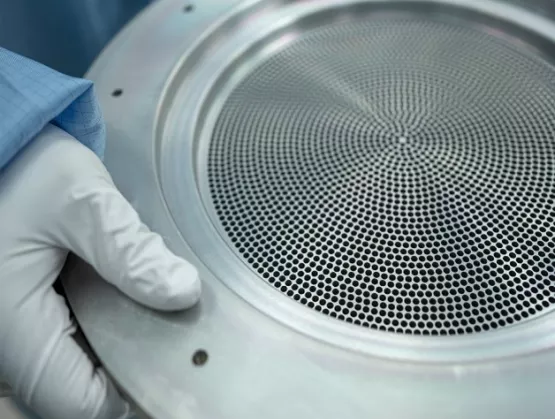
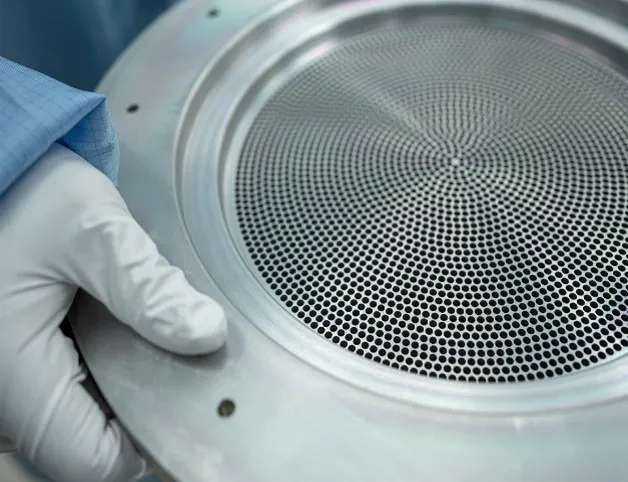
With each transition to a new technology node, fab requirements for metal and particle contamination become more stringent, posing challenges for existing coating methods such as anodization or plasma spray that may not provide complete protection against contamination especially on critical chamber components with complex geometry. SEMI spoke with Beneq business executive Sami Sneck about common metal and particle contamination issues with critical chamber components, coating methods to protect against corrosion, and properties to look for when selecting the optimal protective coating solution. Sneck discussed the unique benefits of atomic layer deposition (ALD)anti-corrosion coatings with Aluminiumoxide (Al2O3) and Yttrium Oxide (Y2O3) and offered recommendations on how to work with original equipment manufacturer (OEM) partners to design, test and implement an ALD coating solution for semiconductor equipment. To learn more, visit Beneq at its digital booth at SEMI Technology Unites Global Summit, available on-demand until March 26, 2021. Registration is open. SEMI: How does ALD compare with other coating methods such as anodization and plasma spray? Sneck: ALD enables conformal dense and pinhole-free coatings on complex shapes. We can deposit various ALD coating materials on parts made of various materials. All other coating techniques have limitations. For instance, anodization is conformal, but porous and is suitable for Al2O3 used for aluminum parts. Plasma Spray is a line-of-sight method and not conformal on complex shapes, such as holes in showerhead parts. SEMI: Which substrate materials work for ALD coatings? Sneck: In general, parts made of common metal materials, such as aluminum, stainless steel or titanium, all work well with ALD coatings. Commonly used ceramic materials work well with ALD too. Plastic materials need to be coated generally at a lower temperature, which limits the coating material selection, but materials such as Al2O3 can be applied as well. SEMI: What is the maximum coating thickness you can reach with ALD? Does this depend on the material? Sneck: Yes, indeed. The maximum coating thickness does depend on the material of the part that we are coating. Polymer materials for example, have a very large coefficient of thermal expansion, which limits the practical coating thickness to the 100-nanometer level. On metal and ceramic parts, coatings of several micrometers are possible too. Typically, ALD coating thickness on chamber components range from a few hundred nanometers to one micrometer. SEMI: Which aspect ratio can you coat with ALD? Sneck: Basically, ALD can coat aspect ratios of 1000:1, but this would be extremely slow. In practice, some of the most complex parts are showerhead parts with small holes. Typically, these have an aspect ratio of around 100:1, which is perfectly commercially feasible for ALD. An extreme example would be gas lines: In this case, the aspect ratio may be also around 100:1, but the physical distance from one end to the middle may be half a meter. In this respect, it is not practical to wait for gas diffusion to reach such a depth level. Instead, the gas lines can be coated by forcing the ALD precursor gas flow into the gas line parts. This works well but needs part-specific manifolds to guide the gases. SEMI: What is the lifetime of ALD coating compared to other coatings? Sneck: ALD coatings differ from other coatings a couple of ways. First of all, ALD coatings generate less particle contamination since they are non-porous. Secondly, and most importantly, ALD coatings can cover areas that other coatings cannot. What is considered the lifetime of a certain part depends on various factors. Ultimately, the lifetime needs to be confirmed by testing parts in actual process chambers by running a lot of wafers through the chamber and monitoring critical parameters such as particle level and yield. SEMI: If you have multiple shelves with parts in the reaction chamber, how does the shelf position affect the coating uniformity? Is center shelf better than top and bottom shelf? Sneck: Uniformity depends on many parameters, including the part geometry, part holder geometry, batch size and coating material. When the shelves supporting the parts are optimally designed and the gas flow is well-distributed to all shelves, all shelves from top to bottom show similar uniformity. SEMI: Is there any risk of cross-contamination? Sneck: Cross-contamination could potentially be caused by the parts themselves or by different coating materials. The batch setup is fixed in production use, which means the parts are the same in every batch. The only variation is that the batch may not be full in some cases, but then we do not fill the empty part of the batch with other parts that could cause contamination in order to prevent contamination from one part type to another. Cross-contamination from one coating material to another is not a usual concern but can be prevented by using dedicated reaction chambers for different coating materials. This is very easy to do with Beneq P800. Sami Sneck manages Beneq’s semiconductor part coating business. He joined Beneq in 2005 and since then has held various professional and management positions including product manager, application manager, director of ALD group, head of sales, and head of Asia. He earned his MSc degree in Chemical Engineering in 2001 from Helsinki University of Technology. Sneck has special expertise in Atomic Layer Deposition technology and business development. He has played a vital role in introducing various ALD production concepts and solutions to several industries ranging from jewelry to photovoltaics, electronics and semiconductors. Access the free webinar recording and discover the latest anti-corrosion coating solutions and the unique benefits of ALD (atomic layer deposition). This webinar is particularly helpful for process engineers, equipment engineers and others responsible for contamination control and equipment yield. Serena Brischetto is senior manager of Marketing and Digital Engagement at SEMI Europe.
Read More
With IP the lifeblood of today’s globally integrated microelectronics supply chain, protecting confidential information is vital to electronics companies around the world. Additionally, the industry’s central role in ensuring the national security and economic competitiveness of every country ups the ante. Yet the supply chain is fraught with security risks. Malicious actors never rest in their work to infiltrate factory systems or human resources databases with the intent to steal IP, disrupt production or embed malicious software that can open the door to future attacks. Cyberattacks in the financial and retail sectors typically draw much more public attention than IT security breaches in the semiconductor industry. While large microelectronics companies are not immune to these threats, they tend to deploy some of the world’s strongest security systems and implement robust security policies and protocols to help mitigate risks. Many of their small and mid-sized counterparts with modest IT budgets and limited expertise, on the other hand, struggle to maintain a similar level of cyberhealth – a critical gap in the microelectronics industry, one of the most strategically important in the world. SEMI is out to help change that by collaborating with cybersecurity experts to help members strengthen their cybersecurity defenses. SEMI plans to increase cybersecurity awareness within the microelectronics workforce and offer cybersecurity assessments to member companies through a third-party provider as part of its SEMI Works® program. Working with experts, SEMI will add cybersecurity-related competencies to the SEMI Works® Skills Portal database to help ensure educational and training programs address these skills. As part of SEMI’s recently launched Curated Content Initiative, member companies will have access to workforce training courses on how to raise awareness of cybersecurity risks and mitigate them. Strengthening IP protections across smart technologies and industries driving the next wave of microelectronics industry growth such as artificial intelligence (AI), 5G, medtech and mobility starts in chip design and extends through fabrication to packaging and ultimately end-use applications. Helping to establish a baseline understanding and awareness of cybersecurity risks and how to mitigate them throughout the supply chain is critical. Bolstering cyber protections at small and mid-sized member companies is a key step in that direction. Commercial success, national security and the security of the ubiquitous IT infrastructures at the center of how we work and live depend on it. Mike Russo is vice president of Industry Advancement and Government Programs at SEMI.
Read More