downloadGroupGroupnoun_press release_995423_000000 copyGroupnoun_Feed_96767_000000Group 19noun_pictures_1817522_000000Member company iconResource item iconStore item iconGroup 19Group 19noun_Photo_2085192_000000 Copynoun_presentation_2096081_000000Group 19Group Copy 7noun_webinar_692730_000000Path
Skip to main content
Default Banner Image

COVID-19

When COVID-19 hit the semiconductor industry, SEMI members were confronted with new hurdles to keeping their employees safe and their operations running uninterrupted. We quickly assisted our global membership around the globe by providing a forum for collecting member insights on best practices for operating and safety procedures, supply chain issues and sentiments on business impact and recovery. That forum took the form of surveys we launched in March 2020. We shared the results with the larger SEMI member community to help them cope with the evolving impacts of the pandemic on their businesses. Following is a summary of our 4th survey, issued last month. Regional and Sector Representation Nearly 40% of our respondents represented companies headquartered in North America. Of the respondents, 10% each were from companies headquartered in Taiwan and China; 5% from Korea, 13% from Japan and 20% from European and Middle Eastern members. The largest share of respondents – 40% – develop equipment for semiconductor fabrication, assembly, and test; 21% supply materials to the microelectronics industry; 14% are device makers; 6% supply software and design services; and 3% are OSATs, EMS suppliers or ODMs. Measures Member Are Taking to Continue Operations The May survey found that almost no companies ceased production for any significant length of time. In order to continue operations, companies instituted social distancing and masking requirements, temperature checks, schedule changes, and some contact tracing, all to varying degrees, as shown in Figure 1. In addition, several companies implemented some combination of mandatory testing, bump sensors, air purification and site capacity limits and sequestered foreign workers in separate housing for required quarantines after travelling. Figure 1 All of these measures are routinely discussed during the regular SEMI EHSS COVID-19 Working Group calls. That group consists of facilities, HR managers and others tasked with ensuring safety monitoring and compliance at member companies. Company Vaccination Policies With the pace of vaccine rollouts varying widely around the world, only 5% of respondents are requiring all workers to be vaccinated before returning to the office, and 12% have not yet considered a vaccine policy. The majority of companies are encouraging but not requiring employee vaccinations, and 26% leave the decision to the individual employees. Figure 2 North American companies constituted the majority of the required and encouraged vaccination categories. In Europe, companies fall into the employee decision or encouraged categories but none require vaccinations. Japanese companies primarily leave the vaccination decision to employees, while Chinese companies are split among the required, encouraged and employee decision categories. Clearly, these guidelines are not required by law in each region, but instead fall to employers and local policymakers. Member Readiness for Digital Transformation A solid majority of members reported they have invested in the adoption of digital transformation technologies and practices, though only about 14% expect to continue their digital investments in the coming year. Many respondents have deployed virtual meeting software and have implemented or plan to put in place virtual reality tools for remote diagnostics and predictive modeling for semiconductor manufacturing. Figure 3 Location by Functional Group in Returning Employees to Sites Not surprisingly, manufacturing and distribution staff that could work from home during the pandemic are back on site, and respondents signaled that R D and engineering groups will soon end their remote work, following by finance and procurement. Sales and marketing show the highest percentage of staff working remotely, with sales having the highest number remaining remote for some time to come. Figure 4 Resilience to Further Economic Uncertainty Of the 274 companies responding, 229, or 84%, feel more resilient in the face of further economic uncertainty after their response to COVID-19, though continuing supply chain issues and raw materials shortages ranked among their top concerns, as did rising customer demands, their ability to increase capacity utilization rates, and the increasing demands on employees and facilities overall. Figure 5 Many thanks to all survey respondents over the past year! We’ll keep you up to date on results of future surveys. For more details on the SEMI EHSS COVID-19 Working Group calls, visit the SEMI COVID Response Site. To watch the recording of our most recent CEO Webinar – Surging Chip Demand, Digital Transformation, and the Pandemic – What’s Next? – click here. More than 750 people attended the June 2nd webinar sponsored by SEMI members Brooks Automation, Hitachi, JCET, KLA and TEL. Heidi Hoffman is senior director of Technology Communities marketing at SEMI.
Read More
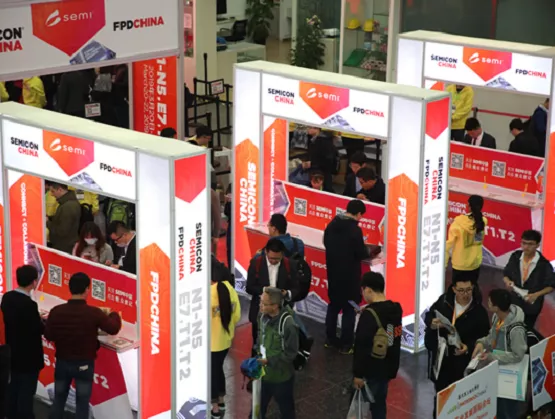
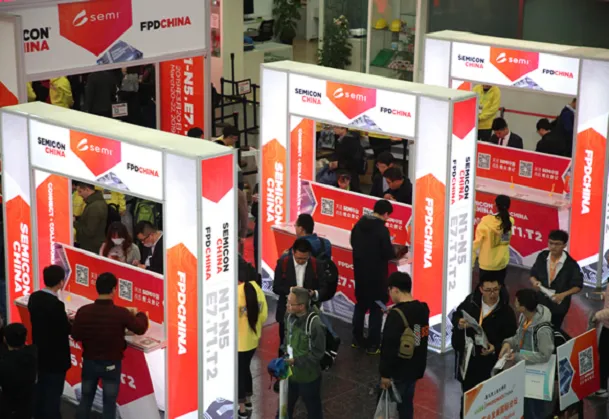
For the second straight year, SEMICON China, among the world’s largest and most influential semiconductor industry events, was the first local tradeshow of its scale held in-person, reflecting China’s rising prominence in the semiconductor industry. After securing approval from the Chinese government to hold large events, SEMI staged SEMICON China 2020 and 2021 with advanced protections against COVID-19 in place. There were no reported infections at either event. Highlights from SEMICON China 2021: Large Scale: Attendance of over 92,000, including more than 66,000 visitors and 25,000 exhibitors. Expo hall totaled 84,500 square meters with about 1,100 exhibiting companies and over 4,000 booths. World-Class Thought Leaders: Strong industry support from key foundries, OSATs, equipment and materials suppliers. Keynote speeches featured world-class industry leaders and head of China’s IC industry fund and global investment consulting agency, who explored the latest global business, technology and market trends and hot domestic investment topics. Concurrent Forums: Forums included SIIP China: SEMI Innovation Investment; Smart Manufacturing; Advanced Manufacturing; Advanced Packaging; Memory; Power Compound Semiconductor; China Display Conference; the all-new Advanced Materials Forum; and China Semiconductor Technology International Conference (CSTIC). Rich Digital Content: SEMICON China’s digital platform provided a rich array of content to attendees around the world including the Grand Opening Keynote and CSTIC, which were broadcast live online. Workforce Development: SEMI China worked closely with industry and government partners to promote SEMI Workforce Development programs to help attract and retain talent for China’s semiconductor industry. SEMICON China again featured the SEMI Workforce Pavilion and SEMI Workforce CXO Talent Forum. Outstanding COVID-19 Protective Measures: SEMICON China deployed advanced testing and monitoring equipment and implemented strict COVID-19 preventative measures to ensure a safe environment for all attendees to network and conduct business. Looking Ahead With the resounding success of SEMICON China 2021, optimism is growing that more physical events will be held with travel restrictions set to ease later this year. The more than 2,500 SEMI members around the world are eager to again network and collaborate face-to-face with customers, suppliers and partners to solve challenges in the microelectronics industry and drive semiconductor innovation that continues to transform how we work and live. That very innovation made many businesses more resilient as the virus spread and enabled people worldwide to work, learn, and shop from home. As SEMI starts to stage other events in-person, we will put in place advanced protective measures against COVID-19 to ensure the safety and well-being of all attendees. As the vaccination roll-out continues worldwide and new COVID-19 strains emerge, SEMI’s flagship SEMICON events are evolving in several ways, most notably with a larger digital presence. In this new era, we offer an international platform for SEMI members and partners across the microelectronics supply chain to collaborate, discuss industry trends, solve common challenges, network, and accelerate business growth through physical, virtual, and hybrid formats. Hybrid events – on-site exhibitions and conferences featuring a digital presence – allow the face-to-face connections so important to the semiconductor industry but also improve the attendee experience by offering an online option with the following benefits: More international accessibility to content live or on-demand Robust interactivity with live-streamed events, allowing more people to participate Greater cost effectiveness to enable companies and people under tight budgets to take advantage of world-class content, including keynote presentations, panel discussions, and technical sessions. In a recent survey of advanced manufacturing businesses, Informa Markets, a multinational publishing, business intelligence, and exhibitions group, found that 93% of respondents are likely to return to in-person events between August and December 2021, signaling a widespread eagerness for the return of live events and face-to-face connections. SEMICONs Scheduled for 2021 In a normal year, each of the seven regions where SEMI operates stages a SEMICON, with the exhibitions spread throughout the year. With the world continuing to combat COVID-19, more SEMICONs have been moved to the second half of 2021 – most of them with a hybrid format so exhibitors and attendees can take advantage of the increasing popularity of online events. After last year’s disruptions to the SEMICON schedule – and with more experience in the new normal – SEMI is excited to welcome the businesses and peers who couldn’t attend the 2020 events back to the in-person and hybrid shows. Innovation never sleeps. And SEMI will continue to evolve its events to help you form the partnerships and make the connections vital to the growth of your company and the industry. For more information about regional SEMICONs, please visit the SEMI events page. About the Author David Ghodsizadeh is the Director of Global Product Marketing at SEMI, where he develops customer-centric strategies to market SEMI Membership, Market Data, Expositions, Smart Initiatives, and Technology Communities to members, partners, and industry peers. Connect with David on LinkedIn.
Read More
“The most important work you can do in the coming year is to start engaging allies.” This is how Dr. Joanne Kamens, Executive Director of Addgene, began her keynote at this year’s Women in Semiconductors (WiS) program in early May. Diversity and inclusion challenges in the workplace are not a “woman problem, they’re a people problem,” she noted.After a one-year hiatus due to COVID-19, WiS reconvened in a virtual format. Dr. Kamens, who has been working on diversity and inclusion efforts for two decades, discussed how the events of the last 14 months continue to impact women disproportionately. In addition to setting the stage for breakout topics following her presentation, Dr. Kamens’ keynote, Driving Change for Inclusion: The Leaders You Want and Want to Be, addressed the underlying issues that prevent not only women but under-represented and under-recognized groups from advancing in STEM fields.Why now? Dr. Kamens pointed to the perfect storm of social and racial events over the last several years in addition to getting a view into each other’s personal lives because of work from home – babies on Zoom, cats interrupting Microsoft Teams meetings – that has exposed our humanity. The most important take-home message from her presentation? “People are people. They’re your most valuable resource.” At the beginning of the COVID-19 shutdown, Dr. Kamens was quick to implement measures to support and allow time for self-care and ensure well-being for all her people, recognizing an immediate need for support and encouragement. To her, this was something obvious to do as a leader. Unfortunately, this is not the case in many organizations.Dr. Kamens noted that when times are stressful, “we go to ground,” falling back on biases. Everyone has biases. However, stressful situations cause us to go back to our defaults – which often means disregarding the needs of underrepresented groups. Implicit biases in both men and women often cause women to be treated differently. Biases create “schema” that impact vital decision-making and can backfire when brought into the workplace. They can lead to inequities in hiring and promotion, or worse.Dr. Kamens also talked about leaders, and how sometimes people are promoted to management because they are good at their jobs, not because they are skilled at managing people. Good managers seek honest feedback, learn from other people, provide opportunities for growth and development and delegate effectively. Dr. Kamens suggested that a good way to drive greater inclusion and better management is to do away with annual reviews, which are a “hot bed for bias,” she said, and are incredibly problematic from an inclusion and leadership perspective.Why did Dr. Kamens focus on leaders? Because change “must come from the top. No company’s culture will change if leadership is not involved in driving and espousing the needed change.”Dr. Kamens stressed that leaders need to promote others. “A leader’s job is to help lift others into the spotlight,” she said. Also, we must lead with humanity. This pandemic has shown that people need different things to do their best work. Finally, who you hire is who your company is, and how it is seen. “Don’t keep jerks, don’t foster jerks and don’t hire jerks,” she advised.Dr. Kamens talked about what really makes people happy.Flexible work scheduleStrong sense of engagement at workFeeling of being appreciated and valuedHaving a high degree of freedom and diversity built into their jobsGood relationships with clients and colleaguesHowever, she insisted that the happiness “sweet spot” is different for everyone.In conclusion, Dr. Kamens stated that good leaders hold everyone accountable, are intentional about the culture they want to create, empower everyone to call out bias and remove barriers to the good work of others.Following Dr. Kamens’ keynote, the program pivoted to breakout sessions on several topics inspired by workplace challenges resulting from the pandemic. These robust conversations resulted in the elevation of common themes, and recommendations for any company looking to better support their employees:Working with Hybrid (in person and online) Teams: There are so many ways to communicate (text, calls, video calls, emails) and it is important to determine what is best for your team. Choose quick phone calls or Slack/Teams chats when full meetings aren’t necessary. Most importantly, make a concerted effort to actively facilitate the meetings so everyone can participate, whether people are on-site or remote.Leading Remotely: Consider that some one-on-one check-ins with direct reports could be done while both of you are on a walk instead of on a computer to allow for a different environment. Make deadlines and expectations crystal clear. Allow frequent breaks from meetings to alleviate video meeting fatigue. Consider virtual coffee chats, lunch breaks with colleagues, casual conversations and happy hours.Mental Well-Being: Companies need to provide the infrastructure for employees to work from home, while protecting people who must work on-site. Consider creating dedicated teams for socially distanced and virtual activities. Remind employees about employee assistance programs for those who are struggling. Consider providing free meals for people working in the office. Remind employees to take breaks (away from the computer), take PTO, and practice self-care. Back-to-back meetings, often at all hours due to time zone differences, can cause significant stress and fatigue. Consider allowing employees more flexibility to manage their calendars, and allow extra time in meetings to socialize.Networking/Team Building: It can be difficult for people new to a company or a team to truly connect with new co-workers. Leaders can schedule meetings with new hires and seasoned employees, using a “speed-dating” format, trivia, or other ice-breaker activities. Encourage new team members to communicate with coworkers and managers and invite people who are struggling to reach out. If you are a new employee, have the courage to ask for what you need, be it a mentor, a check-in, or an afternoon off. If you are looking for individuals in other companies to connect with, find affinity groups and directly email people doing similar work with a request to connect.The most important takeaway from the whole event was: Trust your employees. Give them the flexibility in their schedules and communication styles to do their best work. If the pandemic has shown one thing, it’s that employees can be trusted to work remotely and get the job done. The challenge of juggling work, home and everything in between is unique to everyone. Careers and lives have different phases, and everyone needs to find the balance that works for them within current circumstances. Women especially need to be able to ask for support and flexibility or we risk losing even more of them from our companies.Women in Semiconductors is an important event for professionals across our industry. It was wonderful to share the space with brilliant thinkers and creators and to have such a rich discussion around the issues women face. We are grateful for WiS committee members, sponsors and everyone who participated for contributing to an excellent discussion. Mark your calendars for May 2, 2022, when the event returns to Saratoga Springs, New York.Margaret Kindling is senior program manager, Diversity, Equity and Inclusion, at SEMI; Priya Mukundhan, Ph.D. is metrology product manager at Onto Innovation; and Hannah Rosen is EHS equipment integration engineer at TEL.
Read More
As we move through Q2 of 2021, it seems that the world is finally approaching normalcy. But I don’t believe our lives and businesses will ever be the same. Travel is unlikely to return to the same level as pre-COVID-19 for many years. I’m sure many companies will establish tighter travel policies and budgets as virtual conferencing has proven to be beneficial and cost-effective. Patients and doctors who were skeptical of telemedicine are embracing it, and although it’s not perfect, it has filled a needed gap. Online learning essentially happened over a weekend and will now be part of many curriculums and programs. All of these elements have spurred our semiconductor industry into a super cycle. Demand for chips is leading to an increased demand for semiconductor equipment. Semiconductor capital equipment expenditures in 2020 surpassed $63 billion and are forecast to top $70 billion in 2021. The secondary equipment market typically makes up about 5% to 10% of that. Our inquiries have definitely increased this year. With this in mind, I’d like to share some thoughts for the remainder of the year. Storage of Chipmaking Equipment Not New The semiconductor industry has been experiencing an equipment shortage for some time. It is difficult for original equipment manufacturers (OEMs) to support such a large variety of products and technologies. Some companies use equipment for manufacturing 150mm, 200mm and 300mm wafers. Fabs still run 30-year-old technology on 150mm wafers while the latest technology is manufactured on 300mm wafers. We’ve also seen new technologies like silicon carbide (SiC) being developed on these smaller wafer sizes. Unfortunately, some OEMs stopped making 150mm and 200mm some time ago and have only recently jumped back into the market. These OEMs have had to balance technological advances, pricing, and manufacturing capacity to meet this demand since their primary focus is on 300mm equipment. Third-party refurbished equipment suppliers have also experienced an increase in demand over the last several years. We see it increasing at all technology levels over the next three to five years. This translates to increased equipment pricing for both new and used equipment, as well as increased lead times. Growing Demand for Legacy Tools Many electronic products we use and are familiar with don't require state-of-the-art technology. For instance, cellphones, electric vehicles, wearables, monitors and industrial products still contain many chips manufactured on 200mm wafers using 200mm equipment. There are still approximately 200 200mm fabs worldwide and this makes up about 25% of all wafer capacity regardless of wafer size. These fabs manufacture analog devices, MEMS products, power management ICs, RF devices, discrete devices and sensors. We have also seen an increase in lead times for 200mm equipment. Typical lead times of three to six months have increased in some cases to one year or more. This situation has created a dramatic increase in chip making equipment prices and we do not expect much relief there. Many OEMs transitioned to 300mm equipment prior to 2010. Revenue and profit margins are much higher for them on 300mm equipment. 200mm manufacturing was supported by many third parties for a while. However, in 2016 we saw a resurgence in 200mm equipment, and at that time many OEMs began jump-starting their supply chains. It took some time for them to develop new supply chains, upgrade technology and in some cases hire newly trained engineers to support these new tool sets. All this costs money, which is why we will continue to see an increase in new legacy equipment pricing. Because manufacturers and products may not be able to support these prices, we expect the robust third-party ecosystem to continue. SurplusGLOBAL's Response to this Demand One of the advantages we bring to the secondary equipment market is our ability to recycle technology. We continuously search for opportunities to purchase large packages of tools from companies that are transitioning technology nodes, moving from 200mm to 300mm wafer size or changing product lines. We spend approximately $65 million to $100 million each year on purchasing equipment and in some cases storing it for the right customer. For instance, a memory company may be changing technology nodes and no longer needs its equipment. This use to happen on a predictable schedule. Instead of scrapping that equipment, SurplusGLOBAL purchases and stores it. Sometimes we only need to store it for one month before relocating it. However, in many cases, we store it for one year or more. We may power it on at a later date if it is in good condition. In some cases, we work with an OEM or third party to have it refurbished and ready for a new customer. In response to the need for more secondary market equipment, we have opened up additional offices in Japan and Singapore to stay close to and better support our customers in those regions. Finally, our biggest and most recent endeavor is building our Semiconductor Equipment Cluster, which opens in July 2021. Learn more about the SurplusGLOBAL Semiconductor Equipment Cluster. Emerald Greig is executive vice president Americas at SurplusGLOBAL.
Read More
Now, more than ever, semiconductor companies are relying on their human resources departments to ensure employee safety, support facility access and hygiene measures, cope with staffing demands and incorporate the rapidly evolving guidelines from Centers for Disease Control and Prevention (CDC) and the local state and city mandates. SEMI spoke with Crystal Reich, HR manager at X-FAB Texas, about her participation in the Fab Owners Alliance (FOA) human resources group and the value of collaborating with industry peers on a broad spectrum of topics: from focusing on specific areas such as ensuring employee safety and managing the workforce during a pandemic, to addressing broader organizational challenges such as benchmarking activities and identifying compensation and staffing best practices. SEMI: How did you learn about the FOA human resources group? Reich: I have been part of the FOA HR group since its inception in 2012. Lloyd Whetzel, the CEO at X-FAB Texas, has been very involved with the FOA for several years. When this group was being formed, he let me know about it. I came to the first meeting and have been a part of it ever since. SEMI: What does your participation in the FOA human resources group allow you and your company to do differently? Reich: I am also involved with the Society for Human Resource Management (SHRM), but the FOA HR group provides an excellent opportunity for semiconductor industry HR professionals to collaborate. The group not only covers topics that are specific to the semiconductor industry but also discusses broader topics related to preserving employee well-being during unprecedented challenging times, managing negative emotions, establishing appropriate political expression policies, and creating safe spaces for dialogue. Also, the benchmarking has been fantastic, especially from a compensation and staffing standpoint. It allows us to identify best-in-class recruitment strategies, determine any shortfalls and use this information to improve employee onboarding and development. In addition to discussing these types of issues and trends, we compare and benchmark other HR issues such as policy deployment and legislative trends with colleagues in the industry. SEMI: What are some of the key topics and activities that the FOA HR group has helped you focus on? Reich: X-FAB has been involved in a variety of activities at SEMI. Through the SEMI High Tech U program, we have been able to help college-bound high school students in our community access STEM curriculum and explore careers in technology. We have devised more robust military outreach strategies with the help of the Veterans Program at SEMI, allowing us to recruit and retain excellent technicians from the military. Additionally, benchmarking activities within the FOA HR group have helped us improve our talent acquisition process - especially for positions which are challenging to fill. SEMI: The pandemic brought many significant and unprecedented challenges that affected business continuity. How did your company's participation in the FOA help you navigate these changes? Reich: The FOA has been a great help in addressing the challenges of the global pandemic across several operational collaborative teams. In the early days of the pandemic, as employees moved to remote work, FOA organized a forum that allowed members to share how they dealt with this transition. Constantly changing guidelines and protocols meant that FOA members leaned on each other more than ever to share best practices and lessons from new safety process implementations. FOA offered survey and area-specific team activities, cross-functional operational sessions, and round table discussions at its 2020 Q4 meeting, where members exchanged ideas on how business processes changed during this period and shared what they were doing to ensure business continuity. This provided another excellent opportunity for FOA members to benchmark best practices within the semiconductor industry. SEMI: Would you recommend your peers to join the FOA HR group? Reich: I would highly recommend HR colleagues in the semiconductor industry join this collaborative group. It is a great platform to share ideas, learn from each other, and benchmark with other colleagues in the same industry. The FOA HR Metrics survey is a comprehensive survey covering several different areas within the HR discipline such as compensation, learning and development, tool training, corporate social responsibility, and many others. True to the nature of the FOA, the survey is a result of the collaboration between several HR professionals from Device Maker member companies. Please contact Shilpa Talwalkar at [email protected] if you would like to participate. X-FAB is a member of the SEMI Fab Owners Alliance, an international group of semiconductor and MEMS fab managers and industry suppliers that meet regularly to solve common non-competitive manufacturing issues and improve their business results. Nishita Rao is senior product marketing manager at SEMI.
Read More
The pandemic unleashed by the coronavirus SARS-CoV-2 (which causes the disease COVID-19) has infected over 100 million and resulted in over 2.6 million deaths worldwide as of March 2021. It is well-established that this virus primarily spreads from person-to-person via respiratory droplets produced when an infected person coughs, sneezes or even breathes (see Ref. 1-3). Subsequently, the droplets meet the eyes, or enter nose or mouth of a nearby person, or transmit when a person touches an infected surface, then contacts their eyes, nose, or mouth. Since the virus is small, 0.06–0.14 microns in diameter, many copies can be contained in or attached to emitted respiratory droplets. Droplets as small as one micron can carry enough viral load to cause an infection. A particular concern is the interaction of droplets with ventilation systems, which potentially could enhance the propagation of pathogens. This has implications on situation-specific safe distancing and the design of building filtration systems, air distribution, heating, air-conditioning and decontamination systems. A particular instance of this is the semiconductor manufacturing cleanroom, where systems and protocols are specifically designed to minimize contamination. The $440 billion global semiconductor industry depends on these cleanrooms for integrated circuits (chips), and in turn, these chips form the lifeblood of the multi-trillion-dollar global electronic systems industry. Electronic systems are now critical for just about every aspect of human life, including health, work, finances, entertainment, transportation, power grids and many others. Thus, it is critical to understand how cleanrooms can operate more safely to ensure the health of workers while maintaining productivity levels to meet increasing global demand for semiconductors. In the work described here, we analyzed particle and droplet transport via modeling, simulation [Refs 1-3], and experimentation [Ref. 4] to help guide the industry. Modeling and Simulation In this part of the work, mathematical models were developed to simulate the progressive time-evolution of the distribution of locations of particles produced by a cough. Analytical and numerical studies were undertaken. The models ascertain the range, distribution and settling time of the particles under the influence of gravity and drag from the surrounding air. Beyond qualitative trends that illustrate that large particles travel far and settle quickly – versus small particles that do not travel far and settle slowly (yet can be carried far by ambient flow) – the models provide quantitative results for distances travelled and settling times, which are needed for constructing social distancing policies and workplace protocols. Figure 1 shows examples of the results of the modeling and simulation work. Figure 1: Model of particle spreading from a person coughing, with and without a mask. (Ref. 1) Following are key insights from the modeling and simulation work (Ref. 1): Large particles travel far (launched “ballistically”) and settle quickly, while small particles do not travel far and settle slowly (when there are no ambient externally-driven flow fields). Small particles do not settle even by the end of the simulation time (4 seconds in Ref. 1). Accordingly, the simulations were also run for extremely long periods to ascertain that the “mist” of small particles remained airborne for several minutes (as predicted by the theory). For strong opposing headwind, small particles move backwards, yet still remain airborne for extended periods of time. This is by far the most dangerous case since this will encounter other persons at the torso level. Ratio of the general drag to gravity indicates that at high velocities, the dynamics are dominated by drag. For general cough conditions, there can be cases where the change in the surrounding fluid’s behavior, due to the motion of the particles and cough, may be important. One major implication of this work is that the challenge of infection must be addressed both spatially and temporally. In other words, it is necessary to maintain social distancing based on how far the virus travels, but it is also important to account for how long the virus stays at the location because of specific air patterns. On the positive side, understanding these spatio-temporal patterns accurately will enable companies to design (or re-design) ventilation and decontamination systems precisely to improve worker safety. Other aspects of this analysis entail contact tracing (Ref. 2) and decontamination (Ref. 3). Further details, including simulations, are available at https://msol.berkeley.edu/publications/. Experimentation The major vector of coronavirus spread is through respiratory droplets expelled when coughing, speaking, and breathing; and the efficacy of any safety measures depends on accurate characterization of the dispersal of these droplets. The term particle describes objects that begin their journey as a solid. The term droplet is reserved specifically for objects that are initially liquid, albeit it is important to note that droplets can evaporate and effectively transform into solid particles composed of non-evaporative material. A purpose-built room, the Cal Covid Cube, C3, was set up and utilized for this research [Thatcher et al. 4]. The C3 is a parallelepiped room that is 232 centimeters tall, 376 centimeters long and 284 centimeters wide on the inside. For experimental results to be meaningful and repeatable for scientific and practical purposes, it is essential that the experimental setup be carefully controlled and calibrated. The following precautions were taken to ensure this: Charge-free: When solid particles are released, it is critical to eliminate (or thoroughly know) static charge effects for obtaining accurate deposition patterns. Static charge effects can manifest through particle-particle interactions (affecting particle motion in flight) or particle-surface interaction (affecting deposition pattern). Two methods for the elimination of charge effects on the deposition surface were found to be effective: (1) ionized non-conductive adhesive sampling strips, and (2) grounded aluminum backed carbon sampling strips. Isothermal: The room is a converted walk-in freezer with 10.5-13 centimeter thermal insulation and located in the middle of a building, at least 5 meters away from all building walls. Temperature uniformity was checked and the C3 room temperatures were found to be isothermal within uncertainty of measurements. Quiescent: It was ensured that the room did not create uncontrolled thermal convection due to isothermal nature. Quiescence was verified with both hot-wire measurements and with free-falling particle drift observations. Isopotential: The outer and inner surfaces, including the door of the C3 were conductive aluminum and stainless steel, and copper tape were used to ensure reliable electrical connection of door, interior and exterior panels. Electric fields were surveyed and found to be negligible within precision of instruments. Other design elements: All interior surfaces were coated with black matte paint to reduce scattered light and provide uniform background for imaging measurements. The facility was located on ground floor to limit vibrations. Repeatable Launch: To emulate the release from a true cough or sneeze, and to better understand droplet motion in a canonical turbulent jet versus a cough type release, we studied different layers of complexity for the release geometry: (i) Straight round pipe (ii) Smooth 90-degree curved pipe, with a changing radius along the length of the pipe (iii) Intubation trainer doll, with realistic airways and mouth/tongue structure Figure 2 shows the experimental setup with the intubation doll in C3, with the particle/droplet release being measured after deposition on the sampling strips that appear green. Figure 2: Experimental Setup in C3 with both charge neutralized (white appearing green) and conductive (black) sampling strips placed on a conductive and grounded alignment grid [Ref. 4] We utilized both liquid droplets and solid particles. For droplets, we explored and found promise in a method of deposition analysis based on fluorescence. For particles, we explored many ways in which the smallest of thermal gradients or electrostatic charge issues can affect the data and developed practical methods to address these issues. For accurate measurement free of static charge effects even in environments where high ambient flow velocities may cause a nonconductive surface to rapidly acquire charge (e.g., clean room environment), we developed carbon-tape-based sampling strips that are cleanroom-compatible, conductive, and grounded. For analysis, we developed a cost-effective method utilizing a commercial photo negative scanner followed by image enhancement by blind deconvolution. Figure 3 shows sample results for particle deposition location along our centerline for particles in the ballistic, intermediate and aerosol regime. Figure 3: Experimental Results [Thatcher et al. 4] Following are key insights from experimental work: Significance of both static charge effects and thermal gradients in rooms for validation tests are more than usually appreciated. For modelling, accounting for the non-uniform initial particle velocity matters for the ballistic particles. For all sizes of particles, simulating the transient versus steady state significantly impacts predicted particle spread. Thermal plumes alone from humans along particle flight path can transport 50 micron particles across the room. In some situations, this was observed up to ~6 meters. There is a significant effect of Relative Humidity (RH) and temperature on droplet evaporation. The practical consequence is that, in low RH, particles spread further, with all other things being equal. (The reason is that particles shrunk more and entered the aerosol regime.) In summary, a systematic analysis of particle and droplet transport was conducted by simulation, modeling, and experimentation. We were able to develop robust, rigorous, and repeatable methodologies and draw meaningful insights that will support safer operation and productivity of semiconductor cleanrooms globally. Further, these studies will help with the design (or re-design) of ventilation and de-contamination systems that help protect both the health of humans and the economy from current and future pandemics. This article provides a high-level overview of the work, and further details will be available through a series of scientific papers that are in various phases of publication. We gratefully acknowledge the following support: Gift of the Lam Research Corporation Gifts coordinated through SEMI and provided by Advanced Energy Industries, Applied Materials, ASM, Entegris, JSR, KLA, TEL, and Wonik The 2020 Seed Fund Award from the Center for Information Technology Research in the Interest of Society (CITRIS) and the Banatao Institute at the University of California Vision Research for providing a v2640 camera to help quantify the particle velocities Graduate students Eric Thacher and Tvetene Carlson who conducted the experiments in C3 Valuable discussions with Brett Singer, Thomas Kirchstetter, Michael Sohn, Chelsea Preble of Lawrence Berkeley National Laboratory regarding droplet transport and COVID, and Keith Hansen on particle sampling and charge neutralization DOE Office of Science through the National Virtual Biotechnology Laboratory, a consortium of DOE national laboratories focused on response to COVID-19, with funding provided by the Coronavirus CARES Act Steven Ruzin and the Biological Imaging Facility for their assistance in obtaining the high-quality fluorescence microscopy scans to validate the particle counting methodology. References Zohdi, T.I. (2020) Modeling and simulation of the infection zone from a cough, Computational Mechanics. https://doi.org/10.1007/s00466-020-01875-5 Zohdi, T.I. (2020). An agent-based computational framework for simulation of global pandemic and social response on planet X, Computational Mechanics. https://doi.org/10.1007/s00466-020-01886-2 Zohdi, T.I. (2020) Rapid simulation of viral decontamination efficacy with UV irradiation. Computer Methods Appl. Mech. Eng. https://doi.org/10.1016/j.cma.2020.113216 Thatcher, E., Carlson, J., Castellini, J., Sohn, M.D., Variano, E. and Makiharju S.A. (2021) Droplet and Particle Methods to Investigate Turbulent Particle Laden Jets (in preparation) Authors Evan A. Variano, Professor, Environmental Engineering, UC Berkeley Simo Mäkiharju, Assistant Professor of Mechanical Engineering, UC Berkeley Tarek I. Zohdi, Will C. Hall Endowed Chair of the UCB Computational Data Science Engineering Program, Professor of Mechanical Engineering, UC Berkeley Pushkar P. Apte, Director of Strategic Initiatives, Center for Information Technology Research in the Interest of Society (CITRIS) and the Banatao Institute, UC Berkeley; and Strategic Technology Advisor, SEMI
Read More
The work of the SEMI Environment, Health and Safety (EHS) COVID-19 working group to address industry EHS issues and share best practices has morphed as rapidly as COVID-19 itself as the vaccine rollout continues, inspiring new hope for a return to normal. The group has evolved from mounting crisis responses to urgent issues such as the shortage of masks and sanitization wipes and sprays to helping companies prepare for their employees’ return to the workplace and developing on-site health-screening procedures for employees and visitors to help ensure their safety. Hot SEMI EHS COVID-19 working group topics have included the following as the team continues to meet every other week to stay abreast of COVID-19 developments and their industry impacts. Vaccinations SEMI members have been monitoring the progress of U.S. states and counties in delivering vaccines. So far, no essential workers in the electronics industry have been eligible to be vaccinated. To help gauge the availability of vaccines to essential industry workers, some companies have hired external consultants to monitor the phase-in. The SEMI EHS COVID-19 working group will collect and centralize the information to help members plan for their employees’ return to the workplace. Policy Enforcement At manufacturing sites, some employees reportedly are becoming complacent in following masking and distancing policies, prompting reminder communications from top management for workers to comply until the pandemic is brought to heel. The higher-ups are also encouraging staff to get vaccinated once they are eligible, with some member companies offering workers time off or other incentives for their employees and families to get vaccinated. Contact Tracing Despite the intense focus on contact tracing since the initial COVID-19 outbreak last year and early efforts to track people movement using smartphone applications or wearables, no tracking technology has emerged as the standard for helping to curb the virus’s spread. SEMI members have been testing various technologies ranging from Bluetooth to wearables with wide-band radio waves to track employees while on site. Tracing by wearables has proven inaccurate. Left with no better alternative, the vast majority of SEMI members are performing time-consuming manual contact tracing. OSHA Compliance While OSHA has picked up the pace in issuing new regulations related COVID-19, pandemic-related site inspections have lagged, some SEMI working group members report. In California, CAL/OSHA recently passed a COVID-19 Preparedness Plan that defines the responsibility of employers in preventing workplace outbreaks, offering PPE to workers and conducting frequent testing. The California plan mirrors the CDC recommendations implemented at the onset of the pandemic. To join the SEMI EHS COVID-19 working group, contact our EHS team at [email protected]. Olivier Corvez is senior manager of Environment, Health, Safety and Sustainability at SEMI.
Read More