downloadGroupGroupnoun_press release_995423_000000 copyGroupnoun_Feed_96767_000000Group 19noun_pictures_1817522_000000Member company iconResource item iconStore item iconGroup 19Group 19noun_Photo_2085192_000000 Copynoun_presentation_2096081_000000Group 19Group Copy 7noun_webinar_692730_000000Path
Skip to main content
Default Banner Image

IoT

Outsourced Semiconductor Assembly and Test (OSAT) service providers experienced strong growth in 2017, but will this growth continue? In the last few years, OSAT growth has been driven by shipments for packages found in smartphones, but this market is slowing. What will replace it? Growth in power devices is strong and electronic content in vehicles is increasing. Will OSATs participate in this growth? Many OSATs have plants dedicated to automotive package assembly and will see continued growth. Growing demand for connectivity everywhere, called IoT, is generating large amounts of data, creating the need for more servers and datacenters. The adoption of Artificial Intelligence (AI) across a broad range of applications is driving demand for high-performance packages, but will this assembly take place at the OSATs or foundries? In the third and fourth quarters of 2017, growth in cryptocurrency provided unanticipated revenue for a number of OSATs. Given that the most well-known crypto mining companies and the biggest mining pools are all based in China, several OSATs, including major Taiwanese and Chinese service providers, experienced revenue growth in 2017 directly attributed to the assembly of ASICs in flip chip scale packages (FC-CSPs) and GPUs in flip chip ball grid arrays (FC-BGAs) for the cryptocurrency market. However, the first and second quarter of this year has seen decreased demand for GPUs and ASICs for this application. The assembly of packages for cryptocurrency slowed considerably in the first half of the year and therefore can’t be counted on to add as much to the revenue base as in the previous year. Going into the latter half of the year, the demand for Crypto ASICs is expected to pick up as new generation of 7nm chips will drive new investment and replacement cycle while crypto-mining GPU will see a further decline. Three of the top 10 OSATs, Jiangsu Changjiang Electronics Technology (JCET), Tianshui Huatian Technology (Huatian), and Tongfu Microelectronics (TFME), are based in China. China’s share of the top 10 OSATs’ revenue increased from slightly less than 23 percent in 2016 to more than 25 percent in 2017, and this trend is expected to continue. Crypto-related packaging and test business has certainly contributed a big portion of the share gain. Major OSATs such as TFME and Tianshui Huatian plan expansion in their plants and they expect to fill this added capacity in a broad range of packages. Huatian’s new Nanjing plant will include assembly for memory packages. TFME plans to set up a plant in Xiamen, Fujian Province to provide bumping, wafer level packaging, and system-in-packaging (SiP) services. Tracking the capabilities of OSATs is increasingly important. SEMI and TechSearch International have introduced a new Worldwide OSAT Manufacturing Site Database that provides listings of OSAT facility locations and package and test options in each factory. This database indicates the specific packages offered at each location. Finding plants that offer automotive qualified assembly is also possible with the database. Companies that offer bumping and wafer level packaging are identified. Over 120 companies and 300 facilities are tracked in this database covering both OSAT packaging and test facilities. For additional information about this informative database, please visit https://discover.semi.org/osat-database-registration.html E. Jan Vardaman is president of TechSearch International, Inc., and Clark Tseng is director of Industry Research and Statistics at SEMI.
Read More
Over the last three years the number of battery-operated electronic-component solutions for the Internet of Things (IoT) and Industrial IoT (IIoT) applications has been increasing steadily. This trend will continue for years to come, particularly with the growing popularity of mobile devices of all flavors. Addressing power consumption for battery-powered always-on IoT/IIoT devices – which rely on dozens of electronic components, including sensors — is critical to their commercial success.The demand for ultra-low-power sensors has accelerated the race to squeeze every last mW from components. Compared to previous-generations of sensors, semiconductor suppliers have managed to drastically reduce power by as much as 50%-60% over older solutions. Leveraging new state-of-the-art analog design techniques, we have effectively optimized capacitive readings of MEMS structures. How effective are they? We estimate that with the right mix of our company’s power-saving technologies, it is possible our customers could save 3MW/year globally[1].What’s next?While the semiconductor industry continues to investigate novel technologies, approaches and analog IP for greater energy efficiency, we believe that bigger gains in reducing power consumption will come from thinking at the system level. The sensor node is a good place to start.A typical IoT node is composed of a set of sensors, a microcontroller, a radio frequency (RF) link, and a power-supply system, often based on Li-Po batteries.Of these, the microcontroller and RF link consume the most energy and, in the RF link, power consumption is a function of the distance between end point and receiver and of the amount of data transmitted. Thus, at longer distances reducing the amount of data transmitted can save power. We can achieve this by including some pre-elaboration capabilities on-board and by extracting more meaningful information from the raw sensor data.We address this by moving some computation and data analysis inside the sensors, where smart hardware “digital blocks” perform faster and more efficiently than software-based routines running in the microcontroller. We can achieve this by using dedicated hardware resources to reduce overall system power consumption. The beauty of this solution is that it allows the microcontroller to operate in low-power states by only transmitting significant information in batches. The SensorTile development kit can speed up prototyping of ultra-low-power IoT devices by integrating an ultra-low-power MCU and BlueNRG Bluetooth radio with sensors. Some examples of these advanced digital blocks are the Advanced Embedded Pedometer, the Finite State Machine and Decision Tree, and Compressed FIFO in an IMU.The Advanced Embedded Pedometer is a hard-wired step counter that works independently inside the sensor, without CPU intervention: By comparing sensor outputs to pre-defined and -loaded patterns, it autonomously decides whether the user is walking or running to start and stop counting the user’s steps. The sensor then makes this information available to the microprocessor for further elaboration or for simple notification to the user.The Finite State Machine and Decision Tree are new functions dedicated to pattern recognition (machine learning) and decision-making: They can perform complex classifications and state detection, and can send dedicated warning and signaling to the microprocessor. A good real-world example is industrial predictive maintenance, where the sensor can categorize and identify different malfunctioning states in the equipment before waking the microprocessor to react.Our products, on average, save about 1 mA (1e-3) over competitive devices or over our previous-generation parts. So 2.0 x 1e-3 x 1.5e9 = 3MW. Programmable Sensor and Decision Tree Finite State Machine Integrating programmable sensors and decision trees as well as finite state machines in the sensor allows the sensor to do more of the work while the MCU sleeps. Source: STMicroelectronics Another example is compressed FIFO (first-in, first-out) buffer, which can store sensor data in the sensor, not in raw format, by using efficient compression algorithms. In addition to saving memory (and therefore silicon area) inside the sensor chip, it also saves power by reducing the number of bytes transferred to the processor and by shortening the communication data flow, which reduces processor-active time.These examples – the Advanced Embedded Pedometer, the Finite State Machine and Decision Tree, and compressed FIFO buffer – are just some showing that we can develop low-power IoT/IIoT devices through intelligent management of sensors, microcontrollers and other components in any given system. Your starting point is an IoT/IIoT node that lets you selectively allocate some power-hungry tasks — such as computation and data analysis — to sensors instead of the microcontroller. Leveraging data blocks that reside in the sensors alleviates the microcontroller’s typical power drain, allowing the microcontroller to operate with maximum efficiency.[1] ST sells about 1.5 billion pieces/year (1.5e9), which typically run from a 2V supply. Luca Fontanella joined ST Microsystems in 1995 as an analog designer. In 2001 he joined the MEMS team in a marketing role and today he is marketing manager in the MEMS Sensor Division. Luca has contributed to 25+ international patents and has presented at multiple conferences. He earned a degree in Electronic Engineering from Padua University. Simone Ferri joined STMicroelectronics in 1999 as Central R D engineer, moved to the Audio Division as a digital designer and is now director of the Consumer MEMS Business Unit. He holds a degree in Electronic Engineering and an MBA from the Polytechnic of Milan. _______________________________________________________________________________________________Brush up on the latest MEMS and sensors trends and gain a new perspective on emerging applications. Register today!
Read More
The march to greater precision, efficiency and safety – the lifeblood of high-technology manufacturing facilities – has taken on a new urgency as emerging applications such artificial intelligence (AI), the Internet of Things (IoT) and Industry 4.0 give new meaning to smart factories. Facing fiercer competition and ever more sophisticated fabrication processes, semiconductor fabs are under intense pressure to keep pace with new technologies as they work to upgrade. Nowhere are the stakes higher than in Taiwan, where high-tech manufacturing contributes mightily to the region’s GDP growth. To help Taiwan fabs confront the challenges and opportunities of designing smarter factories, SEMI and its High-Tech Facility Committee hosted the High-Tech Facility Workshop in June. SEMICON Taiwan 2018 High-Tech Facility Pavilion exhibitors gathered to explore how they can build smarter factories by deploying smart surveillance and disaster prevention technologies along with smart communications systems that better use manufacturing data to drive new safety and product quality efficiencies.During the workshop, SEMI High-Tech Facility Committee representatives shared strides it has made upgrading overseas facilities and developing standards to help establish smart factories in Taiwan.SEMICON Taiwan – 5-7 September at Taipei’s Nangang Exhibition Center – is also an important event for advancing smart manufacturing in Taiwan. Nearly 30 leading global manufacturers will exhibit at the SEMICON Taiwan High-Tech Facility Pavilion. The venue covers operational aspects of semiconductor manufacturing vital to becoming smarter including energy savings, nano-contamination control, facility information modeling, precision instrumentation and control, fire protection, mechatronics, and automation control. The pavilion will also feature a series of theme events offering a comprehensive overview of topics including the latest practices for integrating smart facility capabilities from the perspective of an advanced fab designer.At the TechXPOT stage, High-Tech Facility Pavilion exhibitors will also demonstrate the latest technology breakthroughs and cutting-edge smart factor solutions.The September 6th High-Tech Facility International Forum at SEMICON Taiwan will again gather factory experts and thought leaders from industry and academia to examine “Effective Ways to Make a Facility Smart.“ Experts from industry heavyweights in the fields of wafer foundry, LCD, memory and semiconductor packaging including TSMC, UMC, Innolux, ASE, Micron Taiwan, Winbond and VIS will offer insights into key areas of high-tech facilities including facility electricity, machinery, water management, vaporization and automation systems. On the same day as the forum, the High-Tech Facility Get-Together and High-Tech Facility VIP Dinner will bring together industry elites, academic professionals, and government officials to explore partnership opportunities. SEMI Taiwan and the High-Tech Facility Committee share HTF market trends information, technology updates and standards with SEMI members and exhibitors. Founded in 2013, the High-Tech Facility Committee now has 85 corporate members. Dedicated to accelerating industry collaboration through the integration of Taiwan industrial, government and academic resources, the committee each year holds several group meetings focusing on topics including energy savings, earthquake and fire protection, nano-contamination control, and precision instrumentation and control to advance critical technologies and facilitate standardization. The committee also aims to help the industry become more competitive faster by promoting technology standards that boost productivity and reduce production costs.Please visit www.semi.org and www.semicontaiwan.org for more information about SEMI’s high-tech facility initiatives.Iris Tsou is a marketing specialist at SEMI Taiwan.
Read More
For medtech applications to flourish, sensors need a supporting infrastructure that translates the data they harvest into actionable insights, says Qualcomm Life director of business development Gene Dantsker, who will speak about the future of digital healthcare in the Medtech program at SEMICON West. “Rarely can one device give a complete diagnosis,” he notes. “What’s missing is the integration of all the sensor data into prescriptive information.” The maturing medtech sector has developed to the point where sensors can now capture massive amounts of data, conveniently collected from people via mobile devices. The sector now has higher compute capacity to process the data, and improving software can produce actionable insight from the information. The next challenge is to seamlessly integrate these components into legacy medical systems without disrupting existing workflow. “Doctors and nurses don’t have time for disruptive technology – a new system has to be invisible and frictionless to use, with one or fewer buttons, no training and truly automatic Bluetooth-like pairing,” he says. “So device makers need to pack all system intelligence into the circuits and software.”Getting actionable healthcare information from sensors requires integration into the existing medical infrastructure. Source: Qualcomm LifeOne interesting example is United Healthcare’s use of the Qualcomm Life infrastructure to collect data from the fitness trackers of 350,000 patients. The insurance company then pays users $4 a day, or ~$1500 a year, for standing, walking six times a day and other behaviors that clinical evidence shows will both improve patient health and reduce healthcare costs. “It’s a perfect storm of motivations for all stakeholders,” he says.Next hot MEMS topics: Piezoelectric devices, environmental sensors, near-zero power standbyWith sensor technology continuing to evolve, look for coming innovations in MEMS in piezoelectric devices, environmental sensors and near zero-power standby devices, says Alissa Fitzgerald, Founder and Managing Member of A.M. Fitzgerald and Associates, who will provide an update on emerging sensor technologies in the MEMS program at SEMICON West.Piezoelectric devices can potentially be more stable and perhaps even easier to ramp to volume than capacitive ones, with AlN devices for microphones and ultrasonic sensors finding quick success. Now the maturing infrastructure for lead zirconate titantate (PZT) is enabling the scaling of production of higher performing piezo material with thin film deposition equipment from suppliers like Ulvac Technologies and Solmates and in foundry processes at Silex and STMicroelectronics, she notes.In academic research, where most new MEMS emerge, market interest is driving development of environmental sensors and zero-power standby devices. With demand for environmental monitoring growing, much work is focusing on technologies that improve the sensitivity, selectivity and time of response of gas and particulate sensors. Research and funding is also focusing on zero or near-zero power standby sensors, using open circuits that draw no power until a physical stimulus such as vibration or heat wakes them up.MEMS, however, likely won’t find as much of a market in autonomous vehicles as once thought. “While the automotive sensor market will need many optical sensors, MEMS players are competing with other optical and mechanical solutions,” says Fitzgerald. “And here the usual MEMS advantage of small size may not matter much, and the devices will have to meet the challenging automotive requirements for extreme ruggedness.”Paula Doe, SEMI
Read More
As artificial intelligence’s (AI) sprawling influence reshapes industries from logistics and healthcare to automotive and manufacturing, Taiwan is poised to leverage its cutting-edge capabilities and rich history in semiconductor manufacturing to stake out a leadership position in AI. Taiwan’s semiconductor manufacturing industry accounts for a major share of the region’s GDP and, with its manufacturing prowess, the region is fertile ground for using AI to optimize and even revolutionize chip manufacturing. In an AI and Semiconductor Smart Manufacturing Forum recently hosted by SEMI Taiwan, experts from Micronix, Advantech, Nvidia and the Ministry of Science and Technology of Taiwan (MOST) shared their insights on how deep learning, data analytics and edge computing will shape the future of semiconductor manufacturing. Here are four key takeaways.1. Monitor, Forecast, and PreventToday, tier 1 foundries use AI tools to combine equipment know-how and manufacturing statistics in managing massive Fault Detection (FD) data, much in the way that a car’s tire-pressure monitoring system helps maintain safe inflation levels and prevent accidents. For example, AI enables the real-time collection and monitoring of massive amounts of processing data, then alerts system administrators of any hardware failures or other manufacturing abnormalities.AI also makes it possible to adopt Run-to-Run (R2R) control to automate manufacturing process adjustments and corrections by providing feedback that can drive higher processing efficiency. In addition, virtual metrology replaces manual sampling inspection for comprehensive quality control, enabling foundries to improve yields, reduce costs, and strengthen their competitive advantage.2. Beyond Automation: Edge Computing The evolution of IoT is giving rise to a paradigm shift in the industry as the recognition grows that smart factories must go beyond automation to focus also on intelligence. All information – from equipment status and manufacturing process statistics to on-site environmental data – needs to be collected through sensors. In highly time-critical scenarios, returning all sensor data to the cloud for processing is time-consuming and impracticable. This is where edge computing’s real-time features and lower cost than cloud computing come into play.How does edge computing work in a smart factory? First, a rich trove of data from various devices is collected and integrated via Manufacturing Execution Systems (MES). Software analysis then produces a real-time factory production status before production data is visualized through a combination of system platforms and human-machine interfaces. In the end, the data is analyzed realtime in the cloud so failures can be predicted and prevented to help increase capacity and reduce costs. The approach is even capable of Bill of Materials (BOM) predictions, allowing better collaboration between upstream and downstream suppliers.3. Deep Learning Accelerates AI Deep learning enables autonomous driving, intelligent voice assistance and many other AI breakthroughs. The heart of deep learning is its ability to automatically process and learn data in various formats such as images, video and text with no human domain knowledge. This increases predictive accuracy and efficiency in processing massive amounts of data. Deep learning also enhances the efficiency of human-machine collaboration.4. Taiwan’s Competitive Niche: Industry 3.5Industry 4.0 is not just about improving production management. It also focuses on integrating supply chains, even among competitive companies. For Industry 4.0 to thrive, rival companies must grow together. The first and third industrial revolutions centered on disruptive technologies like steam engines, transistors and digital, while the second and fourth revolutions homed in on competition among various business models, platforms and industry ecosystems.While Taiwan’s strengths include innovation, short time-to-market, low manufacturing costs, and high supply chain management efficiency, the region still lags advanced countries in basic industry and research capabilities. Squeezed by Chinese supply chains and high-end manufacturers in advanced countries, Taiwan should start by carving out an Industry 3.5 niche for the island’s manufacturers. SEMI will continue to facilitate cross-industry connection, collaboration and innovation to help manufacturers seeking higher production efficiency and lower costs incorporate AI as a core competitive advantage. At SEMICON Taiwan 2018, SEMI will unveil its Smart Manufacturing Journey, an exhibition that gathers leading AI companies such as ABB, Advantech, Nvidia, Sony and UPS to demonstrate a comprehensive roadmap for smart manufacturing technologies and applications. For more information, please visit the SEMICON Taiwan website.Emmy Yi is a marketing specialist at SEMI Taiwan.
Read More
The fast-growing automotive semiconductor market means big change for the IC supply chain. Beyond the obvious demands for reliability and traceability, the sector is moving towards simpler and lower-cost solutions while facing the daunting challenge of automating driving in a complex world. The need for simpler and cheaper automotive intelligence will likely drive acquisitions to build complete platform solutions that are easier to integrate. This demand has already spawned a market for pre-configured test cars to save developers time and money, and is driving LiDAR (Light Detection And RADAR) towards lower-cost, solid state solutions. “The growth of the automotive electronics market provides a great opportunity for the IC supply chain to differentiate on specialty processes and quality for the high-volume automotive business with its long design cycles,” says Scott Jones, principal, strategy, at KPMG, who will speak in the automotive program at SEMICON West. “This differentiation is a chance to reduce chip suppliers’ dependence on scaling volume for the mobile phone world with its short-cycle volatility of winning and losing sockets.” He notes that increasing demand for automotive ICs is also reinvigorating the eight-inch supply chain and spurring opportunity for specialty products such as compound semiconductor devices for power efficiency. Supplying the automotive market also means addressing automotive reliability requirements, which can be 10 times more stringent than for consumer devices. At the same time, the industry must sustain fast-paced development cycles required for the volume and diversity of low-cost IoT devices, manage the segmented supply chain for both those markets, and still spread development costs. Another big challenge for the supply chain will be to automate testing and update vast amounts of embedded software in these automotive devices. “The more complete solution a company can put together, the more the automakers will gravitate to it. They want simplicity,” Jones suggests. Smaller players will need to differentiate with IP and acquire other IP provider to build a broader platform, or be acquired and folded into an all-in-one solution.AutonomouStuff helps accelerate and simplify development of autonomous driving solutionsAutonomouStuff is helping to speed development of these platforms. The company has grown from a sensor distributor into a supplier in the emerging niche of vehicles preconfigured with key interfaces for sensors and controls. These interfaces can then be customized by integrating different components for developers to test their applications. AutonomouStuff offers developers a lineup of vehicle models pre-configured with the interfaces needed to add desired chips, sensors and software to develop their autonomous vehicle systems. Source: AutonomouStuff.“Whether they’re major chipmakers or AI software startups, they don’t have a year to build their own vehicle platforms themselves for developing autonomous vehicle systems,” says Wolfgang Juchmann, VP sales and business development at AutonomouStuff. Juchmann, a SEMICON West speaker, will bring a demonstration vehicle to the show. “In four to six weeks we can prepare a custom test car with selected sensors, enabling users to start testing their computer platforms and software. It’s faster and more cost-effective for us to supply the car with the needed interfaces.” He notes that developers are using some 300 AutonomouStuff vehicles in the field. AutonomouStuff customers are starting to transition from testing on a single car or two to testing on mini-fleets with 50 to 100 vehicles. Beyond sensors and pre-configured vehicles, the next step will be to add more data intelligence services to help with capabilities like tagging the data for training, Juchmann says. AutonomouStuff already offers hardware to support Baidu’s Apollo open-source software stack and data set. The company was recently acquired by the Swedish holding company Hexagon to help support expansion.CMOS silicon LiDAR nears automotive qualificationInnovations in the hyper-competitive LiDAR market, where burgeoning demand is driving the race to develop various types of solid-state devices, may also help reduce the cost of autonomous vehicles. Among the roughly 40 LiDAR suppliers, at least one – Quanergy – is taking advantage of 45nm and 32nm foundry CMOS volume production. The company uses voltage through the semiconductor stack to change the refractive index, controlling the phases of optical beams and the resulting interference patterns of light exiting the chip to quickly steer the laser beam without the need for moving parts, much like the phased array radar its team developed earlier. Solid state LiDAR image with object recognition software. Source: QuanergySo far, most of the small LiDAR units have shipped to the security, industrial automation, drone, robots and 3D mapping markets. However, Quanergy CEO Louay Eldada, another SEMICON speaker, says the company is also winning automotive designs and expects automotive shipments to take off early next year, once automotive certification testing is completed. “We can get design wins because standard CMOS production at TSMC makes us a known entity,” says Eldada. To prevent component misalignment, the company produces its own specialized packaging to secure the laser, phase control ASIC, optical phased-array emitter, detector array, and receiver readout ASIC at its plant in Silicon Valley or the facility of its automotive partner Sensata. Through its software business, Quanergy offers an artificial intelligence (AI) perception program for object recognition and LiDAR tracking. The solution uses the people-tracker software the company acquired from Raytheon.SEMICON West this year expands to three full days of automotive electronics programming and features a Smart Transportation Pavilion. Other companies with experts who will speak as part of the program include XPT/NIO, Infineon, McKinsey, Voyage, GM Cruise, Bosch, Deepen AI, Airbus A3, Nvidia, Excelfore, Byton, Macronix, SK Hynix, SAP, Xilinx, Achronics, California Fuel Cell Partnership, Velodyne, Lam Research, KLA-Tencor, SCREEN, Rockwell, Versum Materials, TechSearch International, Entegris, ASE, Amazon, Continental and Wind River. www.semiconwest.orgPaul Doe, SEMI
Read More
Device manufacturers continue to invest. Spending in cloud data center (compute, networking and storage), automotive (content per car increases), industrial (on content, factory automation, and positive macro trends), and consumer (gaming) end-markets is particularly strong. We see capital expenditure growth in 2018 and early indications pointing to sustainable spending into 2019. We also expect 14 percent increase (YoY) for fab equipment spending in 2018, up from the February forecast of 9 percent, and expect 9 percent increase in 2019, adjusted from the February forecast of 5 percent. 92 future facilities/lines with various probabilities are scheduled to start production in 2018 or later. Fab investment is just one indicator of how growing demand in areas such as from Artificial Intelligence (AI), cloud/data storage, automotive and Internet of Things (IoT) is driving unprecedented spending in the semiconductor industry. Below are a few highlights* of recent SEMI FabView insights. Details of each project can be found in FabView online 24/7 or World Fab Forecast report (Excel format). Infineon’s new 300mm Fab in Austria - Infineon is planning a new 300mm thin wafer Fab for Power Devices in Villach, Austria. Rumors on Toshiba’s new Fab plans - More 3D NAND fabs in the future at Toshiba are feasible. The timing will depend on market conditions, and our forecast will adjust accordingly. Vanguard's possible 300mm foundry fab - Vanguard's management said it might buy or build a 300mm fab in the near future as all 200mm fabs are essentially full. Powerchip plans to build new memory fab in Taiwan - Powerchip is investing more in expansions since Memory pricing is holding up. Rohm announced to build a new SiC fab in Fukuoka Japan - Rohm announced its plans to build a new SiC fab. Micron is building a new fab in Singapore - Micron broke ground in a ceremony for a new fab in Singapore on April 4, 2018. Bosch had groundbreaking ceremony of their 300mm fab in Dresden end April 2018 - Investment of 1 billion Euro. This is the biggest single investment in Bosch’s 130-year history. SEMI FabView, a mobile-friendly, interactive version of SEMI’s popular World Fab Forecast, delivers on-demand fab information such as fab spending and capacity for over 1,100 facilities, including over 82 planned facilities worldwide, across a wide range of product segments including Power, GPU, Memory, Foundry, MEMS and Sensors fabs. Fab data include region, start of construction, operation, construction and equipment spending, capacity, wafer sizes, product types and geometries. SEMI FabView subscribers receive forecast model updates through SEMI’s World Fab Database. Click here for a trial to experience SEMI FabView first hand. *Actual updates provide more detail Christian G. Dieseldorff and Clark Tseng, Industry Research Statistics Group, SEMI.
Read More
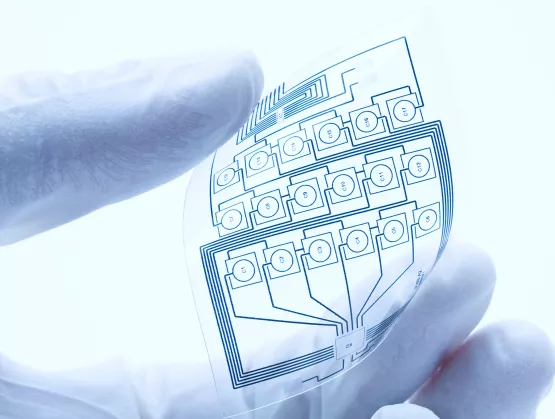
Peel-and-stick simplicity isn’t just for adhesive bandages any more. IoT and flexible hybrid electronics (FHE) are bound to change hardware business models. And flexible displays will breathe life into any surface.These were among the insights foreshadowing the future of the FHE, electronic textiles, IoT, MEMS and sensors industries at the FLEX Japan and MEMS Sensors Forum Japan 2018. At the April event, organized by SEMI-FlexTech-MSIG, nearly 200 attendees shared their observations and lessons learned in the development of processes, products and applications. Presentations and discussions revealed these five takeaways.1. Expect the unexpected with FHE developmentFlexible Hybrid Electronics (FHE) continues to shrink the size and weight of products, enabling new markets and concepts. “FHE takes printed electronics and adds ICs for getting performance out of the PE structure,” said Wilfried Bair of NextFlex, adding that “peel- and-stick electronic products are one example of unexpected new markets enabled by FHE capabilities.” One potential application is large peel-and-stick safety sensors adhered to buildings to warn of structural dangers.Another surprising turn: With new insights into OLED technology originally developed for flexible displays, Cambridge Display Technology (CDT) has devised an innovative medical diagnostic tool for markets such as biomedical and agricultural monitoring. The tool features an atmosphere-processable OLED component with a simplified OLED structure encapsulated in aluminum foil.2. IoT and FHE devices should change hardware business modelsThis is the standard business model for many new FHE products: develop a product, manufacture it, find customers and sell. FHE and IOT device developers were encouraged by Jam Kahn of Gemalto to consider flipping the script: During FHE product development, explore building an after-market revenue stream by controlling and mining the data for trends it reveals. Because of its data harvesting potential, IoT is an excellent emerging technology for this strategy.The “Experience Economy” could create 200 connectable items per person, generating strong revenue streams from the collection and analysis of massive amounts of sensor-generated data. The key is for the data to be actionable. That means hardware suppliers must extend their focus to software development. “A recent study of California investors found that by 2025, 60 percent of global business profits will be from data,“ noted Harri Kopola of VTT, who advised hardware producers to examine business models that produce continuous value by leveraging software. “With FHE, we are creating the path to digitization for non-digital industries, and these industries need complete solutions,” he said.Hardware provider Xenoma, for example, sells an electronic shirt with sensors for measuring muscle movements, heart rate and other health-related data. Xenoma’s Ichiro Amimori said the company offers its open-source software development kit for free under one condition: The developer must share the collection data with Xenoma. The idea is that the more data collected, the greater Xenoma’s ability to improve human health over the long term and achieve its long-term vision of alleviating disease.3. Roll-to-roll and sheet-to-sheet manufacturing will meet in the middleOne of the big advantages of flexible and printed electronics was its promise to enable the manufacturing of electronics on a roll-to-roll (R2R) process in atmospheric (or close) conditions, like newspaper, rather than one sheet at a time, as with displays or wafers. But as development of inks and interconnects progressed, along with the placement of discrete and thinned-die components and basic flexible substrates on a moving web, most research and development (R D) and limited-production runs moved to sheet-fed systems to control material costs for experiments and low-volume production. R D on printing electronics processes split into two camps: the simple printed components camp on R2R, and the camp backing more flexible hybrid electronics development on a sheet-by-sheet basis. But progress didn’t stop.Harri Kopola of VTT highlighted new R2R inspection and test capabilities in the VTT pilot line in Finland. R2R processing advances incorporate ideas from biology, chemistry, optics, optoelectronics, advanced inspection and test capability, illustrating the multidisciplinary nature of FHE. While accurate, high-speed, pick and place of thinned, bare die remains the domain of sheet-to-sheet manufacturing, look for more improvements in accuracy and speed.Another new manufacturing concept that turns business models on their heads – “minimal fabs” – focuses on creating limited-run equipment and processes that use 3D printing and do not require cleanrooms. With a relatively low cost of entry, the approach enables electronics to be produced affordably anywhere.4. Powering the IoT is a grand challengeThe requirement for edge devices to function without intervention for long periods raises hard questions about how to power the devices. Using organic photovoltaics (OPV) in textiles to harvest energy from light could be one solution, according to Kasimaesttro Sugino of the Suminoe Textile Technical Center. ULVAC’s answer to the IoT power issue are requirements for edge device micro-batteries to be environmentally benign, safe, flexible and compatible with semiconductor processing less than .1 mm in height. The micro-batteries must also feature a long life and support continuous power output, high power density, low self-discharge (over 10 years) and mass production, said Shunsuke Sasaki of ULVAC. The batteries are being built on silicon, glass and stainless steel with dry, thin-film vacuum processing. 5. Flexible displays bring any surface to lifeWith their durability, flexibility, low-cost processing and programmability, flexible displays can transform any surface into a content-rich display with messages that make lives healthier, simpler and safer.One example is FlexEnable’s organic thin-film transistor (OTFT), a device made possible not only by recent advances such as the ability to build organic material transistors on plastic and the increasing clarity of new film materials but by continuous manufacturing process improvements. These advances are improving switching times and the color and video capabilities of thin-film transistors while retaining their flexibility, low power consumption and communication capabilities. Simon Jone of FlexEnable gave the examples of wrapping a display around the blind spots of automobiles or replacing side-view mirrors with interior monitors showing feeds from an external camera, approaches that would improve safety while reducing wind drag and increasing fuel efficiency.E Ink’s reflective technology and flexible products are coming to market with a wider color spectrum. The company’s Michael McCreary said its designers are specifying the panels for innovative projects such as the exterior walls of the San Diego International Airport parking garage. Used to communicate with airport visitors, the installation is weather-proof, programmable and self-powered.
Read More
With technology moving at breakneck speed, MEMS and sensors professionals whose job is to stay on top of industry developments must be able to find useful information—fast. Podcasts are one rich source of insight. In All Ears, I share roundups of recent podcast interviews with entrepreneurs and CEOs and episodes covering emerging technologies, breakthroughs and even the unexpected – like a MEMS pinball machine. For the seasoned MEMS and sensors professional or the curious onlooker who loves to learn, here are 5 podcast episode recommendations. 1. Embedded.fm – Episode 214: Tiny Sensor ProblemsChristopher White (@stoneymonster) and Elecia White (@logicalelegance) host Embedded.fm, a weekly podcast about the 5Ws of engineering. They’re both embedded software engineers by trade and their guests include everyone from entrepreneurs and makers to educators and engineers.Tiny Sensor Problems is a good introduction for people who have little to no knowledge of MEMS sensors. Kristen Dorsey, Assistant Professor of Engineering at Smith College, provides a brief overview of MEMS and touches on the manufacturing processes, including temperature sensitivity and sensors hype over the years. You’ll learn facts about interesting MEMS applications that were created, like the pinball machine I mentioned. Dorsey also elaborates on her work in flexible strain and pressure sensors for possible applications in AR and robotics in the future. 2. NPT – Episode 4: MEMS Directional SensorsLet’s dig deeper and learn about some of the applications for MEMS and Sensors. In this case, Erdos Miller, The Drilling Technology Podcast focuses on an extreme niche: oil and gas drilling technology. Ken Miller and David Erdos make up two of the engineering, developers and architect team at Erdos Miller that specializes in creating custom solutions for oil and gas downhole devices. Throughout the episode, they explore surveying sensors starting from the 1920s. History buffs would appreciate the stroll down memory lane and the ingenuity behind the first survey sensor, which involved a glass bottle filled with acid. Texas Instruments’ DLP technology gets a mention towards the end of the episode when micromirrors became a topic of discussion. 3. The Early Stage Podcast – Episode 15: Vesper – Tiny Microphones That Listen ForeverMEMS and sensors are a huge part of IoT—no doubt about it. The Early Stage Podcast captures insights from entrepreneurs into their company’s journey including their innovative approaches to developing cutting-edge technologies and overcome business and technology challenges they encounter. This episode focuses on Matt Crowley, CEO at Vesper, and how piezoelectric microphones will affect the voice interfaces as AI grows more sophisticated. Enthusiastic about the subject, John Valentine, host of the Early Stage Podcast, poses thoughtful questions and Crowley is eloquent and clearly passionate about his trade. They touch upon the race to produce the best voice interfaces for the AI ecosystem and tool kits for companies interested in voice enablement—but lacking a dedicated audio team—and looking for a simple solution. 4. IoT Podcast – Episode 155: New toys, Pi Day and insect-tracking LIDARHost Stacey Higginbotham, a technology journalist covering cloud computing, data centers and IoT, joins IT expert and veteran podcaster Kevin Tofel, in a weekly conversation about IoT developments. They’re entertaining and informative with a knack for making complex concepts easily digestible. In this episode, they discussed their thoughts on how the Broadcom/Qualcomm merger played out. While not explicitly focused on MEMS and sensors, the episode and the podcast in general touches upon overarching challenges the MEMS and sensors industry faces with security, standards, product development and applications usage. The highlight of the show included the guest of this week, Tobias Menne, global head of digital farming at Bayer AG who discusses Agriculture Technology (AgTech). 5. Amelia’s Weekly Fish Fry – Silicon Stagnation: How Emerging Technologies and Non-Traditional Materials Are Changing the Future of MEMSHosted by visionary Amelia Dalton, this episode of Fish Fry addresses the prospect of paper and plastic displacing silicon in MEMS manufacturing. Dalton interviews A.M. Fitzgerald Associates founder Alissa Fitzgerald about her research on the threat of waning research to silicon sensor technology. And more importantly, they discuss its implications for the MEMS and sensor industry 10 to 20 years down the line.Can’t get enough of MEMS? Register to listen in on MEMS and Sensors Industry Group’s free webinar, “Process Control and Root Cause Analysis for More-than Moore and Advanced IC Technologies” on April 25 at 8:00 AM PDT.
Read More