downloadGroupGroupnoun_press release_995423_000000 copyGroupnoun_Feed_96767_000000Group 19noun_pictures_1817522_000000Member company iconResource item iconStore item iconGroup 19Group 19noun_Photo_2085192_000000 Copynoun_presentation_2096081_000000Group 19Group Copy 7noun_webinar_692730_000000Path
Skip to main content
Default Banner Image

Japan

The SEMI Smart Manufacturing Americas Chapter, a key driver of the Global Smart Manufacturing Initiative, accelerates awareness of digital and data-driven strategies and implementations to help speed adoption of smart manufacturing. In 2021, the Chapter will focus on expanding its work across the industry to include academic and research initiatives. The semiconductor industry saw an unprecedented focus on improving digital monitoring of manufacturing activity in 2020, partially due to COVID-19. The Americas Chapter shared case studies on new tools and techniques for social distancing in fabs, aides for remote maintenance, and tips for remote workers. The Chapter also introduced its three pillars of Sensing, Connecting and Predicting and offered related programs. The Global Smart Manufacturing Conference (GSMC) highlighted the significance of universities and research institutions in the development of smart manufacturing with their focus on joint research for broad dissemination. To help drive smart manufacturing advances, at GSMC several offered non-proprietary tutorials on topic including the following: Integrating sensors for acquisition – CEA-Leti Applying new AI and ML tools and strategies to manufacturing – Binghamton University Digital tools for planning, qualifying and management and scheduling in fabs – MINES Saint-Étienne. Adding AI tools to robot work in a smart factory – KAIST Institutes By continuously highlighting the activities of these and other institutions through presentations, interviews, articles and blog posts, we will draw more attention to what is on the horizon for smart manufacturing in 2021. The SEMI Smart Manufacturing Americas Chapter also plans to elevate activities important to the Outsourced Semiconductor Assembly and Test (OSAT), Surface-Mount Technology (SMT) and Printed Circuit Board Assembly (PCBA) segments of the industry including programs on inspection, traceability and the SEMI SMT-ELS Standard for SMT automation. Thurston Taylor, marketing expert at Tokyo Electron and Vice Chair of the Americas Chapter, notes that “With increasingly more demanding requirements for bump, assembly and test, smart manufacturing and applied data science are necessary to achieve back-end goals now and in the future.” Also, many companies are implementing smart manufacturing applications and assessing various strategies to increase their smart manufacturing capabilities. Members of the Americas Chapter plan to review and develop self-assessment documents and maturity models that apply to front-end wafer fabs all the way through packaging and assembly facilities. “Moving forward it is imperative for all of us to up the intensity on specific ROI vectors such as quality, cost, productivity, sustainability and safety leveraging our smart manufacturing SEMI framework of Sensing, Connecting and Predicting,” said noted Bobby Mitra, worldwide director of Smart Manufacturing at Texas Instruments and Americas Chapter Chair. “By offering special flagship events, invited talks, ROI case-studies and ROI criteria in maturity models, we’ll bring high value to the smart manufacturing industry.” Chapter members also will begin mapping the skills needed to implement and support increasingly digital manufacturing capabilities, including any new skill sets, to help companies develop their hiring, training and management strategies. The mapping effort aims to support companies in building a strong pipeline of employees who can efficiently manage and operate smart manufacturing facilities. For its part, the Americas Chapter’s Go Green Subcommittee will focus on applying smart manufacturing technology to reducing the electronic industry’s carbon footprint by accurately tracking energy waste improving overall fab efficiency. Stay tuned for details on activities planned for our chapters in Europe, China, Japan, Korea, Southeast Asia and Taiwan. To learn more about each chapter and how to get involved, please visit the SEMI Smart Manufacturing Hub and sign up for our newsletter. Ayo Kajopaiye is senior project coordinator, Collaborative Technology Platforms, at SEMI.
Read More
In my role as lead for the Smart Mobility initiative at SEMI, I recently spoke with Automotive Logistics Magazine about the growing importance of the semiconductor supply chain’s connection with the automotive industry and the semiconductor shortage hampering global automotive production. Following are excerpts from the interview. Automotive Logistics: Why is there a bottleneck in the global supply of semiconductors at the moment and how long is it likely to last? Weiss: The current automotive chip shortage resulted from the sharp, Covid-19-induced decrease in demand for automotive semiconductors in the second quarter of last year when vehicle production came to a near standstill. The automotive market picked up significantly in the fourth quarter and this caused the supply chain constraints we are seeing today. At the same time as the automotive standstill, the pandemic spurred an increase in demand for home computing and networking equipment, and semiconductor manufacturing plants (fabs) had to pivot to these other markets in order to maximize fab utilization and successfully navigate economic headwinds. Every minute a semiconductor fab is idle or has lines down adds up quickly to missed revenue, so their capacity is booked weeks and even months in advance. With this background, I don’t believe this is a structural shortage and expect a gradual recovery over the next two quarters, barring any major shifts in geopolitics or macroeconomics. Automotive Logistics: What needs to be done to remedy the current shortfall for the automotive industry? Weiss: The automotive industry needs to continue to strengthen its connections to the semiconductor manufacturing supply chain. In past years, auto manufacturers used to rely mainly on their tier one suppliers to interface with the semiconductor supply chain. This has changed significantly. Not only are more chips being used in vehicles (roughly 10% of all devices produced globally end up in cars), but the strategic importance of the chips as enablers for ADAS [advanced driver-assistance systems], electrification, safety, connectivity and other consumer-driven features has increased considerably. With this dynamic in play, carmakers have recognized the value of interacting and collaborating more closely with the semiconductor supply chain. This provides vehicle OEMs with access to innovation, the ability to influence technology direction and pace, along with greater visibility into global supply chain developments. The SEMI Smart Mobility initiative is evidence of this transition, with the likes of Audi, BMW, Ford, Uber, Volkswagen and other vehicle OEMs, along with tier one suppliers such as Continental and Bosch, now actively involved in our automotive electronics and mobility activities to do exactly that – influence, partner, accelerate and guide the global electronics design and manufacturing supply chain that SEMI represents. Automotive Logistics: What percentage of semiconductors manufactured for use by US-based companies are for automotive applications and how has this grown in recent years? Weiss: A little over 10% of semiconductors produced worldwide are sold into the automotive segment, but this number is expected to grow at an accelerated pace in the next few years as electrification, connectivity and autonomous driving become more prevalent. Automotive Logistics: How is SEMI working to help the automotive industry get a clearer view of sub-component supply and better manage supply chain risk? Weiss: The SEMI Smart Mobility initiative is designed to engage automotive OEMs, tier ones, semiconductor device makers, design houses, and equipment and materials companies to drive alignment across the supply chain and address shared challenges collectively. To facilitate this engagement, we created the Global Automotive Advisory Council (GAAC), which has active chapters in Europe, US, China, Japan and Taiwan. The GAAC provides an open platform for creating solutions, fostering collaboration and partnering with other industry bodies to accelerate and harmonize industry efforts that benefit the entire ecosystem. Volkswagen and Audi are already SEMI members – both are founding members of the GAAC Europe chapter – and have become vocal champions and critical contributors to our efforts. When all stakeholders work together, I have no doubt that the future of automotive and mobility will continue to be bright. Interested in learning more about this topic? Read the full interview in Automotive Logistics Magazine, A Fab Future for the Automotive Sector. Please contact me at [email protected] for more information about SEMI’s Smart Mobility Initiative, the Global Automotive Advisory Council, and how SEMI can help your organization navigate electronics in the automotive industry to drive innovation in the mobility space. Bettina Weiss is Chief of Staff and Global Smart Mobility Lead at SEMI.
Read More
Back in 2012, China ranked fifth among seven regions worldwide in IC wafer capacity but surged past the Americas and Japan in 2018 and 2019 to claim the number three position (figure 1). That’s a big deal given that ICs account for the largest share of wafer capacity excluding discrete, opto, MEMS and sensors.China’s IC wafer capacity growth accelerated to tune of 14% in 2019 and 21% in 2020 and is expected to grow at least 17% this year, as we report in the latest update of the World Fab Forecast, published December 3rd by SEMI. Of all regions, Taiwan boasts the second strongest growth rate over the same period at 3% to 4%.Figure 1: Total IC installed wafer capacity for top five regions The report shows that from 2019 through the end of 2021 China will have increased wafer capacity for memory by 95%, foundry by 47% and analog by 29%. Foundry will represent the largest portion of those gains, reaching 2 million wpm (200mm equivalents). Memory will follow at about 1.5 million wpm and then analog at over 120,000 wpm.But Chinese companies aren’t pulling off this feat singlehandedly. Many international companies are contributing to the wafer capacity increases in China (figure 2). Figure 2: IC wafer capacity in China by company origin The share of capacity contributed by Chinese-owned companies and international companies has changed little since 2012, though Chinese-owned companies saw a slight dip in their slice of the pie from 60% to 57%From 2019 through 2021, Chinese-owned companies will add almost 60% capacity for foundries, the most of all sectors. Companies including SMIC, Hua Hong Semiconductor, Nexchip, XMC and Hua Li Microelectronics are driving the increases.During the same period, Chinese-owned companies will ramp up memory capacity from basically zero to 300,000 wpm. Companies such as Yangtze Memory Technology and ChangXin Memory Technologies (CXMT), also known as Innotron, are powering the quick rise with aggressive ramps of 3D NAND and DRAM capacity.Among international-owned companies, TSMC and UMC are driving the largest share of foundry growth, while Samsung, SK Hynix and Intel are powering gains in memory capacity.More information is available in the World Fab Forecast report. The report currently collects information for fab equipment and construction investment, capacities, technologies and product types for over 280 fabs and lines in China alone, including 40 facilities that either began operation in 2020 or will from 2021 through 2024.Christian G. Dieseldorff is senior principal analyst in the Industry Research and Analysis group at SEMI in Milpitas, California.
Read More
If you think the world is flooded with a mind-boggling volume of digital content, then you might be just a amazed to learn about the sheer wealth of information and business opportunities that will be uncovered at this year’s SEMICON Japan as the event goes full digital.To start, more than 160 companies will exhibit their semiconductor manufacturing gear and services on the virtual show floor of Japan’s premier event for the semiconductor manufacturing and design supply chain. Add to that over 80 presentations and panels that feature global industry executives, visionaries and experts offering insights into the latest microelectronics developments, trends and technologies, and it’s easy to see how SEMICON Japan 2020 Virtual is designed to help attendees grow their businesses and the industry drive the next wave of innovations that promise to address some of the world’s greatest challenges across healthcare, the environment, transportation and other industries.Best of all, it will all be available at your convenience from your office or home 24 hours a day, making it safe and easy for you and others from all over the world to attend. Following is what’s in store at SEMICON Japan 2020 Virtual to help lead you into the future.Leading Japanese Securities Analysts to Weigh in What’s Ahead for the Chip Equipment Sector in 2021 For the first time, SEMICON Japan will feature Bulls Bears as Japan’s’ five top securities analysts focus on the 2021 outlook for the global semiconductor equipment sector. The December 17th event will include discussions on the COVID-19 pandemic’s impact on the semiconductor industry, the continuing geopolitical tensions that are forcing the industry to reconfigure its supply chains, the fast-growing China market and cutting-edge applications that are powering industry growth. The perspectives from Japan’s investment community are sure to be compelling as the region supplies one-third of the global semiconductor industry’s chip manufacturing equipment.Moderated by Akira Minamikawa of OMDIA, the panel will include these experts:Three Visionaries to Explore the Digital TransformationPowered by semiconductors, the fourth industrial revolution is driving digitalization globally, remaking societies to bring more efficiencies and conveniences to our work and home lives and help more people prosper. But the flip side of those tremendous benefits is the risk that wealth will be concentrated in the hands of people in positions of power, companies and nations. Democratizing economic development remains a serious challenge worldwide.Addressing this pressing issue, the Opening Panel on December 11 will feature prominent visionaries from political, academic and industrial communities including the following:Sony’s Leading-Edge Electric Car and Nissan’s Driver Assistance System to Highlight Automotive InnovationsCars are becoming more like smartphones on wheels, rapidly filling with more and more semiconductor chips every year with electrification and electronic driver-assisted systems to key drivers of this growth. At the SMART Mobility 1 session on December 14, two pioneering companies – Sony and Nissan Motor – will focus on both areas of semiconductor innovation.Sony’s Vision-S concept car, exhibited at CES 2020, astonished many in the electronics ecosystem and the automotive industry. What is Sony’s vision behind the vehicle? Izumi Kawanishi, Senior Vice President, AI Robotics Business at Sony will share the latest on the initiative.Nissan, maker of the pioneering LEAF electric vehicle, is the first Japanese carmaker to equip a car – its new Skyline – with the ProPILOT 2.0 driver assistance system for hands-off highway driving. Nissan Executive Vice President Asako Hoshino will provide an update on the company’s driver assistance system strategy and plans.Quantum Computing Meets Chip Manufacturing for the First Time at SEMICON Japan In contrast with current computer systems that use bits (binary 0 or 1 state) for computing, quantum computers leverage quantum superposition (0 and 1 states exist at once) to quickly solve highly complex problems that might take traditional supercomputers hundreds or even thousands of years to tease out. American physicist Richard Feynman promoted quantum computer as early as 1982, but it wasn’t until nearly two decades later and long after his death that quantum bit circuits emerged for use in superconductive materials.With quantum circuits and devices requiring state-of-art semiconductor processing technology, The Era of Quantum session on December 15 at SEMICON Japan 2020 Virtual will discuss necessary advances in chip manufacturing technology to enable the next generation quantum computing. The session will be the first time SEMICON Japan connects the semiconductor manufacturing and quantum computing communities.The program will feature the following experts:Strategies for Sustainable Semiconductor Industry GrowthSemiconductors are giving rise to a hyper-connected world that is fueling demand for staggering volumes of chips, pressuring the electronics industry to uncover new ways to increase manufacturing efficiency while reducing power consumption in a bid to help combat climate change. The Grand Finale Panel composed of executives from Japan’s semiconductor supply chain and a supervising ministry will gather for the Grand Finale Panel on December 18 to discuss ways the industry can achieve sustainable growth through innovation with a focus on energy savings and an new process technologies such as extreme ultraviolet lithography (EUV), which promises to enable electronics devices that are more power powerful, cheaper and more energy-efficient.Panelists include the following:Register TodayThe SEMICON Japan 2020 Virtual All-In Pass provides online access to all 80 presentations and panels, which will be available on-demand for replay until January 15, 2021. What’s more, all eight keynote programs will feature English subtitles. For complete information of the exposition, programs and registration, visit the SEMICON Japan website.I look forward to seeing you virtually at the event!Jim Hamajima is president of SEMI Japan.
Read More
As the world combats climate change, the chip industry continues to build momentum in becoming a better steward of the environment. In July, Taiwan chip giant TSMC became the world’s first semiconductor company to join RE100, the global initiative to move away from a widespread reliance on fossil fuels and toward 100% renewable electricity. Applied Materials soon followed with a commitment to expand its renewable energy capacity. For the past four years, ASE Group, the largest outsourced semiconductor assembly and test (OSAT) provider, was named an industry leader in the Dow Jones Sustainability Indices (DJSI), making clear its commitment to protecting the environment. For its part, TEL was selected to be part of the FTSE4Good, a series of ethical investment stock market indices, and FTSE Blossom Japan, an index that gauges the performance of Japanese companies demonstrating strong Environmental, Social and Governance (ESG) practices.SEMI bolsters commitment to green energySEMI has also strengthened its commitment to promoting renewable energy in the semiconductor industry by adding the Green Power Pavilion at this year’s SEMICON Taiwan and continues to support the green energy movement as a co-organizer of Energy Taiwan. The largest renewable energy event in Taiwan, Energy Taiwan features international exhibitions, forums, policy initiatives and business matching events. This year the event attracted more than 12,000 visitors from 50 countries to highlight renewable energy breakthroughs and new products. The SEMI events complement RE100, which works across a wide range of industries that include financial services and retail. The initiative connects more than 260 members that count among them the world’s most influential businesses such as Apple, Google and Facebook and their suppliers through educational events.In many respects, TSMC is becoming a beacon of green energy in the chip industry. In July, the company committed to 20-year agreement to buy offshore wind power gear made by energy firm Ørsted in Taiwan, the global leader in the wind power industry. According to the purchase agreement, TSMC will offtake full production from 920-megawatt wind farms off the coast of Changhua County in western Taiwan expected to start operations in 2025 or 2026. The agreement will by far mark the world’s largest corporate green energy order in the semiconductor manufacturing and renewable energy industries and demonstrates TSMC’s long-term commitment to environmental sustainability.In addition to sourcing renewable energy, TSMC has been working closely with its downstream and upstream suppliers to help drive supply chain improvements geared toward a greener industry by offering on-site coaching, energy audits and educational resources. But the company's focus on energy efficiency is nothing new. For years, its Supply Chain Management forum has promoted industry sustainability and corporate responsibility. Moreover, TSMC worked with SEMI at this year’s SEMICON Taiwan to generate greater awareness of the importance of green energy to the industry and encourage SEMI members to become more involved in the movement.Supply chains expand eco-friendly practicesThe drive toward greener semiconductor manufacturing is also expanding to encompass entire supply chains. One notable initiative is Green Supply Chain Management (GrSCM), an effort to integrate environmental thinking into every level of the supply chain, from product concept to distribution. GrSCM involves the retooling of product design, materials sourcing, manufacturing and processes to reduce the ecological footprint of factories. So far, the results are encouraging. More companies are factoring environmental sustainability into their purchasing decisions to urge suppliers to better manage their power usage and join the green energy movement – an important step in curbing the unavoidable consequences of climate change. Terry Tsao is Global Chief Marketing Officer at SEMI and President of SEMI Taiwan.
Read More
Semiconductor equipment spending is mounting a strong recovery on the strength of explosive chip demand for work-at-home and study-at-home electronics fueled by the COVID-19 pandemic. Despite the growth, the 2017-2018 memory boon that triggered a critical subsystems shortage is still fresh on the minds of equipment suppliers as they worry whether critical subsystem providers can keep pace with the rebounding chip industry while managing the fallout from the COVID-19 pandemic.Hideyuki Koishi, president of HORIBA STEC, Co., Ltd., a leading supplier of mass flow controllers (MFCs), one subsystem critical to semiconductor production, recently spoke with SEMI about the company’s response to the COVID-19 outbreak, the pandemic’s impact on the global supply chain and the company’s ability to meet the demand for MFCs. SEMI: What COVID-19 countermeasures has HORIBA STEC taken?Koishi: To ensure employee safety and security while maintaining a stable supply of products to our customers, we started to deploy company-wide countermeasures when the Japan government declared a nationwide state of emergency to curb COVID-19 infections on April 16.HORIBA STEC and the entire HORIBA group formed a global COVID-19 task force and centralized all local outbreak decision-making to drive a rapid and effective global response. We quickly implemented work-at-home practices for our office staff and provided a safe environment for our factory workers, who are essential to maintaining product supplies, by establishing social distancing protocols and restricting site visits to essential workers. We also distributed face masks to all employees and placed disinfectant dispensers near the door of every room so employees could wash their hands before entering.To help on-site employees follow our social distancing guidelines, we reduced seating at cafeterias and converted meeting rooms to offices to give employees ample work space. We also established invisible walls in manufacturing facilities with multiple collocated divisions to restrict workers to their assigned areas, a containment measure that helps with social distancing while minimizing the risk of an entire factory shutdown if a worker contracts the virus. SEMI: Have you experienced supply chain disruptions due to COVID-19 outbreak?Koishi: Even though our supply chain extends overseas and includes China, fortunately we have not experienced any significant disruptions thanks to the broad geographic distribution of our supply chain. In addition, because many of our critical components are sourced in Japan, pandemic-related impacts to our business have been limited.Long before the COVID-19 outbreak, we organized a community called Rakuraku-kai with our suppliers in Japan to build and maintain close relationships. Although the community name suggests it is exclusive to Kyoto-based suppliers, its reach is a nationwide. After the declaration of state of emergency in June, the supplier community gathered for an ad hoc meeting to exchange information and share perspectives on the COVID-19 crisis.SEMI: Did you have any pandemic protocols in place before the COVID-19 outbreak?Koishi: In 2014, HORIBA group launched Stained Glass, a project designed to increase workforce diversity at HORIBA group companies through initiatives such as placing more women in decision-making roles and encouraging working at home to help employees better balance job demands with their family lives. As part of Good Place, the project’s program to increase the work-at-home rate, HORIBA group deployed a web-based meeting system and encouraged workers to transition from physical to online meetings. Good Place has helped our IT team and workers smoothly implement our work-at-home practices.Working at home is a beneficial practice regardless of its effectiveness in curbing infections. Employees can reduce commute time, increasing their quality. And it’s much easier and more affordable for international participants to join meetings since they’re spared the time and cost of travel. This year HORIBA group also moved its three-day bi-annual global meeting online to make them safer and more economical. The meeting is attended by about 100 leaders of group companies and business units.SEMI: Do you have any concerns about meeting demand for mass flow controllers?Koishi: We doubled the capacity of our main mass flow controller factory in Kumamoto prefecture in 2018 and with more floor space available for further expansion, we see no major barriers to meeting the growing demand from international customers in 2021 and beyond. Nonetheless, we must sustain the best possible COVID-19 countermeasures to maintain production while ensuring the safety of our employees.SEMI: Are you make any social contributions to combat the virus?Koishi: Semiconductors are not only indispensable for the electronics behind remote work, education and healthcare but they also play a critical role in developing COVID-19 therapies and vaccines. Thus, at HORIBA STEC, we believe our most important contribution is to maintain steady a supply of our mass flow controllers and other key semiconductor equipment components.HORIBA group also participates in two important pandemic initiatives. The Open COVID-19 Declaration program calls on intellectual property owners to make their patent rights, utility model rights, design rights and copyrights freely available in the fight against COVID-19. The program’s sole purpose is to stop the spread of COVID-19. HORIBA is among the 20 founders1 of this initiative.In June, HORIBA joined a push by the National Institute of Advanced Industrial Science and Technology (AIST) to develop a simple and rapid COVID-19 antibody test chip system. We’re contributing our expertise in immunoassay analysis and clinical laboratory equipment to help develop the system. SEMI: What have you learned from the COVID-19 outbreak?Koishi: The COVID-19 crisis has posed unprecedented challenges. Everyone hopes to return to normal soon but in reality things will never be exactly the same as before the crisis.Japan might have lagged other countries in its use of IT to improve business efficiency, but as we deal with the new coronavirus, both companies and their employees have been tirelessly considering reforms to the way we work through digitalization. I believe it will be difficult for companies to survive in the new normal unless they can incorporate these types of changes into their operations.On the other hand, I've also been reminded of the importance of traditional, analog communication. While we conducted all of our hiring interviews online this year, face-to-face meetings are a much richer experience that gives the prospective employee and the hiring company a much better sense of each other. In addition, as a company we need to continue to improve our ability to supply products so we can overcome challenges like the pandemic. COVID-19 has taught us our change needs to be more robust. We also need to evolve our business continuity plan to extend well beyond countermeasures to natural disasters such as typhoons and earthquakes. What matters most is that we apply the lessons of COVID-19 to make our business more resilient.[1] Ajinomoto Co., Inc., Canon Inc., Chanel G.K., GenoConcierge Kyoto, Inc., Honda Motor Co., Ltd., Horiba, Ltd., Konica Minolta Inc., Kyoto University, LSI Medience Corporation, Mitsui Knoledge Industry Co., Ltd., NEC Solution Innovators, Ltd., Nikon Corporation, Nissan Motor Co., Ltd., Rohm Co., Ltd., SRL, Inc., Shimadzu Corporation, Teijin Limited., Toyota Motor Corporation, Tsubakimoto Chain Co., and Yahoo Japan Corporation.Yoichiro Ando is a marketing staff member at SEMI Japan.
Read More
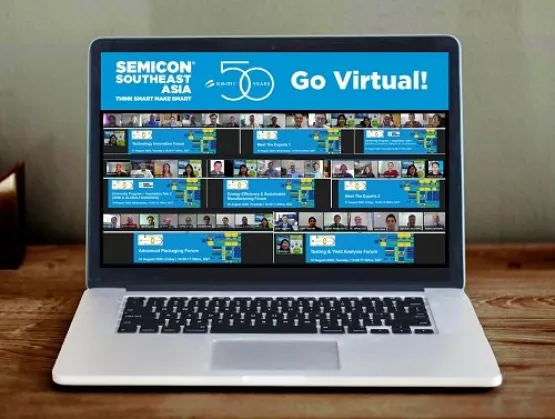
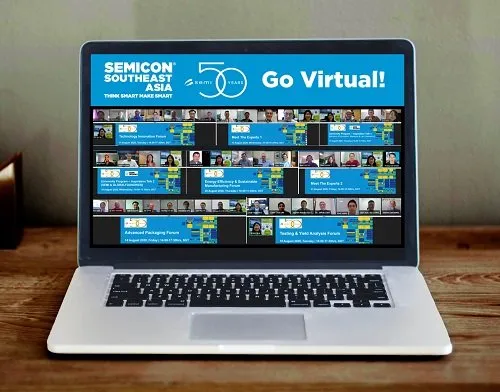
Never before had we expected that SEMICON SEA 2020 would go virtual.The COVID-19 crisis abruptly halted our ability to hold our premier Southeast Asia electronics manufacturing exposition as we typically do – in the physical realm. The pandemic tested our adaptability, challenged our willingness to experiment and, perhaps above all, accelerated not only our own but the world’s digital transformation. We had to change our way of doing business and learn to connect virtually like we had never had before. SEMI continues to believe that virtual interaction is no replacement for face-to-face engagement. But, like the rest of the world, we fast-tracked our digital education and staged the virtual event 20 July to 21 August 2020 to gather supply chain players and help fulfill the tremendous potential of our great industry. For all the suffering the COVID-19 has caused, the pandemic has underscored an important truth – that we need innovation through collaboration now more than ever to help solve the world’s greatest problems. We thank all our event sponsors as we turned what started as a grand experiment into a successful event that drew nearly 3,000 attendees to our webinars, business matching sessions and other online offerings designed to help them uncover new business opportunities. Following are other highlights. Southeast Asia Pavilion at Virtual SEMICON West 2020 In our first collaboration with SEMICON West, our Southeast Asia Pavilion at the event welcomed virtual visitors from around the globe to help them form new connections and grow their businesses. Business Matching Sessions Technical buyers from more than 15 multinational companies along with 141 pre-qualified suppliers attended more than 50 meetings across four online business matching sessions.Technical WebinarsCompany representatives from regions including Malaysia, Singapore, Vietnam, Taiwan, the United States, the UK, Israel, China and Japan shared their expertise and industry insights at SEMICON Southeast Asia 2020 webinars. In addition, experts from leading semiconductor companies such as Micron Semiconductor Asia Operations, ViTrox Corporation Berhad and A*STAR took part in our technical exchange by sharing the latest trends in the rapidly evolving semiconductor industry. Talent Development: Inspirational University Program Talks With building the talent pipeline critical to sustaining growth of Southeast Asia semiconductor manufacturing dynamics, talent champions from Lam Research and GLOBALFOUNDRIES highlighted career opportunities and pathways for young engineers while generating recruiting leads. More than 750 students from Malaysia and Singapore engaged panelists with questions during the sessions. The SEMICON Southeast Asia team extends its tremendous thanks to sponsors and attendees for their support. As we all navigate the pandemic and hope in the near future to awaken to a brighter day, we will continue to connect virtually and, whenever possible, in person as the semiconductor industry evolves and flourishes. The SEMICON SEA 2020 team In the meantime, we will all continue to pull together to support our resilient industry as it outperforms most other manufacturing sectors. Semiconductor capital equipment shipments were up 23% globally in the second quarter of 2020 versus the same period in 2019 and semiconductor chip growth remains in positive territory. Our team has already started planning for SEMICON SEA 2021, scheduled to take place at the Setia Spice Convention Centre in Penang, 18-20 May 2021.We look forward to seeing you again soon as we continue to strengthen the microelectronics ecosystem!Bee Bee Ng is president of SEMI Southeast Asia.
Read More
Japan’s semiconductor industry has weathered the COVID-19 pandemic to post robust growth. Far from a temporary setback, COVID-19 will lead to enduring change in how we work and live. And just as automation has been a bulwark against the devastating business impacts of the virus outbreak, increasing digitization will lead to new efficiencies in our industry.These were some of the key takeaways from three SEMI Japan Members Day webinars in June and July that offered the latest updates on COVID-19 impacts to the semiconductor industry and restart strategies for SEMI members. More than 2,000 SEMI members across Japan’s islands attended the webinars featuring the following five speakers: Hideki Kanewaka, Marketing Director, Consulting Lead, Japan, Accenture Japan Ltd. Takayuki Komori, Manager, Marketing Engineering Dept, SUMCO Corporation Taketoshi Hamaguchi, Director, Manufacturing Industry, Microsoft Corporation Akira Minamikawa, Senior Consulting Director, OMDIA (Informa Intelligence LCC) Yuichi Koshiba, Managing Director Partner, Boston Consulting Group COVID-19 Impact on Japan Semiconductor Industry is ModestThe consensus view of the five speakers from various quarters of the industry – consultant, IT service provider, materials supplier, market analyst – was that the Japan semiconductor industry withstood the heavy blows COVID-19 dealt to other industries thanks to strong demand for chips. Shelter-in-place policies and lockdowns spawned by COVID-19 has accelerated the digital transformation rippling around the world as electronics sales have soared to support everything from remote work and education to healthcare and home entertainment including gaming.The rapid growth of cloud usage for video streaming, gaming and remote work is taxing communications network capacity and placing more bandwidth demands on servers, said Akira Minamikawa of OMDIA. According to a recent report by Nokia, communications network traffic has skyrocketed 300 percent for online meetings and 400 percent for gaming, bringing the networks closer to their capacity limits. Minamikawa sees server shipments increasing at 8 percent CAGR through 2024. For the broader chip market, he expects demand for notebooks, solid state and hard disk drives, and gaming to remain strong in 2020. He also predicts rapid 5G penetration for smartphones will boost semiconductor chip industry growth.Still, not all semiconductor segments are expanding, said Yuichi Koshiba of Boston Consulting Group. Chip shipments for end products in markets such as automotive, industrial equipment and aircrafts are on the decline. Slowing demand for chips that power automotive applications in particular could pare sales for some chip companies and distributors since the segment accounts for a high proportion of their overall revenue.State of the Semiconductor IndustryFrom SUMCO’s vantagepoint as a major silicon wafer supplier, the company’s Takayuki Komori sees a number of changes unfolding in the semiconductor industry: Smartphones are driving growing demand for process technology (smaller nodes) and 300mm wafers. Komori estimates the typical high-end smartphone sports 1,700 square millimeters of silicon. 300mm wafers account for 80 percent of that total while more than 50 percent of the devices use leading edge multi-patterning technologies. Smartphones will need more RF chips to support 5G’s high-speed communications and added frequency ranges. Substrates for RF switches and tuners have been shifting from gallium arsenide (GaAs) and other compound semiconductors to silicon. 5G smartphone penetration will accelerate as the cost of integrating CPUs and modem functions into a single chip sees a swift decline. While the sensitivity and resolution of CMOS image sensors have evolved to incorporate innovative backside illumination and stacking technologies, future advances will focus more on products for machine vision applications capable of sensing invisible light bands. Rising adoption of electric vehicles and robotics applications will drive growing demand for power semiconductors that control their motors such as IGBTs and MOSFETs as the production capacity for the devices expands and shifts to 300mm wafer lines. For memory fabs, Minamikawa said utilization remains high as a result of a spending slowdown by major chip manufacturers and will stay elevated even once additional capacity ramps to support robust demand. Foundry fab utilization also remains high despite the pandemic-driven cancellation of smartphone chip orders in March. Minamikawa also sees the utilization rate of micro rising with the surge in demand for notebooks, PCs and servers in the second half of 2020.Transition to New NormalAs people around the world start to settle into new ways of living and working, there’s a growing acceptance that the transformation will be long-lasting. And no area of people’s lives is changing more than their work. Boosted by government subsidies, many small and midsize companies in Japan have started to implement work-from-home policies, an area where major electronics and IT businesses had already instituted reforms, said Hideki Kanewaka of Accenture. A few examples: Nippon Telegraph and Telephone Corporation (NTT) announced that half of its employees will continue to work from home in the future. A five-year plan Toshiba launched in 2019 to allow all employees to work from home will likely accelerate. Hitachi plans to allow all employees to work from home starting in April 2021. dwango, a major internet-based entertainment company in Japan, announced it will allow in principle any employees to work remotely. In the critical area of remote sales, Kanewaka pointed to the importance of going beyond online business meetings, paperless transactions and virtual events to devise new ways to attract customers and close deals. Creating online communities and providing rich digital content are also important measures to consider, he said.Manufacturing's Digital TransformationTravel restrictions by most countries to curb the COVID-19 outbreak have also raised barriers to chip companies sending engineers overseas sites to service state-of-art equipment and provide other technical support. Microsoft’s remote assist system deployed by ASML is one tool semiconductor makers can use to overcome this challenge, said Taketoshi Hamaguchi of Microsoft.The system connects a remote equipment service expert with an onsite worker through the internet, allowing the technical expert to provide support through a goggle display with a camera worn by the worker. Guided by the expert, the worker can perform complex services. A Natural User Interface (NUI) helps give the factory worker a clear understanding of the often highly technical instructions.Using artificial intelligence (AI) to increase automation will also help reduce the reliance of semiconductor factories on onsite workers. For example, AI deep learning can be deployed to calibrate equipment autonomously and reduce downtime after scheduled maintenances, Hamaguchi said.Corporate Restart Strategies Beyond factory considerations tied to COVID-19, semiconductor companies will need to adapt their business strategies to new ways of operating. For example, global supply chains will shift to domestic sources and increase redundancy to ensure a steady supply, a change leading to higher overall costs, Koshiba said. Trade routes among regions will also be redrawn as the trade rift between the United States and China and other geopolitical tensions intensify. The total value of those routes is expected to recover by 2023.Koshiba advised companies to evaluate the supply chain trade-offs between stability and cost and factor in potential risks to improve their short-term resilience and drive mid- to long-term supply chain restructuring.After past recessions, 14 percent of companies restored sales growth, Koshiba said. He recommended investing aggressively in growth and seizing M A opportunities during the downturn. Chip companies must also adapt to supply chain changes faster than competitors.Become a SEMI MemberWebinars like the recent SEMI Japan Members Day series have become increasingly important in the mix of programs and services SEMI offers members to help them connect, collaborate and innovate in the microelectronics community. To become a SEMI member, please visit the SEMI website or contact your nearest SEMI office.Jim Hamajima is president of SEMI Japan.
Read More
Data recently collected by SEMI points to only a moderate slowdown in the industry’s pursuit of talent, illustrating the growing and significant need for attracting workers at all levels of the organization. With COVID-19’s devastating impact on many sectors of the economy, the time is ripe to sharpen the industry’s focus on attracting and training a new wave of workers to meet the growing talent needs across our industry.To help illuminate the state of microelectronics industry hiring during the pandemic, following are three takeaways from recent workforce development data. Key Takeaway 1 – Emsi Hiring Data and Analytics ReviewIn a May 5 SEMI webinar on the Future of Work, presenter Andrew Crapuchettes, CEO at Emsi, a labor data analytics firm based in Moscow, Idaho, revealed that the U.S. semiconductor equipment and device manufacturing sectors posted 199,326 total jobs (32,022 unique positions) from March through June 2020 with an advertised median annual salary of $68,500 – the highest posting intensity for all other occupations and companies in the U.S. Crapuchettes noted that “although the job postings number was actually down from the previous quarter, some of the large companies have shown flat or growing postings during this period. At Emsi, we are evangelists for more accurately establishing the requirements for the job to more closely match the skills actually being sought.”He pointed to a gap between the skills employers list in job postings and those employees itemize in their resumes. Today’s use of algorithmic resume analysis, however, may reveal false gaps in hiring. Emsi is working with several Fortune 500 companies in the electronics sector to help them analyze their job postings. The goal: to better understand if they have identified the right skills for their business and the recipe for attracting top talent. Emsi supports programs such as the SEMI Works workforce development initiative that are out to more closely align job seekers and curriculum development with the skills needed for microelectronics design, development and manufacturing.During COVID-19, Crapuchettes sees companies across all industries doubling down on employee training. For many organizations, a business slowdown is an opportunity to identify and work to fill employee skill gaps and prepare companies to emerge stronger once the pandemic has passed. Key Takeaway 2 – SEMI COVID Impact SurveyIn March, April and June, SEMI surveyed members to evaluate the impact of COVID-19 and help inform SEMI’s response. Among the questions in the June survey was “How has COVID-19 impacted your hiring plans?” Of the more than 300 respondents, just 13% reported a hiring freeze and 55% said their hiring plans remain unchanged.Figure 2: Data from SEMI COVID-19 Impact Survey All SEMI regions show a similar pattern. Japan, Korea and China reported little to no slowdown in hiring as shown in Figure 2. Differences across regions were notable with more cautious approaches to hiring adopted by North America, Europe and Taiwan, with some companies slowing hiring for certain positions.Key Takeaway 3 – SEMI Survey of Workforce Development Advisory CouncilSEMI relies on members for industry insights we use to build, evolve and prioritize our programs. A June survey of SEMI America’s Workforce Development and Diversity Inclusion Advisory Council showed that, while some member companies have delayed hiring until the pandemic’s impact of the industry is clearer, most respondents see this period as an opportunity to attract talent to the electronics industry and maintain hiring programs to meet the growing demand for talent the digital revolution is fueling. The survey data, as shown in Figure 3, is consistent with Emsi’s results and a larger SEMI member survey. Our June survey also illustrated the strong desire by the Council for SEMI to support diverse communities and lead efforts to connect talent from these groups with career opportunities in electronics. All survey respondents urged SEMI to place the highest priority on promoting Diversity Inclusion in the workforce, with 57% ranking university outreach as a high priority. Visit the Workforce Development Pavilion at Virtual SEMICON West 2020 for More InformationThe microelectronics industry is making a huge impact in the COVID-19 era – from developing the tools to run algorithms for companies working on a vaccine, to keeping the internet humming for home workers and online ordering for homebound seniors. But these services will only continue to evolve at a rapid clip with the right talent. SEMI programs remain laser-focused on pursuing and developing that talent.Thank you to all members who responded to the surveys and Emsi for contributing to understanding of the workforce need in the current climate. We invite all members to connect with SEMI Workforce Development activities. We need your help to align skills to curriculum (SEMI Certs), presenting at our workforce development events and donating to the SEMI Foundation, which provides financial support for much of our work.Learn more about how you can help the industry grow its talent pipeline at the SMART WorkForce Pavilion at the virtual SEMICON West – July 21-23! Checking out the pavilion is free, but there’s a modest fee for the content. Register now for a discounted all-in pass to enjoy blister- and COVID-free access to the first virtual SEMICON West ever. Shari Liss is Executive Director of the SEMI Foundation. She oversees the development and success of all programs from K-12 through re-skilling for veterans.
Read More