downloadGroupGroupnoun_press release_995423_000000 copyGroupnoun_Feed_96767_000000Group 19noun_pictures_1817522_000000Member company iconResource item iconStore item iconGroup 19Group 19noun_Photo_2085192_000000 Copynoun_presentation_2096081_000000Group 19Group Copy 7noun_webinar_692730_000000Path
Skip to main content
Default Banner Image

semiconductor manufacturing

Manufacturing is a cornerstone of U.S. national security and economic prosperity, supporting jobs, growth, and global competitiveness. Within this ecosystem, the U.S. semiconductor industry holds a uniquely critical role, powering the advanced technologies that form the backbone of the modern world. Realizing the full potential of American manufacturing, however, depends on a policy environment that encourages investment and innovation. The pro-growth, competitive, and predictable tax policies in President Trump’s Working Families Tax Cuts (WFTC) are therefore essential to sustaining global leadership of the U.S. semiconductor industry. SEMI welcomes the Administration’s signing of the “One Big Beautiful Bill” and delivering a pro-investment tax framework that accelerates domestic investment and strengthens the American semiconductor industry’s global competitiveness. Demand for semiconductors is rapidly increasing, driven by critical applications such as artificial intelligence and quantum technologies that are integral to American innovation and national security. Meeting this demand requires billions in capital investment across the comprehensive supply chain, making tax policy a key factor in investment decisions. Policies such as the WFTC’s permanent extension and doubling of immediate expensing for qualifying equipment and software provide a significant advantage for companies building, maintaining, and supporting American chip-making. Likewise, by making 100% bonus depreciation permanent, the WFTC allows businesses to expense qualified equipment and property in the first year, significantly improving return on investment for capital-intensive semiconductor projects.Importantly, the American semiconductor supply chain includes not only large manufacturers but also droves of small and medium-sized businesses. President Trump’s WFTC permanently extends the Section 199A deduction, leveling the playing field for these businesses that would otherwise face higher hurdles to growth. That long-term tax certainty allows for businesses to confidently invest in and expand their facilities, hire new employees, and grow production—directly supporting American families. Together these pro-growth tax cuts help drive American semiconductor innovation, growth, and competitiveness. SEMI applauds the Administration’s competitive WFTC policies that support the full semiconductor supply chain. The WFTC allow companies to commit the capital necessary for multi-year semiconductor manufacturing investments with confidence and drive continued U.S. semiconductor and technological leadership. SEMI supports the Administration’s efforts to make the United States the premier destination to do business and looks forward to continued collaboration on U.S. economic and national security policy priorities. Visit SEMI Global Advocacy to learn more about public policy efforts and developments as well as how your company or organization can get involved.Royal Kastens is Vice President, Global Public Policy Advocacy at SEMI.
Read More
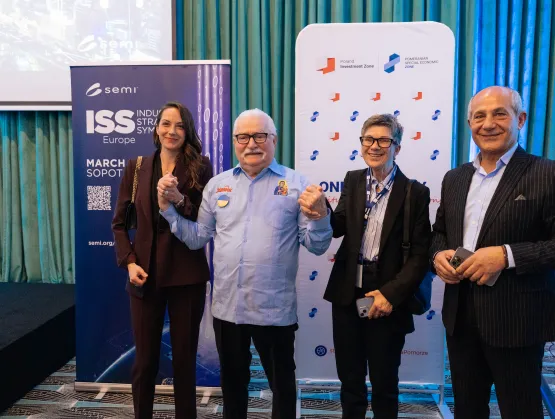
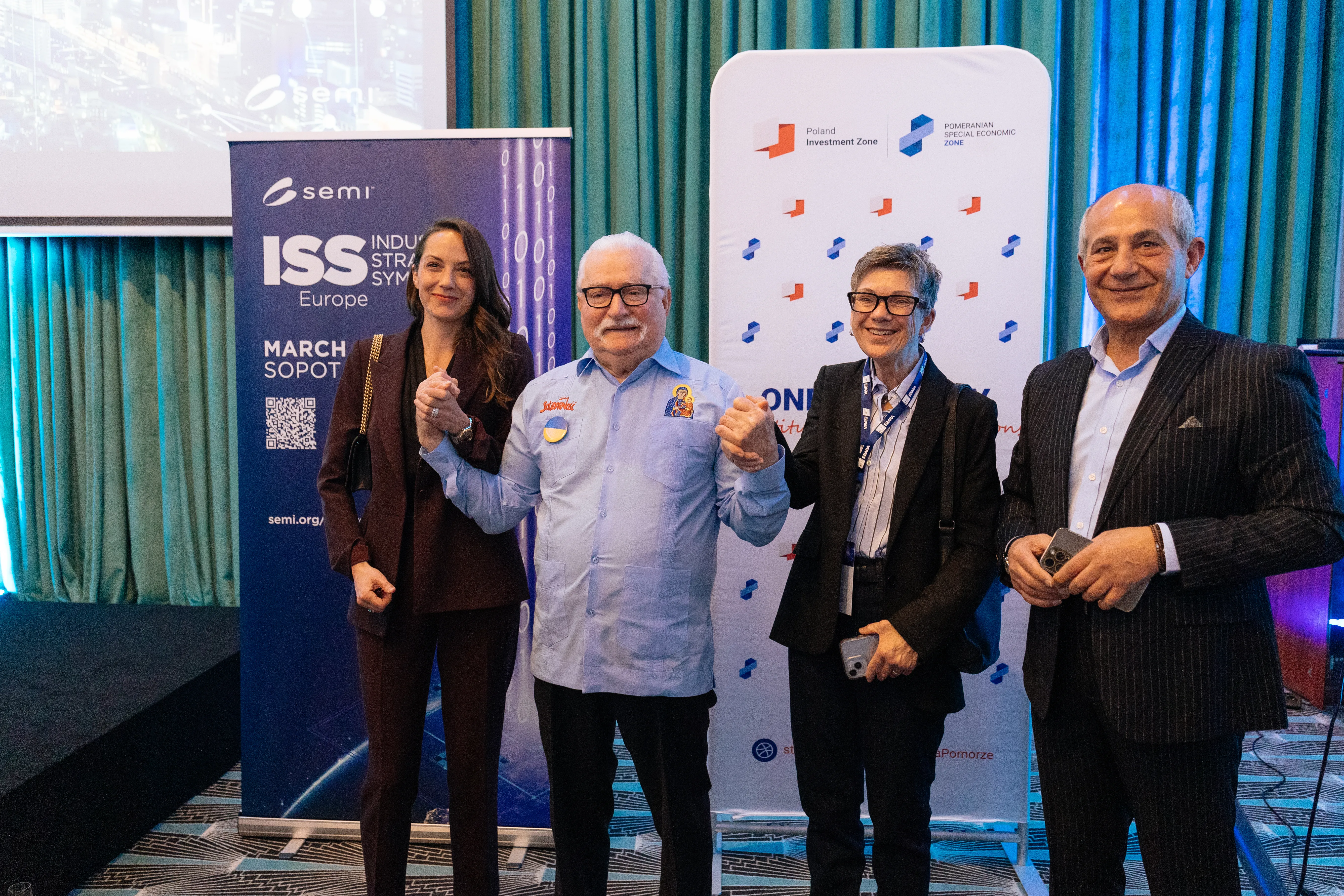
As competition within the semiconductor industry continues to intensify, the need for Europe to strengthen its current position within the global supply chain and develop new partnerships are more important than ever. How can Europe forge a unified semiconductor strategy amidst geopolitical tensions, fast‑moving technological change, and ongoing supply‑chain challenges? These dynamics set the stage for the 2026 Industry Strategy Symposium (ISS) Europe taking place in March in Sopot, Poland for the second consecutive year, bringing together leaders from across the semiconductor ecosystem to assess a rapidly shifting global landscape and define Europe’s path toward greater competitiveness and resilience.The symposium opened with a welcome speech featuring Lech Wałęsa, Nobel Peace Prize Laureate and former leader of the Solidarnosc movement which led Poland’ s resistance to its authoritarian Communist regime in the 1980s. Wałęsa shared a strong message on the importance of collaboration: “Old geopolitical structures and the bipolar world order have reached their limits, and as we transition toward a new global order, it is essential to rebuilding a system better suited to today’s realities”. In this uncertain moment, the Nobel Peace Prize called for peaceful dialogue and collective action to shape a new, more suitable world order rather than relying on conflict.Lech Wałęsa, Nobel Peace Prize LaureateAmidst geopolitical tensions, accelerating technological change, and intensifying global competition, a clear message emerged: semiconductors are now foundational to European economic security and technological leadership. As Laith Altimime, President of SEMI Europe, emphasized, “Semiconductors are the infrastructure of the modern world, and only through close collaboration can we master the challenges ahead and strengthen Europe’s technological leadership.”Laith Altimime, President, SEMI EuropeEurope plays a vital role in this industry, with global revenues expected to reach $2 trillion by 2035. As Altimime noted, “Europe has strong foundations, leading in manufacturing equipment and innovation. We must maintain this leadership while reducing dependencies.”A central theme throughout the symposium was how Europe can build on its leadership positions while strengthening its role across the value chain. As Leonard Hobbs, Director of Government Affairs at Intel Ireland, said, “No region controls the entire supply chain. Europe has to figure out how to differentiate itself within the various parts of the supply chain.” Marc Hijink, author of the book Focus – The ASML Way highlighted Europe’s deep supplier ecosystem, and explained that “more than 80% of the value in the products that ASML makes comes from suppliers who are mostly based in Europe.” Marc Hijink, Author of Focus – The ASML WayAt the same time, significant investments are reshaping Europe’s manufacturing footprint. Joerg Recklies, Executive Vice President Frontend at Infineon, drew the audience’s attention to Infineon’s upcoming Smart Power fab opening in summer 2026 “six months ahead of schedule.” Recklies added, “The new ESMC facility in Dresden is expected to produce 40,000 300mm wafers per month, and will provide the first FinFET capability in Europe.” Joerg Recklies, Executive Vice President Frontend, Infineon TechnologiesLooking at opportunities in advanced semiconductors, Cesc Guim, CEO of Open Chip, said, “25 years ago, the only way to learn how to do advanced chip design was in one of the large US companies. That’s no longer the case. Europe now has the capabilities, supported by RISC-V and a full supply chain backed by the wealth of hardware and software engineering talent in regions such as Pomerania.” Left to Right: Mikołaj Trunin, Deputy Director, Invest in Pomerania and Cesc Guim, CEO, Open ChipTo reinforce the sense of opportunity in a changing world, futurist Christian Kromme gave a whirlwind tour through the revolutions to come in technology and society. He described how each wave of technological change, from the internet to AI to autonomous machines, is arriving faster than the one before. “The internet wave commoditized media and knowledge. In the AI wave, we will see the same value compression, but this time squeezing out human skills such as problem-solving and system design,” said Kromme.Kromme urged delegates to “shift from hard skills to heart skills: imagination, empathy, curiosity and integrity, this is where the value of humans lies, because machines cannot do these things.”Christian Kromme, FuturistTrade tensions and international conflictGeopolitics and supply chain dynamics were central to the discussions. Martin Zech, Senior Director at FTI Consulting, described how the US’s approach to the semiconductor industry had shifted from incentives to restrictions. Zech warned that “a new section 301 investigation into the European semiconductor industry could lead to new tariffs.” Johan Rauer, Partner at McKinsey, added that the threat extends beyond tariffs. “Regions will apply a range of measures, including export controls and IP protection.”Martin Zech, Senior Director, FTI ConsultingJohan Rauer, Partner, McKinsey CompanyChristopher Frieling, Director of Advocacy and Public Policy at SEMI Europe, outlined the EU’s response, including its evolving economic security framework and the concept of “trusted chips,” reflecting a preference for products with strong European involvement.Christopher Frieling, Director of Advocacy and Public Policy, SEMI EuropeThe question of technological leadership was addressed by Carlos Pardo, CEO of KD, who stated, “If Europe wants a relevant position in semiconductors, it needs to invest more.” He added that even in automotive semiconductors, European players hold relatively limited shares. Carlos Pardo, CEO, KDProviding another perspective, Dr. Rafał Bugyi, CEO of TRUMPF Huettinger said, “We don’t need to cover the entire supply chain, but we must be indispensable.” Dr. Rafał Bugyi, CEO, TRUMPF Hüttinger GmbH Co. KGSpeakers also addressed how Europe could adapt to the new reality of supply chain dependency. Benoit Chassagne, End-to-End Supply Chain Manager at Edwards, presented a model of a systems response which his company has implemented to mitigate its exposure to supply chain volatility, while David Forrest, Director of Sustainability and Criticality at Vital Materials, emphasized the role of waste materials recovery, saying that “circularity is an industrial mechanism for supply chain resilience, not an environmental add-on.”Benoit Chassagne, End-to-End Supply Chain Manager, EdwardsDavid Forrest, Director of Sustainability and Criticality, Vital MaterialsCarl van Vugt Luning, Chief Commercial Officer at Resilicon, highlighted the need for greater resilience in polysilicon supply, noting Europe lacks dual sourcing. “Polysilicon is often seen as a commodity, but it is critical. Sovereign chips require a resilient polysilicon supply chain,” said van Vugt Luning.Carl van Vugt Luning, Chief Commercial Officer, ResiliconTurning innovation into commercial revenueIn the session ‘From lab to fab’, speakers examined how Europe can improve its track record in converting innovation into commercial success, for example, by companies such as NVIDIA and Qualcomm.An important part of the EU’s strategy was the creation of technology pilot lines. Jari Kinaret, Executive Director of the Chips Joint Undertaking (Chips JU), told the symposium that the pilot lines are an example of successful collaboration between the state and the private sector. Kinaret said, “The total cost of the NanoIC pilot line (for advanced semiconductor fabrication) is €2.5 billion, but this includes €1 billion of funding from ASML.”Jari Kinaret, Executive Director, Chips Joint Undertaking (Chips JU)The role and value of the pilot lines was the subject of a panel discussion at the symposium. Panelist Anne Van den Bosch, Vice President of Public R D Policies and Programs at imec, said the pilot lines “give the European semiconductor ecosystem faster access to advanced process technology.” Patrick Bressler, Director of Fraunhofer Mikroelektronik, agreed. “Pilot lines are a lab-to-industry scheme to give access to prototype manufacturing for SMEs, start-ups and fabless companies which would not otherwise be able to afford advanced manufacturing,” he said.Moderating the discussion, Laith Altimime asked, “How do we ensure that the products which emerge from innovations developed thanks to the pilot lines get manufactured in Europe? Are boutique fabs the answer?” Kevin Williams, Deputy Director of the PIXEurope pilot line, responded: “There are certainly opportunities in building new types of chips and new types of fabs. We have the know-how in the pilot lines, and the equipment for them is made in Europe.” Bruno Paing, Vice President Europe at CEA-Léti, added, “We need to aim for indispensability, replicating what we have with ASML in the EUV field. For instance, the world needs better memories and better interconnects. There are many opportunities in AI. It is not just about the GPU.”Left to Right: Moderator, Laith Altimime, President, SEMI Europe; Panelists: Anne Van den Bosch, Vice President of Public R D Policies and Programs, imec; Bruno Paing, Vice President Europe, CEA-Léti; Patrick Bressler, Director, Fraunhofer Mikroelektronik; Kevin Williams, Deputy Director, PIXEurope.The symposium also highlighted examples of European innovation from two startups developing new technologies. Antonio Mesquida Küsters, Strategic Advisor to Euclyd, presented a processor system combining 16,384 cores with ultra-high bandwidth memory using advanced 2.5D and 3D packaging, offering an alternative to GPUs for AI inference. As he said, “We want to break the hyperscaler/cloud model of AI to build sovereign AI capability for Europe by 2030.”Antonio Mesquida Küsters, Strategic Advisor, EuclydJekaterina Viktorova, Founder and CEO of Syenta, introduced additive manufacturing technology enabling denser interconnects for advanced AI systems, noting, “Our roadmap is set to produce a 20x increase in bandwidth over the next 10 years.”Jekaterina Viktorova, Founder and CEO, SyentaNew strategies for competitiveness in semiconductor manufacturingIf these types of innovative products are to be manufactured in Europe, the region’s fab operations will need to combat the growing competition from China and elsewhere. Giovanni Notarnicola, Partner at Porsche Consulting, said, “Our position in Europe is under attack. The next threat is not from a new product, but from how chips are designed and produced.”Giovanni Notarnicola, Partner, Porsche ConsultingThomas Altenmüller, Vice President of Manufacturing Analytics at Infineon, highlighted the role of automation: “We get more automation in the transition from 8” to 12” wafers, which gives us an advantage in Europe because of our higher labor cost compared to China. But to compete, we still need more AI smart workflows to increase the automation.” Carina Lainer, Principal at Roland Berger, added, “Today we optimize operations with tools built for a human-centric process, which has reached its limit. We can instead use digitalization and AI to fundamentally change the way that semiconductor innovation takes place.”Thomas Altenmüller, Vice President of Manufacturing Analytics, InfineonLeft to Right: Carina Lainer, Principal, and Thomas Kirschstein, Partner, Roland BergerOded Tal, CEO of MAX Group, cautioned that the barrier to increased implementation of automation was not technical but social. “Humans can be very flexible, but leadership is crucial. “You have to give training and clear instructions. It’s about structure, making people’s roles and responsibilities crystal-clear,” he said.Oded Tal, CEO, MAX GroupThe symposium closed with a panel discussion about the implementation of AI and automation in the fab. Moderator Cassandra Melvin, Senior Director of Business Development and Operations at SEMI Europe, pointed out that “intelligence is moving beyond the tool to the control room, a development which is powered by AI.” The panelists were quick to acknowledge the radical impact that AI is having on fab operations. Dirk Drescher, Plant Manager at Bosch Semiconductor, said, “We built the Bosch fab in Dresden around a standardized data architecture, which is what enables us to implement AI. That is a contrast to a 20 year old fab, which can only see a patchwork of different data systems.”Thomas Richter, Senior Vice President and Managing Director at Infineon, added, “digitalization is about much more than just AI. We have had great success in getting rid of boring, routine tasks through digitalization. This makes a huge difference, and helps our fabs to stay competitive.”The panel also debated the potential impact of humanoid robots on the scale and impact of automation. Richter said, “In our fabs, I can see rooms in which it has never been possible to automate before, but humanoid robots give me hope that we can automate more in future.”Matthias Bonkass, Vice President of Advanced Manufacturing Engineering at GlobalFoundries, agreed. “By 2035, we will see collaboration between humans and humanoids. This wave is coming!” Going even further, Dirk Drescher looked forward to an era of total automation. He said, “We will see a lights-out fab by 2035. This is definitely a tailwind for the European semiconductor industry, making it faster, reducing cost, and giving us more opportunity to build semiconductors in Europe.”Thomas Morgenstern, Executive Vice President of Manufacturing at STMicroelectronics, concluded, “We must not let culture be a barrier to AI. Technical strategies to implement AI are all very well, but you need people to buy in. Morgenstern added, “The name of the game is productivity. The most advanced fabs have to be dark, with remote operating centers somewhere in the world, running clusters of fabs. I am extremely confident that by 2035, if not before, the first dark fab will be in operation.”Left to Right: Moderator, Cassandra Melvin, Senior Director of Business Development and Operations, SEMI Europe; Panelists, Dirk Drescher, Plant Manager, Bosch Semiconductor; Matthias Bonkass, Vice President of Advanced Manufacturing Engineering, GlobalFoundries; Thomas Morgenstern, Executive Vice President of Manufacturing, STMicroelectronics; Thomas Richter, Senior Vice President and Managing Director, Infineon.During the event, SEMI Europe announced recipients of the SEMI European Award and Special Service Award for 2025. Dr Peter O’Brien, Head of Research in Photonics Packaging and Systems Integration at Tyndall National Institute, was honored with the SEMI European Award and, Eric Beyne, Senior Fellow at imec, with the Special Service Award. Peter O’Brien, Head of Research in Photonics Packaging and Systems Integration, Tyndall National InstituteAnne Van den Bosch, Vice President Public R D Policies and Programs, imec receiving the award on behalf of Eric Beyne, Senior Fellow, imecOn behalf of SEMI, the SEMI Europe team and ISS Europe committee, we would like to thank all speakers, sponsors, and attendees for making the event a great success. ISS Europe 2027 will take place in Dresden, Germany from March 8-10.Serena Brischetto is Director, Marketing and Digital Engagement at SEMI Europe.
Read More
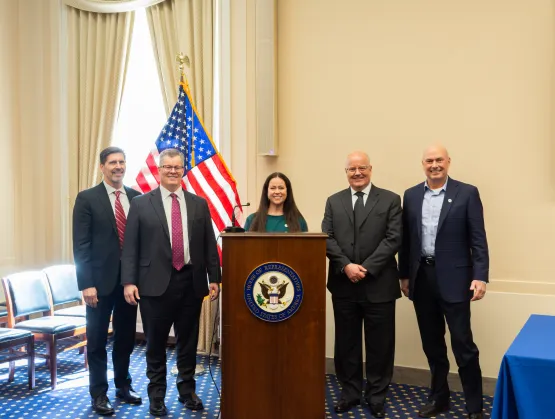
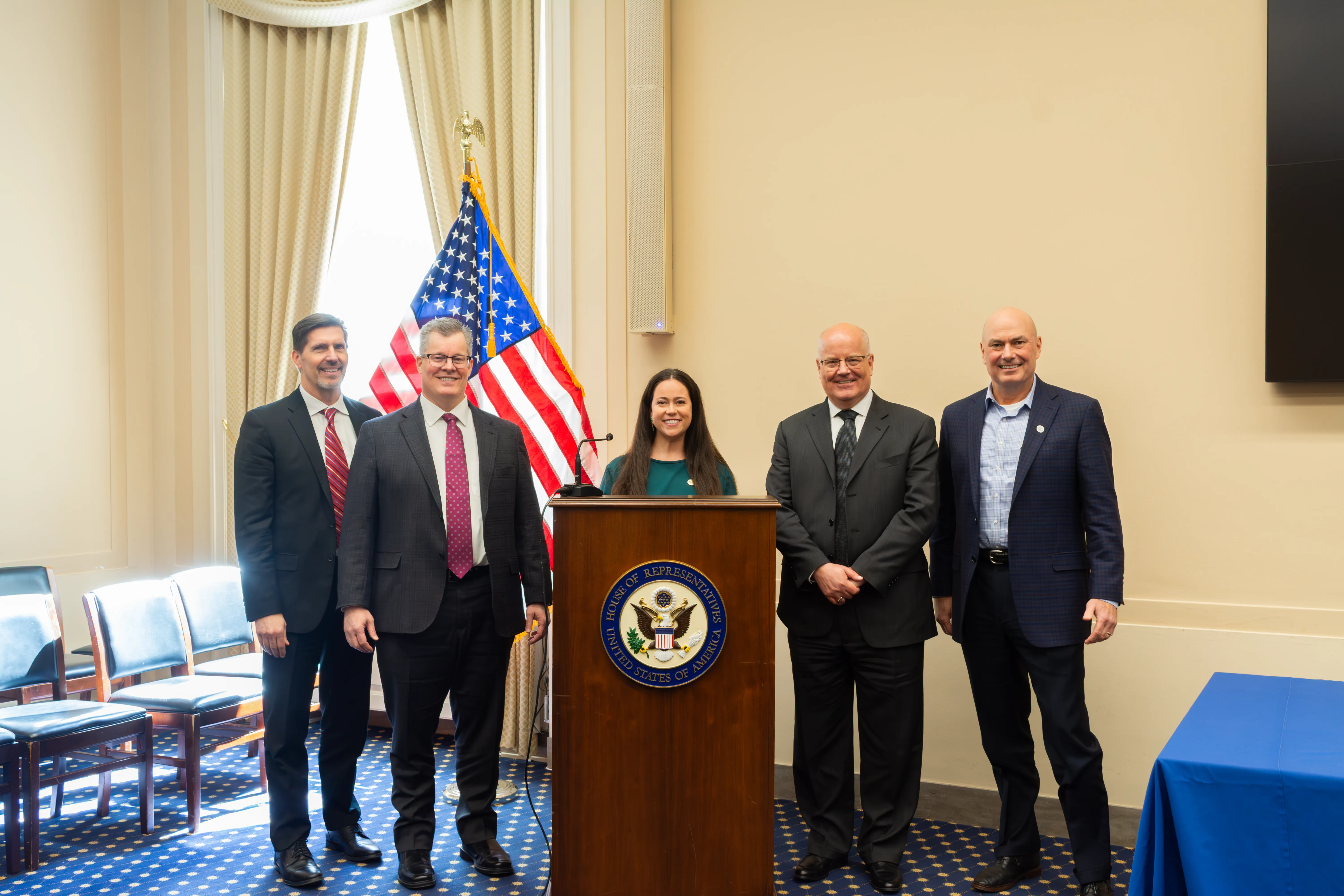
The House Semiconductor Caucus event held on March 17, 2026 at the Rayburn House Office Building in Washington, D.C. brought together industry leaders for an in-depth panel discussion around the upstream vulnerabilities in the U.S. semiconductor supply chain and policy actions Congress should consider. If policymakers do not hear from all segments of the supply chain, critical issues go unaddressed and the policies that result are less effective than they could be. Events like this reflect SEMI’s mission to bring the full breadth of the supply chain into policy conversations. Key topics addressed during this panel were supply chain and critical material challenges, tax and domestic incentives, and export controls and trade policy. The briefing featured executives from leading materials companies—Entegris, Materion, Avient, and CoorsTek—and was moderated by SEMI. They shared firsthand insights into bottlenecks and risks within the global supply chain, emphasizing how disruptions in sourcing and processing critical materials can threaten the entire semiconductor manufacturing process. The event also addressed the need for targeted policy actions to strengthen U.S. competitiveness, such as extending and expanding the Sec. 48D tax credit, targeting R D in specific areas, and workforce development. The event underscored the strategic significance of a robust and resilient semiconductor supply chain as a cornerstone of national and economic security, particularly in light of ongoing global supply chain uncertainties. The panel encouraged policymakers to increase consultation with industry stakeholders and consider specific, actionable steps to close existing gaps and support the entire ecosystem. The Q A session allowed congressional staff to engage directly with experts, further deepening their understanding of the complex challenges facing the semiconductor industry today. SEMI is the preferred trusted partner to the government and the event concluded with a networking lunch to reinforce the collaborative spirit between industry and government that is necessary to build a stronger, more secure future.Thank you to Representative Zoe Lofgren for providing a keynote address, Representative Michael McCaul for collaborating with SEMI to host this panel event, and to our speakers for raising these important issues and sharing timely insights. Visit SEMI Global Advocacy to learn more about public policy efforts and developments as well as how your company or organization can get involved.Scarlett Bickerton, Manager, Federal State Affairs at SEMI.
Read More
On February 20, the U.S. Supreme Court ruled that the International Emergency Economic Powers Act (IEEPA) does not authorize the use of tariffs, invalidating certain tariffs imposed by the Trump Administration under the statute.SEMI shared the following statement on the ruling: SEMI acknowledges today’s U.S. Supreme Court ruling regarding the use of tariffs under the International Emergency Economic Powers Act. As the implications of the decision become clearer, we welcome further guidance and remain committed to working with the U.S. government to strengthen semiconductor supply chains, support innovation, and expand domestic chip manufacturing.Continued investment in U.S. manufacturing depends on stable, reliable access to the highly specialized equipment, materials, and components essential to semiconductor production. Driven by global demand, breakthrough innovation, and record levels of investment, the semiconductor industry is projected to reach a $1 trillion market this year. Clear, consistent, and predictable trade policy remains critical to providing manufacturers – particularly small- and medium-sized enterprises – the certainty necessary to sustain long term investment, scale production, and reinforce technological leadership in the United States.Visit SEMI Global Advocacy to learn more about public policy efforts and developments as well as how your company or organization can get involved.Royal Kastens is Vice President, Global Public Policy Advocacy at SEMI.
Read More
On December 13, SEMI submitted its response to a Request for Information (RFI) from the U.S. Department of Commerce (the Department) regarding the newly launched American Artificial Intelligence (AI) Exports Program. The intent of this program is to position U.S. firms as global leaders in AI by connecting them with international buyers, leveraging the Department's export promotion tools and supporting industry-led consortia through targeted government backing. By issuing this RFI, the Department intends to solicit input on the development of industry-led consortia capable of delivering full-stack American AI export packages under the American AI Exports Program. Working with member companies, the SEMI Public Policy and Advocacy (PP A) team developed a response highlighting the importance of the semiconductor supply chain to the AI ecosystem, and offering various recommendations for consortium formation, federal support, strategic objectives, and proposal evaluation. The response was informed by direct discussions between SEMI PP A and Department officials implementing the program. Some of the key aspects of SEMI's response include the following:Broader AI Tech Stack Definition: The Department should recognize semiconductor manufacturing technologies, mature node semiconductors, and energy/environmental control systems as foundational elements of the AI technology stack. Evaluation Framework: Evaluation criteria for consortium proposals should align with CHIPS for America requirements and guardrails, focusing on national security, economic competitiveness, and commercial viability, as well as infrastructure needs.Consortia Governance: Consortia should be industry-led and feature: honest brokers capable of coordinating commercial actors while advancing national interest objectives; modularity to ensure that the various technology layers function as distinct yet interoperable units; and clear frameworks for intellectual property protections and regulatory compliance. Foreign Participation: Vetted foreign entities should be allowed to participate in the program in order to reflect the global nature of the AI ecosystem and to strengthen allied and partner nation supply chain resilience.Federal Support Mechanisms: The Department should leverage the unique capabilities of the National Institute for Standards and Technology, Center for AI Standards and Innovation, Bureau of Industry and Security, Export-Import Bank, Development Finance Corporation, and others, including expedited licensing, financing tools, tax incentives, and interagency liaisons to accelerate exports. National Security Compliance: SEMI's comments emphasize robust compliance programs, cybersecurity, supply chain security, and risk-based licensing to prevent misuse or diversion of AI technologies. Global Competitiveness and Standards: SEMI urges rapid implementation, international promotion of U.S. AI technologies, and leadership in global standards to ensure interoperability and trusted adoption worldwide.SEMI is grateful for the feedback provided by our member companies in developing this comprehensive response to the Department's RFI. Visit SEMI Global Advocacy to learn more about public policy efforts and developments as well as how your company or organization can get involved.Ben Kallen is Sr. Manager, Public Policy Advocacy at SEMI.
Read More
The CxO Summit at SEMICON Europa 2025 spotlighted Europe’s ongoing efforts to build a resilient and globally competitive semiconductor industry, while calling for greater ambition, speed, and unity in execution. Following global disruptions with the automotive supply chain crisis, the European Union launched a continent-wide strategy through the EU Chips Act. While the Act has already spurred significant developments, including construction of the new ESMC fab in Dresden, Europe remains far from its goal of achieving a 20% share of global semiconductor production by 2030. The CxO Summit, part of the SEMICON Europa event in Munich, provided an opportunity for industry leaders to share ideas about how to catalyze the next phase of the European industry’s growth.Ajit Manocha, President and CEO of SEMI opened the summit by describing today’s industry landscape with one word: “unprecedented.” Manocha said, “The global growth of the industry is unprecedented, with 107 new fabs set to come online by 2028, but the uncertainties are unprecedented, from geopolitics to the talent shortage to environmental concerns. So we need unprecedented solutions.” Ajit Manocha, President and CEO, SEMILaith Altimime, President of SEMI Europe echoed the mood of uncertainty, describing Europe as caught “in a perfect storm.” Altimime said, “As we face a combination of internal challenges and intensifying external competition, collaboration is not optional — it is mission critical.” Laith Altimime, President, SEMI EuropePierre Chastenet, Head of the Unit for Microelectronics and Photonics, European Commission, highlighted the tangible progress made under the EU Chips Act. “We now have a proper toolbox to handle a future crisis in the supply chain. The Chips for Europe initiative has led to the creation of five pilot lines for advanced technologies such as FD-SOI and wide bandgap semiconductors.” Chastenet added, “Europe must now capitalize on its strengths, from materials and equipment to design tools and cutting-edge research emerging from our RTOs.”Pierre Chastanet, Head of the Unit for Microelectronics and Photonics, European CommissionEchoing the call for action, Oliver Schenk, Member of the European Parliament, urged stronger regional unity. “Europe must act together, act faster, and act with much bigger ambition,” Schenk said, reinforcing the need for cross-border commitment to strengthen the continent’s semiconductor position.Oliver Schenk, Member of the European Parliament, European ParliamentHighlighting Europe’s most critical technology gap, Luc Van den hove, President and CEO of imec, unveiled plans for a new advanced fab backed by €2.5 billion in investment from the EU, the Flemish government, and ASML. Van den hove urged Europe to commit wholeheartedly to advanced technologies: “We must be more ambitious, and focus on disruptive breakthroughs rather than incremental change if we want to ensure a prosperous future.”Luc Van den hove, President CEO, imecAt the CxO Summit, CEA-Leti and ASML signed a memorandum of understanding (MoU) to deepen their collaboration and accelerate innovation in mainstream semiconductor technologies. Building on promising results in hybrid bonding, the partnership will now target 'More-than-Moore' innovations, including heterogeneous integration and novel substrates like SiC and GaN. “We aim to combine ASML’s world-class lithography expertise with CEA-Leti’s system-level innovation,” said Sébastien Dauvé, CEO of CEA-Leti. The collaboration is set to strengthen Europe’s ecosystem by shortening the path from early research to industrial impact.Left: Anne Hidma, Senior Vice President EUR US, ASML; Right: Sébastien Dauvé, CEO, CEA-LetiTurning to Europe’s industrial base, Christian Senger, CEO of Volkswagen Autonomous Mobility, emphasized the need to shift from risk-aversion to opportunity. While the region’s automotive sector faces intense global competition, particularly from China, Senger highlighted that Europe has the potential to lead in new mobility markets. “The market for autonomous roboshuttles for people transport in large cities is forecast to be worth €400 billion in the US and Europe alone,” he said. With American firms like Waymo and Uber leading the robotaxi space, Senger stressed that Europe must “act swiftly to create an environment that supports an autonomous mobility industry here.”Christian Senger, Member of the Board for Fully Autonomous Mobility and Transport CEO of ADMT GmbH, VolkswagenEurope’s Potential to Create Advanced TechnologyOne of these RTOs, CEA-Leti, is responsible for the FAMES pilot line for FD-SOI technology. Sébastien Dauvé, CEO of CEA-Leti, agreed with Pierre Chastenet that the pilot lines show great promise. He said, “FD-SOI is a big trend in semiconductors, because it enables very low power consumption in embedded devices. We think that adoption of the technology will grow in the coming years, and that is good, because most of the technology is produced in Europe.”Sébastien Dauvé, CEO, CEA-LetiEurope is also widely recognized to be the leading global voice on sustainability – a huge issue of concern to the semiconductor industry. Henri Berthe, President of the Semiconductor and Battery Segment at Scheider Electric, told the summit that 500 million tonnes of CO2 emissions per year are attributable to the semiconductor industry – “more than the whole of Mexico emits!” he said. “We need to make fabs more efficient, and that is why Schneider Electric has launched a new playbook with Applied Materials for sustainable energy abundance for the industry.”Henri Berthe, President of the Semiconductor Segment, Schneider ElectricAnother aspect of Europe’s playbook is support for new fabs. The flagship is ESMC, the joint venture between TSMC, NXP Semiconductors, Bosch, and Infineon. Christian Koitzsch, president and managing director of ESMC, reported to the summit that the project to build in Dresden a 12nm FinFET foundry and a 28nm CMOS line, requiring a total investment of €10bn, is on schedule. “We are now developing local supply chains, hosting a series of ESMC Supplier Days which are open not only to German but generally to European suppliers,” said Koitzsch.Christian Koitzsch, President and Managing Director, European Semiconductor Manufacturing Company (ESMC)As Manfred Horstmann, General Manager and Senior Vice President of Global Foundries, pointed out, the building of the ESMC fab means that Dresden is established as the center of a cluster of semiconductor industry companies. “Global Foundries has its Fab 1 and a mask center in Dresden. In fact, one-third of the chips produced throughout the whole of Europe now comes from Dresden.”Manfred Horstmann, General Manager and Senior Vice President, GlobalFoundriesAn example of ambition was given by Terence Gan, Executive Director of the Institute of Microelectronics of Singapore. Gan told the summit how Singapore has used pilot lines to stimulate research and development in new technologies. He said: “We started research into advanced packaging as long ago as 2011. Most people thought we were mad! But today, there is strong demand for our advanced packaging capabilities because of the rise of AI and its need for high-performance computing.”Terence Gan, Executive Director, Institute of MicroelectronicsBreaking Barriers to ProgressDespite momentum, bureaucratic inefficiencies continue to hamper progress. Narjiss Haddaoui, Managing Director of European Economics called for faster decision-making: “In global competition, speed is a decisive factor. To act fast enough, the EU must change its ‘software’ - the processes by which it considers and makes decisions.” Narjiss Haddaoui, Managing Director, European economicsThe stifling character of European bureaucracy is reflected in the region’s approach to building fabs. Herbert Blaschitz, Executive Vice President of Advanced Technology Facilities at Exyte, compared fab construction timelines: 20 months in Taiwan, 34 in Europe, and 38 in the U.S., attributing delays in Europe to paperwork bottlenecks.Herbert Blaschitz, Executive VP of Advanced Technology Facilities, ExyteFabio Gualandris, President for Quality, Manufacturing and Technology at STMicroelectronics raised another concern — 100% of raw materials used in European fabs come from outside the region. Christophe Frey, Vice-President for EU Engagements at Arm France, added that geopolitical tensions are clouding the path forward: “We are a bit lost in the smoke from the big fire in the world’s semiconductor industry.” Fabio Gualandris, President Quality, Manufacturing Technology, STMicroelectronics Christophe Frey, Vice-President of EU Engagements, Arm FrancePlaybooks For Future SuccessSo amid the uncertainty and global tension, what lessons can the industry learn from successful regional examples? Tuomas Korpela, Business Development Senior Manager at Nokia, credited Finland’s strategic procurement and policy tools with enabling a vibrant semiconductor ecosystem: “Finland creates demand for advanced chips using industrial policy tools, alongside strategic procurement in sectors such as defense and aerospace, and connectivity.” Tuomas Korpela, Business Development Senior Manager - Corporate Development Organization, NokiaAt a regional level, Joerg Schulze, Director of the Bavarian Chips Alliance, said that his organization was supported by the Bavarian State Ministry of Economic Affairs, as well as by companies and universities. “We help semiconductor companies to establish themselves and grow here through help with site searches, networking and contacts, funding and support, and talent acquisition,” said Schulze.Joerg Schulze, Spokesperson for the Bavarian Chips Alliance, Director of the Fraunhofer IISB, Bayern Innovativ GmbHCompanies in the European semiconductor supply chain also provided the summit with their insights into the roots of global success. André Grede, Chief Technology Officer of Comet, described how his company’s strategy is not to wait for customers to tell it what they need, but to be “ahead of the curve.” Grede said: “Is staying in sync with the customer enough? Not for us - we are deeply embedded with our customers, and constantly looking to broaden our relevance to them.”André Grede, CTO, CometChristophe Maleville, Chief Technology Officer of Soitec, provided a real-world example of how this is done. He said: “Our engineered substrates using RF-SOI technology reduce the drain on a mobile phone’s battery power, and cut our customers’ board footprint thanks to RF front end integration. As a result, our products are now in 100% of 5G smartphones.”Christophe Maleville, CTO, SoitecAnne Hidma, Senior Vice-President for Europe and the US at ASML, shared the company’s success formula: “The reasons for ASML’s success include customer focus – decide which markets you are going to be in, and which you are not. We are also all-in on innovation. We nurture an ecosystem, which for us includes imec and CEA-Leti, as well as partnerships with academia. And lastly, we have a strong supply base, which is a core strength of Europe.” In a time marked by both uncertainty and opportunity, the example of ASML shows how the European semiconductor supply chain can survive and thrive.Anne Hidma, Senior Vice President EUR US, ASMLEurope’s Path ForwardThe CxO Summit made one thing clear: Europe has world-class innovation, policy momentum, and industrial commitment. What’s needed now is faster execution, deeper collaboration, and the courage to invest in the technologies of tomorrow. As the industry heads toward the $1 trillion milestone, the decisions made today will shape Europe’s place in the semiconductor world for decades to come.On behalf of SEMI, the SEMI Europe team would like to express appreciation to the industry leaders for sharing their visions and readiness to collaborate during the CxO Summit.SEMI ContactLaith Altimime, President SEMI [email protected]
Read More
Silicon carbide (SiC) has become a cornerstone of next-generation power electronics, driving advancements in electric vehicles, renewable energy, and industrial applications. After several years of rapid capacity expansion, the SiC industry is now entering a new phase focused on optimization, quality, and long-term scalability.This transition reflects a broader realignment across the global semiconductor ecosystem. As new fabs come online and supply chains mature, the industry is prioritizing stability, cost efficiency, and technical excellence over sheer capacity growth. SiC has moved from being a niche technology to a critical enabler of the energy transition, and this maturity demands not only investment in tools and materials, but also in process knowledge, cross-industry standards, and long-term partnerships that can sustain innovation at scale.To understand how this shift is unfolding, SEMI Europe spoke with Dr. Mark Puttock, Senior Director, Technology and Innovation at Entegris. Puttock shared his perspective on the industry’s evolution and how strategic collaboration and process innovation are shaping the next chapter of SiC manufacturing.From Ramp-Up to RefinementThe early growth of SiC manufacturing was driven by surging demand for high-efficiency power devices, particularly in electric vehicles. According to Puttock, that expansion period has given way to a new focus on yield, uniformity, and process control.The industry is entering a stage of maturity where success depends on optimization rather than scale alone. Improving consistency across crystal growth, wafer, and device fabrication is becoming just as important as adding capacity. This refinement phase calls for closer integration between materials science and manufacturing technology to ensure reliability and cost efficiency.A Focus on Process and Materials InnovationAs SiC moves toward high-volume production, challenges related to contamination control, defectivity, and wafer uniformity are taking center stage. Puttock noted that addressing these issues requires collaboration between materials suppliers, equipment manufacturers, and device makers.Efforts across the industry are converging on similar goals: enhancing purity, improving process repeatability, and developing new methods to enable larger wafer formats. Moving from 6-inch to 8-inch SiC wafers, for example, is widely recognized as a key step toward higher throughput and cost efficiency. Puttock emphasized that innovation in materials science and manufacturing technology must go hand in hand to support this scaling trend.Insights from Cross-Industry CollaborationA recent Entegris blog post featuring insights from Volkswagen Group Components and Porsche Consulting explores how SiC adoption is reshaping manufacturing strategies beyond the semiconductor industry. The post also highlights the strategy paper developed by Porsche Consulting in collaboration with Entegris. This joint effort demonstrates the value of aligning semiconductor-grade precision with automotive manufacturing demands. By sharing perspectives across industries, partners can accelerate best-practice adoption and strengthen the overall ecosystem for wide-bandgap technologies.Building a Sustainable FutureSustainability remains an integral part of this optimization phase. SiC devices themselves enable energy efficiency in end applications, but the way they are manufactured is equally important. Optimizing material use, recycling process consumables, and improving chemical delivery efficiency all contribute to a smaller environmental footprint. As production scales, attention to both performance and sustainability will be key to long-term success.Looking ForwardThe transition from expansion to optimization marks a pivotal moment for SiC manufacturing. Industry focus is shifting from building capacity to mastering control, quality, and resource efficiency. Puttock sees the future of SiC as one shaped by deeper digital integration, data-driven process development, and continued collaboration across disciplines. These advancements will help enable more consistent, sustainable, and cost-effective production—laying the foundation for the next generation of high-performance power devices.At the same time, Entegris continues to invest in materials science, contamination control, and advanced process technologies that help its customers overcome the complex challenges of SiC manufacturing. By combining technical expertise with a collaborative approach, the company plays an active role in supporting the industry’s transition toward more efficient and sustainable production.James Lam is Business Development Manager at SEMI Europe.
Read More
SEMI has submitted comments to the U.S. Department of Commerce’s Bureau of Industry and Security (BIS) in response to its Section 232 National Security Investigation of Imports of Robotics and Industrial Machinery.The submission highlights the vital role robotics and precision machinery play in semiconductor fabrication, packaging, and inspection and emphasizes the need for a balanced, risk-based approach to any future trade actions that strengthen U.S. national security while preserving access to robotics and industrial machinery essential to expanding the domestic semiconductor industry. SEMI RecommendationsSEMI outlined five key recommendations to the Administration.Encourage Investment and Maintain Existing Competitiveness. SEMI recommends excluding essential robotics and industrial machinery where domestic sourcing is not yet viable. If trade actions are taken following the investigation, SEMI recommends providing tariff reductions or waivers for companies investing in U.S. manufacturing capacity. SEMI emphasized protecting small and medium suppliers that keep the ecosystem running.Avoid Stacking Tariffs. Coordinate Section 232 actions across potentially overlapping actions and ongoing investigations, such as on imports of steel and aluminum, semiconductors, critical minerals, and polysilicon. This will help prevent duplicative or compounding tariffs that could raise costs and slow U.S. capacity building.Implement Adjustment Periods and Sunset Provisions. SEMI recommends any trade actions should phase in gradually to allow for domestic adaptation and include regular review mechanisms to recalibrate as the market evolves.Pair Trade Actions With R D, Workforce, and U.S.-Allied Collaboration. Strengthen domestic capacity through targeted federal research and development (R D) programs, workforce training, and deeper partnerships with trusted U.S. allies to build resilient technology ecosystems.Develop a National Robotics Strategy. Given robotics’ foundational role across semiconductor and advanced manufacturing sectors, SEMI recommends that the Administration develop a National Robotics Strategy. The strategy should align federal programs including those at NIST, NSF, and Department of Energy to accelerate robotics innovation, update technical standards, and drive U.S. leadership in automation and manufacturing competitiveness.The Global ContextWorldwide installations of industrial robots surpassed 540,000 units in 2023, with the market projected to exceed $73 billion in 2025.Robotics and industrial machinery are integral to semiconductor production ensuring cleanroom integrity, precision, and throughput. Broad or overlapping tariffs could raise costs and undermine U.S. competitiveness at a time when historic investments in domestic semiconductor manufacturing are taking hold.Next StepsSEMI looks forward to working with the Department of Commerce and other federal partners to ensure that Section 232 policies enhance both U.S. national security and the industry’s global competitiveness.Read SEMI’s full submission on Regulations.gov by searching Section 232 Investigation of Imports of Robotics and Industrial Machinery (XRIN 0694-XC138).Visit SEMI Global Advocacy to learn more about public policy efforts and developments as well as how your company or organization can get involved.Marc Coldiron is Director, Global Public Policy Advocacy at SEMI.
Read More
Extended Plateau, Not a New Cycle: The Broader Industry PictureThe current recovery in the semiconductor market appears to signal revival, yet is best understood as an extended phase of the existing cycle—a phase defined less by renewed demand than by structural restraint and efficiency-driven realignment.AI-related demand is indeed driving the rebound, yet this recovery differs fundamentally from past expansionary booms. It is unfolding within an efficiency-driven adjustment phase, where capital expenditure has shifted its focus from capacity expansion to process upgrades and optimization. The observed recovery therefore reflects structural realignment rather than a conventional cyclical upswing.This realignment has created an ‘Extended Peak Plateau’—a state not of cyclical acceleration but of structural transformation. The imbalance between resilient equipment and materials spending and stagnant wafer shipments has produced an uneven recovery, concentrated in select high-value segments rather than evenly across the value chain. The apparent plateau seen today stems less from broad-based demand expansion than from price-anchored growth, sustained by firm pricing in premium segments such as AI-related and high bandwidth memory (HBM) products.At the same time, semiconductor manufacturers—particularly in memory—have adopted a supply-controlled operational strategy, emphasizing process optimization and product upgrades over large-scale capacity additions. Together, these three structural forces—supply/demand imbalance, price-anchored resilience, and efficiency-oriented adaptation—have defined the industry’s current phase, where revenue growth remains elevated but plateaued rather than accelerating or decelerating.In this context, the recent rise in DRAM prices and continued hyperscaler investment hold implications beyond short-term variables: They determine whether the industry can sustain equilibrium without widening the amplitude of future cycles between overheating and contraction. If DRAM recovery remains purely supply-driven, the upturn will likely be shallow; conversely, a slowdown in hyperscaler investment could undermine the demand foundation itself.This is why the report characterizes the current phase not as a “new cycle” but as an extended plateau. While AI-driven momentum has already taken hold, the transition toward a stable and balanced industry structure must pass through the filter of efficiency. This efficiency-based rebalancing will, in all likelihood, require a period of adjustment before a truly sustainable equilibrium — the foundation for the next phase of genuine growth — can emerge.Desynchronization Between Investment and Wafer Demand: Evidence of a Structural ShiftThe chart below visually illustrates this structural asymmetry. When normalized to Q1 2019 = 100, as of Q2 2025 equipment investment has rebounded to roughly 244, photoresist revenue to 200, and total semiconductor revenue to 184—yet wafer shipments remain near 110 and wafer revenue around 103.Diverging Trends Across the Semiconductor Value Chain (Q1 2019 = 100) * Note1. Data sources: SEMI (WWSEMS, Silicon Wafer Shipment, Photoresist Market Data), WSTS, and IR disclosures from the top five wafer suppliers.2. Wafer revenue reflects the aggregated sales of the top five suppliers; Shin-Etsu’s quarterly figures are estimated from 2Q 2021 onward.3. Semiconductor fab equipment investments reflect only wafer-processing equipment (WFE) expenditures, based on the Wafer Processing Equipment category defined in SEMI’s WWSEMS dataset. All indices are normalized to Q1 2019 = 100; wafer area shipments are originally reported in million square inches (MSI), while other indicators represent revenues or investments in U.S. dollars (USD). The data clearly indicate that while equipment and materials have rebounded, wafer shipments and related revenue remain subdued. This divergence is not a matter of cyclical timing; rather, it reflects a re-alignment of the industry’s recovery dynamics, driven by process complexity and efficiency-oriented capital deployment. In other words, the widening gap between investment and wafer industry output symbolizes the industry’s transition from expansion-driven growth to efficiency-driven operations.In previous cycles, the linear linkage of “investment expansion → production expansion” prevailed. Today, however, investment is now synonymous with process-efficiency improvement rather than capacity growth. Behind this shift lie longer cycle times, rising process complexity, and the increasing concentration of demand in AI-related nodes. More complex manufacturing now requires process sustainment, advanced process control, and continual upgrades—CapEx allocation now reflects this shift.At the same time, a clear gap has emerged between wafer revenue and shipment growth, underscoring the divergence between financial recovery and physical output. In other words, shipment volumes have improved, but average selling prices remain subdued, signaling that the recovery is not demand-driven. This indicates that the current phase is sustained not by broad-based demand expansion, but by selective growth achieved through efficiency gains and product-mix adjustments. Despite this widening gap, the industry may give the outward impression of a steady growth plateau, since CapEx spending and high-value segments continue to post solid growth. Yet what appears as stable growth in the semiconductor and equipment market could be, in fact, a structural illusion—a state shaped by process complexity, efficiency-driven investment, and deliberate product-mix management. In short, this perceived growth is the by-product of financial and supply discipline, not the result of renewed demand momentum.Realignment of the Wafer Industry: A Gradual 300 mm-Led Shift Anchored in Efficiency and Portfolio StrategyAs the broader semiconductor ecosystem shifts its focus from expansion to efficiency—and from scale to high value and customer reliability—wafer manufacturers are, in turn, redefining their competitive edge around operational efficiency and the stable delivery of high-value products. The 300 mm wafer segment continues to lead the recovery, whereas 200 mm wafer shipments remain significantly below its 2022 peak, constrained by sluggish demand from legacy and non-memory applications. On the profitability front, depreciation burdens and persistent pricing pressure are creating dual headwinds.To navigate this environment, leading wafer suppliers are pursuing a dual-track approach: renegotiating long-term supply agreements (LTAs) while managing short-term contracts and selective and disciplined pricing to sustain utilization. At the same time, they are optimizing product portfolios to balance cash-flow defense with strategic offense. In this context, the critical question is shifting from “How much can be sold?” to “What kind of portfolio—specifically, how consistently can high-value wafers be sold and delivered?”In essence, performance is now measured less by expansion and investment scale, and more by efficiency, sustainability, and reliability. This strategic realignment mirrors the broader efficiency-driven transition underway across the semiconductor value chain, underscoring that the wafer industry is no exception to the global shift toward disciplined, portfolio-centric growth.Conclusion: The Path to True Recovery — When Three Forces AlignIn summary, the current semiconductor market is best understood as having entered an extended plateau following the peak of the present cycle, with its future trajectory hinging on how effectively DRAM price resilience and Big Tech investment continuity can restore balance. In essence, the outcome will depend on the market’s ability to narrow the amplitude between overheating and contraction, moving toward a more sustainable equilibrium. Rather than focusing on the DRAM price rebound driven primarily by supply adjustments or on demand concentrated in specific sectors, what truly matters for the wafer industry is the structural alignment of three key forces: (1) the recovery of broad-based and genuine demand, (2) the stabilization of the semiconductor supply structure, and (3) the improvement of operational efficiency across the value chain. The moment these three forces align will signal the true onset of the next upcycle — not only for the broader semiconductor market, but also for the global silicon wafer industry.Such alignment rarely occurs quickly — it requires time, discipline, and structural patience.This article distills the key insights from the Market Update section of the Q3 2025 Silicon Wafer Market Monitor Report. In this quarter’s analysis, the focus lies on the semiconductor cycle’s transition into an Extended Peak Plateau — a phase characterized not by broad-based expansion, but by efficiency-driven operations and portfolio realignment. Drawing on shipment, revenue, and CapEx data across wafers, materials, and equipment, this section identifies structural asymmetries between investment and shipment dynamics, and explores how efficiency gains, product-mix optimization, and supply discipline are reshaping the industry’s recovery trajectory.Separate from this focused article, the full SEMI Silicon Wafer Market Monitor Report provides a wider array of charts and indicators, offering a multidimensional perspective on how key variables interact to shape the future of the global wafer industry. Rather than serving as background commentary, the full report aims to deliver data-driven, decision-ready insights that support strategic thinking amid persistent market uncertainty.For more information on the report or to subscribe, please contact the SEMI Market Intelligence Team at [email protected]. Details on SEMI market data are available at SEMI Market Data. Sungho Yoon is a Principal Analyst on the SEMI Market Intelligence team.
Read More
The Department of Commerce (DOC) has issued an amended version of the semiconductor supply chain Notice of Funding Opportunity (NOFO), commonly referred to as “NOFO 2.” This NOFO is explicitly geared toward projects that would construct, expand, or modernize semiconductor materials facilities or semiconductor manufacturing equipment facilities. Initial concept plans will be accepted until November 1, 2026. DOC released the first version of NOFO 2 in September 2023. While the amended version maintains the focus on upstream suppliers of semiconductor manufacturing materials and equipment, it differs in several key aspects from the original. Outside of the application deadline extension, some of the most notable differences include the following.Project Cost: The amended NOFO 2 removes the $300 million cap on individual projects but argues that individual projects under $20 million are unlikely to reach a scale necessary for achieving strategic objectives.Cost Sharing: The amended version lacks a cost sharing requirement but notes that individual applicants "must be able to demonstrate that they have sufficient resources available to complete the proposed project, when combined with the requested CHIPS Incentives."Fab Clusters: NOFO 2 includes a focus on supporting "the development of vibrant, sustainable semiconductor clusters" by, for example, "reducing the burdens associated with transporting critical supply chain inputs." Evaluation Criteria: Proposals will be evaluated using the following five criteria:Economic and National SecurityCommercial ViabilityFinancial StrengthProject Technical Feasibility and ReadinessWorkforce Development Available Funding: The amended NOFO 2 does not specify a total amount of available funding, which is a departure from the September 2023 version, which set aside $500 million for the entire endeavor. Eligible Applicants: Eligible applicants include private sector organizations, non-profit organizations, consortia of private sector organizations, and consortia of private, public, and/or nonprofit organizations “with a demonstrated ability to substantially finance, construct, expand, or modernize a facility relating to the fabrication, assembly, testing, advanced packaging, production, or research and development of semiconductors, materials used to manufacture semiconductors, or semiconductor manufacturing equipment.”Application Structure and Deadlines: Initial concept plans will be accepted until November 1, 2026. DOC will notify applicants that have been invited to submit full proposals on an individual basis. Sources and Additional Information:NOFO 2NOFO 2 FAQ Visit SEMI Global Advocacy to learn more about public policy efforts and developments as well as how your company or organization can get involved.Ben Kallen is Sr. Manager, Public Policy Advocacy at SEMI.
Read More