downloadGroupGroupnoun_press release_995423_000000 copyGroupnoun_Feed_96767_000000Group 19noun_pictures_1817522_000000Member company iconResource item iconStore item iconGroup 19Group 19noun_Photo_2085192_000000 Copynoun_presentation_2096081_000000Group 19Group Copy 7noun_webinar_692730_000000Path
Skip to main content
Default Banner Image

Scarlett Bickerton

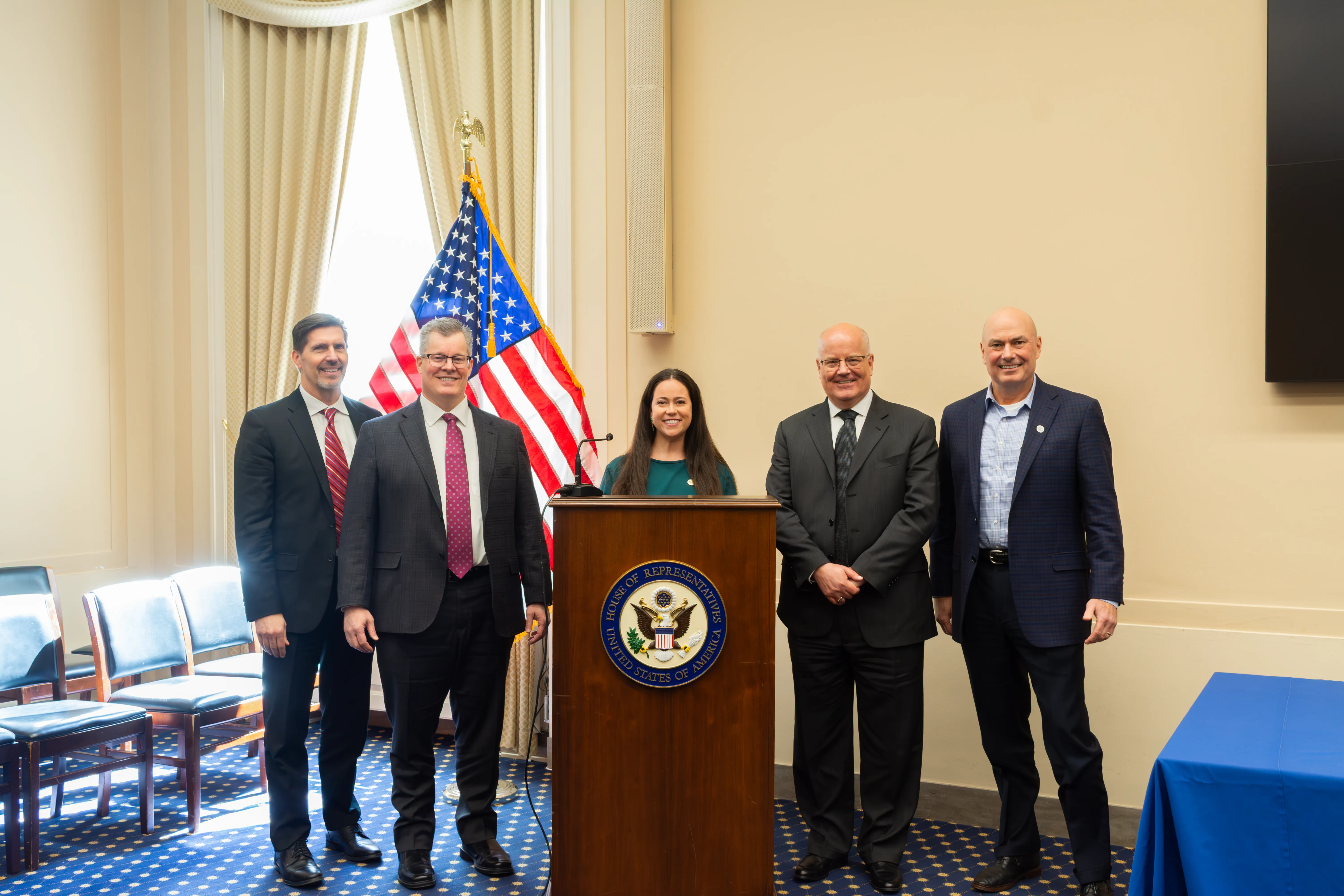
The House Semiconductor Caucus event held on March 17, 2026 at the Rayburn House Office Building in Washington, D.C. brought together industry leaders for an in-depth panel discussion around the upstream vulnerabilities in the U.S. semiconductor supply chain and policy actions Congress should consider. If policymakers do not hear from all segments of the supply chain, critical issues go unaddressed and the policies that result are less effective than they could be. Events like this reflect SEMI’s mission to bring the full breadth of the supply chain into policy conversations. Key topics addressed during this panel were supply chain and critical material challenges, tax and domestic incentives, and export controls and trade policy. The briefing featured executives from leading materials companies—Entegris, Materion, Avient, and CoorsTek—and was moderated by SEMI. They shared firsthand insights into bottlenecks and risks within the global supply chain, emphasizing how disruptions in sourcing and processing critical materials can threaten the entire semiconductor manufacturing process. The event also addressed the need for targeted policy actions to strengthen U.S. competitiveness, such as extending and expanding the Sec. 48D tax credit, targeting R D in specific areas, and workforce development. The event underscored the strategic significance of a robust and resilient semiconductor supply chain as a cornerstone of national and economic security, particularly in light of ongoing global supply chain uncertainties. The panel encouraged policymakers to increase consultation with industry stakeholders and consider specific, actionable steps to close existing gaps and support the entire ecosystem. The Q A session allowed congressional staff to engage directly with experts, further deepening their understanding of the complex challenges facing the semiconductor industry today. SEMI is the preferred trusted partner to the government and the event concluded with a networking lunch to reinforce the collaborative spirit between industry and government that is necessary to build a stronger, more secure future.Thank you to Representative Zoe Lofgren for providing a keynote address, Representative Michael McCaul for collaborating with SEMI to host this panel event, and to our speakers for raising these important issues and sharing timely insights. Visit SEMI Global Advocacy to learn more about public policy efforts and developments as well as how your company or organization can get involved.Scarlett Bickerton, Manager, Federal State Affairs at SEMI.
Read More
As the Department of Commerce explores options to adjust patent fees, these changes will have important implications for the semiconductor industry, where thousands of patents are filed each year to protect groundbreaking technologies. At SEMI, we understand the complexity of getting this right for our member companies. The fee proposal is not only about rates, but also about how fees are structured, applied across different types of filers, and administered in practice. Designing a system that is fair and workable is a significant challenge and one that requires close collaboration between government and industry. The SEMI Global Advocacy team is consistently engaged with the Trump Administration and Congress as a resource. We want to ensure the unique needs of the semiconductor sector are understood and that any adjustments to the fee schedule strengthen U.S. innovation without creating unintended barriers. By working together, SEMI members with U.S. operations can help shape an approach that supports the U.S. Patent and Trademark Office's mission and U.S. competitiveness. Next Steps: SEMI will continue to provide technical insight from across our membership as this process develops and looks forward to partnering with policymakers. We will also share updates as information on new patent fees become available beyond the initial reporting by the Wall Street Journal and other news outlets.Visit SEMI Global Advocacy to learn more about public policy efforts and developments as well as how your company or organization can get involved.Scarlett Bickerton, Manager, Federal State Affairs at SEMI.

Read More
On July 7, President Trump issued an executive order (EO) extending the ten percent baseline tariff rate through August 1, 2025. In addition, the EO suspends the variable "reciprocal" tariffs imposed under the International Emergency Economic Powers Act (IEEPA) until August 1. The order applies to nearly all countries except Mexico, Canada, and China. These changes do not impact separate reciprocal tariff actions on China or alter existing Section 232 measures on steel, aluminum, autos, and their derivative products. At the time of this posting, letters had been sent to 20 trading partners outlining expected tariff rates if no agreement is reached by August 1; bilateral negotiations are ongoing. Eleven of the 21 countries received rate cuts compared to the "Liberation Day" announcements on April 2, ranging from one to 13 percent. President Trump indicated rates could rise around 25 percent if trading partners retaliate. Next Steps: The extension offers short-term stability for SEMI member companies to assess supply chain exposure. SEMI continues to monitor bilateral trade and tariff policy negotiations, including for discussion related to the semiconductor supply chain. We aim to keep member companies informed of relevant tariff escalations. If your company is directly impacted by a country-specific rate shift, please reach out to your region’s SEMI Global Advocacy contact with any feedback on how these tariffs are affecting your operations.Visit SEMI Global Advocacy to learn more about public policy efforts and developments as well as how your company or organization can get involved.Scarlett Bickerton, Manager, Federal State Affairs at SEMI.
Read More