downloadGroupGroupnoun_press release_995423_000000 copyGroupnoun_Feed_96767_000000Group 19noun_pictures_1817522_000000Member company iconResource item iconStore item iconGroup 19Group 19noun_Photo_2085192_000000 Copynoun_presentation_2096081_000000Group 19Group Copy 7noun_webinar_692730_000000Path
Skip to main content
Default Banner Image

semiconductor manufacturing

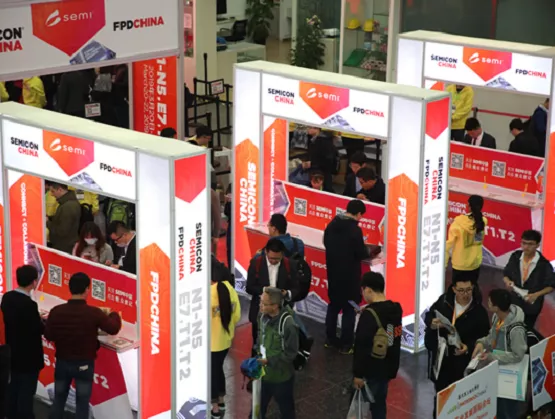
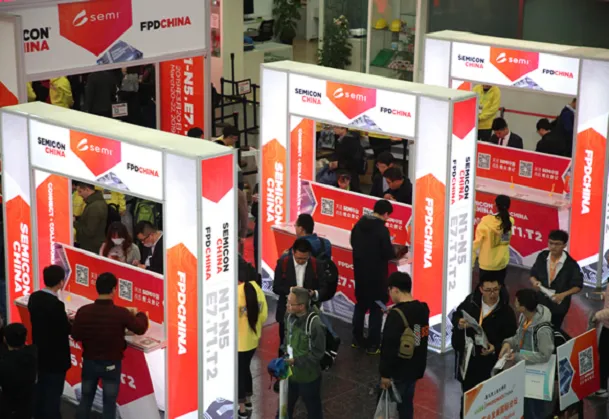
For the second straight year, SEMICON China, among the world’s largest and most influential semiconductor industry events, was the first local tradeshow of its scale held in-person, reflecting China’s rising prominence in the semiconductor industry. After securing approval from the Chinese government to hold large events, SEMI staged SEMICON China 2020 and 2021 with advanced protections against COVID-19 in place. There were no reported infections at either event. Highlights from SEMICON China 2021: Large Scale: Attendance of over 92,000, including more than 66,000 visitors and 25,000 exhibitors. Expo hall totaled 84,500 square meters with about 1,100 exhibiting companies and over 4,000 booths. World-Class Thought Leaders: Strong industry support from key foundries, OSATs, equipment and materials suppliers. Keynote speeches featured world-class industry leaders and head of China’s IC industry fund and global investment consulting agency, who explored the latest global business, technology and market trends and hot domestic investment topics. Concurrent Forums: Forums included SIIP China: SEMI Innovation Investment; Smart Manufacturing; Advanced Manufacturing; Advanced Packaging; Memory; Power Compound Semiconductor; China Display Conference; the all-new Advanced Materials Forum; and China Semiconductor Technology International Conference (CSTIC). Rich Digital Content: SEMICON China’s digital platform provided a rich array of content to attendees around the world including the Grand Opening Keynote and CSTIC, which were broadcast live online. Workforce Development: SEMI China worked closely with industry and government partners to promote SEMI Workforce Development programs to help attract and retain talent for China’s semiconductor industry. SEMICON China again featured the SEMI Workforce Pavilion and SEMI Workforce CXO Talent Forum. Outstanding COVID-19 Protective Measures: SEMICON China deployed advanced testing and monitoring equipment and implemented strict COVID-19 preventative measures to ensure a safe environment for all attendees to network and conduct business. Looking Ahead With the resounding success of SEMICON China 2021, optimism is growing that more physical events will be held with travel restrictions set to ease later this year. The more than 2,500 SEMI members around the world are eager to again network and collaborate face-to-face with customers, suppliers and partners to solve challenges in the microelectronics industry and drive semiconductor innovation that continues to transform how we work and live. That very innovation made many businesses more resilient as the virus spread and enabled people worldwide to work, learn, and shop from home. As SEMI starts to stage other events in-person, we will put in place advanced protective measures against COVID-19 to ensure the safety and well-being of all attendees. As the vaccination roll-out continues worldwide and new COVID-19 strains emerge, SEMI’s flagship SEMICON events are evolving in several ways, most notably with a larger digital presence. In this new era, we offer an international platform for SEMI members and partners across the microelectronics supply chain to collaborate, discuss industry trends, solve common challenges, network, and accelerate business growth through physical, virtual, and hybrid formats. Hybrid events – on-site exhibitions and conferences featuring a digital presence – allow the face-to-face connections so important to the semiconductor industry but also improve the attendee experience by offering an online option with the following benefits: More international accessibility to content live or on-demand Robust interactivity with live-streamed events, allowing more people to participate Greater cost effectiveness to enable companies and people under tight budgets to take advantage of world-class content, including keynote presentations, panel discussions, and technical sessions. In a recent survey of advanced manufacturing businesses, Informa Markets, a multinational publishing, business intelligence, and exhibitions group, found that 93% of respondents are likely to return to in-person events between August and December 2021, signaling a widespread eagerness for the return of live events and face-to-face connections. SEMICONs Scheduled for 2021 In a normal year, each of the seven regions where SEMI operates stages a SEMICON, with the exhibitions spread throughout the year. With the world continuing to combat COVID-19, more SEMICONs have been moved to the second half of 2021 – most of them with a hybrid format so exhibitors and attendees can take advantage of the increasing popularity of online events. After last year’s disruptions to the SEMICON schedule – and with more experience in the new normal – SEMI is excited to welcome the businesses and peers who couldn’t attend the 2020 events back to the in-person and hybrid shows. Innovation never sleeps. And SEMI will continue to evolve its events to help you form the partnerships and make the connections vital to the growth of your company and the industry. For more information about regional SEMICONs, please visit the SEMI events page. About the Author David Ghodsizadeh is the Director of Global Product Marketing at SEMI, where he develops customer-centric strategies to market SEMI Membership, Market Data, Expositions, Smart Initiatives, and Technology Communities to members, partners, and industry peers. Connect with David on LinkedIn.
Read More
Shari Liss, executive director of the SEMI Foundation, is determined to help more people discover careers in the microelectronics industry. As a woman and longtime leader in both education and tech, she has a keen understanding of how chip industry jobs are often not visible or accessible to many people. To address this, she is spearheading the SEMI Foundation’s Industry Image and Awareness Campaign. I asked Shari to tell me about herself, her passion for this work, and this important campaign.Williams: When did you join SEMI? What were you doing before? What is your background?Liss: I joined the SEMI Foundation as executive director in September of 2019. I came to SEMI from Ignited, where as CEO I recruited, trained, and placed more than 400 educators in summer fellowships at top companies for transformative professional development that grew the Bay Area’s STEM talent pool and workforce pipelines. I'm an educator, a math geek, a mom, a musician, and a passionate advocate for a stronger, more diverse workforce.Williams: What is the Industry Image and Awareness Campaign?Liss: The Industry Image and Awareness Campaign, which SEMI has been running for several years, aims to dramatically increase awareness of the huge breadth of careers in the microelectronics industry and build its talent pipeline. The current campaign includes national media exposure and education that highlights careers in the U.S. microelectronics industry. It has two main components: a PBS documentary about our industry that will reach up to 60 million households, and an interactive website that will walk visitors through STEM career pathways and provide resources that increase industry awareness and interest, particularly among women, veterans and people of color. Integrated with SEMI’s Global Workforce Development Initiative, the website will help connect prospective talent to job openings while also focusing on the industry’s long-term workforce needs. The platform will function as a seamless point of contact, supporting recruiting and retention for employers while also serving those in need of upskilling or reskilling. It will target current industry workers as well as prospective employees, including students, veterans, and workers in other occupations.The two components will be integrated, with video content from the documentary series embedded on the website to provide inspiring stories from people already working in the industry.Williams: Why is this campaign important? What problem is it trying to solve in our industry?Liss: Currently, SEMI member companies have tens of thousands of open positions. These can only be filled if we aggressively and purposely attack the talent gaps. When we talk with students, soldiers and other diverse communities, they have little awareness of the kind of work there is in microelectronics, the jobs that await them, and the industry itself. Our industry generally does not have the same name recognition or understanding as social media or software companies, and many potential workers don't know about us.Students understand what’s on their phones and tablets – Google, Amazon, Facebook, Twitter, LinkedIn, Instagram, TikTok – but they don’t know that microelectronics technology powers all of it! STEM talent is already tough to find. Our industry’s relative invisibility makes it even more difficult to find the workers we need. This campaign aims to enlighten and inspire a new generation of innovative workers to join the microelectronics industry. Williams: Why does the microelectronics industry need a more diverse talent pipeline?Liss: The workforce development challenges we face as an industry are layered. We all know that our industry – and our need for a skilled workforce – will continue to grow. We also know that women and people of color are widely underrepresented. They face systemic barriers that start in grade school and continue through each individual’s professional journey. This is not only a significant problem from a social justice and equity standpoint, but it also hampers our companies and our industry.A large body of research shows that more diverse companies are more innovative, productive, competitive, and profitable. They also have less absenteeism, better retention, and greater company and customer loyalty. Our industry cannot fully thrive without a diverse workforce. That’s why reversing this trend is a priority and will take significant investments and systemic changes throughout the entire workforce pipeline. If we do that, we’ll have more successful companies and a dramatically improved industry over the next decade.Williams: Who are our partners in this effort?Liss: We are working with Roadtrip Nation and CAEL, both affiliates of Strada Education.Roadtrip Nation is an Emmy Award-winning media and career guidance nonprofit, whose mission is to empower people to define their own roads in life. Each year, Roadtrip Nation selects socially relevant topics for its narrative-based storytelling projects. Content from these “roadtrips” is then disseminated across a wide range of education and media channels to inspire the next generation with a more inclusive view of the future of work. Roadtrip Nation is creating the video content and the PBS documentary series focuses on the microelectronics industry.The Council for Adult and Experiential Learning (CAEL) is a nonprofit that helps forge a clear, viable bridge between education and career success, providing solutions that promote sustainable and equitable economic growth. CAEL is creating our interactive online platform that will clarify career pathways and guide users in navigating the learning opportunities that connect them to industry jobs and enable upward mobility and access to leadership roles.Williams: How are we engaging our member companies in this work?Liss: Our members and their talent needs are at the core of this work and informing it every step of the way. We are ensuring that the campaign meets these needs as well as those of our university partners, students and workforce development peers in the industry. Through multiple discovery sessions, we are capturing our members’ ideas, hiring challenges, skill gaps and other insights. The campaign’s member-based steering committee is guiding the project.Williams: What kinds of companies and leadership have been involved so far?Liss: Participation has already been incredible, with 38 member companies having joined us for more than 15 hours of discovery sessions and brainstorming. A dozen member companies participate in the steering committee, which is currently defining career pathways and industry needs.Williams: What are the participating companies saying so far?Liss: The response has been amazing! It is truly an unprecedented collaboration. Participants have been effusive about the experience. Here are some of their observations:“It was such a valuable and meaningful discussion. I was so glad to see that so many people from this industry are on the same page – perception, challenge, target audience, action items.”“I enjoyed the sessions very much and the insights from all participants, it is a valuable and meaningful cause.”“These are complex challenges that our industry faces, but kudos to you and SEMI for delving into the big issues and formulating a way forward to raise visibility and elevate perception for the next generation of leadership!”“This project will turn out great in the end! I am amazed at the progress in just a few days.”“I’m excited to see where this project can lead our industry! Thank you for all your hard work and leadership.”“The sequence of events was well structured, organized and focused. I strongly believe that these will be of great benefit to the industry!”Williams: What is the end result we’re working toward?Liss: Through powerful storytelling, amazing networking opportunities, and targeted marketing and outreach tools, we will reach millions of potential employees and open their eyes to the terrific jobs and careers in our industry. The awareness campaign, the website, the videos and the documentary series are all tools that will also reach parents, teachers, school counselors, and industry influences, all while supporting our member companies in hiring.Williams: When can the industry expect to begin to see results of the campaign?Liss: The Roadtrip Nation documentary series will likely air in the first half of 2022, and we anticipate the CAEL website to be live by mid-2022.Williams: What’s the most interesting or powerful lesson you’ve learned so far?Liss: The most powerful thing that I’ve learned is that no matter the company, the leader, or the employee, they all agree on the critical importance of attracting and retaining talent to sustain innovation and industry growth. Because industry awareness and image is such a vital challenge, it’s creating a shared passion across companies and participants. It’s been exciting to see this alignment.Williams: Why are you such a champion of this? What does it mean to you personally?Liss: Throughout my career, I have sought opportunities to grow and scale my impact in STEM education. From being an educator, to an administrator, to running a California-based STEM education nonprofit supporting educators, and now in my work at SEMI, I have always looked for ways to reach more educators and students. As my career progressed, my roles shifted to not just education content, but how to align industry and education. I am passionate about providing students with learning environments that help them understand how the subject matter applies to the real world. When we connect abstract concepts to real-world applications, the lessons tend to be so much more tangible and accessible to kids. It inspires them to want to keep learning those subjects and makes it more likely that they will be excited about what they are studying.At SEMI, I love that I can help form partnerships between the industry and education providers to amplify these messages. I look forward to working with industry stakeholders to provide career opportunities for diverse populations, for soldiers, and for women returning to work.For more information about the Industry Image and Awareness Campaign, contact Shari at [email protected]. Michelle Williams is deputy director of the SEMI Foundation.
Read More
In my role as lead for the Smart Mobility initiative at SEMI, I recently spoke with Automotive Logistics Magazine about the growing importance of the semiconductor supply chain’s connection with the automotive industry and the semiconductor shortage hampering global automotive production. Following are excerpts from the interview. Automotive Logistics: Why is there a bottleneck in the global supply of semiconductors at the moment and how long is it likely to last? Weiss: The current automotive chip shortage resulted from the sharp, Covid-19-induced decrease in demand for automotive semiconductors in the second quarter of last year when vehicle production came to a near standstill. The automotive market picked up significantly in the fourth quarter and this caused the supply chain constraints we are seeing today. At the same time as the automotive standstill, the pandemic spurred an increase in demand for home computing and networking equipment, and semiconductor manufacturing plants (fabs) had to pivot to these other markets in order to maximize fab utilization and successfully navigate economic headwinds. Every minute a semiconductor fab is idle or has lines down adds up quickly to missed revenue, so their capacity is booked weeks and even months in advance. With this background, I don’t believe this is a structural shortage and expect a gradual recovery over the next two quarters, barring any major shifts in geopolitics or macroeconomics. Automotive Logistics: What needs to be done to remedy the current shortfall for the automotive industry? Weiss: The automotive industry needs to continue to strengthen its connections to the semiconductor manufacturing supply chain. In past years, auto manufacturers used to rely mainly on their tier one suppliers to interface with the semiconductor supply chain. This has changed significantly. Not only are more chips being used in vehicles (roughly 10% of all devices produced globally end up in cars), but the strategic importance of the chips as enablers for ADAS [advanced driver-assistance systems], electrification, safety, connectivity and other consumer-driven features has increased considerably. With this dynamic in play, carmakers have recognized the value of interacting and collaborating more closely with the semiconductor supply chain. This provides vehicle OEMs with access to innovation, the ability to influence technology direction and pace, along with greater visibility into global supply chain developments. The SEMI Smart Mobility initiative is evidence of this transition, with the likes of Audi, BMW, Ford, Uber, Volkswagen and other vehicle OEMs, along with tier one suppliers such as Continental and Bosch, now actively involved in our automotive electronics and mobility activities to do exactly that – influence, partner, accelerate and guide the global electronics design and manufacturing supply chain that SEMI represents. Automotive Logistics: What percentage of semiconductors manufactured for use by US-based companies are for automotive applications and how has this grown in recent years? Weiss: A little over 10% of semiconductors produced worldwide are sold into the automotive segment, but this number is expected to grow at an accelerated pace in the next few years as electrification, connectivity and autonomous driving become more prevalent. Automotive Logistics: How is SEMI working to help the automotive industry get a clearer view of sub-component supply and better manage supply chain risk? Weiss: The SEMI Smart Mobility initiative is designed to engage automotive OEMs, tier ones, semiconductor device makers, design houses, and equipment and materials companies to drive alignment across the supply chain and address shared challenges collectively. To facilitate this engagement, we created the Global Automotive Advisory Council (GAAC), which has active chapters in Europe, US, China, Japan and Taiwan. The GAAC provides an open platform for creating solutions, fostering collaboration and partnering with other industry bodies to accelerate and harmonize industry efforts that benefit the entire ecosystem. Volkswagen and Audi are already SEMI members – both are founding members of the GAAC Europe chapter – and have become vocal champions and critical contributors to our efforts. When all stakeholders work together, I have no doubt that the future of automotive and mobility will continue to be bright. Interested in learning more about this topic? Read the full interview in Automotive Logistics Magazine, A Fab Future for the Automotive Sector. Please contact me at [email protected] for more information about SEMI’s Smart Mobility Initiative, the Global Automotive Advisory Council, and how SEMI can help your organization navigate electronics in the automotive industry to drive innovation in the mobility space. Bettina Weiss is Chief of Staff and Global Smart Mobility Lead at SEMI.
Read More