


“A hundred years from now, someone’s going to look back and say, ‘Can you believe they waited until you got a disease, and then they did something?’” This observation from Dr. William Hait, the leader of Johnson & Johnson’s External Innovation program, crisply sums up the SEMI Smart MedTech Summit, a two-day program at SEMICON Europa 2019, sponsored by GE Research and imec
Benjamin Wiegand, PhD of Johnson & Johnson, cited the quote in his opening presentation and added another pertinent question: “What if we could predict who was going to get a disease and then preempt it from happening?” Weigand’s conclusion is the first of six key takeaways from the summit.
1. Accomplishing this vision could lead to a world without disease.
Developing a disease-free world by exploring how the integration of advanced electronics and medical technology (MedTech) can enable new healthcare solutions is the very mission of the SEMI Smart MedTech Initiative. Various experts speaking at the MedTech Summit delved into a range of topics, from pan-European medical initiatives and artificial organs to new sensors and systems and start-ups’ need for funding and partners.
2. All of us will have a digital twin (avatar), bringing together all relevant data that can impact our health and well-being.
Several speakers illustrated the advantages of a digital human avatar that would start with an individual’s unique physical data and then be continuously updated with new data tracked by body-worn devices and from ongoing research findings. This would enable healthcare providers to extract insights and predict future physical performance or health issues.
While, technologically, the avatar can already be constructed, the ability to make real changes to future human behavior is a significant outstanding question.
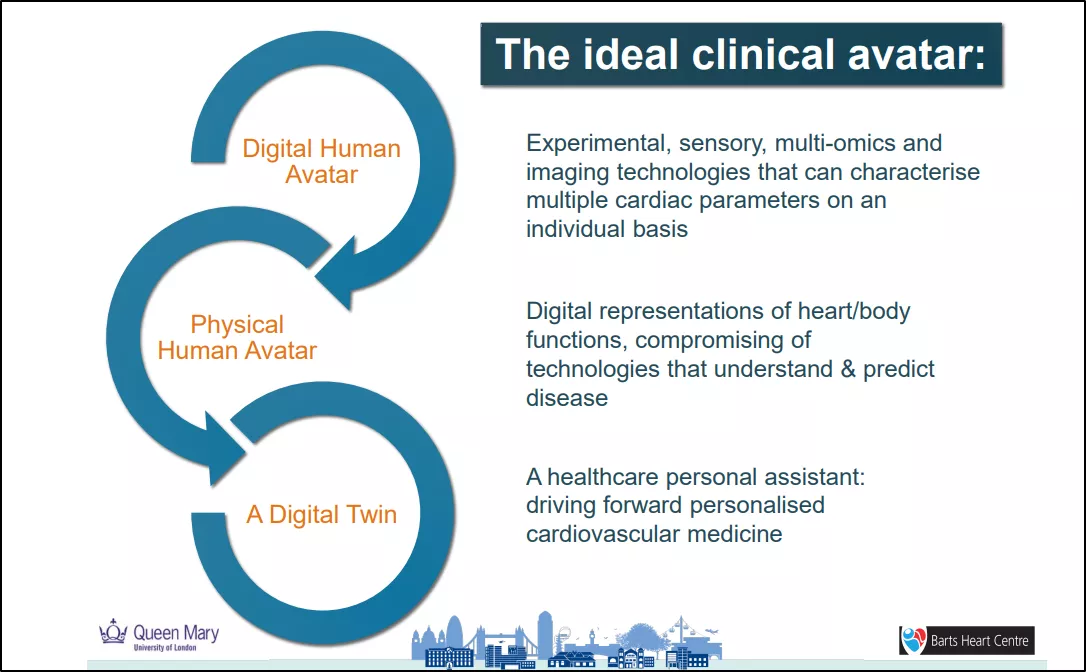
Multiple speakers highlighted the various benefits of digital avatars at the MedTech Summit.
3. The MedTech sector’s need for cybersecurity looms large, as it does in every other digitally-driven, IOT-based framework.
Further exploring the human-to-digital interface, Anthony Mathur of Bart’s Heart Center in the UK pointed to the importance of strict laws for safeguarding patient privacy, a cornerstone of healthcare digital policies, and the critical need for cybersecurity. He warned against an all-digital action network, citing the virus attack that shut down the UK’s National Health Service, rendering all patient records inaccessible for more than two weeks.
4. MedTech devices, systems and other tools will radically change healthcare in the not-too-distant future.
Almost every speaker touched on this point, including Franz Laermer of Bosch in his presentation The Future of Personalized Treatment. Laermer explored devices that will drive more patient-centric healthcare in areas including asthma therapy and molecular diagnostic testing and highlighted innovations in monitoring oncology therapies more effectively, less invasively and more accurately. Other presenters showcased their work in areas including silicon-based microfluidics, next-generation DNA sequencing and synthesis, lab-on-chip and cell arrays.
5. Startups and well-established companies will help advance digital tools and data to keep us healthier, happier and safer.
Among the MedTech Summit highlights, several start-ups presented their business, financial and go-to-market plans. Notably, continuous glucose monitoring (CGM) is an especially active area of investment and innovation, as diabetes is among the world’s most widespread chronic diseases. The industry’s goal is to develop a non-invasive platform as a replacement for today’s prick-and-test approach to measuring blood sugar levels.
6. Pan-European organizations are working to coordinate efforts and investments in digital healthcare.
The European healthcare sector is large and diverse, as shown in the following slide provided by the organization MedTech Europe. Every country has its own legal framework, infrastructure, and health service structure medical technology companies must navigate. More than 27,000 medtech companies are located in Europe – 95% of them small to medium size businesses. Michael Stubin and Patrick Boisseau from MedTech Europe said concerted efforts to coordinate research and structural changes across the EU are underway to help spur medtech innovation and, with healthcare accounting for 10% of Europe's GDP, drive more market opportunity.
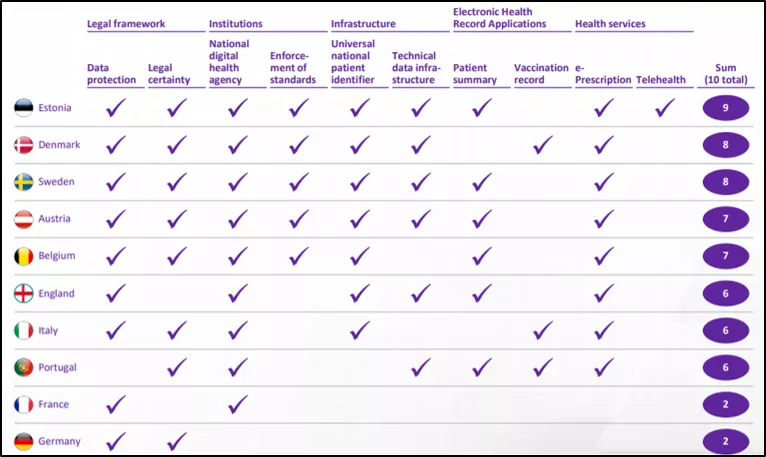
This table shared by MedTech Europe points to the wide range of medical systems by country across the continent.
Next Steps
Is your company applying microelectronics innovations to change the way we approach medical care? If so, you’re invited to share your mission, roadmap and collaboration needs at a future MedTech Initiative Forum. For regular updates, join the MedTech interest list.
In addition to the SEMI MedTech Initiative, our Nano-Bio Materials Consortium (NBMC) brings together scientists, engineers and business development professionals from industry, government and universities to collaboratively initiate research and development of electronic technologies to improve human performance monitoring and performance augmentation. Find out more at www.semi.org/collaborate/communities/NBMC.
Michael Ciesinski is the Vice President of Technology Communities at SEMI.


