downloadGroupGroupnoun_press release_995423_000000 copyGroupnoun_Feed_96767_000000Group 19noun_pictures_1817522_000000Member company iconResource item iconStore item iconGroup 19Group 19noun_Photo_2085192_000000 Copynoun_presentation_2096081_000000Group 19Group Copy 7noun_webinar_692730_000000Path
Skip to main content
Default Banner Image

Autonomous Vehicles

2017 was a good year for the MEMS and sensors business, and that upward trend should continue. We forecast extended strong growth for the sensors and actuators market, reaching more than $100 billion in 2023 for a total of 185 billion units. Optical sensors, especially CMOS image sensors, will have the lion’s share with almost 40 percent of market value. MEMS will also play an important role in that growth: During 2018–2023, the MEMS market will experience 17.5 percent growth in value and 26.7 percent growth in units, with the consumer market accounting for more than 50 percent(1) share overall. Evolution of SensorsSensors were first developed and used for physical sensing: shock, pressure, then acceleration and rotation. Greater investment in R D spurred MEMS’ expansion from physical sensing to light management (e.g., micromirrors) and then to uncooled infrared sensing (e.g., microbolometers). From sensing light to sensing sound, MEMS microphones formed the next wave of MEMS development. MEMS and sensors are entering a new and exciting phase of evolution as they transcend human perception, progressing toward ultrasonic, infrared and hyperspectral sensing.Sensors can help us to compensate when our physical or emotional sensing is limited in some way. Higher-performance MEMS microphones are already helping the hearing-impaired. Researchers at Arizona State University are among those developing cochlear implants — featuring piezoelectric MEMS sensors — which may one day restore hearing to those with significant hearing loss. The visually impaired may take heart in knowing that researchers at Stanford University are collaborating on silicon retinal implants. Pixium Vision began clinical trials in humans in 2017 with its silicon retinal implants.It’s not science fiction to think that we will use future generations of sensors for emotion/empathy sensing. Augmenting our reality, such sensing could have many uses, perhaps even aiding the ability of people on the autism spectrum to more easily interpret the emotions of others.Through my years in the MEMS industry, I have identified three distinct eras in MEMS’ evolution: The “detection era” in the very first years, when we used simple sensors to detect a shock. The “measuring era” when sensors could not only sense and detect but also measure (e.g., a rotation). The “global-perception awareness era” when we increasingly use sensors to map the environment. We conduct 3D imaging with Lidar for autonomous vehicles. We monitor air quality using environmental sensors. We recognize gestures using accelerometers and/or ultrasonics. We implement biometry with fingerprint and facial recognition sensors. This is possible thanks to sensor fusion of multiple parameters, together with artificial intelligence. Numerous technological breakthroughs are responsible for this steady stream of advancements: new sensor design, new processes and materials, new integration approaches, new packaging, sensor fusion, and new detection principles.Global Awareness SensingThe era of global awareness sensing is upon us. We can either view global awareness as an extension of human sensing capabilities (e.g., adding infrared imaging to visible) or as beyond-human sensing capabilities (e.g., machines with superior environmental perception, such as Lidar in a robotic vehicle). Think about Professor X in Marvel’s universe, and you can imagine how human perception could evolve in the future! Some companies envisioned global awareness from the start. Movea (now part of TDK InvenSense), for example, began their development with inertial MEMS. Others implemented global awareness by combining optical sensors such as Lidar and night-vision sensors for robotic cars. A third contingent grouped environmental sensors (gas, particle, pressure, temperature) to check air quality. The newest entrant in this group, the particle sensor, could play an especially important role in air-quality sensing, particularly in wearable devices.Driven by increasing societal concern over mounting evidence of global air-quality deterioration, air pollution has become a major topic in our society. Studies show that there is no safe level of particulates. Instead, for every increase in concentration of PM10 or PM2.5 inhalable particles in the air, the lung cancer rate is rising proportionately. Combining a particle sensor with a mapping application in a wearable could allow us to identify the locations of the most polluted urban zones.The Need for Artificial Intelligence To realize global awareness, we also need artificial intelligence (AI), but first, we have challenges to solve. Activity tracking, for example, requires accurate live classification of AI data. Relegating all AI processing to a main processor, however, would consume significant CPU resources, reducing available processing power. Likewise, storing all AI data on the device would push up storage costs. To marry AI with MEMS, we must do the following: Decouple feature processing from the execution of the classification engine to a more powerful external processor. Reduce storage and processing demands by deploying only the features required for accurate activity recognition. Install low-power MEMS sensors that can incorporate data from multiple sensors (sensor fusion) and enable pre-processing for always-on execution. Retrain the model with system-supported data that can accurately identify the user’s activities. There are two ways to add AI and software in mobile and automotive applications. The first is a centralized approach, where sensor data is processed in the auxiliary power unit (APU) that contains the software. The second is a decentralized approach, where the sensor chip is localized in the same package, close to the software and the AI (in the DSP for a CMOS image sensor, for example). Whatever the approach, MEMS and sensors manufacturers need to understand AI, although they are unlikely to gain much value at the sensor-chip level.Heading to an Augmented WorldWe have achieved massive progress in sensor development over the years and are now reaching the point when sensors can mimic or augment most of our perception: vision, hearing, touch, smell and even emotion/empathy as well as some aesthetic senses. We should realize that humans are not the only ones to benefit from these developments. Enhanced perception will also allow robots to help us in our daily lives (through smart transportation, better medical care, contextually aware environments and more). We need to couple smart sensors’ development with AI to further enhance our experiences with the people, places and things in our lives.About the authorWith almost 20 years’ experience in MEMS, sensors and photonics applications, markets, and technology analyses, Dr. Eric Mounier provides in-depth industry insight into current and future trends. As a Principal Analyst, Technology Markets, MEMS Photonics, in the Photonics, Sensing Display Division, he contributes daily to the development of MEMS and photonics activities at Yole Développement (Yole). He is involved with a large collection of market and technology reports, as well as multiple custom consulting projects: business strategy, identification of investment or acquisition targets, due diligence (buy/sell side), market and technology analyses, cost modeling, and technology scouting, etc.Previously, Mounier held R D and marketing positions at CEA Leti (France). He has spoken in numerous international conferences and has authored or co-authored more than 100 papers. Mounier has a Semiconductor Engineering Degree and a PhD in Optoelectronics from the National Polytechnic Institute of Grenoble (France).Mounier is a featured speaker at SEMI-MSIG European MEMS Sensors Summit, September 20, 2018 in Grenoble, France. (1) Source: Status of the MEMS Industry report, Yole Développement, 2018
Read More
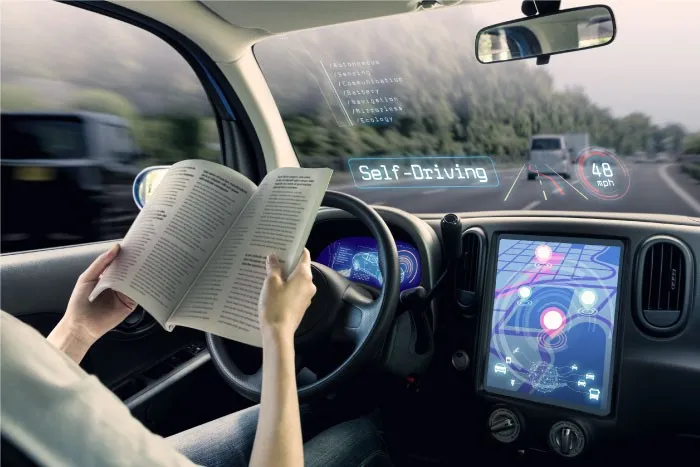
Self-driving cars have been all the rage in both the trade and popular press in recent years. I prefer the term “autonomous vehicles,” which more broadly captures the possibilities, encompassing not only small passenger vehicles but mass transit and industrial vehicles as well. Depending on who’s talking, we will all be riding in fully autonomous vehicles in five to 25 years.The five-year estimates come from startups eager to raise venture capital while the 25-year estimates stem from Tier 1 automotive suppliers who tend to be more conservative in outlook. Regardless of the timeframe, a multitude of investors – national governments, venture capitalists and companies – are dedicating significant capital and effort to make autonomous vehicles a reality.I must admit that I did not fully grasp the enthusiasm for self-driving cars until last year. First, I’ve always enjoyed driving, unless I’m in stop-and-go traffic, so I couldn’t imagine relinquishing the task. Second, I’ve deliberately arranged my life to spend minimal time in my car. However, traffic has become much heavier in my metropolitan area (Boston), and I know that many people in cities around the world face longer commutes and waste more time in gridlock.What is the solution to this problem that is only getting worse? I had an epiphany while walking through Shinigawa Station in Tokyo, one of the busiest train stations in the world. Dense streams of people crisscrossed the station on their individual paths, managing to avoid collisions without the aid of traffic controls. Evidently, humans have an innate collision-avoidance ability that makes traffic controls for pedestrian crowds unnecessary. If autonomous vehicles could achieve the same excellence in collision-avoidance, we could potentially reduce or eliminate traffic controls for vehicular traffic, providing a huge gain in transportation efficiency and relief from gridlock.Sensors as core building blocksNew and improved sensors, many based on micro-electromechanical systems (MEMS) technology, are key to achieving this vision. While MEMS inertial sensors (such as accelerometers and gyros) are already integral to the core safety systems in conventional vehicles, they are also essential to improved self-navigation in autonomous vehicles.The challenge for MEMS suppliers is to deliver inertial sensors that meet the requirements for self-navigation systems, which are different and more demanding than for safety systems.Pinpointing a vehicle’s position requires “dead reckoning” based on inertial sensor signals as a supplement to GPS input. Undesirable drift in the inertial sensor signals due to mechanical quadrature, temperature sensitivity and noise can quickly add up to a large error in position that may result in a collision. To meet the more rigorous requirements for autonomous vehicles, suppliers must design MEMS inertial sensors that are substantially more precise and resistant to drift. This requires design software that is both extremely accurate and fast, as well as increasingly precise and reliable manufacturing capabilities.Other MEMS-based devices, such as micromirrors and micro ultrasound transducers (MUTs), are also promising options for implementing vision and range-finding systems in autonomous vehicles. These sensing systems are needed for building electronic versions of the human collision-avoidance abilities that I witnessed in Shinigawa Station – and it is these systems that autonomous vehicles must emulate.When will self-driving cars become a reality? Aside from the provocative question that got you to read this far, I don’t have a definitive answer. It will undoubtedly occur in phases, ranging from the driver-augmentation systems available in today’s cars to the full autonomy and ubiquity that will allow reduction of traffic controls in 20 years or more. It is clear that the ultimate goals for autonomous vehicles are highly worthwhile, and that achieving those goals will require better-performing and more diverse MEMS sensors. Stephen (Steve) Breit, Ph.D. is Senior Director, MEMS Business, at Coventor, a Lam Research Company. Steve has been responsible for overseeing development and delivery of Coventor’s industry-leading software tools for MEMS design automation since joining Coventor in 2000. Steve holds numerous patents on software systems and methods for MEMS design automation and virtual fabrication. He holds a Ph.D. in Ocean Engineering from MIT and a B.S. in Naval Architecture and Marine Engineering from Webb Institute.For more information, visit: https://www.coventor.com
Read More
In Tokyo, Shanghai, Moscow, London, Paris or New York – wherever you are in the world –Japanese vehicles passing by on the roadways are a common sight. Three big reasons are their high quality, reliability and engineering. But Japan’s automakers are also legendary for their industry breakthroughs. A few highlights: In 1981, Honda introduced the first commercially available map-based car navigation system. The carmaker’s Electro Gyro-Cator used a gyroscope to detect rotation and other movements of the car. In 1990, Mazda equipped its COSMO Eunos with the world’s first built-in GPS-navigation system. In 1997, Toyota launched the world’s first mass-produced hybrid car -- Prius. In 1997, Toyota unveiled the world’s first production laser adaptive cruise control on its Celsior. In 2009, Mitsubishi rolled out the world’s first mass-produced electric car – i-MiEV. Off the roadways and often unheralded, it is supply chain companies including Japanese semiconductor makers that were a key engine of these innovations as they continue their rich history of driving automotive advances. Here’s a closer look at some of the key players and why they matter.Who Makes Automotive Semiconductors?Unlike other semiconductors, automotive chips are manufactured not only by integrated device manufacturers (IDMs) but also by captive fabs and automotive components makers such as Toyota and Denso.Denso, headquartered in Aichi prefecture, started in 1949 as a spin-off of Toyota’s electric components unit. Since 2009, the company has been the world’s largest automotive components supplier. Because Denso’s chips are mostly consumed internally, the company’s manufacturing revenue is not publicly available, but analysts estimate Denso’s chip business exceeds 200 billion JPY or USD $1.9 billion.Denso manufactures semiconductor components at two locations. Its Kota plant in Aichi prefecture manufactures power and logic chips, and the company’s Iwate (Iwate prefecture) facility, acquired from Fujitsu in 2012, produces semiconductor wafers and sensors.Denso Fab (Photo: Denso)Denso is developing SiC wafers for its power chips and plans to manufacture SiC inverters by 2020. Recently, the company announced joint research on Ga2O3 for power devices with FLOSFIA, a tech startup spun off from Kyoto University. In 2017, Denso established a semiconductor IP design company, NSITEXE, in Tokyo to design semiconductor IP cores – the semiconductor components that are key to autonomous driving.Toyota has been manufacturing semiconductor chips at its Hirose Plant since 1989. The semiconductor fab design and manufacturing technologies originated at Toshiba and moved to Toyota under a technology transfer agreement signed in 1987. In the power semiconductor arena, Toyota is jointly developing SiC devices with Denso and Toyota Central Research and Development Labs.Other car and component makers like Honda, Nissan, Hitachi Automotive Systems, Aishin Seiki and Calsonic Kansei are also developing and designing semiconductor chips.Microcontroller Units Microcontrollers (MCUs) were first employed in automobiles in the late 1970s to electronically control engines for higher fuel efficiency. Today, up to 80 MCUs are typically used in a car for powertrain controls (engine, fuel management and fuel injection), body controls (seat, door, window, air conditioning and lighting), safety controls (brake, EPS, suspensions, air bags and anti-collision) and infotainment.In December 2015, the microcontroller unit (MCU) supply chain experienced a major consolidation with the nearly $12 billion acquisition of Freescale Semiconductor by NXP Semiconductors, catapulting NXP to the top of the MCU market. NXP and Freescale were ranked second and third in global market share, after Renesas Electronics, at the time. Renesas held 40 percent global market share before its Ibaraki fab suffered severe earthquake damage in 2011 and hemorrhaged share after the loss of production capacity. Renasas continues to recapture market share at a rapid clip, with a growth rate of 5.2 percent and 24.6 percent, respectively, in the first two quarters of 2017, and claims it still leads the global MCU market for automotive applications with 30 percent share (source: Diamond Online, August 2017).Renesas was established as a joint venture of Hitachi and Mitsubishi and later merged with NEC Electronics. Consequently, Resesas’s MCUs, designed with Hitachi’s SH MCU cores, recently began a gradual shift to Arm cores. Renasas MCUs designed at 40nm or less nodes have been manufactured at TSMC, a Taiwan foundry, since 2012.CMOS Image SensorsCMOS image sensors serve as eyes of cars, performing camera functions on-chip. Today, automobiles typically are fitted with about 10 CMOS image sensors, a number forecast to grow to almost 20 by 2020 (source: Monoist, 2016). The sensor was originally used as a backup monitor but deployments grew with the advent of Advanced Driver-Assistance Systems (ADAS). The CMOS image sensor market is estimated to reach $2.3 billion USD by 2021, according to IC Insights. Sony is the global CMOS image sensor market leader, and ON Semiconductor and OmniVision Technology are big players in this growing segment.In 2016, Denso started using Sony’s CMOS image sensors to detect pedestrians during night driving. Sony manufactures CMOS sensors at Kumamoto TEC and Nagasaki TEC on Kyusyu Island. In 2017, Sony acquired Toshiba’s Oita plant to increase the capacity to respond to the growing demand for backside illumination CMOS image sensors for higher resolution images at a low-light environments.Sony’s 7.42 megapixel CMOS image sensor for automotive cameras (Photo: Sony Corporation)Power DevicesPower semiconductors provide electrical control functions such as rectification, voltage regulation (boost/step-down), and DA/AD conversion. The automotive industry’s migration from fossil fuel vehicles to hybrid and electric vehicles is driving strong demand for power devices. The leading power device makers are competing to develop higher performance devices on new materials such as SiC and GaN.For the past five years, the Japan government has funded SiC power device research and development (R D) projects and, in 2016, the National Institute of Advanced Industrial Science and Technology (AIST) and Sumitomo Electric Industries built a 150mm SiC wafer line at AIST’s Super Clean Room Facility in Tsukuba, Ibaraki. The facility supports volume manufacturing, reliability testing and quality assurance.Rohm is driving the Japan SiC power device industry. Rohm manufactures SiC power devices on 75mm, 100mm and 150mm wafers. In 2009, Rohm acquired a German SiC wafer maker, SiCrystal, which started supplying 150mm wafers to Rohm in 2013. Rohm also acquired Renesas Electronics’s Shiga plant (200mm line) in 2016 to manufacture SiC power and other discrete devices.Fuji Electric manufactures various power products including SiC power devices. Fully 30 percent of its products ship to the automotive industry. In 2013, the company built a new SiC line in its Matsumoto plant that includes both wafer process and packaging facilities. Fuji Electric now develops high-performance SiC devices on the latest 150mm SiC wafer technology.Toyota and Denso round out the Japan SiC power device industry. Denso markets its 150mm SiC technology under the “REVOSIC” brand. In 2013, Toyota built a SiC R D facility at its Hirose plant for future SiC captive manufacturing.SiC power semiconductors to improve vehicle’s fuel efficiency by 10 percent (target) (Photo: Toyota Motor Corp.)
Read More