downloadGroupGroupnoun_press release_995423_000000 copyGroupnoun_Feed_96767_000000Group 19noun_pictures_1817522_000000Member company iconResource item iconStore item iconGroup 19Group 19noun_Photo_2085192_000000 Copynoun_presentation_2096081_000000Group 19Group Copy 7noun_webinar_692730_000000Path
Skip to main content
Default Banner Image

Autonomous Vehicles

AEM Holdings Ltd, a Singapore-based multinational corporation, is listed in Forbes Asia’s 200 Best Under A Billion 2019 and 2020 spotlighting small and midsized companies in the Asia-Pacific region with sales under $1 billion. AEM clinched the Singapore Business Review Technology Excellence Award 2020 for Analytics-Semiconductor and the Singapore Business Awards Enterprise Award 2019/2020. These achievements are testament to AEM’s vision and innovation and the company’s contributions to the increasingly complex testing of chips in a rapidly evolving technological world. I spoke with AEM CEO Chandran Nair, a new Regional Advisory Board (RAB) member of SEMI Southeast Asia, about the company’s intelligent test and handling solutions, its role in digital transformation, the company’s key role in the smart manufacturing movement and the growth prospects for Singapore’s electronics sector. SEMI: AEM’s application-specific, intelligent system test and handling solutions for semiconductor and electronics companies serve the advanced computing, 5G and AI markets. How do you differentiate your solutions from those offered by competitors? Nair: A key differentiation for AEM is that we work closely with our customers to develop application-specific integrated test and handling solutions that meet their needs in a scalable manner from lab to production. We offer our customers customized, full-stack test and handling solutions that give them the agility to accelerate their delivery cycles and enhance product quality. Over the years, AEM has developed and acquired world-class technologies in instrumentation, test, automation, robotics, optical inspection, high-end thermal control, and software. These technology pillars, along with our deep know-how to customize test and handling solutions using the technology pillars as a platform, enable AEM to meet the fast-changing needs of our customers faced with the challenges of testing heterogeneous and complex devices. In addition to investing in technology, AEM has also invested in delivering application-specific solutions to meet customer demand. Our recently announced acquisition of CEI with its manufacturing capabilities in Vietnam and its specialization in low-volume, high-mix manufacturing increases our geographical reach and our ability to quickly turn application-specific test and handling solutions to be deployed. We have a unique and differentiated approach that enables our customers to test high-performance computing devices, automotive devices, and mobility devices with maximum test coverage, cost-effectively, in a manufacturing environment. Our experience in serving the high-performance computing market that traditionally drives advancements in thermal control also puts us at the forefront of delivering comprehensive thermal management, vision, and deep automation and test solutions for the computing, automotive, and mobility markets. AEM also has a strong instrumentation portfolio, including high-density digital instruments and mixed-signal and protocol-aware instrumentation that is well-suited for ATE solutions for SoC, high-power devices, and CMOS image sensors. Over the last few years, we have also established leadership positions in developing and deploying application-specific test solutions for MEMS devices and offering wafer and frame probing stations suitable for R D, wafer sort, and final test. We form strong partnerships with our customers, provide them with end-to-end support in product development, and take them through the entire life cycle process from concept to mass production. Chandran Nair and Goh Meng Klang, vice president of operations, at the AEM manufacturing site in Singapore. (Photo credit: AEM) SEMI: Digital transformation is powering strong growth of advanced computing, 5G and AI. Will AEM be expanding its AEM manufacturing plants in China, Malaysia and Singapore to meet rising demand for these technologies in the coming years? Nair: In regards to manufacturing, AEM currently has manufacturing facilities in Singapore, Malaysia, the U.S., Finland, and China. With our recently announced acquisition of CEI, we will add manufacturing capability in Vietnam and Indonesia. AEM will continue to expand manufacturing appropriately to give our customers cost-effective solutions while maintaining our proven track record of delivering on time and scaling rapidly in times of crises like the pandemic or geopolitical disruptions. As for advanced technologies, the three key factors that will bring the full potential of 5G to fruition are 1) cost-effective, high-powered processing devices at the edge, 2) easy access to high-bandwidth communications, and 3) cost-effective sensor technology. Semiconductors are the primary drivers of these three key success factors. As devices become more complex and our reliance on semiconductor-powered devices in all aspects of our lives deepens exponentially to include mission-critical applications, AEM’s role is to ensure that our customers' electronic and semiconductor devices are shipped thoroughly tested, safe to use, and highly reliable. It is imperative that, as a testing company, we find innovative ways to help our customers test their products with maximum coverage and minimum cost. To do this, we are focusing our R D efforts and investments to continue building on our key technology pillars to ensure that we stay ahead of the curve when it comes to test and handling solutions. We prepare our customers to test increasingly complex devices manufactured on the latest process node. SEMI: During your career you’ve driven projects in test and automation and more recently robotics solutions for ports, logistics warehouses and transport. With robotics and automation a key part of Industry 4.0, what role do AEM solutions play in powering the smart manufacturing movement? Nair: The smart manufacturing movement is powered by semiconductors, software and increasingly by artificial intelligence (AI). Test is at the heart of the process of ensuring that semiconductor and electronics devices reach the consumer well-tested for reliability. With our vision of enabling A Zero Failure World, AEM addresses the necessity for safe, highly reliable devices. The semiconductor companies themselves are adopting smart manufacturing methods. AEM’s tools are Industry 4.0-ready, and we continue to invest in machine learning and data analytics, which are integral to the future of test. Our tools are automated and feature embedded sensors to provide our customers with data about tool usage, the state of a machine’s health, and more. Our tools are connected to our customers’ manufacturing automation platforms. Additionally, we continue to invest in our ability to better slice and dice test data to understand trends and patterns to help our customers analyze data and make decisions faster. SEMI: You also have experience heading autonomous vehicle projects. With the COVID-19 pandemic hastening digital transformation, do you see an acceleration in the development of fully autonomous vehicles and smart manufacturing? Research and development efforts for autonomous vehicles (AV) continue at a fast pace worldwide. With shutdowns and restricted movement rules globally, the pandemic has hastened digital transformation in many ways. The delivery of goods and services is transforming, and AV will surely play a part, especially in secure environments for autonomous transport. The pandemic has accelerated the development of autonomous vehicles and smart manufacturing technology in automation-friendly environments like factories and ports. SEMI: At the recent Global Technology Summit hosted by SEMI, you spoke about testing innovations to meet the demands of highly complex devices. Please elaborate on innovative testing solutions versus traditional testing? Nair: AEM offers a disruptive and differentiated solution, one that is driving a paradigm shift to asynchronous, modular, highly parallel, smart testing solutions. ​ The traditional approach of ATEs to test increasingly complex devices on advanced nodes has reached a point of diminishing returns as it gets exponentially more expensive to increase test coverage to acceptable levels. Additionally, as devices get more complex and companies are rapidly adopting heterogeneous packaging technologies, the realization that System Level Test (SLT) is necessary is forcing a rethink of the entire test process. AEM’s provides asynchronous, modular, highly parallel test cell solutions that enable each test cell to run SLT, final test, or burn-in all in one system and its ability to handle hundreds of test cells independently with each test cell testing multiple devices. Our solutions suddenly make comprehensive testing of every complex device cost-effective. Freeing us from legacy ATE allows AEM to provide these innovative solutions to our customers. AEM engineering and manufacturing teams in Singapore at work on semiconductor test and handling systems for global deployment at world-class semiconductor facilities. (Photo credit: AEM) SEMI: Singapore seems to be in the sweet spot of digital transformation. Singapore’s industrial production grew 8.6% year-over-year in January 2021, an expansion driven mainly by a surge in sectors including electronics, and more growth is seen in the year ahead. Digital technologies such as 5G technology and cloud computing together with continued demand for work-from-home equipment is behind this growth. What are the growth prospects for the region’s electronics sector? Nair: Singapore is well-poised to benefit from the current digital transformation accelerated by the adoption of these technologies during the pandemic. Being a safe, well-governed country with strong IP protection, excellent infrastructure, and the rule of law, Singapore is in a great position to play a central role in cloud-based services, 5G, and the semiconductor industry. Singapore’s semiconductor sector output is at a record high, and the prospects for renewed growth in the region are very good. SEMI: As a new Regional Advisory Board member of SEMI Southeast Asia, how is your industry experience relevant to the scope of this role? What opportunities lie ahead for the region? Nair: I am honored to represent AEM in the SEMI’s Southeast Asia RAB. The SEMI RAB can influence policymakers with ideas and information on the current and future needs of the industry. I also believe that SEMI Southeast Asia can cultivate a strong innovative semiconductor ecosystem that helps regional and global growth. I look forward to working with other very experienced and accomplished board members. Bee Bee Ng is president of SEMI Southeast Asia.
Read More
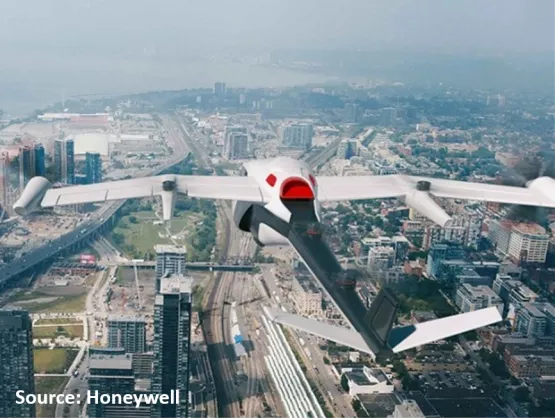
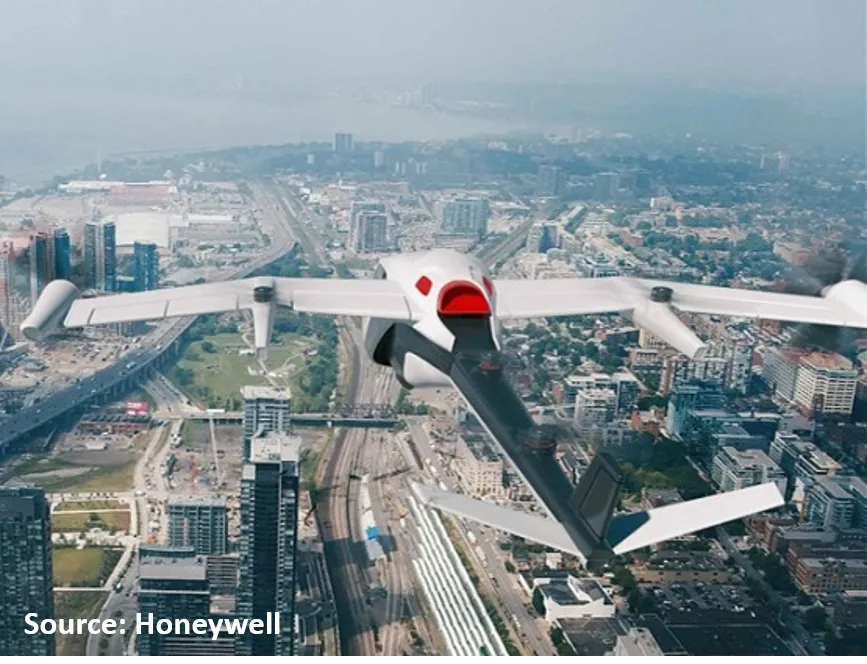
While flying cars have been a science fiction mainstay for decades, new sensors, software and other technology put personal air travel vehicles within reach. MEMS and Sensors Industry Group (MSIG) interviewed Dr. Alberto Speranzon, Fellow at Honeywell Aerospace Advanced Technology, about his upcoming keynote Sensors and Software Enabling Autonomy for Urban Air Mobility at the MEMS and Sensors Technical Congress (MSTC 2021) virtual event, April 13-15. Dr. Speranzon will discuss Honeywell’s challenges in enabling air taxis and the path forward to building out the necessary infrastructure. SEMI: People have dreamed of flying cars for decades. What has changed recently that makes them a near-term reality? Speranzon: There certainly are multiple factors that have contributed to pushing both new startups and established aerospace companies to make this dream a reality. Advances in battery technology are bringing electric aviation closer to being viable. There is still more to be done to achieve higher energy density in batteries, but already with today’s technology we can have vehicles that can fly from the suburbs to the downtown of a large U.S. city. At the same time, urbanization has created a lot of congestion, so finding new, efficient ways to move people and goods across megacities is becoming a critical need. Undeniably, the autonomous car industry has contributed to demonstrating that it is possible to achieve levels of automation and autonomy that were unimaginable just a few decades ago. The advances in sensing and computation required to make self-driving cars a reality is certainly going to help the aviation industry to develop autonomy in the air. SEMI: An air taxi must be highly sensorized. What types of sensors pose your biggest development challenge? Speranzon: Aircraft based on today’s battery systems simply cannot accommodate the size, power requirements and weight of sensors used by standard airliners. So there still is work to be done to reduce the SWaP (Size, Weight and Power) of these systems. Honeywell, for example, has developed a multipurpose radar, the IntuVue RDR-84K, that is only about the size of a paperback book. It can detect traffic, terrain and even weather, and was specially designed for air taxis and cargo UAS (unmanned aerial systems). Today, however, we still rely on human pilots to make the very complex decisions and, despite all the limitations that human eyes have, we do rely on them in a multitude of complex situations. There is also growing interest in integrating cameras into autonomous air taxis and similar platforms. Cameras can’t work alone, because they are affected by foggy, rainy and dim conditions. But they are lightweight, inexpensive, and require little power. That can make them very useful when combined with a compatible radar system like the RDR-84K. While these sensors bring new opportunities to the aerospace industry, they also pose some big challenges. For example, today’s state-of-the-art algorithms for image processing are machine learning algorithms called deep neural networks. They’re capable of extracting high-level information from pixels. But when it comes to aircraft certification, these algorithms face major hurdles. There is no software of this kind in any certified air vehicle, and it is unclear how regulators would certify neural network-based software components. Developers could avoid these new machine-learning algorithms and use standard computer vision methods instead. But they still face the challenge of deciding the type and quantities of images sufficient to declare the software “bug-free.” A similar set of questions will be also be true for radars, as they will be used to feed data more directly into the autonomy modules of future air taxis. So in the short term, we need to tackle the challenge of reducing the size and weight of sensors. But in parallel, we need to develop new ways to take advantage of machine learning: utilizing cameras and radars for autonomous decision making while still ensuring the highest standards of safety. SEMI: How is autonomous air mobility more or less challenging than autonomous ground vehicles? Speranzon: They are both challenging in their own ways. Autonomy on the ground – and I am thinking specifically of autonomous cars – is challenging as their “normal” behavior is very complex. We humans can drive from point A to point B over the public road network without a second thought. But to a machine, the heterogeneity of the people driving on the road, their sometimes unpredictable behavior, the changing weather conditions and shifting environments pose huge challenges. These things make what we call “normal driving” a very difficult problem to solve. At the same time, however, “off-nominal” scenarios in ground autonomy, while complex, are not orders of magnitude more complex than “nominal” scenarios. Ground vehicles can brake and stop, change lanes or move to the side of the road to avoid a crash or manage a malfunction. For autonomous air vehicles, the difference between nominal and off-nominal scenarios is more extreme. “Nominal” flying can rely on some of the existing aviation infrastructure, like communication between air traffic control and other aircraft. Air taxis can follow predefined paths and long-established aviation procedures as they move from vertiport A to vertiport B. This results in more automation than autonomy: everything is prescribed in advance and the onboard computer will follow what is pre-defined. Thus, nominal conditions will be fairly simple. However, in case of accidents or emergencies, aircraft face situations that are orders of magnitude more complex than nominal scenarios. An air vehicle cannot easily just “stop.” It could be 1,000-2,000 ft above ground, possibly above a bustling city. Human pilots go through rigorous training to be able to deal with emergencies like these. Consider the split-second judgments and airmanship behind the 2009 “miracle on the Hudson” landing. Asking autonomy to make the right decisions and execute emergency behaviors is a huge challenge. And these systems will need to be certified to the aviation industry’s very high standards. At present, we do not even have a well-established set of certification rules that an autonomous flying vehicle should comply with. SEMI: How soon might I be able to take an air taxi ride? Speranzon: Initial deployment of air taxis will happen around 2025. They will have human pilots but will use simpler interfaces than today’s cockpits. This first step will provide technologies that make it easier to take off and land, and to avoid traffic. That will reduce the need for highly experienced pilots and should help alleviate the overall shortage of pilots in the aviation industry. Fully autonomous air taxis are likely not going to show up until after 2030. In the beginning, they will likely fly only in regions where the weather is good most of the time. The autonomous car industry has already adopted this strategy, mostly deploying their technology in regions where the weather is dry and sunny. Soon, however, we’ll start seeing operations in “all-weather” scenarios and an increasing number of air vehicles within the same airspace. There is one critical stepping stone on the way to fully autonomous passenger aircraft: the success of fully autonomous cargo drones. For light parcels we will see initial deployments in 2022 or 2023, followed by larger UAS capable of transporting heaver cargo in 2024-2025. But whatever the timing, these are very exciting times. The aviation industry is witnessing a revolution with new vehicle manufacturers, new technologies and, likely, new applications we have not even dreamt of yet. Learn more about Honeywell’s work in urban air mobility and unmanned aircraft at aerospace.honeywell.com/uam. Alberto Speranzon is a Fellow within Honeywell Aerospace Advanced Technology. He received a Ph.D. in Electrical Engineering from the Royal Institute of Technology (KTH), Sweden in 2006. Since joining Honeywell, Alberto has been working on various aspects of autonomous systems for urban air mobility, leading such research areas as program manager and principal investigator. He is an IEEE Senior Member and a member of the Board of Governors of the IEEE Control Systems Society. Nishita Rao is product marketing manager at SEMI.
Read More
The automotive industry is changing. Our vehicles are getting electrified, connected and automated. As this trend is accelerating, it’s having an impact on how semiconductor devices, including MEMS sensors, are designed and qualified for automotive. As automotive semiconductor designers carefully consider product definition, product validation, and long-term reliability, MEMS sensor suppliers are responding to new opportunities created by electrified and automated vehicles by developing inertial measurement units (IMUs) for automated driving as well as battery pressure monitoring sensors for Li-ion EV batteries. The most complex MEMS device of all The automotive MEMS IMU is probably the most complex MEMS device that will be used inside a vehicle. This type of IMU is a System-in-Package (SiP) comprised of multiple gyroscope and accelerometer sensing elements plus a signal processing ASIC, integrated into one package that creates an inertial sensor able to measure up to six degrees of freedom (6DoF): yaw, roll and pitch for rotational movements, and lateral, longitudinal and vertical acceleration for linear movements. Degrees of freedom in a vehicle For vehicles with Level 3 autonomy and above (per SAE definition), the IMU is mandatory for taking over the trajectory control of the vehicle in case other sensors, such as the camera, radar or LiDAR, become impaired. Should such a failure occur, the IMU will function as a guidance sensor to bring the car to a safe stop within a short period of time and distance. The IMU is also used to control the regular movement of the car while driving in automated mode. While IMU technology already exists for aerospace applications, there are significant challenges to adapting it for automotive. The automotive IMU requires high performance at costs that are compatible with the automotive industry. Because automotive life cycles are long, MEMS sensor suppliers must produce the device in high volume for an extended period of time. They must also guarantee the sensor’s performance and reliability over a 10- to 15-year lifetime with no maintenance or recalibration of the sensor required. Only a few MEMS suppliers have the capability and willingness to embark on this kind of journey. Electrification is creating new applications for MEMS sensors The conversion from internal combustion engines to electrified propulsion is going to affect the powertrain MEMS market. For example, pressure sensors used in engine management for air pressure and fuel pressure will simply go away with electrification. However, the use of large Li-ion batteries in electrified vehicles has created a new application for MEMS sensors. One of the known risks of Li-ion batteries is the small probability for a battery cell to go into a thermal runaway situation that will lead to a fire. The press has reported multiple cases of EV batteries catching fire. Thermal runway effects When it comes to thermal runaway events, every second counts. Detecting the event as early as possible enables the vehicle safety system to take all necessary measures to warn occupants of an imminent fire and activate timely countermeasures (e.g., trigger fire extinguisher and call fire brigade) to mitigate the impact of the fire. Published studies have shown that measuring the pressure inside the battery pack is a good indication that a thermal runaway is starting. The outgassing of a battery cell, plus a sudden rise in temperature, will increase pressure inside the battery pack, which will generate a pressure pulse. To detect such a pressure pulse, a MEMS pressure sensor must permanently measure the pressure inside the pack. It must also report to the battery management system any suspicious change in pressure, independent of atmospheric pressure changes. It’s important to keep this kind of sensor on all the time to detect any pressure anomaly in the system, even when the vehicle is completely off. NXP has developed a pressure sensor to specifically address this new safety application in EVs, and several automotive manufacturers are already using this solution. NXP battery pressure management sensor The quest for zero defects While the automotive industry is targeting zero fatalities as its ultimate goal, the semiconductor industry and module suppliers are targeting zero defects for each and every semiconductor device. For safety-critical automotive MEMS sensors complying with the Automotive Electronics Council (AEC) Q100 qualification for semiconductors, it’s necessary but clearly not sufficient to guarantee a zero defects production launch and long-term reliability of the device. To boost the reliability and robustness of automotive sensors, NXP has developed Above and Beyond (AaB), a new methodology that studies advanced reliability and robustness well ahead of the device’s qualification and production release. Based on risk-mitigation analysis, AaB consist of extensive testing, such as test-to-fail, corner lot testing, and new use-case testing combined with advanced statistics, all of which help NXP understand how these different parameters interact with each other. As sensor suppliers must integrate AaB into their project planning, it does add time and cost to the project. The upside is that this early investment pays off as long as weaknesses in the device can be detected and corrected before a production launch. Field failures, on the other hand, can lead to unplanned redesign and requalification of a device. Worst-case, they can lead to a recall campaign that costs a huge amount of money. We’re systematically using the AaB methodology at NXP for safety-critical MEMS sensors because its potential benefits far outweigh its costs. For more information about NXP MEMS sensors, register for the upcoming webinar series, MEMS to Market: Ingredients for Success, where NXP will discuss The Growing Importance of MEMS Reliability (May 5, 2021). Register by March 10 to watch all the webinars LIVE. Each webinar will also be available to watch on-demand at your convenience. Contact the author via LinkedIn or learn more about NXP sensors. About the Author With nearly 30 years of experience in the field of automotive and MEMS sensors, Marc Osajda is responsible for European automotive MEMS sensors business development activities at NXP Semiconductors. Osajda holds an engineering degree in mechanics and electronics from the French Ecole Nationale Superieure d’Arts et Métiers (ENSAM). NXP Semiconductors is an active member of MEMS Sensors Industry Group®(MSIG), a SEMI technology community that connects the MEMS and sensors supply network in established and emerging markets to enable members to grow and prosper. Visit us today.
Read More
In my role as lead for the Smart Mobility initiative at SEMI, I recently spoke with Automotive Logistics Magazine about the growing importance of the semiconductor supply chain’s connection with the automotive industry and the semiconductor shortage hampering global automotive production. Following are excerpts from the interview. Automotive Logistics: Why is there a bottleneck in the global supply of semiconductors at the moment and how long is it likely to last? Weiss: The current automotive chip shortage resulted from the sharp, Covid-19-induced decrease in demand for automotive semiconductors in the second quarter of last year when vehicle production came to a near standstill. The automotive market picked up significantly in the fourth quarter and this caused the supply chain constraints we are seeing today. At the same time as the automotive standstill, the pandemic spurred an increase in demand for home computing and networking equipment, and semiconductor manufacturing plants (fabs) had to pivot to these other markets in order to maximize fab utilization and successfully navigate economic headwinds. Every minute a semiconductor fab is idle or has lines down adds up quickly to missed revenue, so their capacity is booked weeks and even months in advance. With this background, I don’t believe this is a structural shortage and expect a gradual recovery over the next two quarters, barring any major shifts in geopolitics or macroeconomics. Automotive Logistics: What needs to be done to remedy the current shortfall for the automotive industry? Weiss: The automotive industry needs to continue to strengthen its connections to the semiconductor manufacturing supply chain. In past years, auto manufacturers used to rely mainly on their tier one suppliers to interface with the semiconductor supply chain. This has changed significantly. Not only are more chips being used in vehicles (roughly 10% of all devices produced globally end up in cars), but the strategic importance of the chips as enablers for ADAS [advanced driver-assistance systems], electrification, safety, connectivity and other consumer-driven features has increased considerably. With this dynamic in play, carmakers have recognized the value of interacting and collaborating more closely with the semiconductor supply chain. This provides vehicle OEMs with access to innovation, the ability to influence technology direction and pace, along with greater visibility into global supply chain developments. The SEMI Smart Mobility initiative is evidence of this transition, with the likes of Audi, BMW, Ford, Uber, Volkswagen and other vehicle OEMs, along with tier one suppliers such as Continental and Bosch, now actively involved in our automotive electronics and mobility activities to do exactly that – influence, partner, accelerate and guide the global electronics design and manufacturing supply chain that SEMI represents. Automotive Logistics: What percentage of semiconductors manufactured for use by US-based companies are for automotive applications and how has this grown in recent years? Weiss: A little over 10% of semiconductors produced worldwide are sold into the automotive segment, but this number is expected to grow at an accelerated pace in the next few years as electrification, connectivity and autonomous driving become more prevalent. Automotive Logistics: How is SEMI working to help the automotive industry get a clearer view of sub-component supply and better manage supply chain risk? Weiss: The SEMI Smart Mobility initiative is designed to engage automotive OEMs, tier ones, semiconductor device makers, design houses, and equipment and materials companies to drive alignment across the supply chain and address shared challenges collectively. To facilitate this engagement, we created the Global Automotive Advisory Council (GAAC), which has active chapters in Europe, US, China, Japan and Taiwan. The GAAC provides an open platform for creating solutions, fostering collaboration and partnering with other industry bodies to accelerate and harmonize industry efforts that benefit the entire ecosystem. Volkswagen and Audi are already SEMI members – both are founding members of the GAAC Europe chapter – and have become vocal champions and critical contributors to our efforts. When all stakeholders work together, I have no doubt that the future of automotive and mobility will continue to be bright. Interested in learning more about this topic? Read the full interview in Automotive Logistics Magazine, A Fab Future for the Automotive Sector. Please contact me at [email protected] for more information about SEMI’s Smart Mobility Initiative, the Global Automotive Advisory Council, and how SEMI can help your organization navigate electronics in the automotive industry to drive innovation in the mobility space. Bettina Weiss is Chief of Staff and Global Smart Mobility Lead at SEMI.
Read More
Call it a wild guess, but I suspect I am not the only follower of the automotive industry who is tired of reading articles that lament the impact of Covid-19 and speculate, to varying degrees of accuracy, what kind of recovery is in store for major automotive markets around the world.I’m much more interested in what solutions and creative approaches people, companies, and countries have come up with to make cars smarter and safer despite the pandemic or even because of it.A friend of mine who works at a major European vehicle OEM told me that “innovation cannot, must not stop – despite current difficulties.” This sentiment echoes through the automotive supply chain, particularly in the resilience of the semiconductor industry during these challenging times.The recent publication of the AspenCore Guide to Sensors in Automotive – Making Cars See and Think Ahead is a refreshingly positive and inspiring collection of articles, interviews, technology deep dives and business news, all carefully curated and edited by AspenCore Global Editor-in-Chief Junko Yoshida.One article I particularly enjoyed was her “6 Trends on ‘Perception’ for ADAS/AV.” The insights she was able to gather from experts attending the AutoSens show in Brussels are fascinating, even if consensus on what, exactly, will be the winning “robust perception” solution appears to be far off. This is only fitting with so many companies elbowing for that prime spot!Another feature article that stood out was Nitin Dahad’s “Level 5 AVs Unlikely Before 2035” article. It wasn’t so much the longer ramp to full autonomy that caught my eye but the daunting challenge the automotive industry and AVs have to tackle: “…all possible unusual driving situations under all driving conditions and in all environments.” This is truly a mind-boggling undertaking. The author argues that the road to Level 5 “is likely to be paved gradually, as more advanced driver-assistance features come to market.” Sounds reasonable.Both these articles point to the need for collaboration across the automotive electronics supply chain in order to not only sustain the pace of innovation, but accelerate it, as we face our current challenges. This made me think about the SEMI Smart Mobility initiative and how the great minds supporting it might be able to help. The initiative is designed to bring together automotive OEMs, Tier 1s, device makers, design houses, equipment and materials companies as well as R D institutes to address shared challenges and opportunities.SEMI used to stand for Semiconductor Equipment and Materials International, but over the past several years – and driven by the advent of IoT, AI, and everything “smart” – we now represent the entire electronics manufacturing and design ecosystem, with more than 2,400 member companies on our global roster. We created the Smart Mobility initiative in late 2017 with the initial goal of connecting a substantial number of members to new business opportunities involving rapidly rising silicon content in automotive. IHS Markit projects automotive semiconductor revenue to continue to grow at a 6% CAGR to 2026.Over the past 2 ½ years, the initiative has quickly evolved into a global platform connecting the semiconductor, sensor and automotive electronics ecosystem under one roof – the Global Automotive Advisory Council or GAAC. While “silicon content” is still the operative word for many of our core members, the Council’s mission is to address opportunities and challenges that impact more than one segment of the value chain. For example, the challenge of getting to zero defects involves just about every stakeholder – from contamination control in wafer carriers to ensuring device reliability and robustness to packaging and, ultimately, system integration in the car.SEMI also encompasses a number of Technology Communities that provide deep technical expertise in support of the GAAC’s mission. Member companies in our MEMS Sensors Industry Group (MSIG) are directly engaged in and contributing to the GAAC work. GAAC Europe Chapter - Participating Companies“Sensorizing” – making things smarter through the application of sensors – has created solutions for the automotive and mobility space that bring innovation, safety, security and comfort to driver and passenger and that benefit the environment around the car.This makes the AspenCore Guide to Sensors in Automotive a great resource for our members and SEMI staff as we collaborate to accelerate the drive toward Level 5 autonomy.If you are interested in learning more about SEMI’s Smart Mobility and the GAAC, please contact Bettina Weiss, Chief of Staff and Global Smart Mobility Lead at [email protected] with permission from EE Times.
Read More
At the 1964 New York World’s Fair, Walt Disney and his team of Imagineers debuted Audio-Animatronics® in four attractions, Great Moments with Mr. Lincoln, General Electric Carousel of Progress, Ford Magic Skyway, and it’s a small world. As “a new type of animation” that Walt said was “so lifelike that you might find it hard to believe,” Audio-Animatronics captivated audiences, setting the stage for the technological innovation that would transform theme-park attractions for decades to come. While the Audio-Animatronics in classic Disney® attractions such as Enchanted Tiki Room and Pirates of the Caribbean® continue to delight park-goers, more modern attractions take full advantage of the miniaturized, sensitive enabling hardware components, software algorithms, and connectivity technologies that are available to today’s engineers.When Michael Tschanz, director of engineering technology and analysis, a segment within Disney Parks, Experiences and Products’ Global Engineering and Technology department, gives the opening keynote at MSEC 2020, SEMI’s first virtual MEMS Sensors Executive Congress (October 6-8 and 13-15, 2020), attendees will get a rare look inside the magic of select Walt Disney World attractions. Join MEMS Sensors Industry Group and SEMI on October 6 for Tschanz’s keynote presentation, Model-Based Design and Scientific Data Analytics of Disney Attractions — and experience video footage that you won’t see anywhere else. Register now for MSEC 2020.MEMS Sensors Industry Group® (MSIG), a SEMI technology community that connects the MEMS and sensors supply network in established and emerging markets, enables members to grow and prosper. Visit us today.In his role at Disney, Michael Tschanz leads a multidiscipline team which develops detailed mathematical and physics models for transportation, ride and animatronic systems, custom software and network applications, and robotics. The responsibilities for this team also include the development of optimization algorithms, servo controllers, interactive/immersive experiences, data analytics, and material process solutions. Michael’s rich and diverse background includes designs of numerous attractions at various Disney theme parks including: Test Track® Attraction; Mission: SPACE® Attraction; Toy Story Mania!® Attraction and the Expedition Everest® Attraction. Michael also designed all the velocity profiles at the worldwide locations of The Twilight Zone Tower of Terror™.Nishita Rao is product marketing manager at SEMI.
Read More