downloadGroupGroupnoun_press release_995423_000000 copyGroupnoun_Feed_96767_000000Group 19noun_pictures_1817522_000000Member company iconResource item iconStore item iconGroup 19Group 19noun_Photo_2085192_000000 Copynoun_presentation_2096081_000000Group 19Group Copy 7noun_webinar_692730_000000Path
Skip to main content
Default Banner Image

Autonomous Vehicles

Call it a wild guess, but I suspect I am not the only follower of the automotive industry who is tired of reading articles that lament the impact of Covid-19 and speculate, to varying degrees of accuracy, what kind of recovery is in store for major automotive markets around the world.I’m much more interested in what solutions and creative approaches people, companies, and countries have come up with to make cars smarter and safer despite the pandemic or even because of it.A friend of mine who works at a major European vehicle OEM told me that “innovation cannot, must not stop – despite current difficulties.” This sentiment echoes through the automotive supply chain, particularly in the resilience of the semiconductor industry during these challenging times.The recent publication of the AspenCore Guide to Sensors in Automotive – Making Cars See and Think Ahead is a refreshingly positive and inspiring collection of articles, interviews, technology deep dives and business news, all carefully curated and edited by AspenCore Global Editor-in-Chief Junko Yoshida.One article I particularly enjoyed was her “6 Trends on ‘Perception’ for ADAS/AV.” The insights she was able to gather from experts attending the AutoSens show in Brussels are fascinating, even if consensus on what, exactly, will be the winning “robust perception” solution appears to be far off. This is only fitting with so many companies elbowing for that prime spot!Another feature article that stood out was Nitin Dahad’s “Level 5 AVs Unlikely Before 2035” article. It wasn’t so much the longer ramp to full autonomy that caught my eye but the daunting challenge the automotive industry and AVs have to tackle: “…all possible unusual driving situations under all driving conditions and in all environments.” This is truly a mind-boggling undertaking. The author argues that the road to Level 5 “is likely to be paved gradually, as more advanced driver-assistance features come to market.” Sounds reasonable.Both these articles point to the need for collaboration across the automotive electronics supply chain in order to not only sustain the pace of innovation, but accelerate it, as we face our current challenges. This made me think about the SEMI Smart Mobility initiative and how the great minds supporting it might be able to help. The initiative is designed to bring together automotive OEMs, Tier 1s, device makers, design houses, equipment and materials companies as well as R D institutes to address shared challenges and opportunities.SEMI used to stand for Semiconductor Equipment and Materials International, but over the past several years – and driven by the advent of IoT, AI, and everything “smart” – we now represent the entire electronics manufacturing and design ecosystem, with more than 2,400 member companies on our global roster. We created the Smart Mobility initiative in late 2017 with the initial goal of connecting a substantial number of members to new business opportunities involving rapidly rising silicon content in automotive. IHS Markit projects automotive semiconductor revenue to continue to grow at a 6% CAGR to 2026.Over the past 2 ½ years, the initiative has quickly evolved into a global platform connecting the semiconductor, sensor and automotive electronics ecosystem under one roof – the Global Automotive Advisory Council or GAAC. While “silicon content” is still the operative word for many of our core members, the Council’s mission is to address opportunities and challenges that impact more than one segment of the value chain. For example, the challenge of getting to zero defects involves just about every stakeholder – from contamination control in wafer carriers to ensuring device reliability and robustness to packaging and, ultimately, system integration in the car.SEMI also encompasses a number of Technology Communities that provide deep technical expertise in support of the GAAC’s mission. Member companies in our MEMS Sensors Industry Group (MSIG) are directly engaged in and contributing to the GAAC work. GAAC Europe Chapter - Participating Companies“Sensorizing” – making things smarter through the application of sensors – has created solutions for the automotive and mobility space that bring innovation, safety, security and comfort to driver and passenger and that benefit the environment around the car.This makes the AspenCore Guide to Sensors in Automotive a great resource for our members and SEMI staff as we collaborate to accelerate the drive toward Level 5 autonomy.If you are interested in learning more about SEMI’s Smart Mobility and the GAAC, please contact Bettina Weiss, Chief of Staff and Global Smart Mobility Lead at [email protected] with permission from EE Times.
Read More
At the 1964 New York World’s Fair, Walt Disney and his team of Imagineers debuted Audio-Animatronics® in four attractions, Great Moments with Mr. Lincoln, General Electric Carousel of Progress, Ford Magic Skyway, and it’s a small world. As “a new type of animation” that Walt said was “so lifelike that you might find it hard to believe,” Audio-Animatronics captivated audiences, setting the stage for the technological innovation that would transform theme-park attractions for decades to come. While the Audio-Animatronics in classic Disney® attractions such as Enchanted Tiki Room and Pirates of the Caribbean® continue to delight park-goers, more modern attractions take full advantage of the miniaturized, sensitive enabling hardware components, software algorithms, and connectivity technologies that are available to today’s engineers.When Michael Tschanz, director of engineering technology and analysis, a segment within Disney Parks, Experiences and Products’ Global Engineering and Technology department, gives the opening keynote at MSEC 2020, SEMI’s first virtual MEMS Sensors Executive Congress (October 6-8 and 13-15, 2020), attendees will get a rare look inside the magic of select Walt Disney World attractions. Join MEMS Sensors Industry Group and SEMI on October 6 for Tschanz’s keynote presentation, Model-Based Design and Scientific Data Analytics of Disney Attractions — and experience video footage that you won’t see anywhere else. Register now for MSEC 2020.MEMS Sensors Industry Group® (MSIG), a SEMI technology community that connects the MEMS and sensors supply network in established and emerging markets, enables members to grow and prosper. Visit us today.In his role at Disney, Michael Tschanz leads a multidiscipline team which develops detailed mathematical and physics models for transportation, ride and animatronic systems, custom software and network applications, and robotics. The responsibilities for this team also include the development of optimization algorithms, servo controllers, interactive/immersive experiences, data analytics, and material process solutions. Michael’s rich and diverse background includes designs of numerous attractions at various Disney theme parks including: Test Track® Attraction; Mission: SPACE® Attraction; Toy Story Mania!® Attraction and the Expedition Everest® Attraction. Michael also designed all the velocity profiles at the worldwide locations of The Twilight Zone Tower of Terror™.Nishita Rao is product marketing manager at SEMI.
Read More
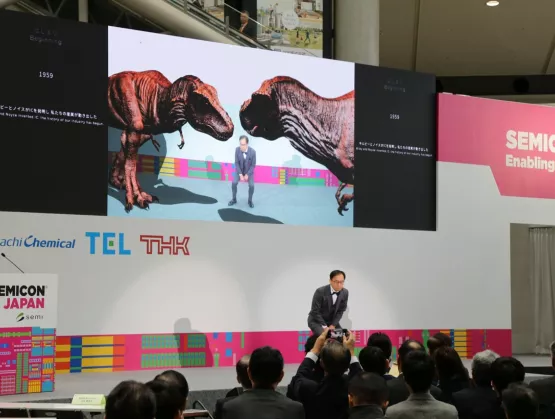
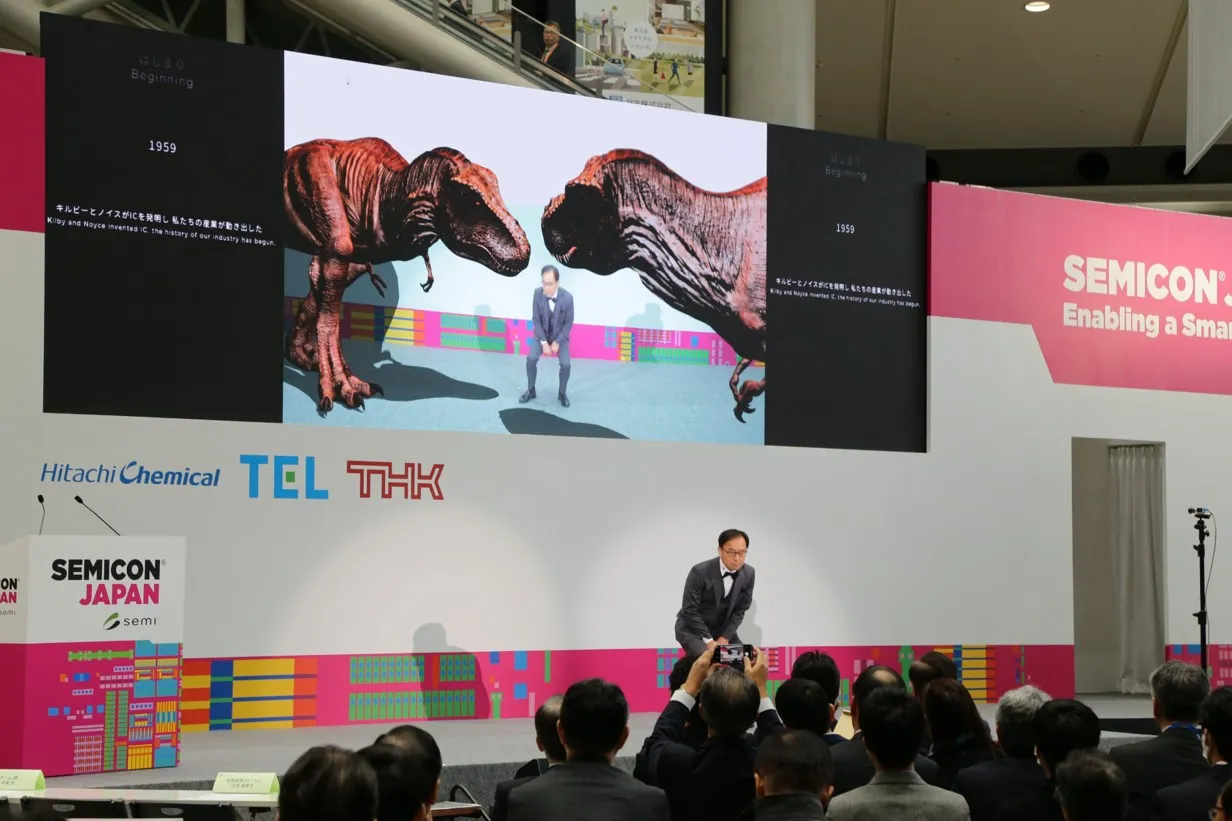
Augmented reality (AR) tyrannosauruses towered on-screen as I interacted with the creatures in a mix of prehistoric and cutting edge. Or, rather, my AR double was doing the playacting. Minutes later, virtual doppelgangers of a small lineup of chip industry executives cut the ceremonial ribbon. Seemingly sweeping away the winter chill, the opening of SEMICON Japan 2019 dazzled with smart technology and the promise of lives, cities and workplaces transformed, with uber-intelligent applications in full display at Tokyo Big Sight. But what resources does the industry need to harness to drive the next era of innovation? The semiconductor industry’s unwavering passion and young talent are key, said Hiroshi Imano, Chairperson of the SEMICON Japan Initiatives Committee, in his opening keynote. And hardly any region of the world is in a better position to help realize that future than Japan, Imano said. The region supplies one third of the equipment and more than half of all materials to the global semiconductor manufacturing industry.Talent was also top of mind for SEMICON Japan 2019 keynote speaker Makiko Eda, Japan's Chief Representative Officer at the World Economic Forum (WEF). Serving as a platform for public-private partnerships, the organization's mandate is to tackle global issues such as climate change and geopolitical strife in making world more resilient to risk and, by extension, more sustainable.Spanning ecology, economy, technology, society, geopolitics and industry, that mission includes reskilling and upskilling a billion people over the next decade, a high priority for WEF, which hosts a conference every January in Davos, Switzerland. The theme of this month's conference – Stakeholders for a Cohesive and Sustainable World – reflects the vital importance of building the international partnerships and global consensus necessary to achieving WEF's goals.One key to that sustainability will be technology and Arm, a global chip design company, will play a key role, with the company’s chips touching over 70 percent of the world’s population, Arm president Yuzuru Utsumi said in his keynote. Today, Arm is driving toward an ambitious goal: Ship 100 billion chips from 2017 to 2021 – the same number produced over the previous quarter century – by powering advances in mobile computing, server and networking infrastructures, and automotive applications.Arm’s innovation ecosystem of more than 1,000 partners will deliver these chips as they continue to work together to develop differentiated technology. Arm plans to increase investments not only in its primary processor business to accelerate market share gains but in the company’s new IoT business to create new revenue streams. The goal: Deliver long-term sustainable growth, Utsumi said. SEMICON Japan 2019 showcases SMART manufacturing and transportation Billed as a showcase of smart technologies, SEMICON Japan 2019 delivered with an array of eye-grabbing exhibitions in the popular SMART Applications Zone. In the SMART Transportation area, the automatic operation pavilion featured a car equipped with open-source software for autonomous driving. The exhibitor, Tier IV, aims to help lead the early commercialization of self-driving vehicles through the adoption of its software, Autoware, which makes it easier to develop self-driving vehicle prototypes using low-power platforms.Sony Semiconductor Solutions demonstrated a vision sensing processor designed to guide autonomous drones. Using two cameras, the processor measured the changing distance between visitors moving about the exhibit and stationary objects in real time, indicating proximity in hues of red (nearby) and blue (at a distance). Many visitors were wowed, describing the multichromatic display as futuristic.Others rode a simple wooden swing hanging by two ropes, but from dizzying heights thanks to Solidray’s Duo-Sight, a virtual reality (VR) system that projects 3D images stretching from wall to floor for immersive experiences. One visitor thrilled at how riding the swing, suspended only a few feet from the floor, felt like soaring on a flying trapeze. Target applications for the technology include virtual rides at amusement parks and presenting interior design options to homeowners.In the SMART Manufacturing area, one highlight was the demonstration by the National Institute of Advanced Industrial Science and Technology (AIST) of a remote-controlled Minimal Fab System designed for low-volume, high-mix chip production with little staffing. Designed to increase production efficiency, the system allows a circuit designer to manufacture a semiconductor by singlehandedly operating equipment up and down the production line. Controlling nearly 50 pieces of equipment, the Minimal Fab System on display manufactured chips that were verified for functional operation and exhibited afterwards.On the SMART Applications stage, exhibitors DENSO and Toyota Motor Corporation announced a new joint venture to conduct research and advanced development of the next-generation in-vehicle semiconductors critical to electric and autonomous vehicle innovation. The venture, operating as MIRISE Technologies, will combine Toyota’s mobility expertise with DENSO’s in-vehicle component prowess. The goal is to build a rapid, competitive development system by 2030, said Yoshifumi Kato, executive director of the DENSO Research and Development Center, and president and representative director of the venture. On track to begin work this year, MIRISE will span three fields of technology development: power electronics, sensing and SoC (System-on-a-Chip). The name MIRISE combines word the Japanese word "mirai" (future) with "rise."Business Continuity PlanningNatural disasters and other emergencies are an ongoing threat to uninterrupted business operations across the semiconductor manufacturing supply chain and particularly in earthquake-prone Japan. To better prepare for business disruptions and restore normal operations as soon as possible after disaster strikes, more companies are teaming on Business Continuity Planning (BCP).THK's Seismic Isolation Experience Car demonstrated one technology designed to help – a seismic isolation device. The car shakes like an earthquake to give people inside a taste of how a building heaves and sways during a quake with and without the device deployed. Visitors were struck by how much the isolator dampens tremors to prevent or minimize damage. In the BCP seminar, representatives from Sony Semiconductor Manufacturing, THK, DISCO and Team Engineering Consulting shared lessons learned from actual disasters and discussed the critical importance of daily disaster drills. Yukihide Keigo, Executive Engineer in charge of Products and Development at Sony Semiconductor Manufacturing, recounted how the company’s Kumamoto Prefecture plant struggled for 96 days to restore full operations after the facility sustained heavy damage in the 2016 earthquake. Keigo said the plant lacked the structural reinforcements necessary to withstand the impact and fell prey to poor planning and accountability. The Kumamoto plant has since implemented measures – structural and procedural improvements – that more accurately account for seismic risks to ensure full recovery within 56 days. The plant’s new procedures include emergency drills for staff including night-shift workers.Innovation abounds at six SuperTHEATER forumsSEMICON Japan 2019 was held in the West and South Halls of Tokyo Big Sight as organizers of the Tokyo Olympics occupied the East Hall, the exhibition's usual home at the venue, to prepare for the 2020 games. For the first time, the main stage, SuperTHEATER, was set up in the cavernous arena near the main entrance. The SuperTHEATER featured six forums over three days. Semiconductor Executive Forum – View by Top Two in the Era of Digitalization with thought leaders from IHS Markit and Sony Semiconductor Solutions SMART Connectivity Forum – Infinite World Brought by 5G Innovation with experts from Softbank and Nokia Solutions Networks SMART Transportation Forum I – Front-line of Automated Driving featuring speakers from Intel and DENSO SMART Transportation Forum II – Revolution of Sky Transportation, supported by the U.S. Commercial Service in Japan, with presenters from Ministry of Economy, Trade and Industry (METI), Subaru and Bell Helicopter Manufacturing Innovation Summit – Issues and Innovation: What will Drive Growth to 2030 featuring thought leaders from VLSI Research, Applied Materials, KLA, Nikon and Tokyo Electron Mirai Vision Forum – Future Relation of Technology and Body 2.0 with speakers from Leave a Nest, Ory Lab and Autonomous Control Systems Laboratory The Mirai Vision Forum highlighted advanced technologies that could lead to societal improvements. One presenter, Kentaro Yoshifuji, CEO at Ory Lab, recalled how, as a child, he once stayed home from school while recovering from an illness. His imagination in full flight, the youngster imagined having a clone that could attend school and be with his classmates. The experience eventually inspired him to develop OriHime, a robot that gives socially isolated people a way to communicate with friends or colleagues remotely. Originally developed for physically impaired people, OriHime today is used to help the able-bodied. The robot is situated with the companion and the user operates OriHime remotely. A camera and monitor in OriHime’s face provide the visual and audio connection and the user controls the device with a smartphone or tablet or, for those who are paralyzed, through eye movement. One potential application: With OriHime stationed at a business office, working mothers could use OriHime to telecommute to better balance their careers with their parenting responsibilities at home. The robot would be a mother’s go-between, enabling her to communicate directly with colleagues.The next generation of innovators also took the stage as five teams presented innovative business ideas in friendly competition. The top prize in The TECH CAMP Hackathon went to the group that hatched an ingenious plan to develop a jacket that trains users to move their bodies in preprogrammed ways. For example, legendary Japanese professional baseball player Shigeo Nagashima could wear the gear while batting to program the device, then give the jacket to someone who’s never swung a baseball bat. The jacket would help the user replicate Nagashima’s swing. Now comes the real work of any innovator – executing on the vision.And then came two soccer-playing artificial intelligence (AI) robots that squared off and ... Scored! The demonstration by the Toyota National College of Technology started as a research project by Toyota National College students in 2002. The young innovators designed and developed all the robotic hardware and software from scratch. Looking ahead to SEMICON Japan 2020!SEMICON Japan 2019 not only gathered leading Japanese semiconductor materials and manufacturing equipment providers to demonstrate their latest innovations. The premiere regional event also provided insights on key trends critical to the entire electronics manufacturing supply chain. This year’s event drew more than 51,000 visitors and 695 exhibitors from 15 regions filling more than 1,700 booths.SEMICON Japan 2020 returns to East Hall at Tokyo Big Sight in December 2020. I look forward to seeing you there!Jim Hamajima is president of SEMI Japan.
Read More
Smart technologies have gripped the world’s imagination with their promise to revolutionize the way we live and work. With the semiconductor supply chain central to these advances, SEMI Japan in October hosted 200 members for SEMI Japan Members Day as speakers from three of the world’s top device manufacturers – Denso, Sony and Kioxia – offered their perspectives on the strides the semiconductor industry needs to make in three key areas: automotive, smart manufacturing and 3D flash memory manufacturing technology. Automotive Evolution and Electronics – DensoThe automotive industry is re-inventing itself to innovate across connectivity, autonomy, sharing and electric (CASE) and ensure safe, comfortable and environmentally friendly autonomous driving, said Nobuaki Kawahara, executive fellow and director of the Advanced Research and Innovation Center at Denso. Key focus areas of Denso in CASE innovation are Extraordinary Safety and Everyday Confidence. The company’s goal is to minimize damage to vehicles involved in collisions or one-car accidents by making it easier for drivers to detect and steer clear of objects in their path.To improve automobile safety and security, the company is developing advanced driver-assistance systems (ADAS) and autonomous driving technologies as it promotes the confluence of four areas of technology – HMI (Human Machine Interface), environmental recognition, vehicle control assistance, and information and communications. One use case Denso sees as a significant opportunity is deploying sensors such as millimeter-wave radar, cameras and LiDAR to monitor a vehicle’s surroundings, using GPS and precision mapping to pinpoint its location and determine the best route for safety and distance, and then transmitting that information to a motion-control system.Denso is also out to solve the hard challenges associated with autonomous driving in dynamic road conditions. Kawahara pointed out that road conditions vary and that rules for "driving at certain intervals in a certain lane" vary depending on the time of day. Also, on public roads in Abashiri, Hokkaido, where the company is currently conducting field tests, snowfall makes it difficult to recognize road images and gather sensor information. In Asia, it is also common for motorcycles and automobiles to speed along with very little space between them.Image Sensors to Accelerate Development of Smart Manufacturing – SonyTo fulfill the promise of smart manufacturing, the semiconductor supply chain must continue to invest in sensor and imaging technology innovation, said Shigeo Ohba, deputy senior general manager of the Imaging System Business Division at Sony Semiconductor Solutions. For its part, Sony is developing imaging sensors that help network and automate factories to achieve new production and cost efficiencies. For example, the company plans to design devices to increase equipment uptime through predictive maintenance, reduce defect rates and drive other manufacturing efficiencies. The challenge with today’s factory lines that produce a number of different devices is that they are highly complex to manage and therefore prone to human error, undercutting manufacturing efficiency. In the future, AI-powered machines will leverage data analysis to help streamline operations. Adapting an image sensor with AI to machine vision applications can simplify key processes such as measurement and inspection processes while reducing safety and security costs.Of the vast amount of information on all machines connected to the cloud, only essential details will be processed at the edge since edge data processing offers stronger security and reduces data transfer time. Ohba said image sensors will evolve based on edge AI, adding that "AI will be a paradigm shift for image sensors if it’s economically feasible."3D Flash Memory Manufacturing Technology Challenges – KioxiaIncreasing connectivity in factories for smarter, more efficient operations places huge demands on memory since networked devices typically store duplicate data, said Hideshi Miyajima, head of the Advanced Memory Development Center (AMDC) at Kioxia. To meet demand for higher networking speed and capacity, 2d NAND flash memory is moving to 3D and, in particular, three 3D techniques: multivalued memory, cell partitioning and layer stacking.To increase storage capacity, the third-generation 64-layer BiCS FLASH™ stacks layers to form nearly two trillion holes with a diameter of 100nm and a depth of 5μm on a wafer and places a uniform 2-3nm thin film on the inner wall of each 5-μm hole. For its BiCS FLASH™, Kioxia uses a dry etching technique that forms a straight, elongated through-hole and atomic layer deposition (ALD) technology, which creates a uniform laminate atomic layer on the wafer surface to grow materials uniformly and with high precision on large, complex substrates.In order to meet the cost expectations of high-volume 3D flash memory manufacturers, outlays across fabs must be reduced by better monitoring plasma control, enhancing yield through particle control, speeding film formation, and reducing gas, power and water usage, Miyajima said.SMART Transportation and SMART Manufacturing in the Spotlight at SEMICON JapanPlease join us at SEMICON Japan 2019, December 11-13 at Tokyo Big Sight, for the latest developments and trends in SMART Transportation and Smart Manufacturing. There are also a few other great reasons to attend. We look forward to seeing you in Tokyo!Jim Hamajima is president of SEMI Japan.
Read More
Part 2 of 2-part series on MSEC 2019 highlights. Read Part 1. Neural Networks on ChipTo be sure, low power is king when bringing machine learning to the sensor edge. Battery-powered, always-on sensing devices require it since frequent recharging is the death knell of any electronic product. That’s why semiconductor companies are offering new ways to conserve power.“MEMS sensor suppliers have made significant strides in the power, size and performance of their devices,” said Aspinity CEO Tom Doyle. “Yet these gains deliver only incremental power improvements to the system.”Doyle advocates a new architectural model that uses an analog neuromorphic processor to analyze all sensor data at the start of the signal chain instead of sending it downstream so power-hungry chips such as DSPs can digitize it before analysis.“The technology industry wants to take advantage of the many benefits of always-on sensing applications,” said Doyle. “Before we can reach mass proliferation, however, we need to resolve the power issues that are deal-breakers for some applications. We believe the answer to this challenge is architectural. All the data gathered by always-on sensing systems is analog in nature, yet as soon as it’s captured, it’s digitized immediately for analysis. Determining which data is important up front eliminates the digitization and processing of irrelevant data so that voice-first devices such as smart speakers and wearables/hearables can run for long periods of time without requiring battery recharge.”Syntiant CTO Jeremy Holleman agreed that on-device intelligence is the future.“Did you just fall? Is your heartrate a bit off? Deep learning provides a toolset that yields vastly superior decisions,” said Holleman. “The problem is that deep learning is computationally intensive. The answer is a neural network that performs on-device edge inferencing.”Holleman added that Syntiant’s neural decision processor was recently certified as Amazon Voice Service (AVS)-compliant for wake-word detection, making it easier to design voice control in battery-powered devices such as earbuds and wearables.MSEC Technology Showcase WinnerWith the groundswell of interest in intelligence at the edge, it was no surprise that Cartesiam won top honors among all competitors in the MSEC Technology Showcase for its NanoEdge AI, software that brings AI to the edge of the signal chain, making it easier for designers to create intelligent objects that can learn and understand.“Unlike other AI algorithmic technologies for sensing devices, NanoEdge enables both learning and inference at the edge, providing accurate and adaptive intelligence,” said Cartesiam Managing Director and Co-founder Marc Dupaquier, who accepted the award. “It’s also the only tool of its kind that does not require data scientists on board for implementation, which saves a tremendous amount of money. Our clients can build a machine learning library and embed it into their own code within weeks to realize the same caliber of unsupervised neural network that was once the exclusive domain of AI cloud vendors.”MSIG 2019 Hall of FameAt this year’s conference, MSIG Director Carmelo Sansone recognized two longtime contributors to the commercialization of MEMS and sensors: Peter G. Hartwell, Ph.D., chief technology officer at InvenSense, a TDK group company; and Thomas Kenny, professor and senior associate dean of engineering at Stanford University.Hartwell leads technology strategy and the InvenSense advanced technology research group. He has more than 25 years’ experience commercializing silicon MEMS products, including advanced sensors and actuators, and developing MEMS testing techniques.Kenny’s academic accomplishments include authoring or co-authoring more than 250 scientific papers and holding 50 issued patents. He has also advised more than 50 graduated Ph.D. students from Stanford.MSEC 2020Mark your calendar for next year’s MSEC, October 12-14, at Coronado Island Marriott Resort Spa in Coronado, Calif. Get updates from MSIG on MSEC and other upcoming events including MSTC 2020.Stay in Touch with MSIGMEMS Sensors Industry Group (MSIG), a SEMI Strategic Association Partner, is the industry association representing the global MEMS and sensors supply chain. To learn how MSIG enables professionals in the MEMS and sensors industry to innovate, address common challenges and accelerate business results, visit us today.Connect with MSIG on Twitter and LinkedIn. Subscribe to SEMI Blog: Technology and Trends.Maria Vetrano is a public relations consultant at SEMI.
Read More
The semiconductor industry is in the final throes of its most recent cyclical downturn, but clear demand drivers on the horizon, such as 5G and autonomous driving, have created a decidedly upbeat mood at SEMI’s Strategic Materials Conference, held this week in San Jose, California. Increased connectivity in daily lives will not only dramatically boost semiconductor volumes, but the physical challenges of improving chip performance have positioned materials as the key enabling technology of the fourth industrial revolution – creating opportunities for suppliers to capture significant value. Most speakers were quick to underscore the importance of materials innovation. According to Dave Anderson, president of SEMI Americas, “We are entering the era of the material scientist,” and the role of materials in semiconductor manufacturing “has never been more important.” Carlos Diaz, senior director, corporate research at foundry major TSMC, said that the future “belongs to new materials and processes,” while Bertrand Loy, president and CEO, Entegris, told attendees the world is on the brink of the fourth industrial revolution, where technology will be fusing “physical, digital, and biological worlds and transforming our collective lives.” Len Jelinek, senior director/semiconductor manufacturing, IHS Markit, noted that 2019 has been a challenging year for semiconductor revenue – expectations are for a 12.5% decline YOY – but said he is not forecasting “doom and gloom” because of positive consumer demand trends beyond 2019. These include the rollout of 5G networks, internet of things (IoT), artificial intelligence (AI), and autonomous vehicles. Jelinek emphasized the foundational impact of 5G in particular. “Don’t think of 5G’s impact only in terms of handsets. It’s an enabling technology that will have broad-based impact” and will be key to creating a sustainable recovery in semiconductor demand in the second half of 2020. The current semiconductor downturn – the industry’s 10th – was initiated by an imbalance in memory supply and demand, and the lack of resolution of trade issues between China and the US is threatening to amplify volatility. Smartphones, the number-one application for semiconductors, are currently challenged by extended replacement cycles, and total handset shipments are set for its second year of decline. “We, as consumers, are waiting for revolutionary features such as 5G speeds, biometrics, foldable handsets and AI capabilities,” Jelinek says. Recent iterations have been merely evolutionary, and premium handset costs have escalated, he adds. Automotive electronics, which account for about 10% of global semiconductor demand, will eke out slight growth in 2019, Jelinek says. “Long-term semi component revenue growth within the Auto segment will focus on increasing content within cars supporting advanced safety features.” During his session, Duncan Meldrum, chief economist and founder of Hilltop Economics, addressed recent threats of a recession. “Underlying economic fundamentals are strong, but we are at that point in the business cycle where it doesn’t take much to knock the economy into recession,” he says. “I am telling people to have a contingency plan in place.” Nevertheless, Meldrum laid out reasons for optimism. Most economies have plenty of jobs, and consumers have been confident despite negative headlines. “For the average person, a tariff trade war gets to be noise. If they don’t see immediate impact, they tend to eventually discount all the headline noise. The same goes for Washington politics or Brexit.” There are no serious signs of inflation pressures in the US or other major economies, he adds. Beyond the cycleLonger-term, explosive growth in connected devices will create a runway for semiconductor volume growth. According to SEMI, over 30 billion devices are currently connected and another 200 million are added daily. By 2020, the number of connected devices will reach 1 trillion. “The growth profile for industry will be very strong and a multiplicity of drivers will bring more stability to this industry,” Loy adds. “But before this future becomes a reality we have a lot of work to do.” Current chips need to be faster and cheaper. “Physical scaling is not going to get us there, we’ve hit those limits,” Loy adds. “We have to look at new architectures and materials.” Loy called on the materials sector to need to “up our game” and spend more on R D. “Customers want us to make our products in very tight process window and ship to control. They want extreme purity for everything. It’s a long list of to-dos and it’s going to cost us a lot,” he adds. Among the needed innovations are photoresist hard masks to hand high aspect ratio, new etch chemistries for better rates and higher selectivity, and new cleaning chemistries for high aspect ratio geometry with high selectivity.Loy also identified contamination control as a key challenge for material suppliers. “When you think about purity and contaminants, you need to think about size, concentration levels, and classes. To optimize yields and lower wafer defectivity, our customers expect materials to be very pure and exhibit low variability.” The payoff for customers is large; a 1% yield improvement can mean $150 million in annual net profit for a leading-edge logic fab, Loy says. For a 3D NAND fab, that figure can be around $110 million per year. But these requirements are getting exponentially tighter. From 28 to 7 nm, the metal impurity concentration limit became 1,000 times lower, Loy notes. Contamination control is even more vital when the potential impacts of latent defects – which are difficult to detect in a fab and during electrical testing – are considered, particularly in emerging applications like autonomous driving, Loy says. “The cost of yield loss is expensive, but failure in a critical optical sensor of a car could be significantly greater, in terms of recalls or even human loss of life.” To meet tightening purity requirements, Loy recommends throwing out traditional thinking about contamination control. “In the past, we could get away with simple filtrations,” he says. “That’s no longer going to work. We need to collectively, up and down the supply chain, migrate to better filtration and purification and also rethink chemical delivery systems and packaging solutions to preserve the integrity of our products.”Metrology will also be key, but analytical capability is lagging. “We all like to believe that we cannot control what we cannot see, but that is exactly what we have to do.” The need for innovation is also being felt at the wafer level. Kevin Light, director, Applications Technology Americas at Siltronic Corp., said that as semiconductor markets become more diversified, silicon suppliers must recognize the distinct challenges each segment faces. Better wafer properties are required for next-generation chips, he adds. “Excessive wafer geometry can cause errors during lithography, especially when printing even smaller linewidths,” he says. The end result can be defocus and placement errors. When dealing with “More than Moore” architectures, wafer requirements are driven by other factors than defects. “More than Moore applications do not benefit from scaling, but instead drive capabilities of separate silicon parameters,” Light says. “In some cases you need high doping, in others the doping needs to be precise.” Czochralski crystal growth is suitable for high dopant levels, but the concentrations vary at the top and bottom of the ingot. Float Zone crystals avoid oxygen incorporation and provide consistent doping. These variations make Czochralski process suitable for PowerMOS, and Float Zone appropriate for IGBT. Compound semiconductor layers, such as GaN-on-Si, offer potential advantages owing to higher switching speeds and critical breakdown fields, he adds. “Silicon wafer requirements are diversifying as the devices themselves find increasing use outside of traditional logic,” Light adds. “Moore’s law is alive and next-gen computing will continue to push the limits of flatness and cleanliness. Meanwhile, demands of energy efficiency, electrification, IoT, and 5G drive wafer requirements other than scaling, including extremely high doped or ultra-low oxygen growing techniques, high lifetimes, and substrates engineered for compounds semiconductors.” Driverless futureAutonomous driving was a frequent discussion topic at SMC. Although IHS Markit does not see it really rolling out until past 2025, the disruption to the auto industry’s status quo is very much being felt now. Dragos Maciuca, executive technical director, Palo Alto Research and Innovation Center at Ford Motor Company, says cars of the future will be autonomous, connected, electrified, and shared. “The biggest transformation will be the shift from mechanical hardware to software,” he says. “Currently [a car] is a mechanical thing that has some electronics. Going forward, it will be a software-driven system that happens to control some mechanical elements.” The transition is already way under way, so much so that autonomous technology developed for the automotive industry is already being spun off into other sectors, such as mining and agriculture, and the auto industry’s competitive landscape is already seeing changes. OEMs and carmakers are entering the market from the traditional auto industry side, while companies such as Google are participating from the software side. “Others, like Uber and Lyft, are coming in from the business plan point of view to eliminate drivers and improve margins,” Maciuca adds. Autonomous driving will require numerous innovations, many of which will require new electronic materials and production processes. “We need weight savings, space savings, and advanced architecture,” Maciuca says. “We also need customization to print circuits as the vehicle comes down the line.” The tech community is proving up to the task. For LIDAR, there were just two technologies available a few years ago, he adds. The impact on chipmakers is also already being felt. “The automotive industry used to buy older chips,” Maciuca says. “Now we are moving to a stage where we need the very first chips at the most advanced node. And we are using them for safety-critical operations. If an AI chip that is supposed to detect a human fails, the consequences can be very severe.”Rebecca Coons is a senior editor at Chemical Week. Republished with permission from Chemical Week.The SEMI Electronic Materials Group (SEMI EMG) is the backbone of the Strategic Materials Conference. EMG is a technology community representing SEMI member companies that provide substrates, polymers, metals, organic and inorganic materials, chemicals, and gases that are developed or in use for the manufacturing of electronics. The group is open to SEMI Members involved in materials manufacture, distribution, and services throughout the microelectronics industry. For more details, please visit the website.
Read More
In 2000, the average car sported 30 to 50 semiconductors. By 2025, the number of chips and sensors in an automobile will soar to an eye-popping 70,000 as it comes uber-connected and immeasurably smarter, powered by machine learning, artificial intelligence (AI), Internet of Things (IoT), visual sensing, high-precision mapping and other advanced capabilities.Today, the proliferation of semiconductors in cars is remaking the automotive industry as four major forces – electrification, connectivity, autonomous driving and diverse mobility – take hold, according to the consultancy firm McKinsey in its report Automotive Revolution – Perspective towards 2030 report. The chip industry saw auto-related sales jump from US$7 billion in 1995 to US$30 billion in 2015, a trajectory that has steepened over the past two years as major chip suppliers have rolled out products for precision mapping, navigation, in-car entertainment, and communications. With semiconductors fast becoming a major aspect of automotive design, traditional automakers are quickly moving to build strong partnerships with the semiconductor sector.Audi, a leading German car brand, took a big step to just that when it became the first automotive OEM to join SEMI as a member in June 2019 and strengthen the automaker’s ties to the semiconductor industry. With a massive market potential to tap, are Taiwan's auto electronics firms well-positioned to work even more closely with first-tier car brands like Audi?At the Smart Transportation Forum on September 18 at SEMICON Taiwan, Andre Blum, project manager at AUDI AG, will join Ian Chan, CTO of Cyntec, to offer insights into how automakers can team up with Taiwanese auto electronics companies. TechOrange, a Taiwanese tech news online media, spoke Blum ahead of the event about Audi's smart car efforts and the carmaker’s work to integrate new technologies into its automotive designs as it forms new partnerships with the semiconductor industry.Blum joined Audi in 2004 and since 2016 has led manifold projects within the group driving Audi’s work with semiconductor companies (Progressive Semiconductor Program). He has seen the automotive industry rapidly accelerate the integration of high technology in vehicles, an area where Audi excels. “The industry is changing how it works and new partners are joining the ecosystems," Blum said.Audi Wants to be the Next Apple in the Car SectorAudi's business developments in recent years echo Apple's early push to integrate the Internet and a panoply of applications into mobile phones. The difference now is Audi is working to integrate a wide range of smart applications into its automobiles for – ala Apple – the best user experience.For example, Audi has recently launched cars designed with Traffic Jam Pilot, Parking Pilot, and Garage Pilot three smart driver-assisting systems. With Traffic Jam Pilot, drivers no longer need to be on standby when stuck in the traffic. Instead, they can kill time with an infotainment system. While out shopping or making other stops, Parking Pilot helps drivers find a parking spot and park automatically. Garage Pilot provides a more comfortable parking-at-home experience – the driver waits maneuvers the car into the garage using handheld remote control. Audi stepped up its efforts in 2019 and revealed its latest concept car at the Shanghai Auto Show. Dubbed Audi AI:ME, the vehicle is equipped with a dizzying array of high tech: level-four self-driving technology, technology that allows the driver to control features with eye movements, LED units in headlights and taillights that change brightness accordingly at night and in bad weather, and VR goggles for onboard infotainment. Innovation and Tech Both Key to the New Driving ExperienceAutomotive technology is rapidly advancing in areas such as electric vehicles, autonomous driving and smart auto electronics. Cars of the future must have more computing power and connectivity to deliver a great user experience that includes high battery efficiency to extend the duration between recharges, in-car entertainment, and intelligent voice assistants – all capabilities made possible by semiconductors.Unburdened by the tasks of driving, passengers will enjoy a more intimate relationship with their vehicles. "The in-car entertainment system will allow passengers to have a teleconference or enjoy a movie in a theater-like setting,” Blum said. Switch on the self-driving system and you can drive through the night from Munich to Hamburg, covering a distance of 800 kilometers in the comfort of a home-like environment. The trip is even possible on one charge, meeting high energy-saving standards.These capabilities are technologically feasible now, but government regulations and policies still need to catch up. In the meantime, Blum says that Audi is focusing on creating a top-notch experience for car users today."The minute you step into a car, all the features, including the seat, radio channels, and the entertainment system will have already been adjusted to your liking and seamlessly connected to your mobile or other hand-held devices," he said.What does the Future Hold for Taiwan in the Next Blue Ocean Market?Semiconductors are the heart of these features, and Blum believes Taiwan is uniquely positioned to drive advances in automotive chips. Taiwan is home to semiconductor powerhouses TSMC and ASE as well as auto electronics companies, and its sophisticated mobile phone supply chain has endowed it with deep experience in integrating semiconductors with electronic modules – advantages that give Taiwan a head start in the automotive semiconductor market.Audi, too, is in a strong position to thrive in the new age of automotive electronics as it looks to its membership with SEMI to collaborate with companies across the microelectronics supply chain.“With rapid advances in automotive electronics technology, semiconductors now play a critical role in innovation and product differentiation,” said Dr. Klaus Buettner, executive vice president of Development Electrics/Electronics, CarIT, Audi.“To fulfill the promise of sustainable, connected-to-everything, highly automated mobility up to autonomous driving, we need to also align automotive requirements across the entire semiconductor value chain,” he said. “With its global platform, SEMI is the right association to bring together supply chain stakeholders for the close collaboration critical to driving technology innovation.”Emmy Yi is a marketing specialist at SEMI Taiwan.
Read More
Automotive original equipment manufacturers (OEMs) and their direct suppliers of parts and systems share a vision: Next-generation vehicles will be more electric, autonomous and connected. At a market size of more than $1 trillion, automotive is steadily becoming a high-tech market as cars morph into advanced technology platforms with partially or fully autonomous features. Call them semiconductors on wheels. Big players such as Google and many carmakers are investing heavily in chip advances to help drive increases in silicon content in automobiles.At SEMICON Europa, Pierrick Boulay, Solid State Lighting and Lighting Systems analyst at Yole Développement, will provide a market update on autonomous automobile trends including the state of sensors, radars, cameras and LiDARs as the industry works to increase the level of autonomy and electrification.Autonomous vehicle design can only thrive with the development of an industry standard for chip and device traceability across the supply chain. The importance of chip traceability to the automotive industry is reflected in its central role in driving a chip traceability standard.According to Heidi Hoffman, senior director of technology communities marketing at SEMI, “chip traceability is one of the next big things for the technology industry. The benefits are enormous, and the upsides – including yield enhancements, counterfeiting safeguards, and support for new applications – are plentiful. But the implementation challenges of chip traceability are also big and will require considerable effort to overcome. The biggest hurdle of all? We need to transcend industry fears by demonstrating that we can secure IP when it is shared across the hardware supply chain.” The Importance of Standards, Data Collection and Collaboration Across the Supply ChainThe automotive industry has long embraced tracing the sources of defects. Now, as the automotive and semiconductor supply chains increasingly overlap, traceability has taken on greater importance in the semiconductor industry. SEMI committees, task forces and events such as the Smart Transportation Forum at SEMICON Europa are ideal platforms for collaborating to develop new standards and best practices for the automotive industry.Earlier this year, German luxury automobile maker Audi AG became the first automotive original equipment manufacturer (OEM) to join SEMI as member, strengthening alignment across automotive supply-chain segments. At SEMICON Europa, the SMART Transportation Forum and Pavilion, staged by the SEMI Global Automotive Advisory Council (GAAC) and bolstered by the Electronic System Design Alliance, a SEMI Strategic Association Partner, will gather key stakeholders across the automotive value chain, from design and semiconductor equipment to materials and carmakers, to explore innovation opportunities in automotive electronics. SEMI Global Automotive Advisory Council (GAAC) “If the industry wants to reach the goal of zero defects, a new collaborative approach is necessary,” observed Antoine Amade, senior regional director EMEA at Entegris. At SEMICON Europa, Amade will present new ways to collaborate in reducing chip defectivity and meet other challenges in the automotive industry.More than half of semiconductor failures on the automotive assembly line today (so-called 0km failures) are traced to semiconductor fab defectivity. “The increasing semiconductor content in automobiles – driven by growth in ADAS, electrification and autonomy – has put a growing focus on the quality and reliability of these devices and their implications for consumer safety and satisfaction,” said Oreste Donzella, senior vice president and CMO at KLA.The smart manufacturing (Industry 4.0) revolution is already spurring higher performance and great efficiencies throughout the supply chain and will also be crucial to driving innovation in automotive. Smart manufacturing makes possible significant improvements in factory key performance indicators (KPI) for cycle time, on-time delivery, overall equipment effectiveness, cost and product quality.“These KPI gains are key to meeting quality levels the automotive industry must reach to support the deployment of autonomous driving vehicles,” said John R. Behnke, general manager of Final Phase Systems at INFICON. In his talk at SEMICON Europa, Behnke will provide an overview of existing, in-progress, and future smart manufacturing solutions for the semiconductor industry and their impact on the automotive supply chain. The SMART Transportation Forum, 13 November, 2019 (9:30-15:30 at ICM Munich, room 14c) at SEMICON Europa is the premier platform for key stakeholders to connect, collaborate and innovate across the automotive value chain. Automotive and semiconductor industry experts will offer insights into trends in design, semiconductor equipment and materials, and automotive innovation and the roadmap to 2030. The SMART Transportation Forum will also showcase innovations in imaging, sensing, artificial intelligence (AI), smart manufacturing and L5 mobility.Other SEMICON Europa highlights: Advanced Packaging Conference: Packaging and Test Challenges Towards High Reliability (12-13 November 2019) 23rd Fab Management Forum: Game Changers for Semiconductor Operations(11-12 November 2019) Strategic Materials Conference: Strategic Materials Enabling Industry Roadmaps(12-13 November 2019) SEMICON Europa registration is open for visitors and exhibitors. For more details, please visit the SEMICON Europa website and connect with SEMI Europe on Twitter or LinkedIn @SEMIEurope (use #SEMICONEuropa).Learn more about the SEMI chip traceability standard – SEMI T23 - Specification for Single Device Traceability for the Supply Chain – and SEMI Technology Communities.Serena Brischetto is a marketing and communications manager at SEMI Europe.
Read More
Stefano Zanella, Head of Automotive, Industrial and Location Businesses, TDK InvenSense will present at next month’s SEMICON Taiwan (September 18-20, 2019 in Taipei City, Taiwan). SEMI Taiwan’s Emmy Yi spoke with Stefano for a preview of his talk.SEMI: What macro market trends are driving automotive manufacturers to increase the variety and volume of MEMS sensors in cars?Zanella: The car world is changing. Consumers increasingly view car ownership as less desirable, yet the number of miles traveled and of hours spent in a car are rising steadily. At the same time, cars are changing profoundly, and the pace of change is rapid. To thrive in this new world, automakers are becoming transportation enablers and providers.Many vehicles today autonomously interact with humans and the world around them, operate with less or no human control, and are powered by electric batteries. MEMS sensors – which mimic and augment the five human senses – are front and center in these advancements.Unlike other types of sensors – such as cameras, radar and GNSS/GPSS – MEMS gyroscopes are functional in every environment. Gyroscopes, as well as accelerometers, can supplement those other sensors when they are not available and boost the accuracy of their outputs when they are available. Both camera stabilization and dead reckoning when GNSS is unavailable are good examples of the latter. Other prevalent sensors include MEMS microphones, used to capture voice commands, ultrasonic sensors, which can be leveraged for parking and gesture recognition, and fingerprint sensors, which can improve car security.SEMI: How can automakers stay competitive in this changing landscape?Zanella: Automakers can future-proof their relevance in the transportation market in several ways. By embracing consumer migration toward ride-sharing over car ownership, many are transforming from manufacturers to mobility providers. Carmakers that invest in ride-sharing and other modes of transportation (e.g., scooters) can sustain their profitability, even if the number of vehicles sold eventually shrinks or simply doesn’t grow as much as anticipated.Automakers will need to pursue new avenues of product differentiation. Traditionally, automakers have kept performance and aesthetics to themselves by owning the engine and the body design of the car, leaving nearly everything else to suppliers. Autonomous driving and electrification, however, are pushing automakers to own the battery pack and the autonomous driving software stack.While we are just beginning to see standardization in battery packs, automakers are likely to own the autonomous driving stack for many years to come. Automakers that offer cars with highly functional and efficient batteries and driving stacks stand to gain market share.Automotive infotainment systems will become increasingly crucial as autonomous driving turns everyone into a passenger. Audio subsystem providers such as Harman Kardon, Bose, and Bang Olufsen, for example, jockeyed for attention at the most recent Geneva Motor Show, demonstrating sophisticated surround-sound systems that rival premium-quality home audio setups.With more and more consumers using voice interfaces to interact with devices in the home, drivers are less willing to accept spotty accuracy in the car. Hence, automakers are using more higher-performing MEMS microphones to accurately capture voice commands. This will come as a relief to those of us who routinely yell at our steering wheels while using voice command to try to call home. Demand for higher quality infotainment systems has prompted some automotive OEMs to own the entire infotainment system and work directly with sensor and chipmakers, a level of intimacy that gives automakers a chance to tune sensor and chip development to their own needs. This tighter relationship also positions device suppliers to forge more direct links with drivers.SEMI: Which MEMS sensors are particularly important to tomorrow’s automobiles and why?Zanella: For many years the automotive industry has been integrating more electronics into cars to improve safety, advance the driver and passenger experience, and, more recently, power the car. As vehicles rely less on human control, automakers must replace the senses of the driver with something else. That something else is a bunch of sensors, microphones, cameras, radar and LIDAR to replace vision and hearing.Since MEMS sensors such as accelerometers, gyroscopes and pressure sensors are much more robust than other types of sensors to operate in snow, rain and darkness and other imperfect environments, automakers use them to ensure that the vehicle never gets lost when other sensors and/or the GPS/GNSS signal become unavailable in tunnels or urban canyons. Gyros help determine direction, accelerometers velocity and distance driven, and pressure sensors height, such as when taking a fork on a multi-level highway. At the same time, fingerprint sensors, ultrasonic parking sensors, and temperature sensors are improving convenience, safety and security for the car’s occupants. Automakers increasingly use inertial and environmental sensors, MEMS microphones, fingerprint sensors, and vision/imaging sensors to augment or replace the five human senses on which car drivers have relied for over 100 years. Source: TDK InvenSense SEMI: To what degree can MEMS sensors enable automotive security?Zanella: MEMS sensors are used widely to enhance security today. Some of their mechanisms are easy to understand while some are unexpected. For instance, ultrasonic fingerprint sensors can authenticate the driver of a vehicle to prevent car theft or something less onerous, like a teenage driver taking the car out without permission.Accelerometers and gyroscopes can prevent a new type of spoof on keyless entry systems. Imagine that you are very close to your vehicle. Your car senses the remote control in your pocket and automatically opens the doors when you pull the handle. Now suppose that your car is parked on the street, not far from your house. You leave the remote control home, and the car doesn’t sense the proximity of the remote control. Great! No one can enter your car, unless ... a thief has a big signal amplifier that makes your car think that the keyless entry device is next to the car. In this case, what can an automaker do? Add an accelerometer that restricts the keyless device from broadcasting the entry signal unless you are walking to the car with the device on your person.SEMI: What would you like SEMICON Taiwan attendees to take away from your presentation?Zanella: I would like them to embrace the transformations afoot in the automotive market as well as their associated design challenges since, by overcoming these hurdles, they can offer significant societal benefits such as safer and cleaner transportation. At the same time, these transformations mean significant opportunities for semiconductor industry revenue growth. And while design-to-delivery cycles in automotive are longer than in consumer and mobile, the automotive market supports higher-value devices as well as the chance to fold dozens of MEMS sensors into a single model.To paraphrase Lord Kelvin: If you can’t sense it, you can’t manage it. As suppliers of many key technologies that make intelligent transportation possible, the MEMS sensors industry is in an excellent position to help automakers manage the many challenges ahead.Stefano Zanella, Ph.D., is Head of Automotive, Industrial and Location Businesses at TDK InvenSense, where he brings MEMS sensors (including accelerometers, gyroscopes and microphones) and location solutions to the automotive and industrial markets. Zanella holds an MS and a Ph.D. in Electrical Engineering from the University of Padova, Padova, Italy as well as MBAs from both the UC Berkeley Haas School of Business and from Columbia University.He will present MEMS Sensors Enabling the Smart Car Revolution on Wednesday, September 18, 2019, at SEMICON Taiwan at 1F 4F, Taipei Nangang Exhibition Center, Taipei City, Taiwan. Register today and save 20% to learn how MEMS sensors are transforming the human experience with cars.Connect with Stefano Zanella at SEMICON Taiwan or via LinkedIn. You can also get more information on TDK’s automotive solutions and application guides online.Interested in engaging with the MEMS sensors supply chain? SEMI MEMS Sensors Industry Group is a technology community that enables professionals in the MEMS and sensors industry to innovate, address common challenges and accelerate business results.Emmy Yi is a marketing specialist at SEMI Taiwan.
Read More
On the day I joined SEMI in March of 2017, I was filled with excitement to be on-boarding at a time when great, leaping strides in innovation were driving the rapid expansion of our ecosystem. In my many conversations with members that followed, I was not surprised that a vast majority ranked among their top concerns the persistent challenge of attracting, training and retaining the talent needed to grow their businesses. Later that year, I raised the global talent shortage issue in my article Securing Talent to Connect, Collaborate and Innovate. As an industry veteran I knew that the decades-long workforce development challenge will only worsen with the proliferation and increasing complexity of technology.Innovation has never been more technology-intensive. Developing the technology and producing the components required for applications powering next-generation communications (5G), artificial intelligence (AI) and machine learning, autonomous vehicles, and the Internet of Things (IoT) require bright minds in diverse fields of science to fill critical positions in the global electronics manufacturing industry. Today, that talent struggle is acute, threatening to undermine our industry’s potential to grow to $1 trillion by 2030.The electronics industry needs a comprehensive, integrated program to build the talent pipeline. The program should inspire school-age children to adult learners to pursue careers in this great but underrecognized industry. It needs to shine a spotlight on career opportunities. It must prepare workers with standardized skills sets transferable across the industry. And it must connect trained workers with hiring companies.SEMI is uniquely positioned to deliver this solution. Launched almost two years to the day after I joined SEMI, SEMI Works is SEMI’s branded workforce development initiative. We realize that trade associations don’t create jobs. Their members do. Think of SEMI Works as SEMI’s commitment to build and maintain the needed infrastructure – the talent pipeline. SEMI Works is comprehensive. The program, supported by SEMI members, is a wide-ranging effort by our Global Advocacy team to ensure education is demand-driven, training programs better meet the needs of the industry, more people pursue careers in electronics and our members have access to the talent pool that we are cultivating. With SEMI Works, SEMI is developing scalable solutions to improve connections among training and education providers, prospective workers and the industry. Key features of SEMI Works will include SEMI-certified education courses and training programs linked to industry requirements and skills credentialing for workers.SEMI Works starts with raising awareness of SEMI-certified programs as a key bridge connecting prospective talent, the industry and applicable training and education programs. Growing awareness of the programs will enable SEMI to build an extensive database of employers and qualified talent and link both to the right training. SEMI will continue to drive and endorse programs that help meet member needs throughout the education continuum – from K-4 to higher education and adult training. But the infrastructure and ecosystem required to support and scale these programs is the key for all of us to win together. At a high level, SEMI Works consists of several important components: Linking the required industry competencies to education and training course curriculum – Similar to the establishment of SEMI standards, SEMI will certify education and training programs that dovetail with the industry competency model. Initial certification and annual re-certification ensure continued updates, relevance and sustainability of the programs. SEMI will raise awareness of SEMI Works certified programs as the standard for meeting the industry’s talent requirements. Developing and maintaining the electronics industry competency model – Through established working groups and ongoing dialogue with our members, we are developing a competency model – a tiered matrix of required competencies used to link course curriculum to the talent needs of employers. The competency model consists of interpersonal and individual skills, academic and general industry requirements, advanced manufacturing competencies, and competencies by job. SEMI will establish and maintain the model with regular updates. Improving access to talent – Through SEMI Works, SEMI will build an extensive database that brings together programs, talent and employers. People and organizations opting into a SEMI-certified program or acquiring a SEMI program certification will be part of the SEMI database. Job seekers will be able to set up a profile and resume and search for training and employment opportunities, and employers will search the talent pool – much as job-search sites work today – assured of a skills match based on the SEMI certification. I am passionate about education and proud of all of SEMI’s efforts. I am especially proud of the work we are doing to help provide a pathway to meaningful careers for children and adults all around the world. We no longer have the luxury of a piecemeal approach to training and education.It is my hope and belief that SEMI Works, together with our efforts to improve diversity and inclusion in the workforce, will be SEMI’s lasting mark on the global electronics industry.Ajit Manocha is president and CEO of SEMI.
Read More