downloadGroupGroupnoun_press release_995423_000000 copyGroupnoun_Feed_96767_000000Group 19noun_pictures_1817522_000000Member company iconResource item iconStore item iconGroup 19Group 19noun_Photo_2085192_000000 Copynoun_presentation_2096081_000000Group 19Group Copy 7noun_webinar_692730_000000Path
Skip to main content
Default Banner Image

MEMS

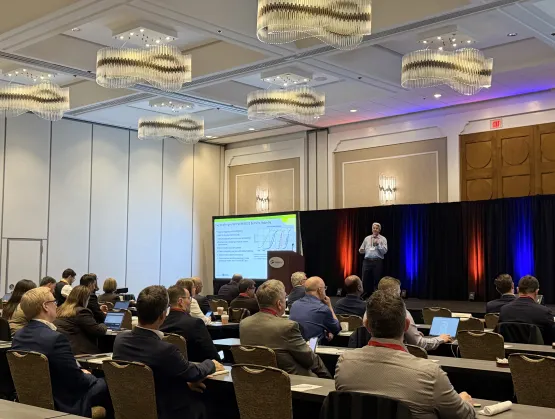
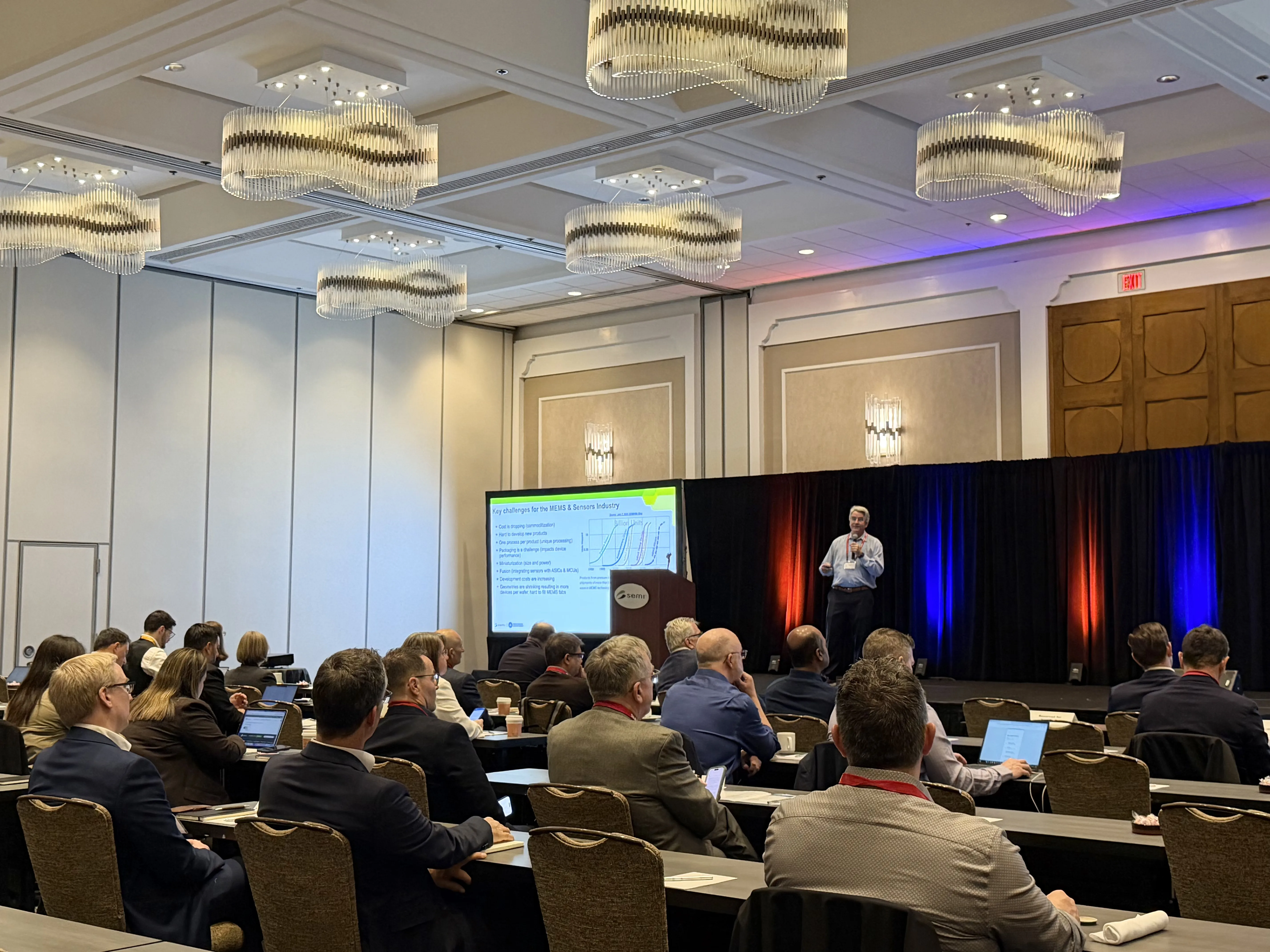
The artificial intelligence revolution has a dirty little secret: for all its "brain" power, AI and autonomy are hopeless without the hardware that connects them to the physical world. Today’s semiconductor-related blockbuster tech topics like autonomous humanoid robots, Edge AI, self-driving cars, and lights-out fabs all depend on a variety of sensing modalities and enabling technologies (from MEMS to photonic and others). The 2026 MEMS Sensors Executive Congress (MSEC) gathered industry leaders to discuss how sensors continue to evolve from simple sensing components to the essential “eyes and ears” of a global, AI-driven transformation.The Sensor Industry is ShiftingMarcellino Gemelli of Bosch Sensortec took a retrospective approach during the Leadership Roundtable starting with the statement “to understand where we are going, we have to look at where we’ve been.” While logic and memory chips scaled rapidly, sensors faced a different reality:Commoditization: Rapid price erosion in high-volume markets like mobile.The "One Process, One Product" Curse: Unlike standard CMOS, every new MEMS device historically required a unique manufacturing flow which results in high development costs.Hard to fill MEMS Fabs: Geometries are shrinking resulting in more devices per waferPackaging: A challenge because it directly impacts device performanceSensor Fusion: Integrating sensor components with ASICs and MCUs to create smart sensorsAccording to Maximize Market Research, the global sensor market is predicted to have an 8.7% CAGR from 2024 through 2030. There is a fundamental realization about sensors: the next stage of autonomous manufacturing and intelligent systems cannot exist without high-fidelity, real-time sensor data from the edge. This was a common theme throughout MSEC. Data presented at MSEC by Pierre-Marie Visse of Yole Group shows the global MEMS market is projected to grow more slowly with a 3.7% CAGR over the same time frame, with higher growth predicted for automotive, industrial, and medical applications.The Leadership Roundtable, featuring executives from Bosch, Infineon, STMicroelectronics, and Rogue Valley Microdevices, highlighted the strategic roadmaps that will define the next decade, echoed by others during other technical presentations:The Edge of Perception: AI is pushing sensing technologies to process data within the sensor itself and not in the cloud, reducing latency and power consumption while improving privacy.Autonomous Manufacturing: Leaders like John Behnke (INFICON) and Edvard Kälvesten (Silex) mapped out the path toward “Autonomous Fabs,” where sensors allow tools to communicate and self-optimize with minimal human intervention.Emerging Modalities: Beyond traditional motion and pressure sensing, MSEC spotlighted the rise of Quantum sensors for resilient navigation and Photonics combined with MEMS for ultra-precise inertial sensing.From “Parts” to “Interfaces”A recurring theme throughout the congress was the death of the "sensor as a part" mentality. In his keynote, Kurt Busch (Syntiant) argued that sensors plus AI models are becoming the default interface layer for products.“The next-generation interface is not a screen. It is the physical world, captured by sensors, interpreted by models, and delivered through natural interactions,” said Busch.This shift is visible in the rapid adoption of Edge AI integration, the development of humanoid robots, autonomous drones and vehicles, and AI enabled smart glasses—rewriting what the human machine interface looks like.Conclusion: Sensorizing the FutureWe are no longer just building devices; we are building an “industrial AI operating system” that connects the digital and physical world. This all starts with sensors. By 2030, the most valuable AI won't just be the one with the biggest brain, it will be the one with the best senses.If you are a leader in the field of MEMS Sensors, let your voice move the industry needle by becoming a SEMI and MEMS Sensors Industry Group (MSIG) member company and getting involved with MSIG. MSIG will be hosting the MEMS Sensors Technical Congress (MSTC) on September 16-17 at SEMI HQ in Milpitas, CA. Engineers and technical executives will dive deep into new technology and processes that advance the sensor industry. To learn more or to be a part of the fascinating world of MEMS Sensors visit the SEMI MSIG website.Paul Carey is Director, MSIG at SEMI. Rafael Tudela is Senior Technical Marketing Manager at SEMI.
Read More
With microelectronics manufacturing increasing in complexity and facing more cybersecurity threats, the SEMI International Standards Program has made crucial progress on efforts to address these challenges and others, in the first quarter of 2025. MEMS manufacturing readiness and cybersecurity came into sharp focus with the introduction of SEMI Standard MS15 - Guide to MEMS Manufacturing Readiness Levels. In addition, this quarter saw the opening of the public commentary period for a SEMI-led semiconductor manufacturing cybersecurity profile, developed for the National Institute of Standards and Technology’s (NIST) Cybersecurity Framework (CSF) 2.0. Through collaborative efforts, we held a successful North America Standards Winter Meeting in February, co-hosted a MEMS webinar, and published over 15 new and revised standards in areas such as equipment automation software, facilities, materials, and more.With exciting developments still to come, we’re looking forward to a wonderful year ahead.MEMS Manufacturing Readiness This March, SEMI unveiled its new standard, SEMI MS15 – Guide to MEMS Manufacturing Readiness Levels. This standard offers readiness level definitions, processes, and practices for creating MEMS products that meet targeted specification performance, quality, cost, and time-to-market. This standard is broken into eight distinct levels that cover basic research, all the way through high-volume production. Prior to the official release of SEMI MS15, we held a webinar that previewed how MEMS Manufacturing Readiness Levels will facilitate efficient MEMS development. Led by co-chair, Michelle Bourke of Lam Research, the SEMI MEMS Sensors Industry Group (MSIG) hosted a webinar featuring MEMS experts from SoftMEMS, HP, Teledyne MEMS, and Polar Semiconductor. Speakers shared insight into creating a structured and balanced MEMS manufacturing approach to drive successful products to commercialization. Cybersecurity Resilience Like 2024, cybersecurity remains pertinent in 2025. Last October, SEMI introduced SEMI Standard E191 and its subordinate standard, SEMI E191.1 to help define cybersecurity status information reporting. SEMI E191 and E191.1 join SEMI’s existing cybersecurity standards, SEMI E187 and E188. Last year also saw the development of the NIST CSF 2.0 Semiconductor Manufacturing Profile under SEMI’s Semiconductor Manufacturing Cybersecurity Consortium (SMCC). In partnership with NIST, SMCC advanced a community profile for CSF 2.0 that will serve as a cybersecurity framework specific to semiconductor manufacturing. The profile opened for public commentary between February 27 and May 30, with the final version slated for official release in Q3 of this year.As the semiconductor industry becomes increasingly reliant on digital technologies, we will continue to prioritize cybersecurity standards and initiatives essential for safeguarding the global supply chain.North America SEMI Standards Winter MeetingsFrom February 24 to 27 at SEMI’s headquarters, leaders from 11 committees and over 40 task forces collaborated on new and revised standards and safety guidelines for environmental, health, and safety, equipment automation and software, liquid chemicals, traceability, and more. Three SEMI Standard draft documents that were reviewed at the North America SEMI Standards Fall Meetings last November have also been approved and published. In addition to SEMI MS15, SEMI F122 – Guide for Facilities Data Package for Manufacturing Equipment Installation and Building Information Modeling, and SEMI E193 – Specification for 300 mm Film Frame FOUP (FFF), have also been approved and published. SEMI F122 suggests formats for reporting facilities data required to plan, prepare, model, and optimize a facility for the installation of manufacturing equipment by fab owners and manufacturing equipment customers. SEMI E193 drives consistent implementation of interfaces for film frame carriers that are compact and work with existing 300 mm FOUP standards and BOLTS interfaces. These standards are now available for purchase. The North America SEMI Standards Summer Meetings will take place from June 2-5 at SEMI’s Milpitas, California headquarters. Some technical committees and task forces may meet virtually outside of this meeting set – check the SEMI Standards calendar of events for updates!Standards Introduced in Q1 2025New and revised standards released in Q1. January 2025 standards: https://store-us.semi.org/collections/standards/lang-english+stdpbc-0125February 2025 standards: https://store-us.semi.org/collections/standards/lang-english+stdpbc-0225March 2025 standards: https://store-us.semi.org/collections/standards/lang-english+stdpbc-0325TestimonialsHear from Doug Suerich, Director of Marketing at PEER Group, how his work is helping shape smart manufacturing standards and global cybersecurity policies through our powerful collaborative platform. Get InvolvedSEMI Standards development activities take place throughout the year in all major manufacturing regions. To participate, join the SEMI International Standards Program.SEMI Standards are available through Individual Download purchases or online via SEMIViews. Sign up for a 30-day SEMIViews trial.For more information, please visit the Standards website and events page. For any questions regarding SEMI Standards activities, please contact your local SEMI Standards staff. Paul Trio is Director of Standards at SEMI.
Read More
The sensor revolution is shaping the future of connectivity, with innovation in MEMS and imaging technologies paving the way for a smarter and more integrated world.As the world becomes increasingly interconnected, MEMS and imaging sensor technologies are driving transformative changes across industries, shaping the future of connectivity, intelligence, and sustainability. Powered by advances in miniaturization, AI integration, and sustainable design, MEMS and imaging technologies are enabling groundbreaking applications—from autonomous vehicles to wearable health devices—while addressing urgent global challenges like climate change and energy efficiency. At the MEMS Imaging Sensors Summit 2024, Laith Altimime, President of SEMI Europe, emphasized the pivotal role of MEMS and imaging technologies. Setting the stage for discussions on technological breakthroughs and market trends, Altimime remarked, “Sensors are at the heart of the next wave of innovation, enabling unprecedented levels of intelligence that are transforming industries and fostering a smarter, more sustainable, and seamlessly connected future.”Laith Altimime, President, SEMI EuropeStefan Finkbeiner, CEO of Bosch Sensortec, underscored in his opening keynote how advanced sensor technologies are enabling life-changing use cases. “Sensors are all around us, though we don’t always notice them,” emphasizing sensors’ ubiquitous role in smartphones, wearables, and hearables. Finkbeiner highlighted miniaturization as a key challenge, noting that even as sensors continue to shrink, they are increasingly integrated with edge AI to enable efficient, local decision-making.Stefan Finkbeiner, CEO, Bosch SensortecSimone Ferri, APMS Group Vice-President and MEMS Sub-Group General Manager at STMicroelectronics, highlighted the pivotal role of sensors as a bridge between the physical and digital world, noting “the most sophisticated machine is the human – so it is best to emulate human capabilities to enable the next generation of devices to accurately measure the parameters of your body.” Ferri stressed the importance of sustainability, advocating for smart, transformative, and precise sensors that provide meaningful data with optimal efficiency. By aligning technological innovation with environmental responsibility, Simone Ferri demonstrated how sensorization can enhance lives while enabling a net-zero transition across industries.Simone Ferri, APMS Group Vice-President and MEMS Sub-Group General Manager, STMicroelectronicsMEMS Growth Fueled by Piezo Materials and ElectrificationJean-Christophe Eloy, CEO and President of Yole Group, grounded the discussion in market data, forecasting a 5% CAGR for the MEMS market, which is set to exceed $20 billion by 2029. He highlighted key trends such as the increasing sophistication of automotive sensors—more cameras, higher resolution—and the impact of electrification. On the technology front, Eloy noted a “strong shift towards piezoelectric (piezo) MEMS,” driven by advancement in new materials like Lead Zirconate Titanate (PZT), Aluminum Nitride (AIN), and Scandium-doped Aluminum Nitride (ScAIN).Jean-Christophe Eloy, CEO and President, Yole GroupAlissa Fitzgerald, CEO of A.M. Fitzgerald Associates explored the expanding roles of MEMS technology in new domains, such as fiber optics for data centers. “Photonics is in the news,” she remarked, highlighting its potential to deliver 40% power savings compared to copper technologies. “MEMS manufacturing is set to evolve by 2030 and beyond,” said Fitzgerald, emphasizing the continued innovation in traditional wafer-based processes through the adoption of advanced thin-film materials like piezoelectrics and GaN. Furthermore, Fitzgerald discussed emerging manufacturing techniques such as 3D-printed MEMS and biodegradable materials to enable low-cost, sustainable sensors.Alissa Fitzgerald, CEO of A.M. Fitzgerald AssociatesAdding to the conversation on manufacturing, Jessica Gomez, CEO of Rogue Valley Microdevices, shared her perspective on how 300mm-capable MEMS foundries could “change the game,” improving production efficiency and lowering costs. Gomez also outlined the unique challenges of MEMS manufacturing, including the need for custom processes and the high-mix, low-volume nature of production.Advancing Smart Mobility Through Interoperable NetworksSmart mobility gained significant traction as Patrice Ancel, In-Vehicle Technologies Leader at BMW, tackled the intricacies of in-vehicle networking. Ancel shed light on the complexities of today’s vehicles, which contain 20,000 components and over 100 electronic control units (ECUs) from multiple suppliers. His message was clear: “Interoperability is key for us; without interoperability, none of this will happen.” Ancel’s call for collaboration resonated throughout the summit, highlighting the critical role of teamwork in driving innovation and progress within the automotive industry.Patrice Ancel, In-Vehicle Technologies Leader, BMWA Vision for the Future: Sustainability, Collaboration, and InnovationThe MEMS Imaging Sensors Summit demonstrated how collaboration, sustainability, and innovation are driving the sensor industry forward. From addressing market trends to tackling manufacturing challenges, the discussions revealed a shared commitment to creating a smarter, more connected world.On behalf of SEMI, the SEMI Europe team would like to thank the industry leaders whose expertise and enthusiasm made this summit a resounding success. SEMI ContactAna Bernardo, Manager of Technology ProgramsEmail: [email protected] Mobile: +49 175 4129 764Sitong He, Communications Manager Email: [email protected]: +49 151 5546 2638
Read More
With increasing demand for personalized smart devices, the MEMS and sensor market is undergoing rapid transformation. MEMS sensors are the backbone of smart wearable devices, seamlessly integrating multiple functions to monitor and simplify our day-to-day activities. As applications in healthcare, environmental tracking, and AR/VR expand, the need for ultra-compact, energy-efficient, and intelligent sensors is more critical than ever.In an exclusive conversation with SEMI, Stefan Finkbeiner, CEO of Bosch Sensortec, shared his perspective on the dynamic landscape of MEMS sensor technology. From Bosch’s evolution to a solutions provider with a focus on sustainability and market-driven innovations, Finkbeiner offered a deep dive into how Bosch Sensortec is positioning itself at the forefront of the industry. “We have to think in terms of the end application and determine what the right hardware and software configuration should be in order to provide solutions with the greatest benefit and flexibility.”Further insights into the future of MEMS and sensor technology will be shared by Finkbeiner during his keynote at the SEMI MEMS Imaging Sensors Summit on November 14, 2024, in Munich, Germany. Registration is still open.SEMI: Welcome, Stefan, and thank you for sharing your insights on advanced sensor technologies. Let’s start with a personal question: What motivates and inspires you about working in sensor technology?Finkbeiner: Sensor technology is very diverse and has significant impacts on consumers. We take pride in prioritizing consumers’ needs and benefits. True to the Bosch motto, “Invented for life,” we are committed to making life better, easier and healthier. This is demonstrated in our sensing solutions, which provide valuable data for fitness tracking in smartwatches, enhance the audio experience in hearables, and enable real-time monitoring of air quality to help individuals make informed decisions for a healthier environment. I am fascinated by technology advancements that are enabling the scaling of sensors—and the processing power and intelligence packed into these increasingly compact devices. For instance, our latest acceleration sensors for hearables are the smallest in the world and are nearly invisible at just 1.2 x 0.8 x 0.55 mm³.We leverage innovative wafer level chip scale packaging (WLCSP) to achieve this reduced form factor. These compact, feature-rich, high-performance accelerometers are easier to integrate in the latest generation consumer products where size and functionality are critical requirements.SEMI: How has Bosch Sensortec’s approach evolved over the years and what is the company’s primary focus today? Finkbeiner: We began our success story a few years ago as a hardware supplier, with one of our first applications being the 'Portrait-Landscape' function in smartphones. Over time, we’ve evolved into one of the leading providers of MEMS sensors.Today, we no longer see ourselves purely as a sensor manufacturer, but as a technology solutions provider. Our focus has shifted to think in terms of the end application and determine what the right hardware and software configuration should be to provide solutions with the greatest benefit and flexibility.Achieving this requires significant software and artificial intelligence (AI) development. In essence, we are optimizing software through self-learning models. Hardware remains essential for optimizing power consumption, with most sensors integrating a controller alongside the ASIC to enable seamless software integration.This unique software and hardware configuration unlocks exciting possibilities and broadens our market reach. We see significant growth in head-mounted devices, and we are actively working on related acoustics solutions.SEMI: Looking ahead, what trends do you anticipate will have the most significant impact on the MEMS sensors market?Finkbeiner: We see several trends that will significantly impact the MEMS sensor market. First, there is growing demand for personal health monitoring in consumer and mobile electronics. Wearable devices, in particular, are becoming essential tools for individuals to track their health and fitness status. This trend requires MEMS sensors to become even more accurate, with solutions that include sophisticated software algorithms to ensure reliability, accuracy, and reproducibility. As a result, AI and machine learning (ML) technologies will play a crucial role in enhancing sensor performance.A second important trend is the continued miniaturization of MEMS sensors. To meet customer demands, sensors must integrate more functionality, including edge-processing capabilities. For example, what once may have been a simple accelerometer with a step-counting algorithm is now evolving into a 6-axis Inertial Measurement Unit (IMU) with an integrated microcontroller and advanced AI/ML software. A great example of this is in True Wireless Stereo (TWS) earphones, where the IMU not only tracks steps but also enables complex tasks like dead reckoning and supports 3D audio—all within the tight constraints of a small TWS earbud housing. Low power consumption, as always, is a critical factor for these mobile devices to meet CE (Conformité Européenne) standards.Finally, we believe that smart glasses, augmented reality (AR) and virtual reality (VR) devices are poised to become the “next big thing.” These devices require advanced image projection optics that offer excellent optical quality, low weight, and ease of use to ensure consumer adoption. We believe our MEMS-based LBS (Laser Beam Scanning) solution is ideal for these applications. Additionally, the successful adoption of smart glasses hinges on high-performance MEMS sensors that are compact, accurate, and power-efficient—critical requirements for all-day wearability and functionality.These trends underscore the need for MEMS technology to evolve, integrating greater functionality, precision, and efficiency to meet the demands of next-generation consumer devices.SEMI: What are some of the biggest challenges facing the MEMS sensors industry today, and how can companies overcome them?Finkbeiner: One key challenge is that the smartphone market—arguably the most attractive market for a variety of MEMS and MOEMS sensors—has become more or less saturated. To stay competitive, MEMS companies must innovate existing products while also developing new, differentiated sensors and actuators for next-generation mobile products.SEMI: How is Bosch Sensortec supporting sustainability initiatives?Finkbeiner: We are helping to mitigate climate change with our low carbon footprint solutions.Up to 20% of annual global carbon emissions are caused by forest fires. This is equivalent to carbon dioxide emitted by all the vehicles driven worldwide. Our sensors can detect forest fires before they develop into wildfires by measuring various gases such as carbon monoxide and hydrogen. In parallel, we are working with our production partners to reduce our carbon footprint over the coming years, while also replacing or minimizing the use of environmentally hazardous chemicals, such as PFAS.SEMI: What are you most excited about for the MEMS Imaging Sensors Summit, and how do you think it will impact the European semiconductor industry?Finkbeiner: The European semiconductor industry has deep expertise in MEMS and sensor technologies, positioning it to make a significant impact in markets such as consumer health, optical sensing, and AR displays. By continuing to focus on sustainable solutions, we can drive even greater impact for the broader industry and secure Europe’s leadership in these growth sectors.I look forward to collaborating with industry peers at the Summit to define next steps needed to advance Europe’s leadership. The MEMS Summit is an invaluable opportunity to collaborate and drive progress, and I warmly invite my colleagues to join us in shaping the future of the European semiconductor industry.Dr. Stefan Finkbeiner Dr. Stefan Finkbeiner has been CEO and General Manager at Bosch Sensortec GmbH since 2012. He was born in 1966 in Freudenstadt, Germany. Stefan Finkbeiner held various senior positions at Bosch including Director of Sensor Marketing, Director of Corporate Research in microsystems technology, and Vice President of Sensor Engineering. He looks back on almost 30 years in semiconductor industry working in different positions related to sensor research, development, manufacturing, and marketing. Due to his wide experience in semiconductor and sensor industry, Stefan Finkbeiner is a recognized guest in panel discussions and as keynote speaker. SEMI ContactSitong He / Communications Manager, SEMI EuropeEmail: [email protected]: +49 151 5546 2638
Read More
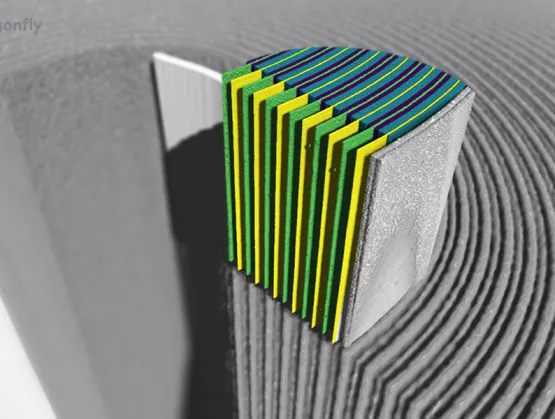
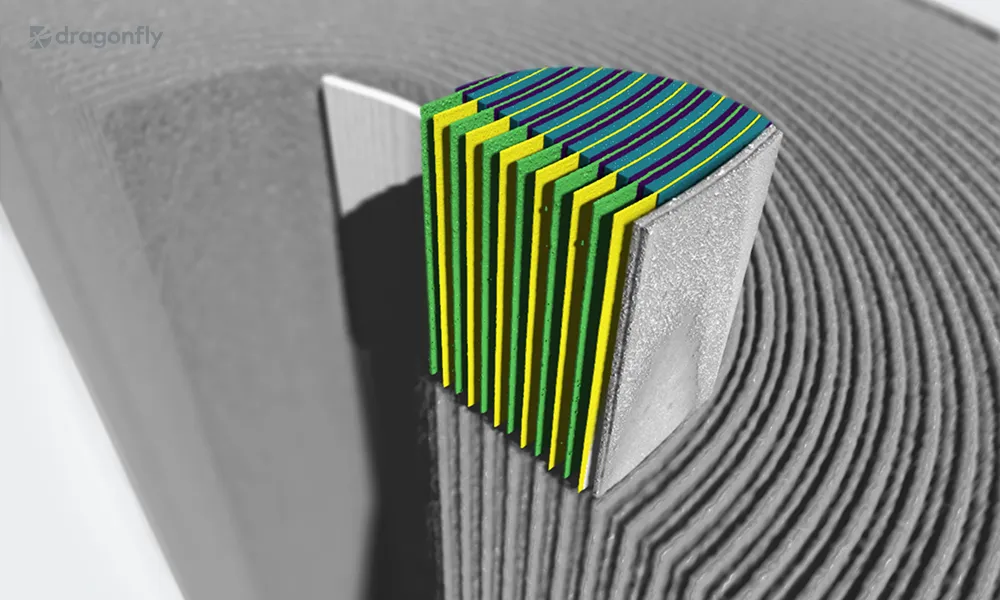
In today’s rapidly evolving semiconductor industry, ensuring both precision and efficiency in manufacturing has become an increasing challenge, particularly as advanced technologies like MEMS and AI chips push the boundaries of design and production. Inspection methods that were once sufficient are now falling short, making room for cutting-edge solutions powered by artificial intelligence (AI). The introduction of AI-driven 3D X-ray inspection technologies is transforming the landscape, offering manufacturers a sophisticated tool to ensure quality control, while driving sustainable production strategies.SEMI spoke with, Joscha Malin, Product Manager, and Daniel Stickler, R D Expert for X-ray Imaging at Comet AG, Industrial X-Ray System Division, to explore how AI-powered 3D X-ray inspection technologies are shaping manufacturing. They delve into how these technologies address critical challenges during inspections and defect analysis, using tools such as Dragonfly 3D World software for user-friendly, AI-driven insights that facilitate effective decision-making.Further insights into the application of AI-powered 3D X-ray inspection technologies and their role in advancing MEMS manufacturing will be presented by Stickler at the SEMI MEMS Imaging Sensors Summit on November 14, 2024, in Munich, Germany. Registration is now open.SEMI: Thank you both for agreeing to share your insights. To start, can you explain the importance of inspection strategies in the context of MEMS manufacturing?Malin: As MEMS devices become increasingly miniaturized and complex, effective inspection strategies are crucial. These strategies not only accelerate the wrap-up of production processes, but also significantly enhance product yield. With tighter tolerances and various materials involved, ensuring the integrity and functionality of each component is more critical than ever. A robust inspection strategy allows us to catch potential defects early, which can save time and costs associated with rework or scrap.Stickler: The evolution of MEMS technology, particularly in AI chips, demands a higher level of inspection sophistication. Traditional methods may fall short in providing the necessary detail and speed, which is why we’re focusing on advanced solutions like our AI-powered 3D X-ray inspection.SEMI: Could you elaborate on how the 3D X-ray technology differs from conventional inspection methods? Stickler: The 3D X-ray technology we utilize acts as a bridge between traditional optical methods and standard 2D X-ray inspection. It offers high-resolution, three-dimensional images without damaging the samples. 3D X-ray technology emphasizes three main benefits: clarity, efficiency, and actionable insights. This means we can obtain detailed images that help us analyze components more effectively, allowing for real-time decision-making.Malin: Moreover, the clarity and detail provided by the 3D X-ray images are critical when it comes to defect analysis in MEMS devices. They allow us to assess mechanical, electrical, and assembly errors in ways that conventional methods simply cannot. This leads to a more reliable production process.SEMI: What specific MEMS defects can be effectively analyzed using this technology?Stickler: There are several types of defects we can analyze. For instance, we can detect mechanical defects such as stiction or fractures, as well as electrical failures like short circuits. The 3D X-ray inspection allows us to visualize these defects in detail. Additionally, we can monitor assembly errors, which are particularly important in complex MEMS devices where misalignments can lead to significant issues.Malin: I’d like to add that early detection of these defects is paramount. The faster we identify issues, the quicker we can implement corrective actions, thereby improving overall yield and reducing production costs.SEMI: You mentioned yield improvement earlier. Can you explain how your technology contributes to that?Malin: Our approach supports process optimization by providing information on product characteristics and, for example, allows us to identify trends early on that may lead to yield issues later. We also aim to accelerate new product introduction in the early phase by rapid feedback, saving time and cost. This is crucial because many defects may not be apparent until later stages of production. With our technology, we can monitor samples in real-time, allowing us to react promptly to emerging challenges.Stickler: By integrating this feedback loop, we can significantly shorten the time to market for new products. This is particularly beneficial in industries where speed and efficiency are essential.SEMI: Can you tell us about Dragonfly 3D World software and its role in this process?Malin: Dragonfly 3D World is a user-friendly software that leverages AI and, specifically, deep learning for image processing. It enables users to efficiently perform bump metrology and defect identification, for example, without needing extensive expertise in the field. The software makes complex processes manageable, even for operators who may not be specialists in image processing.Stickler: Beside MEMS and advanced packaging in GPU production, this software is indeed an “AI-for-AI” application. By utilizing deep learning, users can train models that adapt to various imaging tasks, making the entire inspection process more efficient. The insights generated from the 3D X-ray images are automated, enhancing usability and streamlining workflows.SEMI: In conclusion, what are the key takeaways you’d like to share?Malin: The key takeaways are that AI-driven 3D X-ray inspection is transformative for the MEMS manufacturing process, enhancing inspection strategies and defect detection significantly. By integrating advanced technologies, we can ensure higher product quality and efficiency.Stickler: Yes, and I would emphasize the importance of powerful monitoring and non-destructive test tools. Our innovative solutions not only improve yield, but also pave the way for sustainable practices in manufacturing, ultimately benefiting the industry. Dr. Daniel SticklerDirector X-ray Technology Components at Comet AG, Industrial X-Ray System Division. Based in Hamburg, Germany, he holds a PhD in Physics from the University of Hamburg and has extensive experience in X-ray imaging, semiconductor X-ray applications and product innovations. Joscha MalinDirector Product Marketing Software Products at Comet AG, Industrial X-Ray System Division. Based in Hamburg, Germany, he holds a degree in Electrical Engineering with specialization in Semiconductors and profound experience in the industry. For over a decade, he has focused on developing X-ray inspection and metrology solutions, especially for the Semiconductor industry. SEMI ContactSitong He / Communications Manager, SEMI EuropeEmail: [email protected]: +49 151 5546 2638
Read More
With the rapid proliferation of electronics applications with more powerful embedded intelligence, demand for smarter, more efficient sensors is increasing to help devices connect to the world around them. As the semiconductor industry drives the future of connected technologies and sustainable solutions, it faces challenges in energy consumption, resource management, and ensuring data security.SEMI spoke with Simone Ferri, Vice President and General Manager at STMicroelectronics (ST), about current trends and challenges in the Micro-electromechanical Systems (MEMS) and imaging sensors market and how ST is driving innovation in this rapidly evolving industry. Ferri shared insights ahead of his keynote presentation at the SEMI MEMS Imaging Sensors Summit on November 14, 2024, in Munich. Registration is open.SEMI: Welcome, Simone, and thank you for sharing your perspective on the dynamics and trends for today’s MEMS and imaging sensors. To start, how would you describe the current market dynamics for these technologies, and what key factors are influencing these dynamics? Ferri: Right now, the MEMS and imaging sensors market is primarily driven by applications such as automotive electronics, consumer medical devices, AI-powered devices, and intelligent wake-up systems.According to Omdia, the MEMS market is projected to reach approximately $11 billion by 2027, with a CAGR of 2.8% from 2022 and 2027. Currently, automotive applications account for 50% of this market, with industrial at 15% and consumer at 35%. Notably, the automotive sector is the fastest growing, with a 5.4% CAGR, driven by the increasing use of inertial measurement units (IMUs) and microphones.In addition, Yole Group estimates that the imaging market, including optical sensing, will grow at a 4.7% CAGR between 2023 and 2029. Although mobile phone applications remain the primary driver of Complementary Metal-Oxide-Semiconductor (CMOS) image sensors (CIS) volumes, other sectors, including consumer electronics, automotive, and security imaging, are also contributing to the growth.Long-term forecasts for smartphone sales have been trending downwards, but mobile phones still remain a major driver of applications, innovation, and overall volume in the imaging market. Notably, the automotive imaging sector is one of the fastest growing markets and is expected to drive additional demand for CIS.Factors that influence the current market include global economic conditions, regulatory changes, geopolitical factors, technological innovations, and the emergence of new applications and use cases.SEMI: Can you elaborate on the growth strategies that STMicroelectronics is adopting to stay competitive in the MEMS and imaging sensors market? Ferri: ST has played a pivotal role in both the MEMS and imaging sensors markets for over two decades with its proprietary silicon technologies. We fully leverage our Integrated Device Manufacturer (IDM) business model, which allows us to support our customers through integrated capabilities for both design and manufacturing.To remain competitive, we are exploring new markets for MEMS sensors, particularly in digital healthcare with biosensors, where wearable devices are expected to exceed 500 million units per year by 2027.We’re focusing on the growing demand for automotive sensors such as accelerometers, Inertial Measurement Units (IMU), and pressure sensors, particularly with the rise of electric vehicles. We are enhancing the integration and synergy between automotive and personal devices. For example, we are combining high-g and low-g accelerometers within a single IMU, enabling accurate fall and crash detection, along with precise orientation and wake-up functionality.AI is another one of our priorities. In today's digitalized world, AI enables real-time, contextual understanding and the ability to make decisions that optimize and reduce the power consumption of the final device. Sensors are no longer merely for data collection. Thanks to AI, sensors can interact with their environment and significantly contribute to innovation and sustainability.We are also prioritizing low power consumption. Our MEMS technology operates in low-power mode with almost negligible energy use, activating only when necessary, without waking up the system to understand its environment or to be reconfigured.In addition, we’ve seen optical sensing continue to grow year over year. Optical sensing now offers features such as 3D capture, low-power and low-footprint computer vision, Near InfraRed (NIR) and even Short Wavelength InfraRed (SWIR).We are accelerating and leveraging our IDM model and broadband semiconductor supplier positioning to propose wider system offerings based on the array of sensors and microprocessors that ST develops. As the world shifts toward widespread use of sensors and data collection, the demand for secure sensing technologies is growing, extending beyond mobile and PC applications to spatial computing and AR/VR environments. For example, if we are talking about recognizing specific persons in an AR environment, we don't want the data related to these persons to be sent to the cloud before a decision is made about whether they are supposed to be there or not, as such information can be intercepted. We want all the data to be managed at sensor level and only a warning of rejection or acceptance to be transferred outside our secure sensor. SEMI: What are some of the latest technological innovations in MEMS and imaging sensors that are shaping the industry? Ferri: In MEMS, we're seeing significant advancements in three key areas:- In-sensor AI is integrating technologies in the sensors such as machine learning core (MLC), adaptive self-configuration (ASC), and intelligent sensor processing units (ISPU).- Open sensors are designed to interface seamlessly with other sensors, allowing third parties to benefit from on-sensor processing innovations, while building an ecosystem to create joint value with customers.- Accurate sensors are providing high-precision data, enabling better decision-making and smoother, more natural user interactions. These sensors also reduce factory calibration time and resources, leading to overall lower energy consumption. Because of their accuracy, onboard MLC, and ASC, the sensors can also reconfigure themselves without interaction with the processor, thus guaranteeing the proper accuracy at lower power consumption, at any time, under any condition.In the imaging sensor market, key trends include:- Higher Pixel performance is leading to improved signal-to-noise ratio (SNR), low light performance, better quantum efficiency (QE) and lower noise performance. Despite post processing, pixel performance remains the key factor as SNR performance must remain high while the pixel shrink roadmap advances.- Embedded Intelligence is providing local processing for local decision making, enhanced security, advanced image sensor processing (ISP) for improved image quality, and fusing sensor functions to deliver a better user-experience.- "Always on" capabilities are supporting mass sensorization and deployment of optical sensing solutions everywhere through specific low-power design techniques, process development, and overall system architecture optimization.SEMI: Looking toward the future, what trends do you anticipate will have the most significant impact on the MEMS and imaging sensors market? Ferri: Some macrotrends for sensors include:Electrification: Certain consumer and industrial applications are now being adopted in the automotive sector, especially with the rise of electric vehicles creating new opportunities for innovation and for new players to enter the market. As example, the predictive maintenance that has been developed for industrial electric motors is ported 1:1 to electric vehicles.AI: Regarding data transmission, distributed architecture will push AI towards edge computing, increasingly supported by advancements in 6G and foldable technologies. Additionally, as AI becomes more integrated, the maintenance and security for AI will require more attention.Smart home, buildings, and cities: As cities grow, the demand for smart homes and buildings rises, requiring more sensors to manage energy, security, and urban infrastructure efficiently. Over 55% of the global population and 70% of the EU population reside in cities. Urban areas generate more than 80% of the world’s GDP, and by 2030, it's anticipated that 68% of the global population will be urban dwellers, pointing to the growing need for smart cities.Aging population and digital health: The integration of biosensors with MEMS technology will be crucial for addressing the needs of an aging population.Overall, the use of image sensors for environmental sensing is steadily increasing. This is a major focus for ST, particularly in 3D sensing. New use cases, such as presence detection, are enhancing security and reducing power consumption due to efficient data processing. Additionally, the average number of cameras in smartphones, automobiles, and even in devices like robots and vacuum cleaners, continues to grow.SEMI: What has STMicroelectronics been working on, and what are your plans for the upcoming years? Ferri: To date, we have shipped over 23 billion MEMS sensors. Still, we remain committed to continuously improving our products and enhancing our MEMS technology in terms of affordability, miniaturization, performance, and novelty. We are striving to set the stage for a future defined by innovation and excellence with:Evolution of our current product portfolio by investing in lower power consumption, lower supply voltage, and additional and more sophisticated in-sensor AI for an effective distributed AI conceptNew sensors for presence detection, like infrared (IR) sensors, and health-focused sensors such as biosensors.MEMS sensors are also becoming increasingly accurate, open towards different ecosystems of technologies, and so intelligent that they can self-configure and reduce power consumption thanks to optimal data processing. These attributes allow us to provide meaningful and sustainable solutions across sectors such as automotive, industrial, infrastructure, and personal electronics, enabling us to improve energy efficiency, reduce waste, and support sustainable practices for a greener planet.For the past 10 years, ST has focused on depth sensing across multiple use cases. Today, ST is the number one in the world for time-of-flight solutions through our ST FlightSense product family. More recently, we launched our global shutter image sensors family, ST BrightSense, to address markets like personal electronics, automotive, industrial, communications equipment, and computers and peripherals.More specifically on the automotive side, we have the portfolio, customers, and customer program awards to lead the driver and occupancy monitoring market. We continue to secure design wins from our growing customer base while we expand our product portfolio and broaden our customer and application footprints.SEMI: What are some of the biggest challenges facing the MEMS and imaging sensors industry today, and how is ST addressing them? Ferri: The MEMS and imaging sensors industry faces several challenges, but with strategic planning and innovative solutions, companies can overcome these obstacles by focusing on the following:Integration: With our biosensors, we are doing more with less space. For example, in a standard accelerometer, we integrate an analog front end for electrocardiogram (ECG) analysis, enhancing functionality without increasing the device footprint.Performance enhancement: Ensuring high performance and reliability in various environmental conditions is crucial, especially in automotive and healthcare applications. To meet these demands, we deploy comprehensive testing protocols to ensure our sensors meet performance and reliability standards.Power efficiency: Reducing power consumption is vital, particularly for battery-operated devices like smartphones and IoT devices. We are developing low-power architectures to address this need.Data security: With the growing use of imaging sensors in surveillance and personal devices, data security and privacy have become paramount. Our solutions include encryption for data transmission and storage, as well as robust access control mechanisms to prevent unauthorized access to sensor data.Additionally, supply chain issues remain a significant challenge today. We believe our strategy and capacity as an IDM, combined with our strong innovation capabilities, give us a competitive edge in supply chain management.SEMI: What are you most looking forward to at the MEMS Imaging Sensors Summit, and what does it mean for the European semiconductor industry? Ferri: I look forward to the Summit as a valuable opportunity to connect with industry peers, share insights, and explore new collaborations. I encourage my peers to attend, as it’s a unique platform to collectively shape the future of our industry and sustain Europe’s leadership in semiconductor innovation. About Simone FerriSimone Ferri is Vice President of APMS Group and General Manager for MEMS sub-group at STMicroelectronics. Ferri began his career in STMicroelectronics in 1999 as an R D engineer before becoming a digital designer for the company’s audio division, leading into product management after 5 years. In 2014, ST entrusted Ferri with MEMS consumer sensors followed by global MEMS-sensor related Marketing and Application activities across all markets and segments, leading into his current role. Ferri graduated with a degree in microelectronics from Politecnico di Milano (Polytechnic of Milan), where he also completed his MBA. Sitong He is Marketing and Communications Manager at SEMI Europe.
Read More