downloadGroupGroupnoun_press release_995423_000000 copyGroupnoun_Feed_96767_000000Group 19noun_pictures_1817522_000000Member company iconResource item iconStore item iconGroup 19Group 19noun_Photo_2085192_000000 Copynoun_presentation_2096081_000000Group 19Group Copy 7noun_webinar_692730_000000Path
Skip to main content
Default Banner Image

STMicroelectronics

As the semiconductor industry continues to advance, effective quality management is increasingly essential. The SEMI Quality Benchmarking Consortium (QBC) brings together leading companies to exchange best practices, benchmark performance, and promote collective improvement across the global semiconductor landscape. The last QBC meeting was hosted by Bill Lechten of Micron at their headquarters in Boise, Idaho. Representatives from GlobalFoundries, Infineon Technologies, STMicroelectronics, NXP Semiconductors, and Texas Instruments came together for two days of in-depth discussions and knowledge sharing.The session began with an overview of Micron’s global business and manufacturing footprint. The company reported record revenue of $37 billion in 2025 and currently hold more than 60,000 patents. Micron is investing approximately $150 billion in U.S.-based DRAM manufacturing, which is expected to generate around 90,000 direct and indirect jobs. The QBC operates on a “give-to-get” philosophy where members must actively contribute survey responses and participate in open discussions to access shared benchmarking data. This meeting focused on three topics: risk management, customer return, and product change notification. Participants presented their approaches, shared lessons learned, and engaged in roundtable discussions to identify best-known methods and address common challenges. Customer Returns and Failure AnalysisThe group reviewed processes for handling customer returns and failure analysis. Discussions covered escalation protocols, data-driven versus physical failure analysis, sampling strategies, and customer acceptance challenges. Members shared approaches to closure criteria, complaint prioritization, and using FA and complaint data for trend analysis and continuous improvement. Local support models and the balance between cost, proximity, and specialized lab capabilities were also key topics.Product Change Notifications The consortium explored industry-wide PCN practices, focusing on notification volume, approval processes, and customer expectations. Companies highlighted distinctions between PCN (requiring approval) and CIN (informational) and the challenges of handling multiple changes per notification. Participants shared strategies for managing customer approvals, sample delivery, and internal tracking, including phased notifications and customized communication. Standardization efforts were discussed, such as adopting the JDEC XML schema, while balancing operational efficiency with contractual obligations and customer requirements.Risk ManagementMembers discussed structured approaches to quality and qualification risk, including product grade classification and risk assessment methodologies like FMEA and QRA. Emphasis was placed on assessing end-user system complexity, mission profiles, and application-specific requirements, especially for automotive and AI workloads. Organizations shared practices for transparent customer communication, balancing speed and risk, managing residual risk, and integrating qualification with change management. AI and data analytics were highlighted as emerging tools to support predictive risk assessment and continuous improvement.AI and Digitalization in Quality ManagementArtificial intelligence is becoming a growing focus for semiconductor quality teams. Companies shared early-stage AI initiatives. Based on survey results and discussion, consortium members agreed to establish a working group to explore AI uses cases in risk assessment for change management and new product introduction. Looking AheadWith growing complexity in semiconductor technologies, industry collaboration is vital. Through open discussions and benchmarking, the SEMI Quality Benchmark Consortium enables companies to share knowledge, identify best practices, and address common challenges. The consortium will continue its work at the upcoming meeting to be hosted by Texas Instruments in Dallas, Texas. (From Right to Left) – Karim Somani (SEMI), Sarah Shen (SEMI), Mark da Silva (SEMI), Ivo Clerici (GlobalFoundries), Wesley Hirsch (TI), Roberto Lissoni (STMicroelecetronics), Lou Cerra (NXP), Jens Luepke (Infineon), Bill Lechten (Micron), Fern Yoon (Texas Instruments)Sarah Shen is Senior Coordinator, MEMS Sensors Industry Group at SEMI.
Read More
The semiconductor industry continues to push the boundaries of innovation, making quality management more critical than ever. To address these challenges, SEMI Quality Benchmarking Consortium (QBC) brings together leading companies to share best practices, benchmark performance, and drive collective improvement across the global semiconductor ecosystem.The latest QBC meeting was hosted by Roberto Lissoni of STMicroelectronics at their Agrate site near Milan, Italy. Representatives from Bosch, GlobalFoundries, Infineon, Micron, NXP, and Texas Instruments gathered for two days of deep discussion and knowledge exchange. (From Right to Left) – Roberto Lissoni (STMicroelecetronics), Giorgio Cesana (STMicroelectronics), Fern Yoon (Texas Instruments), Jens Luepke (Infineon), Mark da Silva (SEMI), Kerstin Nocke (Bosch), John Lepper (GlobalFoundries), Bill Lechten (Micron), Lou Cerra (NXP)With over 5,000 employees, ST’s Agrate facility is the company’s largest in Italy, with a strong commitment to innovation through university collaborations. The site includes both 200mm and 300mm wafer fabs, R D centers, and product development teams. STMicroelectronics Agrate, ItalyThe QBC operates on a “Give-to-Get” philosophy: members must actively contribute survey responses and participate in open discussions to access shared benchmarking data. This meeting focused on four topics: zero defect customer satisfaction, safe launch, knowledge management, and organizational comparisons. Participants presented their approaches, shared lessons learned, and engaged in roundtable discussions to identify best-known methods and address common challenges. Zero Defect and Continuous ImprovementParticipants explored the evolving definition of “zero defect,” emphasizing that it’s not about literal perfection, but about meeting customer commitments and requirements. Quality programs are multi-year, cross-functional initiatives, often embedded in broader operational excellence campaigns. Companies leverage KPIs such as parts per million, cost of nonconformance, and customer satisfaction. They tie these metrics to incentive programs and executive reporting. Continuous improvement is driven by Lean, Six Sigma, and employee engagement, with a strong focus on early detection (“shift left”), cross-functional teams, and digital tools for analytics and feedback. Customer Satisfaction and ScorecardsCustomer scorecards and surveys are central to measuring satisfaction, with processes varying by region and account type. Most organizations use a mix of manual and automated systems to collect, review, and act on scorecard data, supplementing these with relationship and transactional surveys. AI and predictive analytics are emerging tools for anticipating customer feedback and improving proactive management, though data security remains a priority. Safe Launch and Risk ManagementThe QBC companies shared decision criteria, risk assessment methodologies (FMEA, TRA), and enhanced control plans for new products and technologies. Cross-functional collaboration is key, with product quality managers accountable for planning and reporting. Digitalization and integration with manufacturing execution systems (MES) are advancing, and there’s growing interest in leveraging AI for risk assessment and process optimization. Knowledge Management and Lessons LearnedKnowledge management remains a challenge, with most companies relying on distributed databases, expert teams, and informal networks. They are piloting structured lessons learned forums, audit systems, and semantic search tools to improve findability and reuse. Effective knowledge management happens when insights are embedded directly into business processes, supported by continuous review and governance. Looking Ahead: AI, Predictive Quality, and ExpansionThe consortium plans to explore topics such as artificial intelligence, predictive quality management, and secure data sharing through dedicated sessions and working groups, with a focus on practical applications and insights from external subject matter experts.Read about the first QBC meeting hosted by Infineon here. Sarah Shen is Senior Coordinator, MEMS Sensors Industry Group at SEMI.
Read More
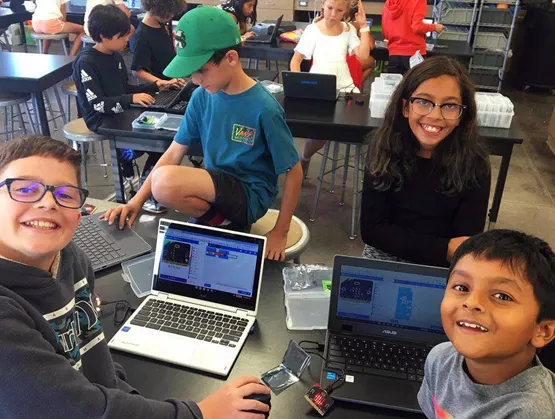
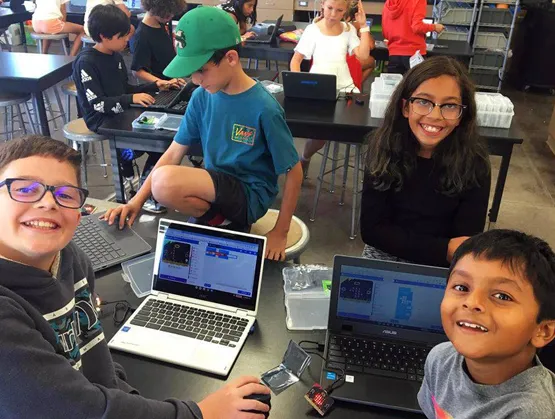
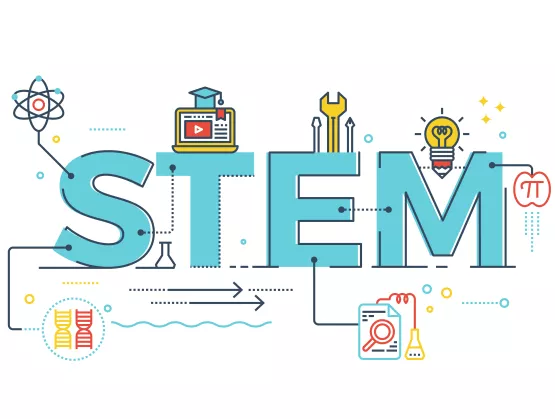
As the semiconductor industry continues to evolve, successful workforce development initiatives are becoming increasingly essential. In Malaysia, around 60,000 new engineers are needed to support the country’s plans for industry growth. However, despite the rising need for new engineering talent, student interest for STEM in Malaysia is declining. Women in particular, are even less likely to consider careers in engineering fields than their male counterparts, and this holds true worldwide. One reason is due to gender biases that form around STEM in early childhood. The Journal of Applied Developmental Psychology found that boys are more likely to consider themselves “good” at STEM, and this stereotype is later reinforced by male dominance within STEM classes. To mitigate the talent shortage, and to encourage more young women to consider STEM careers, STMicroelectronics created its "STEM your way" initiative. This program supports STEM education throughout Malaysia, as well as all other countries that STMicroelectronics operates in. Through STEM your way, STMicroelectronics shares its passion for science and electronics with today’s primary and high school students. Over the last three years, STEM your way has reached nearly 70,000 students globally. To address the STEM gender disparity in Malaysia, SEMI Southeast Asia (SEA) has been proudly collaborating with STMicroelectronics since 2023 on its ST Maur GEMS program, as part of STEM your way. The girls in engineering, mathematics, and science (GEMS) program is foundational for developing future engineering talent and sparking STEM interest among female students. One of SEMI SEA’s first GEMS program initiatives was a “train-the-trainers” session, where SEMI SEA representatives shared creative approaches for teaching STEM-focused course material. This involved the use of Circuit Scribe and Micro:bit Smart Science IoT kits to make lessons tactile, engaging, and memorable. These interactive teaching aids form the basis of a “STEM kit,” and as of today, SEMI SEA and STMicroelectronics have sponsored roughly 200 kits. These efforts culminated in December 2024 during the GEMS IoT Challenge at Universiti Technikal Malaysia Melaka, where 68 students from 17 primary schools showcased their innovative projects. Students demonstrated their technical knowledge and creativity by coupling Micro:bit IoT kits with AI cameras, Wi-Fi modules, servomotors, and more, with the intention of solving day-to-day problems. Posters of students’ solutions at the IoT ChallengeWith the collaborative success of the ST Maur GEMS program, SEMI SEA is excited to help scale the challenge to include additional countries. To partner with SEMI SEA to bring STEM education opportunities to Southeast Asia, please contact Cecelia Fong at [email protected]. SEMI Southeast Asia ContactCecelia Fong, Technology Programs ManagerEmail: [email protected]
Read More
With the rapid proliferation of electronics applications with more powerful embedded intelligence, demand for smarter, more efficient sensors is increasing to help devices connect to the world around them. As the semiconductor industry drives the future of connected technologies and sustainable solutions, it faces challenges in energy consumption, resource management, and ensuring data security.SEMI spoke with Simone Ferri, Vice President and General Manager at STMicroelectronics (ST), about current trends and challenges in the Micro-electromechanical Systems (MEMS) and imaging sensors market and how ST is driving innovation in this rapidly evolving industry. Ferri shared insights ahead of his keynote presentation at the SEMI MEMS Imaging Sensors Summit on November 14, 2024, in Munich. Registration is open.SEMI: Welcome, Simone, and thank you for sharing your perspective on the dynamics and trends for today’s MEMS and imaging sensors. To start, how would you describe the current market dynamics for these technologies, and what key factors are influencing these dynamics? Ferri: Right now, the MEMS and imaging sensors market is primarily driven by applications such as automotive electronics, consumer medical devices, AI-powered devices, and intelligent wake-up systems.According to Omdia, the MEMS market is projected to reach approximately $11 billion by 2027, with a CAGR of 2.8% from 2022 and 2027. Currently, automotive applications account for 50% of this market, with industrial at 15% and consumer at 35%. Notably, the automotive sector is the fastest growing, with a 5.4% CAGR, driven by the increasing use of inertial measurement units (IMUs) and microphones.In addition, Yole Group estimates that the imaging market, including optical sensing, will grow at a 4.7% CAGR between 2023 and 2029. Although mobile phone applications remain the primary driver of Complementary Metal-Oxide-Semiconductor (CMOS) image sensors (CIS) volumes, other sectors, including consumer electronics, automotive, and security imaging, are also contributing to the growth.Long-term forecasts for smartphone sales have been trending downwards, but mobile phones still remain a major driver of applications, innovation, and overall volume in the imaging market. Notably, the automotive imaging sector is one of the fastest growing markets and is expected to drive additional demand for CIS.Factors that influence the current market include global economic conditions, regulatory changes, geopolitical factors, technological innovations, and the emergence of new applications and use cases.SEMI: Can you elaborate on the growth strategies that STMicroelectronics is adopting to stay competitive in the MEMS and imaging sensors market? Ferri: ST has played a pivotal role in both the MEMS and imaging sensors markets for over two decades with its proprietary silicon technologies. We fully leverage our Integrated Device Manufacturer (IDM) business model, which allows us to support our customers through integrated capabilities for both design and manufacturing.To remain competitive, we are exploring new markets for MEMS sensors, particularly in digital healthcare with biosensors, where wearable devices are expected to exceed 500 million units per year by 2027.We’re focusing on the growing demand for automotive sensors such as accelerometers, Inertial Measurement Units (IMU), and pressure sensors, particularly with the rise of electric vehicles. We are enhancing the integration and synergy between automotive and personal devices. For example, we are combining high-g and low-g accelerometers within a single IMU, enabling accurate fall and crash detection, along with precise orientation and wake-up functionality.AI is another one of our priorities. In today's digitalized world, AI enables real-time, contextual understanding and the ability to make decisions that optimize and reduce the power consumption of the final device. Sensors are no longer merely for data collection. Thanks to AI, sensors can interact with their environment and significantly contribute to innovation and sustainability.We are also prioritizing low power consumption. Our MEMS technology operates in low-power mode with almost negligible energy use, activating only when necessary, without waking up the system to understand its environment or to be reconfigured.In addition, we’ve seen optical sensing continue to grow year over year. Optical sensing now offers features such as 3D capture, low-power and low-footprint computer vision, Near InfraRed (NIR) and even Short Wavelength InfraRed (SWIR).We are accelerating and leveraging our IDM model and broadband semiconductor supplier positioning to propose wider system offerings based on the array of sensors and microprocessors that ST develops. As the world shifts toward widespread use of sensors and data collection, the demand for secure sensing technologies is growing, extending beyond mobile and PC applications to spatial computing and AR/VR environments. For example, if we are talking about recognizing specific persons in an AR environment, we don't want the data related to these persons to be sent to the cloud before a decision is made about whether they are supposed to be there or not, as such information can be intercepted. We want all the data to be managed at sensor level and only a warning of rejection or acceptance to be transferred outside our secure sensor. SEMI: What are some of the latest technological innovations in MEMS and imaging sensors that are shaping the industry? Ferri: In MEMS, we're seeing significant advancements in three key areas:- In-sensor AI is integrating technologies in the sensors such as machine learning core (MLC), adaptive self-configuration (ASC), and intelligent sensor processing units (ISPU).- Open sensors are designed to interface seamlessly with other sensors, allowing third parties to benefit from on-sensor processing innovations, while building an ecosystem to create joint value with customers.- Accurate sensors are providing high-precision data, enabling better decision-making and smoother, more natural user interactions. These sensors also reduce factory calibration time and resources, leading to overall lower energy consumption. Because of their accuracy, onboard MLC, and ASC, the sensors can also reconfigure themselves without interaction with the processor, thus guaranteeing the proper accuracy at lower power consumption, at any time, under any condition.In the imaging sensor market, key trends include:- Higher Pixel performance is leading to improved signal-to-noise ratio (SNR), low light performance, better quantum efficiency (QE) and lower noise performance. Despite post processing, pixel performance remains the key factor as SNR performance must remain high while the pixel shrink roadmap advances.- Embedded Intelligence is providing local processing for local decision making, enhanced security, advanced image sensor processing (ISP) for improved image quality, and fusing sensor functions to deliver a better user-experience.- "Always on" capabilities are supporting mass sensorization and deployment of optical sensing solutions everywhere through specific low-power design techniques, process development, and overall system architecture optimization.SEMI: Looking toward the future, what trends do you anticipate will have the most significant impact on the MEMS and imaging sensors market? Ferri: Some macrotrends for sensors include:Electrification: Certain consumer and industrial applications are now being adopted in the automotive sector, especially with the rise of electric vehicles creating new opportunities for innovation and for new players to enter the market. As example, the predictive maintenance that has been developed for industrial electric motors is ported 1:1 to electric vehicles.AI: Regarding data transmission, distributed architecture will push AI towards edge computing, increasingly supported by advancements in 6G and foldable technologies. Additionally, as AI becomes more integrated, the maintenance and security for AI will require more attention.Smart home, buildings, and cities: As cities grow, the demand for smart homes and buildings rises, requiring more sensors to manage energy, security, and urban infrastructure efficiently. Over 55% of the global population and 70% of the EU population reside in cities. Urban areas generate more than 80% of the world’s GDP, and by 2030, it's anticipated that 68% of the global population will be urban dwellers, pointing to the growing need for smart cities.Aging population and digital health: The integration of biosensors with MEMS technology will be crucial for addressing the needs of an aging population.Overall, the use of image sensors for environmental sensing is steadily increasing. This is a major focus for ST, particularly in 3D sensing. New use cases, such as presence detection, are enhancing security and reducing power consumption due to efficient data processing. Additionally, the average number of cameras in smartphones, automobiles, and even in devices like robots and vacuum cleaners, continues to grow.SEMI: What has STMicroelectronics been working on, and what are your plans for the upcoming years? Ferri: To date, we have shipped over 23 billion MEMS sensors. Still, we remain committed to continuously improving our products and enhancing our MEMS technology in terms of affordability, miniaturization, performance, and novelty. We are striving to set the stage for a future defined by innovation and excellence with:Evolution of our current product portfolio by investing in lower power consumption, lower supply voltage, and additional and more sophisticated in-sensor AI for an effective distributed AI conceptNew sensors for presence detection, like infrared (IR) sensors, and health-focused sensors such as biosensors.MEMS sensors are also becoming increasingly accurate, open towards different ecosystems of technologies, and so intelligent that they can self-configure and reduce power consumption thanks to optimal data processing. These attributes allow us to provide meaningful and sustainable solutions across sectors such as automotive, industrial, infrastructure, and personal electronics, enabling us to improve energy efficiency, reduce waste, and support sustainable practices for a greener planet.For the past 10 years, ST has focused on depth sensing across multiple use cases. Today, ST is the number one in the world for time-of-flight solutions through our ST FlightSense product family. More recently, we launched our global shutter image sensors family, ST BrightSense, to address markets like personal electronics, automotive, industrial, communications equipment, and computers and peripherals.More specifically on the automotive side, we have the portfolio, customers, and customer program awards to lead the driver and occupancy monitoring market. We continue to secure design wins from our growing customer base while we expand our product portfolio and broaden our customer and application footprints.SEMI: What are some of the biggest challenges facing the MEMS and imaging sensors industry today, and how is ST addressing them? Ferri: The MEMS and imaging sensors industry faces several challenges, but with strategic planning and innovative solutions, companies can overcome these obstacles by focusing on the following:Integration: With our biosensors, we are doing more with less space. For example, in a standard accelerometer, we integrate an analog front end for electrocardiogram (ECG) analysis, enhancing functionality without increasing the device footprint.Performance enhancement: Ensuring high performance and reliability in various environmental conditions is crucial, especially in automotive and healthcare applications. To meet these demands, we deploy comprehensive testing protocols to ensure our sensors meet performance and reliability standards.Power efficiency: Reducing power consumption is vital, particularly for battery-operated devices like smartphones and IoT devices. We are developing low-power architectures to address this need.Data security: With the growing use of imaging sensors in surveillance and personal devices, data security and privacy have become paramount. Our solutions include encryption for data transmission and storage, as well as robust access control mechanisms to prevent unauthorized access to sensor data.Additionally, supply chain issues remain a significant challenge today. We believe our strategy and capacity as an IDM, combined with our strong innovation capabilities, give us a competitive edge in supply chain management.SEMI: What are you most looking forward to at the MEMS Imaging Sensors Summit, and what does it mean for the European semiconductor industry? Ferri: I look forward to the Summit as a valuable opportunity to connect with industry peers, share insights, and explore new collaborations. I encourage my peers to attend, as it’s a unique platform to collectively shape the future of our industry and sustain Europe’s leadership in semiconductor innovation. About Simone FerriSimone Ferri is Vice President of APMS Group and General Manager for MEMS sub-group at STMicroelectronics. Ferri began his career in STMicroelectronics in 1999 as an R D engineer before becoming a digital designer for the company’s audio division, leading into product management after 5 years. In 2014, ST entrusted Ferri with MEMS consumer sensors followed by global MEMS-sensor related Marketing and Application activities across all markets and segments, leading into his current role. Ferri graduated with a degree in microelectronics from Politecnico di Milano (Polytechnic of Milan), where he also completed his MBA. Sitong He is Marketing and Communications Manager at SEMI Europe.
Read More
Electric mobility, renewable energy and other technology innovations like IoT, 5G, smart manufacturing and robotics all require reliability, efficiency, and compact power systems, fueling the adoption of Silicon Carbide (SiC) and Gallium Nitride (GaN) to support lower voltages in significantly smaller devices. But chip designers must overcome the technological and economical challenges of integrating the two semiconductor materials into power systems.SEMI spoke with Elisabeth Brandl, Business Development Manager at EV Group about trends and new developments within the power electronics industry and the devices' application in smart mobility. Brandl shared her views ahead of her presentation at the SEMI SMART Mobility Forum, 18 February, as part of the SEMI Technology Unites Global Summit, 15-19 February 2021, online event. Join us to meet experts from EV Group and other key industry influencers. Registration is open. SEMI: What is driving new developments in power electronics?Brandl: Globally there are significant changes in infrastructure requirements for communication, automotive and power conversion. We need to look no further than the rising adoption of 5G, electric and hybrid vehicles, and renewable energy as examples of drivers of these changes. The device level, particularly in the field of power electronics, figures prominently in these shifts.The power electronics industry faces a growing number of scenarios where conventional silicon power devices are no longer suitable and are easily outperformed by new architectures mainly based on wide bandgap semiconductor materials like Silicon Carbide (SiC) and Gallium Nitride (GaN).SEMI: What industry challenges is power electronics innovation aiming to solve? Brandl: Power conversion efficiency is very important and needs further improvement as the related losses significantly contribute to the overall power consumption. For green power and a better environmental footprint, renewable energy is crucial, but so is overall power-consumption efficiency, yet the role of power devices is often underestimated. High-frequency and high-power applications, such as data center applications and inverters for renewable energy, where silicon power electronics are reaching their limits, are also important areas in power electronics.SEMI: How will the transition from silicon to compound semiconductor materials help?Brandl: The superior material properties of several compound semiconductors can tackle the need for lower losses in power conversion or better high-frequency behavior. Today, we mainly talk about GaN and SiC power devices as they are materials well-suited to address these needs. However, other materials like diamond and gallium oxide are in development for these applications. Material properties of SiC that enable thinner materials with lower power losses and better thermal behavior address power conversion efficiency as well as form factor challenges. GaN, especially in a high electron mobility transistor (HEMT), can be used for high-frequency applications.SEMI: What enables a better and more cost-effective manufacturability of SiC and GaN power devices?Brandl: For the end customer, a typical figure of merit regarding the cost effectiveness is $ per Ampere or Watt. While this seems simple, the reality is of course more complex. It is important to understand the main cost contributors within the manufacturing area. For SiC, this is clearly the substrate cost. In my presentation, I will show a way to reduce this cost via wafer bonding. For GaN, epitaxy – a method for growing or depositing mono crystalline films on a substrate – is the critical parameter. And of course, yield has a very big impact on cost effectiveness too, which means that good process control including metrology is very important.SEMI: Many semiconductor companies are already transitioning to silicon carbide and gallium nitride. Can you give us an example of a success story?Brandl: All the big power device manufacturers have either acquired or developed their SiC and/or GaN power device technology, so they also see a bright future for these wide bandgap semiconductors in the power device market. The most prominent success story is STMicroelectronics with its SiC MOSFET power devices, which have been implemented by Tesla in its Model 3 vehicles since 2018.SEMI: What is coming next?Brandl: New materials for power devices are being explored, such as diamond and gallium oxide. For SiC, the trend is moving toward 8-inch substrates, which is the focus of the funded EU project REACTION under the coordination of STMicroelectronics. Cost reduction and substrate availability also play a big role. All major power device manufacturers have contracts to secure the supply chain for SiC substrates because material availability is the main uncertainty at this time. Finally, collaborations along the supply chain are crucial and generally beneficial for all parties, as development requirements are better communicated and prioritized.Elisabeth Brandl is Business Development Manager at EV Group. She received her master in technical physics from the Johannes Kepler University Linz, Austria in Semiconductor and Solid State Physics. Since 2014, she has been responsible for Product Marketing Management for temporary bonding and compound semiconductors at EVG. The SMART Mobility Forum is the digital platform of SEMI Europe’s Global Automotive Advisory Council (GAAC) for industry stakeholders along the automotive and electronics value chains, from Design, Semiconductor Equipment and Materials Suppliers to Automotive OEMs.Smart Mobility is one of four SEMI initiatives focused on building communities, content, and activities around critical and emerging electronics markets. Read more about our Regional Chapters.Serena Brischetto is senior manager of Marketing and Communications at SEMI Europe.
Read More
The air we breathe is precious yet neglected as anthropogenic pollutants continue to pour into the earth’s atmosphere. Still, there’s hope that greenhouse gas emissions – and the human behavior behind them – can be brought under control for the good of the planet with the help of gas sensors that gauge pollutant levels.Of the many air pollutants, some are more detrimental to our health than others. Figure 1 lists the top seven pollutants, their chief sources and health effects. The Air Quality Index is calculated by combining values from particles and four gases (carbon monoxide, ozone, sulfur dioxide, nitrogen dioxide). The good news is that gas sensors are available in the market that can monitor each of those pollutants.Figure 1 – Top seven pollutants and their health effects. Source: EPA Air Sensor Guidebook The challenge is that many gas sensor end users today have little understanding of how to compare the performance characteristics of sensors offered by various vendors. SEMI is working to help end users clear that hurdle. SEMI-MSIG this year created a group within its Device Working Group focused on developing gas sensor standards aimed at growing the market and defining guidelines affecting areas including testing methods, reliability requirements, packaging and communication interfaces. Importantly, the standards will also make it easier for end users to make a clear choice among rival products.The SEMI-MSIG Device Working Group comprises devoted experts from leading gas sensor companies as well as OEMs. We welcome companies involved in deploying gas sensors to join this fast-growing group to improve air quality standards in sectors including residential construction, factory automation, automotive, consumer electronics and healthcare. One potential market is consumer electronics such as smart phones since concerns about air quality is growing among device users.The MEMS Sensors Industry Group (MSIG) Device Working group was formed in early 2019. Its mission is to develop a series of technical specifications, industry standards and best practices for MEMS and Sensor devices and platforms. The goal is to advance the use and expansion of MEMS and sensors worldwide.Table 1 – Top seven pollutants and their health effects. Source: EPA Air Sensor Guidebook In the past, we focused on inertial sensors (See IEEE2700 standard for inertial sensors as an example of an output of this team). In 2020, our focus shifted to gas sensors and we plan to expand our work to include other types of sensors in the near feature. Industry leaders such as Bosch, TDK Invensense, Renesas, Infineon, Analog devices, STMicroelectronics, GE and Intel meet every month to strategize on a series of initiatives.If you’re interested in joining the SEMI-MSIG Device Working Group, please contact Carmelo Sansone, Director of MEMS Sensors Industry Group.The MEMS Sensors Industry Group (MSIG) is a SEMI technology community that enables the MEMS and sensor industry to address common challenges, innovate and accelerate business results.Carmelo Sansone is director of the SEMI-MSIG. He has focused his career on building products and system solutions that have large impact in the marketplace. Sansone launched several sensor processor platforms for low-power applications, including the first microcontrollers with DSP capabilities, the core of today’s portable devices intelligence. Sansone has led the successful integration of the MSIG organization into SEMI by expanding its services and global reach. Carmelo holds a master’s degree in Electronic Engineering with a specialization in Biomedical from the University of Pisa and an MBA from Golden Gate University, San Francisco.
Read More
Not long after STMicroelectronics opened its first semiconductor plant in Singapore more than 50 years ago, a facility chiefly focused on chip assembly and packaging, the company realized that it had constructed the site in an area with a blossoming chip ecosystem with a bright future. Before long, the company became the first to start a wafer fab facility in the so-called Little Red Dot. Today, our STMicroelectronics Singapore campus sports several buildings that dwarf the original site in the sprawling Ang Mo Kio Industrial Park 2. The facilities feature advanced 200mm manufacturing lines but still produce huge volumes of chips with more than 1,000 pieces of 150mm manufacturing equipment.Much of the wafer equipment dates back to the past century so is no longer supported by the manufacturers, if they’re still even in existence. Yet decades later the chipmaking gear continues to operate with a surprising reliability that far surpasses the longevity called for in its manufacturing specifications thanks to replacement parts and frequent upgrades with more sophisticated handling robots and chucks. Now, as smart manufacturing begins to establish a foothold in the semiconductor industry, Industry 4.0 technology is breathing new life into these aging workhorses.Despite its age, all of the equipment adheres to industry manufacturing standards. The gear is remotely controlled using the SECS/GEM interface protocol that was either originally integrated with the equipment controller or custom-made. We’ve also maximized its usage through advanced recipe management, advanced alarm and event handling, and secured lot identification.Crucially, we decided to systematically deploy a real-time fault detection and classification (FDC) solution using a third-party product based on what today is known as an edge computing architecture. Every piece of critical processing equipment is progressively paired with its dedicated FDC instance running on a virtual machine in the wafer fab data center, and the FDC solution monitors vital equipment parameters at high frequency – depending on the SECS/GEM capabilities of the equipment – and analyzes incoming manufacturing data in real time using classic SPC (statistical process control) algorithms and even AI-class protocols.Our use of the FDC edge solution as a sensor signal aggregator has given our equipment a second life. The solution processes real-time signals from sensors connected through a typical TCP-IP. Sensors have been the old equipment’s saving grace with their ability to de-multiply equipment capabilities and overcome fundamental shortcomings and design weaknesses. The STMicroelectronics Singapore plant first used off-the-shelf sensor nodes with built-in power amplifier and analog input nodes. While very practical and easy to implement, deploying the nodes can be costly. After developing more expertise in sensor integration using FDC, our wafer fab equipment experts decided to design an in-house solution based on the famed STM32 microcontroller. Leveraging Arduino – an open-source electronics platform with easy-to-use hardware and software – the equipment teams can now design and program a variety of in-house sensors for measurements including temperature, humidity, waterflow and pressure. The sensors are integrated with process equipment using the FDC solution. Integrating the sensors with the FDC engine on the edge computer extends the capabilities of old equipment without jeopardizing the integrity of the machines themselves. While the integration can be quick, it must be robust to ensure the reliability of the new measurements. Similarly, ever-increasing connectivity requirements present clear cybersecurity risks that must be managed upfront and each solution must be hardened to minimize security vulnerabilities. Even so, the challenges and risks pale in comparison to the benefits! Jean-Marc PHILIPPE is DIT Director at STMicroelectronics Pte Ltd. He oversees the deployment and support of Digital Solutions to enable STMicroelectronics front-end operations in Singapore and manages manufacturing productivity and automation programs at site level.
Read More
On May 8, a group of students gathered at SEMICON Southeast Asia for a one-of-a-kind experience. These students would be the first in the region to participate in SEMI High Tech U (HTU) – diving into the deep technology at the core of our industry. They simulated the layering process used in the wafer fabs for microelectronics and solar cell fabrication, then identified uses of integrated circuits and how the process evolves from materials (silicon) to product (patterned wafers).Nearby, another group of students jumped into lessons about gates and binary logic, the language of computers and how they communicate. They played with four basic logic gates – “AND”, “OR”, “NOT” and “XOR” – by using logic boards. Then it was high time to apply what they learned about gates and the binary systems – the inner workings of a calculator – and launch into the much-anticipated Human Calculator game. During the game, students become a 2-bit adder. First, they must convert numbers into binary and then trace the digits through a series of gates. It's only with careful communication and concentration that teams get the right outputs.HTU is the SEMI program that introduces students to science, engineering, technology, and math (STEM) through hands-on activities and experiential learning led by industry volunteers. Since 2002, HTU has reached some 8,000 students in 12 states and nine countries.Southeast Asia hosts first HTUThe ‘Human Calculators’ were one of two groups of more than 80 high-school students from four schools who came to the Malaysia International Trade and Exhibition Centre (MITEC) in Kuala Lumpur for a fun day of education and workshops. The sessions were led by instructors Shafiq Shahmeen and Zafryl-Zaheidy Mustofa from Inari-Amertron and Jamaludin Johar and Huichin Chew from STMicroelectronics.Kicking off the sessions, High Tech U program manager Bryson Gauff gave an oral history of HTU with the students and their teachers and prepped them for the exciting workshops.From India to the United States – Ajit Manocha’s inspiring storySEMI president and CEO Ajit Manocha, on stage for the ribbon-cutting to celebrate the Southeast Asia’s first HTU, shared the story of how he was moved to enter high technology at a young age. Growing up in New Delhi, India, Ajit developed his passion for engineering after being inspired by a close family friend. His love of bits and bytes led him to the United States, where he started his career at Bell Labs, working with semiconductors. Reflecting on his past, he told the students that if a young boy from New Delhi can become an engineer and move to the U.S. to pursue his dream, everyone in the room can do it too – whatever their passion. Much like his friend as a youth, Ajit paid it forward by encouraging the students to follow their hearts: “The future is yours and you can be whatever you want to be.” Ajit Manocha and Professor Madya were joined onstage by Kai Fai Ng, president of SEMI Southeast Asia, and Leslie Tugman, SEMI VP of Global Workforce Development and Diversity, for the ribbon-cutting at SEMI High Tech U in Southeast Asia. The power of experiential learning YBrs. Prof. Madya Dr. Wan Zuhainis Binti Saad, Director of Academic Development Management, Ministry of Education, lit up the room with her passion for education. She quickly connected with the students as she shared her story of being a microbiologist and a professor. She encouraged the students to learn together and do what they love. A strong advocate for empowering learners, Professor Madya also offered a transformational approach to teaching students in the 21st century education – a dynamic, forward-thinking mix of passion-based learning, experiential learning, and entrepreneurial innovation.She believes the more students blend STEM studies with other curriculum like the arts and humanities, the better they can work collaboratively and develop their passion in life. Professor Madya thrilled the roomful of students with her message about what the future holds for all students, especially those participating in Southeast Asia’s first-ever High Tech U.The future of electronicsWith today’s semiconductors processing data at blurring speeds, the program ended aptly with awards for quickness. The awards ceremony, sponsored by Edwards Technology Singapore, recognized the winning team for the fastest Human Calculator in each session. And all four schools received certificates for participating in High Tech U to celebrate the work of all the students – the faces of the future of electronics.SEMI welcomes Southeast Asia to the global High Tech U community! To learn more about SEMI HTU please visit our website. The first-ever SEMI HTU Southeast Asia students with their teachers, industry volunteers and HTU staff at SEMICON Southeast Asia. Ariana Raftopoulos is a marketing communications manager at SEMI.
Read More
For nearly two decades, Sean Ding, CTO and chief scientist of Alibaba Cloud IoT, has worked in software and algorithm architectures, sensing, semiconductors, systems and cloud computing – all areas that have contributed to the rise of the Internet of Things (IoT). It’s no surprise, then, that Alibaba is leading next-generation innovation for the IoT. Ding will bring his expertise to his role as moderator of Brave New World - MSIG Conference on AI+IoT 2019, a half-day forum March 20, 2019, at SEMICON China in Shanghai, China. Maria Vetrano of SEMI spoke with Ding about technologies key to the IoT era including MEMS, sensors, artificial intelligence (AI), edge gateways and cloud computing. SEMI: MEMS sensors are widely used in IoT devices. What is the relationship between AI and MEMS sensors?DING: While MEMS sensors and AI will increasingly co-reside in end-user devices, I do not recommend adding AI next to the sensor (in the same package). That’s because designers continue to use the ASIC for signal conditioning, so A/D converters are still required. Rather, we should look to edge gateways to carry the majority of the workload, including deep learning, because this reduces system complexity and power consumption.SEMI: Why are smarter sensors shifting data processing and analytics to the edge of IoT devices?DING: Data processing and analytics are very important for IoT devices, but we need to focus on understanding the data, parameter calibration and more. The MEMS sensor industry should leave big data analytics to edge computing and cloud computing because AI requires deep learning, demanding a huge amount of data.The challenge is to find the sweet spot for data processing right next to the sensor element.SEMI: What is China’s evolving role in innovation in MEMS sensors for IoT devices?DING: At present, the MEMS community in China needs to figure out how to innovate instead of copying existing technologies, a low-margin business that will not help to grow the industry. One reason why I am so pleased to see the MSIG Conference on AI+IoT in China is that it will encourage greater creativity in the MEMS community in China, and this will ultimately lead to Chinese companies and R D institutions leading innovation rather than copying it.SEMI: What is the right approach to combining smart MEMS sensors with AI in IoT devices? Why is this important for both domestic Chinese and international markets?DING: Combining data from sensors with cloud-edge computing is the right approach. As sensor companies increasingly provide end-to-end solutions, such as “sensor+ firmware + SaaS + app,” we will realize easier and faster integration of sensors in IoT applications.This is incredibly important because China today is the world’s biggest market for IoT hardware. China has 2,000-plus design houses, 200-plus OEMs and thousands of distributors. That said, we still see a highly fragmented market that will benefit from a faster integration methodology.Faster integration of MEMS sensors and AI/machine learning for IoT hardware will benefit designers in international markets as well.SEMI: What do you hope MISG Conference on AI+IoT attendees will take away from the forum? DING: MEMS sensors are highly fragmented, reflecting the highly fragmented applications in which they play. The MEMS sensors industry should figure out how to provide one-stop-shopping solutions for vertical markets. This will speed the scalability of applications and expedite the growth of sensor production. Sean Ding (柯镇) will moderate Brave New World - MSIG Conference on AI+IoT 2019 at SEMICON China on Wednesday, March 20, 2019, at Kerry Hotel Pudong in Shanghai, China.This conference has been organized by the MEMS Sensors Industry Group (MSIG). Register today to connect with Sean Ding and featured speakers at the event.Speakers at the MSIG Conference on AI+IoT 2019 at SEMICON China include: Welcome and Introduction / 欢迎辞Carmelo Sansone, Director, MEMS Sensors Industry Group (MSIG), a SEMI technology community AI Needs Accurate Data – MEMS Sensors Can Provide It / MEMS传感器为人工智能提供真实数据Andrea Onetti, Group VP of Analog MEMS Group, GM of MEMS Sensor Division, STMicroelectronics Enhanced IoT Edge by Smart Sensors / 智能传感器助力IoT边缘智Bennini Fouad, Regional President Asia Pacific, Bosch Sensortec Horizon AI Processor Solution, Enable Industries in AI Time / 地平线AI芯片解决方案,赋能千万业Carl Zhang 张永谦, General Manager/VP, Smart Chip Solutions Division, Horizon Robotics Inertial Sensors in AI Applications / 运动传感器AI应用案例Ben Lee 李彬 , CEO, mCube Ultra-Low-Power Solutions: an Ecosystem Approach / 超低功耗的生态链解决方案Carlos Mazure, IEEE Fellow, Chairman Executive Director, SOI Industry Consortium High-Integrity, Fault-Tolerant Open Inertial Measurement Platform for AI-based Vehicle Automation / 适用于人工智能车辆自动控制的高集成及容错的惯性测量开放平台Dan Dempsey, Senior Director of Automotive, ACEINNA Maria Vetrano is a public relations consultant at SEMI.
Read More