

The semiconductor industry continues to push the boundaries of innovation, making quality management more critical than ever. To address these challenges, SEMI Quality Benchmarking Consortium (QBC) brings together leading companies to share best practices, benchmark performance, and drive collective improvement across the global semiconductor ecosystem.
The latest QBC meeting was hosted by Roberto Lissoni of STMicroelectronics at their Agrate site near Milan, Italy. Representatives from Bosch, GlobalFoundries, Infineon, Micron, NXP, and Texas Instruments gathered for two days of deep discussion and knowledge exchange.

(From Right to Left) – Roberto Lissoni (STMicroelecetronics), Giorgio Cesana (STMicroelectronics), Fern Yoon (Texas Instruments), Jens Luepke (Infineon), Mark da Silva (SEMI), Kerstin Nocke (Bosch), John Lepper (GlobalFoundries), Bill Lechten (Micron), Lou Cerra (NXP)
With over 5,000 employees, ST’s Agrate facility is the company’s largest in Italy, with a strong commitment to innovation through university collaborations. The site includes both 200mm and 300mm wafer fabs, R&D centers, and product development teams.
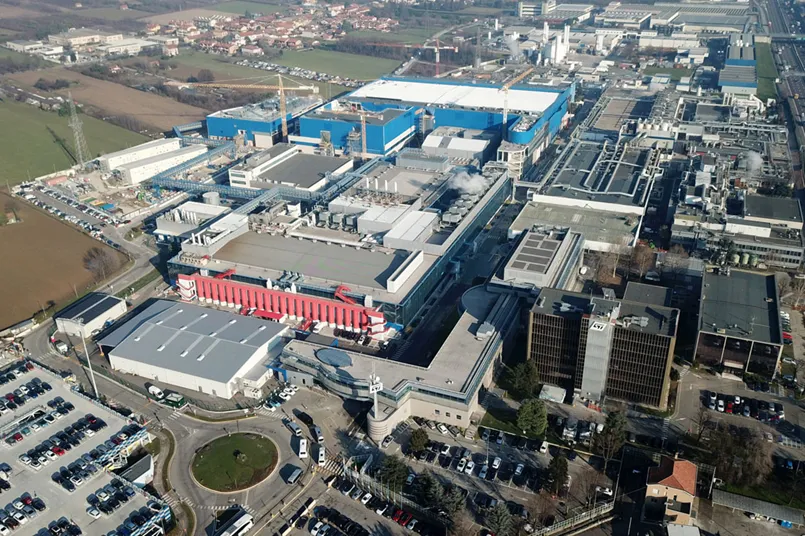
STMicroelectronics Agrate, Italy
The QBC operates on a “Give-to-Get” philosophy: members must actively contribute survey responses and participate in open discussions to access shared benchmarking data. This meeting focused on four topics: zero defect customer satisfaction, safe launch, knowledge management, and organizational comparisons. Participants presented their approaches, shared lessons learned, and engaged in roundtable discussions to identify best-known methods and address common challenges.
Zero Defect and Continuous Improvement
Participants explored the evolving definition of “zero defect,” emphasizing that it’s not about literal perfection, but about meeting customer commitments and requirements. Quality programs are multi-year, cross-functional initiatives, often embedded in broader operational excellence campaigns. Companies leverage KPIs such as parts per million, cost of nonconformance, and customer satisfaction. They tie these metrics to incentive programs and executive reporting. Continuous improvement is driven by Lean, Six Sigma, and employee engagement, with a strong focus on early detection (“shift left”), cross-functional teams, and digital tools for analytics and feedback.
Customer Satisfaction and Scorecards
Customer scorecards and surveys are central to measuring satisfaction, with processes varying by region and account type. Most organizations use a mix of manual and automated systems to collect, review, and act on scorecard data, supplementing these with relationship and transactional surveys. AI and predictive analytics are emerging tools for anticipating customer feedback and improving proactive management, though data security remains a priority.
Safe Launch and Risk Management
The QBC companies shared decision criteria, risk assessment methodologies (FMEA, TRA), and enhanced control plans for new products and technologies. Cross-functional collaboration is key, with product quality managers accountable for planning and reporting. Digitalization and integration with manufacturing execution systems (MES) are advancing, and there’s growing interest in leveraging AI for risk assessment and process optimization.
Knowledge Management and Lessons Learned
Knowledge management remains a challenge, with most companies relying on distributed databases, expert teams, and informal networks. They are piloting structured lessons learned forums, audit systems, and semantic search tools to improve findability and reuse. Effective knowledge management happens when insights are embedded directly into business processes, supported by continuous review and governance.
Looking Ahead: AI, Predictive Quality, and Expansion
The consortium plans to explore topics such as artificial intelligence, predictive quality management, and secure data sharing through dedicated sessions and working groups, with a focus on practical applications and insights from external subject matter experts.
Read about the first QBC meeting hosted by Infineon here.
Sarah Shen is Senior Coordinator, MEMS & Sensors Industry Group at SEMI.


