downloadGroupGroupnoun_press release_995423_000000 copyGroupnoun_Feed_96767_000000Group 19noun_pictures_1817522_000000Member company iconResource item iconStore item iconGroup 19Group 19noun_Photo_2085192_000000 Copynoun_presentation_2096081_000000Group 19Group Copy 7noun_webinar_692730_000000Path
Skip to main content
Default Banner Image

Internet of Things

VTT Technical Research Centre of Finland Ltd (VTT) has its sights set high. As a leading global research and development firm , VTT is out to produce bio-interfacing and biodegradable flexible hybrid electronics (FHE) devices that help tackle some of the world’s greatest challenges including environmental degradation and food scarcity.SEMI’s Maria Vetrano interviewed Antti Vasara, president and CEO of VTT Technical Research Centre of Finland, to preview his February 25 keynote, Beyond Flexible Hybrid Electronics: Biodegradable Electronics and Interfacing Bio+Electronics, at FLEX|MEMS Sensors Technical Congress (MSTC) 2020, February 24-27 at the DoubleTree by Hilton in San Jose, California. Join us at FLEX|MSTC to meet Antti and other industry influencers driving innovation in flexible hybrid electronics (FHE) and MEMS sensors. Register now to connect with him at FLEX|MSTC or visit him on LinkedIn.SEMI: What is body-interfacing electronics and what is your vision for bio-interfacing and biodegradable electronics?Vasara: Body-interfacing electronics have existed for decades. Developed in the 1970s, the wireless heart rate monitor is a good example. While continuous heart monitoring with a compact, inexpensive wearable device is widely accessible technology, other bodily parameters, such as cholesterol levels or biomarkers, are diagnosed every time we see a doctor. Establishing a baseline using multiple measurements — before symptoms develop is actually much more effective.That’s where bio-interfacing comes in. Bio-interfacing devices will continuously measure and analyze complex biogenic substances such as sweat, breath, blood and urine. A smart patch for continuous sweat monitoring, for example, would overcome several challenges: supporting electronics functionality in liquid environments, managing the transport of harvested samples to and from the sensor, managing potential contamination, and disposing of samples after measurement.While FHE in principle delivers the right building blocks and is an ideal form factor for a wearable sweat analytics patch, flexible circuits are not ready for out-of-the box interaction with biological matrices. Hence, our mission at VTT is to anticipate and develop the upscaling process know-how required for FHE devices that either interface with biological systems — or that must themselves biodegrade.We’re also focusing on biodegradable electronics because environmentally conscious end-users and manufacturing companies want biodegradable versions of energy-autonomous, label- or sticker-like Internet of Things (IoT) sensors. Typically used for packaging, logistics, environmental monitoring and medical diagnostics applications, these sensors — which have a lifetime of a few days, weeks or months — have become very popular. Unless they are biodegradable, however, they just add to landfill.SEMI: What approaches is VTT using to develop bio-interfacing and biodegradable electronics?Vasara: In our Business Finland-funded ECOtronics project, we are working with our partners to create recyclable and compostable electronics and optics that use renewable resources. For example, devices developed using substrate materials like paper, cardboard or VTT’s in-house-developed nanocellulose films and biopolymer films for environmental monitoring or skin patches can be easily recycled or even biodegrade naturally. Where possible, we use roll-to-roll printing to generate the device circuitry, and on a component level, we have optimized our assembly process towards bare-die component bonding to reduce the overall footprint of non-biodegradable waste per device.SEMI: What use cases do you find most promising and why?Vasara: A prominent example of a single-use test that generates a large amount of waste is the digital pregnancy test. When breaking it down into components, you will find a rigid circuit board with microprocessor, a couple of coin cell batteries, a liquid crystal display, a LED light source and photodiode, and a large chunk of plastic packaging around it. The materials and battery capacity of such a device would be sufficient to run hundreds of pregnancy tests – actually technical overkill.By using printed circuits on biodegradable substrates, bare-die assembled components (ASIC, LED light sources, photo diodes, thin film batteries as power sources) and device packaging composed of biodegradable plastics, we can completely redefine the environmental footprint of single-use tests. We are currently developing a toolbox for our customers to turn their existing conventional test into an ecotronic form factor.Another exciting use case is a sweat sensor that we developed collaboratively with Ali Javey, Ph.D., professor of Electrical Engineering and Computer Sciences, UC Berkeley, and the co-director of Berkeley Sensor and Actuator Center (BSAC). Together with his team, we created a wearable electrochemical sensor for continuous sweat analysis during exercise. With the UC Berkeley group providing the chemistry to monitor N+, K+ ion and hydration levels in sweat over the duration of several hours, VTT delivered the underlying sensor platform, featuring the printed sensor electrodes and sweat harvesting microfluidic channels for fluid management and transport. It’s exciting to see what we can achieve by combining techniques from different disciplines, in this case electrochemistry, printing, packaging and microelectronics.SEMI: How can industry enable the development/manufacture of flexible FHE devices? Where does VTT fit into the ecosystem?Vasara: As many FHE devices target large-volume markets, scalability of manufacturing is key: How can I get from one device (= working prototype) to a handful of devices (= feasibility study), to thousands (= pilot manufacturing), to a million (= mass manufacturing) without compromising the quality of the system’s performance and reliability?Access to upscaling infrastructure is essential for the development of novel FHE devices and methods, but infrastructure is expensive. That’s where our establishment of a roll-to-roll pilot printing line to bridge the gap between laboratory R D and mass manufacturing has proved invaluable. We can provide a unique worldwide upscaling infrastructure for advanced FHE devices, with a strong focus on large-area roll-to-roll processes and hybrid assembly. This service removes our customers’ burden of high infrastructure investment in early development stages and it allows us to guide customers along their development path, from prototype to mass production.Watch our video: VTT pilot manufacturing for diagnostics and wearablesSEMI: Is there anything else that device manufacturers need to know in order to succeed?Vasara: In my eyes, the success of FHE devices eventually depends on several factors: It requires a high degree of automation, well-optimized processes, reliable supply chains, and perhaps most importantly, clear standards and rules for designers to guarantee flawless interoperability of all the different elements on a flexible and hybrid circuit. Let us not forget – we are trying to marry electronics with printing, biology, packaging, microfluidics, injection molding and other fields of expertise.We recently finalized the compilation of a set of design rules for publication in our state-of-the-art overview of printed and hybrid electronics manufacturing methods. You can download the overview, PrintoCent Handbook, for free.SEMI: What would you like FLEX|MSTC attendees to take away from your presentation?Vasara: The latest technologies and innovations in microelectronics, MEMS, printing, materials, and biosensors provide us a toolbox for true innovation in the FHE space. Now we need cross-disciplinary thinking and daring steps to combine different manufacturing methods and skill-sets. The ideal cross-disciplinary team might include: The printing engineer who knows how to design contact pads for a bare-die IC assembly The biologist who knows about the thermal and mechanical stress in a printing environment to design processes for bio-functionalization of surfaces The electronics engineer who knows how to optimize a circuit powered with an enzymatic biofuel cell The number of sensors deployed on (or inside) our body, in our drinking water, in our cars, on our fields, in our pets, and everyday products will surely grow. Let us make sure they leave the smallest environmental footprint possible.Antti Vasara, Ph.D. has been the president and CEO of VTT Ltd since 2015. VTT is a visionary research, development and innovation partner with over 2000 people and a turnover exceeding 250M EURO. Vasara is president of EARTO (European Association of Research and Technology Organisations) and is chairman of the board of Palta (Finnish Service Sector Employers). In addition, he is a non-executive director of Elisa Oyj (largest communications operator in Finland) and a board member at EK (Finnish Confederation of Industries).He has served on several high-profile groups on industrial and innovation policy of the European Commission, in addition to several groups in Finland on artificial intelligence and research policy. Previously, Vasara spent close to 25 years in private industry, working at Nokia, Tieto, SmartTrust and McKinsey Company. Earlier in his career, he was a researcher in optical communications with 20+ peer-reviewed articles and one international patent. Vasara holds a Doctor of Science (Technology) degree from Aalto University in Finland.For more information about VTT’s work in bio-interfacing and biodegradable FHE devices, visit VTT Research. FLEX|MSTC is organized MEMS Sensors Industry Group (MSIG) and FlexTech, SEMI technology communities focused on the growth of MEMS sensors and the flexible electronics supply chain, respectively.Maria Vetrano is a public relations consultant at SEMI.
Read More
Part 2 of 2-part series on MSEC 2019 highlights. Read Part 1. Neural Networks on ChipTo be sure, low power is king when bringing machine learning to the sensor edge. Battery-powered, always-on sensing devices require it since frequent recharging is the death knell of any electronic product. That’s why semiconductor companies are offering new ways to conserve power.“MEMS sensor suppliers have made significant strides in the power, size and performance of their devices,” said Aspinity CEO Tom Doyle. “Yet these gains deliver only incremental power improvements to the system.”Doyle advocates a new architectural model that uses an analog neuromorphic processor to analyze all sensor data at the start of the signal chain instead of sending it downstream so power-hungry chips such as DSPs can digitize it before analysis.“The technology industry wants to take advantage of the many benefits of always-on sensing applications,” said Doyle. “Before we can reach mass proliferation, however, we need to resolve the power issues that are deal-breakers for some applications. We believe the answer to this challenge is architectural. All the data gathered by always-on sensing systems is analog in nature, yet as soon as it’s captured, it’s digitized immediately for analysis. Determining which data is important up front eliminates the digitization and processing of irrelevant data so that voice-first devices such as smart speakers and wearables/hearables can run for long periods of time without requiring battery recharge.”Syntiant CTO Jeremy Holleman agreed that on-device intelligence is the future.“Did you just fall? Is your heartrate a bit off? Deep learning provides a toolset that yields vastly superior decisions,” said Holleman. “The problem is that deep learning is computationally intensive. The answer is a neural network that performs on-device edge inferencing.”Holleman added that Syntiant’s neural decision processor was recently certified as Amazon Voice Service (AVS)-compliant for wake-word detection, making it easier to design voice control in battery-powered devices such as earbuds and wearables.MSEC Technology Showcase WinnerWith the groundswell of interest in intelligence at the edge, it was no surprise that Cartesiam won top honors among all competitors in the MSEC Technology Showcase for its NanoEdge AI, software that brings AI to the edge of the signal chain, making it easier for designers to create intelligent objects that can learn and understand.“Unlike other AI algorithmic technologies for sensing devices, NanoEdge enables both learning and inference at the edge, providing accurate and adaptive intelligence,” said Cartesiam Managing Director and Co-founder Marc Dupaquier, who accepted the award. “It’s also the only tool of its kind that does not require data scientists on board for implementation, which saves a tremendous amount of money. Our clients can build a machine learning library and embed it into their own code within weeks to realize the same caliber of unsupervised neural network that was once the exclusive domain of AI cloud vendors.”MSIG 2019 Hall of FameAt this year’s conference, MSIG Director Carmelo Sansone recognized two longtime contributors to the commercialization of MEMS and sensors: Peter G. Hartwell, Ph.D., chief technology officer at InvenSense, a TDK group company; and Thomas Kenny, professor and senior associate dean of engineering at Stanford University.Hartwell leads technology strategy and the InvenSense advanced technology research group. He has more than 25 years’ experience commercializing silicon MEMS products, including advanced sensors and actuators, and developing MEMS testing techniques.Kenny’s academic accomplishments include authoring or co-authoring more than 250 scientific papers and holding 50 issued patents. He has also advised more than 50 graduated Ph.D. students from Stanford.MSEC 2020Mark your calendar for next year’s MSEC, October 12-14, at Coronado Island Marriott Resort Spa in Coronado, Calif. Get updates from MSIG on MSEC and other upcoming events including MSTC 2020.Stay in Touch with MSIGMEMS Sensors Industry Group (MSIG), a SEMI Strategic Association Partner, is the industry association representing the global MEMS and sensors supply chain. To learn how MSIG enables professionals in the MEMS and sensors industry to innovate, address common challenges and accelerate business results, visit us today.Connect with MSIG on Twitter and LinkedIn. Subscribe to SEMI Blog: Technology and Trends.Maria Vetrano is a public relations consultant at SEMI.
Read More
The microelectronics industry is entering the era of Cloud Engineering Simulation to slash the costs and risks of new technology development and speed time-to-market in spaces like semiconductors, MEMS sensors, RF front ends, biomedical and driverless cars. In the run-up to SEMICON Europa, 12-15 November, 2019, in Munich, Germany, SEMI spoke with Ian Campbell, CEO of OnScale, about the new paradigm of Cloud Engineering Simulation. Campbell shared his views ahead of the SMART Design Forum, 14 November, 2019, 14:30 to 17:00, in Hall B1, TechARENA 1 at SEMICON Europa. Registration is open. Join the forum to meet experts from OnScale and other key industry influencers. Attendance is free of charge for all SEMICON Europa visitors.SEMI: How did your adventure with OnScale start?Campbell: I’m an engineer. When I was still in high school, I took a night class at Nashville Tech to learn AutoCAD R14, and I’ve been designing and engineering things ever since. I was introduced to Desktop Simulation in my bachelors of mechanical engineering program and used many types of simulation tools for massive design studies at the Aerospace Systems Design Lab at Georgia Tech. I’m a simulation junkie.I started my first Silicon Valley high-tech company, NextInput, in 2012 with Dr. Ryan Diestelhorst (now VP of Strategy at OnScale), to commercialize new ForceTouch and 3D Touch technologies based on our patented MEMS force sensors. At NextInput, we bought hundreds of thousands of dollars of engineering software, but were always frustrated by slow, inaccurate engineering simulation results. We dreamed about running massive simulations on Cloud Supercomputers and creating true Digital Prototypes that could replace costly, time-consuming, and risky physical prototypes.When I got the chance to join the team that became OnScale in 2017, I jumped at the opportunity. At OnScale, we took engineering simulation solvers that had been developed for the U.S. military to run on U.S. Department of Defense and DARPA supercomputers and built a cloud supercomputer platform on Amazon Web Services to run the solvers. The net-net is the world’s first on-demand, infinitely scalable Cloud Engineering Simulation platform. Now, we routinely run massive multi-billion degree of freedom simulations for Fortune 100 companies, including many from the semiconductor and MEMS industries. Since our business model is to charge per core-hour for simulations, the incredible capability we built is cost-effective and available to small startups as well. SEMI: How is the semiconductor design ecosystem evolving? How is Cloud Engineering Simulation applied to semiconductor and design industries?Campbell: The entire industry is experiencing a massive acceleration in product launch cycles and increased competition. New markets like IoT and 5G are reducing semi/MEMS product cycles from years to months. That, in turn, puts enormous pressure on semiconductor and MEMS designers. Missing a key product introduction like a flagship smartphone launch can literally make or break a company.A reliance on traditional engineering methods – schematic capture and layout of a chip, taping out (physically prototyping the chip), performing engineering validation on an e-bench, qualifying the chip (or not qualifying it and going back to the drawing board), and finally launching mass production – is no longer sustainable from a competitive perspective.Instead, market-leading firms are turning to Cloud Engineering Simulation and Digital Prototypes to explore massive design spaces, find optimum designs that beat the competition in every KPI (size, power, performance), and digitally qualify designs before ever cutting silicon, ensuring that designs are robust over their intended operating environments and performance envelopes. Large thermal analysis of a chip on a circuit board executed quickly on the OnScale Cloud Simulation Platform SEMI: Can you give us an example? Campbell: A great example is thermal analysis. Thermal effects have always had huge impacts on MEMS device performance and, more recently, they are beginning to impact performance of next-gen semiconductors, especially GaN power electronics for electric vehicles (EVs).Conducting a full system-level thermal analysis of something like an EV power management system – a power IC in a package, on a board, in an enclosure, under various loading conditions – has been a challenge from a simulation complexity perspective (degrees of freedom) and from a parametric sweep perspective (running hundreds or thousands of simulations to optimize chip placement, routing, etc.). To run these sets of simulations using legacy desktop simulation would take weeks, perhaps even a month or more. To run these massive simulations in parallel on cloud supercomputers using OnScale takes days or even hours.Our customers routinely run very large simulation studies on OnScale Cloud for thermal simulations, RF filter simulations, MEMS simulations, packaging simulations (what we call Digital Qualification), and many more use cases.SEMI: What’s one of your strategic objectives for 2020? Campbell: For 2020, we’re doubling down on MEMS and semi simulation capabilities. We will be launching additional solver capabilities like EM that will be critical in our strategic markets like 5G. We will also be launching a Cloud API so that engineers can integrate OnScale directly into their existing engineering workflows (e.g. MATLAB or EDA/CAD tools) with just a few Python commands.SEMI: Can you share one prediction for the future of semiconductor design solutions? share?Campbell: I think we will continue to see MEMS and semi designers push the envelope and bring smaller, more performant, more cost-effective solutions to market. I’d like to see more highly cost-effective flexible semi/MEMS designs come to market to enable next-gen IoT and IIoT applications. I’d also like to see more biomedical applications – biomems, microfluidics, and labs on a chip for all sorts of life-enhancing applications.SEMI: What are your expectations regarding the SMART Design Forum at SEMICON Europa 2019 in Munich? Campbell: I’m looking forward to getting back to my roots in MEMS/semi design and chatting with other designers about the future of engineering and the future of semi! Ian Campbell is a twice venture-backed Silicon Valley CEO and expert in MEMS sensors, semiconductor technology, and engineering software. Most recently, Ian co-founded OnScale, a Cloud Engineering Simulation startup backed by Intel Capital and Google’s Gradient Ventures. OnScale is revolutionizing engineering by combining world-class multiphysics solvers with Cloud supercomputers, machine learning, and artificial intelligence. Prior to co-founding OnScale, Campbell served as founder and CEO of NextInput, where he led the startup through multiple rounds of funding – totaling $12 million and an additional $4 million in research contracts with government and industry partners – and built a world-class team of engineers and scientists who developed 3D Touch and ForceTouch technologies for smartphones, wearables, industrial, and automotive interface applications. He also secured the first major smartphone OEM design wins in Asia. Campbell earned his B.S. in mechanical engineering from Middle Tennessee State University, and his MSAE in aerospace engineering and MBA from Georgia Institute of Technology.Serena Brischetto is senior manager, marketing and communications, at SEMI Europe.
Read More
Technology advancements seem to be coming at us fast and furiously. Every time you turn around, another company is introducing a breakthrough product with claims of far-reaching implications on how we live and work. But how often do consumers really experience disruptive innovation, like the kind that smartphones and cloud computing have had on our lives? Instead of astounding people, many new products that hit the market today are merely upgraded versions of their predecessor – perhaps offering smaller footprints with faster processors, more attractive packaging, or add-on features. These upgrades tend to underwhelm customers, offering no compelling reason to justify their accompanying price hikes.What consumers want is disruptive technology that truly enhances their lives, whether at work, at home or at play. And that’s exactly what product manufacturers want to deliver. So what’s holding them back?The Limits of Traditional BatteriesThe challenge doesn’t lie in envisioning exciting new offerings. Vendors are great at that. Rather, when it comes to consumer-focused, electronics-based products, the culprit is often conventional, rigid and thick batteries that limit what can be designed around them.But it doesn’t have to be this way.Advances in flexible and thin batteries can spark a whole new level of product differentiation. Even though such batteries have been available now for a few years, they are still a foreign concept to many product designers accustomed to conventional off-the-shelf energy storage that is fixed in rigidity and shape. It’s hard for some people to believe that batteries can fold and flex while maintaining their performance and safety. As a result, they design products around rigid battery parameters. The Promise of FlexibilityFortunately, flexible battery technology is available today, even for high-volume production.While the allure of flexible battery technology is strong, we find ourselves having to reassure manufacturers that flexible batteries are every bit as dependable as their rigid progenitors. Our testing shows that performance-integrity in flexible batteries is strong. They can be flexed, bent and even rolled in any direction without deteriorating performance. For instance, we tested a flexible battery by bending it 10,000 times to prove that it has essentially the same capacity as a non-bent battery. This flexibility gives designers and engineers a new level of freedom in hardware design: Manufacturers can now place batteries in spaces not possible or practical before. Take smartwatches, for instance. Instead of locating batteries in only the head case, engineers can embed a flexible, thin battery in the strap band to increase accessible energy or lengthen battery life. As market demand grows for wearables and hearables, smart apparel and other personal battery-powered products, consumers want more natural-feeling experiences. Unlike fixed off-the-shelf energy solutions offered in a limited range of form factors and capacities, flexible batteries can support customization by size, thickness and capacity, enabling development of products that are smaller, lighter and more comfortable.Rigid batteries are problematic on a whole other level, and that’s safety. Electrolyte advancements ensure flexible batteries are safer. The latest gel-polymer electrolyte is safer than liquid electrolyte because it does not contain liquid that would leak if the battery is pierced or penetrated – yet it still delivers the same high level of ionic conductivity. This is a great advantage for manufacturers of wearables in medical devices, sports equipment and fabrics, industrial applications, and consumer electronics. Knowing that their devices contain safer components not only brings peace of mind to manufacturers and consumers but also increases both adoption and usage rates. Staying competitive in any technology-driven market requires a steady stream of innovation. To rise above the pack, companies must fearlessly embrace advancements that will differentiate them in the marketplace. Your choice of battery is critical to your hardware design – especially if consumers will be in direct contact with the battery. The performance and enhanced safety inherent in next-generation flexible batteries can free you to create disruptive products that deliver a compelling user experience. To learn more about flexible batteries, visit Jenax.EJ Shin delivered an engaging presentation at 2019FLEX Japan (May 22-23, 2019, in Shinagawa, Tokyo), where she discussed Jenax’s flexible and customizable rechargeable battery, a technology that allows batteries to integrate seamlessly into a new generation of medical devices.FLEX Japan is a hosted by FlexTech and MEMS Sensors Industry Group, SEMI technology communities.EJ Shin is Global Director at Jenax Inc., a company that pioneered the next-generation flexible, thin battery that can be bent and rolled in any direction. She has been with Jenax since the company initiated its battery development. EJ helps device and wearable companies leverage Jenax’s customized battery solution for their innovative products. Earlier, she held communications consulting positions at Fleishman Hillard and G20 Summit in Korea. EJ holds an MBA from Yonsei University, South Korea, and a B.A. in International Relations from Tufts University, U.S.
Read More
Back in February of this year, we launched SEMI Works™, a landmark SEMI program designed to grow and sustain the electronics industry talent pipeline from the ground up. But it was much more than a program launch. The introduction was a resounding statement of our passionate commitment to workforce development and its incontrovertible importance to the future of the microelectronics industry. No one’s passion for workforce development burns brighter than SEMI CEO Ajit Manocha’s. In April, he reiterated SEMI’s focus to make good on this commitment and laid out the broad outlines of SEMI Works. From the outset, our sights have been firmly fixed on execution. The National Science Foundation (NSF), a United States government agency that supports fundamental research and education in science and engineering, recently lent its support to SEMI Works with a $6 million investment to develop a scalable, sustainable apparatus to meet current and future talent requirements of the end-to-end electronics manufacturing industry. And more financial backing – this time from abroad – could well be in the offing. We are pressing ahead to develop the infrastructure to connect talent, industry and education providers at scale. We are expanding proven programs for exciting and engaging students in experiential learning opportunities at a young age. And we are paving the way to offer career and educational pathways through high school, college and adult and veteran training. Regional partners are essential to scaling these programs, and to date we have identified three regions for pilots to develop the infrastructure and business model that will be heartbeat of SEMI Works.Moore’s Law is losing steam, raising hard questions about the semiconductor industry’s ability to maintain its swift pace of innovation. The clarion call for chipmakers is to design ever smaller electronic circuits with higher processing power for devices with shrinking form factors. More computing muscle is crucial to advances in smart manufacturing, medtech, quantum computing, artificial intelligence (AI), 5G and the IoT – all technologies that generate and consume staggering amounts of data.Yet no obstacle to industry growth stands as tall as the brick wall of the talent shortage. A highly skilled workforce is essential to invention. As an industry, we’ll only be equal to the world’s greatest challenges by recruiting, training and retaining the best and brightest.At this critical juncture in what is the world’s most strategic industry, the public and private sectors must work collaboratively to leverage their collective strength to produce the talent required to power technology development today and well into the future.In 2020 SEMI will mark 50 years of facilitating collaborations to mint new technologies and markets. We are uniquely positioned, with our members, to lead what history may one day record as our most important effort to date, a push that could impact the world for decades to come. The industry needs a lasting solution to expand and sustain its talent pipeline. SEMI is taking decisive action with SEMI Works. Mike Russo is vice president of Global Industry Advocacy at SEMI.
Read More
The semiconductor industry is in the final throes of its most recent cyclical downturn, but clear demand drivers on the horizon, such as 5G and autonomous driving, have created a decidedly upbeat mood at SEMI’s Strategic Materials Conference, held this week in San Jose, California. Increased connectivity in daily lives will not only dramatically boost semiconductor volumes, but the physical challenges of improving chip performance have positioned materials as the key enabling technology of the fourth industrial revolution – creating opportunities for suppliers to capture significant value. Most speakers were quick to underscore the importance of materials innovation. According to Dave Anderson, president of SEMI Americas, “We are entering the era of the material scientist,” and the role of materials in semiconductor manufacturing “has never been more important.” Carlos Diaz, senior director, corporate research at foundry major TSMC, said that the future “belongs to new materials and processes,” while Bertrand Loy, president and CEO, Entegris, told attendees the world is on the brink of the fourth industrial revolution, where technology will be fusing “physical, digital, and biological worlds and transforming our collective lives.” Len Jelinek, senior director/semiconductor manufacturing, IHS Markit, noted that 2019 has been a challenging year for semiconductor revenue – expectations are for a 12.5% decline YOY – but said he is not forecasting “doom and gloom” because of positive consumer demand trends beyond 2019. These include the rollout of 5G networks, internet of things (IoT), artificial intelligence (AI), and autonomous vehicles. Jelinek emphasized the foundational impact of 5G in particular. “Don’t think of 5G’s impact only in terms of handsets. It’s an enabling technology that will have broad-based impact” and will be key to creating a sustainable recovery in semiconductor demand in the second half of 2020. The current semiconductor downturn – the industry’s 10th – was initiated by an imbalance in memory supply and demand, and the lack of resolution of trade issues between China and the US is threatening to amplify volatility. Smartphones, the number-one application for semiconductors, are currently challenged by extended replacement cycles, and total handset shipments are set for its second year of decline. “We, as consumers, are waiting for revolutionary features such as 5G speeds, biometrics, foldable handsets and AI capabilities,” Jelinek says. Recent iterations have been merely evolutionary, and premium handset costs have escalated, he adds. Automotive electronics, which account for about 10% of global semiconductor demand, will eke out slight growth in 2019, Jelinek says. “Long-term semi component revenue growth within the Auto segment will focus on increasing content within cars supporting advanced safety features.” During his session, Duncan Meldrum, chief economist and founder of Hilltop Economics, addressed recent threats of a recession. “Underlying economic fundamentals are strong, but we are at that point in the business cycle where it doesn’t take much to knock the economy into recession,” he says. “I am telling people to have a contingency plan in place.” Nevertheless, Meldrum laid out reasons for optimism. Most economies have plenty of jobs, and consumers have been confident despite negative headlines. “For the average person, a tariff trade war gets to be noise. If they don’t see immediate impact, they tend to eventually discount all the headline noise. The same goes for Washington politics or Brexit.” There are no serious signs of inflation pressures in the US or other major economies, he adds. Beyond the cycleLonger-term, explosive growth in connected devices will create a runway for semiconductor volume growth. According to SEMI, over 30 billion devices are currently connected and another 200 million are added daily. By 2020, the number of connected devices will reach 1 trillion. “The growth profile for industry will be very strong and a multiplicity of drivers will bring more stability to this industry,” Loy adds. “But before this future becomes a reality we have a lot of work to do.” Current chips need to be faster and cheaper. “Physical scaling is not going to get us there, we’ve hit those limits,” Loy adds. “We have to look at new architectures and materials.” Loy called on the materials sector to need to “up our game” and spend more on R D. “Customers want us to make our products in very tight process window and ship to control. They want extreme purity for everything. It’s a long list of to-dos and it’s going to cost us a lot,” he adds. Among the needed innovations are photoresist hard masks to hand high aspect ratio, new etch chemistries for better rates and higher selectivity, and new cleaning chemistries for high aspect ratio geometry with high selectivity.Loy also identified contamination control as a key challenge for material suppliers. “When you think about purity and contaminants, you need to think about size, concentration levels, and classes. To optimize yields and lower wafer defectivity, our customers expect materials to be very pure and exhibit low variability.” The payoff for customers is large; a 1% yield improvement can mean $150 million in annual net profit for a leading-edge logic fab, Loy says. For a 3D NAND fab, that figure can be around $110 million per year. But these requirements are getting exponentially tighter. From 28 to 7 nm, the metal impurity concentration limit became 1,000 times lower, Loy notes. Contamination control is even more vital when the potential impacts of latent defects – which are difficult to detect in a fab and during electrical testing – are considered, particularly in emerging applications like autonomous driving, Loy says. “The cost of yield loss is expensive, but failure in a critical optical sensor of a car could be significantly greater, in terms of recalls or even human loss of life.” To meet tightening purity requirements, Loy recommends throwing out traditional thinking about contamination control. “In the past, we could get away with simple filtrations,” he says. “That’s no longer going to work. We need to collectively, up and down the supply chain, migrate to better filtration and purification and also rethink chemical delivery systems and packaging solutions to preserve the integrity of our products.”Metrology will also be key, but analytical capability is lagging. “We all like to believe that we cannot control what we cannot see, but that is exactly what we have to do.” The need for innovation is also being felt at the wafer level. Kevin Light, director, Applications Technology Americas at Siltronic Corp., said that as semiconductor markets become more diversified, silicon suppliers must recognize the distinct challenges each segment faces. Better wafer properties are required for next-generation chips, he adds. “Excessive wafer geometry can cause errors during lithography, especially when printing even smaller linewidths,” he says. The end result can be defocus and placement errors. When dealing with “More than Moore” architectures, wafer requirements are driven by other factors than defects. “More than Moore applications do not benefit from scaling, but instead drive capabilities of separate silicon parameters,” Light says. “In some cases you need high doping, in others the doping needs to be precise.” Czochralski crystal growth is suitable for high dopant levels, but the concentrations vary at the top and bottom of the ingot. Float Zone crystals avoid oxygen incorporation and provide consistent doping. These variations make Czochralski process suitable for PowerMOS, and Float Zone appropriate for IGBT. Compound semiconductor layers, such as GaN-on-Si, offer potential advantages owing to higher switching speeds and critical breakdown fields, he adds. “Silicon wafer requirements are diversifying as the devices themselves find increasing use outside of traditional logic,” Light adds. “Moore’s law is alive and next-gen computing will continue to push the limits of flatness and cleanliness. Meanwhile, demands of energy efficiency, electrification, IoT, and 5G drive wafer requirements other than scaling, including extremely high doped or ultra-low oxygen growing techniques, high lifetimes, and substrates engineered for compounds semiconductors.” Driverless futureAutonomous driving was a frequent discussion topic at SMC. Although IHS Markit does not see it really rolling out until past 2025, the disruption to the auto industry’s status quo is very much being felt now. Dragos Maciuca, executive technical director, Palo Alto Research and Innovation Center at Ford Motor Company, says cars of the future will be autonomous, connected, electrified, and shared. “The biggest transformation will be the shift from mechanical hardware to software,” he says. “Currently [a car] is a mechanical thing that has some electronics. Going forward, it will be a software-driven system that happens to control some mechanical elements.” The transition is already way under way, so much so that autonomous technology developed for the automotive industry is already being spun off into other sectors, such as mining and agriculture, and the auto industry’s competitive landscape is already seeing changes. OEMs and carmakers are entering the market from the traditional auto industry side, while companies such as Google are participating from the software side. “Others, like Uber and Lyft, are coming in from the business plan point of view to eliminate drivers and improve margins,” Maciuca adds. Autonomous driving will require numerous innovations, many of which will require new electronic materials and production processes. “We need weight savings, space savings, and advanced architecture,” Maciuca says. “We also need customization to print circuits as the vehicle comes down the line.” The tech community is proving up to the task. For LIDAR, there were just two technologies available a few years ago, he adds. The impact on chipmakers is also already being felt. “The automotive industry used to buy older chips,” Maciuca says. “Now we are moving to a stage where we need the very first chips at the most advanced node. And we are using them for safety-critical operations. If an AI chip that is supposed to detect a human fails, the consequences can be very severe.”Rebecca Coons is a senior editor at Chemical Week. Republished with permission from Chemical Week.The SEMI Electronic Materials Group (SEMI EMG) is the backbone of the Strategic Materials Conference. EMG is a technology community representing SEMI member companies that provide substrates, polymers, metals, organic and inorganic materials, chemicals, and gases that are developed or in use for the manufacturing of electronics. The group is open to SEMI Members involved in materials manufacture, distribution, and services throughout the microelectronics industry. For more details, please visit the website.
Read More
The combination of state-of-the-art semiconductor devices and upcoming manufacturing technologies for cost-effective processing of flexible film substrates has paved the way for a large variety of new applications in the emerging Flexible Hybrid Electronics (FHE).SEMI spoke with Professor Christoph Kutter, executive director, Fraunhofer EMFT, about current FHE technologies and market opportunities ahead of the Get Started with Flexible Hybrid Electronics workshop organized by Fraunhofer EMFT and supported by SEMI, 15 October, 2019, in Munich, Germany. To register for the event, click here.SEMI: Recent developments in thin semiconductors, new materials and cost-effective processing techniques have opened the door to a plurality of new applications and future products. What are the most innovative integration approaches?Kutter: Most interesting is the hybrid integration approach – the combination of most modern printing technologies and lithographically defined semi-additive copper wiring systems with state-of-the-art semiconductor components. Combining these best-of-breed technologies enables low-cost and high-volume printing but also ultra-low power electronics, which is important for every wireless device without or with limited power supply.SEMI: Integrating sensors, integrated circuits (IC), displays, antennas and communication devices on film substrates enables extremely thin and bendable form factors for applications where existing board-level technologies fall short. What are the key enabler technologies?Kutter: Key enabling technologies are fabrication of high-performance wiring patterns, integration of ultra-thin bare dies/components and ongoing advancements in roll-to-roll processing of film substrates. Besides the manufacturing technologies, materials such as electronic inks, substrates, isolation and passivation layers play a key role.SEMI: Are you currently working and experimenting on something particularly exciting?Kutter: We are in the process of developing an adaptive roll-to-roll direct imaging system that analyzes the position of the components manufactured before adaptive lithography steps are carried out in real time. We think that this concept will open up completely new processing possibilities for us. The technical infrastructure making this development possible is funded within the framework of the Research Fab Microelectronics Germany (FMD), the largest cross-site R D cooperation for microelectronics and nanoelectronics in Europe.SEMI: Can you share some details about the Fraunhofer EMFT roadmap?Kutter: Fraunhofer will push the hybrid integration – for example, combining printing technologies with high-performance CMOS – since we are convinced that hybrid integration is the only way to offer low-power systems for IoT with the highest performance and at the lowest cost. For this purpose, we are currently setting up a roll-to-roll die bond and component assembly machine.SEMI: What are your expectations for the future of flexible electronics and why would you recommend attending the workshop in Munich?Kutter: Flexible hybrid integration is becoming more important and offers the best of both worlds: mass volume printing technologies integrated with high performance ultra-low power electronics. You will see many examples of hybrid integration approaches during the workshop. This is a very important opportunity to highlight the latest developments in the semiconductor industry. Researchers, market analysts, material and product developers, and equipment suppliers will gather to provide insights into the latest flexible hybrid electronics innovations. We are particularly proud to organize this platform with SEMI and FlexTech Alliance.Agenda - Get Started with Flexible Hybrid ElectronicsLocation: Fraunhofer EMFT, Hansastrasse 27d, 80686 Munich, GermanyConference Chair: Prof. Dr. Christoph KutterENTRANCE Fees: 150 € VAT excl.Contact: [email protected] Prof. Dr. Christoph Kutter is the director of the Fraunhofer EMFT, focusing on sensing technologies based on silicon electronics and flexible hybrid integration technologies.Kutter completed his physics studies at TU Munich. In 1995, he earned his doctorate in physics at the University of Konstanz. Serena Brischetto is a marketing and communications manager at SEMI Europe.
Read More
John Smee, VP Engineering, Qualcomm Technologies Inc., will share insights on 5G – which is evolving to enable more reliable connectivity with higher performance in and beyond the era of Internet of Things (IoT) – in his keynote at MEMS Sensors Executive Congress, October 22-24, 2019, in Coronado, Calif.SEMI’s Maria Vetrano caught up with John to give MSEC attendees a preview of his talk.SEMI: Why should MEMS and sensors suppliers stand up and take note of the evolution in 5G, particularly 5G NR?Smee: 5G is the unifying fabric that will connect virtually everything around us. 5G New Radio (NR) is the global standard for a unified, more capable 5G wireless air interface. It will deliver significantly faster and more responsive mobile broadband experiences to users. It will also extend mobile technology to connect and redefine a multitude of new industries, including the IoT.As tens of millions of MEMS and sensors are the core components providing intelligence and interactivity to IoT devices, suppliers need to understand the capabilities and efficiencies that 5G will bring to connect the wide range of MEMS and sensors.We should also recognize that we are at the beginning of the 5G era, and 5G technologies will continue to evolve and expand in the coming years to connect new types of devices in increasingly efficient ways.SEMI: What’s special about the upcoming release of 5G NR, 3GPP Rel-16?Smee: While the first 5G NR release, 3GPP Rel-15, focused primarily on enhanced mobile broadband (eMBB), it also established a solid technology foundation for continued evolution in Rel-16 and beyond.With Rel-16, we are seeing 5G NR’s expansion beyond eMBB to address new tiers of IoT services such as industrial IoT (e.g., automation) with ultra-reliable, low-latency communication (URLLC) and cellular vehicle-to-everything (C-V2X) for more advanced use cases, such as autonomous driving. MEMS and sensors are critically important to both types of use cases as they collect the raw information of the physical world, and 5G is the connectivity of these sensors to the network. This makes the technologies inextricably linked.MEMS and sensors are equally integral to the development of more efficient low-complexity massive IoT devices (MIoT) with in-band 5G NR deployments of enhanced machine-type communication (eMTC)/narrowband Internet of Things (NB-IoT) and the use of the new 5G Core Network. In practical terms, devices that enable smart city use cases – such as smart utility monitoring, connected parking meters, and smart street lighting solutions that support 3GPP Rel-16 – are MIoT devices that will delight city administrators and dwellers with their improved coverage and efficiency. SEMI: In addition to low-complexity MIoT devices, what other markets will benefit most from the evolution in 5G NR?Smee: We continue to enhance 5G NR to support the high-performance IoT, including URLLC.URLLC is one of the many new 5G capabilities that wasn’t possible with the previous generation of cellular technologies, such as LTE. Because it delivers services at very high reliability (i.e., 99.9999%) and ultra-low latency (i.e., sub-1ms), URLLC literally opens up new use cases that that only wired communication could serve in the past. Industrial IoT applications that require a mix of high reliability and low latency, such as robotic arm command and control, are foremost among these new URLLC use cases.Another example of IoT taking advantage of URLLC is smart grid, where faults in the electricity distribution network require immediate protection and control to ensure safety and avoid equipment damage.SEMI: How is Qualcomm building on the eMTC/NB-IoT for low-power wide-area IoT (LPWA) – and how will this influence IoT connectivity?Smee: We continue to evolve eMTC/NB-IoT beyond its initial 3GPP release in Rel-13, making these foundational LPWA IoT technologies more capable and efficient as they become the basis for 5G massive IoT.The most significant updates to eMTC/NB-IoT include multi-cast and positioning support in Rel-14 and improved spectral/power efficiencies in Rel-15. Multi-cast can help service providers to deliver firmware updates over the air with greater efficiency, which speeds deployment of new features. Positioning can create new values, which can inform end users where their assets/packages are located, potentially safeguarding assets in transit. Improving spectral/power efficiencies offers more power-efficient transmissions, which takes less toll on battery-operated devices.With Rel-16, we have further optimized eMTC/NB-IoT, which is supported by the new 5G Core Network and is also deployable in 5G spectrum in-band with other 5G NR services.The evolutionary path ahead for eMTC/NB-IoT enables support for an even wider range of 5G massive IoT devices. New enhancements in the pipeline, such as grant-free uplink and multi-hop mesh, will boost efficiency and coverage area that much more.SEMI: Where do mobile broadband devices such as ultra-high-definition (UHD) security cameras fall within Qualcomm’s realization of 5G-NR?Smee: Mobile broadband is at the core of 5G NR. We see it both powering the new generation of 5G smartphones and expanding beyond traditional devices (including always-connected PCs and tablets) to address the needs of high-performance IoT devices such as UHD security cameras.It’s actually an important part of our vision for 5G to have an industrial network that requires all types of 5G connectivity for devices spanning eMBB (e.g., cameras, laptops), URLLC (e.g., machines) and MIoT (e.g., sensors).SEMI: What can the MEMS and sensors industry do to prepare for the 5G wave?Smee: Because 5G can evolve to deliver even better performance and efficiency for connecting sensors in the 5G world, we will see even more widespread adoption of MEMS and sensors into larger numbers of connected applications. MEMS and sensors suppliers, therefore, need to get ready for the 5G wave by preparing to support 5G connectivity in their devices, which will ultimately help to realize the 5G vision of connecting virtually everything in the world around us.John Smee, Ph.D., is vice president of engineering at Qualcomm Technologies Inc., where he is the 5G R D lead responsible for overseeing all 5G research projects, including end-end systems design and advanced RF/HW/SW prototype implementations in Qualcomm’s wireless research and development group. He joined Qualcomm in 2000, holds over 100 U.S. Patents, and has been involved in the design, innovation, and productization of wireless communications systems such as 5G NR, 4G LTE, 3G CDMA, and IEEE 802.11. He also leads Qualcomm’s companywide academic collaboration program across technologies including wireless, semiconductor, multimedia, security and machine learning. John was chosen to participate in the National Academy of Engineering Frontiers of Engineering program and received his Ph.D. in electrical engineering from Princeton University and also holds an M.A. from Princeton and an M.Sc. and B.Sc. from Queen’s University.Smee will present Evolving 5G NR to Connect the Internet of Things on Wednesday, October 23, 2019, at MEMS Sensors Executive Congress, Coronado Island Marriott Resort Spa in Coronado, Calif.Register today to learn how 5G NR will transform the user experience with MEMS- and sensors-enabled devices in IoT, automation and beyond.Interested in engaging with the MEMS and sensors supply chain? MEMS Sensors Industry Group is a SEMI technology community that enables the MEMS and sensors industry to innovate, address common challenges and accelerate business results.Maria Vetrano is a public relations consultant for SEMI.
Read More
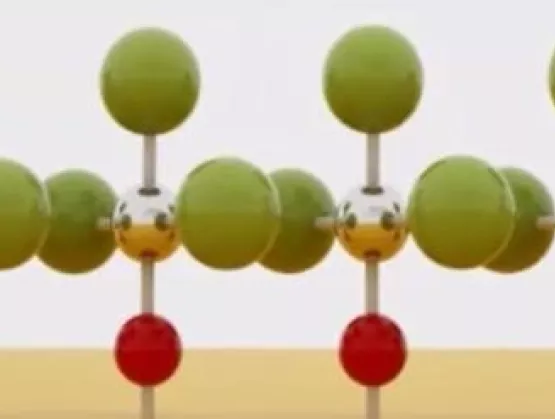
SEMI spoke with Dr. Mikko Söderlund, sales director for Beneq’s semiconductor business, about trends in Atomic Layer Deposition (ALD) applications. Söderlund shared his views ahead of his presentation at SEMI MEMS Imaging Sensors Summit, 25-27 September, 2019, at the WTC in Grenoble, France. Join us at the event to meet Beneq and other key industry influencers. Registration is open.SEMI: The Backside Illuminated (BSI) CMOS Image Sensors (CIS) market continues to experience steady growth. Which applications are currently driving market growth?Söderlund: BSI CMOS Image Sensor market continues to be driven by mobile, security, automotive and Internet of Things (IoT) applications – so there seems to be plenty of opportunities for BSI CIS market to grow further.SEMI: What is critical for advanced thin-film deposition methods to extract best electrical performance?Söderlund: It is critical to control the material properties of the deposited layer (such as charge density, resistivity or barrier property) and of course, film uniformity and conformality. Furthermore, controlling material interfaces is also important, especially for sensitive III-V materials. {% video_player "embed_player" overrideable=False, type='scriptV4', hide_playlist=True, viral_sharing=False, embed_button=False, width='350', height='197', player_id='12721134435', style='margin: 0px auto; display: block; float: right; margin-left: auto; margin-right: auto; width: 350px;' %} Coatings and material features based on existing standard techniques can be very expensive, or not feasible at all. What does Atomic Layer Deposition (ALD), as a thin film coating method, offer in particular?Söderlund: ALD offers dense, highly conformal and pinhole-free best-in-class functional layers for dielectrics, passivation, encapsulation and much more. As a gentle and precise layer-by-layer method, ALD is extremely well-suited for deposition of such performance critical layers over large surface areas such as a cassette of wafers.SEMI: Please describe the Atomic Layer Deposition (ALD) coating process. Söderlund: ALD is based on a self-limiting surface reaction controlled thin film deposition. During coating, two or more chemical vapors or gaseous precursors react sequentially on the substrate surface, producing a solid thin film (see schematic below). Most ALD coating systems use a flow-through traveling wave setup, where an inert carrier gas flows through the system and precursors are injected as very short pulses into this carrier flow. The carrier gas flow takes the precursor pulses as sequential waves through the reaction chamber, followed by a pumping line, filtering systems and, eventually, a vacuum pump.SEMI: What are the two leading edge ALD applications?Söderlund: Today’s leading-edge ALD applications are in logic (high-k/metal gate, multiple patterning) and memory (DRAM capacitor, 3D NAND). Within the More-than-Moore (MtM) markets, CIS and MEMS (actuators and sensors, RF) have been early adopters of ALD, and we also see ALD being introduced in GaN Power and RF, as well as photonics.SEMI: Give us one prediction about the opportunities offered by advanced imaging applications.Söderlund: The large diversity of imaging applications will continue to drive growth and innovation. For example, machine vision is expected to transform the imaging landscape. We see this as a big opportunity for advanced thin-film deposition methods such as ALD, provided that the tools are versatile enough to address the diverse manufacturing requirements.SEMI: What are your expectations for SEMI MEMS Imaging Sensors Summit and why do you invite your peers to attend? Söderlund: The summit brings together all key RF stakeholders in the MEMS and imaging sensors industry, and we are looking forward to a great event. It’s a special event for us as we are officially launching a new ALD cluster tool product specifically engineered for the MtM applications – so this brings great excitement that we want to share with the attendees.Dr. Mikko Söderlund is Sales Director for Beneq’s semiconductor business. He has more than 20 years of experience in product development, product management, technical sales and business development across the photonics, OLED, and semiconductor industries. Mikko received his Ph.D. in Micro- and Nanotechnology from the Helsinki University of Technology. Serena Brischetto is a marketing and communications manager at SEMI Europe.
Read More
In the long unfolding arc of technology innovation, artificial intelligence (AI) looms immense. In its quest to mimic human behavior, the technology touches energy, agriculture, manufacturing, logistics, healthcare, construction, transportation and nearly every other imaginable industry – a defining role that promises to fast track the fourth Industrial Revolution. And if the industry oracles have it right, AI growth will be nothing shy of explosive.“The gains these days are not incremental,” said Ajit Manocha, SEMI president and CEO, said to a gathering in July of the Chinese American Semiconductor Professional Association (CASPA) for its Summer Symposium at SEMI’s headquarters in Milpitas. “They are hockey stick – exponential – with AI semiconductors growing in market size from $4 billion this year to $70 billion in 2025.”Manocha left little doubt that AI is remaking the semiconductor industry and, in the process, the world at large. Internet of Things (IoT) and 4G/5G, both key AI enablers, will account for more than 75 percent of device connections by 2025.“Today, 30 billion devices worldwide are connected,” Manocha said, citing an Applied Materials prediction that the number of connected devices globally will grow to between 500 billion and 1 trillion by 2030. Those devices will generate stunning amounts of data collected, interpreted and used to reason, solve problems, learn and plan, leading to the holy grail of autonomous machine behavior.To process this colossal amount of data central to the promise of AI, the industry must break through the limits of a key technology: memory. Memory a Critical AI BottleneckThe challenge for memory starts with performance. Historically, every decade gains in compute performance have outpaced improvements in memory speed by 100 times, and over the past 20 years that gap has grown, said Steven Woo, a fellow and distinguished inventor at Rambus, presenting at the symposium. The upshot is that memory has bottlenecked compute and, in turn, AI performance. The industry has responded with new ways to implement memory systems on AI chips. Each is suited to unique performance requirements and, of course, comes with trade-offs. Among the frontrunners: On-chip memory delivers the highest bandwidth and power efficiency but is limited in capacity. HBM (High Bandwidth Memory) offers both very high memory bandwidth and density. GDDR balances trade-offs among bandwidth, power efficiency, cost and reliability. Since 2012, AI training capability has grown 300,000 times, besting Moore’s law by 25,000 times in doubling every 3.5 months, a blistering pace compared to the 18-month doubling cycle of Moore’s law, Woo said. The staggering improvements have been driven by parallel computing capacity and new application-specific silicon like Google’s Tensor Processing Unit (TPU).These specialized silicon architectures and parallel engines are key to sustaining future gains in compute performance and combatting the slowing of Moore’s Law and the end of power scaling, Woo said. By rethinking the way processors are architected for certain markets, chipmakers can develop dedicated hardware capable of operating with 100 to 1,000 times greater energy efficiency than general purpose processors to overcome another big limiter to scaling compute performance – power.For its part, the memory industry can improve performance by signaling at higher data rates and using stacked architectures like HBM for greater power efficiency and performance, and by bringing compute closer to the data.Memory scaling for AIA key challenge is scaling memory for AI. Demand for better voice, gesture and facial recognition experiences and more immersive virtual reality and augmented reality interactions is tremendous, said Bill En, senior director at AMD, speaking at the symposium. These capabilities require more processing power across both high-performance computing (HPC) for big data analytics and machine learning as it relies on AI and machine intelligence to generate meaningful insights. Emerging machine learning applications include classification and security, medicine, advanced driver assistance, human-aided design, real-time analytics and industrial automation. And with 75 billion IoT-connected devices – all generating data – expected by 2025, there will be no shortage of data to analyze, En said. The wings alone of a new Airbus A380-1000 feature some 10,000 sensors.Mountains of this data are stored in massive data centers on magnetic hard drives, then transferred to DRAM before moving to SRAM within the CPU for the handoff to the compute hardware for analysis.With data growing at an exponential clip, the question is how to make sure all other memory systems can handle the flood of data. AMD’s answer is a chiplet architecture featuring eight smaller chips around the edge that drive the compute and a large chip in the center that doubles the IO interface and memory capability to in turn double chip bandwidth.AMD has also moved from a legacy GDDR5 memory chip configuration to HBM to bring memory bandwidth closer to the GPU for more efficient processing of AI applications. The HBM provides much higher bandwidth while reducing power consumption. Compared to DRAM, AMD’s HBM delivers a much faster data rate and far greater memory density, En said.Over the next decade, look for more performance improvements from multi-chip architectures, innovations in memory technology and integration, aggressive 3D stacking and streamlined system-level interconnects, he said. The industry will also continue to drive performance gains in devices, compute density and power through technology scaling.Michael Hall is a global marketing communications manager at SEMI.
Read More