downloadGroupGroupnoun_press release_995423_000000 copyGroupnoun_Feed_96767_000000Group 19noun_pictures_1817522_000000Member company iconResource item iconStore item iconGroup 19Group 19noun_Photo_2085192_000000 Copynoun_presentation_2096081_000000Group 19Group Copy 7noun_webinar_692730_000000Path
Skip to main content
Default Banner Image

Workforce Development

Nikki Zaahir joined SEMI last year as senior program administrator on the SEMI Works team after spending the last 15 years designing, coordinating and directing programs that help people develop job skills and find full-time employment. Her career includes roles at the Department of Defense, the National Security Agency, America Works and Vehicles for Change.I spoke with Nikki about her passion for workforce development as we celebrate Black History Month.Williams: What does Black History Month mean to you?Zaahir: Black History Month means to me an opportunity to highlight the overwhelming influence of the inventions that Black Americans contributed to this country. Of all the Black history shared this month, it’s the inventors that have always intrigued and excited me the most. I grew up in a home with parents that taught my siblings and me the history of our culture every day. However, each February I was allowed to research and share my own list of what we called “little known Black history facts.” A couple of my favorites from my childhood are Lonnie Johnson, who invented the Super Soaker water gun, and Alexander Miles, who developed automatic elevator doors in 1887. Frankly, Black History Month reminds me to be proud to be Black and to take a moment to pay homage to the excellence and fortitude of my people.Williams: Where are you from, and where did you go to school?Zaahir: I am from the suburbs of Maryland right outside of Washington, D.C. I grew up in a military family. My father was the first black 1st Sargent in his transportation company. His unit was responsible for transporting heavy artillery equipment around the world. I went to Meade Senior High School on the army base of Fort Meade.Williams: How did you get started in the semiconductor industry?Zaahir: While in the 11th grade, I was actively recruited by a semiconductor company that had recently won a National Security Agency government contract at Fort Meade to make semiconductors for the military.I excelled in English and Science and met the requirements for the work study, which allowed me to spend half of my day in school and the other half at a work study assignment. The company tested a couple of hundreds of students and I was one of the 34 chosen for the career development program. I worked as a technician responsible for the fabrication and processing of the semiconductor wafer. My favorite steps of this process were the spin on glass and gasses chambers in the fab. What lit a fire in me was the realization that there is a whole world of technology opportunities that people like me were unaware of.Nikki Zaahir, in her former role as National Director of Workforce Development and Training at Vehicles for Change, with interns training to be certified automotive technicians.Williams: Did you have any mentors or sponsors who were particularly meaningful as you developed your career?Zaahir: I’ve been very fortunate to be mentored and supported by many people on my professional journey. Peter Cove and Dr. Lee Bowes are a social activist couple who own America Works. They were instrumental in my understanding of workforce development by teaching me that self-sufficiency through gainful employment can change generational poverty. However, the most meaningful people to me are those whose lives I’ve had the absolute pleasure to help change. For example, at Vehicles for Change, I created a social enterprise designed to assist returning citizens (people formerly incarcerated) with training and job placement. In three years, we placed 200 men and women in the workforce with no one reoffending or returning to prison within three years. What made this group of individuals special is that I chose to focus on violent offenders that served 10 years or more in prison.Williams: What motivates you in your work?Zaahir: What drives me is helping people become aware of careers that could not only change their lives but the lives of their families, and waking up every day determined to be that conduit of information and job opportunities.Williams: What is wonderful and challenging about workforce development?Zaahir: Inspiring people to consider educations and careers that may have never been on their minds is the most rewarding aspect of workforce development. To see people who have felt left out of training and employment opportunities due to their backgrounds or lack of higher education take charge and pursue educations and careers that before were only a dream makes this work worth it. On the other side of that, convincing someone who has felt left behind or unworthy of a better life for themselves and their family can be challenging.Williams: Is there a particular story about someone you’ve worked with or helped that you’d like to tell?Zaahir: Eight-time Grammy award winning artist Lauryn Hill of the legendary hip hop group The Fugees once said “In my travels all over the world, I have come to realize that what distinguishes one child from another is not ability, but access. Access to education, access to opportunity, access to love.”I have been blessed beyond measure to work with and help so many people at this point in my career. What I’d like to share is while talent is abundant, access and opportunity are not. That is the story.Williams: What is something unusual about you that people might not know?Zaahir: I’ve studied at the Arthur Findlay College, the world’s foremost college for the Advancement of Spiritualism and Psychic Sciences. Oh! the ghost stories I could tell.Williams: What would you tell young people interested in working in the semiconductor industry?Zaahir: In this industry, you will develop transferable skills for almost any career in manufacturing or production and the ability to make a salary that will provide the opportunity to afford living in safe neighborhoods, reliable transportation and vacations! You can pursue a wide range of skills, training, education and other professional development opportunities in this industry – all while maintaining a healthy work-life balance.Michelle Williams is deputy director of the SEMI Foundation.
Read More
This February, the U.S. celebrates the 45th anniversary of Black History Month, which highlights the achievements and contributions of Black Americans to our country. It is an important celebration, since those contributions have been historically ignored, marginalized or simply unknown. Their stories, however, abound. Black Americans have contributed tremendously to the technology industry, from Garrett Morgan, who invented the gas masks that protected our soldiers in World War I, to James West, who co-invented microphone technology that is ubiquitous in our electronics.Black History Month is also a complicated celebration, and long criticized for its limited scale. Why would we highlight Black contributions for only one month a year, and why would we separate Black contributions from American contributions? As Morgan Freeman famously said, “Black history is American history.” As a country, we should be elevating the stories and achievements of Black people year-round and using those stories to move our country toward more equity and justice for Black Americans.The origins* of Black History Month are grounded in good intentions. It’s expression, however, can be divisive. But there are many ways we can counteract this.First, we can commit to elevating and celebrating the work, stories, and advancements of Black Americans year-round. Second, we can immerse ourselves in Black history and culture through the eyes of Black Americans. There are extraordinary writers to read – Colson Whitehead’s The Underground Railroad is a masterpiece. Poets like Amanda Gorman are top of mind. And consider artists like Kehinde Wiley, whose portraits hang in the Smithsonian. We can seek out Black voices on our social media feeds and look for Black writers and directors when we next binge on Netflix.We can also consider the experience of Black people within SEMI, and our industry. Black people comprise less than 5% of the U.S. tech workforce, and there are zero – yes, zero – Black CEOs of Fortune 500 tech companies. While this lack of Black representation and leadership undercuts our industry’s capacity for innovation, creativity, and productivity, it is, more importantly, unjust. We will explore the reasons behind this in future blogs.There are extraordinary Black leaders and others in our industry who are leading the charge to create greater diversity, equity and inclusion, but that work should be shouldered by the people who have benefitted from these inequities, not the people who have been held back by them.This February, for Black History Month, I invite you to discover and explore the work of Black creators and thinkers. I also invite you to consider the structures and systems that have led to the inequities in our own industry – and how you can be part of dismantling and rebuilding those systems to create a more just workplace and society.A great place to start is exploring the resources on the Crucial Conversations on the SEMI website. And then, I invite you to consider how we as individuals and how our industry can practice acknowledging and celebrating the contributions of Black Americans throughout the year.* Impactree.com has an excellent short version of the events:“In 1915, historian Carter G. Woodson was frustrated with the underrepresentation of Black Americans in university history classes. Woodson knew Black people had tremendous influence over the infrastructure, culture and history of America, yet their role was solely relegated to that of enslaved people. Along with Jesse E. Moorland, Woodson founded the Association for the Study of Negro Life and History – now called the Association for the Study of African America Life and History (ASALH) – to motivate the inclusion of Black Americans in historical textbooks and discussion. 11 years later, Woodson and the ASALH proposed the second week of February be declared Negro History Week, coinciding with the birthdates of Fredrick Douglass and Abraham Lincoln.50 years later, during the United States’ 1976 Bicentennial, President Gerald Ford recognized Black History Month as a nationally celebrated event to be observed every February. Growing from Negro History Week, Black History Month’s goals echo Woodson’s desire for a more inclusive version of history. In Woodson’s own words, ‘What we need is not a history of selected races or nations, but the history of the world void of national bias, race hate, and religious prejudice.’”Michelle Williams is deputy director of the SEMI Foundation.
Read More
The next time you are on a Microsoft Teams call or write a group email that includes a female colleague, consider this: The next time you pick up the phone to contact her, she might be gone. According to the Women in the Workplace 2020 study by McKinsey Company and LeanIn.org, one in four women are considering leaving their workplaces or downshifting their careers due to work-life challenges stemming from COVID-19, leading to the potential loss of two million women from the American workforce. What is making work so untenable for many women?First, consider the overall U.S. workforce, across all sectors: The industries hardest hit by the pandemic are those dominated by women and people of color: healthcare, retail and hospitality, notably restaurants. These two demographics have been losing their jobs in staggering numbers. In December 2020 alone, according to the National Women’s Law Center, women accounted for 100% of the 156,000 jobs lost that month in the U.S. Second, the double whammy of the closure of daycares and the shift to remote schooling saddled mothers with overwhelming responsibilities. In the tech industry, women faced significant challenges before COVID-19 hit. Although women represent about 47% of entry-level workers in tech, that number dwindles to 20% in C-Suite jobs, with women of color accounting for just 2% of these executive roles. This leads to the challenges of being an “Only” – the only woman or person of color in a team, department or meeting. “Onlys” experience isolation, disengagement and pressure to out-perform male, white colleagues simply to be seen as equals. Women report feeling more exhausted, burned out and excluded than their male colleagues.Layer on the pressures of a pandemic and you’ve got a seriously overstressed female workforce at the breaking point. Fathers and partners are not taking on a fair share of the burden. Fully 40% of working mothers are spending 15+ more hours weekly on household duties than they did prior to the COVID-19 crisis and are more than twice as likely as fathers to worry that their performance at work is being negatively judged because of their caregiving responsibilities. And a survey by Chief, a private club for women executives, reports that, irrespective of added responsibilities at home, 70% of women report that they have taken on more duties at work since the COVID-19 crisis began. So, on top of the anxieties around keeping themselves and their families healthy during a worldwide pandemic, women are simultaneously working more, and doing more at home.Women are critically important in workplaces for a host of reasons. Women in senior-level roles have a profound effect on workplace culture. According to the McKinsey study, women are more likely to embrace and champion employee-friendly policies and programs and to take a stand for gender and racial equity at work. Women also mentor and sponsor other women more than men. If senior-level women leave the workforce, women at all levels will lose their strongest allies. Research also shows that gender-diverse teams – and companies – are more innovative, creative and productive. Inclusive workplaces tend to have higher retention rates and better recruitment rates. To sum up, companies where women are well-represented in leadership are 50% more likely to outperform their peers.As indicated by McKinsey, companies are at a critical crossroads. The choices managers, teams and companies make now will influence the workplace for decades to come. The authors of the study say it best: “If companies recognize the scale of these problems and do all they can to address them, they can help their employees get through this difficult time and even reinvent the way they work so it’s more flexible and sustainable for everyone. If not, the consequences could badly hurt women, business and the economy as a whole. This moment requires long-term thinking, creativity, strong leadership and a laser focus on the value of women to their organizations.”What can managers, teams and companies do? Women in the Workplace 2020 features an excellent Framework for Action, which includes everything from making work more sustainable, to minimizing gender biases, to strengthening employee communications. It is an important resource for any individual, team or company that wants to strengthen their support and retention of women. And – small steps can make a big difference. McKinsey encourages companies to ask a few important questions:Consider the workflow of your team: Is it flexible in a way that supports working parents and care-givers?Are performance expectations equitable across genders?Do the women on your team feel as though they can express difficulties or take PTO if they need to in order to take care of family obligations?Finally, simply acknowledging the realities women are facing is a great first step. For instance, if there are women on your team, you could forward them this article and say, “I didn’t realize how significant this issue was. If there are ways I can further help you navigate this time, please feel free to talk with me about it.” None of us want to find out what happens to our companies if we lose 25% of our female colleagues. We have the opportunity and obligation to reverse this troubling trend, if we act deliberately and intentionally to support the women around us. I invite you to dig into the Women in the Workplace 2020 study, to discuss it with your colleagues, and to determine how all of us can make our workplaces more supportive and inclusive for everyone, for the benefit of female workers and their employers everywhere.We encourage your company to participate in McKinsey’s 2021 Women in the Workplace study and make your voice heard. To enroll, visit Women in the Workplace.For information about the SEMI Foundation’s work in Diversity, Equity, and Inclusion, or if your team would like to support the industry in creating a more equitable workplace, please visit us at www.semifoundation.org, or contact Michelle at [email protected] Williams is deputy director of the SEMI Foundation.
Read More
SEMI spoke with Andreas C. Zimmer, Executive Search and Selection Consultant at ZIAN Co industrial consulting and recruitment, about strategies for attracting and retaining talent and promoting careers in semiconductor industry. Zimmer shared his views ahead of his presentation at the SEMI Fab Management Forum, 17 February, as part of the SEMI Technology Unites Global Summit, 15-19 February 2021, an online event. Join us to meet experts from ZIAN Co. and other key industry influencers. Registration is open. SEMI: What makes the semiconductor industry such a great career destination? Zimmer: The semiconductor industry is an interesting world for anyone involved in or just fascinated by high-end technology. But if we think about our mobile phones, personal computers or cars, we should all ask ourselves what technology is behind these devices we use in our daily life. The classical Newtonian physics does not reveal the source of the pixels in our mobile phones or why a navigation system knows where I currently am and how I’m supposed to drive to avoid the traffic jam ahead. The semiconductor industry truly is the technological pacesetter. The technologies and applications developed by SEMI and its members are the multipliers directly impacting our daily life. Moore's law not only affects the development of chips themselves, but also how we use the applications and devices they enable. Think about the size-performance ratio of modern smartphones compared to the first- and second-generation devices in the 1970s and 1980s, or compare today's BMW with one from the 1960s. The problem is that the industry is too hermetic. We perceive a lack of willingness to go out and tell in a generally understandable way what this industry is all about! Everyone knows Apple, Samsung, Nokia, but who, besides the specialists, knows NXP, Infineon, TSMC or LFoundry? Many companies are largely unknown to the general public! So why should a graduate from a technical university choose a company such as Applied Materials, TEL or ASML? During their studies students will inevitably have come in touch with IC or MEMS companies, but do they also know what is behind them? Do they really know the value chain that leads to the end product? SEMI: What can the chip industry do to better attract talent? Zimmer: Our industry is extremely attractive for anyone who is interested in technology and would like to push things ahead, but unfortunately access to this industry is almost reserved to the initiated who, in whatever way, came in touch with the industry at some point. Let me get this straight: This is not a conscious, willful attitude. It is just the result of our industry’s hermetic attitude. In my opinion, there is no overarching, uniform strategy in marketing, communications or advertising to promote the potential of the semiconductor industry to a wider audience. That’s why SEMI and the cooperation of its members in attracting talent is essential. SEMI: What concrete actions do you suggest for attracting and retaining talent? Zimmer: In German there is the saying “Do good and talk about it!” – and this is exactly what should be implemented. It is not enough to place an ad when necessary, to promote something here and there, perhaps to sponsor a chair or to provide a device free of charge. These are certainly all reasonable actions, but rather random and not long-term or strategic. Furthermore, these actions will reach only a relatively small group of people. The industry should organize structured recruitment activities under a long-term plan, over 10 years or even extending to the next generation. This shouldn't be a rigid corset, but rather a guideline closely informed by the chip industry’s technology roadmap and companies across the supply chain. If it is the task of an organization’s board and the management to define the strategic direction and to set specific goals, it should be the task of technical management to ensure that these goals can and will be achieved. However, this will only succeed if human resources is involved from the very beginning and can plan appropriate personnel resources accordingly. Employees retire, quit and change employers. New materials, technologies, applications and processes are being developed and require new, specific knowledge. Market requirements change. All of these components need to be recognized and considered in early planning. SEMI: What is your experience as a consultant? Zimmer: As consultants, we experience how organizations literally fall out of the clouds when the situation within the organization itself drastically changes, because a strategically important colleague is retiring or suddenly leaving the team for whatever reason. Then, quite surprisingly, the question “Where and how quickly can we find the suitable replacement?” arises. Instead, that departure should be considered as a possible development up front in overall talent planning – a plan B to keep in the drawer. Developing and implementing a long-term HR development roadmap, aligned with the technology roadmap, enables a company to anticipate when specific resources are needed, identify the right people and get them onboard without gaps. It is also important to keep your team informed and involved in all decisions and process changes, and to make sure they get the respect and appreciation they deserve. Employer-employee cooperation over the long term only works when the relationship is a win-win for both parties. If an organization sees the relationship as one-sided to its exclusive benefit, sooner or later the worker will be terminated or quit at the expense of the organization. Truly live the statement “Our people are our best and most valuable resources!” SEMI: When should organizations start attracting young talent? Zimmer: The sooner, the better! Communications aimed at attracting future employees should be designed to reach people of all ages and levels of education. For many years, the tobacco industry targeted young people by demographic, considering their age, education and cultural mindset to ensure they perceived cigarettes as cool. The result? Many people became addicted, mostly for life, just because some clever communications expert touched the right spot! Our industry will not attract teenagers like tobacco corporations did, but the strategy is basically the same: arouse the curiosity of your target group and speak their language. A possible scenario: A company starts and establishes a relationship with neighboring technical, middle and high schools by providing equipment, documentation, and employees who serve as teachers or coaches, and organizing guided tours, seminars and workshops in coordination with the school management. The cooperation continues with the university, where the respective chairs are supported and financed. With a little creativity there are endless possibilities! In our day-to-day business, we observe that large, well-known companies such as Bosch and Daimler are practically sitting on the lap of students in key universities and institutes, yet are unable to identify talent very early and bind them to their company. SEMI: How can organizations capitalize on shifting retirement patterns to help narrow their talent gap? Zimmer: The answer to this arises from considerations related to personnel planning in connection with a company’s technology roadmap. If the roadmap is linked to HR plans, you automatically have an overview of the time-critical moments when personnel gaps might arise. Then you can easily close these gaps, for example by arranging the onboarding of a successor for a specific position long before the job holder leaves. Considering notice periods and approval processes, a period of at least two years should be planned in order to be prepared for personnel changes. Of course, much of this varies depending on the importance of the position to the organization and the size of the talent pool. For example, it will probably be easier and faster to hire and train a sales engineer than the successor for a development manager, when you know there are maybe only 10 people worldwide who are, professionally speaking, at his level. And this is equally true for internal promotions: Always keep an eye on your own people and try to discover their greatest talent! Senior people tend to look outside the organization rather than just around the corner. Maybe the right talent is sitting next to you. Stay tuned and talk to your people to implement a strategic knowledge transfer as part of your organizational culture. Another aspect that is often overlooked is the deputy function: We often find functions in organizations that literally have a unique selling proposition. But there is no deputy, no one who can step in case of an emergency, because no other colleague possesses the knowledge and information to take over if necessary. Usually this is not a problem during a vacation or illness, but what do you do if a key job holder suddenly cannot work from one day to the other? SEMI: What is the role played by artificial intelligence? Zimmer: AI is both a risk and an opportunity. A new technology can always mean danger if it is used incorrectly, and I am not talking about job losses! This has always proven to be a mistake in the past. On the contrary, new technologies create new jobs! New technology accelerates communication, creates new platforms for interaction, shortens decision-making processes, and turns the world into a small village. In your interview with David Meyer CEO of Lynceus, he hits the nail on the head: The great advantage of AI in our industry is likely to be the management, handling, analysis and drawing of conclusions from an incredible amount of information at an unbelievable speed. Without AI, information cannot be controlled to this extent, not to mention accurately evaluated in real time. The mastery of these processes and the learning curve that results from them – for example for the determination of quality levels – should set completely new manufacturing standards. SEMI: How can technology unite us? What do you expect from your participation at SEMI Technology Unites Global Summit? SONAR GmbH has been in this industry as a personnel and business consultant firm for 25 years now. We have experienced many pig cycles since 1995 and accompanied our customers through all the ups and downs, only to have learned one thing in the end: The semiconductor industry is unfortunately still too fixated on technology and overlooks the fact that this technology is made by people for people. The EU's latest Pact for Skills, which was presented at end of November 2020 by Commissioners Schmidt and Breton, foresees 2 billion € investment to generate 250,000 new jobs in the electronics industry throughout Europe! In 2013, we aimed to sensitize semi industry executives, managers and CEOs to the importance of human resources to the well-being and success of organizations. It’s vitally important to invest in day-to-day relationships with your employees to foster their careers and address their needs. The SEMI Fab Management Forum will feature leading game changers of semiconductor operations to highlight best practices for achieving sustainable operations beyond 2020 and exploring the latest solutions for smarter tools and smarter processes. Andreas C. Zimmer is executive search and selection consultant at ZIAN Co industrial consulting and recruitment, specializing in recruiting talent for high-end technologies in areas such as LED, PV, semiconductors, electronics, and test and measurement. A personnel and industrial consultant with more than 20 years of experience, Andreas is active throughout Europe, the United States and Asia. For more insights about workforce and skills strategies, please see SEMI Workforce Development activities and the European METIS project. Serena Brischetto is senior manager of Marketing and Communications at SEMI Europe.
Read More
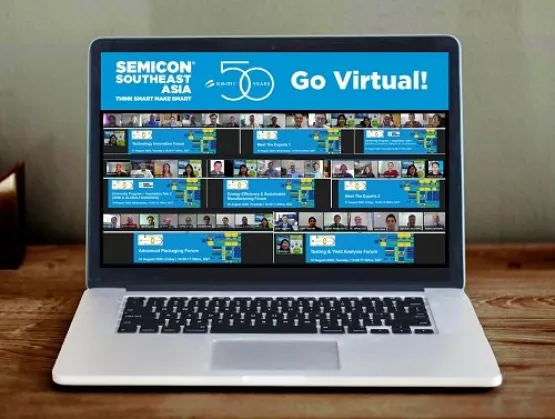
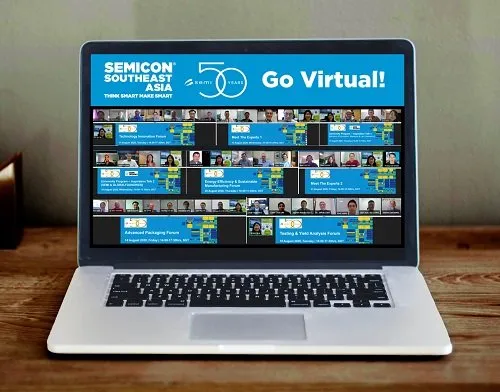
Never before had we expected that SEMICON SEA 2020 would go virtual.The COVID-19 crisis abruptly halted our ability to hold our premier Southeast Asia electronics manufacturing exposition as we typically do – in the physical realm. The pandemic tested our adaptability, challenged our willingness to experiment and, perhaps above all, accelerated not only our own but the world’s digital transformation. We had to change our way of doing business and learn to connect virtually like we had never had before. SEMI continues to believe that virtual interaction is no replacement for face-to-face engagement. But, like the rest of the world, we fast-tracked our digital education and staged the virtual event 20 July to 21 August 2020 to gather supply chain players and help fulfill the tremendous potential of our great industry. For all the suffering the COVID-19 has caused, the pandemic has underscored an important truth – that we need innovation through collaboration now more than ever to help solve the world’s greatest problems. We thank all our event sponsors as we turned what started as a grand experiment into a successful event that drew nearly 3,000 attendees to our webinars, business matching sessions and other online offerings designed to help them uncover new business opportunities. Following are other highlights. Southeast Asia Pavilion at Virtual SEMICON West 2020 In our first collaboration with SEMICON West, our Southeast Asia Pavilion at the event welcomed virtual visitors from around the globe to help them form new connections and grow their businesses. Business Matching Sessions Technical buyers from more than 15 multinational companies along with 141 pre-qualified suppliers attended more than 50 meetings across four online business matching sessions.Technical WebinarsCompany representatives from regions including Malaysia, Singapore, Vietnam, Taiwan, the United States, the UK, Israel, China and Japan shared their expertise and industry insights at SEMICON Southeast Asia 2020 webinars. In addition, experts from leading semiconductor companies such as Micron Semiconductor Asia Operations, ViTrox Corporation Berhad and A*STAR took part in our technical exchange by sharing the latest trends in the rapidly evolving semiconductor industry. Talent Development: Inspirational University Program Talks With building the talent pipeline critical to sustaining growth of Southeast Asia semiconductor manufacturing dynamics, talent champions from Lam Research and GLOBALFOUNDRIES highlighted career opportunities and pathways for young engineers while generating recruiting leads. More than 750 students from Malaysia and Singapore engaged panelists with questions during the sessions. The SEMICON Southeast Asia team extends its tremendous thanks to sponsors and attendees for their support. As we all navigate the pandemic and hope in the near future to awaken to a brighter day, we will continue to connect virtually and, whenever possible, in person as the semiconductor industry evolves and flourishes. The SEMICON SEA 2020 team In the meantime, we will all continue to pull together to support our resilient industry as it outperforms most other manufacturing sectors. Semiconductor capital equipment shipments were up 23% globally in the second quarter of 2020 versus the same period in 2019 and semiconductor chip growth remains in positive territory. Our team has already started planning for SEMICON SEA 2021, scheduled to take place at the Setia Spice Convention Centre in Penang, 18-20 May 2021.We look forward to seeing you again soon as we continue to strengthen the microelectronics ecosystem!Bee Bee Ng is president of SEMI Southeast Asia.
Read More
Data recently collected by SEMI points to only a moderate slowdown in the industry’s pursuit of talent, illustrating the growing and significant need for attracting workers at all levels of the organization. With COVID-19’s devastating impact on many sectors of the economy, the time is ripe to sharpen the industry’s focus on attracting and training a new wave of workers to meet the growing talent needs across our industry.To help illuminate the state of microelectronics industry hiring during the pandemic, following are three takeaways from recent workforce development data. Key Takeaway 1 – Emsi Hiring Data and Analytics ReviewIn a May 5 SEMI webinar on the Future of Work, presenter Andrew Crapuchettes, CEO at Emsi, a labor data analytics firm based in Moscow, Idaho, revealed that the U.S. semiconductor equipment and device manufacturing sectors posted 199,326 total jobs (32,022 unique positions) from March through June 2020 with an advertised median annual salary of $68,500 – the highest posting intensity for all other occupations and companies in the U.S. Crapuchettes noted that “although the job postings number was actually down from the previous quarter, some of the large companies have shown flat or growing postings during this period. At Emsi, we are evangelists for more accurately establishing the requirements for the job to more closely match the skills actually being sought.”He pointed to a gap between the skills employers list in job postings and those employees itemize in their resumes. Today’s use of algorithmic resume analysis, however, may reveal false gaps in hiring. Emsi is working with several Fortune 500 companies in the electronics sector to help them analyze their job postings. The goal: to better understand if they have identified the right skills for their business and the recipe for attracting top talent. Emsi supports programs such as the SEMI Works workforce development initiative that are out to more closely align job seekers and curriculum development with the skills needed for microelectronics design, development and manufacturing.During COVID-19, Crapuchettes sees companies across all industries doubling down on employee training. For many organizations, a business slowdown is an opportunity to identify and work to fill employee skill gaps and prepare companies to emerge stronger once the pandemic has passed. Key Takeaway 2 – SEMI COVID Impact SurveyIn March, April and June, SEMI surveyed members to evaluate the impact of COVID-19 and help inform SEMI’s response. Among the questions in the June survey was “How has COVID-19 impacted your hiring plans?” Of the more than 300 respondents, just 13% reported a hiring freeze and 55% said their hiring plans remain unchanged.Figure 2: Data from SEMI COVID-19 Impact Survey All SEMI regions show a similar pattern. Japan, Korea and China reported little to no slowdown in hiring as shown in Figure 2. Differences across regions were notable with more cautious approaches to hiring adopted by North America, Europe and Taiwan, with some companies slowing hiring for certain positions.Key Takeaway 3 – SEMI Survey of Workforce Development Advisory CouncilSEMI relies on members for industry insights we use to build, evolve and prioritize our programs. A June survey of SEMI America’s Workforce Development and Diversity Inclusion Advisory Council showed that, while some member companies have delayed hiring until the pandemic’s impact of the industry is clearer, most respondents see this period as an opportunity to attract talent to the electronics industry and maintain hiring programs to meet the growing demand for talent the digital revolution is fueling. The survey data, as shown in Figure 3, is consistent with Emsi’s results and a larger SEMI member survey. Our June survey also illustrated the strong desire by the Council for SEMI to support diverse communities and lead efforts to connect talent from these groups with career opportunities in electronics. All survey respondents urged SEMI to place the highest priority on promoting Diversity Inclusion in the workforce, with 57% ranking university outreach as a high priority. Visit the Workforce Development Pavilion at Virtual SEMICON West 2020 for More InformationThe microelectronics industry is making a huge impact in the COVID-19 era – from developing the tools to run algorithms for companies working on a vaccine, to keeping the internet humming for home workers and online ordering for homebound seniors. But these services will only continue to evolve at a rapid clip with the right talent. SEMI programs remain laser-focused on pursuing and developing that talent.Thank you to all members who responded to the surveys and Emsi for contributing to understanding of the workforce need in the current climate. We invite all members to connect with SEMI Workforce Development activities. We need your help to align skills to curriculum (SEMI Certs), presenting at our workforce development events and donating to the SEMI Foundation, which provides financial support for much of our work.Learn more about how you can help the industry grow its talent pipeline at the SMART WorkForce Pavilion at the virtual SEMICON West – July 21-23! Checking out the pavilion is free, but there’s a modest fee for the content. Register now for a discounted all-in pass to enjoy blister- and COVID-free access to the first virtual SEMICON West ever. Shari Liss is Executive Director of the SEMI Foundation. She oversees the development and success of all programs from K-12 through re-skilling for veterans.
Read More
Gursharan Singh, Micron’s senior vice president of Global Assembly and Test, spoke with us about the progress of Micron’s new facility in Penang, the company’s smart manufacturing advancements, its ongoing initiatives to hire and develop talent, and its support of the greater Malaysian community during the COVID-19 pandemic. Micron to Open Center of Excellence in PenangMicron’s 52.6-acre Center of Excellence for SSD assembly and test in Batu Kawan Industrial Park in Penang is slated to open in early 2021. Micron is investing RM1.5 billion over the next five years and has committed to adding 1,000 team members.“In parallel to the building’s construction, we have built a temporary site in Seberang Prai where nearly 1,000 of our team members have already set up the production line for SSD,” Singh said. “Once the new plant is ready, this operation will be moved to Batu Kawan, giving us the advantage to ramp up production and hit the ground running without the lag of waiting for the operationalization of a new facility.”Malaysia to Gain From Micron’s Global Manufacturing NetworkMicron’s commitment to Malaysia extends beyond business investments. As an industry powerhouse, Micron’s Malaysia operations will tap into its global expertise and best practices.“Malaysia is in a unique position to benefit due to its close proximity with our NAND Center of Excellence in Singapore,” Singh said. “We are learning from our factory in Singapore, which implements the latest advances in smart manufacturing, as we develop the facility in Batu Kawan. Those lessons will be used to ensure that new technologies are deployed cost-effectively and push the envelope to get them to the next level.”On the talent front, Micron is creating a pipeline of local Malaysian talent from a young age. This means driving multiple STEM initiatives targeting local primary and secondary schools and includes a Women in Science and Engineering Program we’re offering at 39 of Penang’s secondary schools. We’re also creating internships for engineering degree holders through the company’s Industry Student Engagement Program (ISEP) and continuing a training program for young diploma holders held in conjunction with Penang Skills Development Centre (PSDC) to give them skills that are required by the industry.Our workforce development initiative also gives Micron an opportunity to work with young talent new to the industry so they can learn and undergo in-depth industry training from more experienced peers."We use our global network of expertise to train young workers and give them the opportunity to learn and participate in this start-up-like environment,” Singh said. “We have already hired nearly 40 new college graduates from Universiti Sains Malaysia (USM). Our game plan is to continue on this path by hiring a higher percentage of local graduates and giving them access to our facilities to learn our technology and advance our Malaysia facility. More than that, we hope our collaboration with local universities can extend further into high-impact research initiatives that benefit the wider community."Micron’s Commitment to Malaysia’s Communities During the COVID-19 PandemicMicron is investing in the greater Malaysian community as the country fights the current COVID-19 pandemic. Malaysia is one of five countries prioritized to receive grants from Micron’s $35 million global relief fund. The company recently announced a RM2.6 million donation from the Micron Foundation that will help the three groups most in need – front-line workers and hospitals, children and the elderly in charitable homes, and underprivileged families in Muar and Penang near its facilities. The goal is to quickly distribute aid such as medical and personal protective equipment, food and household items, and financial assistance.In addition, Micron is supporting its Malaysian employees by making a one-time assistance payment of RM1,300 to 94% of its workforce based in Muar and Penang. This is the percentage of the workforce meeting the eligibility criteria.Designated as an essential services provider by the Malaysian government, Micron continues to maintain its local operations. Micron products built in Malaysia are critical to helping the world effectively cope with COVID-19. Our technology enables advanced medical devices for treatment, data centers and supercomputers used by scientists to find new solutions, and e-learning and videoconferencing capabilities that connect the world during this period of restricted movement.Sangeeta Rajgopal is Head of Country Communications Marketing, Singapore Malaysia Global Communications Marketing, Micron
Read More
The march of innovation in semiconductor microfabrication technology over the past 60 years has produced electronic devices and information systems that have transformed industries and lives around the world. And while advances in chip technology continue to make it possible to collect, transmit, store and process more data for a rapidly growing universe of applications, the pace of innovation is now facing strong headwinds. Powered by chip innovation, data centers have become massive centers of information processing but, on the downside, enormous consumers of electricity. Today, the power-hungry hubs account for five percent of the world's electricity usage, a proportion that is growing every year, raising important questions about sustainability. Compounding the challenge, the pace of Moore's Law, for decades the engine of electronic device and information system innovation, has slowed. While the research and development of state-of-the-art semiconductor fine processing technology remains robust, developing the advanced manufacturing technology for mass-producing more sophisticated electronics devices is becoming harder, as is ensuring business profitability."It has become difficult for semiconductor technology to continue to evolve as it has in the past," said Akira Minamikawa, Research Director of Technology Research at IHS Markit, who moderated the Semiconductor Executive Forum – View by Top Two in the Era of Digitalization on opening day of SEMICON Japan 2019 at Tokyo Big Sight. Held at the SuperTHEATER, the forum featured Terushi Shimizu, representative director and president at Sony Semiconductor Solutions, and Atsuyoshi Koike, president at Western Digital Japan, two industry powerhouses that could figure heavily in the future of digital technology. SuperTHEATER, the main stage at SEMICON Japan 2019 Image sensors evolve to become eyes of AIImage sensors are becoming eyes of artificial intelligence (AI) and intelligent systems that monitor people and events worldwide, collecting data that one day could help puzzle out growing social challenges such as energy conservation and traffic congestion. With 51 percent market share on the strength of its industry-leading technology, Sony Semiconductor Solutions dominates the image sensor market. Despite last year’s global semiconductor industry slump, the company’s “business continues to enjoy strong growth and we are very busy,” said Shimizu, who attributed the company’s robust performance to the rising importance of the social role of image sensors and the expanding number of applications they support.The success of the company’s image sensors can also be traced to its division of the image sensor market into two application categories: "Imaging" focuses on capturing beautiful image data, while "sensing" aims to collect data that accurately describes the state of a subject and its surroundings."In 2019, sales of imaging products for smartphones grew rapidly,” Shimizu said in his market overview. “This is due to the average annual 15 percent growth rate of multi-camera smartphones, with some phones today featuring seven cameras, and an average annual growth rate of 20 percent in sensor size to produce higher image quality."But Shimizu cautioned that Sony Semiconductor Solutions doesn’t expect the smartphone sensor market to maintain that fast growth rate."The imaging market is expected to grow until 2022, but after that, the sensing market will drive market growth,” he said, adding that the company’s “capital investment plan is based on this scenario."AI will be key in catalyzing growth of the sensor market as integrations of AI processing engines and sensing images grow in sophistication to capture images undetectable by the human eye, Shimizu said. AI will extract insight from captured image data. For its part, Sony will apply its layer stacking technology to sensing products."By stacking an AI processing engine, we want a significant portion of the recognition processing done within the sensor chip," Shimizu said.One sensor the company already offers collects in-depth information for indirect time-of-flight (ITOF) 3D ranging for new user interfaces relying on autonomous or gesture control for robotics. The sensor “was first used in smartphones in 2018 and saw widespread adoption in 2019," Shimizu said.Sony Semiconductor Solutions plans to focus on developing new sensors for integration with their ultrasonic cousins. Aided by optical deflection technology, the sensors will be used for product quality inspections during manufacturing.With the company’s growing strengths in sensor technology, it hopes “to increase sales of sensors from a few percent of the company’s total sales in 2018 to 30 percent in 2025,” Shimizu said, pointing to its goal "to capture 60 percent share of the image sensor market by 2025."Data as one way to spread happinessAt the heart of consumer devices such as smartphones and computers and also cloud servers, NAND flash has made it possible to process vast troves of data anytime, anywhere. In recent years, the technology has enjoyed stronger adoption for use as the storage medium of choice for edge computing, stationed between end devices and the cloud to help streamline data utilization. But the technology isn’t merely about making smarter use of bits and bytes."We would like to promote the technology development that can support the use of data to bring happiness to people around the world," Koike of Western Digital Japan said. The company calls data that contributes to individual happiness and helps solve social issues "data for good" and, like the Sony Semiconductor Solutions bifurcated classification of the image sensor market, categorizes information into “big data” and “fast data.”For example, big data can leverage AI to drive dramatic improvements in the interpretation of test data and, ultimately, the diagnostic accuracy of mammography for breast cancer screening, aiding in early detection to help save lives, Koike said. Fast data can be harnessed to analyze data collected from a manufacturing equipment line in real time to improve production efficiency. The company’s plant in Yokkaichi, Mie Prefecture, which the company operates in cooperation with Japanese memory manufacturer Kioxia, already uses fast data to bolster production.More NAND flash innovation and greater supply capacity are critical to developing "data for good," Koike said. "It is difficult to expand clean rooms at the same pace as data usage grows. In order to continue to advance technology and enhance supply capacity, we need to adopt new ideas for building production lines. We need a smaller equipment footprint, shorter cycle time and higher throughput."Semiconductor market shows signs of recoveryIn their discussion of the short-term outlook for the semiconductor market, Shimizu and Koike pointed to the importance of strengthening the talent pool of Japan’s semiconductor industry as global competition heats up with China’s pursuit of semiconductor independence and the industry pulls out of the 2019 slowdown fueled by weak memory prices. While Sony’s business has been buoyed by strong image sensor demand for smartphones, the devices “did very well, but other applications didn't," Shimizu said. Even the image sensor market stagnated.Despite the 2019 slump, market conditions and capital investments by semiconductor manufacturers have been on the upswing."In the second half of 2019, the Chinese market showed signs of recovery triggered by 5G,” Shimizu said. “In 2020, this movement is going to be in full swing around the world and we will be busier than last year."Koike agreed: "The semiconductor market for data centers will recover with 5G. The hard disk shortage is already an indication of a recovery, a turnaround that will undoubtedly extend to solid state drives (SSDs). In addition, advances in autonomous driving technology will ensure continued growth of the automotive semiconductor industry.”Japan should embrace international competition, not fear China's pursuit of chip independenceIt's no secret that China is investing heavily in its semiconductor development capabilities to move up the microprocessor value chain. Minamikawa posed the question: How should Japanese chip companies navigate the shifting regional balance of power? "It is natural for China to strive to establish domestic procurement of semiconductors that are fundamental technologies for various industries,” Koike said, “I think the efforts of Chinese companies are outstanding in that they are not pursuing short-term results, such as improving yields in the near future, but are making efforts with an eye to achieving results in 10 years. Japan has a variety of options including working with China to create joint ventures and competing head-on. Regardless of which choice we make, however, it is imperative for the survival of domestic companies that Japan maintains its technological competitiveness to remain ahead of China."Shimizu said that Sony’s “Chinese customers are quick to take action and study extremely hard. We often have opportunities to share our roadmap with them and explore innovation opportunities together. Before, they were passive and relied on us for insights into new technologies, but now they are more assertive and I sense that they will start to drive innovation.”Koike added that "although Japanese companies often talk about business globalization, neither Chinese nor American companies say much about it. While global expansion is a major requirement for business, I think Japanese companies need to focus more on the Japanese market overall, not just when they think about the growing competitiveness of Chinese companies." L-R: Akira Minamikawa, Research Director of Technology Research at IHS Markit; Atsuyoshi Koike, president at Western Digital Japan; Terushi Shimizu, representative director and president at Sony Semiconductor Solutions Talent key to bolstering competitiveness of Japan’s semiconductor industryMinamikawa of IHS Markit didn’t mince words in describing the talent shortage in the Japanese semiconductor industry as “grave,” saying that “the workforce challenge is not endemic to the electronics industry as evidence grows that the number of people obtaining doctorates in Japan is falling and the educational level of the Japanese population as a whole is in decline.”Three years ago, Shimizu interviewed professors on Kyushu island for insights into Japan’s talent shortfall. He came away feeling that “Japanese semiconductor companies were not sufficiently communicating the industry's talent and innovation needs to professors. To help professors and students better grasp the appeal and potential of the industry, we have started to send frontline engineers to universities to educate students and instructors about their work and careers. Expecting corporate HR departments to alone solve the talent shortage won’t work.”"In Japan, if you advance to a doctoral course, you will have a hard time getting a job, which is a strange situation,” Koike said. “Companies and universities need to work together more closely to better understand how to attract and hire doctoral graduates."Minamikawa said companies must have strong leaders with clear missions to attract the right talent, but Koike pointed to the drawbacks: "The image of a company with a strong leader seems to be cool, but it also has a downside because engineers stop thinking for themselves and wait for instructions from the top. I believe it is important for company leaders to have ongoing discussions at all organizational levels and lead the way in times of confusion."Shimizu agreed, citing his own company as an example."Thankfully, our company is very busy right now,” he said. “However, some employees are starting to request more time to think about how to improve the quality of their work. To maintain and strengthen our competitiveness and continue business growth, I believe it is important to cultivate an environment that encourages each employee to take more time to think for themselves."Motoaki Ito is the CEO of Enlight, Inc. and a reporter for SEMI. Mayumi Amagai is a marketing manager at SEMI Japan.
Read More
Global and regional forces shaping the $2 trillion electronics industry have intensified more in the past few years than at any other time I can recall. The uncertainty bred by trade wars, corporate tax changes, new environmental regulations, immigration issues and STEM talent shortages is vexing the global microelectronics supply chain as companies shift investments and operational strategies to adjust to the unrelenting change and new realities with heightened urgency.In our industry, an increasingly dynamic world requires a more determined and strategic approach to advocacy. To meet the industry’s rapidly evolving needs, SEMI is transforming its global advocacy initiatives and programs. In the past 18 months, we have honed the focus of SEMI Global Advocacy to better serve member interests and needs, respond more quickly to fast-moving geopolitical developments, and deliver more value to help spur growth across the end-to-end electronics supply chain.Most importantly, SEMI Global Advocacy is now much more forward-looking and proactive. We have expanded our focus from primarily U.S. and independent regional issues to global affairs, allowing us to better leverage the power of our worldwide platforms. Organizationally, SEMI continues to add specialized staff advocates and calibrate its operational and member-driven engagement models to increase their involvement. There will be more to come, and with your continued support, we’ll be in a stronger position to meet your needs. Thank you!Strengthening the industry’s voiceThe rapid shift to a more proactive advocacy approach across all our initiatives was triggered by one disruptive action a little more than a year ago – the buildup and onset of the trade war between the United States and China. From the outset, SEMI formed strong member coalitions to intensify our lobbying efforts, met frequently with policymakers, submitted written comments to government panels, and issued public communications, all aimed at amplifying our collective voice. SEMI has taken a principled approach to advocacy, publicly stating its positions based on its trade pillars of free and fair trade/open markets, supply chain growth, respect for IP and national security.That approach was on full display as Japan tightened controls on exports to the Republic of Korea, sending shockwaves through the microelectronics industry. To minimize the industry impact, we leveraged our global reach and the counsel of our International Board of Directors to engage with both governments early on and ensure that Japan took into account our members’ interests in developing and implementing the new rules. In general, SEMI opposes the use of tariffs and limiting market access as levers to correct trade imbalances and other structural issues. Instead, we support dialogue and negotiations that lead to multilateral agreements aligned with our members’ interests and global trade principles.This year in the U.S. alone, SEMI advocates have met with more than 70 policymakers in Washington, D.C., including members of Congress and representatives from the White House, federal agencies and the Trade Representative’s office. We have also spoken with representatives from European and Asian government delegations. Since the trade war erupted, we have met with more than 220 policymakers worldwide, giving SEMI a seat at the table – a louder voice for our members – as we are increasingly seen as the voice of the end-to-end electronics manufacturing and design supply chain. SEMI Global Advocacy has also broadened its focus beyond public policy to address other areas of strategic importance to the industry such as the talent shortage.Expanding Advocacy’s global influenceSEMI’s public policy efforts now reach well beyond Washington, D.C. to all seven major manufacturing centers worldwide where we have regional offices, with SEMI advocacy staff in every location. This has created a network multiplier effect that allows us to rally our collective strength around common member interests. It’s no coincidence that our member-driven advocacy initiatives and programs have improved in parallel with expanded global participation by our member companies on our various policy and advocacy committees.Our Trade Advisory Committee, for example, has grown from 16 to 60 active members in the past year alone. This year, we have also formed working groups with SEMI members around the world to address talent pipeline challenges. The upshot is that we are now much more focused in attacking regional issues. Thank you once again.Despite changes in the strategic approach of SEMI Global Advocacy, we remain squarely focused on critical issues affecting industry growth and our members’ interests. In a nutshell, we call these the four T's: Tax – We strive to encourage rates that are fair to all companies, leveling the playing field globally Technology – We seek government investment in technology and innovation (R D) Trade – We advocate for open markets, free and fair trade as we promote our 10 Principles for the Global Semiconductor Supply Chain in Modern Trade Agreements worldwide Talent – We support education investments and immigration policies that provide opportunities and build the talent pipeline In addition, SEMI has long been a leading voice in promoting Environment, Health and Safety regulations that enable industry growth and demonstrate environmental stewardship – and we continue to make investments at this critical juncture as new technologies are driving changes in the regulatory landscape.Maintaining laser focus on member priorities amid shifting geopoliticsThe only way for SEMI Global Advocacy to navigate the cauldron of geopolitical disruption is to remain laser-focused on our members’ top priorities including trade, tax, technology and talent. And we will stick to what SEMI has done best for almost 50 years – facilitate public-private collaborations and more investment on behalf of our members.In workforce development, SEMI is taking bold steps to develop a robust talent pipeline, as much a growth and innovation driver for SEMI members and the industry as any technology. Announced earlier this year, SEMI Works™, our landmark talent development initiative, is already gaining steam with U.S. government investment and our rapid progress in laying its foundation with a database of standardized competencies for technical jobs as well as a certification and credentialing process for curriculum, education and training programs.The future for SEMI members and the industry is brimming with possibility. The strides SEMI Global Advocacy has made over the past year have only been possible through your support and involvement. As we broaden our scope beyond policy, we recognize that more progress needs to be made. We look forward to your continued participation as, together, we help our industry fulfill its great potential.Mike Russo is Vice President of Global Industry Advocacy at SEMI.
Read More
For public policy lovers, civic-minded, engaged U.S. citizens, and people around the world interested in the U.S. President’s positions and priorities, the annual State of the Union address (SOTU) is “must-see TV.” This year, the anticipation and expectations were different than with past presidents. President Trump is the first U.S. president who has used social media to the extreme that he has. President Trump’s prolific Twitter feed has had an interesting impact on the SOTU. U.S. citizens and people from around the world already know President Trump’s positions on issues, his policy priorities and what gets him excited. There is an ongoing, direct line to the President’s thoughts throughout each and every day. In the past we looked to the SOTU for insights into what the sitting president is really thinking and his future policy priorities. Now, there isn’t much we don’t already know.One looming question this year was whether President Trump would reach out in a conciliatory manner to help bridge the political divide and lay the groundwork to enable some public policy wins and avoid another government shutdown. While there were moments of conciliation, the President made it clear he would not move on areas that are most contentious with the other side of the aisle. For example, the President unequivocally reiterated his intent to build the wall. While the message plays well to his base, it is, in effect, a frontal assault and challenge to Democrats. It’s hard to image that his staunch stance will help move the two parties to work together on substantive policy issues. It may also mean that the wall issue will occupy lawmakers time for the foreseeable future, sidelining debate on other important issues.The best hope is that a bipartisan bill finds its way to the President’s desk that he can sign and use to “declare victory.” However, many political observers believe the likelihood of the President declaring a national security emergency is rising as a maneuver to ensure funding for the wall and avoid a shutdown. While such a declaration would most likely face a court challenge, the President could claim that his decision was a move of last resort and leverage the moment to position Democrats as obstructionists to his base. The scenario does not bode well for the bipartisan support necessary to address other issues.What does this mean for our industry? Were there any points raised in the SOTU that would signal a change in what we are facing regarding trade, tariffs, export controls and immigration? Were any new issues or ideas raised that could help lift the global economy? In short, no. On one hand, the President cited his good relationship with the president of China, but on the other doubled down on his attacks on China, seeming to stand firm to bolster his position at the table as the U.S. and China trade talks continue.What do these dynamics mean for SEMI Global Advocacy? In 2018 we were heavily engaged in efforts to prevent regulations that would inhibit our members' ability to develop and deploy technologies and maintain global market access. We advanced our global advocacy model, leveraging our regional presence around the world. Many of the potential issues we faced emanated from the U.S., including those focused on controlling technology development, limiting trade and enhancing export controls. We also intensified our efforts to address industry talent pipeline issues.In 2019, our public policy focus will be to continue to push back on tariffs, engage members to inform the rule-making process for export controls and to attempt to influence the immigration debate as it pertains to access to talent. In addition, while the U.S. R D tax credit was made permanent through the tax cut in 2017, some of the provisions may have unintended consequences and will need to be modified. How the law is enacted will affect how businesses can deduct qualified research and development and other expenses from their taxable income, so we anticipate activity on the tax front as well.It will also be a big year for SEMI on the workforce development front. SEMI will continue to grow its existing High Tech U (HTU), university and mentor programs. In addition, SEMI will be positioning itself as the global leader in addressing issues related to the talent pipeline by approaching the problem with a full-spectrum, holistic approach that is intended to better address more immediate needs in attracting, training and retaining qualified talent. We’ll also focus on improving the industry image and exciting students at a younger age by providing experiential learning activities throughout a defined educational pathway. Stay tuned on this front as the full program unfolds.In general, we will continue to build our relationships and stature as a leading voice for our members and the end-to-end semiconductor supply chain in the areas of talent, trade, tax and technology (SEMI’s “4 Ts”) and to ensure free and fair trade, access to markets, supply chain growth, IP protections and enhanced efforts to improve cybersecurity. Mike Russo is VP of Global Industry Advocacy at SEMI.
Read More