downloadGroupGroupnoun_press release_995423_000000 copyGroupnoun_Feed_96767_000000Group 19noun_pictures_1817522_000000Member company iconResource item iconStore item iconGroup 19Group 19noun_Photo_2085192_000000 Copynoun_presentation_2096081_000000Group 19Group Copy 7noun_webinar_692730_000000Path
Skip to main content
Default Banner Image

United States

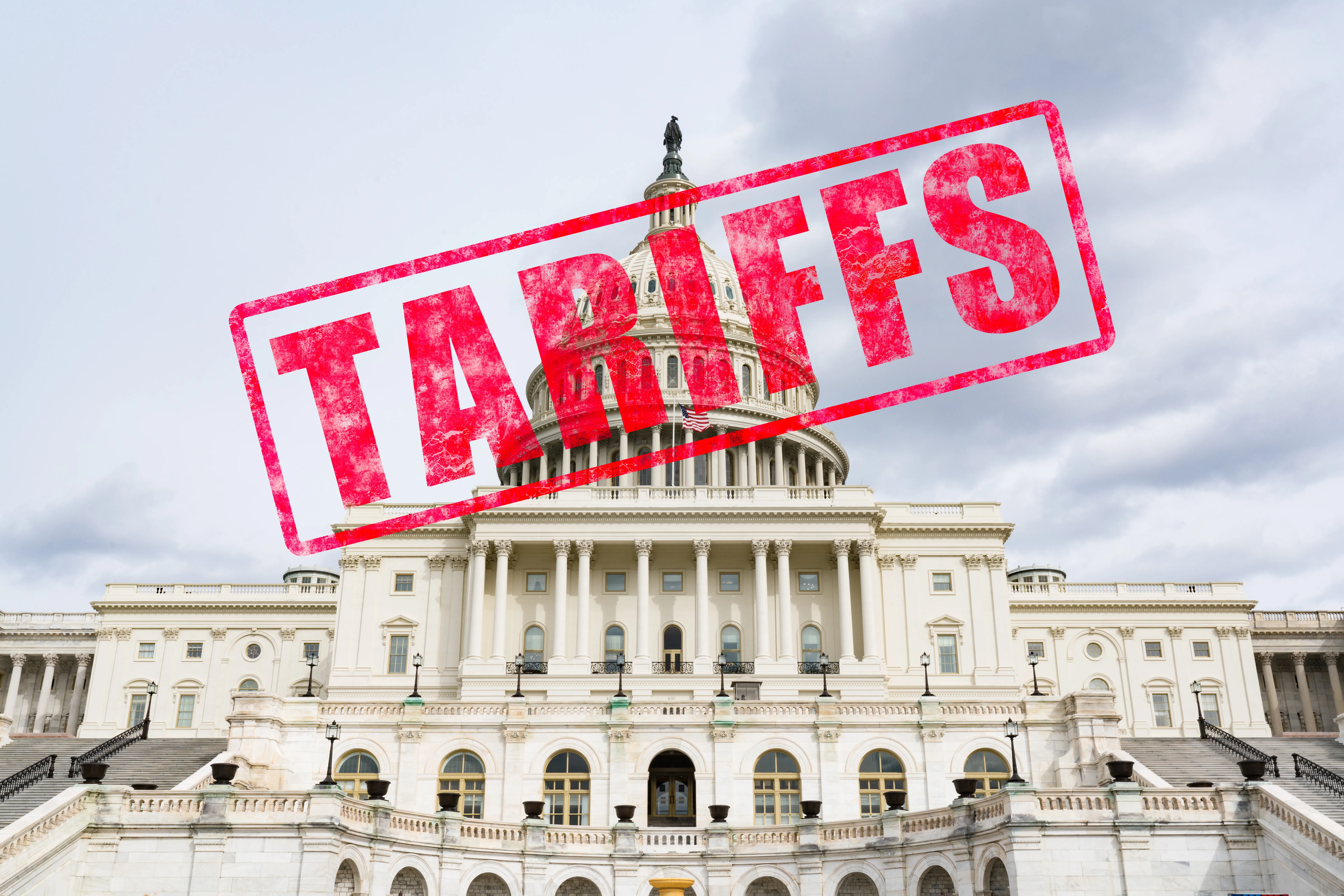
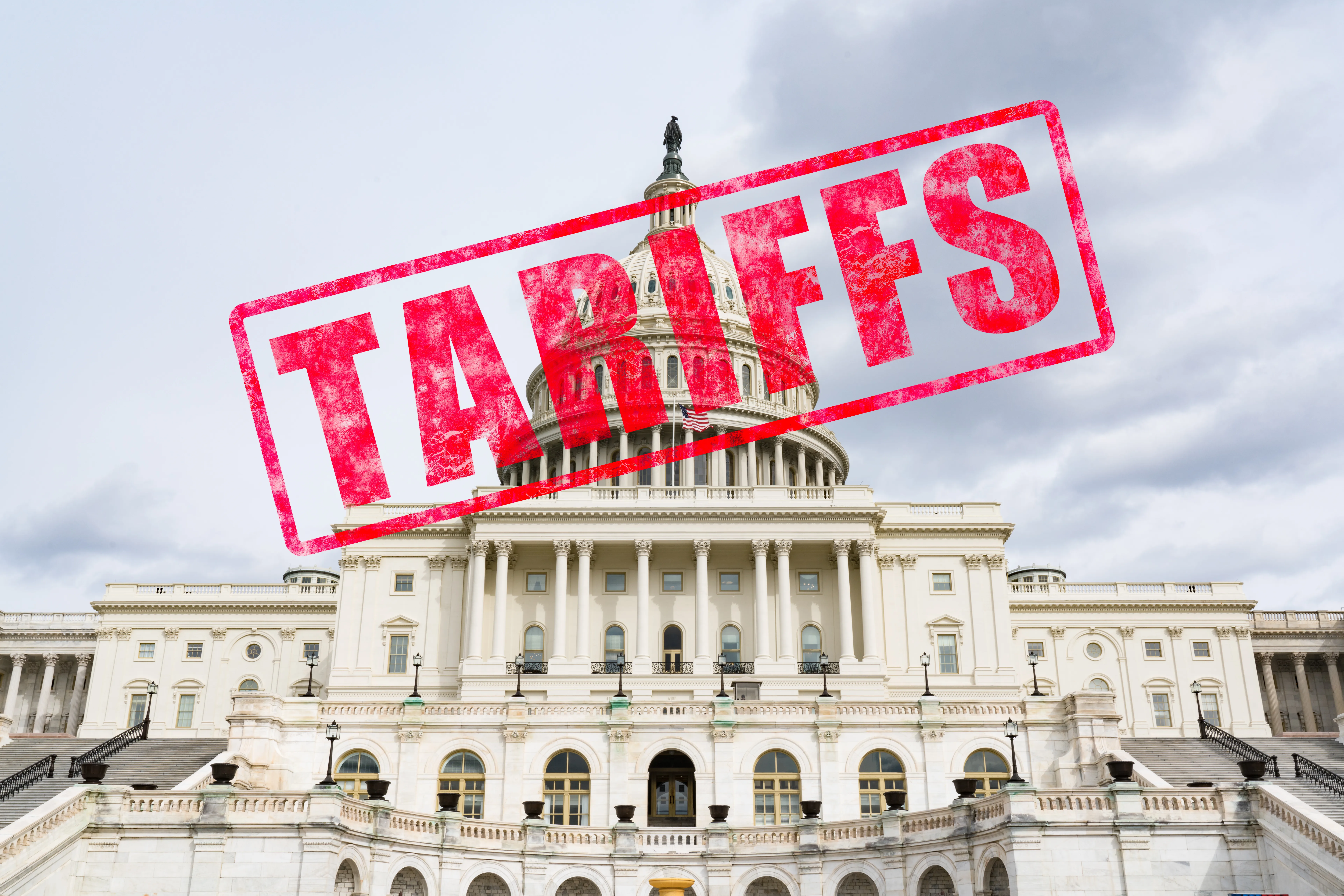
Today, the U.S. Trade Representative (USTR), as part of its Section 301 investigation into China's trade practices, released a list of approximately $300 billion worth of Chinese goods, including a number in the semiconductor supply chain, that would face a tariff of up to a 25 percent. SEMI is working with members to assess the industry impact and will submit written comments and testify against the tariffs at a public hearing scheduled for mid-June.SEMI encourages members to review the new list and determine the level, if any, of impact.Today’s announcement follows last Friday’s tariff hike from 10 percent to 25 percent on $200 billion of imports from China. All told, the U.S. already has levied tariffs on $250 billion of Chinese goods that include materials and machines critical to semiconductor manufacturing. The expanded list released Monday would impose tariffs on essentially all imports from China. For its part, China has announced retaliatory tariffs, but more are likely coming.SEMI has been steadfast in its opposition to these tariffs and other barriers to global commerce. Over the past year, SEMI has submitted numerous written comments and offered testimony on the damaging impact of tariffs to the semiconductor industry. While SEMI strongly supports efforts to strengthen intellectual property protections, we believe that the tariff increases will do nothing to address concerns over China’s trade practices but, instead, harm companies in the semiconductor supply chain by increasing business costs, introducing uncertainty and stifling innovation.SEMI will continue tracking ongoing trade developments. SEMI members with questions should contact Jay Chittooran, global public policy manager at SEMI, at [email protected].
Read More
Yesterday, President Trump extended the deadline for List 3, which would have raised U.S. tariffs on $200 billion worth of goods from China. SEMI welcomes the deadline extension.Over the past three months, the United States and China have engaged in bilateral discussions to address structural issues like intellectual property protection and requirements for the use of joint ventures as well as trade balance concerns. President Trump announced that these talks have yielded significant and substantial progress in all areas. That said, it’s been reported that discussions on structural issues, such as forced technology transfer, have seen limited progress.Certainly, questions remain on the specifics of liberalization, the structure of the agreement and, most notably, enforcement. Any new commitment will be toothless without a firm and binding enforcement mechanism. While the date of the new deadline hasn’t been clarified, we believe that the tariffs won’t be increased before Presidents Trump and Xi meet, which could happen in late March at Mar-a-Lago.List 3 covers a range of items, including a number of consumer goods, but also directly impacts items critical to the semiconductor manufacturing process, including materials and machines. SEMI estimates that all U.S. and Chinese retaliatory tariffs – which hit machines and tools central to the semiconductor industry, including equipment used to manufacture wafers, boules, and chips as well as test, inspection and sensing equipment – will cost members more than $700 million in annual duties.While SEMI strongly supports stronger protections for valuable intellectual property (IP), tariffs will not help address Chinese trade practices and will ultimately have significant and unintended consequences. SEMI asserts that these tariffs will harm companies in the semiconductor supply chain by increasing business costs, introducing uncertainty, and stifling innovation. The tariffs seem to target U.S. firms for simply operating in China.Given that chips, tools, and materials are extremely complex, precise, and difficult to manufacture, it is not reasonable to believe that any component can easily be replaced with a part from another source. Further, this U.S. government approach does not take into account that many items subject to these tariffs are not available, at sufficient quality and cost, from domestic sources, or even non-Chinese sources. We stand steadfast in our belief that this trade action will raise prices, put thousands of high-paying and high skill jobs at risk, and curb growth.SEMI will continue monitoring new developments in this area. Any SEMI members with questions should contact Jay Chittooran, Global Public Policy Manager at SEMI, at [email protected].
Read More
The more than 53,000 people who flocked to SEMICON Korea last month were treated to a motherlode of insight into the future of the semiconductor industry as 470 companies exhibited innovative technologies in more than 2,000 booths. But the annual event’s most arresting numbers came in keynotes and other presentations pointing to the extraordinary industry growth that lies ahead.“It is no exaggeration to say that 90 percent of the world’s data has been generated in the last few years,” said Jim Feldhan, president of Semico Research. “This explosive growth of data is expected to continue. That's why server shipments will grow by 20.3 percent, or 30 million units, this year alone.”Feldhan said that the Internet of Things (IoT) will be a chief driver of semiconductor industry growth, with IoT expected to be applied in areas as varied as automotive, smart cities, edge computers, finance, architecture, agriculture and healthcare. For its part, artificial intelligence (AI) will start to exercise human-like judgment. Feldhan noted that in many instances in these fields, “it is more accurate to apply AI and vision systems than to rely on traditional decision-making.”Yoon Jong Lee, senior vice president of DB HiTek, predicted that the Internet, AI and 5G will drive market growth. “Looking back over the past 30 years, semiconductor market growth was powered by PCs, the Internet and cell phones, yet last year memory accounted for 35 percent of total semiconductor sales, more than double the figure in 2016,” he said. He predicted that, in 2019, the foundry sector will outstrip the semiconductor market in growth, noting that the average growth rate of the semiconductor industry is expected to be 4.1 percent, compared to 7.1 percent for the foundry market. Clark Tseng, director of SEMI, reported that the strong semiconductor growth in 2018 is unlikely to continue in 2019 due to the decline in memory pricing, as well as mobile and PC demand. “Demand for semiconductors is likely to decline in the first half as the industry is still digesting inventory and rebound in the second,” Tseng said. Semiconductor industry growth headwinds include decreases in high-end smartphone purchases, PC demand and demand for DRAMs for servers in data centers, Tseng said. Declines in economic growth and consumption in China and the U.S.-China trade war will also contribute to a slowdown. However, Tseng noted that, over the long term, technology innovation will continue and that the semiconductor industry’s prospects remain bright.One key innovation will be the elimination of AI’s reliance on Internet connections in the future. In his opening day keynote, Eunsoo Shim, senior vice president at Samsung Electronics, emphasized that AI technology that operates without the Internet in the future is essential. “We are developing 'on-device AI' technology that incorporates AI algorithms in products such as smartphones and autonomous vehicles,” he said. "When on-device AI technology is implemented, it reduces reliance on the Internet, battery consumption, and data latency.” Reducing latency will significantly improve device response time.Walden C. Rhines, CEO Emeritus of Mentor, a Siemens business, predicted that AI will fuel rapid memory growth. The memory semiconductor (DRAM, NAND flash) market is expected to see a temporary slowdown this year, with the market expected to rebound in 2020. Rhines said that memory could be seen as an early market with rapid future growth, citing memory market super-booms in 1995 and 2000.“Memory production has not decreased since 1995 or 2000,” he said. “Although memory prices will temporarily fall this year after significant market growth in 2017 to 2018, the market will continue to grow as memory production increases,” he said. Rhines added that “although memory prices will drop by about 10 percent this year, he believes prices will increase 6 percent next year.” He also predicted the steady growth of the non-memory semiconductor market as AI technology matures and China’s investment in fabless companies continues.Indeed, SEMICON Korea speakers made it clear that concerns about the growth of the semiconductor industry are expected to be short-lived. While overall growth is likely to slow in 2019, the industry is expected to rebound steadily – powered by the semiconductor industry paradigm shift led by AI, IOT, and autonomous driving – and reach a new high of nearly $541 billion in 2020.Jaegwan Shim is a marketing specialist at SEMI Korea.
Read More
Last year the industry posted another remarkable double-digit revenue growth year. IC shipments eclipsed one trillion units for the first time and continued to enable an ever-expanding array of silicon intensive-applications.2018 was also a pivotal year of transformation at SEMI. Setting our sights firmly on building more value for SEMI members, we doubled down on priorities I established this time last year. We advocated intensively on global trade policies, industry talent needs, and critical environment, health and safety (EHS) concerns. To underpin our efforts around talent, we took the bold step to reinvigorate the industry’s identity with a dynamic image campaign. Above all, we targeted critical industry-wide issues to help us realize the ambition of becoming a trillion-dollar industry in the next decade. Workforce DevelopmentRedefining our approach to talent development in 2018 was and remains a top priority. A diverse, highly skilled workforce is crucial to the industry’s ability to innovate. Last year we ramped up a number of SEMI High Tech U (HTU) programs to inspire young people and attract them to careers in high-tech manufacturing. To date, more than 130,000 students have been touched by HTU – through student or teacher programs.Over the past year, we designed a new university outreach program and established partnerships with 100 institutions. We established Workforce Pavilions at SEMICON events in Southeast Asia, the U.S., Taiwan, Europe and Japan for students to explore career opportunities and meet with recruiters. We thrilled at seeing sponsors hire young talent at SEMI events. This year, all SEMICONs worldwide will feature Workforce Pavilions.SEMI also formalized its commitment to Diversity and Inclusion (D I) with the establishment of a D I council to shape new programs including the recently launched Spotlight on SEMI Women. To localize and fully optimize our D I programs, we established regional workforce councils in every region we serve. We unveiled the SEMI Mentoring Program to support students and young professionals on this journey by facilitating one-on-one mentoring relationships with industry professionals. Hundreds of mentees have enrolled. But we still need more mentors. I urge you to join the program. During the year, SEMI also expanded its workforce staff and developed a comprehensive workforce strategy with programs that engage students as early as elementary school and inspires them through high school and college. The program provides pathways to professional careers, building a pipeline to fill the short-term and long-term talent needs of the industry. Industry Image CampaignAs we developed the comprehensive workforce development program, we knew we had to refresh the industry’s image and appeal to the next generation through contemporary media and communications channels. So we recently launched a bold, innovative campaign to raise industry awareness and attract students and recent graduates to careers in semiconductor manufacturing.Our You’re Welcome campaign is a novel, creative approach that blends entertainment, media and storytelling to excite students about the industry. The campaign went viral immediately and within weeks had more than 5.5 million social media impressions and 2.3 million video views.Trade Policy AdvocacyRising trade tensions between the U.S. and China catapulted global trade policy to the forefront of industry concerns in 2018. Since the tariffs have taken force, semiconductor companies have faced higher costs, greater uncertainty, and difficulty selling products abroad. The tariffs have forced many SEMI member companies to pause or rethink their investment strategies.SEMI quickly engaged U.S. policymakers and provided resources for SEMI members. We formed a member trade task force, staged trade compliance seminars in China, and convened meetings with over 110 U.S. congressional, agency and administration officials, and provided testimony on the importance of the free trade to the industry.SEMI continues to educate policymakers about the critical importance of free and fair trade, open markets, and respect and enforcement of IP for all players in the global electronics manufacturing supply chain. As part of this initiative, we distributed “10 Principles for the Global Semiconductor Supply Chain in Modern Trade Agreements” and encouraged their adoption in various trade negotiations. These principles outline the primary considerations for balanced trade rules that benefit SEMI members around the world, strengthen innovation and perpetuate the societal benefits of affordable microelectronics.Environment, Health and SafetyEnvironmental regulations are proliferating globally even as advanced semiconductor manufacturing technology relies increasingly on a host of new materials. With dozens of new fabs and fab line upgrades, our industry must align on best practices, sensibly respond to materials restrictions, and renew efforts toward sustainable manufacturing.That’s why the revitalization of SEMI EHS efforts became another priority in 2018. Two months ago, we hosted the inaugural EHS Summit at SEMI Headquarters. Fully, 70 EHS professionals and company executives met to form the basis for the future SEMI EHS program.The Year AheadDespite a softening in the market, compounded by Apple’s first-ever announcement of a revenue decline in 16 years, a geopolitical whirlwind on trade and an extended shutdown of much of the U.S. government, the future is bright.At SEMI’s annual Industry Strategy Symposium (ISS 2019) in Half Moon Bay, Calif. in early January, the sense of optimism was palpable. In her keynote address, Dr. Ann Kelleher, Sr. VP and General Manager, Technology and Manufacturing Group, at Intel, observed that data is powering the fourth industry revolution and the expansion of compute. With customers expecting continual improvements in applications, Kelleher highlighted the tremendous opportunity for the chip industry to meet these expectations.At ISS 2019, we announced a Memorandum of Understand between SEMI and imec. The MOU will enable us to accelerate our members’ engagement in SEMI’s Smart vertical market platforms, in particular Smart MedTech and Smart Transportation. Our partnership with imec will also allow us to boost SEMI Standards activities in non-CMOS technologies, deepen technology roadmap efforts and augment our SEMI Think Tank initiative in thought leadership at a global level.Over the course of this coming year, will we begin our global rollout of key building blocks of our comprehensive workforce development program to engage schoolchildren as young as 10 and learners all the way to veterans who return to the workforce. We are now able, with the invaluable help of our Workforce Development Council and the passionate engagement of many SEMI member companies, to offer a solution to the talent crisis in our industry.We will continue to be the leading voice for our members and the end-to-end semiconductor supply chain across Talent, Trade, Tax and Technology as we work to ensure free, fair trade that protects IP while preserving vital access to markets to grow the supply chain. Vertical Market PlatformsOur vertical market platforms are an important part of this growth. For example, in Smart MedTech, SEMI looks forward to working with the Nano-Bio Materials Consortium to advance human monitoring technology for telemedicine and digital health after winning $7 million to fund the renewed program. In Smart Transportation, we will leverage the Global Automotive Advisory Council (GAAC) we formed last year to represent the full automotive supply chain and the Smart Transportation and Smart Automotive forums featured at all our SEMICON events to enable the industry to identify and seize opportunities in autonomous driving. At ISS 2019, Sujeet Chand of Rockwell Automation noted that “digitization will grow faster in the next 10 years than it did in the past 50,” a trend calling for semiconductor fab architectures that transform data into business value. We will continue to bring the industry together at our Smart Manufacturing venues to help uncover ways to deploy deep learning, edge computing and other Smart technologies to deliver this value and meet the challenges of automation as artificial intelligence’s (AI) sprawling influence reshapes industries including manufacturing.I am filled with optimism and thrilled about the opportunities I see on the horizon for our members as we build on our 2018 accomplishments to enable your prosperity in 2019 and beyond. My heartfelt thanks to all of you for your participation in our programs and events.I look forward to another successful year as we connect, collaborate and innovate together!Ajit Manocha is president and CEO of SEMI.
Read More
With (most of) the election results in from the U.S. midterms, the expected Democratic takeover of the House and the Republican’s maintaining control of the Senate is now a reality. The day of the election, DC insiders expected that the House would go to the Democrats by a margin of +/- 20, with the Republicans gaining 2-3 seats in the Senate. Not a bad prediction, which is a far cry from what the same insiders called in advance of the 2016 Presidential election.What does that mean for our members and the tech sector in general? Will there be an ease of trade tensions or less of a chance of tighter export controls? Some believe that with the midterm elections over, President Trump will have some room to take a less aggressive stance against China, setting up a “win” that he can carry into 2020. With the recent more aggressive stance by North Korea against the U.S. regarding its nuclear program, China may well have some leverage at the trade table … and the U.S. may want to make a deal that provides a path for a “win” on both fronts. Indeed, there are the makings of a potential win-win leading into the G20 meeting in Argentina when President Xi Jinping and President Trump are scheduled to meet on Dec. 1.One can see a scenario where there is a meeting of the minds and some degree of lessening tariffs; that does not mean that the effort to enhance export controls will go away. The need for tighter restrictions on export controls is driven to a great degree by the U.S. Department of Defense (DoD) and is a follow on from the previous FIRRMA legislation and attempts to curb the loss of U.S. technology critical to global competitiveness and national security. This issue will not go away anytime soon, and cases like the recent one involving Jinhua only add fuel to the fire. In addition, given how these cases can be leveraged at the negotiating table, they will continue to surface.SEMI’s approach has been to educate governments, lawmakers and administration officials on the strategic importance of the globally connected and highly complex semiconductor supply chain, and how some of the approaches will not achieve the attended goals. This approach helps to ensure that when and if it comes time to make decisions based on merit, the principals are informed. It also helps SEMI and its members develop and maintain important relationships and positions SEMI as an industry leader and spokesperson, making it a more effective advocate. As an example, on Nov 8th SEMI released its Global Trade Principles with the intention of providing a framework to all governments to guide various trade talks. It also helps to inform member companies and others from the broader tech sector of our industry position(s) so we are able to speak with one voice. These principles are aligned with our fundamental advocacy pillars of promoting free trade and market access, respect for IP, cybersecurity and national security.Will the fact that power is now split between the two chambers of Congress help or hurt? Will the House focus on investigations limit the ability to move productive legislation? Besides taking time, it may well put them at increasingly worse odds with the Senate and the President (if that is possible), creating deadlock. Some argue that if nothing moves, no harm can be done. Some also say that it may drive the President to take independent and more aggressive actions in order to demonstrate (his) effectiveness to his base. There is another view: that with the Democrats, the President may be able to lead in the advancement of legislation that will show he can get things done when others couldn’t in areas that benefit the greater good…some of which may impact our industry…such as investments in education and infrastructure development. This would be a way that he could pull in some of the votes from the middle that he has lost in his first two years in office. They say “politics makes for strange bedfellows”; one never knows what might happen in this case.Regardless of what happens, some things will not change: the global nature of our business and the needs of our members to have access to markets…and to be able to safely and efficiently leverage their technologies in the way they see fit in order to grow their business. SEMI will continue to advance the interests in what is an extremely challenging and dynamic global policy environment today. As ruling parties and representatives change around the globe, we will continue to build new relationships and educate lawmakers so they are able to make informed decisions that benefit our members. Mike Russo is VP of Public Policy and Talent Advocacy at SEMI.
Read More
Last week, the Office of the U.S. Trade Representative (USTR), on instruction from President Trump, notified Congress that the administration intends to begin bilateral trade negotiations with Japan, the European Union (EU), and the United Kingdom.SEMI stands strong for free trade and open markets, and roundly supports efforts to increase market access and tap into more foreign economies, especially economies like Japan and the EU, both of which are central to the semiconductor industry. The semiconductor industry, which enables the $2 trillion electronics market, is built on global commerce. SEMI members rely on a vast network of supply chains that span the globe, bringing together components and tools made all around the world and assembled into a single sub-system that is then integrated into a larger tool used in the chipmaking process.These free trade agreements will reduce tariffs, which will result in cost savings and productivity gains, and allow SEMI members to expand and grow. But the benefits of modern free trade agreements extend well beyond tariff reduction. Indeed, these trade deals will establish and enhance global trade rules that enable companies to innovate and compete fairly on a level playing field. Trade agreements strengthen certainty and further business continuity.While the exact nature and negotiation timelines for the talks remain unclear, SEMI will engage the administration, urging it to maintain high standards in these agreements, such as: Maintain strong respect for intellectual property and trade secrets through robust safeguards and significant penalties for violators Remove tariffs and non-tariff barriers on semiconductor products as well as products that depend on semiconductors Simplify and harmonize the customs and trade facilitation processes Combat any attempts of forced technology transfer Prevent use of data localization measures and enable the free flow of cross-border data flows End discriminatory and/or burdensome regulatory practices Ensure standards in all forms are market-oriented Create rules for state-owned enterprises to ensure fair and non-discriminatory treatment of all companies According to Trade Promotion Authority (TPA), the U.S. law that guides trade votes in Congress, negotiations with each country can only begin 90 days after last week’s notification. During that period, there will be intensive consultation with Congress and stakeholders. This means, at the earliest, talks can start on January 14, 2019. (Bear in mind that discussions with the UK can only begin in earnest once the UK has formally left the European Union on March 29, 2019.)The Trump administration’s announcement comes after the U.S. imposed or threatened tariffs on imports on all trading partners, including the EU and China. All told, the U.S. has imposed tariffs on more than $300 billion worth of goods. SEMI has weighed in on the detrimental nature of tariffs, arguing that tariffs on China will ultimately do nothing to address the concerns with China’s trade practices. This sledgehammer approach will introduce significant uncertainty, impose greater costs, and potentially lead to a trade war, ultimately undercutting the ability of semiconductor companies to sell overseas, stifling innovation and curbing U.S. technological leadership.Elsewhere, the Comprehensive and Progressive Agreement for Trans-Pacific Partnership, the multilateral trade deal that links 11 Asia-Pacific economies, is well on its way to taking force. Canada will be taking its final steps to ratify the deal, joining Mexico, Japan and Singapore. The deal, formerly known as the Trans-Pacific Partnership, should take effect by the first half of 2019.SEMI will continue tracking ongoing trade developments. Any SEMI members with questions should contact Jay Chittooran, Public Policy Manager at SEMI, at [email protected].
Read More
Last week, more than a dozen senior semiconductor executives traveled to Washington, DC for the first-ever Fall Washington Forum. The SEMI Washington Forum, a venue for SEMI members to educate lawmakers about the industry, focused on action against China, both in the form of tariffs and export controls.Our industry is global, and companies rely heavily on trade. In 2017, more than 90 percent of equipment made in the United States was exported. Because of this dynamic, the United States holds a nearly $9 billion trade surplus in this industry. SEMI supports trade policies that open foreign markets. In the meetings, the executives expressed deep concern that the tariffs would inflict deep damage to the U.S. economy, including to SEMI members. Estimates suggest that the Sec. 301 tariffs (and the Chinese retaliatory tariffs) will cost semiconductor companies more than $700 million annually, dramatically increasing the cost of doing business. These tariffs also threaten U.S. technological leadership. The United States has led innovation for decades. However, by pursuing policies that limit market access opportunities, company-led R D and innovation will slow, which, in turn, will curb further export potential. SEMI companies also stressed that because of the blunt application of these tariffs, this action will actually hurt U.S. companies as much as it hurts their Chinese competitors. Indeed, about 40 percent of imports in our sector from China are from U.S. or other non-Chinese companies. Further, the semiconductor industry relies on a vast network of supply chains, which have been built and qualified over the course of years. A fundamental revamp of supply chains is simply not feasible. This would be expensive, time-consuming, and resource-intensive. With a growing number of policy issues that are central to and could have significant impact for semiconductor companies, SEMI hosted its first ever Fall Washington Forum for members of its North American Advisory Board (NAAB). SEMI also invited several other industry executives. In total, 14 senior industry executives, including representatives from equipment manufacturers, component suppliers, and materials providers, attended the Fall ForumDuring the two days of meetings, SEMI met with several senior Administration officials to better the policies being enacted and considered as well as encourage all parties to not impose barriers to commerce, which would severely impact the semiconductor industry. SEMI also met with Members of Congress and their staffs on this issue. All told, attendees at the Fall Forum had more than 15 meetings with policymakers, reflecting the great impact of public policy on SEMI members companies. At a time when the stakes for the industry could not be higher, direct engagement with lawmakers is critical. The Washington Forum offers an incredible opportunity for members to better understand the impact of key public policy issues and gain firsthand experience in influencing policy and helping lawmakers better understand the industry.If you are interested in learning more about the SEMI Washington Forum or SEMI’s public policy program, please contact Jay Chittooran by email at [email protected].
Read More
U.S.-China Trade War Heats UpThe U.S. Trade Representative (USTR) yesterday released a 25 percent tariff on $16 billion in imports from China, including 29 tariff lines that represent the heart of the semiconductor industry. These tariff lines include semiconductor products such as machines and spare parts used to make, wafers, flat panel displays, masks and chips, and will cost SEMI’s 400 U.S. members an estimated more than $500 million annually in additional duties.SEMI, along with hundreds of companies, including Lam Research and KLA-Tencor, submitted written comments, requesting the removal of tariff lines from the proposed list. SEMI also testified on behalf of the semiconductor industry, joining more than 80 other companies, including Applied Materials, in opposing the duties before an U.S. government interagency panel in late July.This trade action is on top of the already imposed $34 billion U.S. tariff list, which will cost SEMI’s U.S. members tens of millions of dollars annually. In the coming days, USTR will publish details on how U.S. companies can request the exclusion of products from the $16 billion tariff list, much as it did for the first round of $34 billion.In a swift retaliation, China announced a 25 percent tariff on $16 billion in U.S. exports, including products vital to semiconductor manufacturing such as chemicals, test equipment and other parts. Both U.S. and China tariffs will take effect on August 23.The new tariffs come as China considers tariffs on $60 billion of U.S. imports, and the U.S. weighs additional duties on $200 billion of Chinese imports – a wave that would inflict even deeper damage on the U.S. semiconductor industry. This latest round of U.S. tariffs would cover goods used in microelectronics manufacturing, including chemicals, glass products and spare parts. SEMI will testify against the $200 billion tariff list later this month. If your company expects to be impacted by the proposed tariffs on $200 billion worth of goods, please contact SEMI staff.SEMI stands firm in its belief that none of the tariffs address U.S. concerns over China’s trade practices. Instead, they harm companies in the semiconductor supply chain by increasing business costs, introducing uncertainty and stifling innovation. SEMI will continue to engage with policymakers as both the U.S. and China $16 billion tariff lists are implemented. We will also be evaluating the products covered by the $200 billion U.S. list and the $60 billion Chinese list as both are further considered. We encourage members to review these lists to determine impact on their companies. For more information, please contact Jay Chittooran, Public Policy Manager at SEMI, at [email protected].
Read More