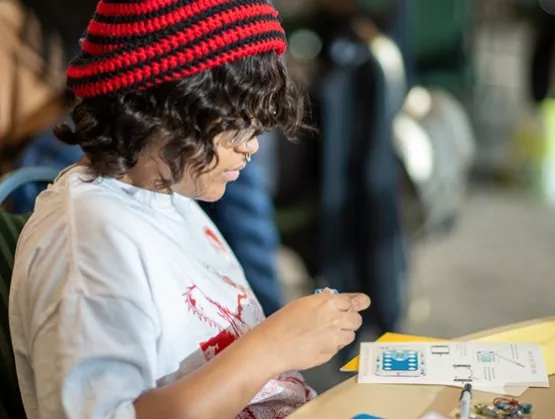
The semiconductor industry, once a hidden force in technology, is now recognized as a pivotal driver of the modern economy. As the engine behind everything from smartphones to smart cities, semiconductors fuel innovation and shape how students learn, play, and engage with the world, making chips a crucial factor in shaping our collective future as the climate changes.In line with SEMI Sustainability Initiative participation at Climate Week NYC, we are preparing a groundbreaking pilot program at the intersection of youth empowerment, workforce development, and climate action. To help the semiconductor industry develop a climate-literate workforce, the SEMI Climate Equity Social Impact Working Group and the SEMI Foundation have partnered to develop a global K-12 program open to all SEMI members for participation and sponsorship. The program will share best practices and resources such as those that follow in this article.SEMI will announce the program at the 29th United Nations Climate Change Conference, more commonly known as COP29, which will be held in Baku, Azerbaijan from November 11-22, 2024. SEMI members are encouraged to become partners and help shape the program ahead of COP29. Contact us to learn more and participate in the announcement.The Opportunity for Semiconductor Industry Climate Leadership It’s not enough for students to simply be aware of climate change and the United Nations Sustainable Development Goals. Awareness alone won’t protect communities or help solve the problems we may all face in the future. We must prepare the next generation to be climate-literate — providing them with the knowledge, tools, and skills to understand complex issues, work collaboratively across the globe, and develop practical, real-world solutions. With this foundation in place, young people become proactive global citizens with the skills to solve problems.The semiconductor industry doesn’t need to reinvent the wheel or build new networks to drive partnership at the intersection of sustainability and workforce development. Companies in our value chain are already well positioned to scale equitable opportunities, promote STEM and AI skills, and empower students to tackle real-world climate challenges as we help prepare them for future careers. Global networks of sustainable schools focused on climate action are well-established in key semiconductor regions. In Taiwan alone, over 330,000 students will participate this year.Sustainable schools networks engage teachers and students with programs that are fun, motivating, and spark curiosity by providing ownership over solving real-world challenges. These mostly free programs can also help drive gender and racial equity into the tech, science and engineering fields for communities and schools that might otherwise be left behind.Examples of programs with youth-designed climate actions are all around us. Students in one New Taipei City, Taiwan school conducted their own energy audits to reduce energy consumption in their medium-income community. Students in a North Pennsylvania, U.S. school of limited resources created a community garden that sparked interest in biodiversity and STEM.Our industry has a unique opportunity to tap into existing sustainable schools networks and help them grow, while amplifying youth-led climate action. These efforts will empower the next generation to drive meaningful change in their communities and inspire young people of every demographic to see the semiconductor industry as a place where they can build impactful careers.Leading the Way: Why the Semiconductor Industry is PivotalGiven the essential role of semiconductor companies in the global electronics design and manufacturing value chain, industry leaders have a unique opportunity to lead the way in cultivating a climate-literate generation of students for the future workforce. Early education on sustainability and technology integration is crucial, positioning leading companies and their partners to shape the emerging global workforce. The long-term semiconductor workforce development effort must cultivate global citizens who understand how to apply their skills in solving challenges. Opportunities for All Schools: Making Climate Education InclusiveWhile some high-resource schools may be able to integrate advanced environmental science and technology projects, it’s important to ensure that all students have access to meaningful climate learning opportunities. For example, students at schools with fewer resources can engage in projects like programming inexpensive micro:bit sensors to measure local water quality or sample moisture levels in their community gardens. Projects such as these are affordable, scalable, and can be implemented in any school, providing students with hands-on experience in environmental science and technology.More importantly, they build critical thinking and problem-solving skills that empower students to take ownership of climate issues affecting their communities.Additional powerful examples already in existence that provide a basis for scalable teaching, learning and partnership for schools globally include:1. Global Climate Pathways (GCP) is a program where various middle schools around the world work together to solve climate problems. Schools that participate receive learning opportunities and tangible STEM learning tools, including STEM kits. These innovative tools provide learning opportunities in coding and circuits.2. EcoSchools U.S. is a global sustainability education program run by the National Wildlife Federation (NWF). This transformative program is student-led, integrating green STEM through project-based learning. It provides opportunities for students to take ownership of their learning by addressing real-world challenges, drives student and teacher engagement, and creates tangible sustainability impacts across school communities. EcoSchools US fosters the development of transferable skills highly valued by employers, such as problem-solving, critical thinking, and interpersonal skills.3. Global Classroom Project is an initiative by Fairfax County Public Schools in Virginia, USA, designed to enhance students' global awareness and cultural understanding. It typically involves integrating international perspectives and global issues into the curriculum, promoting cross-cultural exchanges, and connecting students with peers from around the world.New Jersey Institute of Technology President Teik C. Lim hosts an exchange of Taiwan educators during their visit to advance global collaboration for students.A Common Ground for All Stakeholders: Education with a PurposeA challenge in K-12 engagement is the differing perspectives on its purpose among stakeholders. Companies in the semiconductor value chain may view this student outreach as a way to develop technical talent, while green nonprofits often emphasize climate education and sustainability.Bridging these perspectives requires building a platform that any classroom or school can access if they choose. Adopting a public-private partnership approach brings together corporate, government, and nonprofit stakeholders around a shared set of values. This collaborative effort aims to create opportunities and solutions for communities globally.By investing in early education, the semiconductor industry will not only prepare young people to tackle environmental and technical challenges but also ensure they are ready for future job opportunities and educational pathways. These efforts will help attract students to become part of an industry that values their contributions and future, shaping a workforce equipped to lead and innovate in a rapidly evolving world.This is the moment for companies in the semiconductor value chain to lead by example, demonstrating their investment not just in technology but in the sustainability and health of our planet. By supporting K-12 education with a focus on climate literacy, international partnership, sustainability, and STEM, companies in our value chain can build a brighter, more sustainable future for us all—while ensuring that today’s students are prepared to address the challenges of tomorrow. Justin Harris is Senior Advisor for Climate Equity Social Impact at SEMI, Bia Hamed, Ph.D. is Program Manager, Global Education Initiatives at the SEMI Foundation, and Marley Hauser is senior coordinator for the Climate Equity Collaborative. Acknowledgements Partners We thank our first round of partners for the SEMI global K-12 climate engagement program for their contributions of time and thought leadership to this effort: SEMI members, Climate Equity Collaborative, National Wildlife Federation, ARCedTech, Fairfax County Public Schools, Kaohsiung City Education Bureau, U.S. Environmental Protection Agency, Taiwan Ministry of Environment, Sustainable Jersey for Schools, New Jersey Department of Education, Dr. Prabhakar Shrestha of New Jersey Institute of Technology (NJIT), Dr. Tim Hsu of Global Environmental Enhancement (GEE) in Taiwan, New Jersey Audubon, and the students of NJIT and Readington Middle School in Whitehouse, New Jersey. Special thanks to Shari Liss, Vice President for Workforce Development at SEMI Foundation, and Dr. Mousumi Bhat, SEMI Vice President for Sustainability.