Energy Collaborative to highlight initial sponsors, partners and mission at COP28 2023 United Nations Climate Change Conference
MILPITAS, Calif. — November 30, 2023 — Aiming to reduce global semiconductor ecosystem carbon emissions, SEMI and the Semiconductor Climate Consortium (SCC) have created the Energy Collaborative (EC) to understand and clear roadblocks to the installation of low-carbon energy sources in the Asia-Pacific region. The EC, a collective of industry leaders, will provide a consolidated view of priorities for low-carbon energy in the region.
 “Sharing resources to start this foundational semiconductor industry sustainability work now is important to enable wider access to low-carbon energy in the next five to ten years,” stated Young Bae, SCC Governing Council member and sponsor for the SCC Scope 2 Working Group, and Global Business Director, Advanced Cleans Technologies at DuPont. “One of the key action areas the SCC has identified is the lack of low-carbon energy plans and actions in the Asia-Pacific region. The EC will help the SCC by accelerating investments to broaden access.”
The EC sponsoring companies will anchor the collective’s work to engage in roundtables and fact-finding sessions. Initial sponsors include:
- Applied Materials
- AMD
- ASE
- ASML
- JSR
- Lam Research
- Macquarie Group
- Samsung Electronics
- TotalEnergies
- TSMC
McKinsey & Company is a Knowledge Partner to the initiative, providing fact-based analysis and support.
“The semiconductor value chain and its downstream partners and customers have a pivotal role to play in the acceleration of low-carbon energy installations, due to their scale in high-priority markets and the extent to which they will drive growth in future energy demands,” stated Ajit Manocha, President and CEO of SEMI. “To reach the emissions reductions goals of the sector, a step function change in ambition and action is required. The EC is focused on that goal – increasing the pace and scaling of access to low-carbon energy.”
A recent SCC report found that the semiconductor value chain is a significant consumer of energy in almost all key Asian markets. Additionally, a recent analysis by McKinsey & Company[1] shows that even with major semiconductor companies’ latest commitments, which are more stringent than past measures, the industry is not on track to limit emissions to the extent required under the 2015 Paris Agreement. The analysis finds that both individual and collective actions by semiconductor players can help the entire industry increase its sustainability effort and meet the 1.5°C challenge.
SEMI representatives will host a special session on December 2 in the Green Zone at COP28 in Dubai, United Arab Emirates. For more information, contact Heidi Hoffman of SEMI at [email protected].
SEMI welcomes additional sponsors and partners of the Energy Collaborative. To join the collaborative or learn more, contact [email protected].
About the Semiconductor Climate Consortium
Focused on overcoming emissions challenges facing the semiconductor value chain, the Semiconductor Climate Consortium (SCC) was formed based on the principles of collaboration, ambition and transparency. SCC working groups are working to establish more accurate emissions reporting, measure the value chain’s progress and accelerate the development of sustainability solutions. An outgrowth of the SEMI Sustainability Initiative, the SCC has more than 90 members.
About SEMI
SEMI® connects 3,000 member companies and 1.3 million professionals worldwide to advance the technology and business of electronics design and manufacturing. SEMI members are responsible for the innovations in materials, design, equipment, software, devices, and services that enable smarter, faster, more powerful, and more affordable electronic products. Electronic System Design Alliance (ESD Alliance), FlexTech, the Fab Owners Alliance (FOA), the MEMS & Sensors Industry Group (MSIG) and SOI Consortium are SEMI Strategic Technology Communities. Visit www.semi.org, contact one of our worldwide offices, and connect with SEMI on LinkedIn and X (formerly Twitter) to learn more.
Association Contact
Michael Hall/SEMI
Phone: 1.408.943.7988
Email: [email protected]
[1] https://www.mckinsey.com/industries/semiconductors/our-insights/keeping-the-semiconductor-industry-on-the-path-to-net-zero
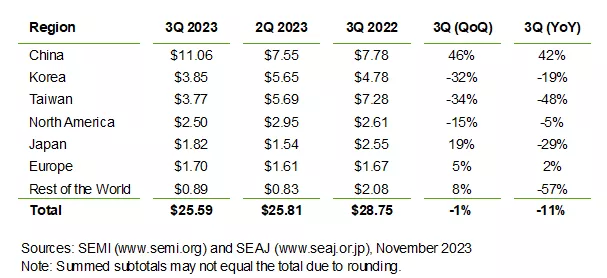
 “The Q3 2023 dip in equipment billings was due to softening chip demand,” said Ajit Manocha, SEMI President and CEO. “However, China has shown strong demand and spending power for mature-node technologies, a sign of the industry's resilience and growth potential in the long run.”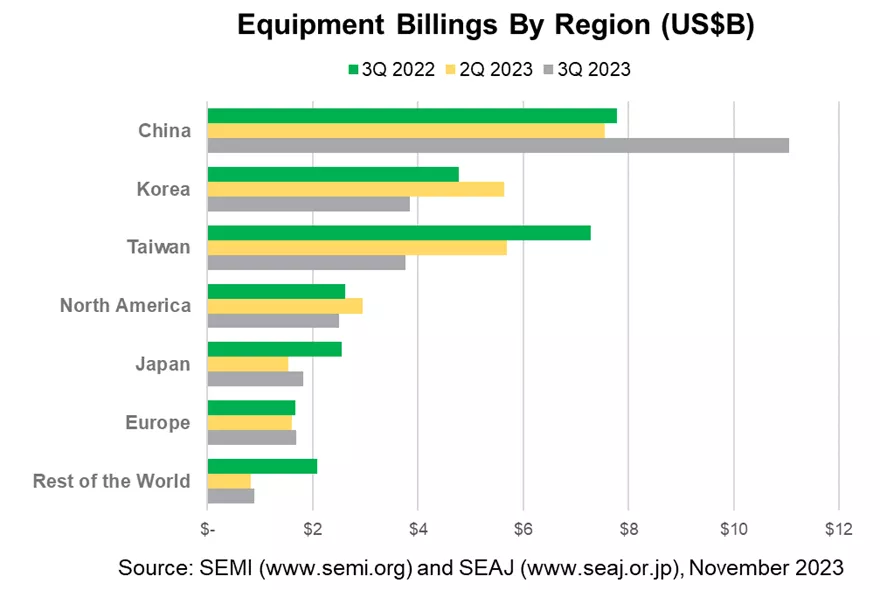

 “We look forward to deep diving into the innovations that are driving semiconductor industry growth in Europe and globally,” said Laith Altimime, President of SEMI Europe. “Companies from across the semiconductor supply chain will meet to explore new business and technology opportunities and ways to accelerate innovation.”
 Hosted by the
  The MSIG PNT program, a public-private partnership between SEMI and the
  ISS speakers will highlight trends that promise to lay the groundwork for the semiconductor industry’s path to $1 trillion in revenue with a focus on innovation and business opportunities in growth markets. Central themes at ISS 2024 will include:
 “The decline in global silicon shipments continued as a result of the ongoing broad-based inventory correction cycle,” said Anna-Riikka Vuorikari-Antikainen, Chairman of SEMI SMG and Chief Commercial Officer at Okmetic. “Silicon wafer shipments for the computing, communications, consumer and memory markets saw the most pronounced declines due to a softening in demand and continuing economic uncertainties, while the automotive and industrial sectors were resilient during this period.”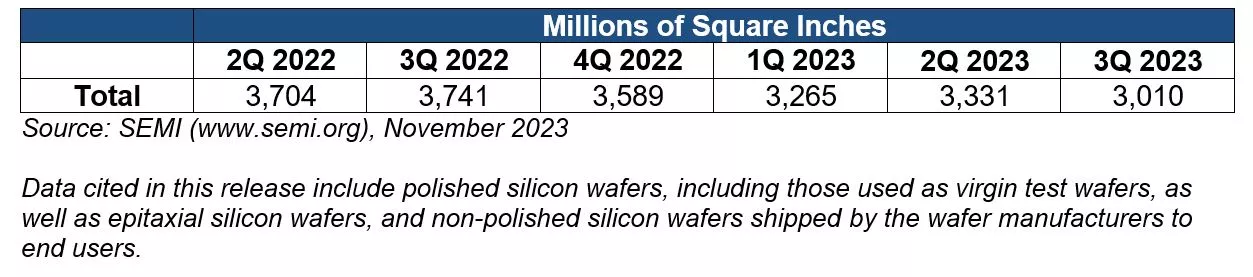
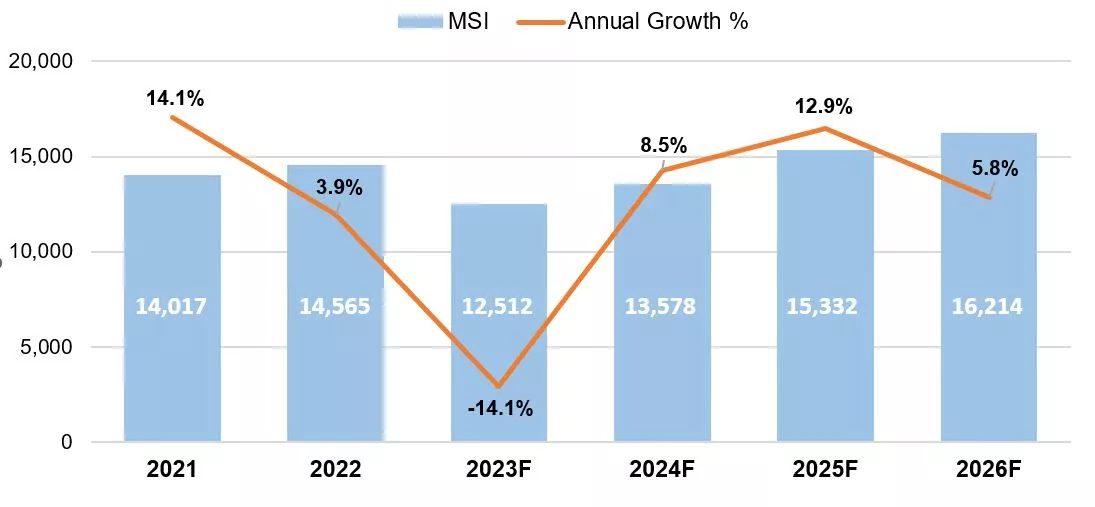
 Momentum from the 2024 rebound is expected to continue through 2026, with wafer shipments setting new highs as silicon demand increases to support artificial intelligence (AI), high-performance computing (HPC), 5G, automotive and industrial applications.