downloadGroupGroupnoun_press release_995423_000000 copyGroupnoun_Feed_96767_000000Group 19noun_pictures_1817522_000000Member company iconResource item iconStore item iconGroup 19Group 19noun_Photo_2085192_000000 Copynoun_presentation_2096081_000000Group 19Group Copy 7noun_webinar_692730_000000Path
Skip to main content
Default Banner Image

Margaret Kindling

“In today's ever-evolving professional landscape, empowering women and fostering their success is not just necessary—it's essential," said Caryn Veach, a long-time Women in Semiconductors (WiS) committee member. Veach is a strategic account manager at Kokusai Electric Corporation, which sponsored the WiS program in Albany, New York in May. Additional sponsors included Axcelis, Energetiq (a Hamamatsu Company), IBM, Nikon Precision and Onto Innovation.This year’s WiS theme, "Empowerment in Action: Real Strategies for Women’s Success," was designed to provide all attendees with actionable strategies to support women's career growth and representation, as well as lead to greater talent retention and workforce stability. The program, which was open to everyone at the co-located SEMI Advanced Semiconductor Manufacturing Conference, was co-chaired by Joy Racowski, PhD., Strategic Account Sales Engineering Manager - Delivery Systems Services at EMD Electronics and Rosanna Robert, ES Process Engineer ll at TEL Technology Center America.Keynote speaker Jennifer Lynn, Cybersecurity Leader and Research Security Program Manager at IBM Semiconductors emphasized the significance of community in driving change. She stressed the role of Employee Resource Groups (ERGs) as a collective voice to advocate for safer and welcoming workspaces where all individuals feel respected and valued. Some key takeaways from Lynn’s address: champion supportive career initiatives, become a mentor or find a mentor, and be an ally in support of peer success. Shari Liss, Vice President of Global Workforce Development and Initiatives at SEMI, moderated a panel which also highlighted real strategies for women’s success. Panelists from EMD Electronics, Entegris, TEL Technology Center of America and University at Albany focused on actionable strategies which everyone, not only women, can implement to navigate corporate environments. They encouraged WiS participants to challenge norms which penalize specific employees. Panelists invited attendees to discover and embrace what makes them unique and use that as a strength for themselves as well as others. (l-r) WiS panel: Shari Liss, SEMI; Jennifer Braggin, Director, Technology, Office of the CTO, Entegris; Daniel Drellich, Managing Director Sr. Vice President of Business Partnering, EMD Electronics; Kathleen Dunn, PhD, Professor of Nanoscale Science and Engineering, University at Albany; Alex Oscilowski, President, TEL Technology Center AmericaImposter Syndrome is a common challenge to women and those who are new in their career or leadership role. Panelists advised everyone to push through it and support others who might feel this way. Assertiveness is an area which should be seen as a strength rather than a disadvantage, especially for women; it’s important that different voices and opinions are heard. Finally, panelists urged everyone to give credit where it is due and actively support team members and peers.The program concluded with an interactive workshop facilitated by Debbie Gustafson, CEO of Energetiq Technology. Attendees were invited to craft an elevator pitch which could be used when networking or applying for a new job or position. Common elements of a pitch include a concise description of oneself, a unique value proposition and a call to action for one’s audience or employer. WiS was an empowering experience with excellent opportunities to network with female business leaders from around the country as well as recent college graduates and industry professionals from major semiconductor manufacturers. There is something uniquely impactful about coming together with other women and peers who understand the challenges and opportunities of our industry. These events create space for honest conversations, meaningful networking, and a sense of community. It is a reminder that that together we can drive change and support one another in powerful ways. Through grants from the W.K. Kellogg Foundation and the David Lucille Packard Foundation, the SEMI Foundation is expanding Women in Semiconductors programming to several regions around the country. In addition to an event in San Jose, California there will be programs in Arizona, Michigan and Ohio in the second half of 2025. For information on WiS in Michigan, visit https://semiscan.org/event/women-in-semiconductors/.Empowering women in the workplace requires persistent effort and community support. By embracing these strategies and advocating for necessary changes, organizations can pave the way for a more equitable future. And just like the Kokusai Electric embrace of Tai-wa, a Japanese word meaning "synergistic discourse", WiS encourages face-to-face conversations and a willingness to understand others with a sense of empathy and respect for everyone.Margaret Kindling is Senior Program Manager at the SEMI Foundation. She has promoted inclusive workplaces via initiatives like WiS, Semiconductor PRIDE and workforce development programming at SEMICON West, SEMICON India and SEMIEXPO Heartland. After a combined 37 years at SEMI and the SEMI Foundation, she will be retiring in August 2025.
Read More
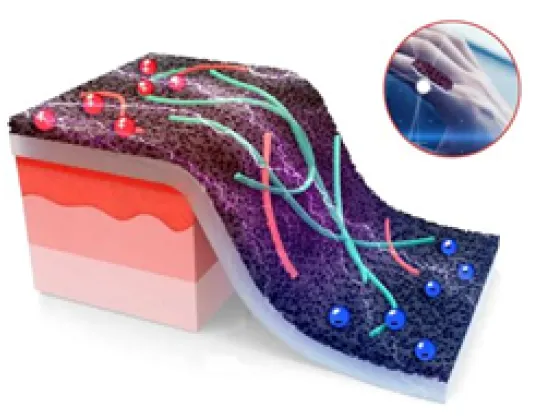
Say ‘Ahhhh’ – imagine your doctor monitoring a health condition from afar or emergency responders receiving real-time alerts that could save a life. A new smart sensor is taking the ouch out of wound monitoring. By using laser-induced graphene (LIG), a two-dimensional (2D) material, researchers are developing a sensor that could revolutionize the tracking of wound healing and recovery. Doctors could get a much clearer picture of the healing process, identifying issues like inflammation, physical strain or a spike in body temperature early on. "This unique sensor material we've developed has potentially important applications in health care monitoring,” said Huanyu “Larry” Cheng, James L. Henderson, Jr. Memorial Associate Professor of Engineering Science and Mechanics (ESM) at Penn State. LIG sensors are self-powered which means they could be especially useful for continuous monitoring in clinical settings or helping detect fires in remote locations. Source: Materials Research Institute, Penn StateUnder the Sea – Mechanical engineers at Carnegie Mellon’s Soft Machines Lab have created a soft robot inspired by the quick and agile brittle starfish, the first mobile and untethered underwater crawling robot. Named after Sponge Bob Square Pants’ sidekick, PATRICK is an AI powered robot which operates without motors so as not to disturb delicate sea life. To make the robot move, the researchers hit it with electric current, causing the wires to heat up past its transition temperature and allowing the limbs to contract and move in different directions. “We want to put the power and the electronics on-board with the robots,” said Ph.D. candidate and PATRICK creator, Zach Patterson. The soft robotic systems which are ideal for tracking the health and quality of water, are biodegradable to eliminate waste and protect the natural environment.Source: Carnegie Mellon University, School of Engineering The sky is NOT the limit with engineering – While Blue Origin made the news recently for sending an all women crew to the edge of space, the first Mexican born woman to travel into space is Katya Echazarreta, an electrical engineer originally from Guadalajara, Mexico. Echazarreta was selected for the trip from a pool of 7,000 applicants from more than 100 countries based on her outstanding achievements in the space industry, including five NASA missions. She traveled to space in 2022 aboard Blue Origin’s NS-21 flight as one of Space for Humanity’s citizen astronauts. Echazarreta comes from a family of engineers and works to make space exploration accessible to young kids, teens, women, and other scientists and engineers through Fundación Espacial, a foundation started in Mexico. Source: Astronomy.comMargaret Kindling is Senior Program Manager at the SEMI Foundation. She promotes inclusive workplaces via initiatives including Women in Semiconductors, Semiconductor PRIDE and workforce and career development programming at SEMICON West and SEMIEXPO Heartland.
Read More
“In technology it’s about the people: getting the best people, retaining them, nurturing a creative environment and helping to find a way to innovate.” Marissa MayerThe annual Women in Semiconductors (WiS) program organized by the SEMI Foundation and held in conjunction with the SEMI Advanced Semiconductor Manufacturing Conference (ASMC) returns for a second year in Albany, New York. This year’s themes are Empowerment in Action and Beyond Buzzwords with a focus on real actions to create success. As in the past, the WiS committee recognizes that everyone needs to be part of these important discussions. Collectively, we are committed to building workplaces that are supportive of all the people who will drive future semiconductor industry growth and success. Meeting the global semiconductor industry’s talent needs to underpin future growth will require continued progress on drawing more women to its workforce. "It’s critical that companies continue to invest in women," Rachel Thomas, CEO, LeanIn.org.WiS co-chairs Samira Bagheri, PhD., Senior Operations Manager at EMD Electronics and Rosanna Robert, ES Process Engineer ll at TEL Technology Center America shared their thoughts about their involvement in the committee, their careers, and why they are excited about this year’s WiS program. SEMI: How did you become involved in the Women in Semiconductors committee and program? Samira Bagheri, PhD., Senior Operations Manager at EMD ElectronicsBagheri: I became involved in WiS through my passion for fostering greater opportunities for everyone in the semiconductor industry. My journey began with my active engagement in employee resource groups (ERGs) at EMD Electronics, particularly the Women’s Success Network, where I led initiatives to support and empower women in STEM. Recognizing the need for a dedicated platform to connect, mentor, and amplify women’s voices in our field, I took on a leadership role within WiS. My involvement has allowed me to collaborate with inspiring women and industry leaders, working together to create meaningful conversations and drive impactful change.Rosanna Robert, ES Process Engineer ll at TEL Technology Center AmericaRobert: I became involved with WiS because of the personal impact I believe I can have, especially with younger girls entering the STEM field. I aim to help improve systems and increase involvement. It’s a great opportunity to collaborate with other companies and colleges. It’s also a great way to look back and see the impact you can make.SEMI: We recently celebrated Women’s History Month and International Women’s Day. How did your company recognize the women at your company? Bagheri: At EMD Electronics, we celebrated Women’s History Month and International Women’s Day with a series of events aimed at recognizing and empowering women in our organization. We hosted panel discussions featuring women leaders, highlighting their career journeys and the challenges they’ve overcome. Additionally, our Women’s Success Network organized networking sessions and workshops focused on leadership development and mentorship. We also reinforced our commitment to inclusion through executive sponsorship and by sharing stories that showcase the invaluable contributions of women in the semiconductor industry.Robert: TEL was able to host multiple seminars during the month of March, covering the national conference for women and providing career talks from one of our female managers. We also had some positive outcomes with our ERGs.SEMI: What can industry leaders do to better engage and inspire female students to pursue a career in the semiconductor industry?Bagheri: Industry leaders play a critical role in shaping the future workforce by actively engaging with female students early in their academic journeys. One of the most effective ways to inspire young women is through mentorship and visibility—having female engineers and leaders share their career paths and experiences can make a huge impact. Hands-on workshops, industry-sponsored hackathons, and participation in organizations like WiS help bridge the gap between education and industry, making the semiconductor field more accessible and appealing.Robert: I believe a great way to get more engagement is through mentorship, scholarships, and funding. Offering scholarships or funding opportunities specifically for women in STEM fields can help with college expenses.SEMI: What was your biggest takeaway from the Women in Semiconductors panel discussion hosted by EMD Electronics last November? Bagheri: The biggest takeaway from our November Women in Semiconductors panel discussion was the power of community and sponsorship. The panelists emphasized that while mentorship is crucial, sponsorship—where leaders actively advocate for women’s career growth—can have an even greater impact. We also had deep conversations about the systemic challenges women face in semiconductor careers and the need for industry-wide initiatives to address these barriers. The event reinforced the importance of building a strong network of support and advocating for policies that create a more inclusive workplace, where everyone has a voice.Robert: It was nice that this program was hybrid so I could join remotely. One of my key takeaways on how to overcome barriers in our workplace is the ability to identify those barriers and figure out how to address them. It’s not just about overcoming them but also approaching them with practical strategies.SEMI: What resources would you recommend to individuals and companies on how to be better allies to women in the workplace?Bagheri: To be better allies, individuals and companies can leverage several resources:Books: Lean In by Sheryl Sandberg, The Memo by Minda Harts, and How Women Rise by Sally Helgesen and Marshall Goldsmith.Training: Workshops and leadership development programs tailored to expand understanding.Networks: Initiatives like WiS, Women in Technology (WIT), and Society of Women Engineers (SWE) provide valuable tools and networking opportunities.Company Initiatives: Establishing mentorship and sponsorship programs, ensuring expanded representation in leadership, and actively promoting work-life balance policies. Being an advocate is an ongoing commitment, and these resources provide a strong foundation for driving meaningful change.Robert: I know there are a few good books out there for people to read, such as Invisible Women by Caroline Criado Perez. There are also great training courses on LinkedIn Learning that individuals can take at their leisure. Additionally, leading by example is a great way for individuals to advocate for others; stand up for women in their companies, and ensure they have a chance to be heard.SEMI: Is there someone who has supported you in your career or been an inspiration?Bagheri: Yes, I’ve been fortunate to have several mentors and sponsors throughout my career. Their leadership, advocacy, and guidance have helped me navigate challenges and seize growth opportunities. Additionally, the women I’ve met through WiS and other ERG initiatives continue to inspire me. Their resilience, innovation, and commitment to making the semiconductor industry more inclusive motivate me to keep pushing for progress.Robert: Support and inspiration come from everywhere. My first mentor hired me not only for my skills but also to give women a chance in the semiconductor field. The inspiration I have comes from a young girl, Francesca. She was always amazed by my work and would frequently ask what I did that day, even though she probably didn’t fully understand. Her curiosity drives me to do better and change the environment for women to explore. Every challenge and barrier I face is one that Francesca and other females can overcome with smiles on their faces. I am inspired to make the industry a welcoming place for her and others!SEMI: What can attendees expect from this year’s Women in Semiconductors scheduled on May 8, 2025 in Albany, New York?Bagheri: This year’s Women in Semiconductors program will be an incredible opportunity to connect, learn, and engage with industry leaders committed to advancing parity among employees in the semiconductor space. Attendees can expect thought-provoking panel discussions, interactive workshops, and networking sessions that provide actionable insights for career growth and leadership. The theme will focus on empowering women and exploring strategies to level up in the workplace. We will also highlight success stories, share best practices, and create a platform for meaningful conversations about the future of women in the semiconductor industry.Robert: This year will be amazing! We’ll discuss key words to grab attention, as well as how to craft a compelling elevator pitch that engages others in a short amount of time.We invite everyone to participate in the upcoming Women in Semiconductors event and learn more about how to become an agent of change. For details and to register, visit the event website. WiS is made possible through generous support of our sponsors: Axcelis, Energetiq, IBM, Kokusai Electric, Nikon Precision and Onto Innovation. Samira Bagheri is a distinguished professional in the field of nanotechnology, holding a Ph.D. in the subject. She has authored over 200 ISI articles, contributing significantly to the advancement of knowledge in materials science and semiconductors. Bagheri was a recipient of SEMI Foundation Excellence in Achievement Award 2024, which recognizes those within the global microelectronics sector who have made significant contributions to advance workforce development initiatives.Rosanna Robert is a Process Engineer at Tokyo Electron. Robert is active in TEL-US Women’s Network, and UPWARDS program with RIT. Prior to joining TEL Technology Center, America she attended University of Albany to obtain her master’s in Nanoscale Engineering. She supports many local church groups along with volunteering at veteran homes and food banks in her Upstate New York Community. Margaret Kindling is Senior Program Manager at the SEMI Foundation. She promotes inclusive workplaces via initiatives like Women in Semiconductors, Semiconductor PRIDE and develops workforce and career programming at SEMICON West and SEMIEXPO Heartland.
Read More
The inaugural SEMIEXPO Heartland scheduled for April 1-2, 2025 in Indianapolis, Indiana, with a focus on Smart Mobility and Smart Manufacturing, provides an opportunity for industry collaboration and growth. These key markets will help drive the semiconductor in achieving a common goal – reaching $1 trillion in revenue by 2030. A critical component in achieving that goal is a sustainable talent pipeline.For the SEMI Foundation, this new expo and conference means partnering with industry and academic stakeholders to cultivate a more inclusive workforce, where everyone is welcome and can establish a rewarding career while helping the semiconductor industry fulfill its potential. Analysts estimate that by 2030 the chip industry will need 1 million more skilled workers to meet exploding demand for semiconductors.Similar to Semiconductor Day programming, the Workforce Development (WFD) Pavilion will connect SEMI members, including human resource professionals and talent recruiters from across the microelectronics industry, with current job seekers and those aspiring to work in the industry.Students, recent graduates, military veterans and professionals returning to work after an absence will discover how microelectronics enable a smart future that is radically changing everyday life—from autonomous vehicles to powering the latest smartphones to the impact of AI on manufacturing. The Workforce Development Pavilion is made possible through the generous support of sponsors ASML, Comet Technologies USA and VAT. SEMIEXPO Heartland partners include Applied Research Institute, Indiana for the Bold, Purdue University and Visit Indy.Pathways to SuccessMike Glavin, SEMI Foundation Program Director of Workforce Development will kick off the two-day programming with an overview of the many national and global initiatives SEMI offers to support member companies in their efforts to attract, develop and retain a skilled workforce. Our resources and initiatives expand the talent pool, attract workers with different experiences and perspectives, and help employers train and grow innovative teams.His presentation will be followed by a series of ‘Day in the Life” presentations by KLA, Pivotal Systems, EMD Electronics and Micron Technology. Career opportunities in the semiconductor ecosystem are vast due to the depth and breadth of the industry and professionals from varied backgrounds will highlight what they do at their companies and why this industry offers so many excellent career opportunities.A presentation from EMD Electronics will discuss how rotational programs can help companies identify, nurture and retain top talent. Following the presentations on day one, students can meet with industry professionals and human resources experts at the Flash Mentoring/Ask an Expert session to learn more about career opportunities and discover what it’s like to work in the semiconductor industry. Companies participating in the session will include ASML, Brewer Science, Brooks Automation, Comet USA, EMD Electronics, KLA, Micron, Pivotal Systems, WGNSTAR. Enthusiastic students attend SEMI Foundation workforce development programming in April 2023.Expanding Career OpportunitiesIn addition to ‘Day in the Life’ presentations by industry professionals from ASML, Brewer Science, Brooks Automation and Synopsys, expo visitors on day two also will hear about Resume Building and Interviewing Skills from a Talent Engagement Lead at ASML. The SEMI VetWorks: Advancing Veteran Careers in Semiconductor Technology presentation showcases how talent professionals can connect with veterans and military communities to grow their workforce. Talent professionals will learn about two exciting Purdue University programs: The Summer Training, Awareness, and Readiness for Semiconductors (STARS) is a workforce development program launched by the university to attract and train students for careers in the microelectrons industry. SCALE is a program engaging K-12 schools and teachers in Microelectronics Workforce Development. Both sessions will be presented by Purdue University faculty members and provide industry professionals with an opportunity to expand the talent pipeline. The day’s programming concludes with a resume review. During this interactive session, students and job seekers can have their resume reviewed by professionals from ASML, Brewer Science, Brooks Automation, Comet USA, EMD Electronics, KLA, Micron, Pivotal Systems, Synopsys, and WGNSTAR. Connect and LearnPresentations throughout the two days are meant to engage students and jobs seekers on exciting careers in semiconductors. To register for expo and conference and learn more about all the sessions scheduled in the Workforce Development Pavilion, visit SEMIEXPO Heartland. Margaret Kindling is Senior Program Manager at the SEMI Foundation. She promotes inclusive workplaces via initiatives like Women in Semiconductors, Semiconductor PRIDE and develops workforce development programming at SEMICON West and SEMIEXPO Heartland.

Read More
Superconducting Naturally – Miassite is a naturally occurring mineral which scientists at Ames National Laboratory have identified as the first unconventional superconductor found in nature. Unlike conventional superconductors that follow the Bardeen-Cooper-Schrieffer (BCS) theory, minerals such as miassite exhibit unique properties outside of this framework. Made of rhodium and sulfur, miassite was initially recognized as a regular superconductor in 2010. Recent tests confirm it joins a small, exclusive group of unconventional superconductors previously limited to lab-made materials.Lab tests on miassite involved measuring magnetic reactions, inducing defects, and analyzing energy gaps, all confirming its unconventional behavior. While naturally occurring, samples are unlikely to be superconductive due to their disordered state, miassite’s lab-verified properties open doors to new research and highlight its unique duality as both a conventional and unconventional superconductor.Source: A Superconductor Found in Nature Has Rocked the Scientific WorldPheromones + vision = mate selection – When choosing a mate, Heliconius butterflies, despite their tiny brains can outperform current AI in multi-sensory decision-making by processing visual and chemical cues simultaneously. This discovery inspired Penn State researchers to develop a low-energy, multi-sensory AI platform using 2D materials. The device combines molybdenum sulfide (MoS2) to mimic visual capabilities and graphene to detect chemical signals like pheromones.The device could integrate visual and chemical cues, offering adaptability like a butterfly’s mating behavior. This innovation addresses limitations in current AI, which relies heavily on energy-intensive, single-sensory processes. Researchers aim to expand the device to process three senses, like crayfish using visual, tactile, and chemical cues. The work, supported by the U.S. Army Research Office and the U.S. National Science Foundation, could revolutionize applications in robotics, smart sensors, and critical environments, by enabling AI systems to detect issues using multiple sensory inputs efficiently. Imaging of Heliconius Butterfly A Butterfly Effect – Proving once again that there is a lot to be learned from nature, researchers from the Fraunhofer Institute for Solar Energy Systems ISE have developed innovative, colored solar facade elements inspired by morpho butterfly mimicry. These panels are aesthetically pleasing, integrate seamlessly into building exteriors, and retain high efficiency, achieving 95% of the power output of uncoated panels. Using vacuum-applied 3D photonic structures like those on butterfly wings, the panels produce vibrant, angularly stable colors with minimal energy loss. This MorphoColor® technology addresses architects’ and building owners’ concerns about design, offering an efficient, visually appealing solution for building-integrated photovoltaics while surpassing other technologies currently available.Close up of a morpho butterfly wingSustainable Flight – The world’s fastest supercomputer, Frontier, located at Oak Ridge National Laboratory, enables unprecedented advancements in sustainable aviation technology. Capable of over a quintillion calculations per second, Frontier allows GE Aerospace to conduct full-scale simulations of its revolutionary Open Fan engine design, accelerating insights into aerodynamics and turbulence. This groundbreaking tool aids the CFM RISE program, which aims to cut fuel consumption and CO2 emissions by at least 20%. Frontier’s detailed simulations predict engine performance under real-world conditions, saving years of testing. The partnership between GE Aerospace and Oak Ridge is expanding, promising future collaborations in climate modeling and advanced simulation techniques.An Open Fan engine design developed as part of a new project led by GE AerospaceSource: https://www.geaerospace.com/news/articles/new-frontier-how-ge-aerospace-using-worlds-fastest-supercomputer-help-design-open-fanMargaret Kindling is Senior Program Manager at the SEMI Foundation. She promotes inclusive workplaces via initiatives like Women in Semiconductors, Semiconductor PRIDE and workforce development programming at SEMICON West and SEMIEXPO Heartland.
Read More
Even before the invention of the first semiconductor, women have been making significant contributions to technology. As of July 2024, 27.6% of the tech workforce identified as female. During the last 5 years, the percentage of women represented in tech increased by less than 3%. A bright spot is the semiconductor industry, where women comprise nearly 29% of the workforce. However, there’s still a long way to go until we see greater gender equity. Although women aren’t always highly visible in their roles, their achievements are significant. The slide show featured at the Women in Semiconductors (WiS) reception during SEMI’s Industry Strategy Symposium (ISS) 2025 earlier this month highlighted only a small number of the many women who have made a positive and lasting impact on technology. From Ada Lovelace, founder of scientific computing, to Lisa Su, AMD CEO who was named Time’s CEO of 2024, women have long been technology trailblazers and role models to inspire future female leaders.At this year’s WiS reception, attendees joined in a celebration of industry pioneers, both past and present. “When women come together, amazing things happen," said Shari Liss, SEMI Vice President of Global Workforce Development Initiatives. “The event was all about connection, mentorship, allyship, and lifting each other up. In a world that can feel heavy, it was a reminder of the strength we have when we support one another and work together to shape the future of our industry,” said Liss. WiS continues to be an important part of SEMI Foundation workforce development programming.Shari Liss, SEMI Vice President of Global Workforce Development and Initiatives at ISS 2025In her welcoming remarks, Debbie Gustafson, CEO of Energetiq Technology, Inc., a Hamamatsu Company and a member of the SEMI Foundation Board of Trustees, asked how many people in the audience feel that they can make a difference, and only half raised their hands. She shared a story of how she has made a difference by making her company realize the important role women play in bringing innovative solutions to today’s most pressing challenges. “Everyone can help improve the number of women in your companies by creating an effective place for women to have a personal life and also have a career!” Debbie Gustafson, CEO, Energetiq Technologies at ISS 2025This is the second year Energetiq has sponsored the WiS reception at ISS. “It’s a way to show my support for SEMI events and encourage men to attend as allies to women,” said Gustafson, as images of industry luminaries were projected on the screen behind her. She recalled her first ISS and how few women were in attendance. The gender gap has declined over the years, but the number of women, including speakers, at ISS and other SEMI programs remain low. “I hope that every one of the women and allies will volunteer and raise their voices,” urged Gustafson.Gustafson asked for additional comments from the audience, and SEMI President and CEO Ajit Manocha immediately volunteered to add his voice in support. “Our industry must do a better job of recruiting and retaining women – and most importantly – providing leadership opportunities,” said Manocha. “The benefits of diversity and female leadership to business operations and the bottom line are well documented. Women are crucial to narrowing the talent gap, and ultimately, to our industry’s future.”Celebrating Women in Semiconductors at ISS 2025Creating true inclusion and equity in the workplace is critical to everyone’s success. Since its inception almost a decade ago, Women in Semiconductors has highlighted women’s contributions and leadership in the semiconductor industry and recognizing the need to bridge the workplace gender gap. Our upcoming May 2025 program, which will be held in conjunction with ASMC, will highlight authentic stories to inspire and provide actionable insights. The agenda will include skills development which incorporates decision-making, strategic thinking, negotiation, as well as networking opportunities to connect aspiring leaders with experienced mentors who can provide guidance.In 2025, we’re excited to expand the WiS initiative to programs in Arizona, Michigan and Ohio with funding from the W.K. Kellogg Foundation and David and Lucile Packard Foundation. An important piece of this work is SEMI Foundation’s Chips Childcare program. Through Chips Childcare, SEMI Foundation partners with Policy Equity Group and other organizations across the country to support companies in designing stronger childcare plans and systems. Affordable, accessible, and quality childcare is a critical element of successful workforce development and paramount to not just helping families thrive, but ensuring that communities, cities, and the country can meet economic goals. Part of this program is providing industry awareness and outreach to women and parents who rely on childcare to work, and expanding Women in Semiconductors to new regions will support Chips Childcare goals. Learn more about the Chips Childcare program in SEMI’s blog: Affordable, Accessible, and Quality Childcare: A Critical Workforce Development Strategy for the Semiconductor Industry.”Companies that embrace inclusion, leveraging the strengths of all workers – including women – create dynamic and innovative work environments. We encourage everyone in the industry to focus on steps they can make, collectively or individually and regardless of position, to drive meaningful progress to advance women and a thriving semiconductor industry.The next WiS event will transition beyond discussions to providing practical strategies that can help women secure internal job opportunities and build skills needed for career advancement, and how can we empower changes that lead to meaningful improvements that drive lasting impact for everyone. Learn more about empowering change at Women in Semiconductors on May 8, 2025. For details, visit https://www.semi.org/en/connect/events/women-in-semiconductors-wisMargaret Kindling is Senior Program Manager at the SEMI Foundation. She promotes inclusive workplaces via initiatives like WiS, Semiconductor PRIDE and workforce development programming at SEMICON West and SEMIEXPO Heartland.
Read More
How Cool is That - Northrop Grumman’s “World’s Fastest Microchip” won the 2024 “Coolest Thing Made in California” contest, organized by the California Manufacturers Technology Association (CMTA). Public votes were cast for 138 California-made products in four rounds, culminating in this microchip—boasting speeds up to 1 terahertz—being crowned the winner. Manufactured in Redondo Beach, CA, the chip is 1,000 times faster than smartphone processors and represents California’s cutting-edge manufacturing sector. The contest and award ceremony were celebrated during CMTA’s MakingCA Conference, honoring manufacturing’s $310 billion contribution to the state’s economy. Doing the Green Wave - NIST scientists have successfully created a compact, full-spectrum laser covering the green-yellow-orange wavelengths, long considered challenging to produce. Traditional semiconductor lasers struggled with green wavelengths due to material limitations, so NIST turned to nonlinear optics, producing different wavelengths by adjusting silicon nitride device geometry and laser input. This breakthrough enables more precise, pure wavelengths ideal for quantum computing, medical devices, and underwater communications. Their method combines pump laser tuning and device adjustments, achieving 150+ wavelengths, demonstrating a significant advancement in accessible, high-quality lasers.Source: NIST’s Compact Green Semiconductor Laser - IEEE SpectrumEnergy Hero - At the 2024 ITF World conference, AMD CEO Lisa Su spotlighted a new goal: a 100x boost in computing efficiency by 2027. As shrinking transistor sizes yield diminishing returns, materials innovation has become essential for boosting performance and efficiency. Applied Materials has responded with advanced materials engineering solutions, harnessing exotic elements and 3D chip designs to improve efficiency. For instance, Applied’s Integrated Materials Solution™ combines six process technologies to reduce chip wiring resistance by 25%, a critical advance as semiconductor nodes shrink to the atomic scale. These methods promise breakthroughs in power efficiency across AI, personal electronics, and more. Building Automation of the Future - Imagine a future where every device in newly built structures— from HVAC systems and appliances to light switches and sensors—is equipped with a microprocessor and linked through a reliable communication network. This could transform how buildings operate, yielding substantial benefits across various sectors. Chip manufacturers would see new growth opportunities, while builders could offer smarter, more efficient homes. Consumers would gain convenience and comfort, as buildings could dynamically adjust to personal preferences and real-time needs. For instance, rooms would automatically adapt their temperature as people move through them, making manual thermostat adjustments obsolete. This automated approach wouldn’t just create a more comfortable environment but would also optimize energy use, potentially lowering costs and benefiting the environment.Source: Building Automation of the Future - EE TimesDo you have a fun fact to share? We invite SEMI members to share fun facts about the industry or their company. We’ll consider your tidbits for inclusion in future blog articles and or posting on social media. Complete our survey form or email [email protected]. Learn more about the SEMI Foundation and its initiatives to promote industry awareness and help provide a path for those interested in rewarding careers in microelectronics. Follow the SEMI Foundation on LinkedIn, Instagram, X and Facebook. Margaret Kindling is Senior Program Manager for Diversity, Equity, and Inclusion at the SEMI Foundation. She promotes inclusion and belonging via Women in Semiconductors, Semiconductor PRIDE and SEMICON West Workforce Development Pavilion programming.
Read More