downloadGroupGroupnoun_press release_995423_000000 copyGroupnoun_Feed_96767_000000Group 19noun_pictures_1817522_000000Member company iconResource item iconStore item iconGroup 19Group 19noun_Photo_2085192_000000 Copynoun_presentation_2096081_000000Group 19Group Copy 7noun_webinar_692730_000000Path
Skip to main content
Default Banner Image

semiconductor manufacturing

Materials science – a field that includes elements of applied physics, chemistry, and mulit-disciplinary engineering applied to magnetics, metallurgy, ceramics, polymers and silicon – serves as the foundation for technologies that have driven much of the tech sector’s economic growth for the past 50 years. As our devices grow smaller, faster and smarter – while also requiring higher performance and greater energy efficiency – we’re reaching the limits of what can be accomplished with these fundamentals. The technology sector needs renewed research and investment in new materials to help address the challenges we face in a rapidly changing world. Leading TDK Ventures, the investment arm of TDK Corporation, I’m happy to report that a number of young companies have stepped up to the challenge of innovating materials science for the 21st century. In the past 18 months, we invested in multiple startups dedicated to reimagining the basic building blocks of materials science and identifying new ways to push technology forward – in fact, three of them have successfully gone public or been acquired over the last year. This demonstrates not just a renewed interest in materials science research but also highlights the momentum for healthy returns on materials science investments. Or, as I like to say, it’s the return of materials science returns. Materials science at the atom level For high-tech investors, materials science went out of favor the past 10 or 15 years, because investment in software development companies began to deliver very healthy returns in relatively short time frames – often in as little as two or three years. Product development in materials science traditionally requires much more capital and takes a lot longer to generate returns than software startups. Today’s hardware innovators are making it clear that we’ve only begun to scratch the surface of what’s possible in the materials sciences. Unlike 20 years ago, we can develop products like graphene, which consists of a single layer of carbon atoms that is about 200 times stronger than steel and an excellent conductor of both heat and electricity. Nanometer-scale materials like this enable the design of ultra-low power, high-performance components that can integrate multiple functionalities onto very small devices and create opportunities that were impossible only a few years ago. With advances like this, the future of materials science is regaining its luster. Investors welcome materials science startups Three materials science startups with successful exits: GenCell, which went public in 2020, develops fuel cell solutions that offer clean backup power for a variety of commercial, industrial and healthcare operations and can be used for off-grid power and rural electrification in a wide range of temperature and humidity conditions. GenCell’s revolutionary process creates hydrogen-on-demand from anhydrous ammonia (NH3) at 10 times the efficiency of other solutions, without any outside electrical power.GenCell fuel cells enable hydrogen and oxygen to react in an emissions-free chemical process that produces electricity and heat, with pure water as the only by-product. Origin, acquired by Stratasys in 2020, creates 3D printer platforms that offer an additive manufacturing approach to mass manufacturing, with the freedom of open materials. Using Origin 3D printers, customers can print products of their own design from a range of materials, or from their own proprietary materials. Origin maintains strategic partnerships with the largest materials science companies in the world and print products for leading companies in the dental, medical, and industrial sectors. SLD Laser, acquired by KYOCERA in 2020, produced the world's first high-luminance, fully integrated white laser light emitter. The emitter is based on a gallium nitride solid-state laser projected through a high-performance phosphor element that converts the blue laser to broad-spectrum, incoherent white light that eliminates eye safety risks. The resulting light source emits 100x more luminance, projects 10 times the distance than an LED, and is being incorporated into a range of specialty, display and automotive lighting applications. Materials matter Many of the fundamental technological innovations of the last century, including advances in semiconductors, biotechnology, and server technology, were based on breakthroughs in materials science. At TDK Ventures, we believe the only way to advance further is to return to materials research to identify new ways to expand the horizons of science and technology. For some established companies, this may require a pivot from traditional ways of getting things done and embracing fresh ways of thinking. It means thinking more like a startup and welcoming the challenges of change and new opportunities. We also believe that these innovations should not just push the boundaries of existing disciplines but contribute to preserving our environment and improving the lives of people. This is one of the founding principles of TDK Ventures: Our investments must contribute to digital and energy transformation and help lead to a more sustainable world. Our goal is to help every startup we invest in achieve their full potential for positive world impact. For instance, GenCell fuel cells bring emissions-free electrical power to rural communities far from traditional electrical grids, helping raise living standards without reliance on polluting diesel generators. Laser lights from SLD Laser are more power-efficient than traditional LED lamps, as lights last over 10,000 hours longer than equivalent HID (high-density discharge) lamps. Origin 3D printer platforms enable safe, localized manufacturing, and are geared toward minimizing energy waste in the supply chain. We’re just scratching the surface of what’s possible with materials science. At TDK Ventures, we’re dedicated to delivering meaningful financial results while exploring the potential of new and transformative technologies to bring positive change to our society and environment. Nicolas Sauvage is managing director at TDK Ventures, the corporate venture capital (CVC) arm of Japan-headquartered electronics manufacturer TDK Corporation. TDK Ventures is a technology-focused venture fund, investing globally in early-stage startups that leverage fundamental materials science to bolster innovations in Digital Transformation (DX), Energy Environmental Transformation (EX), unlocking an attractive and sustainable future for the world.
Read More
SEMI spoke with Eyal Shekel, senior vice president of Service Strategy and Excellence at Tokyo Electron Limited, about the impact of artificial intelligence (AI) on smart manufacturing and how other fab solutions for smarter process tools are advancing semiconductor manufacturing.Eyal shared his views ahead of his presentation at the SEMI Fab Management Forum, 17 February, as part of the SEMI Technology Unites Global Summit, 15-19 February 2021, an online event. Join us to meet experts from Tokyo Electron and other key industry influencers. Registration is open. SEMI: AI technology is considered a key enabler for smart manufacturing. What are the latest trends? Shekel: The advent of advanced nodes and extreme complex 3D semiconductor geometry has lengthened time to market and increased costs in areas ranging from equipment development and large-scale metrology usage to monitoring yield inhibitors.AI is becoming a critical tool in the area of material informatics to determine suitable materials and processing techniques in order to meet the needs of future devices. Together with new materials and processes, the development and implementation of virtual metrology will enable accurate and almost absolute real-time monitoring of our customers’ device wafers at each stage of the manufacturing process.SEMI: What are the benefits of data analysis in the process from R D and Ramp-Up to High-Volume Manufacturing? Shekel: The new research field of materials informatics enabled by AI provides tools to guide the highly efficient discovery and optimization of production processes. For example, TEL has developed methodologies for co-optimizing processes and materials for etch rates.To monitor and manage the yield of semiconductor fabrication processes, direct metrology measurements are important. However, it is difficult to monitor all production wafers due to the time and cost involved. With deep learning AI, it is now becoming possible to predict every wafer’s metrology measurements based on production equipment data and previously processed wafer metrology variables. This enables total quality management and run-to-run control, while simultaneously reducing production costs and cycle time.SEMI: Can you tell us more about TEL Service Advantage?Shekel: TEL Service Advantage is a TEL global support organization that allows customers to select a service plan that fits their needs. Through TEL Service Advantage, we can quickly respond to customer requests and technical advancements. TEL Service Advantage provides various plans to maximize equipment maintenance efficiency for customers and productivity from equipment manufactured by TEL. TEL Service Advantage plans can be combined to meet customer needs and achieve maximum results.A key enabling element of TEL Service Advantage is TELeMetrics™. TEL analyzes equipment data from various sensors using a remote connection and, based on that analysis, provides solutions to customer-specific problems around equipment throughput and predictive maintenance.SEMI: How is AI helping during the pandemic? Can you share a success story? Shekel: The pandemic forced severe travel restrictions worldwide, making it very difficult or even impossible in many cases to visit our customers, as it is still the case today. Standard communication devices like smartphones and email helped at the beginning when TEL intensified the remote support by our Total Support Centre (TSC).TEL continued to develop its Service Advantage program quickly, and started using additional advanced tools and methodologies such as the following: Deployed AR (Augmented Reality) to remotely assist our customer and TEL engineers Secured remote connections into TEL tools to investigate parameters and logs, or to change set-up Used remote training courses that connects trainers via video conferencing systems and training tools in the factories to skill up engineers located in a different parts of the world Used AR glasses for tool start-up and troubleshooting Expanded TEL database global technology with multi-tool on languages search capabilities A key project at a customer site in Europe offers an excellent success story. Using all the approaches above, we collaborated with the local team to put a tool into production with no major delays. This was highly appreciated by the customer and very important for us.SEMI: What do you predict for the future? Shekel: Global technology infrastructure continues to develop and expand rapidly. Elements like 5G networks, IoT and advanced sensing capabilities will lead to what we call General AI, which will be based on neuro-like infrastructure. The auto learning will spread across domains and rely on internal logic and reasoning to automate many tasks that are manual today. In our industry in particular, General AI will enable workers to focus more on data analytics and future advanced R D rather than ongoing operations.SEMI: How can technology unite us? What do you expect from your participation at SEMI Technology Unites Global Summit?Shekel: Technology united us in the last 150 years. The connectivity started with telegraph and telephone and was used to exchange information over wider distances. Nowadays, video conference capabilities, AR and improving communications technology makes it much easier to unite people who are geographically dispersed. This becomes obvious and valuable especially during this pandemic period. As a fact, we are able to continue to perform all our key activities – our tool support, training and customer relationships – even if we cannot be present in person.The SEMI Technology Unites Global Summit is a great chance to stay connected to people and customers that I would normally meet at the SEMICON exhibitions.It also offers the opportunity to network with many more people who I would not be able to meet otherwise. Moreover, I can watch speeches and presentations at any time! Normally I would miss some programs since exhibitions and events took place at the same time.Eyal Shekel, senior vice president of Service Strategy and Excellence at Tokyo Electron Europe Limited, is a 27-year semiconductor industry veteran. Upon his graduation as a Mechanical Engineer from the Technion (Israel leading technical institute), he joined Applied Materials. In 1997 he moved on to Tokyo Electron (TEL) in Europe, served as the Regional Service Manager of Israel and, soon after, was appointed the company’s General Manager. Since 2005 Eyal has been part of TEL Europe senior management. He oversaw the Service and Support Operations for TEL Europe as a senior vice president until 2019. In his current role, he co-leads TEL’s Global Service Committee in Japan.The SEMI SMART Manufacturing Initiative is a global effort to promote awareness of and interest in smart manufacturing with a focus on delivering industry-recognized best-in-class programs and services to enable members to maximize product quality and productivity while reducing costs. Activities are focused on building out core capabilities to enable smart manufacturing across the microelectronics supply chain. MADEin4 is a consortium of 47 partners from 10 countries connecting the full range of supply chain – from semiconductor equipment manufacturers and system-integrating metrology companies to RTOS and key applications such as the automotive industry. The MADEin4 Project develops next generation metrology tools, machine learning methods and applications in support of Industry 4.0 high-volume manufacturing in the semiconductor manufacturing industry. Serena Brischetto is senior manager of Marketing and Communications at SEMI Europe.
Read More
Nexperia became a standalone company about four years ago after our divestiture from NXP Semiconductors. Last year we started our journey towards smart manufacturing at our back-end factories in Asia by developing a roadmap to help steer us in the right direction.Our first step to creating a convincing and workable smart manufacturing roadmap was to define the very meaning of smart manufacturing to Nexperia. Since the definition of smart manufacturing varies widely, we started by looking at two different and distinct technology adaptations: Physical automation Data-driven manufacturing, or using analytics at the core to develop and adopt machine learning and artificial intelligence (AI) models It is important to find the right balance of investments between physical automation and data-driven manufacturing to steer clear of deployment inefficiencies since only connected solutions deliver full value. Our approach involved the following high-level steps. Meeting with internal management teams for their inputs and examining factory needs and maturity Meeting with other semiconductor factory operators, subcontractors and partners to review their smart manufacturing approaches and challenges Evaluating our needs and status against the Singapore Smart Industry Readiness Index model Physical AutomationEvaluating the maturity of available solutions and adaptions by the industry and our own shop floor helped simplify the thought process quite well. Logistic automation is not new. Very mature solutions, even for custom layouts and preferences, are readily available. Shop floor automation is far more difficult than logistic automation since variability is simply too high. Traditional shop floor investments were always driven from quality or OEE perspectives and not necessarily very well connected. Our approach is outside-in – deploy logistic automation first and then move to the shop floor.Data-Driven ManufacturingHow smart manufacturing becomes depends on the extent to which a factory is data-driven. Enabling data-driven manufacturing requires foundational investments to improve traceability, connectivity and real-time operations. We believe real-time awareness can drive machine-level and closed-loop process control critical for predictive, cognitive control of the shop floor.Real-Time Awareness and Traceability is at the CoreDeveloping real-time awareness requires wide-ranging manufacturing protocols. The following focus areas have helped us simplify the challenge: Connectivity Core systems for areas including MES, quality and SAP Analytics and AI Digital shop floor featuring one operator interface with real-time control systems Readiness of engineers, technicians and managers Each of these pillars has different level of complexity due to legacy equipment and systems, legacy processes and inexperience of engineers with automation. This makes deployment of data-driven operations a complex challenge. We looked at different project approaches for each of the focus areas: Core Systems – Build additional technology enablers and roll them out with prioritization planning. Analytics – Focus mainly on OEE and yield with automated root cause analysis and predictive approaches. Real-Time Control – Merge the initiative with factory-level programs to improve productivity and quality. With a strong smart manufacturing roadmap, the next challenge is to secure long-term buy-in on the plan and required investments from executive management. Visiting and otherwise connecting with peer sites that have already deployed smart manufacturing infrastructure is vital in this effort. Thanks to SEMI members, we were allowed to visit their factories with our management team for go-and-see tours since seeing is believing in the smart manufacturing journey. Our executives also met with subcontractors and vendors to better understand the value of this transformational undertaking.A long-term outlook is necessary to successfully develop a smart manufacturing roadmap, and executive commitment goes a long way to ensuring its success. We are excited about our smart manufacturing journey and believe it is a game changer for our factories.Adarsha MARPALLI is director of Factory Automation at Nexperia B.V.
Read More
If you think the world is flooded with a mind-boggling volume of digital content, then you might be just a amazed to learn about the sheer wealth of information and business opportunities that will be uncovered at this year’s SEMICON Japan as the event goes full digital.To start, more than 160 companies will exhibit their semiconductor manufacturing gear and services on the virtual show floor of Japan’s premier event for the semiconductor manufacturing and design supply chain. Add to that over 80 presentations and panels that feature global industry executives, visionaries and experts offering insights into the latest microelectronics developments, trends and technologies, and it’s easy to see how SEMICON Japan 2020 Virtual is designed to help attendees grow their businesses and the industry drive the next wave of innovations that promise to address some of the world’s greatest challenges across healthcare, the environment, transportation and other industries.Best of all, it will all be available at your convenience from your office or home 24 hours a day, making it safe and easy for you and others from all over the world to attend. Following is what’s in store at SEMICON Japan 2020 Virtual to help lead you into the future.Leading Japanese Securities Analysts to Weigh in What’s Ahead for the Chip Equipment Sector in 2021 For the first time, SEMICON Japan will feature Bulls Bears as Japan’s’ five top securities analysts focus on the 2021 outlook for the global semiconductor equipment sector. The December 17th event will include discussions on the COVID-19 pandemic’s impact on the semiconductor industry, the continuing geopolitical tensions that are forcing the industry to reconfigure its supply chains, the fast-growing China market and cutting-edge applications that are powering industry growth. The perspectives from Japan’s investment community are sure to be compelling as the region supplies one-third of the global semiconductor industry’s chip manufacturing equipment.Moderated by Akira Minamikawa of OMDIA, the panel will include these experts:Three Visionaries to Explore the Digital TransformationPowered by semiconductors, the fourth industrial revolution is driving digitalization globally, remaking societies to bring more efficiencies and conveniences to our work and home lives and help more people prosper. But the flip side of those tremendous benefits is the risk that wealth will be concentrated in the hands of people in positions of power, companies and nations. Democratizing economic development remains a serious challenge worldwide.Addressing this pressing issue, the Opening Panel on December 11 will feature prominent visionaries from political, academic and industrial communities including the following:Sony’s Leading-Edge Electric Car and Nissan’s Driver Assistance System to Highlight Automotive InnovationsCars are becoming more like smartphones on wheels, rapidly filling with more and more semiconductor chips every year with electrification and electronic driver-assisted systems to key drivers of this growth. At the SMART Mobility 1 session on December 14, two pioneering companies – Sony and Nissan Motor – will focus on both areas of semiconductor innovation.Sony’s Vision-S concept car, exhibited at CES 2020, astonished many in the electronics ecosystem and the automotive industry. What is Sony’s vision behind the vehicle? Izumi Kawanishi, Senior Vice President, AI Robotics Business at Sony will share the latest on the initiative.Nissan, maker of the pioneering LEAF electric vehicle, is the first Japanese carmaker to equip a car – its new Skyline – with the ProPILOT 2.0 driver assistance system for hands-off highway driving. Nissan Executive Vice President Asako Hoshino will provide an update on the company’s driver assistance system strategy and plans.Quantum Computing Meets Chip Manufacturing for the First Time at SEMICON Japan In contrast with current computer systems that use bits (binary 0 or 1 state) for computing, quantum computers leverage quantum superposition (0 and 1 states exist at once) to quickly solve highly complex problems that might take traditional supercomputers hundreds or even thousands of years to tease out. American physicist Richard Feynman promoted quantum computer as early as 1982, but it wasn’t until nearly two decades later and long after his death that quantum bit circuits emerged for use in superconductive materials.With quantum circuits and devices requiring state-of-art semiconductor processing technology, The Era of Quantum session on December 15 at SEMICON Japan 2020 Virtual will discuss necessary advances in chip manufacturing technology to enable the next generation quantum computing. The session will be the first time SEMICON Japan connects the semiconductor manufacturing and quantum computing communities.The program will feature the following experts:Strategies for Sustainable Semiconductor Industry GrowthSemiconductors are giving rise to a hyper-connected world that is fueling demand for staggering volumes of chips, pressuring the electronics industry to uncover new ways to increase manufacturing efficiency while reducing power consumption in a bid to help combat climate change. The Grand Finale Panel composed of executives from Japan’s semiconductor supply chain and a supervising ministry will gather for the Grand Finale Panel on December 18 to discuss ways the industry can achieve sustainable growth through innovation with a focus on energy savings and an new process technologies such as extreme ultraviolet lithography (EUV), which promises to enable electronics devices that are more power powerful, cheaper and more energy-efficient.Panelists include the following:Register TodayThe SEMICON Japan 2020 Virtual All-In Pass provides online access to all 80 presentations and panels, which will be available on-demand for replay until January 15, 2021. What’s more, all eight keynote programs will feature English subtitles. For complete information of the exposition, programs and registration, visit the SEMICON Japan website.I look forward to seeing you virtually at the event!Jim Hamajima is president of SEMI Japan.
Read More
Not long after STMicroelectronics opened its first semiconductor plant in Singapore more than 50 years ago, a facility chiefly focused on chip assembly and packaging, the company realized that it had constructed the site in an area with a blossoming chip ecosystem with a bright future. Before long, the company became the first to start a wafer fab facility in the so-called Little Red Dot. Today, our STMicroelectronics Singapore campus sports several buildings that dwarf the original site in the sprawling Ang Mo Kio Industrial Park 2. The facilities feature advanced 200mm manufacturing lines but still produce huge volumes of chips with more than 1,000 pieces of 150mm manufacturing equipment.Much of the wafer equipment dates back to the past century so is no longer supported by the manufacturers, if they’re still even in existence. Yet decades later the chipmaking gear continues to operate with a surprising reliability that far surpasses the longevity called for in its manufacturing specifications thanks to replacement parts and frequent upgrades with more sophisticated handling robots and chucks. Now, as smart manufacturing begins to establish a foothold in the semiconductor industry, Industry 4.0 technology is breathing new life into these aging workhorses.Despite its age, all of the equipment adheres to industry manufacturing standards. The gear is remotely controlled using the SECS/GEM interface protocol that was either originally integrated with the equipment controller or custom-made. We’ve also maximized its usage through advanced recipe management, advanced alarm and event handling, and secured lot identification.Crucially, we decided to systematically deploy a real-time fault detection and classification (FDC) solution using a third-party product based on what today is known as an edge computing architecture. Every piece of critical processing equipment is progressively paired with its dedicated FDC instance running on a virtual machine in the wafer fab data center, and the FDC solution monitors vital equipment parameters at high frequency – depending on the SECS/GEM capabilities of the equipment – and analyzes incoming manufacturing data in real time using classic SPC (statistical process control) algorithms and even AI-class protocols.Our use of the FDC edge solution as a sensor signal aggregator has given our equipment a second life. The solution processes real-time signals from sensors connected through a typical TCP-IP. Sensors have been the old equipment’s saving grace with their ability to de-multiply equipment capabilities and overcome fundamental shortcomings and design weaknesses. The STMicroelectronics Singapore plant first used off-the-shelf sensor nodes with built-in power amplifier and analog input nodes. While very practical and easy to implement, deploying the nodes can be costly. After developing more expertise in sensor integration using FDC, our wafer fab equipment experts decided to design an in-house solution based on the famed STM32 microcontroller. Leveraging Arduino – an open-source electronics platform with easy-to-use hardware and software – the equipment teams can now design and program a variety of in-house sensors for measurements including temperature, humidity, waterflow and pressure. The sensors are integrated with process equipment using the FDC solution. Integrating the sensors with the FDC engine on the edge computer extends the capabilities of old equipment without jeopardizing the integrity of the machines themselves. While the integration can be quick, it must be robust to ensure the reliability of the new measurements. Similarly, ever-increasing connectivity requirements present clear cybersecurity risks that must be managed upfront and each solution must be hardened to minimize security vulnerabilities. Even so, the challenges and risks pale in comparison to the benefits! Jean-Marc PHILIPPE is DIT Director at STMicroelectronics Pte Ltd. He oversees the deployment and support of Digital Solutions to enable STMicroelectronics front-end operations in Singapore and manages manufacturing productivity and automation programs at site level.
Read More
I recently spoke with Chan Pin CHONG, Executive Vice President and General Manager of Products and Solutions at Kulicke Soffa, about how smart manufacturing is driving new production efficiencies in the semiconductor industry. During our conversation, he also provided practical steps for factory operators to follow in evaluating their smart manufacturing needs in order to ensure successful implementation and discussed the potential payoffs. Based in Singapore, Kulicke Soffa is a leading global provider of ball bonding, advanced packaging, wedge bonding, and electronic assembly equipment for the semiconductor, power and automotive industries.Ng: Industry 4.0 and smart manufacturing are critical to the growth of the semiconductor industry. What does the smart manufacturing movement mean to you or Kulicke Soffa?Chong: The future of smart manufacturing is the vision of building a digital connected factory to drive new manufacturing efficiencies by combining physical and cyber technologies. Industry 4.0 integrates discrete systems and harnesses the power of large volumes of data to move towards greater automation.At K S, we define smart manufacturing across the following four key areas embedded in our roadmap for all K S products, from wire bonders and advance placement tools to pick and place machines: Interoperability – This is about machines, devices and sensors connecting to each other. In fact, the very basis of smart manufacturing is that all devices are connected. Information transparency – Through simulation, various artificial intelligence (AI) tools use contextual information to emulate the actual world. Technical assistance – Robots or machines support humans in making decisions or solving problems. Autonomous decision-making – This is our vision that robots or machines can learn from machines to make decisions on their own. Ng: Please elaborate on some of these areas and how they’re the relevant to smart manufacturing. Chong: The need for machines, devices and people to communicate with each other forms the basis of connectivity, the idea of all machines communicating with each other or a host. Connectivity protocols now in place for machine-to-machine connectivity include SEMA, SECS/GEM, SEMI-ELS and IPC-CFX. Machine technology uses various sensing technologies. For example, for a pick and place machine such as SMT platform on K S Hybrid, the algorithm to recognize and align processes is part of the sensor needed in each machine before to can process and add thousands of components to the substrate or panel. In a wire bonder, the ultrasonics or EFO signal can provide some form of sensing technology for a machine to detect process conditions. Importantly, these sensing technologies can be used to collect feedback for process improvements.One example of how K S machines are connected to the host is our use of an intermediate server or host named KNeXt to connects to all assembly equipment in the fab. The equipment can then, in turn, connect to an external secured cloud or K S Global Cloud.Ng: What are the objectives for smart manufacturing?Chong: The ultimate goal is to achieve higher factory productivity or better OEE (Overall Equipment Effectiveness) by improving machine yields, productivity and efficiency. The key is to leverage AI, 5G, the Internet of Things (Iot) and other industry 4.0 technologies to drive automation and process improvements. Ultimately, each factory must meet productivity, yield and cost goals. Smart manufacturing enables factory operators to meet these goals. That is the focus of smart manufacturing.Ng: What is the biggest potential benefit of smart manufacturing?Chong: Smart manufacturing uses data to predict outcomes of a process step or machine operation. Once data is available in the global cloud, analytics can start to build data sets to run statistical modelling and examine factory operation trends. We can also use the data to identify past machine behaviors in order anticipate outcomes, including undesirable ones that we can then prevent.In the SMT example, if we can systematically examine days or weeks of historical performance, we can plot some statistical variations in the process specifically to a pick or placer or a robot and anticipate or avoid problems. However, all sensors must be in place in the bond head or the robot so that we can detect changes or variations in the robot’s movements.Kulicke Soffa smart manufacturing facility Ng: What are some recent factory improvements smart manufacturing has enabled? Chong: Kulicke Soffa has contributed to the hierarchical architecture of the smart factory and key technologies. COVID-19 is driving demand for greater factory connectivity, and K S offers solutions that are key to remote management and full control of smart equipment from a central control and embedding Internet of Things (IoT), big data, cloud computing and sensors in manufacturing. Using these technologies, a small smart factory can be remotely operated and managed.With COVID-19 limiting air travel around the world and access to support engineers, the need has grown for remote machine access to reduce the downtime per machine. Remote factory access enables off-site engineers to remotely identify and diagnose machine problems.Ng: What are barriers to faster adoption of smart factories?Chong: While most smart factories are capable of network connectivity and data collection, a key challenge is the lack of a business model for smart factories and smart equipment. Most factories must justify major capital investments by demonstrating ROI (Return of investments) potential. Capital improvements for every factory usually take several years to implement and are based on a complex business model. Factory connectivity requires substantial investments and years to implement. The same is true of the cloud infrastructure buildouts necessary to generate big data and meaningful analytics. The executive mandate for factory management to install capability usually calls for specific business targets in the planning stage.Another longstanding barrier to entry is the lack of compatibility of existing tools with new factory protocols, raising the question of whether the cost of replacing legacy tools justifies the need for a smart factory. If new factory investment is required for the latest tools to support the production of new products, the ROI will be much easier to justify.Ng: How is AI is important in smart manufacturing?Chong: AI interprets and learn from data to perform tasks and meet specific goals. Good examples of AI implementations include Amazon’s Siri and Alexa voice-command devices and self-driving cars being developed by Google and Tesla.At K S, over the years we’ve implemented AI in our smart wire bonders to reduce human intervention in our ProCu-7, PSP-2, ProCu Loop 2, Pro Bump and overhang processes.Thanks to AI, with senses of signals from the bonder, we can reduce the amount of parameters that an engineer or technician have to do trial and error. With on bonder metrology, PBI, loop height, wire sway features, AI allows us to measure process efficiency and provide feedback.Over several years of AI development, we have leveraged the technology to monitor machines and provide real-time performance feedback in order to provide better closed loop control such as short tail recovery in our bonder process. We can also use the data to predict machine behavior, monitor its health and track maintenance. Ultimately, AI enables fabs to improve manufacturing efficiency, productivity, yields and device quality.Ng: What’s an example of how AI has solved your manufacturing equipment problems?Chong: We’ve used AI to set RPM (real time monitor) limits, identify defective P-parts and monitor various conditions such as wire size and capillaries. These types of cases can arise in any manufacturing environment as humans make process mistakes or use the wrong part for a machine. With AI, we can prevent these problems and reduce the risk of further material lost from the wire bonding process.Ng: What advice do you have for factories looking to implement smart manufacturing systems?Chong: To build a smart factory, start by focusing on a clear set of business objectives and how smart manufacturing will help minimize or eliminate current factory inefficiencies. In other words, start with the end in mind – the problems that needs to be solved and the business goals – and identify the information you need to demonstrate ROI. Do you need to resolve, automate or improve processes or just to be more efficient? Before investing millions or billions of dollars to build a smart factory, identify those clear goals upfront. Then map out the particulars of implementation to avoid major problems around standards, protocols and connectivity.Bee Bee Ng is president of SEMI Southeast Asia.
Read More
Semiconductor equipment spending is mounting a strong recovery on the strength of explosive chip demand for work-at-home and study-at-home electronics fueled by the COVID-19 pandemic. Despite the growth, the 2017-2018 memory boon that triggered a critical subsystems shortage is still fresh on the minds of equipment suppliers as they worry whether critical subsystem providers can keep pace with the rebounding chip industry while managing the fallout from the COVID-19 pandemic.Hideyuki Koishi, president of HORIBA STEC, Co., Ltd., a leading supplier of mass flow controllers (MFCs), one subsystem critical to semiconductor production, recently spoke with SEMI about the company’s response to the COVID-19 outbreak, the pandemic’s impact on the global supply chain and the company’s ability to meet the demand for MFCs. SEMI: What COVID-19 countermeasures has HORIBA STEC taken?Koishi: To ensure employee safety and security while maintaining a stable supply of products to our customers, we started to deploy company-wide countermeasures when the Japan government declared a nationwide state of emergency to curb COVID-19 infections on April 16.HORIBA STEC and the entire HORIBA group formed a global COVID-19 task force and centralized all local outbreak decision-making to drive a rapid and effective global response. We quickly implemented work-at-home practices for our office staff and provided a safe environment for our factory workers, who are essential to maintaining product supplies, by establishing social distancing protocols and restricting site visits to essential workers. We also distributed face masks to all employees and placed disinfectant dispensers near the door of every room so employees could wash their hands before entering.To help on-site employees follow our social distancing guidelines, we reduced seating at cafeterias and converted meeting rooms to offices to give employees ample work space. We also established invisible walls in manufacturing facilities with multiple collocated divisions to restrict workers to their assigned areas, a containment measure that helps with social distancing while minimizing the risk of an entire factory shutdown if a worker contracts the virus. SEMI: Have you experienced supply chain disruptions due to COVID-19 outbreak?Koishi: Even though our supply chain extends overseas and includes China, fortunately we have not experienced any significant disruptions thanks to the broad geographic distribution of our supply chain. In addition, because many of our critical components are sourced in Japan, pandemic-related impacts to our business have been limited.Long before the COVID-19 outbreak, we organized a community called Rakuraku-kai with our suppliers in Japan to build and maintain close relationships. Although the community name suggests it is exclusive to Kyoto-based suppliers, its reach is a nationwide. After the declaration of state of emergency in June, the supplier community gathered for an ad hoc meeting to exchange information and share perspectives on the COVID-19 crisis.SEMI: Did you have any pandemic protocols in place before the COVID-19 outbreak?Koishi: In 2014, HORIBA group launched Stained Glass, a project designed to increase workforce diversity at HORIBA group companies through initiatives such as placing more women in decision-making roles and encouraging working at home to help employees better balance job demands with their family lives. As part of Good Place, the project’s program to increase the work-at-home rate, HORIBA group deployed a web-based meeting system and encouraged workers to transition from physical to online meetings. Good Place has helped our IT team and workers smoothly implement our work-at-home practices.Working at home is a beneficial practice regardless of its effectiveness in curbing infections. Employees can reduce commute time, increasing their quality. And it’s much easier and more affordable for international participants to join meetings since they’re spared the time and cost of travel. This year HORIBA group also moved its three-day bi-annual global meeting online to make them safer and more economical. The meeting is attended by about 100 leaders of group companies and business units.SEMI: Do you have any concerns about meeting demand for mass flow controllers?Koishi: We doubled the capacity of our main mass flow controller factory in Kumamoto prefecture in 2018 and with more floor space available for further expansion, we see no major barriers to meeting the growing demand from international customers in 2021 and beyond. Nonetheless, we must sustain the best possible COVID-19 countermeasures to maintain production while ensuring the safety of our employees.SEMI: Are you make any social contributions to combat the virus?Koishi: Semiconductors are not only indispensable for the electronics behind remote work, education and healthcare but they also play a critical role in developing COVID-19 therapies and vaccines. Thus, at HORIBA STEC, we believe our most important contribution is to maintain steady a supply of our mass flow controllers and other key semiconductor equipment components.HORIBA group also participates in two important pandemic initiatives. The Open COVID-19 Declaration program calls on intellectual property owners to make their patent rights, utility model rights, design rights and copyrights freely available in the fight against COVID-19. The program’s sole purpose is to stop the spread of COVID-19. HORIBA is among the 20 founders1 of this initiative.In June, HORIBA joined a push by the National Institute of Advanced Industrial Science and Technology (AIST) to develop a simple and rapid COVID-19 antibody test chip system. We’re contributing our expertise in immunoassay analysis and clinical laboratory equipment to help develop the system. SEMI: What have you learned from the COVID-19 outbreak?Koishi: The COVID-19 crisis has posed unprecedented challenges. Everyone hopes to return to normal soon but in reality things will never be exactly the same as before the crisis.Japan might have lagged other countries in its use of IT to improve business efficiency, but as we deal with the new coronavirus, both companies and their employees have been tirelessly considering reforms to the way we work through digitalization. I believe it will be difficult for companies to survive in the new normal unless they can incorporate these types of changes into their operations.On the other hand, I've also been reminded of the importance of traditional, analog communication. While we conducted all of our hiring interviews online this year, face-to-face meetings are a much richer experience that gives the prospective employee and the hiring company a much better sense of each other. In addition, as a company we need to continue to improve our ability to supply products so we can overcome challenges like the pandemic. COVID-19 has taught us our change needs to be more robust. We also need to evolve our business continuity plan to extend well beyond countermeasures to natural disasters such as typhoons and earthquakes. What matters most is that we apply the lessons of COVID-19 to make our business more resilient.[1] Ajinomoto Co., Inc., Canon Inc., Chanel G.K., GenoConcierge Kyoto, Inc., Honda Motor Co., Ltd., Horiba, Ltd., Konica Minolta Inc., Kyoto University, LSI Medience Corporation, Mitsui Knoledge Industry Co., Ltd., NEC Solution Innovators, Ltd., Nikon Corporation, Nissan Motor Co., Ltd., Rohm Co., Ltd., SRL, Inc., Shimadzu Corporation, Teijin Limited., Toyota Motor Corporation, Tsubakimoto Chain Co., and Yahoo Japan Corporation.Yoichiro Ando is a marketing staff member at SEMI Japan.
Read More
The costs of production are typically based on labor and materials and define manufacturing expenses. But is this approach accurate enough? What about the cost of poor quality and lack of efficiency in production? How is the pandemic impacting semiconductor manufacturing and what can we expect from the future?SEMI recently spoke with Dr. Eyal Kaufman, founder and CEO of QualityLine, a Kiryat Gat, Israel-based provider of smart manufacturing analytics solution, about manufacturing controls and how to select the best data source to improve product quality and yield. Kaufmann provided a snapshot of current best practices used by the company to improve manufacturing efficiencies and product quality while reducing costs. He also discussed the COVID-19 pandemic’s impact on semiconductor smart manufacturing and how artificial intelligence (AI) can help keep factory workers safe.For additional insights on smart manufacturing, join the virtual SEMI Global Smart Manufacturing Conference, October 20 - 22, 2020. Registration is open.SEMI: Real manufacturing costs are calculated based on different aspects such as failures in production, repairs, products returned, scrap of components or late deliveries. Lack of quality and efficiency in manufacturing can undermine a business. How are you helping businesses overcome these challenges?Kaufman: To increase profit margins, it is essential to identify inefficiencies and what improvements to prioritize. Once manufacturing quality and efficiency deficiencies have been measured, the next step is to continuously collect manufacturing data in order to run the final cost analysis and use the analytics to improve the manufacturing process.Smart manufacturing makes it possible to detect anomalies in automated factories, improve production performance and increase profitability. Today, automated data are collected from every machine and piece of test equipment in the factory. Still, manufacturing data collection in many industries remains manual and expensive because of the time and human resources involved. A real-time analytics system can automatically collect all data sources and select the relevant data for analysis, which today is the most accurate and effective way of measuring and resolving quality and efficiency deficiencies.Data-driven decisions made by smart manufacturing reduce costs and improve manufacturing strategies, enabling factory operators to increase product quality, drive higher production capacity and enhance product design for manufacturability. Analytics solutions monitor shop floor operations accessing vendors and subcontractors’ products criterion to run root cause analysis. All those data will reduce the return rate of faulty products and accelerate return on investment. This is why we definitely need smart manufacturing technologies!SEMI: Data accumulated during the manufacturing process includes vital information about failures, anomalies and machine usability. What data are necessary to create the best analytics solution?Kaufman: Many companies today run data mapping and automatic creation of data capture. They often wonder if they need to use testing data, sensors data or product design data, or whether they should collect feedback from their customers and vendors. The best way to create an effective manufacturing analytics system is to use data sources such as: Feedback from customers (returned units, customers complaints, etc..) Testing data from automated test equipment and manual test activities Feedback from technicians repairing faulty units Analysis of testing processes done by vendors Sensors data Data from our ERP/MES systems Artificial intelligence enables any type and size of data structure, even accumulated data, to be automatically integrated and interpreted. AI-based analytics can also establish correlations between each manufacturing stage to help factory operators quickly conduct deep diagnostic and root cause analysis for problem solving and prevention – all while leaving intact a factory’s existing process, machinery and data output. Machine learning evaluates how a factory runs its database and puts all the information generated into an analytics solution that provides the know-how to continuously improve factory efficiency.SEMI: How do you select the best data source to improve manufacturing quality and yield? Kaufman: The accuracy and integrity of data accumulated in our manufacturing process is key to controlling and improving yield and quality while reducing manufacturing costs. Smart manufacturing is a technology-driven approach that uses digital and remote connected machinery to monitor the production process. The goal is to identify anomalies in manufacturing processes and leverage analytics to improve process yield and product quality.To select the relevant data, we collect each type and source of data that can improve the efficiency of a real manufacturing cell: Test data from Automated Testing Equipment Test data from Manual Testing Processes Analyses of repairing processes (failed units during the manufacturing process and units that were returned from customers) Once the data structure is collected, the next step is to turn it into actionable information in the manufacturing process. QualityLine smart manufacturing solutions provide a complete one-stop solution to interpret any manufacturing data structure. Our advanced manufacturing analytics solution detects quality and yield anomalies to reveal production line inefficiencies and opportunities to improve manufacturing quality and efficiency.SEMI: How would you describe your approach?Kaufman: Industry 4.0 in manufacturing claims to be the fourth generation of the industrial revolution. Advanced technologies like manufacturing intelligence and machine learning can efficiently achieve zero defects on manufacturing lines. Digital factories leverage technologies and methodologies including: Big data Self-optimization Self-configuration Self-diagnosis Cognitive and machine learning Smart manufacturing technologies enhance the manufacturing process by continuously collecting and analyzing data in real-time to achieve and maintain high quality performance. The goal is to achieve a significant increase in efficiency and yield while reducing waste and inefficiency.Until now, there has been no viable way to integrate all saved manufacturing data into a unified database. QualityLine advanced manufacturing analytics make it possible for any factory to become digital without installing new hardware, which can be expensive and require not only the extensive integration of existing data but investments in training. Our user-friendly solution integrates manufacturing data for industries with zero automation by first collecting and analyzing data from any type of manual test procedure and then integrated it into manufacturing analytics to improve efficiency.SEMI: Why are Pass/Fail criteria insufficient for controlling manufacturing yield and quality?Kaufman: Managing a mass manufacturing process is always a challenge because hundreds of tasks must be successfully completed before products can ship to customers. At QualityLine, we establish a test process for each stage of the production flow, from the incoming raw material to the final stage prior to the delivery of finished goods to the client. To prevent unexpected downtime incidents, waste and defective products, we collect and interpret every type of relevant data and turn it into meaningful information, setting up the following capabilities: Collection and interpretation of test and process data of each single unit and from each process and plant Automatic detection of quality and yield problems Accurate and quick root cause analysis process Automatic alerts to abnormal issues Prediction process potential and level of failures Measurement of key performance indicators Many manufacturers base their test criteria of each parameter on one key indicator – Pass or Fail. If the test result shows a Pass, then the unit is ready to move on to the next manufacturing stage. If the test result shows Fail, then the unit is sent to a technician for further analysis.A simple Pass or Fail criteria for product quality is far from sufficient since it provides little or no information about edge cases, where one or more of the technical parameters of the unit under test is only within its allowed tolerance. Edge cases may lead to unit failure during operation such as in extreme environments (cold, heat, humidity, electrical overload, impact, etc.). In fact, when running a mass manufacturing line, it is impossible to continuously digest all the detailed information collected from testing stations. Data is analyzed in detail only when a critical quality problem emerges and further analysis is required to understand the root cause.Information overload and the disregard of important parameters makes it hard to control the process and improve quality and yield. New technologies make fast and scalable data integration possible so data can be collected in real time to detect quality issues early, identify complex process disruptions to avoid delivery delays and ensure the best possible product for customers. Only by accurately analyzing data as actionable information can factory operators control the manufacturing quality process.SEMI: How has COVID-19 impacted the smart manufacturing market? How has your technology helped factories remain online?Kaufman: Smart manufacturing is playing a significant role by helping manufacturers overcome COVID-19 challenges such as workforce reductions, social distancing, drops in sales for some specific products and extreme pressure to cut operational costs.Manufacturing leaders turned to us for a solution to the challenges of maintaining efficient factory operations with a limited workforce and reduced number of operating hours. Filling factory orders with fewer people on the floor is a struggle. Digital factory technologies enable remote monitoring of operations to increase efficiency and capacity. We are helping our clients improve efficiency while reducing costs. Our remote monitoring technology can provide the operational visibility to floor managers and engineering teams who cannot go physically to the factories due to safety restrictions. With our advanced manufacturing analytics, they have full end-to-end visibility and can remotely diagnose and solve production line issues. During this critical time, we are proud to be improving remote monitoring solutions to help the industry withstand the pandemic. Some of our clients would have closed their factories otherwise. We’ve been working to integrate manufacturing data in factories that were previously unautomated to drive high automation levels. Integrating processes with existing factory data, regardless of customer’s protocols or automation level, is our great technology advantage.SEMI: How will manufacturing and its supply chains look after COVID-19?Kaufman: Smart manufacturing is currently a necessity. We collect and analyze data not only to improve quality but to reduce client returns of faulty products by 50% and reduce waste by 22%, both critical points. Manufacturing challenges will continue to accelerate advancements in technology and improve efficiency, safety and productivity as more factory operators incorporate real-time data analytics and artificial intelligence (AI). SEMI: Will suppliers continue to explore new avenues for smart manufacturing technologies and what are their growth opportunities?Kaufman: Yes, definitely. The sector has already changed, with COVID-19 bringing both opportunities and challenges. Industry leaders are facing new pressure, with sudden materials shortages, drops in demand and worker unavailability. The growth opportunities for manufacturing are likely to be digital, as already evident in the immediate response to the crisis. Industry 4.0 solutions will be crucial to increase end-to-end supply-chain transparency, automation and data integration. QualityLine manufacturing analytics have improved key manufacturing performance metrics. For example, based on customer feedback, we’ve increased production yield by 30%, saving some of our customers millions of dollars. Improvements like this can help suppliers withstand pandemics.Dr. Eyal Kaufman, Founder and CEO at QualityLine, has senior management experience and over 25 years of expertise in business development, marketing, finance, operations, engineering and quality management at leading industrial companies. Prior to QualityLine, he served as VP of Mobileye, Cardo Systems, and Medisim Ltd., as well as CEO of OnTheGo Systems. Eyal holds a Ph.D. from California Intercontinental University, an MBA from City University of New York and a BSc. from the Technion in Israel.The SEMI SMART Manufacturing Initiative is a global effort to promote awareness and interest about smart manufacturing with focus on delivering industry-recognized best-in-class programs and services to enable members to maximize product quality, productivity and cost improvements through smart manufacturing. Activities are focused on building out core capabilities to enable smart manufacturing across the microelectronics supply chain.MADEin4 is a consortium of 47 partners from 10 countries connecting the full range of supply chain: from semiconductor equipment manufacturers and system-integrating metrology companies to RTOS and key applications such as the automotive industry. The MADEin4 Project develops next generation metrology tools, machine learning methods and applications in support of Industry 4.0 high volume manufacturing in the semiconductor manufacturing industry.Serena Brischetto is a senior manager of marketing and communications at SEMI Europe.
Read More
Teck Khiong, WOI, senior manager of Factory Integration at Infineon Technologies Asia Pacific Pte Ltd, recently shared with me how the Infineon backend plant in Singapore has benefited from its journey to qualify for the lighthouse certification.WOI is driving Infinion smart manufacturing projects with a strong focus in the area of connect and control using IoT (Internet of Things) and analytics technologies. Ng: How did the Infineon backend plant in Singapore distinguish itself to qualify for lighthouse certification? WOI: The Infineon Singapore backend manufacturing plant is proud to be a Lighthouse Certified Smart Manufacturing site as part of the World Economic Forum’s (WEF) Fourth Industrial Revolution platform. Our Industry 4.0 (I4.0) implementation reduces labor costs by 30% and improves capital efficiency by 15%. We drove this successful digital transformation continuously investing in our people development and digital backbone.Of the many initiatives under our I4.0 Smart Factory platform, five were selected for WEF Lighthouse submission and certification. Digital foundation with integrated connectivity and workflow execution We implemented an Internet of Things (IoT) framework to connect machines to manufacturing system more than two years ago. The digitization of our Work-in-Progress (WIP) management systems provides full traceability and gives us better control of the four Ms (Man-Machine-Method-Material). Material handling and process automation We progressively deployed automated solutions starting six years ago using autonomous transport, robotic material management systems and automation of packing processes. This eliminated non-value touches in areas of WIP storage and retrieval. Advanced algorithms enabled WIP scheduling and dispatching As our product mix and volume grew in complexity, our advanced algorithms has enabled us to increase our machine uptime, thus reducing idle and set-up time. Manufacturing control tower Our control tower provides a real-time pulse of the entire manufacturing process, from machine efficiency to quality. The tower also improves data integrity and collaborative information sharing while issuing early-warning alerts that enable exception management and timely decisions. Running a global virtual factory Our Global Production Network deployments allows us to connect and manage a growing contract-manufacturing network in real time, with the same transparency, traceability and control as if the manufacturers are our internal sites.About Teck Khiong, WOITeck Khiong, WOI graduated from Loughborough University in the UK with a Master of Science degree in Computer Integrated Manufacturing (CIM). For more than 20 years he has delivered manufacturing IT solutions to global backend (assembly and test) semiconductor manufacturing, ranging from equipment, factory, process control, material handling automation and manufacturing execution systems (MES).
Read More
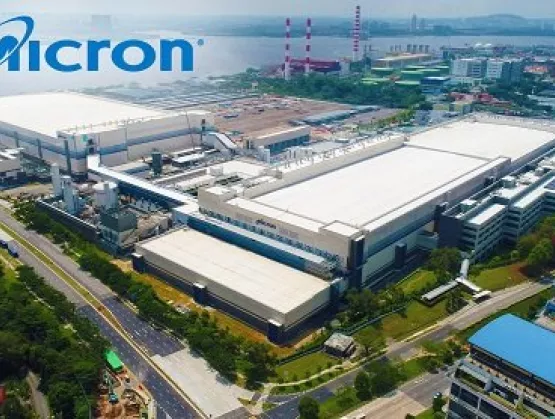
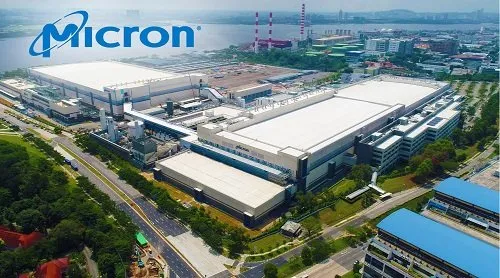
Making Strides TogetherKnowledge is power – especially when it is shared. This principle formed the foundation for Micron’s Go and See virtual visit of its Singapore manufacturing plant on 26 August 2020 as 27 companies including GLOBALFOUNDRIES, ST Microelectronics, Infineon, TEL, ViTrox , IBM, HP and UTAC joined the first-of-a-kind virtual factory visit. The chip industry powerhouses gathered to see how Micron’s Lighthouse frontend wafer fabrication facility leverages Fourth Industrial Revolution technologies to drive new production and cost efficiencies.They saw clear markers of a transformed organisation and spoke with working-level staff, managers and front-line employees. Company representatives also met virtually with Micron management teams from organisations that led its digital transformation – from pilot programs to integration at scale – to realise significant financial and operational benefits. The mix of technologies they deployed to make it all happen included artificial intelligence (AI), big data analytics and the Industrial Internet-of-Things (IIoT).Micron’s Singapore-based fab facility earned Lighthouse certification earlier this year from the World Economic Forum’s Global Lighthouse Network. The Go and See tour was co-sponsored by SEMI Southeast Asia and McKinsey Company.Transformation is CrucialBy embracing Lighthouse principles, semiconductor sectors and companies can accelerate their digital transformation to boost operational and financial efficiency while helping increase productivity across the electronics supply chain. It will take time for Southeast Asia semiconductor manufacturers to transform to digital operations, though we’re seeing growing interest in Industry 4.0 practices as they begin to understand that the deployment of new technologies and applications will help them better understand real-world benefits of smart manufacturing use cases and solutions. SEMI believes shining the spotlight on companies like Micron can illuminate the way forward for other companies to help drive the industry’s digital transformation. We look forward to seeing companies build on this momentum as they start to leverage leading-edge technologies to improve efficiencies and promote sustainability.Bee Bee Ng is president of SEMI Southeast Asia.
Read More