downloadGroupGroupnoun_press release_995423_000000 copyGroupnoun_Feed_96767_000000Group 19noun_pictures_1817522_000000Member company iconResource item iconStore item iconGroup 19Group 19noun_Photo_2085192_000000 Copynoun_presentation_2096081_000000Group 19Group Copy 7noun_webinar_692730_000000Path
Skip to main content
Default Banner Image

healthcare

Part 2 of 2-part series on MSEC 2019 highlights. Read Part 1. Neural Networks on ChipTo be sure, low power is king when bringing machine learning to the sensor edge. Battery-powered, always-on sensing devices require it since frequent recharging is the death knell of any electronic product. That’s why semiconductor companies are offering new ways to conserve power.“MEMS sensor suppliers have made significant strides in the power, size and performance of their devices,” said Aspinity CEO Tom Doyle. “Yet these gains deliver only incremental power improvements to the system.”Doyle advocates a new architectural model that uses an analog neuromorphic processor to analyze all sensor data at the start of the signal chain instead of sending it downstream so power-hungry chips such as DSPs can digitize it before analysis.“The technology industry wants to take advantage of the many benefits of always-on sensing applications,” said Doyle. “Before we can reach mass proliferation, however, we need to resolve the power issues that are deal-breakers for some applications. We believe the answer to this challenge is architectural. All the data gathered by always-on sensing systems is analog in nature, yet as soon as it’s captured, it’s digitized immediately for analysis. Determining which data is important up front eliminates the digitization and processing of irrelevant data so that voice-first devices such as smart speakers and wearables/hearables can run for long periods of time without requiring battery recharge.”Syntiant CTO Jeremy Holleman agreed that on-device intelligence is the future.“Did you just fall? Is your heartrate a bit off? Deep learning provides a toolset that yields vastly superior decisions,” said Holleman. “The problem is that deep learning is computationally intensive. The answer is a neural network that performs on-device edge inferencing.”Holleman added that Syntiant’s neural decision processor was recently certified as Amazon Voice Service (AVS)-compliant for wake-word detection, making it easier to design voice control in battery-powered devices such as earbuds and wearables.MSEC Technology Showcase WinnerWith the groundswell of interest in intelligence at the edge, it was no surprise that Cartesiam won top honors among all competitors in the MSEC Technology Showcase for its NanoEdge AI, software that brings AI to the edge of the signal chain, making it easier for designers to create intelligent objects that can learn and understand.“Unlike other AI algorithmic technologies for sensing devices, NanoEdge enables both learning and inference at the edge, providing accurate and adaptive intelligence,” said Cartesiam Managing Director and Co-founder Marc Dupaquier, who accepted the award. “It’s also the only tool of its kind that does not require data scientists on board for implementation, which saves a tremendous amount of money. Our clients can build a machine learning library and embed it into their own code within weeks to realize the same caliber of unsupervised neural network that was once the exclusive domain of AI cloud vendors.”MSIG 2019 Hall of FameAt this year’s conference, MSIG Director Carmelo Sansone recognized two longtime contributors to the commercialization of MEMS and sensors: Peter G. Hartwell, Ph.D., chief technology officer at InvenSense, a TDK group company; and Thomas Kenny, professor and senior associate dean of engineering at Stanford University.Hartwell leads technology strategy and the InvenSense advanced technology research group. He has more than 25 years’ experience commercializing silicon MEMS products, including advanced sensors and actuators, and developing MEMS testing techniques.Kenny’s academic accomplishments include authoring or co-authoring more than 250 scientific papers and holding 50 issued patents. He has also advised more than 50 graduated Ph.D. students from Stanford.MSEC 2020Mark your calendar for next year’s MSEC, October 12-14, at Coronado Island Marriott Resort Spa in Coronado, Calif. Get updates from MSIG on MSEC and other upcoming events including MSTC 2020.Stay in Touch with MSIGMEMS Sensors Industry Group (MSIG), a SEMI Strategic Association Partner, is the industry association representing the global MEMS and sensors supply chain. To learn how MSIG enables professionals in the MEMS and sensors industry to innovate, address common challenges and accelerate business results, visit us today.Connect with MSIG on Twitter and LinkedIn. Subscribe to SEMI Blog: Technology and Trends.Maria Vetrano is a public relations consultant at SEMI.
Read More
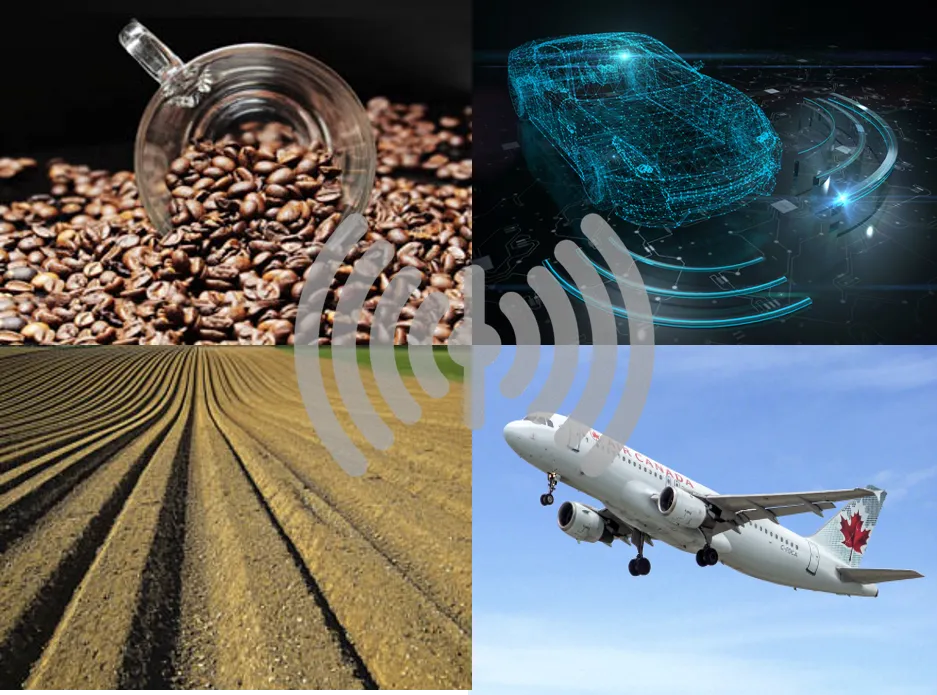
Part of 1 of 2-part series on MSEC 2019 highlights. Read Part 2. MEMS and sensors are proliferating across consumer, automotive, biomedical/healthcare, robotics, industrial and agriculture applications to harvest sensory data in a hyper-connected world and meet demand from consumers and organizations alike as they clamor for more intelligence in electronics.Take the ubiquitous iPhone. Shipped in 2007, Apple’s first iPhone sported five sensors. By contrast, the most feature-packed smartphones will embed up to 20 sensors by 2021, according to Yole Développement’s Jérôme Azémar. He estimates that the devices will feature four MEMS microphones, four CMOS image sensors (CIS), a RGB color sensor, a laser rangefinder, an infrared sensor, a gas sensor, a heart rate monitor and a fingerprint sensor, not to mention the MEMS inertial sensors that device users have come to know and trust.The MEMS market is expected to reach $18.5 billion in 2024 [1], up a whopping 60 percent from $11.6 billion in 2018, according to Azémar, who presented at MEMS Sensors Industry Group’s 15th annual MEMS Sensors Executive Congress (MSEC) in late October in Coronado, Calif. Add other types of sensors to the mix – CIS, environmental sensors, LiDARs, radars, ultrasonics, and fingerprint sensors – and the market will mushroom to $93 billion by 2024, said Azémar.Since MEMS Sensors Industry Group (MSIG) joined SEMI as a Strategic Association Partner three years ago, SEMI has expanded its MEMS and sensors programs to Europe and Asia while continuing to grow its U.S. conferences. “SEMI is continually investing in MEMS and sensors innovation across the supply chain,” said Dave Anderson, president of SEMI Americas and host of MSEC. “For example, MSIG is contributing to the development of the Heterogeneous Integration Roadmap, an initiative designed to drive heterogeneous integration technology development and accelerate electronics innovation. The roadmap spans device design, test and fabrication, ecosystem development, R D, equipment and materials. “At MSEC, executives and other speakers explored how AI and blockchain are remaking the food supply chain, air transportation and other sectors as MEMS and sensors improve the quality of our lives,” said Anderson.Sensing at the EdgeThe concept of artificial intelligence (AI), that a machine can harness intelligence that rivals or outperforms humans – and act without human intervention – has been a feature of the human imagination since at least the 1968 film 2001: A Space Odyssey. MEMS and sensors facilitate intelligence in a wide range of electronics such as smartphones, healthcare wearables, robots, industrial predictive maintenance systems, and cars. AI is sure to augment that functionality.MEMS and sensors are now in their third wave of evolution, a focus on edge AI, Bosch Sensortec CEO and General Manager Stefan Finkbeiner told MSEC attendees. For its part, Bosch is working to add AI to MEMS devices. The first wave integrated software with MEMS sensors, and the second, sensor fusion, enabled designers to allocate performance and power strategically to tune MEMS for resource-constrained devices. The third wave is “an active-learning phase in which MEMS facilitates real-time learning at the edge to promote greater personalization, environmental feedback, privacy of user data and improved battery life,” said Finkbeiner.Small sensor nodes with edge AI exemplify third-wave applications. Integrating low-power environmental sensors (e.g., gas, temperature, pressure, humidity and air-flow sensors), the nodes could be deployed in fire-prone forests to assess fire risk and support early detection. Access to this real-time environmental information could prove invaluable to residents and public-safety personnel alike.Google takes another tack, applying machine learning to resource-constrained devices, said Nick Kreeger, a senior software engineer at the Internet giant. The company’s Google Brain creates machine learning models that can run on inexpensive, low-power microcontrollers using Google’s TensorFlow Lite, an open-source machine learning tool that’s been deployed on a multitude of mobile devices. Inferencing is done at the device’s edge, rather than transmitted to the cloud.Meeting the power constraints of battery-powered sensing devices is another matter that starts with minimizing energy and data waste. “Deep learning is compute-bound and runs well on existing microcontrollers,” Kreeger said. “Because it’s all arithmetic, it’s low-power compared to storage access.”Already Google has worked with Plant Village, a research unit at Penn State University, and the International Institute of Tropical Agriculture (IITA) to help farmers improve food production by using machine learning and cheap sensors to spot and manage planet diseases in developing countries. And that production chain is in dire need of a boost, according to Rajendra Rao, general manager of IBM Food Trust, an enterprise-class blockchain solution.“We are on the cusp of complete failure of the food system,” Rao said. “One out of 10 people gets sick each year from foodborne illness, 420,000 die from this annually, 80 percent of companies in the food supply chain have not digitized, one-third of all fresh food in the US is thrown away, and one in five seafood samples worldwide is mislabeled.”IBM Food Trust’s work with Sucafina, which manages a global green coffee supply chain, shows how sensors can trace food from the farm to the processing plant to the consumer. With the IBM Food Trust platform, Sucafina can track the origin of the beans used in a cup of coffee – a competitive differentiator to coffee drinkers eager to support fair-trade coffee roasters.ripe.io, one of Forbes’ 25 most innovative AgTech startups, is also tackling the challenges and complexities of the food supply chain.“Our secure blockchain platform creates a digital twin of food items, transparently aggregating foods’ journey in real-time, to provide a harmonized trustworthy platform for multiple stakeholders,” said Rachel Gabato, the company’s COO. The ripe.io blockchain-based platform collects data from various sensors – temperature, pressure, light, humidity and inertial MEMS sensors. Growers, distributors and end customers including sweetgreen – a U.S. restaurant chain that depends on fresh produce – use the information to trace the origin and quality of food.MSEC 2020Mark your calendar for next year’s MSEC, October 12-14, at Coronado Island Marriott Resort Spa in Coronado, Calif. Get updates from MSIG on MSEC and other upcoming events including MSTC 2020.Stay in Touch with MSIGMEMS Sensors Industry Group (MSIG), a SEMI Strategic Association Partner, is the industry association representing the global MEMS and sensors supply chain. To learn how MSIG enables professionals in the MEMS and sensors industry to innovate, address common challenges and accelerate business results, visit us today.Connect with MSIG on Twitter and LinkedIn. Subscribe to SEMI Blog: Technology and Trends.[1] Source: Status of the MEMS Industry report, Yole Développement, 2019Maria Vetrano is a public relations consultant at SEMI.
Read More
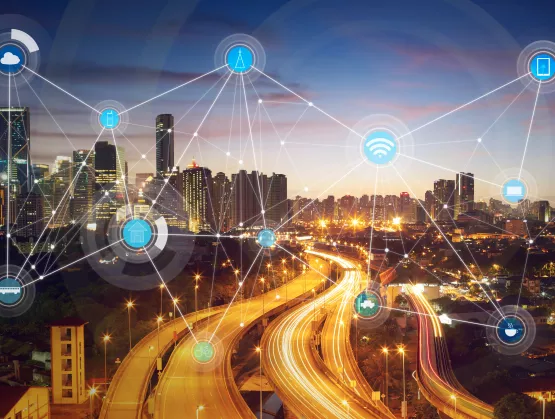
Smart cities of the digital future will employ systems enabled by MEMS and sensors in wide-ranging ways. From wearable sensors that monitor personal health and wellness and environmental sensors that assess air quality to autonomous micro-transit systems that are efficient and environmentally sustainable, MEMS and sensors are critically important to living in smart societies.SEMI’s Nishita Rao spoke with Albert P. Pisano, Professor and Dean at UC San Diego Jacobs School of Engineering ahead of his October 24 closing keynote presentation, MEMS and Systems in the Digital Future, at MEMS Sensors Executive Congress, October 22-24, 2019, at Coronado Island Marriott Resort Spa in Coronado, Calif.Join us at MSEC to meet Albert Pisano and other industry influencers driving MEMS and sensors innovations. Registration is open.SEMI: What are some of the most important large-scale system needs of the digital future – and why is MEMS so important in meeting these needs?Pisano: My vision of the digital future is an optimistic one, in which technology is used to assist people in their pursuit of health and happiness. In that digital future, I expect disruption in several key industries that depend on large-scale systems enabled by MEMS – healthcare, retail, transportation and education.Driving these disruptive forces across all four industries is the demand for more relevant real-time information, collected via inconspicuous technologies. Small in size and weight and low in power consumption, what technology other than MEMS delivers these combined attributes?SEMI: How do you envision MEMS in smart cities? What applications and devices will change the human experience in cities?Pisano: Smart cities, by my definition, are cities in which the four basic industries – healthcare, retail, transportation, and education – are implemented in their disrupted form.Take healthcare, for example. The adoption of MEMS chemical sensors in a wearable format will revolutionize human health monitoring. These sensors will not only improve individual health but also mitigate the spread of disease.In transportation, the coming of semi- or fully autonomous vehicles (as well as the general upgrading of all mass-transit vehicles) will give commuters additional time to pursue their interests while en route. A coming revolution of data connectivity to all vehicles will spur the rise of work, study and entertainment options available to people in transit. MEMS in the communication channels as well as in the vehicles will play an essential role in streaming personal data to travelers.SEMI: Could you help us visualize a disruptive application in one of these industries, say healthcare? Pisano: Healthcare is a particularly compelling area because MEMS offers life-enhancing, even life-saving, functionality that will significantly improve the quality of life of some people. MEMS allows us to design consumable wearable sensors that allow individuals to unobtrusively and non-invasively obtain biochemical data, such as potassium, sodium and sugar levels in the body fluid, as well as metabolic indicators such as lactic acid. Further, MEMS-based devices can perform EKG and EEG functions as well as monitor blood pressure in deep body veins in non-medical settings. This higher level of medical-grade data (not just casual data such as an approximate number of steps taken) will allow departments of public health to identify the early onset of individual disease.SEMI: What new forms of wireless communications will affect MEMS-enabled systems in the digital future?Pisano: Most visions of a digital future include wireless communication, but as the spectrum becomes ever more crowded, and as the need for unregulated, negotiated spectrum access increases, we will experience greater pressure to consider other forms of communication, such as inductive, optical and sonic. MEMS sensors are the only technical alternative to these other forms of communication in that they provide acceptable SWAP (size, weight and power). This will spawn battery-powered solutions with significant operational time. A good example is wireless telemetry of human physiological data from the skin. Only MEMS technology can reduce sensor-consumed power to below one microwatt. At this low level, energy harvest from the skin itself is sufficient to power the sensor!SEMI: How is the UCSD campus a living laboratory for intelligent sensing devices and systems?Pisano: Progressive universities, such as the University of California San Diego, understand that they are microcosms of small cities. They have populations during the day of approximately 65,000 people, a myriad of vehicles and a concentrated group of people.Many functions on campus mirror that of a small city. Lecture halls are similar to movie theatres. Student stores and centers are similar to shopping malls. Student residence halls are similar to apartment houses. Many campuses have medical centers, with their own emergency health services and hospitals. As a microcosm of a small city, it is only natural to think of the university as a wonderful living laboratory that allows us to test out new technologies at scale.Clearly, autonomous transit and wearable sensors have potential for uptake in this community. And that’s just scratching the surface. Package delivery (dinner to a dorm room, perhaps?), parking-spot location assistance, and even location-independent data streaming for classroom lectures are just a few possible examples of applications that we can test in a university environment.SEMI: How can the MEMS and sensors industry help researchers and innovators realize the digital future?Pisano: As a MEMS practitioner for almost 30 years, I fully understand the need to focus at the device level to ensure that the MEMS design meets SWAP and other requirements. But I truly believe that MEMS designers must learn to think more about subsystem and system issues, since the future of MEMS will be won by those who cannot only design the device right, but who can design the right device. By taking a much more market- and system-oriented approach to MEMS design thinking, companies in this industry will realize greater success.Register now to connect with Albert Pisano at MSEC and visit his UCSD page for more information.Albert P. Pisano, Ph.D., began his service as Dean of the Jacobs School of Engineering in 2013. He holds the Walter J. Zable Chair in Engineering and serves on the faculty of the departments of mechanical and aerospace engineering and of electrical and computer engineering. Pisano is an elected member of the National Academy of Engineering for contributions to the design, fabrication, commercialization, and educational aspects of MEMS, and is a Fellow of the ASME.Prior to his appointment at UCSD, Pisano served on the UC Berkeley faculty for 30 years, where he held the FANUC Endowed Chair of Mechanical Systems. Pisano was the senior co-director of the Berkeley Sensor Actuator Center (an NSF Industry-University Cooperative Research Center), director of the Electronics Research Laboratory (UC Berkeley’s largest organized research unit), and faculty head of the Program Office for Operational Excellence, among other leadership positions. From 1997 to 1999, Pisano was a program manager for the MEMS Program at the Defense Advanced Research Projects Agency (DARPA). Pisano held several research positions prior to joining academia.Pisano is a co-inventor listed on more than 36 patents in MEMS and has co-authored more than 400 archival publications. Pisano also is a co-founder of 10 startup companies in the areas of transdermal drug delivery, transvascular drug delivery, sensorized catheters, MEMS manufacturing equipment, MEMS RF devices and MEMS motion sensors. Visit his faculty page to learn more about his research interests.MEMS Sensors Industry Group, a SEMI technology community representing the global MEMS and sensors supply chain, hosts the annual MEMS Sensors Executive Congress. To learn how MSIG enables professionals in the MEMS and sensors industry to innovate, address common challenges and accelerate business results, visit us today.Nishita Rao is marketing manager for technology communities at SEMI.
Read More
4 Key Takeaways from SEMI Taiwan Member ForumThe rapid development of artificial intelligence (AI) has accelerated the digital transformation in various industries and has now fused with Internet of Things (IoT) to exploit the value of both technologies in reshaping the electronics industry value chain. As it emerges from the shadows of its parent technologies, AIoT is giving rise to new opportunities in manufacturing, healthcare, transportation, and even energy. AIoT is fast rising in prominence as an enabler of key electronics manufacturing process improvements and the creation of add-on value to existing products – both critical to the success of many businesses.SEMI and the SEMI MEMS Sensors Industry Group (SEMI-MSIG) held a technical forum on smart sensing and its applications in AI and AIoT, inviting renowned experts in sensors and edge computing to share in-depth insights into the latest AIoT technologies and applications with more than 100 industry professionals in research and development, marketing and sales. Here are four key takeaways from the SEMI Taiwan member forum.1. Steady Growth for Global Sensors MarketThe global sensors market’s steady growth is expected to expand at a CAGR of 6.6 percent from 2017 to 2023, with Asia driving the biggest gains and automotive leading the segments – including healthcare and education – with the strongest growth. Automotive alone is expected to reach US$34 billion in 2023.2. Integration Critical to MEMS Sensors DesignsWith AI booming, MEMS sensor designs need to drive toward greater integration —not only integrating data collection with sensors, but also streamlining data processing on the backend – making 3D models of today’s MEMS mechanical designs critical. The differences between 3D and entrenched 2D models are dramatic, elevating the importance of specifying manufacturing steps in MEMS designs. As new sensors and applications continue to emerge, companies that develop the most powerful integrated designs will win. 3. Growth of Smart Voice-Control Applications to ExplodeAIoT is also accelerating the development of smart voice-control applications and the rise of new related business opportunities. Just 50 million voice-controlled devices shipped worldwide in 2017, a number predicted to swell to 436 million in 2021 with smart home devices such as set-top boxes and smart TVs the major growth drivers.4. AIoT Eyed to Make Human-Robot Collaboration SafeSafety is an essential feature for human-robot collaboration. Tactile sensing technologies give robots a layer of “skin” with capabilities rivaling human touch. To ensure humans and robots work together safely in work environments, sensors on this layer of skin are concentrated – less than 8mm apart, equivalent to the width of a human finger, with a response time of less than 5ms on contact. More than 4 million robots worldwide are expected to be upgraded with these sensing technologies and are on track for deployment in pilot plants in the next three years.SEMI-MSIG is committed to strengthening connections across all sectors in the MEMS and sensors supply chain, working closely with the industry to accelerate the development of related technologies and applications in both mature and emerging markets. In addition, SEMI-MSIG hosts regular events to inspire business opportunities and technology exchange for innovative applications, while enhancing the visibility of members among global customers and partners to help them forge new partnerships. To join the group, contact SEMI Taiwan’s Helen Chen at [email protected] Yi is a marketing specialist at SEMI Taiwan.
Read More
Do you email your doctor when you have a tickle in your throat? Wear a fitness tracker or use an app to monitor your sugar levels, exercise or nutrition? If so, congratulations! You are a part of the rapid growth of digital medicine.Since you’re on the leading edge of this trend to enhance the efficiency of healthcare delivery, you might enjoy learning more about how the medical industry is transforming healthcare in this collection of podcast episodes and video. These are my top picks and just the tip of the proverbial iceberg in how modern medicine is taking today’s technology and applying it to best practices for remote patient monitoring, medical diagnosis, rural healthcare and more.Enjoy! And let me know if you find any others worth the listen!1. Inside Angle: 3M Health Information Systems - Telemedicine: Enhancing Access to Improve OutcomesAccess to healthcare can be a matter of life or death. For some patients, this may mean taking a day off work and driving for hours because services are not available in their hometown.Inside Angle host Dr. Gordon Moore interviews Barb Johnston, co-founder and CEO of HealthLinkNow, about the implementation of telemedicine programs. They discuss how technology impacts telemedicine adoption and related regulations and benefits clinicians and patients in the telepsychiatry and mental health industry. 2. NPR’s The Salt: What’s On Your Plate – This Chef Lost 50 Pounds and Reversed Prediabetes With A Digital ProgramThis short audio clip and article dives into lifestyle and wellness apps designed to motivate users to eat healthier, exercise more and – in some cases – save them from a preventable disease, like diabetes.Wellness apps like Omada Health rely on smartphones, e-coaching, electronic nudging and other methods to encourage users to make and, more importantly, stick to changes that can improve their health. And it’s catching on as other organizations, such as The Centers for Disease Control and Prevention, recognize the difference lifestyle-change programs designed to prevent diabetes are making. 3. Red Hot Healthcare: Episode 57 - Bluer Skies for TelemedicineLast year alone, venture capitalists poured $7 billion into telemedicine. As an emerging concept, telemedicine has a long road ahead until it’s fully integrated and adopted into modern medical practices. Nathaniel Lacktman, partner and health care lawyer with Foley Lardner LLP, discusses legal issues and hurdles surrounding telemedicine today with Red Hot Healthcare host Dr. Steve Ambrose.Lacktman pointed to healthcare providers such as Mercy Virtual Care Center, Mayo Clinic and MDLive that are likely to lead the telemedicine race. This podcast episode is a great listen for entrepreneurs and medical professionals who are interested in learning about compliance and business considerations for the implementation of telemedicine. 4. Digital Health Today: Episode 56 – Eren Bali on Building the World’s Largest Connected Care NetworkEren Bali, CEO and co-founder of Carbon Health, is out to change our fragmented traditional healthcare system with his aim to build the world’s largest connected care network.For Bali, it all started with his sister’s experience consolidating his mother’s health records – scattered over 20 different systems. And from that challenge, his idea to create a universal network that aggregates patient medical records was born.Bali and Digital Health Today host Dan Kendall discuss Bali’s launch of Carbon Health, the new medical records system’s first implementation in a San Francisco primary care clinic, and how providers and patients can get on board with this model. 5. Digital Health Today: Episode 58 – Brennan Spiegel Gets Real About Virtual RealityThis episode of Digital Health Today centers on how Virtual Reality (VR) is being used to enhance patient care. Host Dan Kendall speaks with Dr. Brennan Spiegel, Director of Health Services Research at Cedars-Sinai Health System and Professor of Medicine and Public Health at UCLA, about how immersive technology like VR and Augmented Reality (AR) can improve patients’ experience as well as alleviate pain, anxiety, depression, addiction and more. In a particularly interesting segment, Dr. Spiegel calls the hospital a biopsychosocial jail cell and underscores its importance in not just treating physical ailments but, more wholistically, also addressing the psychological and social wellbeing of patients. 6. TED2017: Raj Panjabi – No one should die because they live too far from a doctor What do you do when access to a doctor means rowing a boat for hours? Millions of people around the world lack access to health care because they live in a remote town or village.In this TED talk, Raj Panjabi, physician in the Division of Global Health Equity at Harvard Medical School, Brigham and Women’s Hospital, and co-founder of Last Mile Health, offers a solution to the problem of healthcare access in the form of the Community Health Academy, a global platform to train and connect community health workers by leveraging devices like smartphones to bring preventative healthcare to even the most far-flung regions of the world. 7. GeekWire’s Health Tech Podcast: How AI is making humans the ‘fundamental thing in the internet of things’Can AI predict which patients are at risk for chronic diseases using their old medical records? This episode of Health Tech Podcast dives deep into the future of healthcare with a look at the potential for AI -- “augmented intelligence” or “assistive intelligence” – to improve patient outcomes, the focus of Ankur Teredesai, a data scientist at the University of Washington and co-founder and CTO of health AI startup KenSci.Clare McGrane, host of GeekWire’s Health Tech Podcast, speaks with numerous experts in this field. They compare precision health to a modern car constantly monitored by microprocessors. The minute something is wrong, you get a warning to take the car to a shop to resolve the issue. The same concept can be applied to humans and deliver big healthcare impacts as research in AI and machine learning continues to evolve. 8. NPR’s Shots: Can Home Health Visits Help Keep People Out Of The ER?In Washington D.C., the city with the highest per capita 911 call volume in all of the U.S., Mary’s Center is piloting a program to provide primary care telemedicine to patients who cannot, or in some cases, do not want to visit the clinic. NPR covers the story of Medicaid patient Dennis Lebron Dolman, who is currently receiving a mix of home visits and virtual treatment.Besides providing healthcare access to rural regions, telemedicine has the potential to reduce emergency room visits in cities as well as improve the health of patients in the long run. Learn more at SEMICON West’s Smart MedTech TechXPOT on Digital Medicine and Remote Patient Monitoring. Hosted by NBMC on July 12, 2018, from 10:30 AM to 12:30 PM, the event will feature healthcare industry leaders exploring state-of-the-art healthcare practices and the future of medical technology. Registration is now open!Amy Ly is a Technical Programs Marketing Coordinator at SEMI.
Read More