downloadGroupGroupnoun_press release_995423_000000 copyGroupnoun_Feed_96767_000000Group 19noun_pictures_1817522_000000Member company iconResource item iconStore item iconGroup 19Group 19noun_Photo_2085192_000000 Copynoun_presentation_2096081_000000Group 19Group Copy 7noun_webinar_692730_000000Path
Skip to main content
Default Banner Image

SOI Consortium

Lots of great information came out of the two days of workshops in Japan recently organized by the SOI Consortium. Some of the presentations are now posted on the consortium website (get them here). The first day (held in Yokohama and sponsored by Silvaco) focused on FD-SOI and RF-SOI design. The second day (held at U. Tokyo) focused on More than Moore (especially silicon photonics, MEMS sensors), and the SOI manufacturing ecosystem. The 1st day panel discussion was so interesting we'll give it a post of its own, then follow up with round-ups of the presentations from both days. And now to ramp! The morning panel discussion on end-user deployment for FD and RF-SOI was moderated by SOI Consortium Executive Director Giorgio Cesana. GF's CTO Subi Kengeri led off saying that that 2017 had been the year of FD-SOI adoption. Samsung Director Adam Lee noted that in the beginning nobody believed it would get traction, but now everybody does, and Samsung is commercializing it: chips coming out this year will ramp in volume in 2019. [caption id="attachment_12578" align="aligncenter" width="875"] Panel on FD-SOI and RF-SOI end-user deployment, SOI Workshop Japan, 2018. Giorgio Cesana, SOI Consortium Executive Director, Moderator; John Carey, ST Director; Adam Lee, Samsung Director; Subramani Kengeri, GF CTO; Wayne Dai, VeriSilicon CEO; Mostafa Emam, Incize CEO. (Courtesy: SOI Consortium)[/caption] VeriSilicon CEO Wayne Dai said he sees great potential in IoT, where the volumes are high but fragmented. In IoT, he said, you need RF, but you really only need very high performance about 20% of the time, which is a perfect fit for FD-SOI. ST Director John Carey noted that ST's been using FD-SOI since 2014. They've fabbed products for cryptocurrency and infrastructure. Now in their second and third generations of designing with it, they've got some big FD-SOI chips coming out next year with embedded memory and RF. He sees it being particularly successful in mmWave, automotive and IoT. The conversation then shifted to RF-SOI. Mostofa Emam, CEO of Incize, explained that since RF-SOI is already in every smart phone, it's in a different situation from FD-SOI. The emphasis here is now on adding more blocks. “RF is an art,” he said. “It takes an artist. You need talented artists and tools.” One of the biggest challenges for fabs that are newcomers is models – not just at the transistor level, but also at the substrate level. The big players have addressed this, but Incize is working to support more foundries with new, innovative approaches, and helping them develop robust PDKs. The industry needs more good RF designers as well as better RF design flow, he concluded. Coming back to FD-SOI, Cesana asked about non-volatile memory (NVM). Samsung's Lee said they've already got NVM options including eMRAM for 28nm, and customers are now requesting eMRAM PDKs for the next node (18FDS). ST's Kengeri added eNVM is important for FD-SOI, especially since flash is not scaling. While there are lots of options, MRAM gives you all the value, and in FD-SOI it only adds three more mask steps, so cost savings are maintained. With respect to local computing for AI with FD-SOI, everyone agreed on the importance of the edge. In addition to RF, FD-SOI gives you density even at 28nm, explained Carey. You can manually control power with back biasing, so you get something very flexible, especially for NB-IoT applications where the battery will have to last for 10 years. In fact Kengeri sees FD-SOI as enabling fog/edge computing. 5G – What's First? The next question was about 5G: which applications would we be seeing first, and how does FD-SOI help? Lee said Samsung's seeing it for apps up to 10GHz as well as mmWave. Customers are telling them they want FD-SOI for technical reasons. Kengeri expanded on that point, saying it comes down to fundamental physics: gate resistance, capacitance, mismatch. FD-SOI has lower Vmin and better Fmax compared to FinFETs, and that's what tier-one players want. Carey brought it back to RF-SOI (noting that ST's introducing a 45nm version), which supports a large number of elements and increased complexity with smaller power budgets. Emam then asked the foundry guys about mmWave. Substrates won't be the bottleneck he said, so what's the FD-SOI/mmWave roadmap? Kengeri responded that GF's ready. Lee said Samsung is also ready, and you'd see it next year on handsets. Samsung has engaged with customers on 30GHz for the middle of next year, he added: it's qualified. Carey said ST sees it first in consumer premises equipment that's connected by satellite. The right enabler Cesana then asked about image sensor processors (ISPs), noting that analyst Handel Jones has said this is a big opportunity for FD-SOI. You can do 3D integration with sensors, but heat makes noise, so you need technology that decreases heat production and doesn't give you hotspots (which would be visible in the image). Kengeri pointed to challenges in power density, thermal envelopes and the RTS (random telegraph noise signal). Although there are a lot of options, FD-SOI plays well for thermals and noise, so GF sees a good opportunity here. Dai added that the industry needs volume applications for FD-SOI, and ISPs need to bring more logic closer to the camera. And he concurred that you need FD-SOI for the thermals: it's very important. In closing, Dai noted that as a design house, “We walk on two legs: FinFETs and FD-SOI.” 28, 22, 18 and 12nm FD-SOI all enable differentiation. In particular, you need something between 20nm and 7nm: FD-SOI is here. Asked about Japan in particular, Dai said beyond automotive he saw lots of potential in ULP for AVR. Kengeri added that for any applications besides performance-at-any-cost, FD-SOI is the right enabler.
Read More
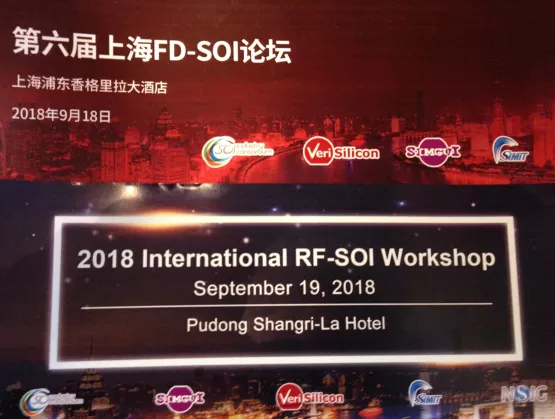
Excellent news and exciting applications made headlines at the recent FD-SOI and RF-SOI events in Shanghai. During the FD-SOI day, Amazon/Blink and Intellifusion shared news about their new chips, and we got updates from GF and Samsung. The RF-SOI day featured a great talk with details about China Mobile's 5G plans, and peeks at Nokia's groundbreaking approach and Qorvo's outlook. [caption id="attachment_12354" align="alignright" width="300"] (Photo courtesy: Verisilicon)[/caption] The hall was absolutely full – with over 300 people attending each day. The FD-SOI event was by invitation only, and there were far more people wanting to attend than there was room for, even given the big room in which the events were held. The events got excellent coverage in the China tech press. For example, EEWorld started with an overview article and added five supporting pieces zooming in on key presentations and companies: one on GlobalFoundries, one on Samsung, one on Verisilicon, and two on Soitec (CEO and top exec interviews). These pieces are in Chinese, but just open the links through your favorite translation site. Many of the key slides are captured in these articles, so if you can't wait for the ppts to be posted on the SOI Consortium website, you can get some quick previews now. The Verisilicon PR folks also wrote up highlights of the FD-SOI event in real time with lots of great pictures – you can read that here. Many thanks to that team, too, for flagging the coverage in the China press and posting it on their WeChat account. On the RF-SOI side, the Simgui folks wrote that up – you can read it here. They also sponsored a gala dinner with awards given to Qorvo and SmarterMicro – you can read about that here. Most of the presentations will be posted on the SOI Consortium website over the next few weeks, at which point we'll cover them in-depth here at ASN. But for now, here's a quick round-up of some of the highlights. FD-SOI Highlights [caption id="attachment_12347" align="alignright" width="300"] (Courtesy: Blink, Verisilicon)[/caption] Boston-area based Blink, which makes very popular home security systems, was recently bought by Amazon (see their current product page here). They just taped out a new chip on Samsung's 28FDS FD-SOI technology, and they're really happy about it. “I believe for battery powered devices at home, FD-SOI is the way to go,” said Yantoa Jia, Head of ASIC China Ops at Blink. Their goal in the move from 55nm bulk to 28nm FD-SOI was to double battery life, add features and control costs: and they did it. Even adding two more CPU cores and lots more features, “The power drop is fantastic,” he said. Design was no problem, he continued, and there was plenty of IP. Once the new generation is officially announced, he promised to sit down with ASN and give us more details. Attendees also heard about a new chipset from Intellifusion, which is putting its face recognition technology onto GlobalFoundries' 22FDX FD-SOI with design house Verisilicon. CEO Nin Chen gave an impromptu talk about how their technology is used to find missing people and property. The new chip, which is especially designed for use in cities, is network-to-cloud leveraging AI. For his part Thomas Morgenstern, GlobalFoundries SVP and GM of the Dresden Fab 1, said they're seeing high yields and increasing capacity for 22FDX. The marketing and manufacturing ecosystem has been built around the fab in Europe. Now, he said, the key is to build an FD-SOI ecosystem in China. The market needs of China largely parallel those of Europe, he noted, for performance and efficiency at the right cost point. The ecosystem enables fast time-to-market and 1st-time-right. [caption id="attachment_12343" align="alignleft" width="300"] (Photo courtesy: Cadence)[/caption] Samsung SVP Gitae Jeong sees their FD-SOI technology as the right solution for the 4th Revolution, which includes everything from energy harvesting to self-driving cars. They've just taped out their first 5G mmWave cellular chip on 28FDS, he revealed. eMRAM is looking very good, only requiring three additional masks and getting stable yields from -40o to 105oC. 18FDS is on schedule, with PDK 0.5 now being released, and 1.0 on track for release in March 2019. They expect a very fast ramp, and are looking at a 35% area reduction, power cut in half and performance up 22% compared to 28FDS. RF-SOI Highlights [caption id="attachment_12350" align="alignright" width="300"] China Mobile, Project Manager Danni Song (Photo courtesy: Simgui)[/caption] When China Mobile talks, the world listens. Project Manager Danni Song presented again this year (she gave a great talk last year, too). China has a very ambitious 5G project underway, and under two years in which to roll it out. The biggest challenges are power consumption and cost (a problem made worse by the additional power amplifiers needed for MIMO). Can RF-SOI help solve these challenges, she asked? One thing she did clarify during the panel discussion was with respect to the mmWave part of the 5G puzzle. Their initial 2020 rollout will only focus on sub-6GHz, with mmWave following a year or two later. Michael Reiha, Head of RFIC R D at Nokia Mobile Networks clarified the worldwide 5G rollout during the panel discussion. Different locations on the planet have different histories and needs, so will rollout 5G in different ways. For historical reasons (and a lack of choice), the US will lead with mmWave, he said. Europe, meanwhile, will focus on 24GHz to meet the needs of automotive radar. In his presentation, Reiha described Nokia's approach to power amplifiers (PA), which is very different from what others are doing. With RF-SOI, he said, you can add sensors and logic for a level of preventative care, so you can gauge and protect your equipment using AI. He believes this disruptive approach will put them two years ahead of the industry, enabling massive MIMO to be deployed in dense urban areas with 60% lower power consumption and 50% savings in material costs. Go read about their Reefshark tech, he urged, which he says will beat GaAs. “The future is very bright with RF-SOI,” he concluded. “I can state that with confidence.” [caption id="attachment_12351" align="alignleft" width="300"] Julio Costa, Director of Technology Development, Qorvo (Photo courtesy: Simgui)[/caption] Julio Costa, Director of Technology Development at Qorvo sees it differently. Traditionally a GaAs house, all their RF-SOI work is fabless. While RF front end modules (FEMs) are loaded with RF-SOI, he said, and are a big winner for antenna tuning, Qorvo still sees GaAs for high-efficiency amplifiers and envelope tracking. But, he said, it will be a battle. GaAs wins in terms of area and power consumption he contends, but adds that SOI wins in terms of cost. Power levels, he predicts, will be the determining factor. So that's the quick overview – we'll drill down into the presentations as they're posted, so stay tuned!
Read More
The presentations from the SOI Consortium sponsored workshop held during Semicon West are now posted and freely available on the website – click here to see the full agenda with links to the presentations. The workshop, entitled 4G/5G Connectivity: Opportunities for the SOI Supply Chain, was well-attended and generated excellent discussions. If you don't have time to look at all of the ppts, here are quick overviews. Market Overview and FD SOI Opportunities, by Handel Jones, CEO, IBS. Handel Jones is an industry veteran, China expert and longtime follower of the SOI ecosystem. High performance with low power consumption are the key requirements for the continued growth in the semiconductor industry, he said, making FD-SOI the right choice for a wide range of products. Here's how he sees it: [caption id="attachment_12312" align="alignleft" width="300"] (Courtesy: IBS and SOI Consortium)[/caption] He estimates the yearly TAM (total available market) for FD-SOI based products in the range of $46 billion over the next 10 years, largely driven by needs for ultra-low power and RF integration. He goes on to break out volumes by applications (including ISPs – image signal processors; and CIS – CMOS image sensors), foundry markets by feature dimension and to map out technology trends. Mobile Radio Transformation in the Age of 5G: A Perspective on Opportunities for SOI, Peter Rabbeni, Vice President, Globalfoundries. Peter Rabbeni is an RF expert par excellence, having overseen the shipping of over 35 billion RF-SOI products to date. In his presentation, he details how 5G NR (New Radio) sub-6GHz frequency band specifications significantly increase frequency range and channel bandwidth, and how new band support and MIMO complexity and die size per handset are driving complexity in RF FEMs. Furthermore, 5G/mmWave phased arrays are driving a paradigm shift in the approaches that can be taken, he explains, so greater integration is needed. Here's a great slide showing where GF's two main SOI technologies come into play: [caption id="attachment_12311" align="alignleft" width="1000"] (Courtesy: GlobalFoundries and SOI Consortium)[/caption] Empowerment of 5G with SOI-Based Technologies, Emmanuel Sabonnadière, CEO, Leti-CEA. [caption id="attachment_12310" align="alignleft" width="300"] (Courtesy: Leti and SOI Consortium)[/caption] Working in partnership with industry leaders around the world, Leti has been the research powerhouse behind all things SOI since the early 1980s. In fact Reuters ranks them #2 in their most recent list of the World’s Most Innovative Research Institutions. This presentation reviews the key technical benefits of FD-SOI for IoT and IMT (that's international mobile communications, btw). Engineered Substrates – at the Foundation of 5G, Thomas Piliszczuk, Executive Vice President, Soitec. This presentation really puts the context around engineered substrates. Here are two excellent and useful slides here that identify which engineered substrates go where in the 5G world, and the engineered substrates that Soitec provides. Check these out: [caption id="attachment_12309" align="alignleft" width="1000"] (Courtesy: Soitec and SOI Consortium)[/caption] [caption id="attachment_12308" align="alignleft" width="1000"] (Courtesy: Soitec and SOI Consortium)[/caption] Ultra-thin Double Layer Metrology with High Lateral Resolution, Bernd Srocka, Vice President, Unity GmbH. [caption id="attachment_12307" align="alignleft" width="300"] (Courtesy: Unity and SOI Consortium)[/caption] In case you're not familiar with them, Unity provides a wide range of solutions in metrology and inspection. Both the top silicon layer and BOX layer of wafers for FD-SOI applications have draconian requirements that have required new approaches in metrology to ensure the thickness and homegeneity control of these very thin layers. China 5G Plan and SOI Ecosystem, Jeffrey Wang, CEO, Simgui. Shanghai-based Simgui partners with Soitec, using SmartCut™ technology for the production of RF-SOI wafers. It is doubling its capacity to reach 400K over the next year, and expanding into 300mm. China is aggressively working on 5G and plans to deploy 5G commercialization in 2020. Jeff Wang's is a terrific presentation detailing the rollout. (BTW, in addition to the massive funding effort underway, the government created the National Silicon Industry Group (NSIG) to support the semiconductor material ecosystem in China. You'll want to keep up with what's going on here). Here's the slide that summarizes the SOI ecosystem in China – the presentation then goes on to detail who does what. [caption id="attachment_12306" align="alignleft" width="1000"] (Courtesy: Simgui and SOI Consortium)[/caption] Inspection and Metrology Relevance in SOI Manufacturing, Jijen Vazhaeparambil, Vice President General Manager, KLA-Tencor. [caption id="attachment_12305" align="alignleft" width="300"] (Courtesy: KLA-Tencor and SOI Consortium)[/caption] K-T has played a strategic role in the SOI story going back for decades (and in fact they wrote a piece for the third edition of ASN back in 2005!), ensuring metrology innovations for things that hadn't previously need detection and measurement. With each new set of requirements, they rose to the occasion with wafer metrology solutions that helped increase quality and decrease costs. This presentation recaps some of them.
Read More
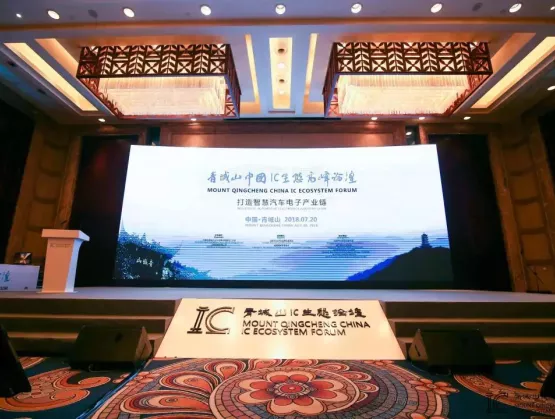
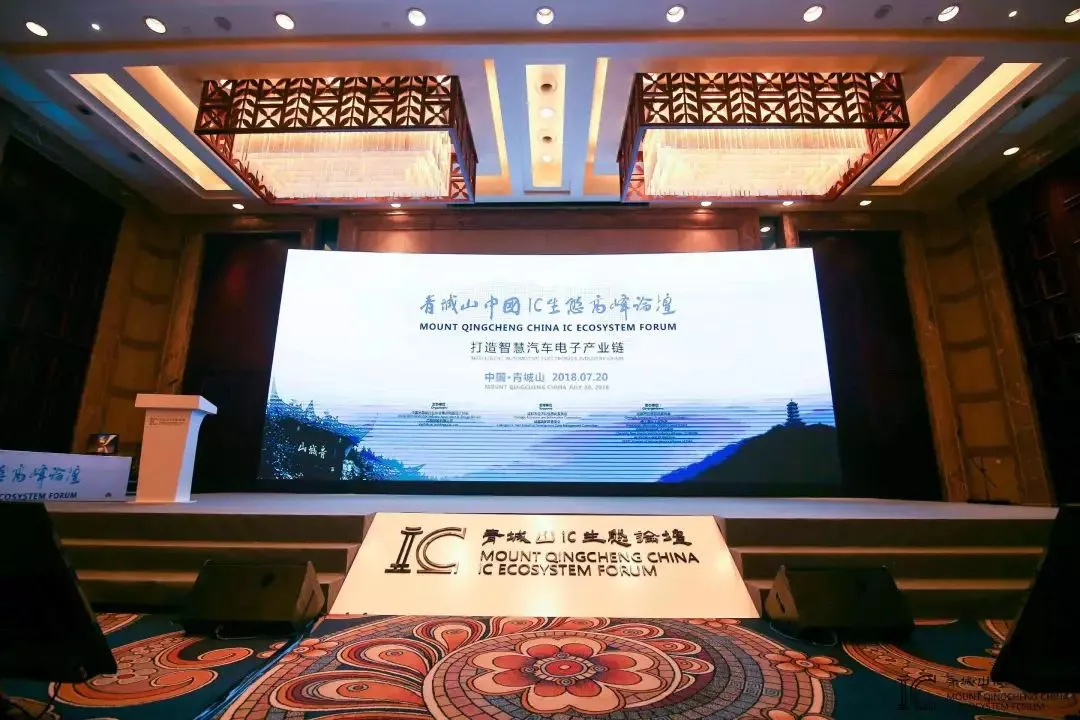
FD-SOI was a very important topic during the recent Mount Qingcheng China IC Ecosystem Forum. To situate things, Mount Qingcheng, with its lush hills and waterways, is located just outside of Chengdu. That of course is where GlobalFoundries is building its new fab, which will be the first in China to run FD-SOI. Chengdu is also a key city in China's automotive electronics landscape. [caption id="attachment_12236" align="alignright" width="300"] (Image Courtesy: VeriSilicon)[/caption] The theme of the forum was Building a Smart Automotive Electronics Industry Chain. Over 260 decision-makers from government, academia and industry attended – and the SOI Consortium had a significant presence. The event was chaired by Wayne Dai, CEO/Founder of consortium member VeriSilicon, and tireless champion of the the FD-SOI ecosystem in China and worldwide. Morning keynotes were given by: Carlos Mazure, Soitec CTO and SOI Consortium Executive Co-Director; Mark Granger, GF's VP of Automotive Product Line Management; and Tony King-Smith, Executive Advisor at AImotive, a GF 22FDX customer. BTW, transcripts of all the talks are available through Gasgoo, China's largest automotive B2B marketplace. You can click here to access them. (They're in Chinese – but you can open them in the language of your choice using the major translation websites.) Chengdu Officials Affirm Support for FD-SOI Fan Yi, Deputy Mayor of Chengdu, spoke extensively of FD-SOI in his keynote on the importance of rapidly developing smart cars. He heralded the “spectacular” new GlobalFoundries fab there. Following a meeting with the company's top brass the day before, he affirmed GF's confidence in their investment. There is a solid roadmap for FD-SOI, he noted, and efforts are underway to accelerate the move into production and expand education and training. He cited the benefits of FD-SOI for the entire supply chain, from design through package and test, raising the level of the entire IC industry to new heights. The government, he said, attaches great importance to this enterprise. Their thinking regarding intelligent transport in China is integrated with the overall approach to smart cities. SOI Consortium Leads Industry Keynotes [caption id="attachment_12232" align="alignleft" width="300"] Wayne Dai, VeriSilicon Founder and CEO (Photo courtesy VeriSilicon)[/caption] In his opening remarks, Wayne Dai emphasized the need for China to seize the advantage in the next round of development opportunities in the automotive electronics industry. This year's Qingcheng forum, he noted, brought together key representatives from across the supply chain, from of the highest to the deepest reaches of the smart car electronics industry, and across markets, technologies, solutions, industrial ecosystem, standards and regulations. In his talk on how FD-SOI is boosting the accelerated development of automotive electronics, Carlos Mazure presented the SOI Industry Consortium. He noted that the Consortium promotes mutual understanding and development across the ecosystem. SOI is already present throughout automotive applications, he noted. There are currently about 100mm2 of SOI per car, in such diverse areas power systems, transmissions, entertainment, in-vehicle networking and more. SOI will experience especially high growth in electrification, information/entertainment, networking, 5G, AI/edge computing and ADAS. He then went on to give some history and an extensive overview of the major trends and highlights we've seen over recent years. He finished by giving examples of convergence across the supply chain with IC manufacturers working with automakers to lower power, increase processor performance and advance 5G. [caption id="attachment_12233" align="alignright" width="665"] Carlos Mazure, Soitec CTO and SOI Consortium Executive Co-Director; Tony King-Smith, Executive Advisor at AImotive and Mark Granger, GF's VP of Automotive Product Line Management (Photo courtesy VeriSilicon)[/caption] GF's Mark Granger addressed the rapid development of automotive electronics. In certain areas, he said, he sees growth rates of over 20%. They are working on building the Chengdu ecosystem, especially for design, and in cooperation with the rest of the supply chain. Furthermore, he reminded the audience, when you talk about cars, travel implies that you also talk about IoT as well as things like infotainment and integrated radar ICs. In addition to cost and power efficiencies, the AEC-Q100 standard for IC reliability in automotive applications is also pushing designers to turn to FD-SOI. In the GF meeting with Chengdu government officials (referenced above in deputy mayor Fan Yi's talk), he too confirmed their support of FD-SOI as a key technology for China. GF is currently cooperating with about 75 automotive partners, he said, and the company is looking to increase cooperation with partners in the Chengdu region. Tony King-Smith talked about the 22FDX test chip AImotive is doing with Verisilicon and GF. In case you missed it, in June 2017 AImotive announced its AI-optimized hardware IP was available to global chip manufacturers for license. AiWare is built from the ground up for running neural networks, and the company says it is up to 20 times more power efficient than other leading AI acceleration hardware solutions on the market. In the same announcement, they revealed that VeriSilicon would be the first to integrate aiWare into a chip design,and that aiWare-based test chips would be fabricated on GF's 22FDX. The chip is expected to debut this year. While the afternoon agenda was not specific to FD-SOI, it did focus on the "smart cockpit" and "intelligent driving", with talks by nine leading players in China's automotive IC and investment communities. ~ ~ ~Note: Many thanks to the folks at VeriSilicon, who wrote up this event for their WeChat feed, and shared photos with us here at ASN.
Read More
Some really innovative start-ups presented chips they're doing on FD-SOI at the SOI Consortium’s 2018 SOI Symposium in Silicon Valley. We'll cover those here in Part 3 of ASN's coverage, as well as a presentation on China by wafer-maker Simgui and the final panel discussion. BTW, if somehow you missed my coverage of the morning sessions about very cool new products and projects from NXP, Sony, Audi, Airbus and Andes Technology, be sure to click here to read it. And in the afternoon the foundry partners provided excellent insight into who's designing chips on FD-SOI, and VLSIresearch explained why. You can read that here. Some of the presentations are posted on the SOI Consortium Events page – but some won’t be. Either way, I’ll cover them here. Start-upsIneda Systems began as an ADAS start-up, and are now working on developing low-power SoCs for use in consumer and enterprise applications. They're using FD-SOI for their current family of chips. SVP Ramkumar Subramanian emphasized that NRE costs are really important for smaller designs. 22FDX, he said, enabled them to move from 40nm, and ramp to larger volumes. In February, GreenWaves Technologies, a fabless semiconductor startup designing disruptive ultra-low power embedded solutions for image, sound and vibration AI processing in sensing devices, announced its GAP8 IoT application processor. GAP8 evaluation boards can now be ordered. The GAP8 agile power management architecture combined with IOT low duty cycling is a perfect fit for FDSOI processes. CEO Loic Lietar talked about how it would be used in AI applications at the very edge, wherein only the necessary data should be uploaded to the cloud. Also in February, Dream Chips’ announced that its ADAS SoC fabbed in GlobalFoundries’ 22FDX (FD-SOI) technology was posting record power efficiency (you can read more about it in ASN's coverage at the time here.) Dream Chips is Germany’s largest independent Engineering Service Provider. At the symposium, CEO Jens Benndor's talked about their roadmap. [caption id="attachment_11865" align="alignleft" width="300"] (Courtesy: eVaderis, SOI Consortium)[/caption] eVaderis CEO Jean Pascal Bost talked about how data-intensive IoT applications are enabled with FD-SOI and embedded magnetoresistive non-volatile memory (eMRAM) technology. You can get the slides from his talk here. eVaderis has eflash-like and eSRAM-like eMRAM IP that covers most MCU applications. They also have an eMRAM compiler tool and high-value-added IP for 22FDX. They foresee impressive power savings at the system level with body biasing: 25x this year and up to 45x in 2020, so that intelligence can be brought to IoT. In February they announced that they are co-developing an ultra-low power MCU reference design using GF’s eMRAM technology on the 22FDX® platform. And in March eVaderis and Mentor/Siemens announced that eVaderis proprietary Magnetic Tunnel Junction (MTJ) model would be co-optimized with AFS to speed-up simulations and generations of embedded MRAM IPs and compiler products with good accuracy.An 22FDX MCU reference design project is underway, with tape-out in July '18. Reduced Energy Microsystems (REM) CEO William Coven talked about realizing near-threshold computing with 22FDX and low-power memories. REM has two products on 22FDX: their Neuron Vision SoC and 64-bit RISC-V IP cores. 22FDX, he says, has been fantastic. Simgui Jeffrey Wang, the CEO of wafer-maker Simgui looked at why China is promoting its IC industry. (In the SOI ecosystem, Simgui is particularly known for its RF-SOI wafers, which it produces using Soitec's Smart CutTM process.) This was more of an overview talk, not necessarily specific to the SOI ecosystem, but certainly interesting. In terms of worldwide semiconductor sales, he said, about half end up in China. The CICF – aka the Big Fund – is currently running at about $74 billion. Having realized that mergers acquisitions would not solve the problem, they've opened a second round, targeting another $160 billion. China's two biggest innovation success stories are Huawei (with its Kirin processor), and China Rail, which is now a global Fortune 500 company. The CAGR for the China semiconductor industry is 19%, though they need 20% to reach their goals. IC design is a particularly successful area, posting a CAGR of 29%, with two players in China in the top 10 worldwide. Packaging and assembly/test are also very strong. Zing is working on increasing the supply of 300mm silicon wafers, while Simgui is expanding in both 200 and 300mm capex, due to “big demand”, he said. Panel Discussion [caption id="attachment_11866" align="alignleft" width="300"] SOI Symposium Panel Discussion: (left to right): Giorgio Cesana (Co-Director SOI Consortium), Dave Eggleston (VP GF), Tim Saxe (CTO, Quicklogic), Wayne Dai (CEO, Verisilicon), Samir Patel, (CEO Sankalp Semi), Kelvin Low (VP, ARM), Mahesh Tirupattur (EVP, Analog Bits)[/caption] The day wrapped up with an excellent panel discussion moderated by SOI Consortium Executive Co-Director Giorgio Cesana. Here are a few of the observations made by the panelists. QuickLogic CTO Tim Saxe said that FD-SOI made their designs more compact. With FD-SOI for FPGAs, you've got one set of IP, and you can decide at runtime where you're going for low power or high performance. With a lot of power domains, you see the benefits at the system level. GF VP Dave Eggleston said they're seeing early adopters of eMRAM, especially for wearables with RF and low power. ARM VP Kelvin Low said people should do more than just migrate to FD-SOI. If they use back biasing, it can replace the need for big/little cores. Body biasing makes things easier, maintained Verisilicon CEO Wayne Dai. His teams find that with body biasing, you can tape out for “typical” instead of “worst case”. It's not too late for FD-SOI: it's perfect timing for the MCU market, which is still at 40nm, said Sankalp Semi CEO Samir Patel. As designers, they're happy to focus on companies still on the older nodes. The IP ecosystem should be more enthusiastic about FD-SOI, said Analog Bits EVP Mahesh Tirupattur. You've got more potential customers, and your volume runs can be bigger. In his closing remarks, SOI Consortium Executive Co-Director Carlos Mazure reminded the audience of the day's three take-aways: power consumption is driving even systems companies FD-SOI is penetrating fields like MCUs and SoCs where more intelligence is needed China is still a really big opportunity.
Read More
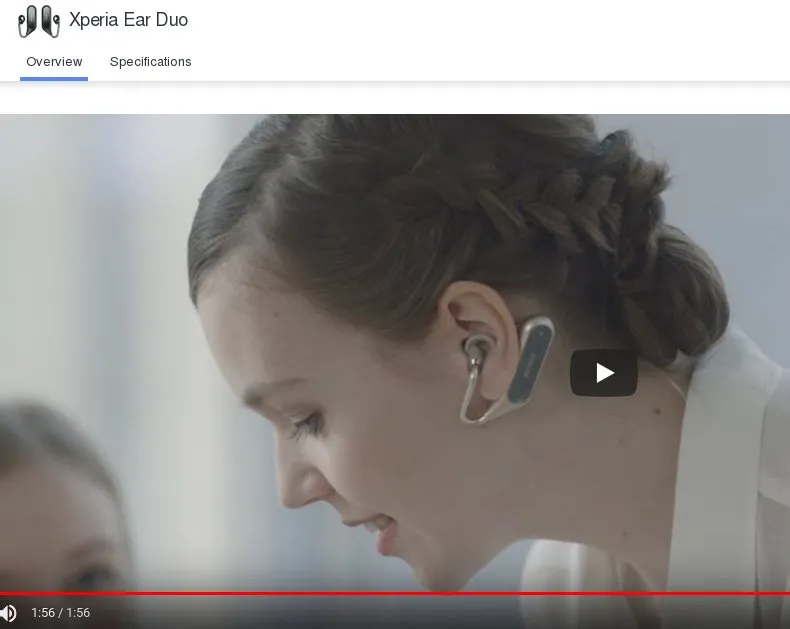
“The ecosystem is ready. The focus is now on applications and products.” And with those words, SOI Consortium Executive Director Carlos Mazure opened the annual Silicon Valley SOI Symposium. As promised, the day was packed with presentations about products on FD-SOI – some from big players like NXP and Sony, some from names new to the FD-SOI ecosystem like Audi and Airbus, and some from start-ups just getting into the game. The event got excellent coverage in EETimes/EDN – including in their editions across the globe in China, Japan, Taiwan, India and more. Samsung, GF Ramp FD-SOI, heralded the headlines. It was a full day of excellent presentations. In this post, I'll chronicle the morning presentations. The next post(s) will cover the afternoon session. Note that as of this writing, the ppts are not yet posted on the SOI Consortium website, but many will be. Keep checking back under the Events tab, and look under “past Events”. Andes Technology As semiwiki noted a few years back, Andes Technology is “...the biggest microprocessor IP company you've never heard of.” Based in Taiwan, Mediatek is one of their big customers; they've got a strong client base across Asia/Pacific, and are now making inroads into North America. Last year they announced with GF their 32-bit CPU IP cores had been implemented on GF's 22FDX® FD-SOI technology. In his symposium keynote, CEO Frankwell Lin said that in the test chip they're doing with GF and Invecus, they're seeing a 70% power savings compared with what they'd gotten in 28ULP. Their newest products are the N25 32bit and NX25 64bit RISC-V based cores, and in July they'll announce a core that runs on Linux. NXP “With FD-SOI we're enabling the future of embedded processing,” the always-quotable (and keynote speaker) NXP VP/GM Ron Martino told us. NXP's i.MX7ULP, i.MX8, i.MX8X and i.MXRT are all FD-SOI based. They all share fundamental building blocks, so NXP can build platforms, scale and re-use IP. “It's better than any technology I've worked on in my 30 years in the industry,” he said. They're seeing much higher performance with on-chip flash. And the RT “crossover” processor boasts 3x higher computing performance than today's competing MCUs. This is going to be critical for edge computing going forward, to which end NXP is working very closely with foundry partner Samsung. FD-SOI is not just helpful for the logic part of these chips – memory technologies also share in the benefits. They get much higher performance with on-chip flash. Leakage is cut by a factor of ten with biasing techniques, and the enhancements mean that memory can operate at very low voltages. NXP is increasingly sophisticated with how they use body biasing, applying high-granularity techniques to independent domains in different parts of the chips. Getting sub-0.6 Vmin delivers value at multiple levels: on battery life, on total system cost, and on system enablement. Invest in body biasing if you want to get leadership results, advised Martino. Edge computing – including machine learning and neural networks for things like image classification – is a big target, he continued. At the last CES they did a proof-of-concept “foodnet” where two appliances talked to each other without having to go to the cloud. In that case it was an i.MX8 in a fridge and an i.MXRT in a microwave, but he explained that the same concept can be applied to a car for driver awareness, where you don't want to take the extra time for or don't have a connection to the cloud. iMX and FD-SOI enable scalable solutions, he concluded. Audi What's a metal-bending company doing talking about electrons? asked Audi Project Manager Dr. Andre Blum. And why SOI? Well, for Audi, he said, SOI stands for Solutions, Opportunities and Innovation. [caption id="attachment_11790" align="alignleft" width="300"] Audi Project Manager Andre Blum says SOI stands for Solutions, Opportunities and Innovation -- at the 2018 SOI Symposium in Silicon Valley.[/caption] Audi is working on the various levels of autonomous driving, and they want it to be without design limitations. That means being able to hide sensors wherever they're needed. They'll create a cocoon around the car for the best driver experience. He showed a fun video Audi's made to illustrate their concept – it's the Invisible Man video, which you can check out on YouTube. But those new architectures can't up the power budget (think heat): rather they need to cut power drastically while increasing performance. And with FD-SOI, they see an opportunity to do just that, he said, while integrating the sensors. Audi is one of 25 partners in a heavily funded ( 100 million Euros) brand new EU Horizon 2020 program called Ocean12 (lead by Soitec). The launch was only May 1st 2018 (so as of today it doesn't even have a website yet), and it will run for about 4 years. It is described by ECSEL (a public-private entity that puts together the big EU research projects) as an “opportunity to carry European autonomous driving further with FDSOI technology up to 12nm node”. One to watch! Airbus For Airbus, it's all about increased connectivity and communications that are trusted and secure, said company expert Olivier Notebaert. Since their chip runs are low, NRE – non-recurring engineering costs – are very important; and they need flexible systems. SOI has a long history in aerospace – in fact that's originally where it got its start, since it can handle radiation and is immune to latch-up. Notebaert says that even for Airbus, IoT is their future. The developments they pioneer will be part of it. Airbus is a partner in the EU Horizon 2020 DAHLIA project – which stands for Deep sub-micron microprocessor for spAce rad-Hard appLIcation Asic. The project is, “...developing a Very High Performance microprocessor System on Chip (SoC) based on STMicroelectonics European 28nm FDSOI technology with multi-core ARM processors for real-time applications, eFPGA for flexibility and key European IPs, enabling faster and cost-efficient development of products for multiple space application domains. The performance is expected to be 20 to 40 times the performance of the existing SoC for space.” According to another recent presentation, DAHLIA is prototyping an FPGA this year that will be in production in 2019. Sony For Sony GM Kenichi Nakano, FD-SOI has big potential for low-power products. And he should know. Sony has been an FD-SOI pioneer, using it as the basis for GPS chips that are now in a growing number of cool products, especially watches. They're getting good feedback from the market and see good opportunities across a diversified global customer base, he said. Their CXD5603, for example, is the lowest power GNSS (GPS) chip worldwide. In mass production since 2015, it is now dominating world wearable markets like trackers -- such the popular Amazfit line. Running through their various FD-SOI based GPS offerings, he noted that the GPS is a pretty simple chip. But now customers are asking for more, like for it to work in the water (where a GPS typically doesn't). So Sony has partnered with triathalon teams and are seeing good results. With success, of course, comes greater demands: for greater accuracy, for more precise positioning in motion, for increased height accuracy, for even lower power – and Sony is meeting these demands with FD-SOI, in solutions like the new CXD5602. The CXD5602 product configuration covers audio/video/communications: key factors in IoT. A camera version is releasing this summer, as are main and extension boards. An LTE module will be released at the end of 2018. And now they're using those FD-SOI chips in audio applications. You'll find it in the Xperia™ Ear Duo, he said. The MWC press release noted that Xperia Ear Duo “... is driven by Sony’s ultra-low power consuming “CXD5602” chip and a sophisticated multi-sensor platform, the “Daily Assist” feature will recognize time, location and activities to offer relevant information throughout the day – reminding you what time your next meeting is when you reach the office or narrating the latest news headlines.” Also in that PR, Hiroshi Ito,Deputy Head of Smart Product Business Group at Sony Mobile Communications, said, “Ear Duo is the first wireless headset to deliver a breakthrough Dual Listening experience – the ability to hear music and notifications simultaneously with sounds from the world around you.” The highly anticipated wireless “open-ear” stereo headset started rolling out to select markets in Spring 2018. There's a great info page with video here. https://youtu.be/1lKo9acJDPs So that's what we heard in the morning. My next post (or posts?) will cover the afternoon. That includes Dan Hutcheson's excellent talk updating his FD-SOI survey, presentations from Samsung, Globalfoundries and Simgui, plus some from very cool start-ups, and the final panel presentation.
Read More
China Mobile is the world's largest* telco. So when Danni Song, one of the company's high-level project managers presented at the SOI Consortium's 5th International RF-SOI Workshop in Shanghai, you can bet people listened. With each new slide, a glowing sea of cell phone cameras rose over the heads of the audience in the huge, packed ballroom. [caption id="attachment_11612" align="alignleft" width="300"] (Photo courtesy: SOI Consortium, Simgui)[/caption] Over the last month, there's been a lot more coverage of 5G in the press (especially after the recent Mobile World Congress (MWC) – check out Junko Yoshida's EETimes piece for example). For ASN readers who want to know more about 5G and RF-SOI in China, here's a reminder that Song's presentation, and many of the others given by leading companies at the RF-SOI Workshop last fall, are now posted on and freely available the Consortium website Events page. Click here for the listing and links.The theme of the workshop was IoT, mobile, 5G connectivity, and mmW. As Dr. Xi Wang, Director General of SIMIT/CAS (the Shanghai Institute of Microsystem Information Technology in the Chinese Academy of Sciences), said in his opening keynote, China is strong in RF-SOI. RF-SOI will be growing at a CAGR of over 15% for the next five years, and China has production, design, wafer manufacturing and good momentum. “We will make a great contribution to the whole IC industry,” he predicted.Of note, too, Russell Ellwanter, CEO of TowerJazz, gave what turned out to be a very inspirational keynote about Value Creation, and the importance of treating your suppliers with respect. He credits his company's close relationship with RF-SOI wafer-supplier Soitec for TJ's claim to the world's best linearity. Five of their seven fabs do RF-SOI. LNA (low-noise amplifers) are a big market driver, and with RF-SOI they can integrate the LNA with the switch.Here are some more highlights from the day – but by all means check out the presentations for details. (You can click on the illustrations to see them in full screen.)China MobileIn her presentation, Embrace a Brand New Cooperation in 5G Era, Song asked where RF-SOI could help in her wish list. Could it increase integration and decrease cost and power consumption? Can it help improve NB-IoT device performance? The supply chain needs to come back around into a circle, so that the telcos are connected to and get insights from the wafer substrate providers, she said. [caption id="attachment_11608" align="alignright" width="300"] (Courtesy: China Mobile, SOI Consortium)[/caption] China Mobile has a 5G Innovation Center, and has established test labs in 8 cities. And the government has announced a 5G launch in 2020, with pre-commercial trials now going into 20 cities. So she was at the RF-SOI Workshop as much to listen and learn as to share China Mobile's vision.Sony [caption id="attachment_11613" align="alignleft" width="300"] (Courtesy: SOI Consortium and Sony)[/caption] The presentation by Kidetoshi Kawasaki, GM of Sony Semiconductor Solutions, focused on antenna tuning, which he said is one of the fastest growing things in cell phones. Antenna Tuning Progress SOI Single Chip Integration for 4G/5G UE (note that UE = user equipment) looks at antenna aggregation, and why it is important for carrier aggregation (CA) and MIMO. Sony has developed an SOI-based next-gen process for 5G integrating passive components. That's why RF-SOI is important and will be continued to be used in the mobile market, he said.GlobalFoundriesGF has developed demo vehicles to help customers, said Sr. Director of the RF Business Unit, Peter Rabbeni. (Over the years they've shipped over 32 billion RF-SOI devices, btw.) In his presentation, RF-SOI: Delivering Performance Integration for the Next Generation of Mobile,he noted that RF is becoming more complex than digital. As a result there is a need to integrate to help reduce cost: this is a direct correlation to the standards that are driving complexity. At the same time, performance requirements are increasing, so the challenge is driving increased performance at the same or lower cost than previous generations of products. [caption id="attachment_11609" align="alignright" width="300"] (Courtesy: GlobalFoundries and SOI Consortium)[/caption] To meet 4G/LTE and 5G's evolving performance demands, GF has recently introduced two new RF-SOI platforms, which he detailed in the presentation. 8SW enables increased integration of front-end modules (FEMs), while 45RFSOI is for mmWave FEMs. (In a separate presentation, IDDO-IC CEO Denis Masliah presented a Differential Complementary Millimeter Wave Power Amplifier for 5G using 45RFSOI process, which is currently being fabbed by GF.)RF-SOI Wafer SuppliersThe two leading RF-SOI wafer suppliers, Soitec and partner Simgui, both gave excellent presentations. Though Soitec EVP Bernard Aspar's presentation Engineered Substrates as Foundation of Innovation in RF is not posted, he made some important points. Up til now, RF-SOI has mainly been about switches and tuners, he said, but there are other opportunities that offer the potential for huge growth. The full supply chain needs to be prepared, he said, and suppliers need to understand each other. Each technology requires the right substrate – and even as we move into sub-6GHz 5G, there is still work to be done in 4G. In fact Soitec is now offering services to help customers better understand new substrate options. [caption id="attachment_11611" align="alignright" width="300"] (Courtesy: Simgui, SOI Consortium)[/caption] Soitec's partner in China, Simgui, now uses Soitec's Smart CutTM technology for RF-SOI wafer production. Together the two are now producing over a million 200mm RF-SOI wafers/year, said Simgui Sr. Director, Kerui Wang. His presentation, RF-SOI – a Secured Substrate Supply Chain, looked at their strategic partnership with Soitec, wherein they use the same tools and processes to deliver the same products meeting the same specs.Fabs and FablessTwo leading fabless companies – RDA Microelectronics (which was acquired by Spreadtrum) and SmarterMicro also presented their RF-SOI activities. Although their ppts are not posted, here are a few highlights.Longtime ASN readers will recall that RDA has been shipping high-volume, RF-SOI based chips to Samsung and others for over five years. In the presentation, RF-SOI in Current and Future RFFE Solutions, Engineering AVP Joseph Jia said that over last two years alone they've released almost 50 RFFE (front end) chips on RF-SOI. They see RF-SOI as the right match for switches, tuners and NB-IoT because of the low-voltage and tunability advantages.SmarterMicro's CTO, Peter Li, sees RF-SOI as a cornerstone of 5G. In his presentation, Reconfigurable RFFE in 5G, he said the goal is smart systems on fewer dies to decrease size and cost.Jeff Zhu, assistant director at SMIC, presented SMIC, 0.13um RF-SOI Platform Updates. Mainland China's largest foundry has recently moved its RF-SOI process from 180 to 130um, and he walked us through some chip designs.Throughout the day, presenters noted that RF is a great opportunity for China to take a leadership position. As one panelist at the end of the day noted, RF depends more on expertise and talent than digital, which depends more on manpower.Nanjing: A China RF CapitalJust before the Shanghai events, there was a 2-day event sponsored by the City of Nanjing, co-organized by SOI Industry Consortium and the City of Nanjing. Over 200 participants attended the workshop and tutorials on SOI applications, SoC development and manufacturing, EDA IP ecosystem, as well as a design tutorial for More than Moore SOI ecosystem. Almost all of those presentations are now posted on the Consortium – click here to get them.Some of the participants in the SOI Consortium's delegation also had the opportunity to visit the enormous Nanjing Sofware Park. Nanjing, we learned, is often considered China's “RF capital”. The list of the world's major RF players working in partnership there is certainly an international who's who.So, lots of good RF-SOI/5G info on the SOI Consortium website – check it out!~ ~ ~*in terms of market value and subscribers.
Read More
ASN asked Carlos Mazure and Giorgio Cesana, the Executive Directors of the SOI Consortium, to take a moment to share their outlook for 2018. Here’s what they had to say. First of all, we’d like to wish everybody in the SOI ecosystem a safe, happy and prosperous 2018. We just finished up a great year, and now look forward to exciting prospects in the months to come. Taking a quick look back, 2017 was marked by significant growth for RF-SOI markets, and with key product announcements for FD-SOI (accompanied by a very positive change in how it is viewed). In both domains, the foundries announced their roadmaps, so now the current sweet spots and future directions are clearly established. Let’s take a moment to consider RF-SOI. As those following wireless markets know, RF-SOI has been the basis for antenna front-end modules in all the world’s smart phones for a few years now. With 2018, we see the industry turn its attention to 5G, with sub-6GHz in priority but also addressing the mmW space. Thanks to various flavors of RF-SOI, and RF integration in FD-SOI, we’ll move into a new phase where wireless will get faster and lower power than ever before. This will be a hot topic in both the SOI Consortium symposiums around the world this year, and in articles coming your way here in ASN. Another hot topic will be exciting new products coming out on FD-SOI. Chip design and manufacturing is of course always a fairly long process, and we’ve talked about the importance of building the ecosystem over the last few years. Now, a good ecosystem is in place. The design tools are ready and validated at the fabs, and key IP is ready. Of course with time there will be more and more IP, but lack of IP is no longer a barrier to design starts. Embedded memory – eMRAM – is another subject that designers want to learn more about, so that will be part of what we’ll be covering. [caption id="attachment_11476" align="alignleft" width="247"] Photo courtesy: SOI Consortium / Adele Hars[/caption] Last year we saw a growing list of successful FD-SOI tape-outs. In 2018, these chips will be ramping in volume. So this year, we look at products. We’ll be inviting those companies that are ramping in silicon to present their chips at the various symposia we organize around the world: Silicon Valley in the spring, Tokyo in the summer, China in the fall. Our symposia will again be accompanied by tutorial days, which have been very popular and successful. In this year’s tutorials there will be a particular focus on RF, analog and mixed-signal design, and they’ll dive deeper into how to use back biasing techniques for further boosting performance and lowering power. So we’re at the beginning of what should be a very exciting year. We’d like to take a moment to thank all the member companies in the SOI Consortium for their enthusiastic support. And we look forward to welcoming new members over the course of this year. With warm regards, Giorgio Cesana and Carlos Mazure Executive Directors of the SOI Consortium
Read More