downloadGroupGroupnoun_press release_995423_000000 copyGroupnoun_Feed_96767_000000Group 19noun_pictures_1817522_000000Member company iconResource item iconStore item iconGroup 19Group 19noun_Photo_2085192_000000 Copynoun_presentation_2096081_000000Group 19Group Copy 7noun_webinar_692730_000000Path
Skip to main content
Default Banner Image

foundry

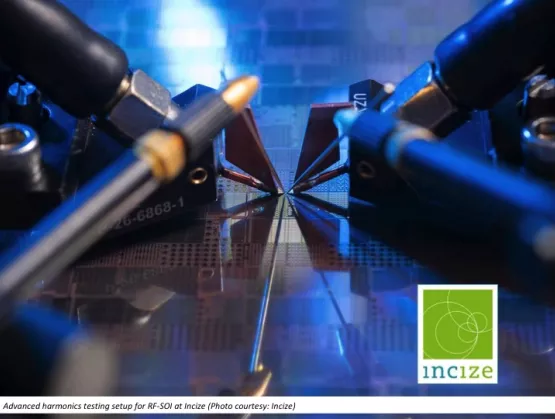
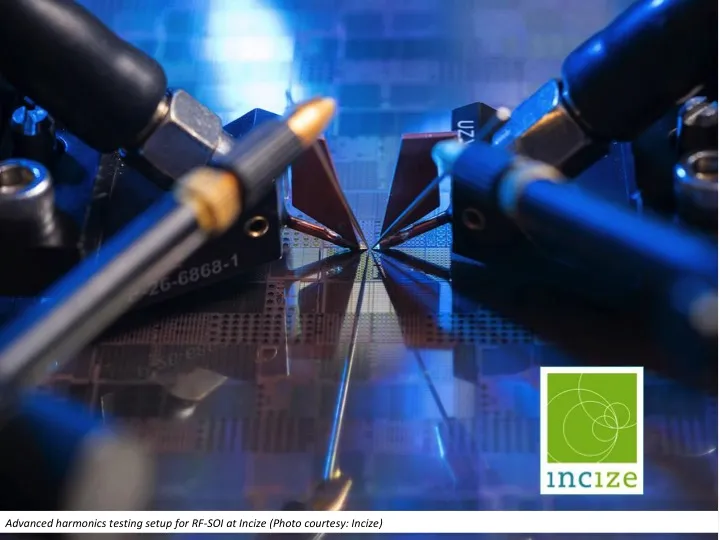
With the CAGR for switches in cell-phone RF front-end modules running at 9% for the next five years, new players want to get in on the action, and established players want to up the ante. The specialists at Incize help wafer suppliers, foundries and fabless companies maximize switch performance starting at the substrate level. CEO Mostafa Emam explains how.SOI News (SN): Can you tell us about the role Incize plays in the RF-SOI ecosystem? [caption id="attachment_32519" align="alignright" width="140"] Incize CEO Mostafa Emam. (Photo courtesy: Incize)[/caption] Mostafa Emam (ME): Our clients are wafer suppliers, foundries and fabless companies. The services we offer are testing and modeling of substrates, with the vision of what will happen in the value chain. Based on what the customer will do with the substrates, we do testing and modeling to improve the technology and tune their processes. Although the big players have teams devoted to this, we can add a layer of characterization that they have no expertise in. Some of our customers are foundries that have been using bulk silicon, but now see opportunities in RF-SOI. But they’re starting from scratch and we help them to adopt the technology. We help them understand the physics behind the technology so they can migrate from bulk to SOI. We help them develop test structures and evaluate their technology. Then we create models for both fully-depleted and partially-depleted SOI with PD-SOI 130 nm or 60 nm technology dominating the RF front-end module market. We believe RF is an art and you need to see the whole picture. SN: Can you tell us a bit about the history of Incize? ME: The RF-SOI story started in the 1990s. Then came trap-rich RF-SOI wafers from Jean-Pierre Raskin’s team at UC Louvain, industrialized by Soitec. Our lab at UC Louvain became known for our expertise in RF-SOI, and in 2011 we created Incize as a spin-off. [Editor's note: for more background, see this SOI Consortium article about the birth of trap-rich substrates and the company’s founding.] At first our characterization services were very diverse, but by 2014 we focused mostly on RF-SOI because of the big demand. In 2015 we started doing radiation hardness tests for space applications and a new business unit was created. In 2016 we started our modeling and PDK activity, followed the next year by work on GaN on Si. In 2018, we started offering full support to RF-SOI newcomers, who were starting from scratch, usually smaller players in the RF market. It takes about two years to fully train the engineers, support the technology enhancements, design test vehicles, measure them and finally do the modeling and PDK. So some of these players are now fully established in the RF-SOI market and have contracts in place with big customers. SN: In your presentations, you often say there is room for all. What do you mean by that? ME: There is a big market for RF-SOI in the coming years. It can offer the low-power, the low-cost and the high performance. RF-SOI is the only mature technology that combines all of this today. It successfully competes with traditional III-V technology. More foundries want to employ RF-SOI. We show to them that it’s not black magic – you just need to know how it works. [bctt tweet="There is a big market for RF-SOI in the coming years. More foundries want to employ #RFSOI. We show them that it’s not black magic – you just need to know how it works. - Incize CEO Mostafa Emam #5G #semiconductors" username="@soiconsortium"] On our side, we have the knowledge and the infrastructure. Our added value is that we can do advanced tests the customers can’t do. So the foundry says there’s opportunities in switches, we’ll do this and develop it all with optimization for specific Ron and Coff [the figure of merit for RF switches]. The foundry develops an RF switch and aiming at certain performance (RonCoff). We help our customers during this development phase. Once the performance target is reached we start developing a model and a PDK. There is enough demand for RF-SOI, as even entry-level cell phones have SOI chips. Some opt for a fast and low-cost solution. Many target “good enough”, although some target to compete against the big players – it’s a question of their business strategy. And this is where our added value comes in. SN: Can you provide some more insight into how you see the RF market? ME: The Front End Module (FEM) is a fast growing market, with increasing demand in terms of volume and performance. This includes antenna switches, LNAs, tuners, filters, etc. Historically, III-V materials have been used for their high performance and high power handling. However, RF-SOI has become the material of choice, and the biggest driver is integration of the RF switch and LNAs in one chip. It’s not easy to integrate the power amplifiers (PAs) on the same chip (still being on III-V substrates). But as it decreases footprint and cost, there are those who’ll do it. There is no viable competition for SOI – nothing will replace it in the short term. There are other technologies, but they are long term. It’s a stable market with high demand. SN: For those of us who are not RF experts, can you help us understand the technology? ME: The switch is sort of the traffic light of the FEM, receiving and transmitting. The simplest RF switch can be composed of only four transistors. Transistors leak power so you need to determine your Ron Coff performance. [Editor's note: Resistance on vs. Capacitance off, the RF switch figure of merit, is measured in femtoseconds and should be as low as possible. Psemi has a good video explaining it.] When the Coff capacitance is small, the switch is really off. When the On resistance Ron is small, it means low losses, and the switch is turned On. Ron and Coff is a compromise. And as there are many frequency bands and antennas, the FEM becomes very complex. Another issue is power handling, since the switch is the first stage behind the antenna. And finally, there is the question of switch linearity. Trap rich SOI wafers suppress harmonics so you have less distortion originating in the substrate. You have to model this – the designer needs to know. In addition to single tone harmonics you also get intermodulation, where, two or more high power signals at two different frequencies create distortion at other frequencies. The danger is that these parasitic signals can be so close that the filter can’t reject them and the useful signals get distorted. This was a killer for the switch created on the bulk substrate. Trap-rich RF-SOI fixed this. So now 100% of switches are on trap-rich SOI substrates. While it’s still a niche market, there is demand from customers for increasing the number of bands – that’s driving this market. SN: And what happens as we move to 5G? ME: There’s more and more pressure on the specs. It’s an art when anything changes. Moving from 3G to 4G required complete upgrade of the [foundry’s] models. With 4G, the specs are severe and the FEM must be built on trap-rich substrates. But 5G is not well defined, so the RF industry is taking their best shot. What is clear: the performance requirements get more challenging. Once the technology is understood, it can be implemented. But the foundries and the fabless need our help to do it fast and do it well. We create more value working together. SN: How do you see things evolving? ME: The number of foundries today doing switches on RF-SOI is increasing, and this will continue for the next few years. We saw this opportunity and invested in it. Our company is just ten people, and we are self-funded. We are swimming in business, but we have fun. And we’re getting recognition. Any company with CMOS in place could adopt RF-SOI. But it’s a different mindset. We help with the transition. ~ ~ ~Click here to read more feature articles in SOI News.
Read More
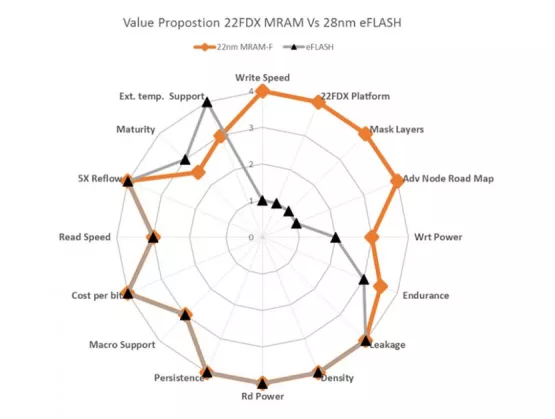
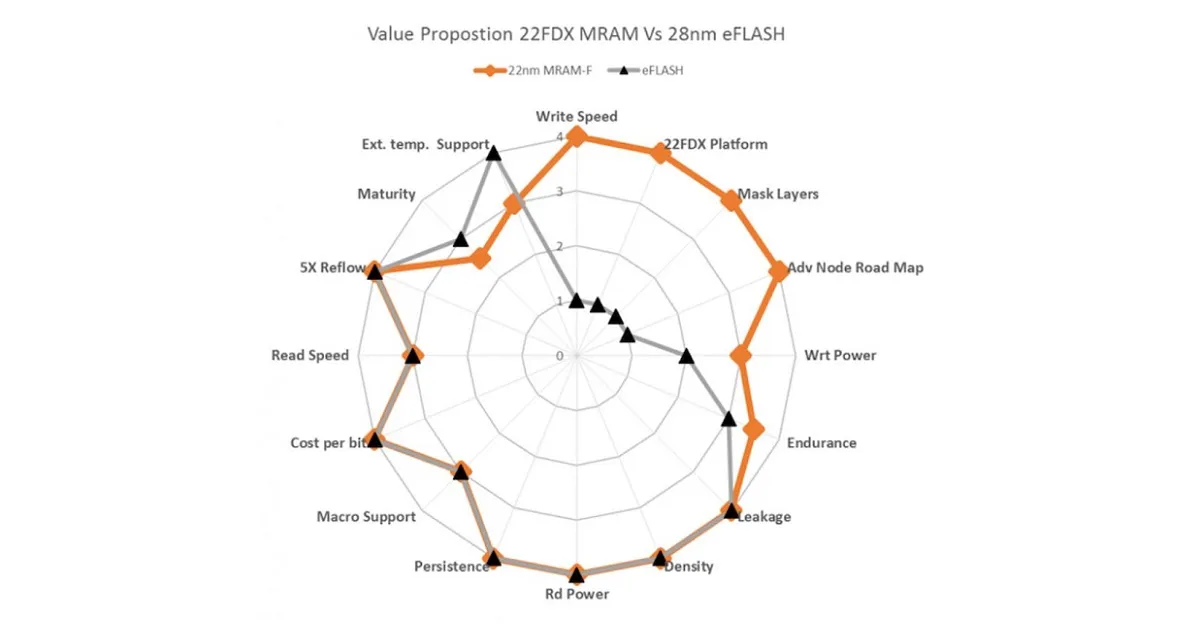
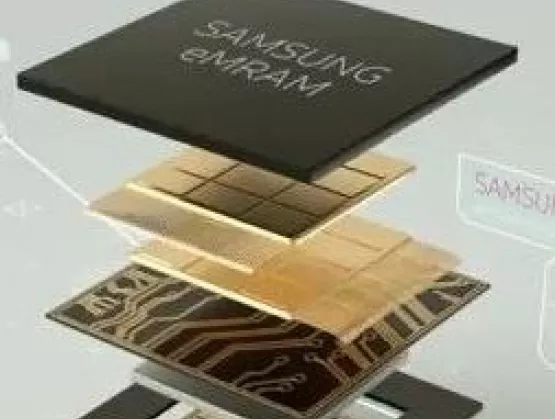
GlobalFoundries recently announced that its embedded magnetoresistive non-volatile memory (eMRAM) has entered production on the company’s 22nm FD-SOI (22FDX®) platform. (See the full press release here.) The company says this advanced embedded non-volatile memory on its FDX™ platform provides a cost-effective solution for low-power, non-volatile code and data storage applications. It is now working with several clients with multiple production tape-outs scheduled in 2020. GF heralds the announcement as a significant industry milestone, demonstrating the scalability of eMRAM as a cost-effective option at advanced process nodes for IoT, general-purpose microcontrollers, automotive, edge-AI, and other low-power applications. [caption id="attachment_31334" align="alignright" width="485"] (Courtesy: GlobalFoundries. Click to enlarge.)[/caption] “We continue our commitment to differentiate our FDX platform with robust, feature rich solutions that allow our clients to build innovative products for high performance and low power applications,” said Mike Hogan, senior vice president and general manager of Automotive and Industrial Multi-market at GlobalFoundries. “Our differentiated eMRAM, deployed on the industry’s most advanced FDX platform, delivers a unique combination of high performance RF, low power logic and integrated power management in an easy-to-integrate eMRAM solution that enables our clients to deliver a new generation of ultra-low power MCUs and connected IoT applications.”[bctt tweet="In production! @GlobalFoundries’ eMRAM on #22FDX FD-SOI replaces #eFlash for #IoT genpurpose #microcontrollers #automotive #edgeAI more. #lowpower #chipdesign #FDSOI" username="@soiconsortium"] [caption id="attachment_31330" align="alignleft" width="467"] (Courtesy: GlobalFoundries. Click to enlarge.)[/caption] Designed as a replacement for high-volume embedded NOR flash (eFlash), GF’s eMRAM allows designers to extend their existing IoT and microcontroller unit architectures to access the power and density benefits of technology nodes below 28nm. It is a highly versatile and robust embedded non-volatile memory (eNVM) that has passed five rigorous real-world solder reflow tests, and has demonstrated 100,000-cycle endurance and 10-year data retention across the -40°C to 125°C temperature range. The FDX eMRAM solution supports AEC-Q100 quality grade 2 designs, with development in process to support an AEC-Q100 quality grade 1 solution next year. [caption id="attachment_31331" align="alignright" width="280"] GF’s state-of-the-art 300mm production line at Fab 1 in Dresden, Germany, will support volume production of 22FDX with MRAM. (Courtesy: GlobalFoundries)[/caption] Custom design kits featuring drop-in, silicon validated MRAM macros ranging from 4 to 48 mega-bits, along with the option of MRAM built-in-self-test support is available today from GF and their design partners. eMRAM is a scalable feature that is expected to be available on both FinFET and future FDX platforms as a part of the company’s advanced eNVM roadmap. GF’s state-of-the-art 300mm production line at Fab 1 in Dresden, Germany, will support volume production of 22FDX with MRAM. Prior to this announcement, an excellent GF blog by David Lammers recapped GF's 2019 IEDM presentation of their eMRAM reliability data. You can read that here. It also provides a lot of interesting background information.
Read More
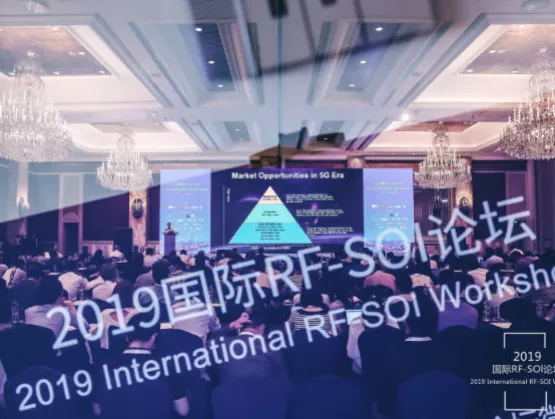
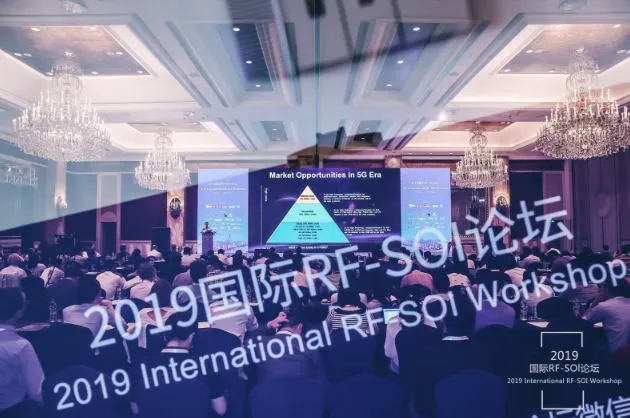
The SOI Consortium’s China 2019 event ran for two days, and it’s taken four (!) posts to cover all the presentations. In this final post we cover the afternoon RF-SOI sessions, which were dedicated to the China RF-SOI ecosystem and the RF value chain. In case you missed them, our previous posts recapped: 1. major keynotes from both the FD-SOI and RF-SOI days; 2. the FD-SOI presentations; 3. the morning sessions of the RF-SOI day; and 4. (this post) the RF-SOI day afternoon sessions. As we noted in Part 1 of our RF-SOI coverage, there were over 500 attendees for the RF-SOI day. And impressively, the room was still packed right through to the very end of the afternoon. Read on! SESSION 2: CHINA RF-SOI ECOSYSTEMSuzhou HunterSun Electronics: Super Opportunity for Integrated RFFE (“Jacky” Yujun Ding, COO)This talk had two parts. First, how is 5G changing the world, and second, what are the RFFE opportunities? He cited IHS data indicating that 5G will create tens of millions of jobs. New products include NB IoT, cellular V2X, as well as traditional PC/tablets and smart phones. But you still need to cover 2/3/4G with 5G. Major growth will happen in 2025-27. In terms of opportunities for RFFE, you've currently got 550mm2 going for $8; in 5G, you'll need 600mm2, but it will cost $16. You need RFSOI for filters and antenna switches, which are in high demand. Parts of the supply chain have no China players. Revenue for BAW is higher than SAW, but there's more SAW. He sees the industry moving heavily into integrated FEM (versus chip-on-board). He finished by itemizing different parts of the RFFE, indicating where the opportunities are (citing some data from Yole), with a special emphasis on integrated products for Chinese companies, with continued investor confidence. SmarterMicro: RF-SOI: Key Technology of Smart Connection (Yangyang Pen, Director) RF-SOI is an enabler of smart connections. However he sees GaAs as better for power, so SmarterMicro has a solution combining RF-SOI and GaAs. They've developed the world's first mMTC RFFE for high-performance upgrades on a single die and software reconfigurable. He notes that for IoT, lifetimes will be longer than 10 years, and that terminals are becoming more powerful. CanaanTek: Critical SOI CMOS Blocks in the 5G NR Sub-6GHz RF Front-End Architectures (Wayne Ni, CTO Board Chairman) CanaanTek is a fabless company working in consumer markets, with switches, tuners and LNAs in SOI-CMOS. He wants to capture 10% of the market with a focus on sub-6. The antenna/tuner is a must, and they've developed solutions for switches here. The figure of merit is RonCoff. He showed a product roadmap on SOI-CMOS. Xpeedic: Innovative EDA Solutions to Enable Differentiated RF-SOI Designs (Feng Ling, CEO)RF-SOI is growing, but there are still design challenges in process, models, filters and packaging. To design a good front end, you need better models and filters. People think passives are easy, but you need accurate models here. Xpeedic has developed design flows that include the effects of packaging early in design. Their products include IRIS, iModeler and Metis (for packaging). They've also introduced substrate modeling in partnership with CWS in France. The product is called SiPEX: it can address linearity in switch or PA designs. You need accurate substrate models to do this. Customers indicate they're seeing big improvements as well as reductions of 25% in chip area. IDP filters is another place they're working, to provide RF filters to fabless IC or module companies. No single filter technology can fit all the needs – IDP is one of them, so they have a broad portfolio of IDP filter technologies. He closed by saying that especially in China, the SOI ecosystem is really growing. SESSION 3: RF VALUE CHAINTowerJazz: Specialized RFSOI Foundry Technology to Support Rapid New Product Development (Paul Hurwitz, Director of RF Technology Development)This presentation gave a full overview of what TowerJazz offers in terms of RF-SOI foundry services with its fabs in Isreal, the US and Japan. What's new in 2019 is a diversifying of 200mm and 300mm. 200mm is best for power handling (for infrastructure/basestation antenna tuners and switch power handling, for example). 300mm is best for SW and LNA integration and higher digital densities. They've got new SOI models for the latest technology generations, and physics-based modeling of RF breakdown for accuracy. With more die being flipped, they needed new substrate modeling. For LNA and switch integration in 300mm, they invested in RF modeling. They also have an in-house MPW (multi-project wafer) program. He noted that customers in China are moving quickly in response to their customer requirements. Okmetic: Tailored Silicon Substrates for RF Applications (Atte Haapalinna, CTO)Okmetic Oy is a niche player in the substrate materials market, with specialties in sensors and MEMS, where they are the market leader. Now part of China’s NSIG group, they are expanding their manufacturing facility in Finland. In this presentation, their CTO talked about their current offerings as well as what they have under development. They do 150-200mm wafers, with a special emphasis on thick SOI. In terms of silicon substrates for RF, ultra-high resistivity is key. Their wafers are also used in IDP – integrated passive devices – for RF and acoustic filters. They are continually improving their high resistivity Magnetic Czochralski (MCz) silicon wafers, and are developing substrates for RF passives for automotive V2X. For RF beyond 6 GHz, they are looking at customized high resistivity silicon wafers for mmWave with researchers and customers. For sensors, they do SOI wafers with built-in cavities. Incize: RF SOI Ecosystem – History Challenges (Mostafa Emam, CEO)The world is exceeding expectations in terms of data usage. While the CAGR for devices is 27%, for data it’s 46%. Therefore each device needs to be faster and more power efficient. Incize recognizes RF as an art, with each piece hand crafted. But artists need to see the whole picture: at Incize, they help 17 companies – including wafer suppliers, foundries and fabless – see that big picture, especially in measurement, characterization and modeling for RF. For wafer suppliers, they do very high-power and very precise on-wafer testing to determine things like intermodulation distortion and substrate interference. For foundries, their specialty is in RF switches, for whom they do harmonics testing and thermal noise management. With those insights, Incize foundry customers have drastically increased the performance of the RF chips they’re manufacturing on trap-rich, high-resistivity SOI wafers. Meanwhile, Incize is also preparing PDKs for future potential substrate generations including GaN-on-Silicon, silicon-on-porous, and new contactless testing techniques for piezoelectric-on-insulator (POI – used in filters in 4/5G). “There’s a really big business opportunity for RF-SOI,” concluded Emam, “and room for everyone.” Cadence: SOI Technology in Intelligent and IoT/Vision/AI Systems (Jonathan Smith, Senior Director)Cadence does SOI enablement at advanced nodes. Smith shared three recent success stories. First, there’s the Musca-S1 test chip they did with Arm, Samsung and Sondrel this past spring. Second, there’s the Tensilica DSP for automotive vision on GlobalFoundries’ 22FDX, which uses 1/10th of the power of existing solutions and was demonstrated at CES. And finally there’s the i.MX line from NXP. In recent news, there’s a new version (18.1) of Virtuoso RF. Though it’s been on the market for 30 years, they’ve added advanced methodologies so that system design and analysis are on the same platform. They’ve also announced National Instruments’ analysis solver, the Clarity 3D solver for next-gen 3D solutions, the integration of multiple electromagnetic (EM) solvers, and advance SiP options. Silvaco: Xena-IP Management Infrastructure for the SOI Ecosystem (Babak Taheri, CEO)Every multi-core SoC today has as many as 200 IPs, if not more. How do you manage that? Tracking and traceability of IP is complicated but important. For IP providers, how do they track where its being used? And for IP consumers, they need to know what they’ve used and where. What’s required is an IP management system to keep track of the different functions and different concerns. Today’s tracking systems don’t talk to each other. Silvaco’s Xena IP management solution organizes all IP data, accounts, products, contracts, devices, support, compliance and reporting. For compliance in particular, they do IP “fingerprinting” and “DNA analysis”, which they’ve patented. The fingerprint is a digital representation of the IP: it’s not just software. It is secure, and can’t be reverse engineered. It’s not a tag: a tag is inserted into the IP, whereas fingerprints are extracted. DNA analysis flags discrepancies and quickly identifies where they are and which files to look in. Xena works in the cloud, enterprise systems or hybrids. The SOI ecosystem will be hearing a lot more about this. ~~ Please note that the China event presentations are all available on our website to anyone whose company or organization is a member of the SOI Consortium.
Read More
Since the beginning of the year, there’s been a steady stream of excellent news around Samsung Foundry’s 28FDS, their highly successful 28nm FD-SOI offering. Let’s take a look at what’s been happening, as things do seem to be accelerating. By way of reminder, they announced the industry’s first eMRAM (embedded MagnetoResistive RAM) testchip tape-out milestone on 28FDS in September 2017 (you can read the press release here) - which was just a year after they had announced mass production of 28FDS process technology.At the end of 2018, Arm announced the industry’s first Embedded MRAM (eMRAM) compiler IP built on Samsung Foundry’s 28FDS process technology. Follow that with this announcement at the beginning of 2019: Soitec Expands Collaboration with Samsung Foundry on FD-SOI Wafer Supply. The two companies announced that Samsung had secured a high-volume supply of FD-SOI technology to meet industry's current and future demands especially in consumer, IoT and automotive applications. In March came two more big announcements. First: Samsung Electronics Starts Commercial Shipment of eMRAM Product Based on 28nm FD-SOI Process. As they noted in the PR, “Samsung’s 28FDS-based eMRAM solution offers unprecedented power and speed advantages with lower cost. Since eMRAM does not require an erase cycle before writing data, its writing speed is approximately a thousand times faster than eFlash. Also, eMRAM uses lower voltages than eFlash, and does not consume electric power when in power-off mode, resulting in great power efficiency.”Hard on the heals of that came the news that Arm and Samsung Announce IP Platform including eMRAM for 18nm FD-SOI. At the SOI Consortium’s Silicon Valley Symposium in April, Tim Dry (he’s Samsung’s Director of Foundry Marketing for Edge and End Point), gave a terrific presentation. Entitled Samsung’s FDS with MRAM: Enabling Today’s Innovative Low Power Endpoint Products, it details the company’s FDSOI roadmap for the IoT Endpoint Platform (and yes, you can download in its entirety). Then in May at the big Samsung Foundry Forum in Silicon Valley, Arm, in collaboration with Samsung Foundry, Cadence, and Sondrel, demonstrated the first 28nm FD-SOI eMRAM IoT test chip and development board. The Musca-S1 test chip demonstrates a new choice in SoC design for IoT solutions, said Arm. (Sondrel, btw, is Europe's largest independent IC design consultancy.)In parallel, Cadence announced: Cadence Custom/AMS Flow Certified for Samsung 28nm FD-SOI Process Technology. Especially aimed at digitally-assisted analog designs, what’s new here is that the Cadence custom and analog/mixed-signal IC design flow is now Samsung Foundry certified for 28FDS. Samsung’s 28FDS PDK techfile is Mixed-Signal OpenAccess ready, enabling customers to deploy OpenAccess-integrated, fully interoperable Virtuoso-Innovus implementation flows. For its part, at its Foundry Forum, Samsung unveiled extensions of the company’s FD-SOI (FDS) process and eMRAM together with an expanded set of state-of-the-art package solutions. They indicated that the development of the successor to the 28FDS process, 18FDS, and eMRAM with 1Gb capacity will be finished this year.And finally, companies like NXP are shipping exciting new products fabbed on Samsung’s 28FDS. Ron Martino, VP GM of NXP’s i.MX Application Processor Product Line covered key products in his presentation at the SOI Consortium’s Silicon Valley Symposium (see our coverage here). Among them: the i.MX7ULP for long battery life with 2D 3D graphics for wearables and portables in consumer and industrial applications; the i.MX 8 and 8X subsystems for automotive and industrial applications; and the i.MX RT series of “cross-over” processors. The i.MX RT ULP (real-time, ultra-low-power) series, which Martino says is the “new normal”, deals with a high number of sensor inputs. The i.MX RT 1100 MCUs, which have been qualified for automotive and industrial applications, are breaking the gigahertz performance barrier.In July, linuxgizmos.com reported that, “In June, NXP began volume shipments of its super power-efficient i.MX7 ULP, which it announced in 2017. The SoC is billed as the most power-efficient processor on the market that also includes a 3D GPU. […] the ULP version includes a 3D graphics capable Vivante GC7000.” (Vivante, btw, is a VeriSilicon company, which is an SOI Consortium member and a leading proponent of FD-SOI design and IP in China and worldwide.) This is leading to some really nice wins for NXP. For example, they’ve got Amazon's Alexa Voice Service (AVS) leveraging the i.MX RT crossover processor, enabling developers to quickly and easily add Alexa voice assistant capabilities to their products. The RT series has rapidly been expanded, with versions for voice-controlled devices and offline face and expression recognition capabilities for smart home, commercial and industrial devices.Also announced this summer: NXP and Microsoft Bring Microsoft Azure Sphere Security to the Intelligent Edge with a New Energy-Efficient Processor. That collaboration includes development of a new crossover applications processor in NXP’s i.MX 8 series integrating Microsoft’s Azure Sphere security architecture and Pluton Security Subsystem. Their customers “will be able to harness the high-performance and energy efficiency of NXP’s i.MX 8 applications processors combined with Microsoft’s unequaled security and assurance provided by Azure Sphere certified chips”. As Martino concluded in his presentation, “The future of embedded processing [is] enabled by FD-SOI.” And Samsung Foundry’s FD-SOI offerings are clearly a massive enabler of that future.
Read More
Specialty foundry TowerJazz is ramping a 65nm version of its RF-SOI process on 300mm wafers at Fab 7 in Uozu, Japan. To support the ramp, the company has signed a contract with long-term partner, Soitec, guaranteeing a supply of tens of thousands of 300mm SOI silicon wafers, securing wafer prices for the next years and ensuring supply to its customers, despite a tight SOI wafer market. [caption id="attachment_12108" align="alignright" width="300"] The 300mm 65nm RF-SOI process will be offered at the Uozu, Japan fab, which is operated by the TowerJazz Panasonic Semiconductor Company (TPSCo). (Photo courtesy: TowerJazz)[/caption] Five of TJ's seven fabs do RF-SOI. LNA (low-noise amplifers) are a big market driver, and with RF-SOI they can integrate the LNA with the switch, CEO Russell Ellwanter said in his lead keynote at the SOI Consortium’s 5th International RF-SOI Workshop in Shanghai (spring, 2018). BTW, that was in fact a very inspirational talk about Value Creation, and the importance of treating your suppliers with respect. He credited his company’s close relationship with RF-SOI wafer-supplier Soitec for TJ’s claim to the world’s best linearity. “We are delighted to see the strong adoption of 300mm RF SOI through this large capacity and supply agreement with TowerJazz to augment our already significant 200mm RF-SOI partnership,” said Soitec CEO Paul Boudre. “TowerJazz was the first foundry to ramp our RFeSI products to high volume production in 200mm and continues as one of the industry leaders in innovation in this exciting RF market with advanced and differentiated offerings.” According to the TJ press release (you can read it here), with its best in class metrics the TowerJazz 65nm RF-SOI process enables the combination of low insertion loss and high power handling RF switches with options for high-performance low-noise amplifiers as well as digital integration. The process can reduce losses in an RF switch improving battery life and boosting data rates in handsets and IoT terminals. It's a high-growth market, to be sure. Market researchers Mobile Experts predict that the mobile RF front-end market will reach $22 billion in 2022 from an estimated $16 billion in 2018. TowerJazz says its breakthrough RF SOI technology continues to support this high-growth market and is well-poised to take advantage of next-generation 5G standards, which will boost data rates and provide further content growth opportunities in the coming years. Customers are already getting into position. For example, Maxscend (WuXi, China), a provider of RF components and IoT integrated circuits, is ramping in this new technology. “We chose TowerJazz for its advanced technology capabilities and its ability to deliver in high volume while continuously innovating with a strong roadmap. We specifically selected its 300mm 65nm RF SOI platform for our next-generation product line due to its superior performance, enabling low insertion loss and high power handling,” said Maxscend CEO Zhihan Xu. As longtime ASN readers will know, we've been covering the evolutions of TJ's RF-SOI platforms since the beginning of the decade. It's worth noting, too, that beyond RF, TowerJazz also offers foundry customers other SOI-based processes, such as the new 0.18μm BCD SOI, a 200V SOI technology platform (announced in 2017, press release here) for motor drivers, industrial tools, electric vehicles and more. The previous generation 0.18μm SOI for automotive power management also offers exceptional area savings and is well-suited for high temperature operation. Back in 2014, here at ASN we did a great interview with TJ SVP Dr. Marco Racanelli about when and why they use SOI – and while processes have advanced, the basic drivers are still there, so it's a still a good read. And finally, designers will want to know that the TJ Multi-Project Wafer (MPW) Shuttle Program offers the 65nm RF-SOI process, as well as other SOI-based processes. See the website for scheduling and details.
Read More
Leti and Soitec have announced a new collaboration and five-year partnership agreement to drive the R D of advanced engineered substrates, including SOI and beyond. This agreement brings the traditional Leti-Soitec partnership to a whole new dimension and includes the launch of a world-class prototyping hub associating equipment partners to pioneer with new materials, The Substrate Innovation Center will feature access to shared Leti-Soitec expertise around a focused pilot line. Key benefits for partners include access to early exploratory sampling and prototyping, collaborative analysis, and early learning at the substrate level, eventually leading to streamlined product viability and roadmap planning at the system level. [caption id="attachment_12066" align="aligncenter" width="644"] CEOs Emmanuel Sabonnadière (Leti) and Paul Boudre (Soitec) announcing the new Substrate Innovation Center during Semicon West '18. (Image courtesy: Leti)[/caption] Leading chip makers and foundries worldwide use Soitec products to manufacture chips for consumer applications targeting performance, connectivity, and efficiency with extremely low energy consumption. Applications include smart phones, data centers, automotive, imagers, and medical and industrial equipment, but this list is always growing, along with the need for flexibility to explore new applications starting at the substrate level. At the Substrate Innovation Center, located on Leti’s campus, Leti and Soitec engineers will explore and develop innovative substrate features, expanding to new fields and applications with a special focus on 4G/5G connectivity, artificial intelligence, sensors and display, automotive, photonics, and edge computing. “Material innovation and substrate engineering make entire new horizons possible. The Substrate Innovation Center will unleash the power of substrate R D collaboration beyond the typical product road maps, beyond the typical constraints,” said Paul Boudre, Soitec CEO. “The Substrate Innovation Center is a one-of-a-kind opportunity open to all industry partners within the semiconductor value chain.” Whereas a typical manufacturing facility has limited flexibility to try new solutions and cannot afford to take risks with prototyping, the mission of the Substrate Innovation Center is to become the world’s preferred hub for evaluating and designing engineered substrate solutions to address the future needs of the industry, inclusive of all the key players, from compound suppliers to product designers. Using state of the art, quality-controlled clean room facilities, and the latest industry-grade equipment and materials, Leti and Soitec engineers will conduct testing and evaluation at all levels of advanced substrate R D. “Leti and Soitec’s collaboration on SOI and differentiated materials, which extends back to Soitec’s launch in 1992, has produced innovative technologies that are vital to a wide range of consumer and industrial products and components,” said Emmanuel Sabonnadière, Leti CEO. “This new common hub at Leti’s campus marks the next step in this ongoing partnership. By jointly working with foundries, fabless, and system companies, we provide our partners with a strong edge for their future products."
Read More
Per Arm, the industry's first eMRAM compiler IP is now on Samsung's 28nm FD-SOI technology. The announcement was made in a post by Kelvin Low, VP Marketing for ARM's Physical Design Group (read it here). He said that ARM has successfully completed their first eMRAM IP test chip tapeout. The Arm eMRAM compiler IP will be available from 4Q 2018 for lead partners. Samsung Foundry’s 28nm FD-SOI process technology is called 28FDS. eMRAM (which stands for embedded MagnetoResistive RAM) is a novel non-volatile memory (NVM) option positioned to replace incumbent NVM eFLASH, which has hit its limits in terms of speed, power, and scalability. Arm's new eMRAM compiler IP gives Samsung's 28FDS customers the flexibility to scale their memory needs based on the complexity of various use-cases, explains Low. “What drives the cost-effectiveness of this compiler IP is that eMRAM can be integrated with as few as three additional masks, while eFlash requires greater than 12 additional masks at 40nm and below,” he says. “Also, the eMRAM compiler can generate instances to replace Flash, Electrically Erasable Programmable Read-Only Memory (EEPROM) and slow SRAM/data buffer memories with a single non-volatile fast memory – particularly suited for cost- and power- sensitive IoT applications.” [caption id="attachment_11972" align="alignleft" width="300"] A key slide shown by Arm at the 2017 SOI Consortium's Silicon Valley Symposium (Courtesy: Arm and the SOI Consortium)[/caption] At the SOI Consortium's 2017 Silicon Valley Symposium, Arm said that they were stepping up their support of FD-SOI (read about that here) – and clearly they are! At that event, Arm VP Ron Moore gave a great presentation, which is freely available on our website: Low Power IP: Essential Ingredients for IoT Opportunities. Samsung, btw, has been offering 28FDS for about three years now. (ASN did a 3-part interview with Kelvin Low back in 2015 when he was a senior director of marketing for Samsung Foundry. It's still a useful read – you can get it here.) As of last fall, Samsung said it had taped out more than 40 products for various customers. And at the SOI Consortium's 2018 Silicon Valley Symposium, Hong Hoa, SVP said they'd already taped out another 20 this year (read about that here). https://youtu.be/EB14K8Gq5-w Samsung says the write speed of their eMRAM is 1000x faster than eFlash. They actually announced the industry's first eMRAM testchip tape-out milestone on 28FDS in September 2017 (you can read the press release here). They also did an eMRAM test chip with NXP. (BTW, Samsung has a really nice video explaining their eMRAM offering – you can see it above or on YouTube here.) As noted in ASN's Silicon Valley 2018 symposium coverage, the basic PDK for the Samsung 18nm FD-SOI process (18FDS) will be available in September 2018, with full production slated for fall of 2019. It will deliver a 24% increase in performance, a 38% decrease in power, and a 35% decrease in area for logic. RF for the 18FDS platform will be ready by the end of this year, and eMRAM beginning in 2019.
Read More
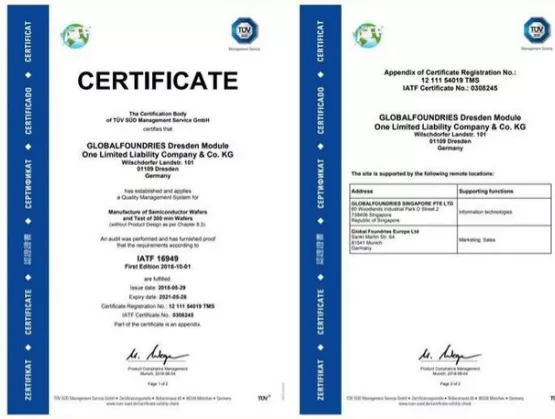
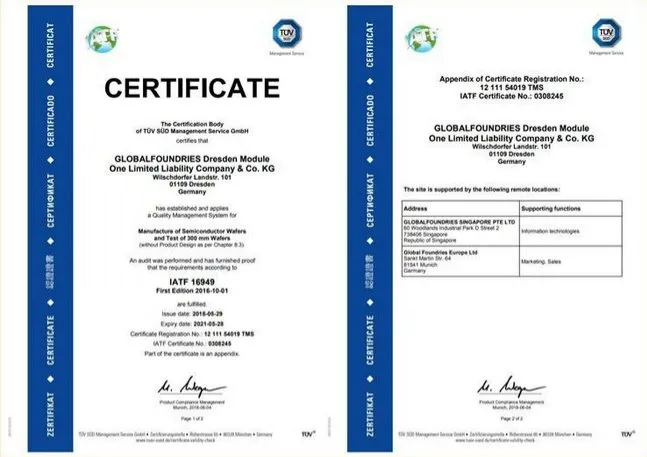
[caption id="attachment_11914" align="alignright" width="150"] Mark Granger, GlobalFoundries' VP Automotive Product Line Management[/caption] GF's 22FDX® (22nm FD-SOI) offering is on an automotive roll. The technology platform has been certified for several key automotive standards, and GF has announced an exciting new ADAS customer in Arbe Robotics. In addition to sharing info from various press releases and blogs, ASN also had a chance to catch up with Mark Granger, GF's VP for automotive, who provided some great insights. Read on! Taking the Heat When it comes to compliance, automotive industry standards are excruciatingly rigorous. Every part that goes into a car must adhere to the relevant standards: chips are no exception. One such standard is the AEC – Q100, a “Failure Mechanism Based Stress Test Qualification For Integrated Circuits”. The AEC – aka the Automotive Electronics Council – handles those testing standards and certification. Grade 2 means a technology is certified for the -40°C to +105°C ambient operating temperature range. To achieve Grade 2 certification, devices have to successfully withstand reliability stress tests for an extended period of time over the specified temperature range. GF recently announced that 22FDX has been AEC Q100 Grade 2 certified (press release here). However Granger adds that for their customers, they've added additional headroom that takes them to 125°C. They're now working on Grade 1 certification, he says, which means the devices are certified to handle junction temperatures up to 125°C (and there again, GF has added additional headroom that takes them to 150°C). That should be done by the end of 2018. The ability you get with FD-SOI to tune the transistors using body biasing is really beneficial here, he says. For GF, the 22FDX qualifications exemplifies their commitment to providing high-performance, high-quality technology solutions for the automotive industry. The automotive industry is driven by a “zero excursions – zero defects” mindset, says Granger, and that drives the foundry, too. SOI has been used for decades across industries where heat and electromagnetic radiation are challenges, bringing soft error rates (SER) down by orders of magnitude, notes Granger. (SOI, btw, essentially eliminates what are known as Single Event Upsets (SEU) caused by latch-up, which in turn brings down SER.) That in turn, ties into the FIT (failure in time) rate – and that's part of the ISO 26262 “Road vehicles – Functional safety” standard – where 22FDX is also certified. As a part of GF's AutoPro™ platform, 22FDX allows customers to easily migrate their automotive microcontrollers and ASSPs to a more advanced technology, while leveraging the significant area, performance and energy efficiency benefits over competing technologies. Moreover, the optimized platform offers high performance RF and mmWave capabilities for automotive radar applications and supports implementation of logic, Flash, non-volatile memory (NVM) in MCUs and high voltage devices to meet the unique requirements of in-vehicle ICs. GF's Fab 1 in Dresden, Germany (which is where they do 22FDX) also has achieved ISO-9001/IATF-16949 certification, which demonstrates that it is capable of meeting the stringent and evolving needs of the automotive industry. (IATF is the International Automotive Task Force. 16949 is a Quality Management System (QMS) certification specifically for the automotive sector.) Granger wrote a really informative blog on the GF website – you can read it here. It includes this graphic, indicating where in the car 22FDX-based parts are expected to go. [caption id="attachment_11913" align="alignleft" width="1000"] Here's how GF sees the applications for 22FDX and other chip technologies in automotive applications. (Courtesy: GlobalFoundries)[/caption] On Radar GF recently announced that Arbe Robotics selected 22FDX® as the process technology for its groundbreaking patented imaging radar. Arbe aims to achieve fully automated system capabilities and enable safer driving experiences for autonomous vehicles (read the press release here). As the first company to demonstrate ultra-high-resolution at a wide field of view, Arbe Robotics’ radar technology can detect pedestrians and obstacles at a range of 300 meters, in any weather and lighting conditions. The processor creates a full 3D shape of the objects and their velocity, and classifies targets using their radar signature. As Granger noted in his blog, “Radar is one of several sensor types used to detect objects near a vehicle, to enable features like adaptive cruise control. Lidar is another. It uses pulsed lasers to determine distance from an object by measuring the time it takes for the light to reflect back. However, lidar is currently expensive and is affected by weather conditions. Radar is less expensive, and higher-resolution radars promise to compete well with lidar in automotive applications, thereby enabling lower-priced vehicles to enjoy greater ADAS capabilities. 22FDX-based radar sensors can provide higher resolutions and less latency than current radar sensors at a very low total system cost.” While they may be complementary at first, there is a battle brewing between high-resolution radar and lidar, Granger told ASN. Putting their solution on 22FDX enables Arbe to achieve a 77 GHz mmWave radar and compete cost-effectively with lidar. “They wanted the best,” says Granger. 22FDX can achieve the requisite Ft and Fmax figures of merit. And with transistor stacking, they can also integrate the power amplifier (PA) on a single device. With the low inherent capacitance of the PA in 22FDX, you can get the high power output you need for mmWave but with low power consumption. GF blogger Dave Lammers has also written a great piece about the Arbe solution (you should read it: here's the link). “The company said its advanced technology allows the detection of small targets, such as a human or a bike even if they are somewhat masked by a large object such as a truck,” he writes. “The imaging radar can determine whether objects are moving, and in what direction, and alert the car in real-time about a risk. “While other car sensors can fail when it is raining, if there’s fog, and due to blinding lights such as a sudden reflection, Arbe’s radar is completely oblivious to all those factors. The custom designed radar processor creates a full real-time 4D image of the environment, and classifies targets using their radar signature.” Avi Bauer, Arbe's VP of R D, is now clearly an SOI fan. Lammers quotes him as saying, “With SOI the design is more straightforward, and (voltage) biasing allows you to do things that cannot be done in standard CMOS. For the transmit and receive modules, SOI’s higher resistivity substrate benefits the passive components – inductors and capacitors – and allows good isolation. High Q passives are important. At 22nm, SOI allows better performance overall.” Clearly good things are coming down the road for FD-SOI!
Read More
“GlobalFoundries, TowerJazz, TSMC and UMC are expanding or bringing up RF SOI processes in 300mm fabs in an apparent race to garner the first wave of RF business for 5G, the next-generation wireless standard,” writes Mark Lapedus of Semiconductor Engineering. His recent piece, RF-SOI Wars Begin, explains why demand across the supply chain is currently tight. Rest assured, the supply situation is being addressed fast. By next year, 300mm-based RF-SOI manufacturing (vs. 200mm) will increase from 5% to 20%. But with insatiable end-user demand for greater throughput, overall RF-SOI device demand is increasing in the double-digit range, so 200mm-based manufacturing is also expanding fast. [caption id="attachment_11905" align="alignleft" width="300"] The front-end modules in all smartphones are built on Soitec's RF-SOI wafer technology. The most advanced, for LTE/LTE-A, are built on Soitec's RFeSI-SOI wafers, which have four layers to meet the demands of devices with high linearity requirements. (Courtesy: Soitec)[/caption] SOI wafer manufacturer Soitec has 70% of the RF-SOI wafer market share. The other RF-SOI wafer manufacturers – Shin-Etsu, GlobalWafers and Simgui – all use Soitec's RF-SOI wafer manufacturing technology. This is an excellent, comprehensive piece, that clearly explains the complexities of the markets, the devices, the manufacturing and the supply chain. It's a highly recommended read. BTW, the SOI Consortium is organizing a 4G/5G SOI supply chain workshop during Semicon West (July '18). Sign up or get more information on that under the Events tab here on the consortium website. Of course, here at ASN, we've been covering RF-SOI for over a decade. You can use our RF-SOI tag to access most of the pieces we've done over the years.
Read More
Good news: there are far fewer bigoted extremists out there when it comes to FD-SOI vs. FinFETs. People want the best technology for their application. It's that simple. That's a key piece of news from the updated survey by Dan Hutcheson, CEO of VLSI Research, which he presented in the afternoon session of the SOI Consortium's 2018 SOI Symposium in Silicon Valley The afternoon then featured presentations by foundry partners, which I'll cover here. Also in the afternoon were presentations by wafer-maker Simgui, some innovative start-ups leveraging FD-SOI for custom SoCs and the final panel discussion. I'll cover those in Part 3 of this series. BTW, if somehow you missed my coverage of the morning sessions about very cool new products and projects from NXP, Sony, Audi, Airbus and Andes Technology, be sure to click here to read it. The presentations are starting to be posted on the SOI Consortium Events page – but some won't be. Either way, I'll cover them here. VLSI Research A couple years ago at the annual SOI Symposium in Silicon Valley, Dan Hutcheson presented results of a survey he did (ASN covered it – you can still read about it here). At the 2018 event, he presented an update, which is now posted. You can get it here. The FD-SOI roadmap and IP availability are no longer issues for decision makers, he found. The 14nm branch – do you go FinFET or FD-SOI? – is gone. “Fins and FD are complementary,” he observed. Most people said they'd consider using both and running two roadmaps, choosing whichever technology is appropriate to a given design. [caption id="attachment_11841" align="alignnone" width="1000"] (Courtesy: VLSI Research, SOI Consortium)[/caption] From a transistor viewpoint, the top reasons to choose FD-SOI is that it's better for analog and has lower leakage/parastics. It's perceived as better for complex, high mixed-signal SoCs, and especially for RF and sensor integration. In fact, people see RF as the new mixed-signal, wherein FD-SOI is uniquely positioned for 5G and mmWave. From a business viewpoint, FD-SOI is perceived to have real advantages. In particular, FD-SOI wins when it comes to keeping down design costs, manufacturing costs and time-to-market. IoT is still the hottest target market for FD-SOI, to which he adds high growth expected in automotive and medical. Samsung With 20 tape-outs in 2018, Samsung is seeing an acceleration in its FD-SOI business. “The trend is healthy,” said Hong Hoa, SVP of the company's foundry business. FD-SOI, he continued, is on a “differentiation path.” Samsung's 28nm FD-SOI process, called 28FDS is at full maturity with very strong yields. They're seeing more customers and a wider range of applications. The design infrastructure, silicon-verified IP and methodologies are also all mature. They have optimal implementation and verification guidelines for body bias design, a body bias memory usage guide, and a body bias generator integration guide. The process supports Grade 1 automotive, and will be qualified for Grade 2 in a few weeks. FD-SOI, Hoa reminded the audience, offers superior RF performance compared to both planar bulk and 14nm FinFET. The Samsung strategy is to first provide a base for for the FD-SOI process, then add RF and eMRAM. The base for 28nm was done in 2016; they added RF in 2017 and eMRAM this year. The Samsung platform for IoT applications integrates both RF and eMRAM to support multi-function needs in a single platform. Lead customers are already working with eMRAM in their designs, he added. (BTW, Samsung has a really nice video explaining their eMRAM offering – you can see it on YouTube here.) The basic PDK for the Samsung 18nm FD-SOI process (18FDS) will be available in September 2018, with full production slated for fall of 2019. It will deliver a 24% increase in performance, a 38% decrease in power, and a 35% decrease in area for logic. RF for the 18FDSplatform will be ready by the end of this year, and eMRAM beginning in 2019. GlobalFoundries With design wins from 36 customers underway, 12 of which are taping out in 22FDX (GF's 22nm FD-SOI process) this year, the market has validated FDX for differentiation, said GF SVP Dr. Bami Bastani. And indeed, designers are using it for a wide array of applications across North America, Europe, Asia/Pacific and Japan. Customers in the North America are designing in 22FDX for NB-IoT, industrial, RF/analog, mobile, network switches and cryptocurrency applications. In Europe, it's more or less the same plus automotive/mmWave, optical transmission, wireless BTS and AI/ML. In Asia Pacific/Japan the mix is similar to Europe. Bastani sees the three big enablers as the the strengths of the roadmap, the ecosystem and multi-sourcing from Dresden and Chengdu (where they're already equipping the cleanrooms). He also tipped his hat in acknowledgment to the partnership with FD-SOI wafer supplier Soitec, noting that they have gone the extra mile to match GF's requirements. So that was the first part of a great afternoon. As mentioned above, my next post (part 3) will cover a very informative presentation by wafer-maker Simgui on the markets in China, plus talks by some innovative start-ups leveraging FD-SOI for custom SoCs and the final panel discussion.
Read More