downloadGroupGroupnoun_press release_995423_000000 copyGroupnoun_Feed_96767_000000Group 19noun_pictures_1817522_000000Member company iconResource item iconStore item iconGroup 19Group 19noun_Photo_2085192_000000 Copynoun_presentation_2096081_000000Group 19Group Copy 7noun_webinar_692730_000000Path
Skip to main content
Default Banner Image

Samsung

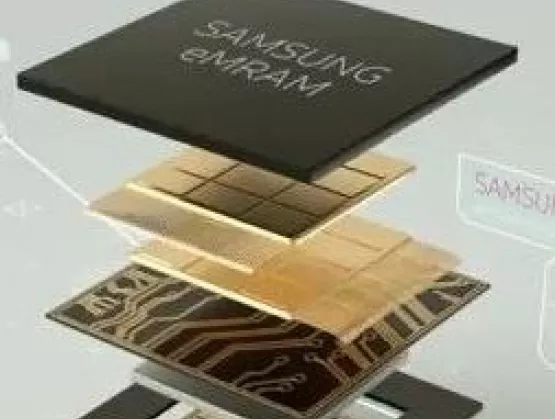
Per Arm, the industry's first eMRAM compiler IP is now on Samsung's 28nm FD-SOI technology. The announcement was made in a post by Kelvin Low, VP Marketing for ARM's Physical Design Group (read it here). He said that ARM has successfully completed their first eMRAM IP test chip tapeout. The Arm eMRAM compiler IP will be available from 4Q 2018 for lead partners. Samsung Foundry’s 28nm FD-SOI process technology is called 28FDS. eMRAM (which stands for embedded MagnetoResistive RAM) is a novel non-volatile memory (NVM) option positioned to replace incumbent NVM eFLASH, which has hit its limits in terms of speed, power, and scalability. Arm's new eMRAM compiler IP gives Samsung's 28FDS customers the flexibility to scale their memory needs based on the complexity of various use-cases, explains Low. “What drives the cost-effectiveness of this compiler IP is that eMRAM can be integrated with as few as three additional masks, while eFlash requires greater than 12 additional masks at 40nm and below,” he says. “Also, the eMRAM compiler can generate instances to replace Flash, Electrically Erasable Programmable Read-Only Memory (EEPROM) and slow SRAM/data buffer memories with a single non-volatile fast memory – particularly suited for cost- and power- sensitive IoT applications.” [caption id="attachment_11972" align="alignleft" width="300"] A key slide shown by Arm at the 2017 SOI Consortium's Silicon Valley Symposium (Courtesy: Arm and the SOI Consortium)[/caption] At the SOI Consortium's 2017 Silicon Valley Symposium, Arm said that they were stepping up their support of FD-SOI (read about that here) – and clearly they are! At that event, Arm VP Ron Moore gave a great presentation, which is freely available on our website: Low Power IP: Essential Ingredients for IoT Opportunities. Samsung, btw, has been offering 28FDS for about three years now. (ASN did a 3-part interview with Kelvin Low back in 2015 when he was a senior director of marketing for Samsung Foundry. It's still a useful read – you can get it here.) As of last fall, Samsung said it had taped out more than 40 products for various customers. And at the SOI Consortium's 2018 Silicon Valley Symposium, Hong Hoa, SVP said they'd already taped out another 20 this year (read about that here). https://youtu.be/EB14K8Gq5-w Samsung says the write speed of their eMRAM is 1000x faster than eFlash. They actually announced the industry's first eMRAM testchip tape-out milestone on 28FDS in September 2017 (you can read the press release here). They also did an eMRAM test chip with NXP. (BTW, Samsung has a really nice video explaining their eMRAM offering – you can see it above or on YouTube here.) As noted in ASN's Silicon Valley 2018 symposium coverage, the basic PDK for the Samsung 18nm FD-SOI process (18FDS) will be available in September 2018, with full production slated for fall of 2019. It will deliver a 24% increase in performance, a 38% decrease in power, and a 35% decrease in area for logic. RF for the 18FDS platform will be ready by the end of this year, and eMRAM beginning in 2019.
Read More
Here’s why the embedded community should care whether the chips they use are built on FD-SOI. FD-SOI has “…dramatically improved the landscape for power efficiency,” NXP VP Joe Yu explains in a recent Embedded Systems Engineering piece (you can read it here). He gets into the hows and whys of the i.MX7ULP chip design, taking a deep dive into the things that the embedded folks really care about. He details how FD-SOI decreases leakage and dynamic power, including the roles played by forward and reverse body biasing. He then goes on to explain why it’s better for analog, and how it prevents latch-up. FD-SOI enables new features, too, he points out, like ultra-low power consumption and deep sleep suspend. And perhaps most importantly, he explains how bursty high-performance and ultra energy efficiency are dynamically traded off on an as-needed basis. “Engineers no longer face a forced selection: low-power processor or high-performance processor,” he say. “Rather, the selection for performance or power efficiency can be made instantaneously, as needed, without having to reconfigure.” All of this plus the rich graphics and user interface FD-SOI enables makes the i.MX 7ULP perfect for “…IoT edge devices, as well as smart home controls, building automation, portable patient monitoring, wearables, and portable scanners.” This is an excellent read: highly recommended. Of course, ASN covered the i.mX7ULP when it was first announced (on Samsung's 28nm FD-SOI) last year – you can still read our coverage here. But it’s good to see the company explaining to their customers how FD-SOI will change the way they build products. BTW, you can get all the i.MX7ULP product details on the NXP website here. NXP has also put together a nifty video on the i.MX7ULP – see it here.
Read More
Good news: there are far fewer bigoted extremists out there when it comes to FD-SOI vs. FinFETs. People want the best technology for their application. It's that simple. That's a key piece of news from the updated survey by Dan Hutcheson, CEO of VLSI Research, which he presented in the afternoon session of the SOI Consortium's 2018 SOI Symposium in Silicon Valley The afternoon then featured presentations by foundry partners, which I'll cover here. Also in the afternoon were presentations by wafer-maker Simgui, some innovative start-ups leveraging FD-SOI for custom SoCs and the final panel discussion. I'll cover those in Part 3 of this series. BTW, if somehow you missed my coverage of the morning sessions about very cool new products and projects from NXP, Sony, Audi, Airbus and Andes Technology, be sure to click here to read it. The presentations are starting to be posted on the SOI Consortium Events page – but some won't be. Either way, I'll cover them here. VLSI Research A couple years ago at the annual SOI Symposium in Silicon Valley, Dan Hutcheson presented results of a survey he did (ASN covered it – you can still read about it here). At the 2018 event, he presented an update, which is now posted. You can get it here. The FD-SOI roadmap and IP availability are no longer issues for decision makers, he found. The 14nm branch – do you go FinFET or FD-SOI? – is gone. “Fins and FD are complementary,” he observed. Most people said they'd consider using both and running two roadmaps, choosing whichever technology is appropriate to a given design. [caption id="attachment_11841" align="alignnone" width="1000"] (Courtesy: VLSI Research, SOI Consortium)[/caption] From a transistor viewpoint, the top reasons to choose FD-SOI is that it's better for analog and has lower leakage/parastics. It's perceived as better for complex, high mixed-signal SoCs, and especially for RF and sensor integration. In fact, people see RF as the new mixed-signal, wherein FD-SOI is uniquely positioned for 5G and mmWave. From a business viewpoint, FD-SOI is perceived to have real advantages. In particular, FD-SOI wins when it comes to keeping down design costs, manufacturing costs and time-to-market. IoT is still the hottest target market for FD-SOI, to which he adds high growth expected in automotive and medical. Samsung With 20 tape-outs in 2018, Samsung is seeing an acceleration in its FD-SOI business. “The trend is healthy,” said Hong Hoa, SVP of the company's foundry business. FD-SOI, he continued, is on a “differentiation path.” Samsung's 28nm FD-SOI process, called 28FDS is at full maturity with very strong yields. They're seeing more customers and a wider range of applications. The design infrastructure, silicon-verified IP and methodologies are also all mature. They have optimal implementation and verification guidelines for body bias design, a body bias memory usage guide, and a body bias generator integration guide. The process supports Grade 1 automotive, and will be qualified for Grade 2 in a few weeks. FD-SOI, Hoa reminded the audience, offers superior RF performance compared to both planar bulk and 14nm FinFET. The Samsung strategy is to first provide a base for for the FD-SOI process, then add RF and eMRAM. The base for 28nm was done in 2016; they added RF in 2017 and eMRAM this year. The Samsung platform for IoT applications integrates both RF and eMRAM to support multi-function needs in a single platform. Lead customers are already working with eMRAM in their designs, he added. (BTW, Samsung has a really nice video explaining their eMRAM offering – you can see it on YouTube here.) The basic PDK for the Samsung 18nm FD-SOI process (18FDS) will be available in September 2018, with full production slated for fall of 2019. It will deliver a 24% increase in performance, a 38% decrease in power, and a 35% decrease in area for logic. RF for the 18FDSplatform will be ready by the end of this year, and eMRAM beginning in 2019. GlobalFoundries With design wins from 36 customers underway, 12 of which are taping out in 22FDX (GF's 22nm FD-SOI process) this year, the market has validated FDX for differentiation, said GF SVP Dr. Bami Bastani. And indeed, designers are using it for a wide array of applications across North America, Europe, Asia/Pacific and Japan. Customers in the North America are designing in 22FDX for NB-IoT, industrial, RF/analog, mobile, network switches and cryptocurrency applications. In Europe, it's more or less the same plus automotive/mmWave, optical transmission, wireless BTS and AI/ML. In Asia Pacific/Japan the mix is similar to Europe. Bastani sees the three big enablers as the the strengths of the roadmap, the ecosystem and multi-sourcing from Dresden and Chengdu (where they're already equipping the cleanrooms). He also tipped his hat in acknowledgment to the partnership with FD-SOI wafer supplier Soitec, noting that they have gone the extra mile to match GF's requirements. So that was the first part of a great afternoon. As mentioned above, my next post (part 3) will cover a very informative presentation by wafer-maker Simgui on the markets in China, plus talks by some innovative start-ups leveraging FD-SOI for custom SoCs and the final panel discussion.
Read More
“The ecosystem is ready. The focus is now on applications and products.” And with those words, SOI Consortium Executive Director Carlos Mazure opened the annual Silicon Valley SOI Symposium. As promised, the day was packed with presentations about products on FD-SOI – some from big players like NXP and Sony, some from names new to the FD-SOI ecosystem like Audi and Airbus, and some from start-ups just getting into the game. The event got excellent coverage in EETimes/EDN – including in their editions across the globe in China, Japan, Taiwan, India and more. Samsung, GF Ramp FD-SOI, heralded the headlines. It was a full day of excellent presentations. In this post, I'll chronicle the morning presentations. The next post(s) will cover the afternoon session. Note that as of this writing, the ppts are not yet posted on the SOI Consortium website, but many will be. Keep checking back under the Events tab, and look under “past Events”. Andes Technology As semiwiki noted a few years back, Andes Technology is “...the biggest microprocessor IP company you've never heard of.” Based in Taiwan, Mediatek is one of their big customers; they've got a strong client base across Asia/Pacific, and are now making inroads into North America. Last year they announced with GF their 32-bit CPU IP cores had been implemented on GF's 22FDX® FD-SOI technology. In his symposium keynote, CEO Frankwell Lin said that in the test chip they're doing with GF and Invecus, they're seeing a 70% power savings compared with what they'd gotten in 28ULP. Their newest products are the N25 32bit and NX25 64bit RISC-V based cores, and in July they'll announce a core that runs on Linux. NXP “With FD-SOI we're enabling the future of embedded processing,” the always-quotable (and keynote speaker) NXP VP/GM Ron Martino told us. NXP's i.MX7ULP, i.MX8, i.MX8X and i.MXRT are all FD-SOI based. They all share fundamental building blocks, so NXP can build platforms, scale and re-use IP. “It's better than any technology I've worked on in my 30 years in the industry,” he said. They're seeing much higher performance with on-chip flash. And the RT “crossover” processor boasts 3x higher computing performance than today's competing MCUs. This is going to be critical for edge computing going forward, to which end NXP is working very closely with foundry partner Samsung. FD-SOI is not just helpful for the logic part of these chips – memory technologies also share in the benefits. They get much higher performance with on-chip flash. Leakage is cut by a factor of ten with biasing techniques, and the enhancements mean that memory can operate at very low voltages. NXP is increasingly sophisticated with how they use body biasing, applying high-granularity techniques to independent domains in different parts of the chips. Getting sub-0.6 Vmin delivers value at multiple levels: on battery life, on total system cost, and on system enablement. Invest in body biasing if you want to get leadership results, advised Martino. Edge computing – including machine learning and neural networks for things like image classification – is a big target, he continued. At the last CES they did a proof-of-concept “foodnet” where two appliances talked to each other without having to go to the cloud. In that case it was an i.MX8 in a fridge and an i.MXRT in a microwave, but he explained that the same concept can be applied to a car for driver awareness, where you don't want to take the extra time for or don't have a connection to the cloud. iMX and FD-SOI enable scalable solutions, he concluded. Audi What's a metal-bending company doing talking about electrons? asked Audi Project Manager Dr. Andre Blum. And why SOI? Well, for Audi, he said, SOI stands for Solutions, Opportunities and Innovation. [caption id="attachment_11790" align="alignleft" width="300"] Audi Project Manager Andre Blum says SOI stands for Solutions, Opportunities and Innovation -- at the 2018 SOI Symposium in Silicon Valley.[/caption] Audi is working on the various levels of autonomous driving, and they want it to be without design limitations. That means being able to hide sensors wherever they're needed. They'll create a cocoon around the car for the best driver experience. He showed a fun video Audi's made to illustrate their concept – it's the Invisible Man video, which you can check out on YouTube. But those new architectures can't up the power budget (think heat): rather they need to cut power drastically while increasing performance. And with FD-SOI, they see an opportunity to do just that, he said, while integrating the sensors. Audi is one of 25 partners in a heavily funded ( 100 million Euros) brand new EU Horizon 2020 program called Ocean12 (lead by Soitec). The launch was only May 1st 2018 (so as of today it doesn't even have a website yet), and it will run for about 4 years. It is described by ECSEL (a public-private entity that puts together the big EU research projects) as an “opportunity to carry European autonomous driving further with FDSOI technology up to 12nm node”. One to watch! Airbus For Airbus, it's all about increased connectivity and communications that are trusted and secure, said company expert Olivier Notebaert. Since their chip runs are low, NRE – non-recurring engineering costs – are very important; and they need flexible systems. SOI has a long history in aerospace – in fact that's originally where it got its start, since it can handle radiation and is immune to latch-up. Notebaert says that even for Airbus, IoT is their future. The developments they pioneer will be part of it. Airbus is a partner in the EU Horizon 2020 DAHLIA project – which stands for Deep sub-micron microprocessor for spAce rad-Hard appLIcation Asic. The project is, “...developing a Very High Performance microprocessor System on Chip (SoC) based on STMicroelectonics European 28nm FDSOI technology with multi-core ARM processors for real-time applications, eFPGA for flexibility and key European IPs, enabling faster and cost-efficient development of products for multiple space application domains. The performance is expected to be 20 to 40 times the performance of the existing SoC for space.” According to another recent presentation, DAHLIA is prototyping an FPGA this year that will be in production in 2019. Sony For Sony GM Kenichi Nakano, FD-SOI has big potential for low-power products. And he should know. Sony has been an FD-SOI pioneer, using it as the basis for GPS chips that are now in a growing number of cool products, especially watches. They're getting good feedback from the market and see good opportunities across a diversified global customer base, he said. Their CXD5603, for example, is the lowest power GNSS (GPS) chip worldwide. In mass production since 2015, it is now dominating world wearable markets like trackers -- such the popular Amazfit line. Running through their various FD-SOI based GPS offerings, he noted that the GPS is a pretty simple chip. But now customers are asking for more, like for it to work in the water (where a GPS typically doesn't). So Sony has partnered with triathalon teams and are seeing good results. With success, of course, comes greater demands: for greater accuracy, for more precise positioning in motion, for increased height accuracy, for even lower power – and Sony is meeting these demands with FD-SOI, in solutions like the new CXD5602. The CXD5602 product configuration covers audio/video/communications: key factors in IoT. A camera version is releasing this summer, as are main and extension boards. An LTE module will be released at the end of 2018. And now they're using those FD-SOI chips in audio applications. You'll find it in the Xperia™ Ear Duo, he said. The MWC press release noted that Xperia Ear Duo “... is driven by Sony’s ultra-low power consuming “CXD5602” chip and a sophisticated multi-sensor platform, the “Daily Assist” feature will recognize time, location and activities to offer relevant information throughout the day – reminding you what time your next meeting is when you reach the office or narrating the latest news headlines.” Also in that PR, Hiroshi Ito,Deputy Head of Smart Product Business Group at Sony Mobile Communications, said, “Ear Duo is the first wireless headset to deliver a breakthrough Dual Listening experience – the ability to hear music and notifications simultaneously with sounds from the world around you.” The highly anticipated wireless “open-ear” stereo headset started rolling out to select markets in Spring 2018. There's a great info page with video here. https://youtu.be/1lKo9acJDPs So that's what we heard in the morning. My next post (or posts?) will cover the afternoon. That includes Dan Hutcheson's excellent talk updating his FD-SOI survey, presentations from Samsung, Globalfoundries and Simgui, plus some from very cool start-ups, and the final panel presentation.
Read More
EDA companies Cadence, Synopsys and Silvaco all gave excellent presentations at the SOI Consortium forums in Nanjing and Shanghai.Here's a recap of what the Cadence folks said. (I'll cover the Synopsys and Silvaco presentations in my next posts.)Design WinsAt the Shanghai FD-SOI Forum. Dr. Qui Wang, VP Chief of Staff, talked about FD-SOI Foundry Enablement: From Concept to Mass Production. Cadence, he reminded the packed ballroom, is not just EDA, but also system design enablement targeting verticals. “We’re ready!” he stated.In the last three years, they’ve done a lot of work on FD-SOI, he said, even working with ARM, GF and Dream Chip on the demo board as a reference design for automotive or vision applications, to show real data to their customers. It uses a quad implementation of the configurable Tensilica Vision P6 core.To simplify back biasing for the library folks, they worked with the foundries to create interpolations. And as Cadence is traditionally strong in RF/mixed-signal, there’s a new back-biasing tool to simplify board-chip communications, and make the bridge between power and thermal analysis.Cadence Has It All Jonathon Smith, Director of Strategic Alliances at Cadence, presented Enabling an Interconnected Digital World -- Cadence EDA IP Update at the Nanjing SOI summit. As he explained, his job is to ensure that design customers can use Cadence tools effectively, not just with Cadence IP, but also with 3rd party IP for the foundry nodes.He pointed out that the numbers for IoT predictions vary widely, and that industrial IoT (IIoT) will probably account for about 10% of the market. What is sure is that it will contain a large mixed-signal component (RF/digital/analog) and complex packaging.His customers want to know how fast and easy it is to work in FD-SOI. “Cadence custom and digital tools are ready for FD-SOI,” he said. They have the PDKs and tech files, and the EDA tools are enabled. The reference flows (both digital and custom analog) are tested and ready (Cadence customers who use p-cells and RF look especially for a good mixed-signal flow). [caption id="attachment_11432" align="alignnone" width="768"] EDA requirements for FD-SOI are complete. (Courtesy: Cadence SOI Consortium)[/caption] Customers also ask for proof points, and want to know the number of tape-outs they’ve done, performance benchmarks for working silicon and proven IP: this is what gives designers confidence, he said. Examples like Dream Chip’s Computer Vision Processor Chip Design for automotive ADAS CNN applications in 22nm FD-SOI (which they announced at Mobile World Congress in 2017 – see the press release here) have really helped build confidence further, he observed. (In case you missed it, DreamChip presented at the Silicon Valley SOI event in April 2017 – you can get that presentation here.)Cadence sees SOI as a driving force in IoT markets. They’ve also had some big digital wins recently, he added, and have made some major announcements with the foundries.For example, in September, they announced that their set of Design for Manufacturing (DFM) tools (signoff solutions) are now qualified on Samsung’s 28nm FD-SOI. This enables customers to create complex, advanced-node designs for the automotive, mobile, IoT, high-performance compute (HPC) and consumer markets (read the press release here). The Samsung Foundry's PDKs for 28nm FD-SOI are available for download now and incorporate the Cadence Litho Physical Analyzer (LPA), Physical Verification System (PVS) and Cadence CMP Predictor (CCP). In addition to signoff quality, the Cadence DFM tools offer an integration with the Virtuoso® platform and the Innovus™ Implementation System, providing designers with automated fixing capabilities and overall ease of use.And in October, Cadence announced that its digital and signoff flow, from synthesis to timing and power analysis, supports body-bias interpolation for GlobalFoundries 22FDX™ (read the press release here). The Cadence® tools enable advanced-node customers across a variety of vertical markets—including automotive, mobile, IoT and consumer applications—to use GF’s FD-SOI architecture to optimize power, performance and area (PPA).Cadence tools for ST’s 28nm FD-SOI foundry process were ready in 2016, btw – there’s a nice video testimonial from ST on power signoff, for example, which you can see here.
Read More
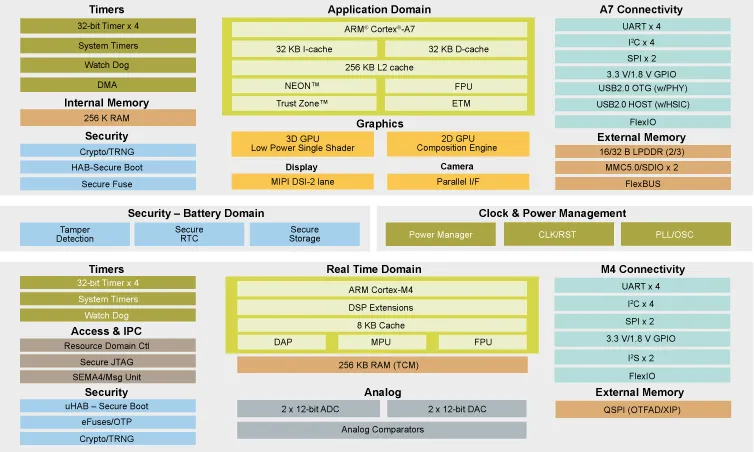
They're calling it, “The most advanced, lowest power-consuming GPU-enabled MPU on the market.” It's NXP's new i.MX 7ULP general-purpose processor, and it's on 28nm FD-SOI. They've got a nifty video summing it all up – you can watch it here. [caption id="attachment_10388" align="alignleft" width="300"] NXP is first to market with a general-purpose processor on FD-SOI: the i.MX 7ULP. It's got both ultra-low power consumption and rich graphics for battery powered applications. (Courtesy: NXP)[/caption] With the i.MX 7ULP, NXP is first to market with an FD-SOI applications processor offering the industry’s lowest power consumption. The debut was made at the recent Embedded World Conference in Nuremberg, Germany, and it made a big splash in media across the globe. (Read the full press release here.) In deep sleep mode, it boasts power consumption of just 15 uW or less: 17 times less than previous (and highly successful) low power i.MX 7 devices. Dynamic power efficiency is improved by 50 percent on the real-time domain.The i.MX 7ULP applications processor family is currently sampling to select customers. Broader availability of pre-production samples is scheduled for Q3 2017.Hello, IoT!The high-performance, low-power solution is optimized for customers developing applications that spend a significant amount of time in standby mode with short bursts of performance-intense activity that require exceptional graphics processing. Sounds like IoT – and indeed it is, and more.With the i.MX 7ULP, NXP's targeting wearables, portable healthcare, smart home controls, gaming accessories, building automation, general embedded control and IoT edge solutions. Bottom line: it's designed to enable ultra-low-power and secure, portable applications – especially those demanding long battery life. (Read the current fact sheet here.)The detailsThe i.MX 7ULP features an advanced implementation of the ARM® Cortex®-A7 core, the ARM Cortex-M4 core, as well as a 3D and 2D Graphic Processing Units (GPUs). It's got a 32-bit LPDDR2/LPDDR3 memory interface and a number of other interfaces for connecting peripherals, such as WLAN, Bluetooth, GPS, displays, and camera sensors. [caption id="attachment_10387" align="alignnone" width="834"] (Courtesy: NXP)[/caption] NXP says this new design, based on FD-SOI’s lower voltage capability, enables rich user experience through extremely power-efficient graphics acceleration, a fundamental requirement in many of today’s consumer and industrial battery-operated devices that incorporate robust graphic interfaces. Further enablement includes rich Linux or Android ecosystem with the real-time capability supported by FreeRTOS.Leveraging body biasing and moreNXP credits the design’s extreme low leakage and operating voltage (Vdd) scalability to that FD-SOI specialty: reverse and forward body biasing (RBB/FBB) of the transistors, and its smart power system architecture.In presenting the new i.MX 7ULP to the tech press, the company highlighted the following FD-SOI design advantages: Large dynamic gate and body biasing voltage range Domain and subsystem optimization with custom standard cell library with mixed voltages Low quiescent current (Iq) bias generators Enhanced ADC performance with unique FD-SOI attributes Fail Safe I/O for simplified low power system design To that, add a note about security. As the chip's fact sheet says, “The processors deliver hardware-enabled security features that enable secure e-commerce, digital rights management (DRM), information encryption secure boot, and tamper detection.” Those are just the sort of things that demand the bursts of high performance that dynamic forward body biasing delivers where and when it's needed.Samsung fabs, Verisilicon adds IPTwo other SOI Consortium members – Samsung and Verisilicon – are particularly pleased with NXP's results.“We are excited that NXP is the first to bring the benefits of FD-SOI (28FDS) technology to the general purpose market,” says Ryan Lee, VP of the Foundry Marketing Team at Samsung Electronics. “28FDS technology will satisfy a growing and critical need for ultra low power designs that require power-performance at very low voltages. We plan to evolve 28FDS technology to a differentiated low-power single platform by implementing RF and embedded Non-Volatile Memory (eNVM) solution for our customers’ success.”NXP’s processor design enables robust low power graphics for the IoT and wearable markets through two graphic processor units (GPU) from Vivante: the GC7000 NanoUltra 3D GPU with a low power single shader, and the GC320 Composition Processing Core (CPC) for 2D graphics. The 3D GPU plays a critical role in enabling rich 3D based user interfaces, while the CPC can accelerate both rich 3D and simpler 2D user interfaces. Processors based on the combination of the two GPUs enable efficient display systems which offload and significantly reduce system resources, in turn providing rich user interfaces at low power levels to extend the battery life of devices.“Our 3D GPU is a result of a joint collaboration between Vivante and NXP to deliver industry-leading 3D capabilities with the lowest power consumption,” said Wei-Jin Dai CEO at Vivante Corporation and Chief Strategy Officer and GM of the IP Division at Verisilicon. “The power savings from using the right GPU in an ultra low power processor is one of the major attributes and advantages of the architecture.”So, now shall we dig in a little deeper into the “why FD-SOI” question? Read on in Part 2 of this article.-- By Adele Hars, ASN Editor-in-Chief
Read More