downloadGroupGroupnoun_press release_995423_000000 copyGroupnoun_Feed_96767_000000Group 19noun_pictures_1817522_000000Member company iconResource item iconStore item iconGroup 19Group 19noun_Photo_2085192_000000 Copynoun_presentation_2096081_000000Group 19Group Copy 7noun_webinar_692730_000000Path
Skip to main content
Default Banner Image

22FDX

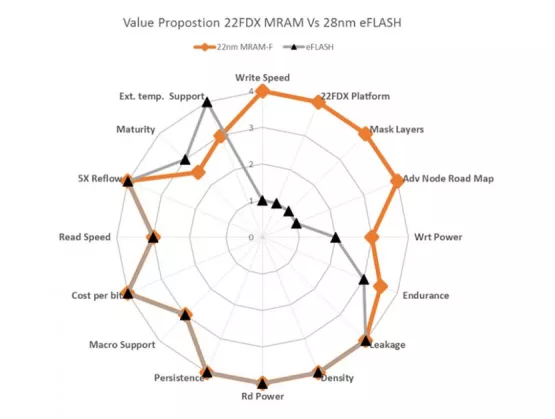
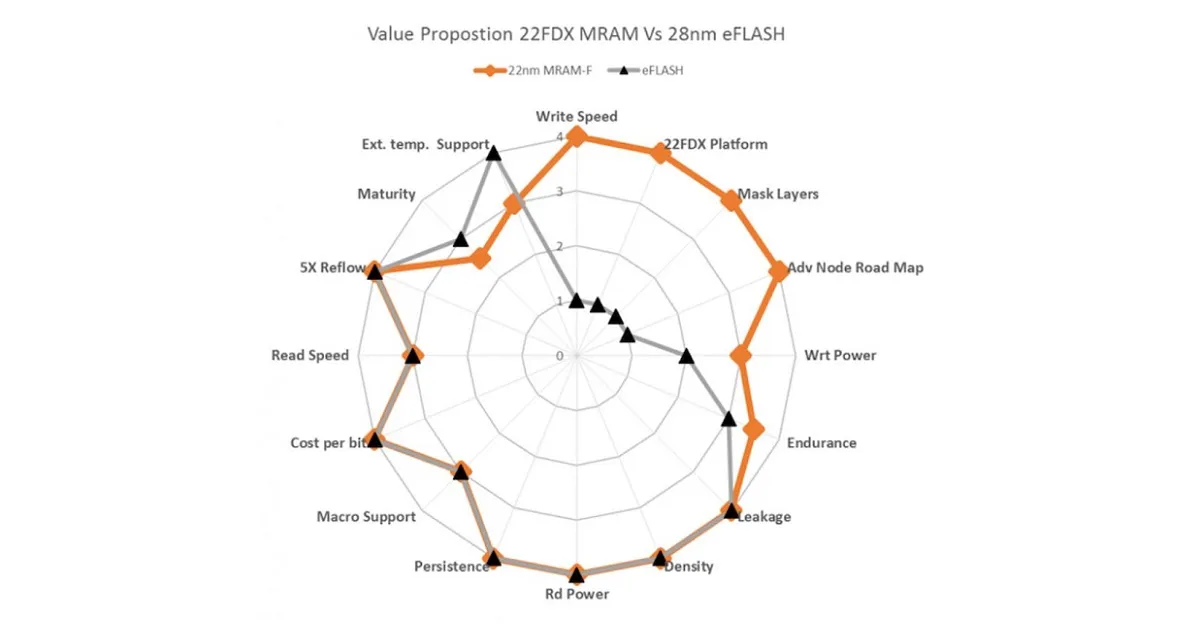
GlobalFoundries recently announced that its embedded magnetoresistive non-volatile memory (eMRAM) has entered production on the company’s 22nm FD-SOI (22FDX®) platform. (See the full press release here.) The company says this advanced embedded non-volatile memory on its FDX™ platform provides a cost-effective solution for low-power, non-volatile code and data storage applications. It is now working with several clients with multiple production tape-outs scheduled in 2020. GF heralds the announcement as a significant industry milestone, demonstrating the scalability of eMRAM as a cost-effective option at advanced process nodes for IoT, general-purpose microcontrollers, automotive, edge-AI, and other low-power applications. [caption id="attachment_31334" align="alignright" width="485"] (Courtesy: GlobalFoundries. Click to enlarge.)[/caption] “We continue our commitment to differentiate our FDX platform with robust, feature rich solutions that allow our clients to build innovative products for high performance and low power applications,” said Mike Hogan, senior vice president and general manager of Automotive and Industrial Multi-market at GlobalFoundries. “Our differentiated eMRAM, deployed on the industry’s most advanced FDX platform, delivers a unique combination of high performance RF, low power logic and integrated power management in an easy-to-integrate eMRAM solution that enables our clients to deliver a new generation of ultra-low power MCUs and connected IoT applications.”[bctt tweet="In production! @GlobalFoundries’ eMRAM on #22FDX FD-SOI replaces #eFlash for #IoT genpurpose #microcontrollers #automotive #edgeAI more. #lowpower #chipdesign #FDSOI" username="@soiconsortium"] [caption id="attachment_31330" align="alignleft" width="467"] (Courtesy: GlobalFoundries. Click to enlarge.)[/caption] Designed as a replacement for high-volume embedded NOR flash (eFlash), GF’s eMRAM allows designers to extend their existing IoT and microcontroller unit architectures to access the power and density benefits of technology nodes below 28nm. It is a highly versatile and robust embedded non-volatile memory (eNVM) that has passed five rigorous real-world solder reflow tests, and has demonstrated 100,000-cycle endurance and 10-year data retention across the -40°C to 125°C temperature range. The FDX eMRAM solution supports AEC-Q100 quality grade 2 designs, with development in process to support an AEC-Q100 quality grade 1 solution next year. [caption id="attachment_31331" align="alignright" width="280"] GF’s state-of-the-art 300mm production line at Fab 1 in Dresden, Germany, will support volume production of 22FDX with MRAM. (Courtesy: GlobalFoundries)[/caption] Custom design kits featuring drop-in, silicon validated MRAM macros ranging from 4 to 48 mega-bits, along with the option of MRAM built-in-self-test support is available today from GF and their design partners. eMRAM is a scalable feature that is expected to be available on both FinFET and future FDX platforms as a part of the company’s advanced eNVM roadmap. GF’s state-of-the-art 300mm production line at Fab 1 in Dresden, Germany, will support volume production of 22FDX with MRAM. Prior to this announcement, an excellent GF blog by David Lammers recapped GF's 2019 IEDM presentation of their eMRAM reliability data. You can read that here. It also provides a lot of interesting background information.
Read More
The GAP9, GreenWaves Technologies latest IoT application processor -- which is being fabbed on GlobalFoundries 22FDX (FD-SOI) technology -- will be sampling in the first half of 2020, according to EETimes (read the whole article here). Mass production is slated for 2021. Greenwaves (which has been an SOI Consortium member for several years now) is a fabless semiconductor startup designing disruptive ultra-low power embedded solutions for AI processing in sensing devices at the very edge. GreenWaves marketing director Martin Croome told EETimes, “We are using the body biasing ability in FD-SOI to allow us to achieve even lower power consumption.” Compared to GreenWaves’ currently shipping product, GAP8 (which is on a 55nm bulk process), GAP9 reduces energy consumption by 5 times while enabling inference on neural networks 10 times larger. This is thanks to architectural enhancements and the move to GF's 22FDX semiconductor process. The new chip delivers a peak cluster memory bandwidth of 41.6 GB/sec and up to 50 GOPS combined compute power at an overall power consumption of 50mW. It enables customers to embed machine learning and signal processing capabilities into battery operated or energy harvesting devices such as IoT sensors in smart building, consumer and industrial markets and consumer and medical wearable devices. GAP9 was showcased at the last RISC-V Summit in San Jose (read the full press release here). [caption id="attachment_29061" align="alignnone" width="400"] GAP9 Block diagram (Courtesy: GreenWaves)[/caption] Some of the (many!) features include: 10 identical high performance, extended ISA, RISC-V ISA cores (cluster of 9 cores for compute-intensive tasks and a fabric controller core for control and communication) Dynamic voltage frequency scaling and automatic body biasing Multiple power states: deep sleep, deep sleep with retentive RAM, low activity, SOC on, SOC on cluster on Click here for a full GAP9 product brief.
Read More
[caption id="attachment_15930" align="alignright" width="150"] Daniel Nenni, CEO Founder, SemiWiki.com[/caption] Note to our readers: Semiwiki Founder Dan Nenni recently wrote an excellent piece on the importance of the Synopsys investment in automotive IP for GlobalFoundries' 22FDX (FD-SOI) technology. He graciously has given us permission to reprint it here in ASN. By Dan Nenni, CEO Founder, SemiWiki.com IP vendors have always had the inside track on the status of new process nodes and what customers are planning for their next designs. This is even more apparent now that systems companies are successfully doing their own chips by leveraging the massive amounts of commercial IP available today. Proving once again that IP really is the foundation of modern semiconductor design. Automotive is one of those market segments where systems companies are doing their own chips. We see this first hand on SemiWiki as we track automotive related blogs and the domains that read them. To date we have published 354 automotive blogs that have been viewed close to 1.5M times by more than 1k different domains. [caption id="attachment_15933" align="alignleft" width="1000"] (Courtesy: semiwiki.com and GlobalFoundries)[/caption] The recent press release by Synopsys and GLOBALFOUNDRIES didn’t get the coverage it deserved in my opinion and the coverage it got clearly missed the point. Synopsys, being the #1 EDA and #1 IP provider, has the semiconductor inside track like no other. For Synopsys to make such a big investment in FD-SOI (GF FDX) for automotive grade 1 IP is a huge testament to both the technology and the market segment, absolutely. I talked to John Koeter, Vice President of Marketing for IP, Services and System Level Solutions. John is a friend and one of the IP experts I trust. 3 years ago Synopsys got into automotive grade IP and racked up 25 different customer engagements just last year. The aftermarket electronics for adding intelligence (autonomous-like capabilities, cameras, lane and collision detection, etc...) to older vehicles is also heating up, especially in China. I also talked to Mark Granger, Vice President of Automotive Product Line Management at GLOBALFOUNDRIES. Mark has been at GF for two years, prior to that he was with NVIDIA working on autonomous chips with deep learning and artificial intelligence. According to Mark, GF's automotive experience started with the Singapore fabs acquired from Chartered in 2010. The next generation automotive chips will come from the Dresden FDX fabs which are right next door to the German automakers including my favorite, Porsche. One thing we talked about is the topology of the automotive silicon inside a car and the difference between central processing and edge chips. Remember, some of these chips will be on glass or mirrors or inside your powertrain. The edge chips are much more sensitive to power and cost so FDX is a great fit. Mark provided a GF link for more information: Here is the link to our Automotive resources: https://www.globalfoundries.com/mark...ons/automotive One thing Mark, John, and I agree on is that truly autonomous cars for the masses is still a ways out but we as an industry are working very hard to get there, absolutely. Here is the press release: Synopsys and GLOBALFOUNDRIES Collaborate to Develop Industry's First Automotive Grade 1 IP for 22FDX Process Synopsys' Portfolio of DesignWare Foundation, Analog, and Interface IP Accelerate ISO 26262 Qualification for ADAS, Powertrain, 5G, and Radar Automotive SoCs MOUNTAIN VIEW, Calif., and SANTA CLARA, Calif., Feb. 21, 2019 /PRNewswire/ -- Highlights: Synopsys DesignWare IP for automotive Grade 1 and Grade 2 temperature operation on GLOBALFOUNDRIES 22FDX®process includes Logic Libraries, Embedded Memories, Data Converters, LPDDR4, PCI Express 3.1, USB 2.0/3.1, and MIPI D-PHY IP Synopsys' IP solutions implement additional automotive-grade design rules for the 22FDX process to meet reliability and 15-year automotive operation requirements Synopsys' IP that supports AEC-Q100 temperature grades and ISO 26262 ASIL Readiness accelerates SoC reliability and functional safety assessments Join Synopsys and GLOBALFOUNDRIES at Mobile World Congress in Barcelona, Spain on Feb. 25 for a panel on "Intelligent Connectivity for a Data-Driven Future" Synopsys, Inc. (Nasdaq: SNPS) and GLOBALFOUNDRIES (GF) today announced a collaboration to develop a portfolio of automotive Grade 1 temperature (-40ºC to +150ºC junction) DesignWare® Foundation, Analog, and Interface IP for the GF 22-nanometer (nm) Fully-Depleted Silicon-On-Insulator (22FDX®) process. By providing IP that is designed for high-temperature operation on 22FDX, Synopsys enables designers to reduce their design effort and accelerate AEC-Q100 qualification of system-on-chips (SoCs) for automotive applications such as eMobility, 5G connectivity, advanced driver assistance systems (ADAS), and infotainment. The Synopsys DesignWare IP implements additional automotive design rules for the GF 22FDX process to meet stringent reliability and operation requirements. This latest collaboration complements Synopsys' broad portfolio of automotive-grade IP that provides ISO 26262 ASIL B Ready or ASIL D Ready certification, AEC-Q100 testing, and quality management. "Arbe's ultra-high-resolution radar is leveraging this cutting-edge technology that enabled us to create a unique radar solution and provide the missing link for autonomous vehicles and safe driver assistance," said Avi Bauer, vice president of R D at Arbe. "We need to work with leading companies who can support our technology innovation. GF's 22FDX technology, with Synopsys automotive-grade DesignWare IP, will help us meet automotive reliability and operation requirements and is critical to our success." "GF's close, collaborative relationships with leading automotive suppliers and ecosystem partners such as Synopsys have enabled advanced process technology solutions for a broad range of driving system applications," said Mark Ireland, vice president of ecosystem partnerships at GF. "The combination of our 22FDX process with Synopsys' DesignWare IP enables our mutual customers to speed the development and certification of their automotive SoCs, while meeting their performance, power, and area targets." "Synopsys' extensive investment in developing automotive-qualified IP for advanced processes, such as GF's 22FDX, helps designers accelerate their SoC-level qualifications for functional safety, reliability, and automotive quality," said John Koeter, vice president of marketing for IP at Synopsys. "Our close collaboration with GF mitigates risks for designers integrating DesignWare Foundation, Analog, and Interface IP into low-power, high-performance automotive SoCs on the 22FDX process." Resources For more information on Synopsys DesignWare IP for automotive Grade 1 temperature operation on GF's 22FDX process: Foundation IP: Logic Libraries, Embedded Memories, One-Time Programmable Non-Volatile Memories (OTP NVM), and Embedded Test and Repair Data Converters LPDDR4 PCI Express 3.1 USB 2.0/3.1 MIPI ~ ~ ~ About the Author Daniel Nenni has worked in Silicon Valley for over 35 years with computer manufacturers, electronic design automation software, and semiconductor intellectual property companies. He is the founder of SemiWiki.com (an open forum for semiconductor professionals) and the co-author and publisher of "Fabless: The Transformation of the Semiconductor Industry", "Mobile Unleashed: The Origin and Evolution of ARM Processors in our Devices" and "Prototypical: The Emergence of Prototyping for SoC Design". He is an internationally recognized business development professional for companies involved with the fabless semiconductor ecosystem.
Read More
GlobalFoundries and Dolphin Integration are collaborating on the development of a series of adaptive body bias (ABB) solutions to improve the energy efficiency and reliability of SoCs on GF’s 22nm FD-SOI (22FDX®) process technology for a wide range of high-growth applications such as 5G, IoT and automotive. The goal of the IP is to accelerate energy-efficient SoC designs and push the boundaries of single-chip integration. The design kits with turnkey ABB solutions will be available starting in Q2 2019. As part of the collaboration, Dolphin and GF are working together to develop a series of off-the-shelf ABB solutions for accelerating and easing body bias* implementation on SoC designs. ABB is a unique feature of FD-SOI that enables designers to leverage forward and reverse body bias techniques to dynamically compensate for process, supply voltage, temperature (PVT) variations and aging effects to achieve additional performance, power, area and cost improvements beyond those from scaling alone. The ABB solutions in development by GF and Dolphin consist of self-contained IPs embedding the body bias voltage regulation, PVT and aging monitors and control loop as well as complete design methodologies to fully leverage the benefits of corner tightening. GF says its 22FDX technology offers the industry’s lowest static and dynamic power consumption. With automated transistor body biasing adjustment, Dolphin Integration can achieve up to 7x energy efficiency with power supply as low as 0.4V on 22FDX designs. “We have been working with GF for more than two years on advanced and configurable power management IPs for low power and energy efficient applications,” said Philippe Berger, CEO of Dolphin Integration. “Through our ongoing collaboration with GF, we are focused on creating turnkey IP solutions that allow designers to realize the full benefit of FD-SOI for any SoC design in 22FDX.” “In order to simplify our client designs and shorten their time-to-market, GF and our ecosystem partners are helping to pave the way to future performance standards in 5G, IoT and automotive,” said Mark Ireland, vice president of ecosystem partnerships at GF. “With the support of silicon IP providers like Dolphin Integration, new power, performance and reliability design infrastructures will be available to customers to fully leverage the benefits of GF’s 22FDX technology.” As STMicroelectronics Fellow and Professor Andreia Cathelin has beautifully noted, “Body biasing is not an obligation. It’s an opportunity.” And GF/Dolphin clearly aim to make that opportunity a much easier and more powerful one to take advantage of. ~ ~ ~ *A note on terminology: the terms back bias and body bias are used interchangeably. Likewise the terms adaptive and dynamic when used in the FD-SOI context. Here is a quick explanation of how it works, from an ST paper from several years ago: Back-biasing consists of applying a voltage just under the BOX of target transistors. Doing so changes the electrostatic control of the transistors and shifts their threshold voltage VT, to either get more drive current (hence higher performance) at the expense of increased leakage current (forward back-bias, FBB) or cut leakage current at the expense of reduced performance. While back-bias in planar FD is somewhat similar to body-bias that can be implemented in bulk CMOS technology, it offers a number of key advantages in terms of level and efficiency of the bias that can be applied. Back-biasing can be utilized in a dynamic way, on a block-by-block basis. It can be used to boost performance during the limited periods of time when maximum peak performance is required from that block. It can also be used to cut leakage during the periods of time when limited performance is not an issue. In other words, back-bias offers a new and efficient knob on the speed/power trade-off. For another good discussion of body biasing in FD-SOI, you might want to check out The Return Of Body Biasing by Semiconductor Engineering's Ann Steffora Mutschler from a couple years ago.
Read More
[caption id="attachment_12359" align="alignright" width="300"] (Courtesy: PRNewsfoto/QuickLogic Corporation)[/caption] Some great pieces of FD-SOI news from QuickLogic. The company recently demonstrated its ultra-low power ArcticPro™ embedded FPGA (eFPGA) solutions at the GlobalFoundries Technology Conferences in Santa Clara, California, Munich and Shanghai. The technology is available now. ArcticPro is the industry's first eFPGA offering for GF's 22FDX® process (btw they've been shipping it in volume for GF's 65nm and 40nm bulk processes for years). The company says its ultra-low power eFPGA architecture and mature software offer semiconductor and system companies the ability to integrate programmable hardware accelerators to lower power consumption and the flexibility to reconfigure a device's functionality in the field. [caption id="attachment_12360" align="alignleft" width="300"] (Image courtesy: QuickLogic)[/caption] QuickLogic has also announced that the technical university ETH Zurich will integrate QuickLogic's ArcticPro technology onto the university's PULP platform. PULP is a silicon-proven open-source parallel platform for ultra-low power computing created with the objective of delivering high compute bandwidth combined with high-energy efficiency. ETH will become the first licensee of eFPGA technology from QuickLogic on GF's 22FDX process node. They will develop an SoC integrating ETHZ's open-source RISC-V cores and eFPGA technology, enabling users to offload critical functions from the processor(s) and implement them in eFPGA fabric. This approach creates multiple hardware co-processors that increase system efficiency and performance while decreasing power consumption. "The main goal of the PULP program is to use a multi-disciplinary approach to achieve extremely high-power efficiency for computing applications," said QuickLogic CTO Dr. Timothy Saxe. "QuickLogic has a tremendous depth of experience in achieving low power consumption across a broad range of applications, including AI and IoT at the edge and security, and we look forward to contributing what we've learned along with our eFPGA technology to this groundbreaking initiative in low power computing." ETH's PULP platform with the fully integrated eFPGA is expected to be available Q1' 2019. QuickLogic is part of GF's fast-growing FDXcelerator™ partner ecosystem, offering customers ultra-low power (eFPGA) Intellectual Property, complete software tools and a compiler.
Read More
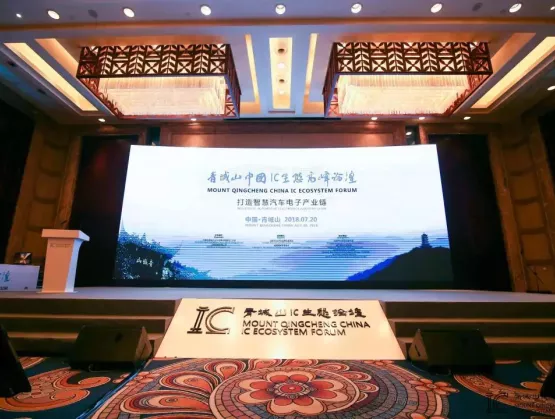
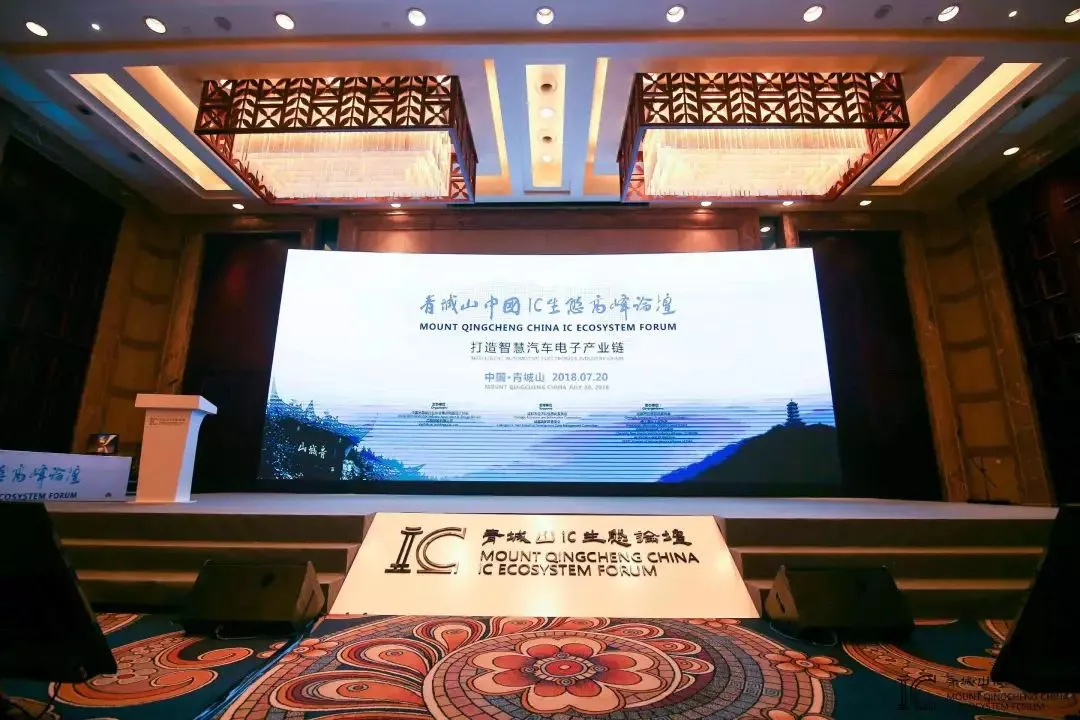
FD-SOI was a very important topic during the recent Mount Qingcheng China IC Ecosystem Forum. To situate things, Mount Qingcheng, with its lush hills and waterways, is located just outside of Chengdu. That of course is where GlobalFoundries is building its new fab, which will be the first in China to run FD-SOI. Chengdu is also a key city in China's automotive electronics landscape. [caption id="attachment_12236" align="alignright" width="300"] (Image Courtesy: VeriSilicon)[/caption] The theme of the forum was Building a Smart Automotive Electronics Industry Chain. Over 260 decision-makers from government, academia and industry attended – and the SOI Consortium had a significant presence. The event was chaired by Wayne Dai, CEO/Founder of consortium member VeriSilicon, and tireless champion of the the FD-SOI ecosystem in China and worldwide. Morning keynotes were given by: Carlos Mazure, Soitec CTO and SOI Consortium Executive Co-Director; Mark Granger, GF's VP of Automotive Product Line Management; and Tony King-Smith, Executive Advisor at AImotive, a GF 22FDX customer. BTW, transcripts of all the talks are available through Gasgoo, China's largest automotive B2B marketplace. You can click here to access them. (They're in Chinese – but you can open them in the language of your choice using the major translation websites.) Chengdu Officials Affirm Support for FD-SOI Fan Yi, Deputy Mayor of Chengdu, spoke extensively of FD-SOI in his keynote on the importance of rapidly developing smart cars. He heralded the “spectacular” new GlobalFoundries fab there. Following a meeting with the company's top brass the day before, he affirmed GF's confidence in their investment. There is a solid roadmap for FD-SOI, he noted, and efforts are underway to accelerate the move into production and expand education and training. He cited the benefits of FD-SOI for the entire supply chain, from design through package and test, raising the level of the entire IC industry to new heights. The government, he said, attaches great importance to this enterprise. Their thinking regarding intelligent transport in China is integrated with the overall approach to smart cities. SOI Consortium Leads Industry Keynotes [caption id="attachment_12232" align="alignleft" width="300"] Wayne Dai, VeriSilicon Founder and CEO (Photo courtesy VeriSilicon)[/caption] In his opening remarks, Wayne Dai emphasized the need for China to seize the advantage in the next round of development opportunities in the automotive electronics industry. This year's Qingcheng forum, he noted, brought together key representatives from across the supply chain, from of the highest to the deepest reaches of the smart car electronics industry, and across markets, technologies, solutions, industrial ecosystem, standards and regulations. In his talk on how FD-SOI is boosting the accelerated development of automotive electronics, Carlos Mazure presented the SOI Industry Consortium. He noted that the Consortium promotes mutual understanding and development across the ecosystem. SOI is already present throughout automotive applications, he noted. There are currently about 100mm2 of SOI per car, in such diverse areas power systems, transmissions, entertainment, in-vehicle networking and more. SOI will experience especially high growth in electrification, information/entertainment, networking, 5G, AI/edge computing and ADAS. He then went on to give some history and an extensive overview of the major trends and highlights we've seen over recent years. He finished by giving examples of convergence across the supply chain with IC manufacturers working with automakers to lower power, increase processor performance and advance 5G. [caption id="attachment_12233" align="alignright" width="665"] Carlos Mazure, Soitec CTO and SOI Consortium Executive Co-Director; Tony King-Smith, Executive Advisor at AImotive and Mark Granger, GF's VP of Automotive Product Line Management (Photo courtesy VeriSilicon)[/caption] GF's Mark Granger addressed the rapid development of automotive electronics. In certain areas, he said, he sees growth rates of over 20%. They are working on building the Chengdu ecosystem, especially for design, and in cooperation with the rest of the supply chain. Furthermore, he reminded the audience, when you talk about cars, travel implies that you also talk about IoT as well as things like infotainment and integrated radar ICs. In addition to cost and power efficiencies, the AEC-Q100 standard for IC reliability in automotive applications is also pushing designers to turn to FD-SOI. In the GF meeting with Chengdu government officials (referenced above in deputy mayor Fan Yi's talk), he too confirmed their support of FD-SOI as a key technology for China. GF is currently cooperating with about 75 automotive partners, he said, and the company is looking to increase cooperation with partners in the Chengdu region. Tony King-Smith talked about the 22FDX test chip AImotive is doing with Verisilicon and GF. In case you missed it, in June 2017 AImotive announced its AI-optimized hardware IP was available to global chip manufacturers for license. AiWare is built from the ground up for running neural networks, and the company says it is up to 20 times more power efficient than other leading AI acceleration hardware solutions on the market. In the same announcement, they revealed that VeriSilicon would be the first to integrate aiWare into a chip design,and that aiWare-based test chips would be fabricated on GF's 22FDX. The chip is expected to debut this year. While the afternoon agenda was not specific to FD-SOI, it did focus on the "smart cockpit" and "intelligent driving", with talks by nine leading players in China's automotive IC and investment communities. ~ ~ ~Note: Many thanks to the folks at VeriSilicon, who wrote up this event for their WeChat feed, and shared photos with us here at ASN.
Read More
GlobalFoundries has announced that the company’s 22nm FD-SOI (22FDX®) technology has delivered more than two billion dollars of client design win revenue. With more than 50 client designs, 22FDX is being used in power-optimized chips across a broad range of high-growth applications such as automotive, 5G connectivity and IoT. Their clients chose it for the significant reductions in power and die size relative to a traditional bulk CMOS process, says the company. 22FDX offers the industry’s lowest operating voltage, delivering up to 500MHz frequencies at only 0.4 volts. The technology also delivers efficient single-chip integration of RF, transceiver, baseband, processor, and power management components, “...providing an unparalleled combination of high performance RF and mmWave functionality with low-power, high density logic for devices that require long-lasting battery life, increased processing capability, and connectivity.” 22FDX is in early production, with yields and performance matching client expectations. A recent VLSI Research survey indicated that FD-SOI technology is seen as a complementary technology to FinFET. It's gaining traction in application spaces such as IoT, where power consumption is important and the product life is relatively short. “We’re only just beginning,” said GF CEO Tom Caulfied. “We have found a way to separate ourselves from the pack by emphasizing our differentiated FD-SOI roadmap and client-focused offerings that are poised to enable connected intelligence. We will continue to build on our momentum and look for ways to expand our reach to address the evolving needs of the industry.” Here's a sampling of customer quotes from the press release (read more here): “At Synaptics, as we expand upon our industry-leading mobile and PC businesses to include delivering new and innovative products that address the booming IoT market, we require the best available technologies to enable us to deliver top-notch solutions including voice and multimedia processing capabilities for our customers,” said the company's CEO, Rick Bergman. “GF’s 22FDX technology delivers a potent mix of low static and dynamic power along with excellent performance to give us a great platform for our world-class products.” “As our customers increasingly demand more from their mobile experiences, our partnership with GF on its 22FDX technology is critical to differentiate ourselves in the competitive market and deliver powerful and efficient mobile SoCs,” said Rockchip CEO Min Li. “Our goal has always been to provide more secure, connected experiences for drivers. Combining our leadership in radar technology with GF's 22FDX automotive-qualified process, we are able to deliver a cost-effective, high performance, low power solution that opens new opportunities for car manufacturers to provide better experiences for drivers around the world," said Kobi Marenko, CEO of Arbe Robotics. “The automotive industry realizes that assisted driving solutions require more camera information besides Radar and Lidar, integrating information from multiple cameras. The resulting DreamChip multi-core vision processor platform, based on the 22FDX process is providing European auto makers and Tier 1 automotive component suppliers with a platform from which they can create custom derivatives with a massively reduced time to market," said Dream Chip Technologies CEO Jens Benndorf. “With 22FDX, the value proposition for us is the potential power and area savings, two key metrics for our highly optimized LTE NB-IoT and CAT-M chipsets. In addition, leveraging the growing ecosystems of IP available in the 22FDX process helps to accelerate time to market,” said Peter Wong, CEO at Riot Micro, which designs purpose-built silicon for wireless IoT applications. (Read more about that here.) GF adds that it is preparing to deliver 12FDX™ technology, which will provide a full node scaling benefit and improved power efficiency for a new generation of applications, from edge-node artificial intelligence and AR/VR to 5G networking and ADAS.
Read More
Dolphin Integration, a partner in the ENIAC THINGS2DO European FD-SOI project, showcased its achievements with PowerStudio™ during the project final review. Power Studio is Dolphin's cutting-edge EDA tool for safe Power Regulation Networks implementation. THINGS2DO, which stands for THIN but Great Silicon to Design Objects, was a 4-year, €120 million EU project (85% industry-funded) with over 40 partners that just finished up at the end of 2017. The goal was to build a design development ecosystem for FD-SOI. The project funded and supported the development of major FD SOI-based IPs and ASICs as well as EDA tools. (Another recent THINGS2DO announcement was Dream Chips’ ADAS SoC fabbed in GlobalFoundries’ 22FDX technology -- read about that here.) “Being involved in the THINGS2DO project was an opportunity for Dolphin Integration to start introducing FD-SOI in its automatic design methodologies,” said Frederic Poullet, Dolphin Integration’s CTO (read the press release here). “Dolphin Integration plans to offer a full suite of tools allowing its customers to implement right-on-first-pass Power Regulation Networks.” The company notes that THINGS2DO also proved that low power consumption makes FD-SOI a perfect fit for IoT and automotive applications. For instance, dynamic control of threshold voltage can be used to compensate for temperature variations, and to drive speed improvements by 200% in ultra-low voltage applications. Dolphin Integration provides energy efficient IPs and ASIC services dedicated to the low-power application market and supports its internal teams with tailor-made software tools. To address the specific needs of its customers in low-power design, Dolphin developed PowerStudio™, a global solution for the optimization of Power Regulation Networks (PRNet) to be used at an early stage of the SoC design process. In particular, it addresses new design challenges in noise and power supply integrity. The first module of PowerStudio™ will also embed architecture optimization features at the schematic level, in terms of FoM-based cost optimization, mode management, margin cuts and integrability rate-based risk optimization. Btw, Dolphin Integration Director Frederic Renoux gave an excellent great presentation at an SOI Consortium event in Nanjing, China last year, entitled Embedding power regulation activity control networks for best SoC PPA. Dolphin Integration joined Global foundries’ FDXcelerator™ Program last year (read the press release here) to streamline design in 22FDX®. "Our comprehensive and robust library of voltage regulators, power gating cells and logic modules, enables to deal cost-effectively and securely with power distribution, power gating, power monitoring and power control of any SoC design in 22FDX," Michel Depeyrot, Dolphin Integration's Chairman, said at the time. "As connected devices sleep most of their time, users of 22FDX also benefit from our ultra-low power and accurate oscillators to design an always-on RTC which consumes as little as 60 nA." See the Dolphin Integration website for the full catalog of their IP, EDA and ASIC/SoC service offerings, including for GF's 22FDX.
Read More
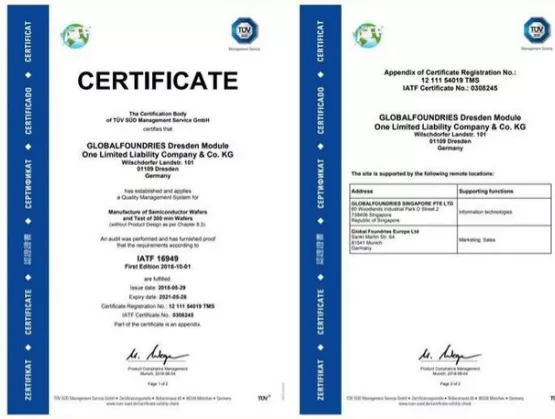
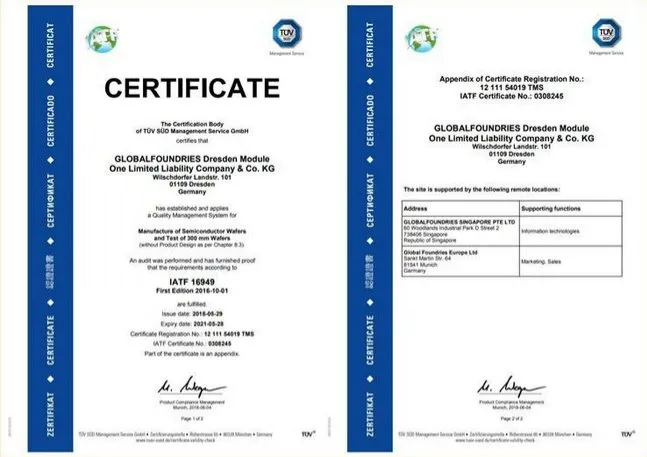
[caption id="attachment_11914" align="alignright" width="150"] Mark Granger, GlobalFoundries' VP Automotive Product Line Management[/caption] GF's 22FDX® (22nm FD-SOI) offering is on an automotive roll. The technology platform has been certified for several key automotive standards, and GF has announced an exciting new ADAS customer in Arbe Robotics. In addition to sharing info from various press releases and blogs, ASN also had a chance to catch up with Mark Granger, GF's VP for automotive, who provided some great insights. Read on! Taking the Heat When it comes to compliance, automotive industry standards are excruciatingly rigorous. Every part that goes into a car must adhere to the relevant standards: chips are no exception. One such standard is the AEC – Q100, a “Failure Mechanism Based Stress Test Qualification For Integrated Circuits”. The AEC – aka the Automotive Electronics Council – handles those testing standards and certification. Grade 2 means a technology is certified for the -40°C to +105°C ambient operating temperature range. To achieve Grade 2 certification, devices have to successfully withstand reliability stress tests for an extended period of time over the specified temperature range. GF recently announced that 22FDX has been AEC Q100 Grade 2 certified (press release here). However Granger adds that for their customers, they've added additional headroom that takes them to 125°C. They're now working on Grade 1 certification, he says, which means the devices are certified to handle junction temperatures up to 125°C (and there again, GF has added additional headroom that takes them to 150°C). That should be done by the end of 2018. The ability you get with FD-SOI to tune the transistors using body biasing is really beneficial here, he says. For GF, the 22FDX qualifications exemplifies their commitment to providing high-performance, high-quality technology solutions for the automotive industry. The automotive industry is driven by a “zero excursions – zero defects” mindset, says Granger, and that drives the foundry, too. SOI has been used for decades across industries where heat and electromagnetic radiation are challenges, bringing soft error rates (SER) down by orders of magnitude, notes Granger. (SOI, btw, essentially eliminates what are known as Single Event Upsets (SEU) caused by latch-up, which in turn brings down SER.) That in turn, ties into the FIT (failure in time) rate – and that's part of the ISO 26262 “Road vehicles – Functional safety” standard – where 22FDX is also certified. As a part of GF's AutoPro™ platform, 22FDX allows customers to easily migrate their automotive microcontrollers and ASSPs to a more advanced technology, while leveraging the significant area, performance and energy efficiency benefits over competing technologies. Moreover, the optimized platform offers high performance RF and mmWave capabilities for automotive radar applications and supports implementation of logic, Flash, non-volatile memory (NVM) in MCUs and high voltage devices to meet the unique requirements of in-vehicle ICs. GF's Fab 1 in Dresden, Germany (which is where they do 22FDX) also has achieved ISO-9001/IATF-16949 certification, which demonstrates that it is capable of meeting the stringent and evolving needs of the automotive industry. (IATF is the International Automotive Task Force. 16949 is a Quality Management System (QMS) certification specifically for the automotive sector.) Granger wrote a really informative blog on the GF website – you can read it here. It includes this graphic, indicating where in the car 22FDX-based parts are expected to go. [caption id="attachment_11913" align="alignleft" width="1000"] Here's how GF sees the applications for 22FDX and other chip technologies in automotive applications. (Courtesy: GlobalFoundries)[/caption] On Radar GF recently announced that Arbe Robotics selected 22FDX® as the process technology for its groundbreaking patented imaging radar. Arbe aims to achieve fully automated system capabilities and enable safer driving experiences for autonomous vehicles (read the press release here). As the first company to demonstrate ultra-high-resolution at a wide field of view, Arbe Robotics’ radar technology can detect pedestrians and obstacles at a range of 300 meters, in any weather and lighting conditions. The processor creates a full 3D shape of the objects and their velocity, and classifies targets using their radar signature. As Granger noted in his blog, “Radar is one of several sensor types used to detect objects near a vehicle, to enable features like adaptive cruise control. Lidar is another. It uses pulsed lasers to determine distance from an object by measuring the time it takes for the light to reflect back. However, lidar is currently expensive and is affected by weather conditions. Radar is less expensive, and higher-resolution radars promise to compete well with lidar in automotive applications, thereby enabling lower-priced vehicles to enjoy greater ADAS capabilities. 22FDX-based radar sensors can provide higher resolutions and less latency than current radar sensors at a very low total system cost.” While they may be complementary at first, there is a battle brewing between high-resolution radar and lidar, Granger told ASN. Putting their solution on 22FDX enables Arbe to achieve a 77 GHz mmWave radar and compete cost-effectively with lidar. “They wanted the best,” says Granger. 22FDX can achieve the requisite Ft and Fmax figures of merit. And with transistor stacking, they can also integrate the power amplifier (PA) on a single device. With the low inherent capacitance of the PA in 22FDX, you can get the high power output you need for mmWave but with low power consumption. GF blogger Dave Lammers has also written a great piece about the Arbe solution (you should read it: here's the link). “The company said its advanced technology allows the detection of small targets, such as a human or a bike even if they are somewhat masked by a large object such as a truck,” he writes. “The imaging radar can determine whether objects are moving, and in what direction, and alert the car in real-time about a risk. “While other car sensors can fail when it is raining, if there’s fog, and due to blinding lights such as a sudden reflection, Arbe’s radar is completely oblivious to all those factors. The custom designed radar processor creates a full real-time 4D image of the environment, and classifies targets using their radar signature.” Avi Bauer, Arbe's VP of R D, is now clearly an SOI fan. Lammers quotes him as saying, “With SOI the design is more straightforward, and (voltage) biasing allows you to do things that cannot be done in standard CMOS. For the transmit and receive modules, SOI’s higher resistivity substrate benefits the passive components – inductors and capacitors – and allows good isolation. High Q passives are important. At 22nm, SOI allows better performance overall.” Clearly good things are coming down the road for FD-SOI!
Read More
Good news: there are far fewer bigoted extremists out there when it comes to FD-SOI vs. FinFETs. People want the best technology for their application. It's that simple. That's a key piece of news from the updated survey by Dan Hutcheson, CEO of VLSI Research, which he presented in the afternoon session of the SOI Consortium's 2018 SOI Symposium in Silicon Valley The afternoon then featured presentations by foundry partners, which I'll cover here. Also in the afternoon were presentations by wafer-maker Simgui, some innovative start-ups leveraging FD-SOI for custom SoCs and the final panel discussion. I'll cover those in Part 3 of this series. BTW, if somehow you missed my coverage of the morning sessions about very cool new products and projects from NXP, Sony, Audi, Airbus and Andes Technology, be sure to click here to read it. The presentations are starting to be posted on the SOI Consortium Events page – but some won't be. Either way, I'll cover them here. VLSI Research A couple years ago at the annual SOI Symposium in Silicon Valley, Dan Hutcheson presented results of a survey he did (ASN covered it – you can still read about it here). At the 2018 event, he presented an update, which is now posted. You can get it here. The FD-SOI roadmap and IP availability are no longer issues for decision makers, he found. The 14nm branch – do you go FinFET or FD-SOI? – is gone. “Fins and FD are complementary,” he observed. Most people said they'd consider using both and running two roadmaps, choosing whichever technology is appropriate to a given design. [caption id="attachment_11841" align="alignnone" width="1000"] (Courtesy: VLSI Research, SOI Consortium)[/caption] From a transistor viewpoint, the top reasons to choose FD-SOI is that it's better for analog and has lower leakage/parastics. It's perceived as better for complex, high mixed-signal SoCs, and especially for RF and sensor integration. In fact, people see RF as the new mixed-signal, wherein FD-SOI is uniquely positioned for 5G and mmWave. From a business viewpoint, FD-SOI is perceived to have real advantages. In particular, FD-SOI wins when it comes to keeping down design costs, manufacturing costs and time-to-market. IoT is still the hottest target market for FD-SOI, to which he adds high growth expected in automotive and medical. Samsung With 20 tape-outs in 2018, Samsung is seeing an acceleration in its FD-SOI business. “The trend is healthy,” said Hong Hoa, SVP of the company's foundry business. FD-SOI, he continued, is on a “differentiation path.” Samsung's 28nm FD-SOI process, called 28FDS is at full maturity with very strong yields. They're seeing more customers and a wider range of applications. The design infrastructure, silicon-verified IP and methodologies are also all mature. They have optimal implementation and verification guidelines for body bias design, a body bias memory usage guide, and a body bias generator integration guide. The process supports Grade 1 automotive, and will be qualified for Grade 2 in a few weeks. FD-SOI, Hoa reminded the audience, offers superior RF performance compared to both planar bulk and 14nm FinFET. The Samsung strategy is to first provide a base for for the FD-SOI process, then add RF and eMRAM. The base for 28nm was done in 2016; they added RF in 2017 and eMRAM this year. The Samsung platform for IoT applications integrates both RF and eMRAM to support multi-function needs in a single platform. Lead customers are already working with eMRAM in their designs, he added. (BTW, Samsung has a really nice video explaining their eMRAM offering – you can see it on YouTube here.) The basic PDK for the Samsung 18nm FD-SOI process (18FDS) will be available in September 2018, with full production slated for fall of 2019. It will deliver a 24% increase in performance, a 38% decrease in power, and a 35% decrease in area for logic. RF for the 18FDSplatform will be ready by the end of this year, and eMRAM beginning in 2019. GlobalFoundries With design wins from 36 customers underway, 12 of which are taping out in 22FDX (GF's 22nm FD-SOI process) this year, the market has validated FDX for differentiation, said GF SVP Dr. Bami Bastani. And indeed, designers are using it for a wide array of applications across North America, Europe, Asia/Pacific and Japan. Customers in the North America are designing in 22FDX for NB-IoT, industrial, RF/analog, mobile, network switches and cryptocurrency applications. In Europe, it's more or less the same plus automotive/mmWave, optical transmission, wireless BTS and AI/ML. In Asia Pacific/Japan the mix is similar to Europe. Bastani sees the three big enablers as the the strengths of the roadmap, the ecosystem and multi-sourcing from Dresden and Chengdu (where they're already equipping the cleanrooms). He also tipped his hat in acknowledgment to the partnership with FD-SOI wafer supplier Soitec, noting that they have gone the extra mile to match GF's requirements. So that was the first part of a great afternoon. As mentioned above, my next post (part 3) will cover a very informative presentation by wafer-maker Simgui on the markets in China, plus talks by some innovative start-ups leveraging FD-SOI for custom SoCs and the final panel discussion.
Read More