downloadGroupGroupnoun_press release_995423_000000 copyGroupnoun_Feed_96767_000000Group 19noun_pictures_1817522_000000Member company iconResource item iconStore item iconGroup 19Group 19noun_Photo_2085192_000000 Copynoun_presentation_2096081_000000Group 19Group Copy 7noun_webinar_692730_000000Path
Skip to main content
Default Banner Image

IP

Since about a third of all IoT devices are expected to be connected by Bluetooth, chip designers need IP solutions that will help reduce system cost and greatly improve battery life. And that's just what VeriSilicon has announced for GlobalFoundries' 22FDX® (FD-SOI) process. “By taking advantage of integrated RF capabilities of FD-SOI, in particular GF’s 22FDX, our BLE 5.0 RF IP will significantly reduce the system cost and greatly boost the growth momentum of wearable products such as wireless earplugs,” said Dr. Wayne Dai, Founder, Chairman, President and CEO of VeriSilicon. 22FDX enables efficient single-chip integration of RF, transceiver, baseband, processor, and power management components. GF and VeriSilicon are working on an SoC using VeriSilicon's BLE 5.0 RF IP in GF’s 22FDX process. The latest iteration of Bluetooth is 5, which (like its predecessor 4) has a Low Energy (LE) RF option – but with big improvements. According to the Bluetooth website, “With 4x range, 2x speed and 8x broadcasting message capacity, the enhancements of Bluetooth 5 focus on increasing the functionality of Bluetooth for the IoT.” BLE 5.0 was designed for very low power operation and is optimized for the sorts of short burst data transmissions you'll get with IoT. On the strength of VeriSilicon’s innovative RF architecture and by leveraging GF’s 22FDX technology, VeriSilicon says the new IP product achieves significant improvements in power, area, and cost compared to current offerings, so it will better serve the emerging and increasing wearable devices and IoT applications space. "VeriSilicon's BLE IP complements GF's 22FDX FD-SOI capabilities and is well positioned to support the explosive growth of low-power IoT and connected devices," said Mark Ireland, vice president of ecosystem partnerships at GF. "Together, we broaden our IP and services to further enable our mutual clients to provide power and cost efficient solutions." VeriSilicon BLE 5.0 RF IP includes a transceiver that is compliant with the BLE 5.0 specification and supports GFSK modulation and demodulation. The silicon measurement shows that the sensitivity can be tested up to -98dBm with less than 7mW power dissipation in typical conditions. It largely improves battery life for low power IoT applications. In addition, the RF transceiver saves 40% area compared to a similar implementation on 55nm bulk CMOS. Besides the RF transceiver, this IP integrates on-chip balun, TX/RX switch and 32K RC OSC driver to save the BOM. Moreover, high efficiency DC/DC and LDOs are also available for power management. You can read the full press release in Chinese here and in English here.
Read More
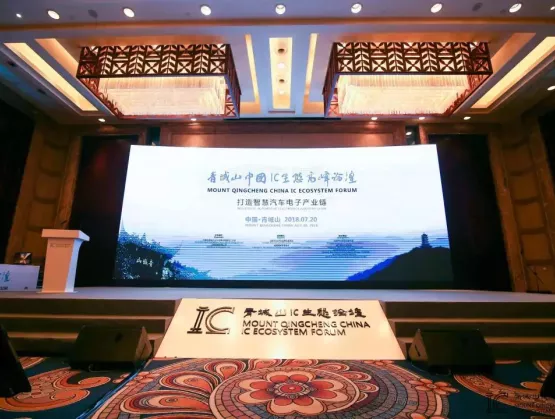
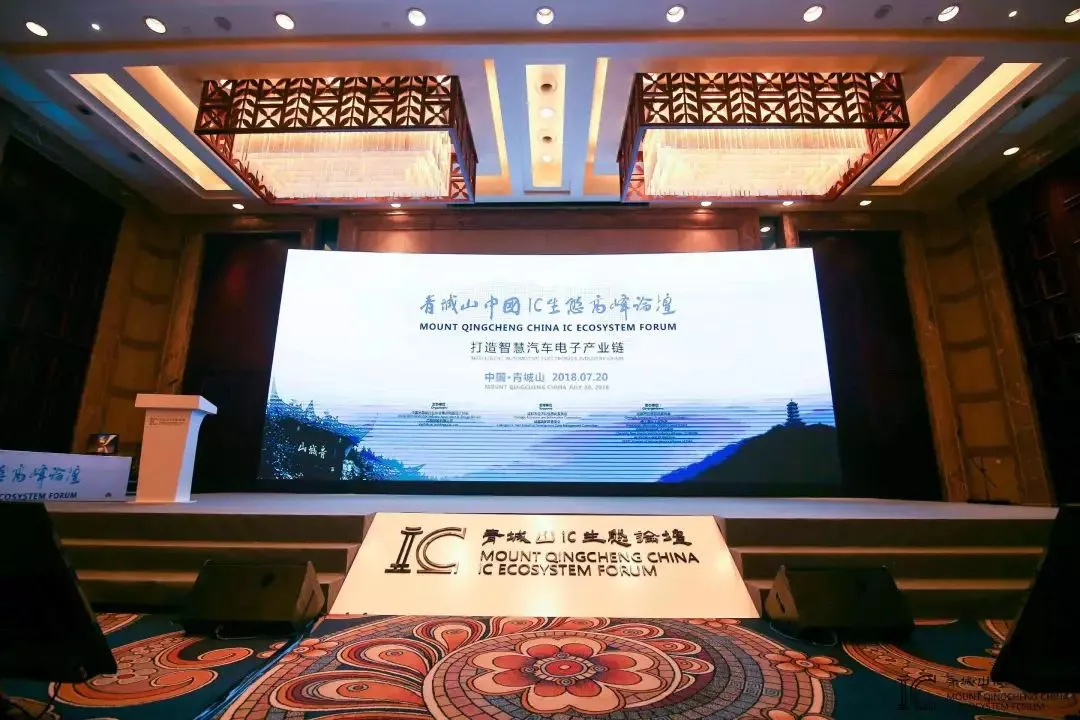
FD-SOI was a very important topic during the recent Mount Qingcheng China IC Ecosystem Forum. To situate things, Mount Qingcheng, with its lush hills and waterways, is located just outside of Chengdu. That of course is where GlobalFoundries is building its new fab, which will be the first in China to run FD-SOI. Chengdu is also a key city in China's automotive electronics landscape. [caption id="attachment_12236" align="alignright" width="300"] (Image Courtesy: VeriSilicon)[/caption] The theme of the forum was Building a Smart Automotive Electronics Industry Chain. Over 260 decision-makers from government, academia and industry attended – and the SOI Consortium had a significant presence. The event was chaired by Wayne Dai, CEO/Founder of consortium member VeriSilicon, and tireless champion of the the FD-SOI ecosystem in China and worldwide. Morning keynotes were given by: Carlos Mazure, Soitec CTO and SOI Consortium Executive Co-Director; Mark Granger, GF's VP of Automotive Product Line Management; and Tony King-Smith, Executive Advisor at AImotive, a GF 22FDX customer. BTW, transcripts of all the talks are available through Gasgoo, China's largest automotive B2B marketplace. You can click here to access them. (They're in Chinese – but you can open them in the language of your choice using the major translation websites.) Chengdu Officials Affirm Support for FD-SOI Fan Yi, Deputy Mayor of Chengdu, spoke extensively of FD-SOI in his keynote on the importance of rapidly developing smart cars. He heralded the “spectacular” new GlobalFoundries fab there. Following a meeting with the company's top brass the day before, he affirmed GF's confidence in their investment. There is a solid roadmap for FD-SOI, he noted, and efforts are underway to accelerate the move into production and expand education and training. He cited the benefits of FD-SOI for the entire supply chain, from design through package and test, raising the level of the entire IC industry to new heights. The government, he said, attaches great importance to this enterprise. Their thinking regarding intelligent transport in China is integrated with the overall approach to smart cities. SOI Consortium Leads Industry Keynotes [caption id="attachment_12232" align="alignleft" width="300"] Wayne Dai, VeriSilicon Founder and CEO (Photo courtesy VeriSilicon)[/caption] In his opening remarks, Wayne Dai emphasized the need for China to seize the advantage in the next round of development opportunities in the automotive electronics industry. This year's Qingcheng forum, he noted, brought together key representatives from across the supply chain, from of the highest to the deepest reaches of the smart car electronics industry, and across markets, technologies, solutions, industrial ecosystem, standards and regulations. In his talk on how FD-SOI is boosting the accelerated development of automotive electronics, Carlos Mazure presented the SOI Industry Consortium. He noted that the Consortium promotes mutual understanding and development across the ecosystem. SOI is already present throughout automotive applications, he noted. There are currently about 100mm2 of SOI per car, in such diverse areas power systems, transmissions, entertainment, in-vehicle networking and more. SOI will experience especially high growth in electrification, information/entertainment, networking, 5G, AI/edge computing and ADAS. He then went on to give some history and an extensive overview of the major trends and highlights we've seen over recent years. He finished by giving examples of convergence across the supply chain with IC manufacturers working with automakers to lower power, increase processor performance and advance 5G. [caption id="attachment_12233" align="alignright" width="665"] Carlos Mazure, Soitec CTO and SOI Consortium Executive Co-Director; Tony King-Smith, Executive Advisor at AImotive and Mark Granger, GF's VP of Automotive Product Line Management (Photo courtesy VeriSilicon)[/caption] GF's Mark Granger addressed the rapid development of automotive electronics. In certain areas, he said, he sees growth rates of over 20%. They are working on building the Chengdu ecosystem, especially for design, and in cooperation with the rest of the supply chain. Furthermore, he reminded the audience, when you talk about cars, travel implies that you also talk about IoT as well as things like infotainment and integrated radar ICs. In addition to cost and power efficiencies, the AEC-Q100 standard for IC reliability in automotive applications is also pushing designers to turn to FD-SOI. In the GF meeting with Chengdu government officials (referenced above in deputy mayor Fan Yi's talk), he too confirmed their support of FD-SOI as a key technology for China. GF is currently cooperating with about 75 automotive partners, he said, and the company is looking to increase cooperation with partners in the Chengdu region. Tony King-Smith talked about the 22FDX test chip AImotive is doing with Verisilicon and GF. In case you missed it, in June 2017 AImotive announced its AI-optimized hardware IP was available to global chip manufacturers for license. AiWare is built from the ground up for running neural networks, and the company says it is up to 20 times more power efficient than other leading AI acceleration hardware solutions on the market. In the same announcement, they revealed that VeriSilicon would be the first to integrate aiWare into a chip design,and that aiWare-based test chips would be fabricated on GF's 22FDX. The chip is expected to debut this year. While the afternoon agenda was not specific to FD-SOI, it did focus on the "smart cockpit" and "intelligent driving", with talks by nine leading players in China's automotive IC and investment communities. ~ ~ ~Note: Many thanks to the folks at VeriSilicon, who wrote up this event for their WeChat feed, and shared photos with us here at ASN.
Read More
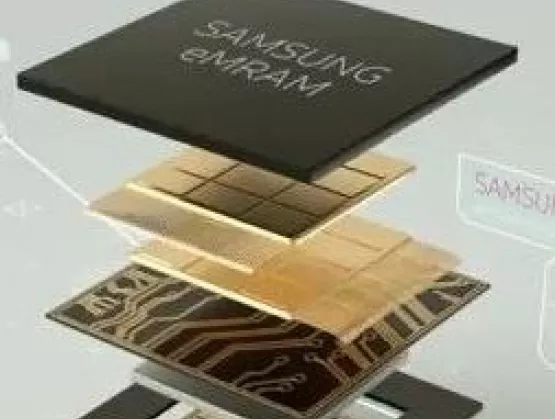
Per Arm, the industry's first eMRAM compiler IP is now on Samsung's 28nm FD-SOI technology. The announcement was made in a post by Kelvin Low, VP Marketing for ARM's Physical Design Group (read it here). He said that ARM has successfully completed their first eMRAM IP test chip tapeout. The Arm eMRAM compiler IP will be available from 4Q 2018 for lead partners. Samsung Foundry’s 28nm FD-SOI process technology is called 28FDS. eMRAM (which stands for embedded MagnetoResistive RAM) is a novel non-volatile memory (NVM) option positioned to replace incumbent NVM eFLASH, which has hit its limits in terms of speed, power, and scalability. Arm's new eMRAM compiler IP gives Samsung's 28FDS customers the flexibility to scale their memory needs based on the complexity of various use-cases, explains Low. “What drives the cost-effectiveness of this compiler IP is that eMRAM can be integrated with as few as three additional masks, while eFlash requires greater than 12 additional masks at 40nm and below,” he says. “Also, the eMRAM compiler can generate instances to replace Flash, Electrically Erasable Programmable Read-Only Memory (EEPROM) and slow SRAM/data buffer memories with a single non-volatile fast memory – particularly suited for cost- and power- sensitive IoT applications.” [caption id="attachment_11972" align="alignleft" width="300"] A key slide shown by Arm at the 2017 SOI Consortium's Silicon Valley Symposium (Courtesy: Arm and the SOI Consortium)[/caption] At the SOI Consortium's 2017 Silicon Valley Symposium, Arm said that they were stepping up their support of FD-SOI (read about that here) – and clearly they are! At that event, Arm VP Ron Moore gave a great presentation, which is freely available on our website: Low Power IP: Essential Ingredients for IoT Opportunities. Samsung, btw, has been offering 28FDS for about three years now. (ASN did a 3-part interview with Kelvin Low back in 2015 when he was a senior director of marketing for Samsung Foundry. It's still a useful read – you can get it here.) As of last fall, Samsung said it had taped out more than 40 products for various customers. And at the SOI Consortium's 2018 Silicon Valley Symposium, Hong Hoa, SVP said they'd already taped out another 20 this year (read about that here). https://youtu.be/EB14K8Gq5-w Samsung says the write speed of their eMRAM is 1000x faster than eFlash. They actually announced the industry's first eMRAM testchip tape-out milestone on 28FDS in September 2017 (you can read the press release here). They also did an eMRAM test chip with NXP. (BTW, Samsung has a really nice video explaining their eMRAM offering – you can see it above or on YouTube here.) As noted in ASN's Silicon Valley 2018 symposium coverage, the basic PDK for the Samsung 18nm FD-SOI process (18FDS) will be available in September 2018, with full production slated for fall of 2019. It will deliver a 24% increase in performance, a 38% decrease in power, and a 35% decrease in area for logic. RF for the 18FDS platform will be ready by the end of this year, and eMRAM beginning in 2019.
Read More
Dolphin Integration, a partner in the ENIAC THINGS2DO European FD-SOI project, showcased its achievements with PowerStudio™ during the project final review. Power Studio is Dolphin's cutting-edge EDA tool for safe Power Regulation Networks implementation. THINGS2DO, which stands for THIN but Great Silicon to Design Objects, was a 4-year, €120 million EU project (85% industry-funded) with over 40 partners that just finished up at the end of 2017. The goal was to build a design development ecosystem for FD-SOI. The project funded and supported the development of major FD SOI-based IPs and ASICs as well as EDA tools. (Another recent THINGS2DO announcement was Dream Chips’ ADAS SoC fabbed in GlobalFoundries’ 22FDX technology -- read about that here.) “Being involved in the THINGS2DO project was an opportunity for Dolphin Integration to start introducing FD-SOI in its automatic design methodologies,” said Frederic Poullet, Dolphin Integration’s CTO (read the press release here). “Dolphin Integration plans to offer a full suite of tools allowing its customers to implement right-on-first-pass Power Regulation Networks.” The company notes that THINGS2DO also proved that low power consumption makes FD-SOI a perfect fit for IoT and automotive applications. For instance, dynamic control of threshold voltage can be used to compensate for temperature variations, and to drive speed improvements by 200% in ultra-low voltage applications. Dolphin Integration provides energy efficient IPs and ASIC services dedicated to the low-power application market and supports its internal teams with tailor-made software tools. To address the specific needs of its customers in low-power design, Dolphin developed PowerStudio™, a global solution for the optimization of Power Regulation Networks (PRNet) to be used at an early stage of the SoC design process. In particular, it addresses new design challenges in noise and power supply integrity. The first module of PowerStudio™ will also embed architecture optimization features at the schematic level, in terms of FoM-based cost optimization, mode management, margin cuts and integrability rate-based risk optimization. Btw, Dolphin Integration Director Frederic Renoux gave an excellent great presentation at an SOI Consortium event in Nanjing, China last year, entitled Embedding power regulation activity control networks for best SoC PPA. Dolphin Integration joined Global foundries’ FDXcelerator™ Program last year (read the press release here) to streamline design in 22FDX®. "Our comprehensive and robust library of voltage regulators, power gating cells and logic modules, enables to deal cost-effectively and securely with power distribution, power gating, power monitoring and power control of any SoC design in 22FDX," Michel Depeyrot, Dolphin Integration's Chairman, said at the time. "As connected devices sleep most of their time, users of 22FDX also benefit from our ultra-low power and accurate oscillators to design an always-on RTC which consumes as little as 60 nA." See the Dolphin Integration website for the full catalog of their IP, EDA and ASIC/SoC service offerings, including for GF's 22FDX.
Read More
EDA companies Cadence, Synopsys and Silvaco all gave excellent presentations at the SOI Consortium forums in Nanjing and Shanghai.Here's a recap of what the Cadence folks said. (I'll cover the Synopsys and Silvaco presentations in my next posts.)Design WinsAt the Shanghai FD-SOI Forum. Dr. Qui Wang, VP Chief of Staff, talked about FD-SOI Foundry Enablement: From Concept to Mass Production. Cadence, he reminded the packed ballroom, is not just EDA, but also system design enablement targeting verticals. “We’re ready!” he stated.In the last three years, they’ve done a lot of work on FD-SOI, he said, even working with ARM, GF and Dream Chip on the demo board as a reference design for automotive or vision applications, to show real data to their customers. It uses a quad implementation of the configurable Tensilica Vision P6 core.To simplify back biasing for the library folks, they worked with the foundries to create interpolations. And as Cadence is traditionally strong in RF/mixed-signal, there’s a new back-biasing tool to simplify board-chip communications, and make the bridge between power and thermal analysis.Cadence Has It All Jonathon Smith, Director of Strategic Alliances at Cadence, presented Enabling an Interconnected Digital World -- Cadence EDA IP Update at the Nanjing SOI summit. As he explained, his job is to ensure that design customers can use Cadence tools effectively, not just with Cadence IP, but also with 3rd party IP for the foundry nodes.He pointed out that the numbers for IoT predictions vary widely, and that industrial IoT (IIoT) will probably account for about 10% of the market. What is sure is that it will contain a large mixed-signal component (RF/digital/analog) and complex packaging.His customers want to know how fast and easy it is to work in FD-SOI. “Cadence custom and digital tools are ready for FD-SOI,” he said. They have the PDKs and tech files, and the EDA tools are enabled. The reference flows (both digital and custom analog) are tested and ready (Cadence customers who use p-cells and RF look especially for a good mixed-signal flow). [caption id="attachment_11432" align="alignnone" width="768"] EDA requirements for FD-SOI are complete. (Courtesy: Cadence SOI Consortium)[/caption] Customers also ask for proof points, and want to know the number of tape-outs they’ve done, performance benchmarks for working silicon and proven IP: this is what gives designers confidence, he said. Examples like Dream Chip’s Computer Vision Processor Chip Design for automotive ADAS CNN applications in 22nm FD-SOI (which they announced at Mobile World Congress in 2017 – see the press release here) have really helped build confidence further, he observed. (In case you missed it, DreamChip presented at the Silicon Valley SOI event in April 2017 – you can get that presentation here.)Cadence sees SOI as a driving force in IoT markets. They’ve also had some big digital wins recently, he added, and have made some major announcements with the foundries.For example, in September, they announced that their set of Design for Manufacturing (DFM) tools (signoff solutions) are now qualified on Samsung’s 28nm FD-SOI. This enables customers to create complex, advanced-node designs for the automotive, mobile, IoT, high-performance compute (HPC) and consumer markets (read the press release here). The Samsung Foundry's PDKs for 28nm FD-SOI are available for download now and incorporate the Cadence Litho Physical Analyzer (LPA), Physical Verification System (PVS) and Cadence CMP Predictor (CCP). In addition to signoff quality, the Cadence DFM tools offer an integration with the Virtuoso® platform and the Innovus™ Implementation System, providing designers with automated fixing capabilities and overall ease of use.And in October, Cadence announced that its digital and signoff flow, from synthesis to timing and power analysis, supports body-bias interpolation for GlobalFoundries 22FDX™ (read the press release here). The Cadence® tools enable advanced-node customers across a variety of vertical markets—including automotive, mobile, IoT and consumer applications—to use GF’s FD-SOI architecture to optimize power, performance and area (PPA).Cadence tools for ST’s 28nm FD-SOI foundry process were ready in 2016, btw – there’s a nice video testimonial from ST on power signoff, for example, which you can see here.
Read More