downloadGroupGroupnoun_press release_995423_000000 copyGroupnoun_Feed_96767_000000Group 19noun_pictures_1817522_000000Member company iconResource item iconStore item iconGroup 19Group 19noun_Photo_2085192_000000 Copynoun_presentation_2096081_000000Group 19Group Copy 7noun_webinar_692730_000000Path
Skip to main content
Default Banner Image

STEM

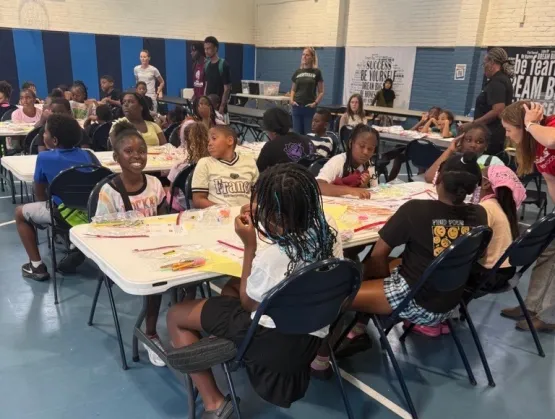
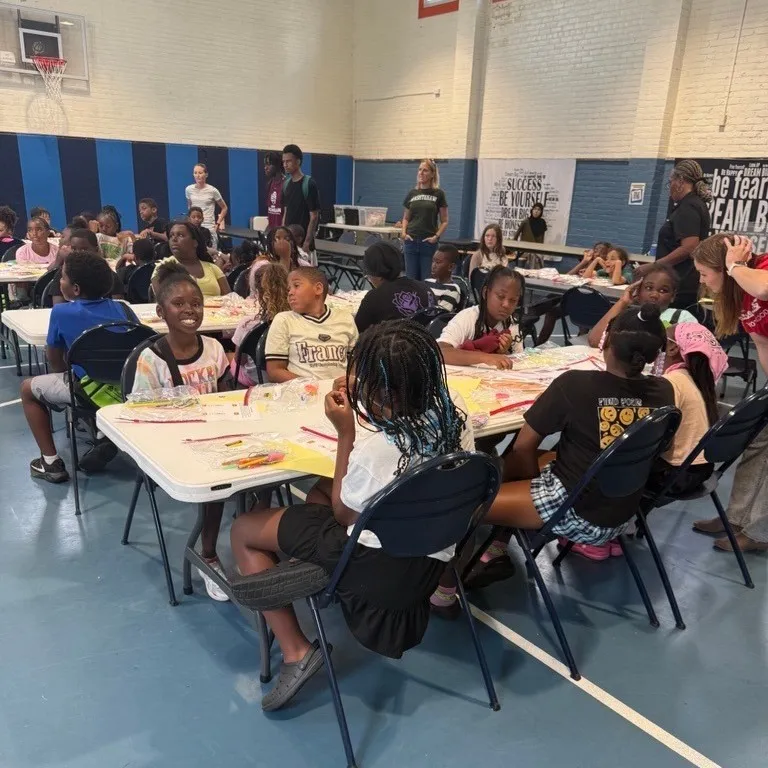
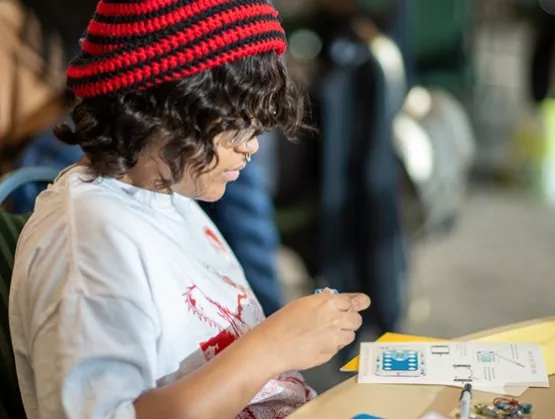
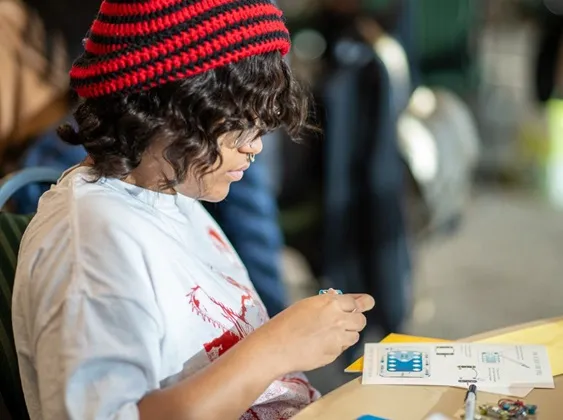
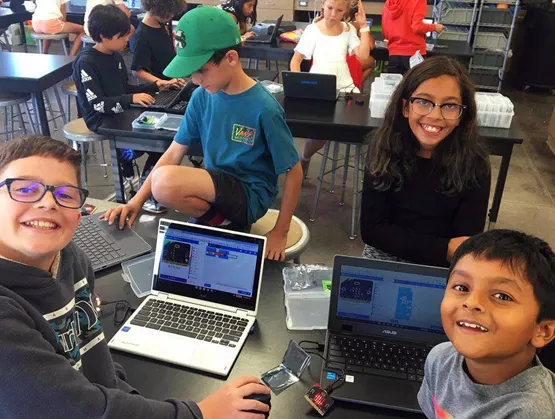
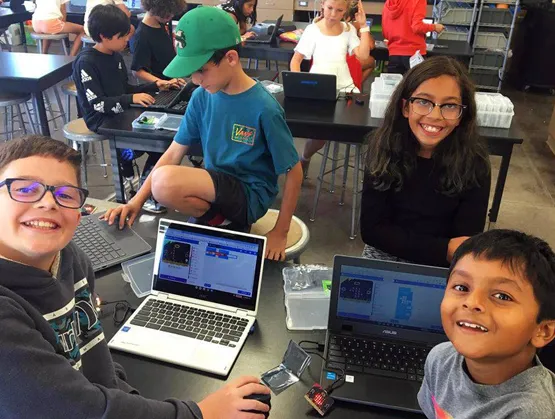
In the summer of 2025, I had the privilege of leading more than a dozen SEMI Foundation STEM summer camps in schools across multiple communities.Each camp brought students face-to-face with hands-on engineering challenges, semiconductor learning modules, and conversations about the careers connected to what they were building.What stood out most wasn’t just the energy in the classrooms; it was the moment students began to see themselves in futures they hadn’t previously imagined. For many, it was their first exposure to the semiconductor industry. Their first time hearing about advanced manufacturing careers. Their first time understanding that a certificate, credential, or engineering degree could lead to a stable, high-quality job shaping the technologies that power modern life.And it reinforced something we believe deeply at the SEMI Foundation, that workforce development does not begin at graduation; it begins in grade school with early awareness and intentional exposure.Starting Earlier: Where the Semiconductor Workforce Truly BeginsBuilding a strong, future-ready semiconductor workforce does not begin in college, or even high school. It begins in the earliest years of science, technology, engineering, and mathematics (STEM) exposure.Since 2003, I have created STEM programming that introduces college majors and career pathways to K–12 students. At the SEMI Foundation, that work now connects directly to one of the most urgent workforce challenges of our time, ensuring the semiconductor industry has the skilled talent needed to support domestic manufacturing expansion and global competitiveness.When elementary and middle school students engage in hands-on STEM experiences, they build confidence. They develop technical vocabulary, critical thinking skills, and resilience. They begin to understand how the devices they use every day are designed and manufactured. That early spark matters, especially in industries like semiconductors, where awareness has historically been limited among younger students.Moving From Exposure to Industry ExplorationAs students progress, programming must move from exposure to exploration.Through SEMI Foundation initiatives, including hands-on camps, classroom modules, and industry-connected programming, students begin to see how semiconductors power everything from smartphones and AI to healthcare systems and clean energy technologies.Middle school and early high school programs should intentionally connect STEM learning to real-world applications:Engineering design challenges tied to semiconductor conceptsProject-based learning informed by industry practicesCareer speakers from manufacturing and technical rolesMentorship that reflects diverse entry points into the industryThis stage is critical for workforce development. Quality hands-on learning must be paired with representation and mentorship. Students need to hear authentic stories about different pathways into technical fields, whether through two-year degrees, apprenticeships, industry certifications, or four-year engineering programs.High School: Where Awareness Becomes PreparationHigh school is where exploration must transition into preparation.Structured career pathways, dual enrollment opportunities, industry certifications, internships, and apprenticeship models create tangible bridges between classroom learning and workforce entry.When students graduate with credentials aligned to high-demand sectors, including advanced manufacturing and semiconductor production, they leave with more than knowledge. They leave with validated skills and industry relevance.This alignment does not happen by accident. It requires coordinated partnerships between K–12 systems, higher education institutions, workforce agencies, and employers. At the SEMI Foundation, we work to support this alignment so curriculum reflects industry needs and students experience clear, navigable pathways into careers.When education and industry move in sync, skills gaps narrow, and regional economies strengthen.Sustaining Momentum: Postsecondary and Employer PartnershipPostsecondary institutions and employers play a pivotal role in sustaining momentum.Stackable credentials, registered apprenticeships, and paid work-based learning models allow students to build competencies while earning income. Clear articulation agreements between high schools, community colleges, and universities reduce talent loss and create seamless transitions. In the semiconductor industry, where technical precision and specialized skills are essential, these structured pathways are not optional. They are foundational.A Long-Term Vision for Semiconductor Workforce GrowthThe semiconductor industry powers nearly every aspect of modern life. But sustaining that innovation requires long-term workforce vision. The students I met in our 2025 summer camps reminded me of what is possible when exposure meets opportunity.When we start early, align intentionally, and collaborate across systems, we do more than prepare a workforce. We cultivate the next generation of innovators who will design, build, and lead the technologies shaping our future.Bia Hamed is Program Manager, Global Education Initiatives at the SEMI Foundation.
Read More
The semiconductor industry is expanding at an unprecedented pace. Global semiconductor revenues are now forecast to exceed $1 trillion annually by 2030, yet recruitment is struggling to keep pace with the demand for new workers. This is why talent development is a critical focus for SEMI and the SEMI Foundation.Young professionals and students are crucial stakeholders of future talent. Held during SEMICON Europa, Building the Talent Pipeline event provided a showcase for some of Europe’s most enthusiastic promoters of careers in the industry: the Student Ambassadors of the European Chip Skills Academy (ECSA). The session opened with Andra Bornea, a Master’s student of electrical engineering at the Technical University of Cluj-Napoca in Romania, who shared the inspiring story of her journey towards a career in electronics. “For me, it started when I attended the ECS Summer School in 2023 along with 39 other students. It was a life-changing experience,” Bornea shared.The Summer School is a week-long programme jointly organised by AENEAS, ECSA, EPoSS and Inside, bringing together lectures, demonstrations and interactive sessions that give students a first-hand glimpse into what a career in semiconductors can look like. For Bornea, the impact was immediate and decisive. “Attending the Summer School convinced me to shift the focus of my studies from telecommunications and pursue a Master’s in electrical engineering,” she added. Today, Bornea is one of 70 students across Europe who form the ECSA Student Ambassador Programme, a community she describes as “a vibrant network of motivated students working towards the goal of keeping Europe at the forefront of the global semiconductor industry.”Andra Bornea, Technical University of Cluj-Napoca The event also featured other ECSA student ambassadors who are actively promoting the semiconductor industry within their own academic communities. One of them was András Bálint Mészáros, an electrical engineering student at the Budapest University of Technology and Economics, who spoke about his determination to build a student electronics club despite facing administrative hurdles along the way. Reflecting on the process, Mészáros said, “ECSA provided good opportunities to start a community of students interested in observing how the microelectronics industry works.”András Mészáros, Budapest University of Technology and Economics A similar spirit of initiative was shared by Nassim Beladel, a Master’s student at ETH Zurich, who described founding Young Neuromorphs which is a student association focused on computational hardware design inspired by the structure of the human brain. Beladel outlined ambitious plans for the group, including an FPGA hackathon in 2026 supported by the Edge AI Foundation, as well as a proposal to present the association’s work at an IEEE event in Shanghai. Nassim Beladel, ETH Zürich These new initiatives supplement a vibrant network of clubs and events around Europe. Octavian-Constantin Axinte, a Master’s student at the Technical University of Cluj-Napoca, told the forum of a Romanian competition for electronics students which has its roots way back in 1992. The Technologies of Interconnections in Electronics (TIE) contest attracted 1,500 students to its final stage in 2025. Axinte said that the benefits of participation included “hands-on experience of professional work, interaction with teachers, and, if all goes well, a job offer!” Octavian Axinte, Technical University of Cluj-Napoca Pioneering Research Efforts of the Next Generation of Students The Building the Talent Pipeline event also gave ECSA student ambassadors an opportunity to describe the findings of research projects that they have undertaken. Laura Sondakh, a Master’s student at Ghent University, presented her research into the environmental and social impacts of tantalum and cobalt which are critical minerals used in electronic components such as capacitors. “These minerals mostly come from the Democratic Republic of Congo, a country which ranks very low on development indices,” she explained, noting that many mines are located in conflict-affected regions in the east of the country. Laura Sondakh, Ghent University Vuk Vulević, a Bachelor’s student of telecommunications and IT at the University of Belgrade, shared his work on the applications of quantum computing, highlighting its potential beyond classic engineering uses such as machine learning. He explained how quantum technologies could also be applied “in pharmacology, for simulating complex molecules and testing compounds virtually, and in finance, for performing risk analyses and Monte Carlo simulations at high speed.” Vuk Vulević, University of Belgrade Z Zainab, a Research Assistant at Hochschule Anhalt, shared insights from her research into how mechanical strain can be introduced during the wafer saw-dicing process which is a critical step in turning wafers into individual chips. Using Raman spectroscopy, her work helps identify how key process parameters influence wafer integrity, enabling manufacturers to better optimise dicing conditions and reduce hidden damage that can affect chip reliability and manufacturing efficiency.Z Zainab, Research Assistant, Hochschule Anhalt Future Plans for Building the Talent Pipeline The event concluded by looking ahead at how SEMI and its partners are scaling up programmes to support talent development worldwide. Victoria Cummings, Senior Manager for Workforce Development and EU Projects at SEMI Europe, introduced Reinforcing Skills in Chips Design for Europe (RESCHIP4EU), a Master’s program for training the next generation of semiconductor designers supported by SEMI Europe and STMicroelectronics. Outlining the project’s ambition, Cummings said, “The program has a broad curriculum, covering everything from silicon chips and SoCs to safety-critical software, how to run a team, and how to start a semiconductor business.” Victoria Cummings, Senior Manager, Workforce Development and EU Projects, SEMI Europe The focus then shifted towards engaging younger learners. Marco van Schagen and Tijl Bouman, co-founders of JuniorIOT, unveiled their newest workshop, Chips in Schools, which builds on their work to spark interest in electronics among younger students. During a hands-on demonstration, audience members of all ages were invited to examine LEDs under a microscope, learning how different chips can be identified and classified by function.The Chips in Schools workshop will soon be available on the ECSA e-learning platform as part of the ongoing collaboration between ECSA and JuniorIOT. Reflecting on the importance of early engagement, van Schagen noted: “When we talk about the talent pipeline, we need to ask where this pipeline really begins. For us, it’s so important that we reach out to children early to foster their sense of curiosity and discovery.”Marco van Schagen, Co-founder of JuniorIOT, demonstrating the Chips in Schools workshop with Victoria Cummings.Rounding off the session, Mike Glavin, Program Director for Workforce Development at the SEMI Foundation, spoke about efforts to significantly scale the foundation’s impact. He described how, despite hundreds of individual microelectronics education initiatives across schools and colleges in the United States, their collective impact has often been limited by fragmentation and a lack of coordinated promotion. To address this, Glavin introduced the National Network for Microelectronics Education (NNME), an initiative designed to unify and amplify existing programmes by connecting educators, students and regional partners. The goal, he explained, is to build scalable, sustainable talent pipelines: “We want to answer the questions, how do we train teachers to educate students about semiconductors? How do we connect to networks through which we can train educators at scale? And how do we develop resources so that a university can host its own semiconductor day, rather than requiring the SEMI Foundation to put it on?” Mike Glavin, Program Director for Workforce Development, SEMI Foundation From university labs to industry-aligned Master’s programs, the message at SEMICON Europa 2025 was clear: talent development is critical to sustaining Europe’s semiconductor ambitions. SEMI would like to thank its partners across academia and industry, as well as the vibrant community of ECSA Student Ambassadors, whose collaboration, commitment and creativity are helping to build a diverse, resilient talent pipeline and shaping the future of the global microelectronics ecosystem.SEMI Contact Jatin Mendiratta, Communications Coordinator, European Projects Email: [email protected]
Read More
As the semiconductor industry continues to evolve, successful workforce development initiatives are becoming increasingly essential. In Malaysia, around 60,000 new engineers are needed to support the country’s plans for industry growth. However, despite the rising need for new engineering talent, student interest for STEM in Malaysia is declining. Women in particular, are even less likely to consider careers in engineering fields than their male counterparts, and this holds true worldwide. One reason is due to gender biases that form around STEM in early childhood. The Journal of Applied Developmental Psychology found that boys are more likely to consider themselves “good” at STEM, and this stereotype is later reinforced by male dominance within STEM classes. To mitigate the talent shortage, and to encourage more young women to consider STEM careers, STMicroelectronics created its "STEM your way" initiative. This program supports STEM education throughout Malaysia, as well as all other countries that STMicroelectronics operates in. Through STEM your way, STMicroelectronics shares its passion for science and electronics with today’s primary and high school students. Over the last three years, STEM your way has reached nearly 70,000 students globally. To address the STEM gender disparity in Malaysia, SEMI Southeast Asia (SEA) has been proudly collaborating with STMicroelectronics since 2023 on its ST Maur GEMS program, as part of STEM your way. The girls in engineering, mathematics, and science (GEMS) program is foundational for developing future engineering talent and sparking STEM interest among female students. One of SEMI SEA’s first GEMS program initiatives was a “train-the-trainers” session, where SEMI SEA representatives shared creative approaches for teaching STEM-focused course material. This involved the use of Circuit Scribe and Micro:bit Smart Science IoT kits to make lessons tactile, engaging, and memorable. These interactive teaching aids form the basis of a “STEM kit,” and as of today, SEMI SEA and STMicroelectronics have sponsored roughly 200 kits. These efforts culminated in December 2024 during the GEMS IoT Challenge at Universiti Technikal Malaysia Melaka, where 68 students from 17 primary schools showcased their innovative projects. Students demonstrated their technical knowledge and creativity by coupling Micro:bit IoT kits with AI cameras, Wi-Fi modules, servomotors, and more, with the intention of solving day-to-day problems. Posters of students’ solutions at the IoT ChallengeWith the collaborative success of the ST Maur GEMS program, SEMI SEA is excited to help scale the challenge to include additional countries. To partner with SEMI SEA to bring STEM education opportunities to Southeast Asia, please contact Cecelia Fong at [email protected]. SEMI Southeast Asia ContactCecelia Fong, Technology Programs ManagerEmail: [email protected]

Read More
As the demand for more powerful and efficient chips continues to grow, and the pace of semiconductor manufacturing in Arizona rapidly expands, so does the need for a highly skilled workforce capable of meeting these challenges. The SEMI Foundation’s SEMI Career and Apprenticeship Network (SCAN) Arizona Team is committed to building a robust workforce pipeline through strategic partnerships and initiatives that connect industry to education. These initiatives include fostering science, technology, engineering, and math (STEM) enthusiasm in K-12 (kindergarten through high school) classrooms to creating earn-and-learn opportunities through apprenticeships and collaborations with leading semiconductor companies. The Foundation’s Arizona team has coordinated key events and initiatives in the state that showcase a holistic approach to addressing workforce challenges, many of which could be expanded and replicated throughout the US and even globally.Arizona SciTech STEM and Innovation Summit: Fostering STEM Enthusiasm The Arizona SciTech STEM and Innovation Summit has long been a hub of innovation, offering students, educators, and the community an immersive experience in STEM. This year’s summit was no exception. Showcasing hands-on activities, workshops, and demonstrations, the event connected STEM industries with Arizona's next generation of talent.The SEMI Foundation Arizona team led activities and sessions demonstrating the Foundation’s work with educators and workforce experts to explore how semiconductor curricula can be integrated into classrooms. Through engaging workshops featuring SEMI Foundation High Tech U Micro:bit STEM kits and Baltu Technologies, and a panel discussion with educators talking about the importance of industry in the classroom, participants explored exciting careers and how to introduce industry opportunities to students. These interactions emphasized the real-world applications of classroom learning, showing the path to careers in high-tech industries.Teachers students participate in a hands-on Micro:bit STEM Kits workshop during AZ SciTech STEM and Innovation Summit held on October 22, 2024. Panelists discuss the future of the semiconductor industry incorporated into students’ education. From left to right: Dee Pinkston (Chicanos por la Causa), Raquel Diaz (Trevor G. Browne High school), Rachna Mathur (ASU prep, ASU, STEMology), Kenneth Mims (Science Prep Academy Neurodiversity Education Research Center). Apprenticeship 101: A Guide to Workforce ReadinessIn a landscape where technical skills are increasingly critical, the Apprenticeship 101 workshop provided a crucial introduction to the benefits of how earn-and-learn programs are transforming careers in semiconductors and beyond. Hosted by: Arizona Commerce AuthorityArizona@Work SEMI Foundation Federal/State Apprenticeship Developer Scott EllsworthSEMI Foundation SCAN Arizona team The City of Phoenix This event gave attendees an overview of apprenticeship opportunities in fields like semiconductors and advanced manufacturing.Participants learned how these programs build bridges between education and employment, offering both practical experience and a clear path to career advancement. A notable highlight was the emphasis on underrepresented groups, showcasing how apprenticeships can empower individuals to succeed in high-demand fields.Panelists highlighting pathways to careers in semiconductors with a focus on earn-and-learn opportunities. From left to right: Nick Irigoyen (SEMI Foundation), Michael Rosas (Arizona Commerce Authority), Scott Ellsworth (SEMI Foundation), Joan Bueno (Arizona Apprenticeship Office), James A. Montoya (ARIZONA@WORK), Stephanie Varela (City of Phoenix) Apprenticeship 101 Panelists. From Left to Right: Nick Irigoyen (SEMI Foundation), Scott Ellsworth (SEMI Foundation), Joan Bueno (Arizona Apprenticeship Office), Stephanie Varela (City of Phoenix), Perla DeBaggis (SEMI Foundation), James A. Montoya (ARIZONA@WORK) Intel Apprenticeship Program Support: A Step Toward Workforce Expansion Intel’s apprenticeship announcement signaled a transformative step for Arizona’s tech industry. With a focus on diversity and inclusion, Intel’s initiative aims to recruit participants from all backgrounds, ensuring a broad and equitable talent pool. Their current cohort of apprenticeships started with 9 women from the Fresh Start Foundation. The team worked with Arizona@Work representative Stephanie Varela to provide the apprentices with an overview session of the workforce innovation and opportunity act resources available to them. These kinds of resources provide alignment and improvement of employment, training, and education programs to promote individual growth. By investing in the workforce of tomorrow, Intel underscored its commitment to Arizona’s economic growth and technological leadership.Intel apprentices Gabriella Medina and Laura Jabalera are paving the way for women in the industry. Learn more about their inspiring journey here. TSMC Apprenticeship Announcement: Driving Innovation and InclusionSimilarly, TSMC’s apprenticeship program launched on November 19, 2024, bringing excitement and opportunity to the state. The program offers specialized training for individuals seeking careers in semiconductor manufacturing, a vital industry for Arizona’s economy.TSMC’s announcement emphasized collaboration with educational institutions, including community colleges and universities, to ensure apprentices receive both technical training and academic support. TSMC Arizona is investing more than $5 million in this program representing on-the-job training hours and education tuition support for its apprentice employees.The SEMI Foundation SCAN Arizona team joins TSMC apprentices on November 19, 2024 to celebrate the launch of TSMC's groundbreaking apprenticeship programs. Trevor G. Browne High School AET Assembly: Inspiring Young InnovatorsAt Trevor G. Browne High School, the Advanced Engineering and Technology (AET) Assembly served as a rallying point for students interested in high-tech careers. The SEMI Foundation Arizona Team joined their assembly to celebrate the potential of Arizona’s youth, sharing stories of innovation and success in the semiconductor sector.Students gained valuable insights into the industry’s evolving landscape, learning about the impact semiconductors have in cutting-edge technologies and career pathways in engineering and manufacturing. The assembly highlighted the importance of programs like SCAN-AZ and other local initiatives happening in 2025, which aim to bridge the gap between classroom learning and real-world opportunities.Micro:bit Competition: Sparking Innovation in Arizona's ClassroomsThe launch of SEMI Foundation - Arizona’s first Micro:bit Competition is bringing creativity and technology together in K-12 classrooms statewide! Designed to inspire innovation, this competition challenges students to use Micro:bit to develop projects that showcase their technical skills and imagination.From robotics to sustainability solutions, students are exploring real-world applications of STEM through hands-on projects. With categories like Innovation in Education and Creative Arts, the competition encourages participants to think outside the box. This initiative not only highlights the SEMI Foundation’s commitment to STEM education but also fosters the next generation of problem solvers and innovators. The Micro:bit Competition is more than just a contest—it’s a stepping stone for students to explore their potential in high-tech industries.Stay tuned as we celebrate the incredible projects and the bright young minds behind them!ASU Preparatory South Elementary, Grades 3-6 Teacher Michael Grant (Left) receiving his Micro:bit STEM kits for his participating classroom from Perla DeBaggis SEMI Foundation (Right)The SEMI Foundation’s efforts in Arizona exemplify the power of strategic partnerships and innovative programs to build a stronger, more diverse pipeline for the semiconductor workforce. By engaging educators, students, and industry leaders, we are creating pathways that connect education to employment, fostering a future-ready workforce. These initiatives serve as a blueprint for workforce development that can be adapted and scaled nationwide, empowering communities to thrive in the evolving high-tech economy. The SEMI Foundation is thrilled to continue this momentum and expand our impact even further in 2025! Co-Author Perla DeBaggis is the Senior Specialist for Career and Industry Awareness at the SEMI Foundation, focusing on bridging the gap between education and industry. Co-Author Nick Irigoyen is the Project Manager for Project Manager, Workforce Development Apprenticeships at the SEMI Foundation, focusing on initiatives aimed at strengthening the semiconductor talent pipeline in Arizona.
Read More
SEMI High Tech U is making waves around the world, introducing students and educators to the fascinating world of microelectronics through hands-on, experiential STEM learning kits. The SEMI Foundation started the program in the U.S., aiming to spark interest in semiconductors and technology, and High Tech U has expanded across borders to reach students in Europe and Southeast Asia. Recently, young learners in Germany and Malaysia participated in the SEMI program, diving into circuits, coding, and connecting their learning to the ever-evolving semiconductor industry.One of the core goals of High Tech U is to empower educators and students with tools that make microelectronics accessible and engaging. Since 2022, thanks to support from sponsors like KLA, Nordson, Western Digital, STMicroelectronics, Applied Materials, Broadcom, Infineon, and Qorvo, the program has reached over 5,500 students across multiple states and countries.MichiganStudents in Ypsilanti creating circuits with various materials.In the summer of 2024, SEMI Foundation partnered with Toyota and Washtenaw Community College to provide a free three-day summer program at Parkridge Community Center in Ypsilanti, Michigan. Dozens of Ypsilanti middle school and elementary school students engaged in active, hands-on learning about circuits using everyday materials such as playdough, copper tape, and batteries. The students built basic circuits on paper, created light-up greeting cards, and sculpted figures illuminated with tiny LED bulbs. This learning opportunity taught students and their counselors how circuits and semiconductors are an integral part of everyday life.MalaysiaStudents, staff, and teachers from ST Muar GEMS program.In 2023, STMicroelectronics Muar sponsored High Tech U kits for local schools as part of their Girls in Engineering, Mathematics Science (GEMS) STEM Lab program. SEMI Foundation staff collaborated with the GEMS program and provided a live international train-the-trainer session where teachers familiarized themselves with the High Tech U kits and accompanying curriculum. This session ensured that STMicroelectronics partners from the Muar Primary School were prepared to implement the program and make the connections between student learning and the work of the microelectronics industry.The STMicroelectronics Muar GEMS program has since educated many students in the local area on circuits, coding, and the basics of semiconductors. This partnership continues to blossom as STMicroelectronics aims to expand the implementation of the successful GEMS program. Moving forward in 2024 and beyond, GEMS students will apply their newfound skills in a friendly competition to solve real-world problems, showcasing how knowledge of circuits and coding can make a difference in creating a better world.GermanyStudents from SEMI Europe’s inaugural High Tech U program in Berlin.The SEMI Europe team has also recently launched their first High Tech U program in partnership with the Micro:bit Educational Foundation. Through a series of hands-on STEM activities, SEMI introduced a 4th-grade class in Germany to the fascinating world of microelectronics. Students were able to explore the fundamentals of coding and electronics through building a codable guitar using cardboard, aluminum foil, and electrical clips.The program continues to grow in Europe, providing students opportunities for interactive projects like crafting dice, programming melodies, and building smart sensors. The students’ enthusiasm and curiosity has shown the possibilities of engaging young minds in the world of microelectronics.Expanding Opportunities for Industry InvolvementSEMI invites you to take part in attracting, developing, and retaining the microelectronics talent of the future. Join us in this critical work while strengthening your company’s impact on your local communities. Learn more about High Tech U and opportunities for companies to get involved around the globe by contacting Bia Hamed at [email protected]. Berton Mahardja is the Director of Global Education Initiatives at SEMI Foundation. Prior to joining SEMI, Berton served in various roles across K-12 education. He is passionate about programs that support equitable industry access for students and adults.
Read More