downloadGroupGroupnoun_press release_995423_000000 copyGroupnoun_Feed_96767_000000Group 19noun_pictures_1817522_000000Member company iconResource item iconStore item iconGroup 19Group 19noun_Photo_2085192_000000 Copynoun_presentation_2096081_000000Group 19Group Copy 7noun_webinar_692730_000000Path
Skip to main content
Default Banner Image

Smart Transportation

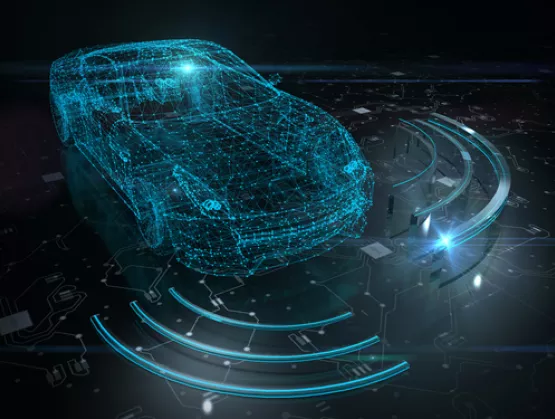
Connectivity. Electrification. Shared Mobility. Autonomous Driving. McKinsey Company cites these four disruptive trends behind future mobility — dynamics that could help to transform quality of life for hundreds of millions of people.McKinsey Company predicts that by 2030, mobility innovation could dynamically alter everything from safety in human locomotion to air quality, public spaces and power systems. Much the same way that tiny plankton in our oceans sustain aquatic animals, MEMS and sensors, while small, are crucial building blocks of integrated mobility.As partner at McKinsey Company, Andreas Breiter will explore this connection during his MSEC 2020 presentation, Future Mobility Enabled by Sensorization. SEMI recently caught up with Breiter to preview his October 7 talk at SEMI’s first virtual MEMS Sensors Executive Congress, October 6-8 and 13-15, 2020.Register now for MSEC 2020 and explore this topic with Breiter during the live Q A portion of his presentation.SEMI: You play a dual role at McKinsey Company, advising clients in advanced industries on capital investments and serving on the leadership team of the McKinsey Center for Future Mobility (MCFM). What is the relationship between them?Breiter: Mobility has become so much more than the auto sector. Today when we say future mobility, we’re talking about the convergence of many exciting developments influencing the ways that people and goods move around. Cars have become computers, and we now have to contemplate new frontiers, such as air taxis and electric vehicle infrastructure.Mobility is changing so quickly that it’s inspiring decision-makers from other market sectors to explore what implications it will have for them. We’re helping mining companies think about their haulers, retailers think about their footprints, and insurance companies plan for autonomous vehicles. The MCFM exists as a global think tank to focus on these frontier topics, helping to ensure we are ready for the future. During my MSEC presentation, I’ll explore how those future topics are influencing automotive mobility in the short- and long-term. The MCFM is even more forward-looking, so we’re just starting to build scenarios for what might come in 2040 and beyond.SEMI: How are changes in the mobility ecosystem affecting the automotive value chain?Breiter: In the past, the automotive value chain was clearly structured. We had sensor companies selling to Tier 1 suppliers, who would in turn sell to OEMs, who would sell directly to end customers.The value chain has grown more complex, however. In the future, we might see fleets of robotaxis, which will be owned by companies instead of by individual consumers. Already today, rideshare companies are game-changers because consumers can travel by car without owning one.Plus we see companies offer parts of the user experience such as user interfaces for automotive infotainment. In the past, everything in the car was branded by the OEM, but now we have third-party platforms that let us control some of our automotive infotainment options.SEMI: How are MEMS and sensors suppliers participating in this new value chain?Breiter: The pervasive use of sensors in cars has driven automotive OEMs and Tier 1 suppliers to work directly with suppliers, whose close involvement eases the complexity of integration. Just think about the sensors used in autonomous driving. Getting that right is safety-critical.We’re also seeing suppliers go beyond the individual component level to provide complete systems-level solutions. Advanced driver-assistance systems (ADAS) are a good example.SEMI: Automotive applications tends to have some of the longest design-to-delivery cycles in industry. Will this ever change?Breiter: The automotive product lifecycle was typically five-plus years, with a few years of development before that and continued service after the end of the lifecycle. That gives MEMS and sensors suppliers a 10+ year timeline on one model.With so much innovation taking place, this slow cycle won’t work forever. Over-the-air (OTA) updates, for example, enable new features when they become ready for deployment. I expect we’ll see OTA updates from many end manufacturers in coming years. SEMI: What changes do you foresee in ADAS and autonomous driving?Breiter: ADAS and autonomous features will become much more common. We’ve already witnessed this progression, with introductions first in premier models and later rolling out in more affordable vehicles. Lane-change assist and rear camera followed this path and are now pretty standard. Collision avoidance, as a safety-critical feature, is likely next in line for more widespread adoption.As for fully autonomous driving, consumers will accept that only when it becomes safer than a human driving a car.SEMI: Where is the greatest opportunity in the next five years?Breiter: Electrification of vehicles is number one. When it comes to engines, we’re moving from internal combustion to hybrid and then to electric. Since OEMs are adding sensors for the battery system, for battery management, and for electric motors, this progression represents growth opportunity for sensors suppliers – in particular for hybrid vehicles that contain both powertrain technologies.But that’s not all when it comes to sensors. Outside of powertrains, new sensors are added to enable a variety of functions, including, for example, ADAS and autonomy, as well as increased interior content, such as mood lighting.SEMI: Is there anything surprising coming, sensor-wise, in mobility?Breiter: To enable intelligent traffic systems, you need to make infrastructure smarter — which brings us to sensors. We’re going to see roads and other assets in infrastructure sense the state of traffic, sense what traffic participants are doing, and support connectivity between, for example, the infrastructure, vehicles on the ground, pedestrians on walkways and drones in the air.SEMI: What would you like MSEC attendees to take away from your presentation?Breiter: We’re living in a transformative era for the mobility industry. During the last 100 years of mobility, the ecosystem barely changed. In recent years, however, we’ve seen massive technological gains, largely enabled by semiconductors, MEMS and sensors. Instead of serving as just one of many suppliers, I’d encourage MSEC attendees to anticipate future mobility challenges so they can offer solutions to OEMs and Tier 1 suppliers accordingly.For more information, visit McKinsey Center for Future Mobility. MEMS Sensors Industry Group® (MSIG), a SEMI technology community that connects the MEMS and sensors supply network in established and emerging markets, enables members to grow and prosper. Visit us today.Andreas Breiter leads McKinsey’s capital-investment work for advanced industries in North America as well as its Center for Future Mobility on the West Coast. In his advisory work, Breiter serves a broad range of companies in the automotive sector, including car and truck manufacturers and their suppliers, as well as companies in the utilities and renewables space. He helps executives make strategic choices around product development and helps companies stay ahead of emerging trends, such as autonomous driving, connectivity, electric vehicles, and shared mobility.Andreas holds a Ph.D. in Operations Management and studied in Germany, France, the U.S. and Canada.Nishita Rao is product marketing manager at SEMI.
Read More
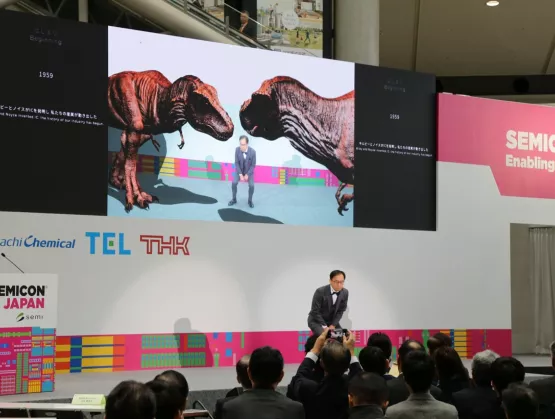
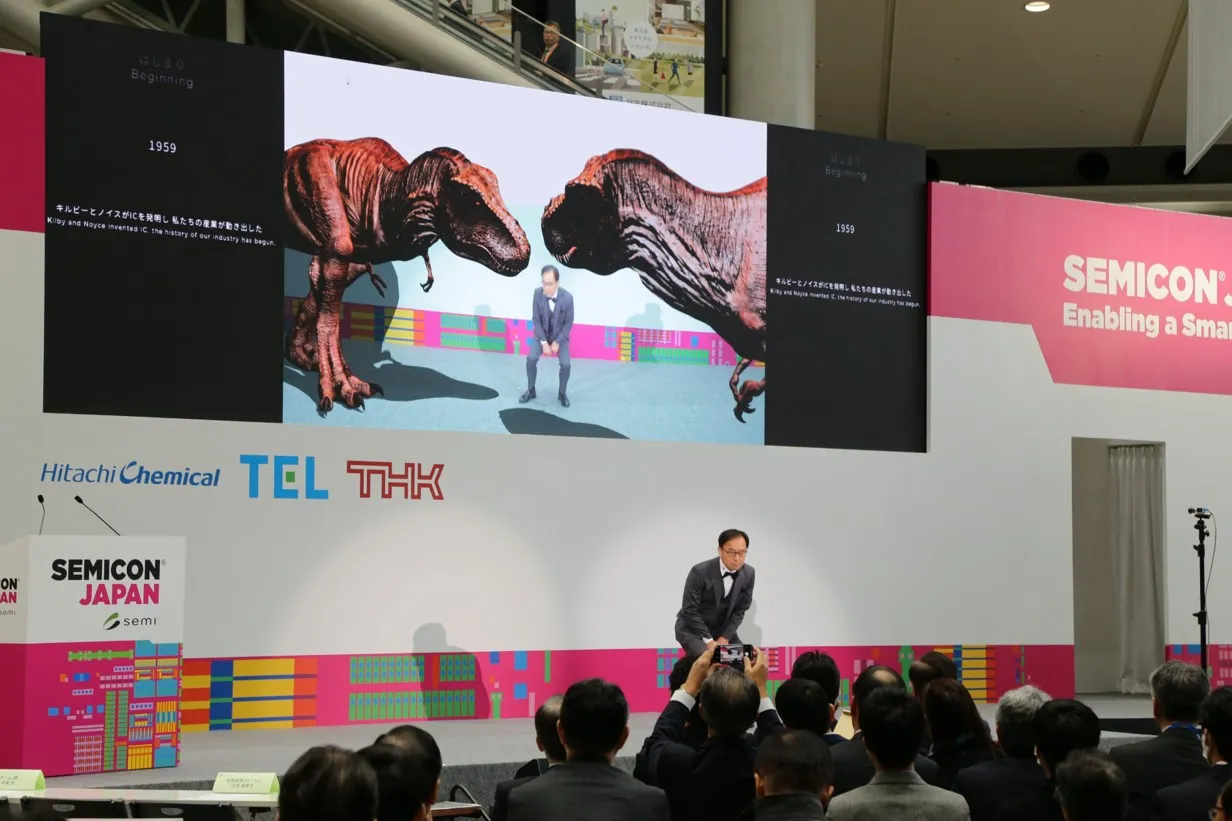
Augmented reality (AR) tyrannosauruses towered on-screen as I interacted with the creatures in a mix of prehistoric and cutting edge. Or, rather, my AR double was doing the playacting. Minutes later, virtual doppelgangers of a small lineup of chip industry executives cut the ceremonial ribbon. Seemingly sweeping away the winter chill, the opening of SEMICON Japan 2019 dazzled with smart technology and the promise of lives, cities and workplaces transformed, with uber-intelligent applications in full display at Tokyo Big Sight. But what resources does the industry need to harness to drive the next era of innovation? The semiconductor industry’s unwavering passion and young talent are key, said Hiroshi Imano, Chairperson of the SEMICON Japan Initiatives Committee, in his opening keynote. And hardly any region of the world is in a better position to help realize that future than Japan, Imano said. The region supplies one third of the equipment and more than half of all materials to the global semiconductor manufacturing industry.Talent was also top of mind for SEMICON Japan 2019 keynote speaker Makiko Eda, Japan's Chief Representative Officer at the World Economic Forum (WEF). Serving as a platform for public-private partnerships, the organization's mandate is to tackle global issues such as climate change and geopolitical strife in making world more resilient to risk and, by extension, more sustainable.Spanning ecology, economy, technology, society, geopolitics and industry, that mission includes reskilling and upskilling a billion people over the next decade, a high priority for WEF, which hosts a conference every January in Davos, Switzerland. The theme of this month's conference – Stakeholders for a Cohesive and Sustainable World – reflects the vital importance of building the international partnerships and global consensus necessary to achieving WEF's goals.One key to that sustainability will be technology and Arm, a global chip design company, will play a key role, with the company’s chips touching over 70 percent of the world’s population, Arm president Yuzuru Utsumi said in his keynote. Today, Arm is driving toward an ambitious goal: Ship 100 billion chips from 2017 to 2021 – the same number produced over the previous quarter century – by powering advances in mobile computing, server and networking infrastructures, and automotive applications.Arm’s innovation ecosystem of more than 1,000 partners will deliver these chips as they continue to work together to develop differentiated technology. Arm plans to increase investments not only in its primary processor business to accelerate market share gains but in the company’s new IoT business to create new revenue streams. The goal: Deliver long-term sustainable growth, Utsumi said. SEMICON Japan 2019 showcases SMART manufacturing and transportation Billed as a showcase of smart technologies, SEMICON Japan 2019 delivered with an array of eye-grabbing exhibitions in the popular SMART Applications Zone. In the SMART Transportation area, the automatic operation pavilion featured a car equipped with open-source software for autonomous driving. The exhibitor, Tier IV, aims to help lead the early commercialization of self-driving vehicles through the adoption of its software, Autoware, which makes it easier to develop self-driving vehicle prototypes using low-power platforms.Sony Semiconductor Solutions demonstrated a vision sensing processor designed to guide autonomous drones. Using two cameras, the processor measured the changing distance between visitors moving about the exhibit and stationary objects in real time, indicating proximity in hues of red (nearby) and blue (at a distance). Many visitors were wowed, describing the multichromatic display as futuristic.Others rode a simple wooden swing hanging by two ropes, but from dizzying heights thanks to Solidray’s Duo-Sight, a virtual reality (VR) system that projects 3D images stretching from wall to floor for immersive experiences. One visitor thrilled at how riding the swing, suspended only a few feet from the floor, felt like soaring on a flying trapeze. Target applications for the technology include virtual rides at amusement parks and presenting interior design options to homeowners.In the SMART Manufacturing area, one highlight was the demonstration by the National Institute of Advanced Industrial Science and Technology (AIST) of a remote-controlled Minimal Fab System designed for low-volume, high-mix chip production with little staffing. Designed to increase production efficiency, the system allows a circuit designer to manufacture a semiconductor by singlehandedly operating equipment up and down the production line. Controlling nearly 50 pieces of equipment, the Minimal Fab System on display manufactured chips that were verified for functional operation and exhibited afterwards.On the SMART Applications stage, exhibitors DENSO and Toyota Motor Corporation announced a new joint venture to conduct research and advanced development of the next-generation in-vehicle semiconductors critical to electric and autonomous vehicle innovation. The venture, operating as MIRISE Technologies, will combine Toyota’s mobility expertise with DENSO’s in-vehicle component prowess. The goal is to build a rapid, competitive development system by 2030, said Yoshifumi Kato, executive director of the DENSO Research and Development Center, and president and representative director of the venture. On track to begin work this year, MIRISE will span three fields of technology development: power electronics, sensing and SoC (System-on-a-Chip). The name MIRISE combines word the Japanese word "mirai" (future) with "rise."Business Continuity PlanningNatural disasters and other emergencies are an ongoing threat to uninterrupted business operations across the semiconductor manufacturing supply chain and particularly in earthquake-prone Japan. To better prepare for business disruptions and restore normal operations as soon as possible after disaster strikes, more companies are teaming on Business Continuity Planning (BCP).THK's Seismic Isolation Experience Car demonstrated one technology designed to help – a seismic isolation device. The car shakes like an earthquake to give people inside a taste of how a building heaves and sways during a quake with and without the device deployed. Visitors were struck by how much the isolator dampens tremors to prevent or minimize damage. In the BCP seminar, representatives from Sony Semiconductor Manufacturing, THK, DISCO and Team Engineering Consulting shared lessons learned from actual disasters and discussed the critical importance of daily disaster drills. Yukihide Keigo, Executive Engineer in charge of Products and Development at Sony Semiconductor Manufacturing, recounted how the company’s Kumamoto Prefecture plant struggled for 96 days to restore full operations after the facility sustained heavy damage in the 2016 earthquake. Keigo said the plant lacked the structural reinforcements necessary to withstand the impact and fell prey to poor planning and accountability. The Kumamoto plant has since implemented measures – structural and procedural improvements – that more accurately account for seismic risks to ensure full recovery within 56 days. The plant’s new procedures include emergency drills for staff including night-shift workers.Innovation abounds at six SuperTHEATER forumsSEMICON Japan 2019 was held in the West and South Halls of Tokyo Big Sight as organizers of the Tokyo Olympics occupied the East Hall, the exhibition's usual home at the venue, to prepare for the 2020 games. For the first time, the main stage, SuperTHEATER, was set up in the cavernous arena near the main entrance. The SuperTHEATER featured six forums over three days. Semiconductor Executive Forum – View by Top Two in the Era of Digitalization with thought leaders from IHS Markit and Sony Semiconductor Solutions SMART Connectivity Forum – Infinite World Brought by 5G Innovation with experts from Softbank and Nokia Solutions Networks SMART Transportation Forum I – Front-line of Automated Driving featuring speakers from Intel and DENSO SMART Transportation Forum II – Revolution of Sky Transportation, supported by the U.S. Commercial Service in Japan, with presenters from Ministry of Economy, Trade and Industry (METI), Subaru and Bell Helicopter Manufacturing Innovation Summit – Issues and Innovation: What will Drive Growth to 2030 featuring thought leaders from VLSI Research, Applied Materials, KLA, Nikon and Tokyo Electron Mirai Vision Forum – Future Relation of Technology and Body 2.0 with speakers from Leave a Nest, Ory Lab and Autonomous Control Systems Laboratory The Mirai Vision Forum highlighted advanced technologies that could lead to societal improvements. One presenter, Kentaro Yoshifuji, CEO at Ory Lab, recalled how, as a child, he once stayed home from school while recovering from an illness. His imagination in full flight, the youngster imagined having a clone that could attend school and be with his classmates. The experience eventually inspired him to develop OriHime, a robot that gives socially isolated people a way to communicate with friends or colleagues remotely. Originally developed for physically impaired people, OriHime today is used to help the able-bodied. The robot is situated with the companion and the user operates OriHime remotely. A camera and monitor in OriHime’s face provide the visual and audio connection and the user controls the device with a smartphone or tablet or, for those who are paralyzed, through eye movement. One potential application: With OriHime stationed at a business office, working mothers could use OriHime to telecommute to better balance their careers with their parenting responsibilities at home. The robot would be a mother’s go-between, enabling her to communicate directly with colleagues.The next generation of innovators also took the stage as five teams presented innovative business ideas in friendly competition. The top prize in The TECH CAMP Hackathon went to the group that hatched an ingenious plan to develop a jacket that trains users to move their bodies in preprogrammed ways. For example, legendary Japanese professional baseball player Shigeo Nagashima could wear the gear while batting to program the device, then give the jacket to someone who’s never swung a baseball bat. The jacket would help the user replicate Nagashima’s swing. Now comes the real work of any innovator – executing on the vision.And then came two soccer-playing artificial intelligence (AI) robots that squared off and ... Scored! The demonstration by the Toyota National College of Technology started as a research project by Toyota National College students in 2002. The young innovators designed and developed all the robotic hardware and software from scratch. Looking ahead to SEMICON Japan 2020!SEMICON Japan 2019 not only gathered leading Japanese semiconductor materials and manufacturing equipment providers to demonstrate their latest innovations. The premiere regional event also provided insights on key trends critical to the entire electronics manufacturing supply chain. This year’s event drew more than 51,000 visitors and 695 exhibitors from 15 regions filling more than 1,700 booths.SEMICON Japan 2020 returns to East Hall at Tokyo Big Sight in December 2020. I look forward to seeing you there!Jim Hamajima is president of SEMI Japan.
Read More
Famous for its warmth and hospitality, Japan always welcomes visitors from around the world with a gracious embrace. But when is the best season to visit? It depends on the interest of each visitor of course. For Instagrammers, the April cherry blossoms or November autumn leaves – a masterpiece of art with their rainbow gold, red and yellow hues – are ideal for snapping memorable pictures. For foodies, winter delights with tuna, toro sushi and other seafood at their tastiest. Wagyu peaks in richness, too, when the cold weather sets in. For anime and manga enthusiasts, August is definitely the time to visit. That’s when COMIKET, the world’s largest comic market – drawing more than a half million people – takes place in Tokyo. But for people in the electronics value chain, the perfect time to pack their bags and hop a flight to Tokyo is December, when SEMICON Japan – December 11-13 at Tokyo Big Sight – opens its doors with its own form of hospitality.Why should you attend? Here are the five top reasons.Reason 1: Japan is home to leading electronics industry suppliersAccording to VLSI Technology, seven of the top 15 semiconductor equipment suppliers in 2018 are headquartered in Japan, and many Japanese companies also lead backend equipment segments. For decades, Japanese companies have supplied about one third of the equipment for the global semiconductor equipment industry, according to SEMI and the Semiconductor Equipment Association of Japan (SEAJ). Most of these companies typically set up a booth on the SEMICON Japan show floor to welcome your visit.True, many Japanese suppliers also exhibit at SEMICON shows outside of Japan to meet with customers. But you will find many more engineers, managers and executives of equipment suppliers on their home ground at SEMICON Japan, where suppliers typically debut new equipment. Their booths are also ideal locations for visitors to meet with suppliers to ask questions, exchange opinions and negotiate new business deals.Japanese materials suppliers enjoy an even larger market share, providing about half the materials for the global semiconductor industry. These suppliers dominate in silicon wafers, photomasks, photoresists, sputtering targets, packaging substrates, bonding wires, leadframes, mold compounds and wafer level packaging dielectrics. Unlike equipment suppliers, not all materials companies exhibit. Instead, many participate as speakers and attend to connect with customers.Reason 2: Get ready for the next semiconductor industry upturnA year ago, in late 2018, we expected chip inventory to stabilize by mid-2019, yet the industry still struggles with high inventory overall and low average selling price for memory. The SEMI 2019 equipment billing forecast was lowered accordingly from -4.0 percent growth (2018 year-end forecast) to -18.4 percent (2019 mid-year forecast). However, the two forecasts still predict positive growth in 2020. As SEMICON Japan 2019 is underway, we should be at the beginning of the next upturn.The chart below shows that more wafer process fabs will start construction in 2020 than this year. (Please see article: Nearly $50 Billion in Fabs to Start Construction in 2020.) Custer Consulting Group also pointed to “a resumption in semiconductor chip and capital equipment growth in late 2019 or early 2020.” (Please see article: Semiconductor Industry Upturn by Early 2020?.)With better times ahead, SEMICON Japan 2019 will be an opportune time to exchange opinions with key players across the supply chain and start negotiations for the coming robust recovery of the equipment, components and materials markets.Reason 3: Glimpse the future at SuperTHEATERSEMICON Japan SuperTHEATER will feature industry and technology insights from global visionaries. Asako Eda, Japan’s chief representative officer of the World Economic Forum and the former president of Intel Japan, will open the SuperTHEATER with her keynote on how we live in an era where the fourth industrial revolution, climate change, disparity and geopolitical risks are affecting our lives and with the speed we have never experienced. She will explore the growing role of innovation and social responsibility and how the World Economic Forum is addressing associated challenges. The opening keynote session will also feature Nandan Nayampally, vice president and general manager of the Immersive Experience group at Arm.In all, the SuperTHEATER will host seven keynote forums over three days at SEMICON Japan including: Semiconductor Executive Forum – Terushi Shimizu, representative director and president of Sony Semiconductor Solutions, and Atsuyoshi Koike, president of Western Digital Japan, will discuss their business strategies and prospects. Manufacturing Innovation Summit – Executives from Applied Materials, KLA, Nikon and Tokyo Electron will discuss business and technology issues as well as innovations that will drive growth to 2030. All seven SuperTHEATER programs will be simultaneously translated to English for international audiences.Reason 4: Connect to application communitiesCollaboration across the value chain has never been more important to industry innovation and growth – the very reason SEMI has expanded its reach beyond the semiconductor manufacturing supply chain (equipment and materials) to include design, systems and products.The SEMICON Japan show and conferences will connect you to key application segments of the value chain. The SuperTHEATER will host two SMART transportation forums highlighting the latest developments in autonomous driving and sky transportation (flying cars). In the SMART Applications Zone on the show floor, you’ll find electronics products and technologies showcased for automotive and manufacturing automation as the autonomous driving pavilion highlights emerging technologies that are driving semiconductor innovation opportunities. Reason 5: Learn from disaster and recovery experiencesJapan has taken important disaster recovery lessons from devastating earthquakes over the past three decades, most notably the Kumamoto quake in 2016, the Tohoku temblor in 2011 and the Kobe rattler in 1995. So has the Japan electronics supply chain, including SEMI members. In the Business Continuity Plan (BCP) area at SEMICON Japan 2019, exhibitors including DISCO, Murata Machinery and THK will highlight technologies that can strengthen your preparedness for a disaster and aid in the recovery.On December 12 at the BCP seminar at Japan 2019, Sony Semiconductor Manufacturing, DISCO and Team Engineering Consulting will share their experiences and expertise in mitigating the disaster impacts. (Sony and Disco will present in Japanese.)To get the feel for the magnitude of a major earthquake and how seismic isolation protects against structural damage, be sure to take advantage of THK’s earthquake experience car. Seismic isolation installs isolators – rubber bearings, friction bearings, ball bearings, spring systems or other devices – beneath a building to buffer earthquake vibrations transmitted to structures.More reasons to attend SEMICON JapanAnd of course your visit to Tokyo for SEMICON Japan 2019 wouldn’t be complete without exploring Tokyo and other regions to experience Japan’s exotic culture, cityscapes and cuisine! Here are some resources to give you even more reasons to book a flight to Tokyo: Japan National Tourism Organization Go Tokyo Kyoto Tourism I look forward to seeing you at SEMICON Japan in December!Jim Hamajima is president of SEMI Japan.

Read More
Automotive original equipment manufacturers (OEMs) and their direct suppliers of parts and systems share a vision: Next-generation vehicles will be more electric, autonomous and connected. At a market size of more than $1 trillion, automotive is steadily becoming a high-tech market as cars morph into advanced technology platforms with partially or fully autonomous features. Call them semiconductors on wheels. Big players such as Google and many carmakers are investing heavily in chip advances to help drive increases in silicon content in automobiles.At SEMICON Europa, Pierrick Boulay, Solid State Lighting and Lighting Systems analyst at Yole Développement, will provide a market update on autonomous automobile trends including the state of sensors, radars, cameras and LiDARs as the industry works to increase the level of autonomy and electrification.Autonomous vehicle design can only thrive with the development of an industry standard for chip and device traceability across the supply chain. The importance of chip traceability to the automotive industry is reflected in its central role in driving a chip traceability standard.According to Heidi Hoffman, senior director of technology communities marketing at SEMI, “chip traceability is one of the next big things for the technology industry. The benefits are enormous, and the upsides – including yield enhancements, counterfeiting safeguards, and support for new applications – are plentiful. But the implementation challenges of chip traceability are also big and will require considerable effort to overcome. The biggest hurdle of all? We need to transcend industry fears by demonstrating that we can secure IP when it is shared across the hardware supply chain.” The Importance of Standards, Data Collection and Collaboration Across the Supply ChainThe automotive industry has long embraced tracing the sources of defects. Now, as the automotive and semiconductor supply chains increasingly overlap, traceability has taken on greater importance in the semiconductor industry. SEMI committees, task forces and events such as the Smart Transportation Forum at SEMICON Europa are ideal platforms for collaborating to develop new standards and best practices for the automotive industry.Earlier this year, German luxury automobile maker Audi AG became the first automotive original equipment manufacturer (OEM) to join SEMI as member, strengthening alignment across automotive supply-chain segments. At SEMICON Europa, the SMART Transportation Forum and Pavilion, staged by the SEMI Global Automotive Advisory Council (GAAC) and bolstered by the Electronic System Design Alliance, a SEMI Strategic Association Partner, will gather key stakeholders across the automotive value chain, from design and semiconductor equipment to materials and carmakers, to explore innovation opportunities in automotive electronics. SEMI Global Automotive Advisory Council (GAAC) “If the industry wants to reach the goal of zero defects, a new collaborative approach is necessary,” observed Antoine Amade, senior regional director EMEA at Entegris. At SEMICON Europa, Amade will present new ways to collaborate in reducing chip defectivity and meet other challenges in the automotive industry.More than half of semiconductor failures on the automotive assembly line today (so-called 0km failures) are traced to semiconductor fab defectivity. “The increasing semiconductor content in automobiles – driven by growth in ADAS, electrification and autonomy – has put a growing focus on the quality and reliability of these devices and their implications for consumer safety and satisfaction,” said Oreste Donzella, senior vice president and CMO at KLA.The smart manufacturing (Industry 4.0) revolution is already spurring higher performance and great efficiencies throughout the supply chain and will also be crucial to driving innovation in automotive. Smart manufacturing makes possible significant improvements in factory key performance indicators (KPI) for cycle time, on-time delivery, overall equipment effectiveness, cost and product quality.“These KPI gains are key to meeting quality levels the automotive industry must reach to support the deployment of autonomous driving vehicles,” said John R. Behnke, general manager of Final Phase Systems at INFICON. In his talk at SEMICON Europa, Behnke will provide an overview of existing, in-progress, and future smart manufacturing solutions for the semiconductor industry and their impact on the automotive supply chain. The SMART Transportation Forum, 13 November, 2019 (9:30-15:30 at ICM Munich, room 14c) at SEMICON Europa is the premier platform for key stakeholders to connect, collaborate and innovate across the automotive value chain. Automotive and semiconductor industry experts will offer insights into trends in design, semiconductor equipment and materials, and automotive innovation and the roadmap to 2030. The SMART Transportation Forum will also showcase innovations in imaging, sensing, artificial intelligence (AI), smart manufacturing and L5 mobility.Other SEMICON Europa highlights: Advanced Packaging Conference: Packaging and Test Challenges Towards High Reliability (12-13 November 2019) 23rd Fab Management Forum: Game Changers for Semiconductor Operations(11-12 November 2019) Strategic Materials Conference: Strategic Materials Enabling Industry Roadmaps(12-13 November 2019) SEMICON Europa registration is open for visitors and exhibitors. For more details, please visit the SEMICON Europa website and connect with SEMI Europe on Twitter or LinkedIn @SEMIEurope (use #SEMICONEuropa).Learn more about the SEMI chip traceability standard – SEMI T23 - Specification for Single Device Traceability for the Supply Chain – and SEMI Technology Communities.Serena Brischetto is a marketing and communications manager at SEMI Europe.
Read More
How are flexible electronics impacting the automotive sector? How will medical diagnostics and life sciences be changing with the advent of flexible, conformable electronics? How does space exploration intersect with the continued development of flexible sensors and Internet of Things (IoT) systems? The upcoming 2019FLEX Japan / MEMS SENSORS FORUM in Shinagawa, Tokyo, May 22-23, 2019, will explore these questions and more. The event, the third FLEX Japan, is expected to gather 300 designers, technologists, researchers, analyst and product developers to hear presentations, discuss their approaches, and create connections. The transformation of the automotive industry will receive special attention with speakers from Yole Développement and a deep exploration of the new sensor form factors and capabilities. Professor Shoji Kawahito of Shizuoka University will discuss the impact of image sensors on automotive LIDAR, night vision and monitors for the driver and passengers. Dr. Yoshifumi Sakamoto of IBM Japan will share his views on key trends in smart transportation and what they mean for the supply chain. Beck Oh, president and CEO of PNI Sensor, will share how parking sensors are transforming our driving – and parking – experience. Hideo Fukunaga, project manager for Velodyne LiDAR, will discuss his work using LIDAR, often seen as the most promising and the most difficult and expensive component of autonomous driving. Jerome Joimel, CTO of ISORG, will discuss integration of organic image sensor behind display.Medical and home electronics devices are moving out of their boxes and hospitals, and flexible electronics, new sensor designs and new power options are playing a major role in that transformation. Jenax, Kobe University, Toyo University, Osaka University, and Daiwa House are just some of the presenters in this area. Researchers are steadily overcoming key technology hurdles, such as electronic interconnects between soft and rigid surfaces, and energy harvesting techniques for no-power devices, as well as ultra-thin RF components, and advanced microfluidic systems. Space, the final frontier, will be the backdrop for the general keynote talk of Mayya Mayyappan, chief scientist for exploration technology at NASA’s Ames Research Center. His team is investigating new printed and flexible sensors and electronics that can be printed in zero-gravity and how these devices will enable IoT.The only event in Japan focused on flexible and printed electronics, with special focus on the complementary areas of sensors and MEMS, 2019FLEX Japan / MEMS SENSORS FORUM provides an excellent opportunity to meet with industry players considering integration and application of new form factor electronics. More than 20 exhibitors will showcase the building blocks for conceptualizing and designing new products immediately.Register now!
Read More
As group vice president of the Analog MEMS Group and general manager of the MEMS Sensor division at STMicroelectronics, Andrea Onetti brings nearly three decades of experience in MEMS, sensors and audio systems to his leadership role at one of the world’s most successful electronics and semiconductor manufacturers. During his keynote at FLEX and MEMS Sensors Technical Congress 2019, February 18-21 in Monterey, Calif., Onetti will address the criticality of sensor accuracy in advancing automotive, industrial and consumer applications. SEMI’s Maria Vetrano spoke with Onetti recently to give FLEX/MSTC attendees a preview of his presentation. SEMI: What are some promising advancements in sensors for autonomous cars? Onetti: The avionics industry is already successfully applying sensors for autonomous operationl. Inertial navigation systems (INS) support the operation of planes during flight, both after takeoff and before landing. Unfortunately, the technology in these navigation systems is expensive and not scalable, and they are hampered by reliability limitations in an automotive environment.Following the steady progress that we have made with MEMS inertial sensors in consumer applications, we are on the cusp of realizing greater accuracy in temperature and time – finally delivering the performance required for autonomous driving. Because we can scale in production – we’re now manufacturing more than a billion units a year – we can select the cream of this production crop for adoption in cars. Consequently, we should see Level 3 and Level 4 autonomous driving for consumers very soon.SEMI: How are companies using sensors to monitor and track their assets in industrial applications? Onetti: Predictive maintenance and asset tracking are the two main verticals in Smart Industry. The adoption of multiple sensors for condition monitoring is helping to detect the faulty operation of equipment and to detect early signs of issues that are otherwise difficult to capture. Ultrasonic microphones can detect leaks in a pipe at an early stage, accelerometers with high bandwidth can act as micrometers, and accurate temperature sensors can catch overheating. Similarly, in asset tracking, we use temperature monitoring in combination with inertial sensors to detect problems during the transport of goods. Shock sensors with extremely high full scale (up to 8000g) can tell whether a lightweight envelop has been dropped. Pressure sensors can switch off a radio system when a cargo plane takes off and can mute smart trackers in compliance with flight regulations. We really can do almost anything! A full slate of ST sensors and microcontroller units (MCUs) enable WEG’s small but powerful motor sensor, which listens to a motor, feels its pain, and shares that information with engineers, operators and others to diagnose problems before they happen. Image courtesy of STMicroelectronics. High-accuracy motion, environmental and proximity sensors are crucial to VR/AR. Image courtesy of STMicroelectronics. SEMI: How will sensors advance user experiences in consumer electronics, such as VR/AR systems?Onetti: Virtual reality (VR) and augmented reality (AR) are great examples of promising consumer technologies that will become pervasive as performance of inertial sensors improves. First, we need super accuracy in time and temperature to provide the right experience to users. To achieve this level of accuracy, we need a major step forward in performance, and that includes power consumption and miniaturization. Fortunately, we are constantly making progress in the high-accuracy motion, environmental and proximity sensors that are critical to these systems. While the scale is vastly different between VR/AR and automotive, the requirements for AR/VR systems are pretty similar to those that will enable autonomous cars. A growing variety of sensors (environmental, microphone, proximity, motion) – combined with a sensor hub in an MCU – are central to VR controllers (above) and VR head mounted displays (below). Images courtesy of STMicroelectronics. SEMI: We don’t hear much about the criticality of higher accuracy in sensors. Why is improving accuracy in sensors especially important – and what role do calibration routines play in achieving higher accuracy?Onetti: A sensor is more than just the performance of the relevant function. It is also the intrinsic accuracy that it brings. This accuracy is tuned by calibration, which is typically an expensive process done at the end of product manufacturing or – better still – during earlier stages of manufacturing.Today more applications require sensors with higher accuracy, which necessitates investing more time in calibration, leading to higher cost.MEMS technology can help by offering solutions with intrinsic higher accuracy, which reduces the cost of calibration for product manufacturers. This naturally delivers major benefits to OEMs and, ultimately, their customers.SEMI: What would you like FLEX and MSTC attendees to take away from your presentation?Onetti: As attendees explore the wide variety of available sensor solutions for their end products, I would ask them to prioritize the role of accuracy in sensor selection – because improved accuracy means higher quality data, and higher quality data means better decisions with reduced need for data processing.While designers understand the role of calibration routines in qualifying individual components for specific applications, it is the continuous evolution of MEMS technology that offers the best possibility of breakthrough reductions in time and cost of these calibration routines. This makes MEMS sensors more attractive and affordable than similar sensor components based on different technologies. Andrea Onetti will present Accuracy Enables MEMS Sensor Pervasion at FLEX/MSTC on Tuesday, February 19 at 11:00 am.Register today to connect with him at the event. To learn more about STMicroelectronics, click here. Maria Vetrano is a public relations consultant at SEMI.MSTC FLEX 2019 is organized by MEMS Sensors Industry Group (MSIG) and FlexTech.Maria Vetrano is a public relations consultant at SEMI.
Read More
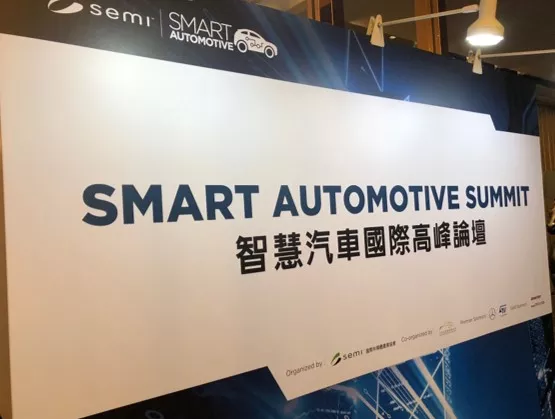
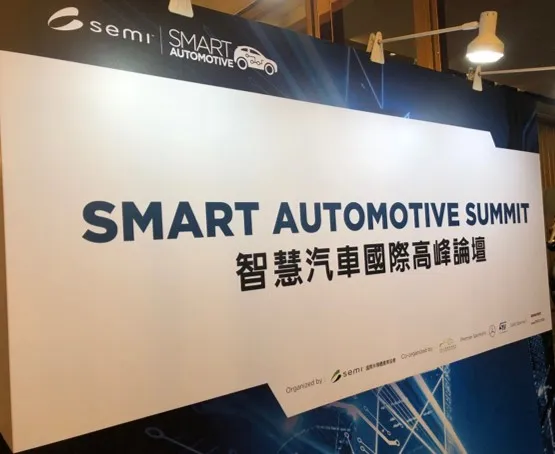
Are you ready for a shared economy where your transportation needs are no longer met by an automaker, but rather a “mobility service provider”? While smart transportation news has mostly focused on the likes of electrification (Tesla) and autonomy (Waymo), the real changes in transportation may be more fundamental than self-driving electric cars. According to presenters at this week’s Smart Automotive Summit at SEMICON Taiwan, new technologies won’t just make cars smarter: they will transform the way we see and use transportation in myriad ways.Constance Chen, public relations general manager for forum sponsor Mercedes Benz, opened with a brief overview of parent Daimler’s evolving approach to transportation, dubbed CASE, which stands for Connected, Autonomous, Shared and Services, and Electric.“The fundamental value of vehicles is changing,” Chen said, and car ownership is one of the biggest changes. Ride-sharing services like Uber and Lyft, and shared car services like ZipCar and DriveNow, are already addressing the transportation needs of a growing urban population that eschews car ownership. Traffic congestion, parking challenges, and a desire to improve air quality are key drivers (no pun intended) moving people away from car ownership to embrace shared transportation solutions.Indeed, societal considerations are as challenging as some technological hurdles facing autonomous vehicle development. Robert Brown, Taiwan operations manager for Magma Electronics, listed his top five challenges for autonomous transportation: Perception (vision, sensors) Assessment (ability of systems to analyze data) Control (need for faster-than-human response) Communication (vehicle-to-vehicle, vehicle-to-everything) Expectations—specifically people’s expectations of the value autonomous transportation should deliver As people change the way they view transportation and begin to understand what is possible when they can relinquish control of their vehicle, they’re transportation needs and expectations are likely to change. The challenges are, of course, also an opportunity to deliver a wide range of services, including information, entertainment, and retail, which opens the door for traditional carmakers to position themselves more as service providers like Mercedes Benz.For those who have grown up with traditional car ownership and the perceived freedom that owning allows one to go anywhere at anytime, the idea of giving up their car—one that they drive themselves—might seem beyond the pale. But as ride-sharing services are already showing, a growing portion of our population seems more than ready to embrace a shared and autonomous future.The SEMICON Taiwan Smart Automotive Summit is part of SEMI’s Smart Transportation initiative focusing on automotive electronics, a top priority for SEMI and its 2,000+ members. SEMI’s industry standards, technology communities, roadmap efforts, EH S/regulatory activities and other global platforms and communities bring together the automotive and semiconductor supply chains to collaborate, increase cross-industry efficiencies and shorten the time to better business results.Michael Droeger is director of marketing at SEMI.
Read More
In Tokyo, Shanghai, Moscow, London, Paris or New York – wherever you are in the world –Japanese vehicles passing by on the roadways are a common sight. Three big reasons are their high quality, reliability and engineering. But Japan’s automakers are also legendary for their industry breakthroughs. A few highlights: In 1981, Honda introduced the first commercially available map-based car navigation system. The carmaker’s Electro Gyro-Cator used a gyroscope to detect rotation and other movements of the car. In 1990, Mazda equipped its COSMO Eunos with the world’s first built-in GPS-navigation system. In 1997, Toyota launched the world’s first mass-produced hybrid car -- Prius. In 1997, Toyota unveiled the world’s first production laser adaptive cruise control on its Celsior. In 2009, Mitsubishi rolled out the world’s first mass-produced electric car – i-MiEV. Off the roadways and often unheralded, it is supply chain companies including Japanese semiconductor makers that were a key engine of these innovations as they continue their rich history of driving automotive advances. Here’s a closer look at some of the key players and why they matter.Who Makes Automotive Semiconductors?Unlike other semiconductors, automotive chips are manufactured not only by integrated device manufacturers (IDMs) but also by captive fabs and automotive components makers such as Toyota and Denso.Denso, headquartered in Aichi prefecture, started in 1949 as a spin-off of Toyota’s electric components unit. Since 2009, the company has been the world’s largest automotive components supplier. Because Denso’s chips are mostly consumed internally, the company’s manufacturing revenue is not publicly available, but analysts estimate Denso’s chip business exceeds 200 billion JPY or USD $1.9 billion.Denso manufactures semiconductor components at two locations. Its Kota plant in Aichi prefecture manufactures power and logic chips, and the company’s Iwate (Iwate prefecture) facility, acquired from Fujitsu in 2012, produces semiconductor wafers and sensors.Denso Fab (Photo: Denso)Denso is developing SiC wafers for its power chips and plans to manufacture SiC inverters by 2020. Recently, the company announced joint research on Ga2O3 for power devices with FLOSFIA, a tech startup spun off from Kyoto University. In 2017, Denso established a semiconductor IP design company, NSITEXE, in Tokyo to design semiconductor IP cores – the semiconductor components that are key to autonomous driving.Toyota has been manufacturing semiconductor chips at its Hirose Plant since 1989. The semiconductor fab design and manufacturing technologies originated at Toshiba and moved to Toyota under a technology transfer agreement signed in 1987. In the power semiconductor arena, Toyota is jointly developing SiC devices with Denso and Toyota Central Research and Development Labs.Other car and component makers like Honda, Nissan, Hitachi Automotive Systems, Aishin Seiki and Calsonic Kansei are also developing and designing semiconductor chips.Microcontroller Units Microcontrollers (MCUs) were first employed in automobiles in the late 1970s to electronically control engines for higher fuel efficiency. Today, up to 80 MCUs are typically used in a car for powertrain controls (engine, fuel management and fuel injection), body controls (seat, door, window, air conditioning and lighting), safety controls (brake, EPS, suspensions, air bags and anti-collision) and infotainment.In December 2015, the microcontroller unit (MCU) supply chain experienced a major consolidation with the nearly $12 billion acquisition of Freescale Semiconductor by NXP Semiconductors, catapulting NXP to the top of the MCU market. NXP and Freescale were ranked second and third in global market share, after Renesas Electronics, at the time. Renesas held 40 percent global market share before its Ibaraki fab suffered severe earthquake damage in 2011 and hemorrhaged share after the loss of production capacity. Renasas continues to recapture market share at a rapid clip, with a growth rate of 5.2 percent and 24.6 percent, respectively, in the first two quarters of 2017, and claims it still leads the global MCU market for automotive applications with 30 percent share (source: Diamond Online, August 2017).Renesas was established as a joint venture of Hitachi and Mitsubishi and later merged with NEC Electronics. Consequently, Resesas’s MCUs, designed with Hitachi’s SH MCU cores, recently began a gradual shift to Arm cores. Renasas MCUs designed at 40nm or less nodes have been manufactured at TSMC, a Taiwan foundry, since 2012.CMOS Image SensorsCMOS image sensors serve as eyes of cars, performing camera functions on-chip. Today, automobiles typically are fitted with about 10 CMOS image sensors, a number forecast to grow to almost 20 by 2020 (source: Monoist, 2016). The sensor was originally used as a backup monitor but deployments grew with the advent of Advanced Driver-Assistance Systems (ADAS). The CMOS image sensor market is estimated to reach $2.3 billion USD by 2021, according to IC Insights. Sony is the global CMOS image sensor market leader, and ON Semiconductor and OmniVision Technology are big players in this growing segment.In 2016, Denso started using Sony’s CMOS image sensors to detect pedestrians during night driving. Sony manufactures CMOS sensors at Kumamoto TEC and Nagasaki TEC on Kyusyu Island. In 2017, Sony acquired Toshiba’s Oita plant to increase the capacity to respond to the growing demand for backside illumination CMOS image sensors for higher resolution images at a low-light environments.Sony’s 7.42 megapixel CMOS image sensor for automotive cameras (Photo: Sony Corporation)Power DevicesPower semiconductors provide electrical control functions such as rectification, voltage regulation (boost/step-down), and DA/AD conversion. The automotive industry’s migration from fossil fuel vehicles to hybrid and electric vehicles is driving strong demand for power devices. The leading power device makers are competing to develop higher performance devices on new materials such as SiC and GaN.For the past five years, the Japan government has funded SiC power device research and development (R D) projects and, in 2016, the National Institute of Advanced Industrial Science and Technology (AIST) and Sumitomo Electric Industries built a 150mm SiC wafer line at AIST’s Super Clean Room Facility in Tsukuba, Ibaraki. The facility supports volume manufacturing, reliability testing and quality assurance.Rohm is driving the Japan SiC power device industry. Rohm manufactures SiC power devices on 75mm, 100mm and 150mm wafers. In 2009, Rohm acquired a German SiC wafer maker, SiCrystal, which started supplying 150mm wafers to Rohm in 2013. Rohm also acquired Renesas Electronics’s Shiga plant (200mm line) in 2016 to manufacture SiC power and other discrete devices.Fuji Electric manufactures various power products including SiC power devices. Fully 30 percent of its products ship to the automotive industry. In 2013, the company built a new SiC line in its Matsumoto plant that includes both wafer process and packaging facilities. Fuji Electric now develops high-performance SiC devices on the latest 150mm SiC wafer technology.Toyota and Denso round out the Japan SiC power device industry. Denso markets its 150mm SiC technology under the “REVOSIC” brand. In 2013, Toyota built a SiC R D facility at its Hirose plant for future SiC captive manufacturing.SiC power semiconductors to improve vehicle’s fuel efficiency by 10 percent (target) (Photo: Toyota Motor Corp.)
Read More