downloadGroupGroupnoun_press release_995423_000000 copyGroupnoun_Feed_96767_000000Group 19noun_pictures_1817522_000000Member company iconResource item iconStore item iconGroup 19Group 19noun_Photo_2085192_000000 Copynoun_presentation_2096081_000000Group 19Group Copy 7noun_webinar_692730_000000Path
Skip to main content
Default Banner Image

global advocacy

The new Administration in the United States has been aggressively focusing on trade measures to establish more balanced relationships with its trading partners, according to the White House.Over the last several weeks, President Trump declared a U.S. economic emergency and announced a universal 10% tariff on all countries, which went into effect on April 5, 2025. There are also levies that Trump has called “reciprocal,” including a 34% tariff on Chinese goods and a 20% tariff on European Union imports, that started on April 9.Previously announced 25% tariffs on foreign-made autos and certain auto parts are also now in effect.Presently, finished semiconductors are exempt from these tariffs, however, a Federal Register notice provided the following update:On April 1, the Secretary of Commerce initiated an investigation under section 232 of the Trade Expansion Act (19 U.S.C. 1862) to determine the effects on national security of imports of semiconductors, semiconductor manufacturing equipment (SME), and their derivative products. This includes, among other things, semiconductor substrates and bare wafers, legacy chips, leading-edge chips, microelectronics, and SME components. Derivative products include downstream products that contain semiconductors, such as those that make up the electronics supply chain. The SEMI Advocacy team is working side by side with member companies in the U.S. to prepare industry’s response for the public comment period tied to the 232 investigation. Comments are due May 7. (Update: SEMI comments submitted.)SEMI has been tirelessly working to educate new policymakers and regulators about the negative impacts the proposed tariffs have on the semiconductor industry. Ajit Manocha, President and CEO of SEMI, and Joe Stockunas, President of SEMI Americas, have been to Washington, D.C. for a series of meetings with administration officials and on Capitol Hill. Clarity on the recent tariff announcements — and guidance on what could come next — has been at the top of the agenda. Additionally, many member company executives recently attended the SEMI Washington Fly-In to advocate for policies that support the global supply chain on Capitol Hill, and the topic of tariffs was of the highest priority for congressional staff.Considering the complexities of the semiconductor industry supply chain, U.S. companies must rely on highly specialized materials, equipment, and components sourced from multiple countries. Strategically deployed and comprehensively assessed trade actions ensure that U.S. businesses maintain market access to critical supplies and remain globally competitive.Additionally, SEMI has highlighted that through fair and reciprocal trade practices, the U.S. can avoid unintended cost increases, supply chain disruptions, and ultimately any risks to American competitiveness in the global marketplace. Coordinating trade policies with allies prevents retaliatory tariffs for industries critical for national security, such as the semiconductor industry, and keeps costs competitive for consumers and industries, all while fostering a more resilient domestic manufacturing ecosystem. Semiconductor companies make substantial investments in building new facilities, and policy stability and predictability are key factors in site selections. With governments around the world putting incentives in place to bolster their semiconductor ecosystems, and to attract industry investments and good-paying jobs, public-private synchronization on trade policies is crucial to help the U.S. meet its technology innovation goals.Visit SEMI Global Advocacy to learn more about public policy efforts and developments as well as how your company or organization can get involved.John Cooney is VP, Global Advocacy Public Policy at SEMI.
Read More
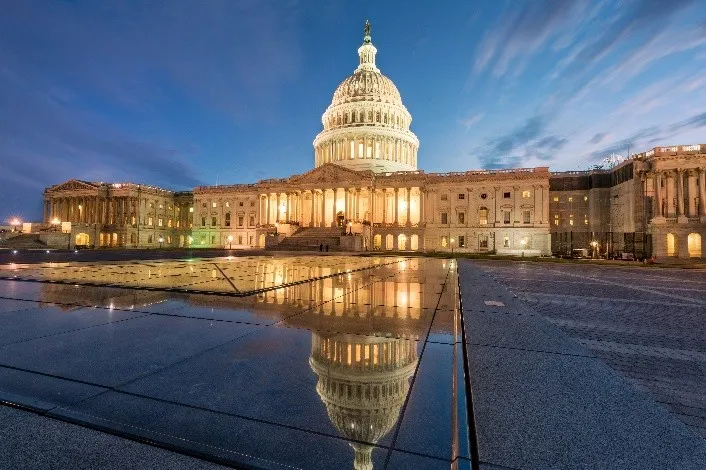
On April 8-9, 2025, bees on cherry blossoms lining the streets of Washington D.C. were not the only things buzzing. The word “tariffs” floated in the air from TVs and conversations throughout Capitol Hill, as people eagerly awaited the implementation and response to United States President Donald Trump’s latest round of far-reaching trade policy. This was the backdrop for this year’s SEMI Washington Fly-In, hosted annually by the SEMI North America Advisory Board (NAAB), which gathered representatives from member companies to meet with government officials and advocate for policy changes vital to the semiconductor industry’s continued growth and innovation.SEMI executives and more than 50 representatives from member companies across the end-to-end semiconductor supply chain participated in the Fly-In. SEMI President and CEO Ajit Manocha, SEMI Americas President Joe Stockunas, and SEMI Vice President of Global Advocacy and Public Policy John Cooney met with Trump administration officials from the Department of Commerce. Reflecting the global reach of SEMI, Manocha traveled from Washington to Brussels for meetings with the European Commission. On April 8, Stockunas presided over a NAAB meeting, followed by a dinner and prep session for meetings with Congressional members and their staff the following day. Building on the priorities outlined in the briefing book prepared by Cooney’s Advocacy team in Washington, participants discussed priority messages to convey tailored to the specific officials.Focus topics included:Tariffs and Trade – Address the buzz of the day’s news cycle by spotlighting the challenges of multiple layers of tariffs facing U.S. operations due to the industry’s global supply chain.Export Control Policy – Revise export control rules to be narrow and focused with increased transparency to minimize uncertainty for companies contributing to the world’s most complex manufacturing processes.Tax Policy and Investment Incentives – Extend tax credits set to expire and expand them to include semiconductor material suppliers and packaging facilities to bolster the full semiconductor ecosystem.CHIPS Act Implementation – Streamline implementation and ensure that the full intended scope of the CHIPS Act is maintained to meet the goals of the bipartisan legislation.Workforce Development and Immigration – Highlight the need for multi-layered programs – from education to apprenticeships through career development – required to provide the skilled workforce that will underpin domestic industry expansion.Energy and Environment – Showcase the need for strong R D programs, industry-led standards, and permitting reforms to help the semiconductor industry address booming energy requirements to power Artificial Intelligence and meet the resource needs of the growing domestic chipmaking ecosystem.PFAS Regulation and R D Needs – Prioritize regulatory actions that take a risk-based approach to PFAS and other chemicals critical to semiconductor manufacturing, as well as R D to improve environmental controls and identify potential alternative substances.SEMI organized four groups by U.S. region – East, Midwest/South, Southwest and West – comprised of representatives from member companies with operations in the respective states of the Senate and House of Representative offices scheduled for meetings at Capitol Hill. On April 9, the groups met with Members of Congress and their staff from 20 of the nation’s states, including Arizona, Arkansas, California, Colorado, Delaware, Idaho, Kentucky, Louisiana, Massachusetts, Michigan, Minnesota, New Mexico, North Carolina, Ohio, Oregon, Texas, Utah, Virgina, Washington and West Virginia. The groups shared powerful perspectives, data and anecdotes on the impact of policies on their companies’ operations. While the groups for the SEMI Washington Fly-In included representatives from companies that are fierce business rivals, the focus of the discussions successfully presented a unified industry voice highlighting shared challenges, policy recommendations, and request for support – in true SEMI “Stronger Together” spirit.News of a 90-day pause on most tariffs broke while the groups were conducting their meetings. The intense difficulties of tracking changes on tariffs and other policies permeated throughout the conversations on the impact on business decision-making. While influencing policy changes will not occur instantaneously, the SEMI Washington Fly-In bolstered the SEMI Global Advocacy team’s ongoing efforts to educate officials on the nuances and critical importance of the complete semiconductor supply chain. Additionally, the discussions emphasized the policy modifications that will have the greatest impact in helping the industry continue its lasting legacy of innovation that improves the quality of life for people in the U.S. and around the world.On April 11, the Customs and Border Patrol issued an addendum to the tariff exemption list that did not result in a complete exemption for the semiconductor supply chain. President Trump posted afterward on social media: "We are taking a look at Semiconductors and the WHOLE ELECTRONICS SUPPLY CHAIN in the upcoming National Security Tariff Investigations."Traditionally, such investigations have been conducted over a prolonged period of time for the government to collect data directly from companies and solicit feedback from industry. If past precedent remains, this will represent the first formal opportunity for industry to engage on the Administration's tariffs. The President has stated that his plans for tariffs on semiconductors will be unveiled this week.Visit SEMI Global Advocacy to learn more about public policy efforts and developments, and SEMI Workforce Development for more information on efforts to address the microelectronics industry’s talent needs.Samer Bahou is Director of Marketing Communications at SEMI.
Read More
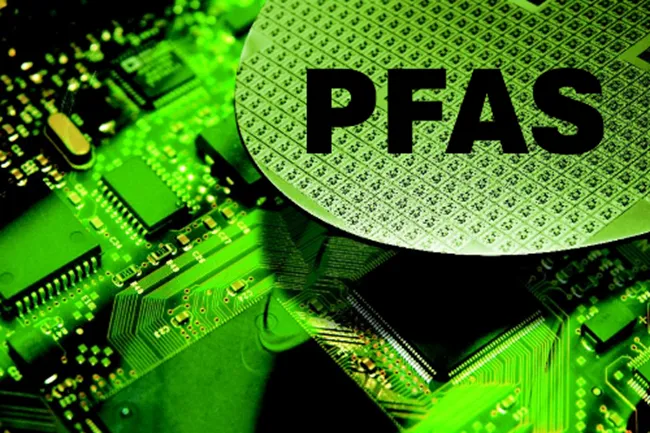
Per- and polyfluoroalkyl substances (PFAS) are a large class of thousands of synthetic chemicals that are used throughout the semiconductor industry in the form of gases, liquids, and solid high-molecular weight polymers, due to their wide range of physical and chemical properties. PFAS contain carbon-fluorine bonds, which are one of the strongest chemical bonds in organic chemistry, allowing them to resist degradation and to cover long distances away from the source of their release.In recent years, the high persistence of PFAS in both the environment and the human body has encouraged the European Chemicals Agency (ECHA) to launch a PFAS restriction proposal aiming to regulate and eliminate their use over the next few years. The proposal is currently under assessment by ECHA’s scientific committees for Risk Assessment (RAC) and for Socio-Economic Analysis (SEAC).PFAS in the Semiconductor Industry The exceptional physiochemical properties of PFAS provide them a high degree of functionality in semiconductor manufacturing across the entire supply chain, and often the combination of their properties allows manufacturers to satisfy multiple and overlapping technical requirements.While the industry recognizes the importance of transitioning away from PFAS, and research to that effect is ongoing, current technological limitations do not allow the industry to manufacture semiconductors without the use of PFAS or to discover scientifically viable alternatives that can effectively substitute their use.At this point in time, no known alternatives exist for most of the uses of PFAS by the semiconductor industry. Alternative substances must be researched, invented and potentially applied into mass production to be recognized as viable alternatives. Many different pathways will have to be explored as PFAS are currently used across the entire supply chain for over 1,000 semiconductor applications, including articles, support equipment and fab operations, or as process chemicals.SEMI Europe—European Semiconductor Industry Association (ESIA) PFAS Research Workshop Considering the criticality of the PFAS issue for the semiconductor industry, SEMI and the European Semiconductor Industry Association (ESIA) have greatly strengthened their joint advocacy efforts over this past year concerning the ECHA’s PFAS restriction proposal.In this regard, SEMI and ESIA successfully organized a workshop in October 2023 with the relevant representatives of the European Commission (DG GROW, DG ENV, DG CNECT and DG RTD) to present and discuss in-depth the key technical evidence for the use of PFAS is the semiconductor sector. The discussions built upon the extensive technical evidence that was presented by SEMI and ESIA in their respective submissions for the six-month PFAS consultation facilitated by ECHA.Following the successful execution of this first workshop, there was a keen interest from the European Commission to enquire further upon the current state of play of research and development efforts in the field of PFAS detection, abatement, capture and destruction, circularity, recycling and alternativesFor this reason, after the first workshop, ESIA and SEMI collaborated to develop and deploy a joint PFAS Survey aimed at identifying the research priorities in PFAS from the perspective of their member companies. Based on the survey outcomes, the associations compiled the SEMI–ESIA PFAS Research Roadmap and officially presented it to the representatives of the European Commission during a follow-up workshop on 13th June 2024. Discussions at the workshop focused on the key research priorities for the semiconductor industry to discover potentially viable alternatives to the use of PFAS. In the upcoming legislative period, SEMI Europe will continue to engage with relevant stakeholders to contribute to the political debate and encourage a legislative framework that can enhance sustainability across industrial supply chains while preserving Europe’s technological competitive advantage. Get InvolvedGet involved in the SEMI PFAS Working Group! The SEMI PFAS Working Group is composed of industry technologists from leading companies across the global semiconductor manufacturing supply chain. The working group meets regularly to share intelligence and develop strategies to earn exemptions and/or extensions from regulators. Join SEMI in this crucial effort to enable the industry to continue manufacturing chips vital to the prosperity of the world by contacting [email protected]. Stefano Orlando is Manager Advocacy and Public Policy at SEMI Europe.
Read More
On Monday, SEMI led a statement from a coalition of industry groups calling on governments worldwide to harmonize their policies to safely allow essential international travel by essential workers. Cross-border mobility in the semiconductor and microelectronics industry is vital to maintaining manufacturing critical to the production of semiconductor devices that are the foundation of our modern economy, countless economic sectors and each nation’s response to the COVID-19 pandemic. Uniform cross-border travel rules impacting essential businesses in the electronics supply chain are crucial for semiconductor business infrastructure and supply chains to maintain effective operations.To that end, SEMI is urging governments around the world to permit international travel by semiconductor supply chain engineers, technicians and executives with minimal disruption to ensure any fast-tracked procedures apply directly to the semiconductor industry and that any agreements negotiated among countries harmonize global travel procedures and processes. Global supply chains require cross-border travel by key technical personnel and business continuity decision-makers to ensure that essential industry manufacturing and business operations remain efficient, effective and uninterrupted. While the industry continues to implement safety protocols and minimize non-essential travel to stem the spread of COVID-19, highly sophisticated equipment sets and materials usage from multiple nations will at times require specialized expertise that is not present in-country.For example, technicians from a semiconductor manufacturing equipment company typically must travel to semiconductor factories in other countries to install or repair specialized tools in situations that are beyond the expertise of the local field office and too complicated to handle by video conference. Similarly, at times semiconductor-based solutions, such as cloud computing, must be implemented or optimized on-site for the equipment to achieve full capacity. After months of remote access to their overseas operations, it also is critical that executives are able to visit their facilities to evaluate and manage their ongoing operations. In the past month, several countries central to the global electronics supply chain have engaged in both formal and informal talks to ease travel restrictions on personnel from essential industries. China, for example, is negotiating fast-track travel protocols with countries throughout Asia and Europe. On May 1, China and South Korea formalized an agreement that has made significant accommodations for semiconductor industry personnel to travel between the two countries. Last week, China and Singapore reached a similar deal – planned to take effect in early June – prioritizing travel for both executives and technicians.Beyond China, several ad-hoc negotiations are underway involving countries as varied as Taiwan, Vietnam, South Korea, Thailand, Canada, Australia and New Zealand. Multilateral discussions are also afoot with the aim of setting up bubble travel zones featuring standard health and travel protocols within the country blocs. As these disparate agreements between individual countries or small blocs of countries take shape, however, they are likely to create divergent standards that may complicate efforts of global businesses to effectively service their operations and customers, even if such travel is and has been deemed essential.In March, when U.S. states and many governments around the world began implementing stay-at-home orders and closing non-essential business operations, SEMI immediately took a lead role advocating to ensure that that the entire microelectronics supply chain was deemed essential and able to continue operations. In the U.S., nearly every state followed SEMI’s recommendation to adhere to the Department of Homeland Security’s Cybersecurity and Infrastructure Security Agency (CISA) guidelines that included semiconductor manufacturing and its supply chain as essential, or specifically highlighted semiconductor supply chains as essential. Overseas, SEMI advocacy worked to ensure the semiconductor supply chain was deemed essential in every key jurisdiction.The mobility of essential workers is critical to essential business operations in the electronics supply chain. Just as SEMI led the effort to ensure that critical electronics supply chain operations were deemed essential as economies were closing down, SEMI will continue to advocate for uniform essential travel guidelines for critical infrastructure workers as economies reopen. Karl Kailing is manager of Public Policy and Advocacy at SEMI.
Read More
Global and regional forces shaping the $2 trillion electronics industry have intensified more in the past few years than at any other time I can recall. The uncertainty bred by trade wars, corporate tax changes, new environmental regulations, immigration issues and STEM talent shortages is vexing the global microelectronics supply chain as companies shift investments and operational strategies to adjust to the unrelenting change and new realities with heightened urgency.In our industry, an increasingly dynamic world requires a more determined and strategic approach to advocacy. To meet the industry’s rapidly evolving needs, SEMI is transforming its global advocacy initiatives and programs. In the past 18 months, we have honed the focus of SEMI Global Advocacy to better serve member interests and needs, respond more quickly to fast-moving geopolitical developments, and deliver more value to help spur growth across the end-to-end electronics supply chain.Most importantly, SEMI Global Advocacy is now much more forward-looking and proactive. We have expanded our focus from primarily U.S. and independent regional issues to global affairs, allowing us to better leverage the power of our worldwide platforms. Organizationally, SEMI continues to add specialized staff advocates and calibrate its operational and member-driven engagement models to increase their involvement. There will be more to come, and with your continued support, we’ll be in a stronger position to meet your needs. Thank you!Strengthening the industry’s voiceThe rapid shift to a more proactive advocacy approach across all our initiatives was triggered by one disruptive action a little more than a year ago – the buildup and onset of the trade war between the United States and China. From the outset, SEMI formed strong member coalitions to intensify our lobbying efforts, met frequently with policymakers, submitted written comments to government panels, and issued public communications, all aimed at amplifying our collective voice. SEMI has taken a principled approach to advocacy, publicly stating its positions based on its trade pillars of free and fair trade/open markets, supply chain growth, respect for IP and national security.That approach was on full display as Japan tightened controls on exports to the Republic of Korea, sending shockwaves through the microelectronics industry. To minimize the industry impact, we leveraged our global reach and the counsel of our International Board of Directors to engage with both governments early on and ensure that Japan took into account our members’ interests in developing and implementing the new rules. In general, SEMI opposes the use of tariffs and limiting market access as levers to correct trade imbalances and other structural issues. Instead, we support dialogue and negotiations that lead to multilateral agreements aligned with our members’ interests and global trade principles.This year in the U.S. alone, SEMI advocates have met with more than 70 policymakers in Washington, D.C., including members of Congress and representatives from the White House, federal agencies and the Trade Representative’s office. We have also spoken with representatives from European and Asian government delegations. Since the trade war erupted, we have met with more than 220 policymakers worldwide, giving SEMI a seat at the table – a louder voice for our members – as we are increasingly seen as the voice of the end-to-end electronics manufacturing and design supply chain. SEMI Global Advocacy has also broadened its focus beyond public policy to address other areas of strategic importance to the industry such as the talent shortage.Expanding Advocacy’s global influenceSEMI’s public policy efforts now reach well beyond Washington, D.C. to all seven major manufacturing centers worldwide where we have regional offices, with SEMI advocacy staff in every location. This has created a network multiplier effect that allows us to rally our collective strength around common member interests. It’s no coincidence that our member-driven advocacy initiatives and programs have improved in parallel with expanded global participation by our member companies on our various policy and advocacy committees.Our Trade Advisory Committee, for example, has grown from 16 to 60 active members in the past year alone. This year, we have also formed working groups with SEMI members around the world to address talent pipeline challenges. The upshot is that we are now much more focused in attacking regional issues. Thank you once again.Despite changes in the strategic approach of SEMI Global Advocacy, we remain squarely focused on critical issues affecting industry growth and our members’ interests. In a nutshell, we call these the four T's: Tax – We strive to encourage rates that are fair to all companies, leveling the playing field globally Technology – We seek government investment in technology and innovation (R D) Trade – We advocate for open markets, free and fair trade as we promote our 10 Principles for the Global Semiconductor Supply Chain in Modern Trade Agreements worldwide Talent – We support education investments and immigration policies that provide opportunities and build the talent pipeline In addition, SEMI has long been a leading voice in promoting Environment, Health and Safety regulations that enable industry growth and demonstrate environmental stewardship – and we continue to make investments at this critical juncture as new technologies are driving changes in the regulatory landscape.Maintaining laser focus on member priorities amid shifting geopoliticsThe only way for SEMI Global Advocacy to navigate the cauldron of geopolitical disruption is to remain laser-focused on our members’ top priorities including trade, tax, technology and talent. And we will stick to what SEMI has done best for almost 50 years – facilitate public-private collaborations and more investment on behalf of our members.In workforce development, SEMI is taking bold steps to develop a robust talent pipeline, as much a growth and innovation driver for SEMI members and the industry as any technology. Announced earlier this year, SEMI Works™, our landmark talent development initiative, is already gaining steam with U.S. government investment and our rapid progress in laying its foundation with a database of standardized competencies for technical jobs as well as a certification and credentialing process for curriculum, education and training programs.The future for SEMI members and the industry is brimming with possibility. The strides SEMI Global Advocacy has made over the past year have only been possible through your support and involvement. As we broaden our scope beyond policy, we recognize that more progress needs to be made. We look forward to your continued participation as, together, we help our industry fulfill its great potential.Mike Russo is Vice President of Global Industry Advocacy at SEMI.
Read More