downloadGroupGroupnoun_press release_995423_000000 copyGroupnoun_Feed_96767_000000Group 19noun_pictures_1817522_000000Member company iconResource item iconStore item iconGroup 19Group 19noun_Photo_2085192_000000 Copynoun_presentation_2096081_000000Group 19Group Copy 7noun_webinar_692730_000000Path
Skip to main content
Default Banner Image

robotics

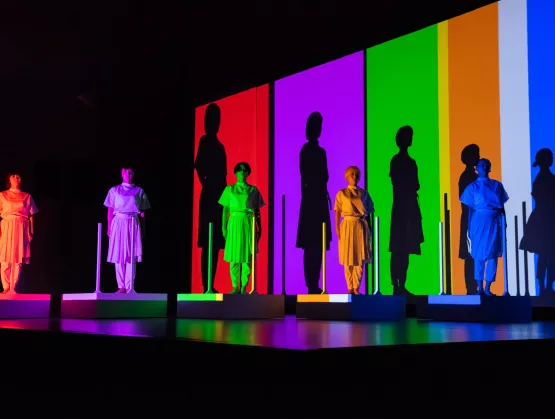
Five young dancers bathed in a striking rainbow of colors with their silhouettes cast in the background dazzled SEMICON Japan 2018 attendees at the opening ceremony in mid-December. Gone were the standard opening keynotes and ribbon cutting, replaced by live performance and media art set against a dramatic black backdrop. There was no mistaking the wide-eyed looks of wonder in the audience.In its sheer vibrance, the opening ceremony thrilled with an excitement that seemed to embody the extraordinary growth expectations for the global semiconductor supply chain over the next five years, with the industry poised to double sales from $2 trillion to a staggering $4 trillion – a phenomena SEMI president and CEO Ajit Manocha has called The Rebirth of the Semiconductor Industry. Driving this unprecedented growth will be SMART applications that are transforming industries and applications worldwide, powered by artificial intelligence (AI) and Internet of Things (IoT) technologies.The dramatic scene at SEMICON Japan 2018 was staged by Rhizomatiks, a media arts company that produced the Rio Olympic Games closing ceremony and is famous for its pop music spectacles. The company’s CTO, Motoi Ishibashi, the event’s first keynote speaker, described his team’s development of drones and vehicles guided by motion and precision-control technologies. It was some of these SMART vehicles that maneuvered the opening ceremony performers from the dance company Elevenplay onstage. Only Rhizomatiks, Ishibashi said, has this capability. In its mission to enrich people’s lives through new media arts, Rhizomatiks uses the latest virtual and mixed-reality technologies to orchestrate not only dance performances but music videos, commercials, fashion shows and festivals.Toru Nishikawa, the second keynote speaker and CEO at Preferred Networks, a leading Japan-based developer of deep learning software programs, surprised the SEMICON Japan audience with his discussion of his company’s work to develop a specialized chip for deep learning processing, joining technology giants Apple, Google, Alibaba and Microsoft in chip design. As more IT and software companies develop specialized, differentiated chips, the devices are quickly becoming the heartbeat of SMART technologies. The company’s approach has taken hold. Only four years old, Preferred Networks is enjoying rapid growth by working with global powerhouses including Toyota, NTT, Panasonic, Fanuc, NVIDIA, Intel and Microsoft. Ishibashi’s and Nishikawa’s fresh visions and the media arts extravaganza reflected the success of SEMICON Japan, held again at Tokyo Big Sight: The event’s 1,881 booths – filled by 727 exhibitors from 14 regions – was the highest count in six years. With Japan home to companies that supply about 40 percent of semiconductor equipment and materials worldwide, top suppliers historically have occupied the largest spaces on the SEMICON Japan show floor.According to IDC, personal computers and smartphones, long the largest revenue sources for the semiconductor industry, will remain top revenue drivers in the coming years. But revenue from new SMART technologies for applications such as automotive and factory automation is growing, a trend expected to continue with a 2018-2022 CAGR of 9.5 percent for automotive and 5.2 percent for manufacturing, compared to 1.1 percent for PCs and 2.9 percent for smartphones.SEMICON Japan’s new SMART Applications zone highlighted these and other new market opportunities for semiconductor growth with product and technology exhibits from companies including Bosch, IBM, Microsoft, NEC, Preferred Networks, Sony, SAS, Siemens, Tesla and Toyota. But the zone wasn’t all work and no play. The ROBOT SQUARE and SPORTS x IOT robot exhibits took visitors back to their school days, with robot anime – from Astro Boy to Gundam and Evangelion – that they could ride and control! As the World Gets Smarter, So Must SEMICON and the IndustryWe all agree the world is getting smarter at a fast pace. New cars are easier to drive – some models are almost fully autonomous on highways and streets. Your SMART speaker has gone well beyond an audio playback device and is more like a home AI platform. Almost all storefronts are equipped with video cameras. Your workplace, whether an office or a factory, is driven by automation. The reliance of these environments and devices on semiconductors is driving exponential chip and changing the world. Businesses need to adapt and so do SEMICON events. We’re doing just that as SEMICON Japan 2018 demonstrated – from an opening ceremony enabled by technology innovation to new faces of the industry to the SMART Application zone. As the SEMICON Japan presidents’ reception concluded the first day of the show, a robot from the ROBOT SQUARE suddenly appeared in the reception hall in front of about 250 executives from the global industry. Everyone at the reception was impressed and stepped forward to the stage, reflecting the overall excitement about SEMICON Japan, which for many years showcased only chip manufacturing equipment and materials. This year, to keep pace with the changing world, it was much more than that.SEMICON Japan 2019 will again take place in December at Tokyo Big Sight. However, organizers of the Tokyo Olympics will be using the East Exhibit Hall usually occupied by SEMICON Japan to prepare for the games. As a result, SEMICON Japan will be held in the West and South Halls instead. Look for more changes to the event. I hope to see you next year!Jim Hamajima is president of SEMI Japan.
Read More
4 Key Takeaways from SEMI Taiwan Member ForumThe rapid development of artificial intelligence (AI) has accelerated the digital transformation in various industries and has now fused with Internet of Things (IoT) to exploit the value of both technologies in reshaping the electronics industry value chain. As it emerges from the shadows of its parent technologies, AIoT is giving rise to new opportunities in manufacturing, healthcare, transportation, and even energy. AIoT is fast rising in prominence as an enabler of key electronics manufacturing process improvements and the creation of add-on value to existing products – both critical to the success of many businesses.SEMI and the SEMI MEMS Sensors Industry Group (SEMI-MSIG) held a technical forum on smart sensing and its applications in AI and AIoT, inviting renowned experts in sensors and edge computing to share in-depth insights into the latest AIoT technologies and applications with more than 100 industry professionals in research and development, marketing and sales. Here are four key takeaways from the SEMI Taiwan member forum.1. Steady Growth for Global Sensors MarketThe global sensors market’s steady growth is expected to expand at a CAGR of 6.6 percent from 2017 to 2023, with Asia driving the biggest gains and automotive leading the segments – including healthcare and education – with the strongest growth. Automotive alone is expected to reach US$34 billion in 2023.2. Integration Critical to MEMS Sensors DesignsWith AI booming, MEMS sensor designs need to drive toward greater integration —not only integrating data collection with sensors, but also streamlining data processing on the backend – making 3D models of today’s MEMS mechanical designs critical. The differences between 3D and entrenched 2D models are dramatic, elevating the importance of specifying manufacturing steps in MEMS designs. As new sensors and applications continue to emerge, companies that develop the most powerful integrated designs will win. 3. Growth of Smart Voice-Control Applications to ExplodeAIoT is also accelerating the development of smart voice-control applications and the rise of new related business opportunities. Just 50 million voice-controlled devices shipped worldwide in 2017, a number predicted to swell to 436 million in 2021 with smart home devices such as set-top boxes and smart TVs the major growth drivers.4. AIoT Eyed to Make Human-Robot Collaboration SafeSafety is an essential feature for human-robot collaboration. Tactile sensing technologies give robots a layer of “skin” with capabilities rivaling human touch. To ensure humans and robots work together safely in work environments, sensors on this layer of skin are concentrated – less than 8mm apart, equivalent to the width of a human finger, with a response time of less than 5ms on contact. More than 4 million robots worldwide are expected to be upgraded with these sensing technologies and are on track for deployment in pilot plants in the next three years.SEMI-MSIG is committed to strengthening connections across all sectors in the MEMS and sensors supply chain, working closely with the industry to accelerate the development of related technologies and applications in both mature and emerging markets. In addition, SEMI-MSIG hosts regular events to inspire business opportunities and technology exchange for innovative applications, while enhancing the visibility of members among global customers and partners to help them forge new partnerships. To join the group, contact SEMI Taiwan’s Helen Chen at [email protected] Yi is a marketing specialist at SEMI Taiwan.
Read More
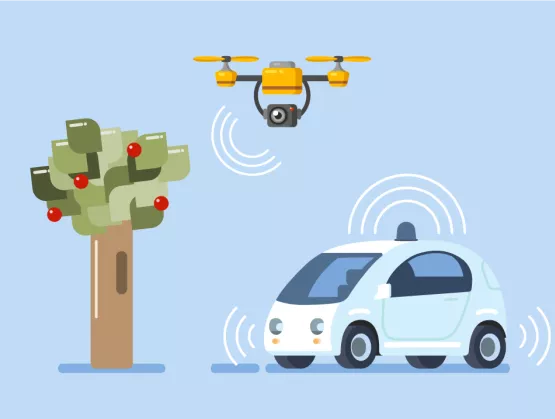
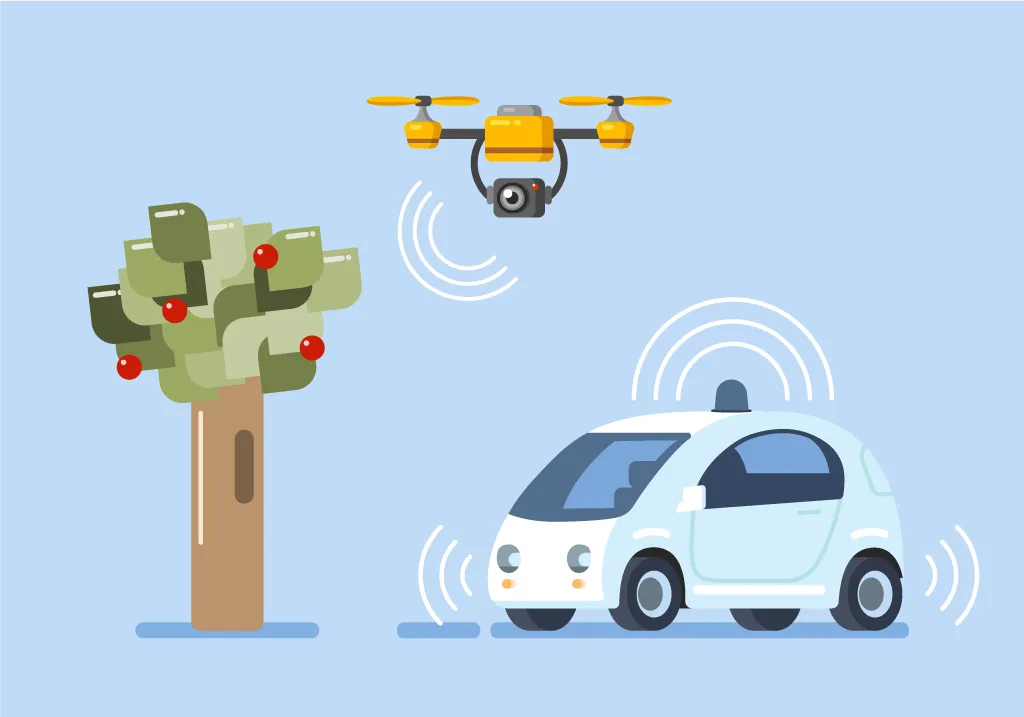
Nicolas Sauvage, senior director of Ecosystem at TDK InvenSense, will present at the fast-approaching MEMS Sensors Executive Congress on October 29-30, 2018 in Napa, Calif. SEMI’s Nishita Rao spoke with Sauvage to offer MSEC attendees advance insights on Sauvage’s feature presentation.SEMI: What is “autonomy value” and why is it important?Sauvage: How do you increase the perceived value of an electronic device? If it’s an autonomous car, its value is closely tied to the autonomy level — i.e., the independence — that it offers people. Higher autonomy value for a self-driving car, for example, means that even a blind person could use it. It’s been almost two years since Waymo demonstrated this, and here’s the video that shows it.Countless other sensor-based electronic products have their own “autonomy value.” Imagine the need to get medicine to people during a humanitarian health crisis. Drones could be your best option because they can deliver to inaccessible or remote locations. Unlike older drones, which require active piloting by a person, a drone with higher autonomy value could deliver medicine to Doctors Without Borders without ongoing human intervention.This drone could navigate objects, such as trees and birds, and would have excellent location-awareness. It could fly through any landscape in bright sunlight or during the night. To increase the drone’s autonomy value, you would need better sensors, including those sensors that can enable sensing in sunny conditions or in pitch-black night, as well as better machine learning.SEMI: In this example, what types of sensors would the drone manufacturer need?Sauvage: The manufacturer would need a “surrounding-sensing” solution that includes ultrasonic and pressure sensors as well as image sensors. Start with high-quality image sensors combined with ultrasonic range-finding sensors — high-accuracy devices that function in all lighting conditions and can detect objects of any color. Add motion sensors and a pressure sensor, which would capture the height of the drone to make known the drone’s location in space. The drone would need this combination of sensors, plus smart sensor fusion, because GPS alone cannot avoid obstacles: its signal can be sporadic in certain parts of the world or in certain terrain, making it unreliable.A key attribute of all these sensors would be low power consumption since the drone would run on battery.SEMI: To what extent might autonomy value cause manufacturers to consider multi-vendor solutions?Sauvage: I would like to see it inspire the MEMS and sensors ecosystem to work together, to arrive at multi-vendor solutions that will benefit humanity through greater autonomy value. Whether we’re looking at autonomous cars, drones, robotics or other applications, there are cases where we need to prioritize safety and security over industry competition. SEMI: Where are we today in terms of achieving true autonomy value – and where are we going?Sauvage: The sky is the limit, literally. Machine learning and surrounding-sensing solutions applied to cars, drones and robots will increase autonomy value to the point where we can justifiably call it artificial intelligence.SEMI: What would you like MEMS Sensors Executive Congress attendees to take away from your presentation?Sauvage: I hope that attendees will recognize the value of ecosystem solutions in increasing autonomy value. Together we can expand the variety of sensor types that address novel use-cases and jobs-to-be-done. Instead of waiting for customers to ask for ecosystem-level solutions, we need to articulate a complete MEMS and sensors supply-chain ecosystem if we want the Internet of Things (IoT) and Industrial IoT (IIoT) to grow more quickly. As senior director of Ecosystem, Nicholas Sauvage is responsible for all strategic relationships, including Google and Qualcomm, and other HW/SW/System companies. He is also responsible for strategic and market-driven goal-setting of our SensorStudio developer program, and driving select partnerships with SoC sensor hub platforms. Prior to joining InvenSense, Nicolas was part of NXP Software management team, responsible for worldwide sales, as well as for P L and product management of their OEM Business Line. Nicolas is an alumnus of Institut supérieur d’électronique et du numérique, London Business School and INSEAD. Register today to connect with Nicolas Sauvage at the event. You can also connect with him on LinkedIn.Nishita Rao is a marketing manager at SEMI.
Read More