downloadGroupGroupnoun_press release_995423_000000 copyGroupnoun_Feed_96767_000000Group 19noun_pictures_1817522_000000Member company iconResource item iconStore item iconGroup 19Group 19noun_Photo_2085192_000000 Copynoun_presentation_2096081_000000Group 19Group Copy 7noun_webinar_692730_000000Path
Skip to main content
Default Banner Image

Micron

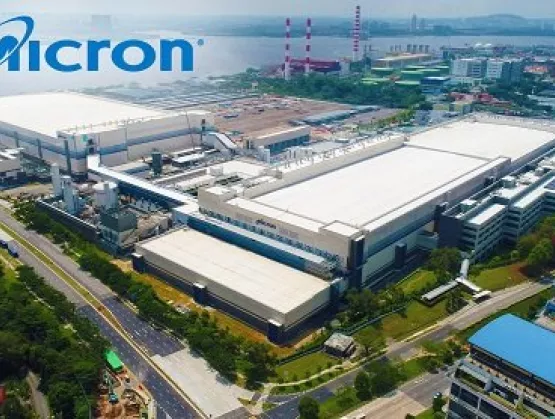
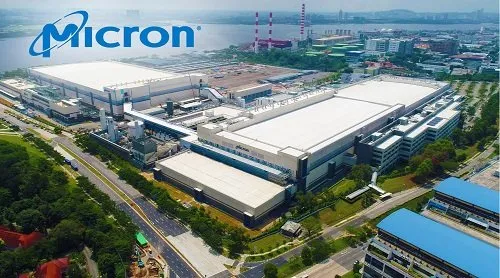
Making Strides TogetherKnowledge is power – especially when it is shared. This principle formed the foundation for Micron’s Go and See virtual visit of its Singapore manufacturing plant on 26 August 2020 as 27 companies including GLOBALFOUNDRIES, ST Microelectronics, Infineon, TEL, ViTrox , IBM, HP and UTAC joined the first-of-a-kind virtual factory visit. The chip industry powerhouses gathered to see how Micron’s Lighthouse frontend wafer fabrication facility leverages Fourth Industrial Revolution technologies to drive new production and cost efficiencies.They saw clear markers of a transformed organisation and spoke with working-level staff, managers and front-line employees. Company representatives also met virtually with Micron management teams from organisations that led its digital transformation – from pilot programs to integration at scale – to realise significant financial and operational benefits. The mix of technologies they deployed to make it all happen included artificial intelligence (AI), big data analytics and the Industrial Internet-of-Things (IIoT).Micron’s Singapore-based fab facility earned Lighthouse certification earlier this year from the World Economic Forum’s Global Lighthouse Network. The Go and See tour was co-sponsored by SEMI Southeast Asia and McKinsey Company.Transformation is CrucialBy embracing Lighthouse principles, semiconductor sectors and companies can accelerate their digital transformation to boost operational and financial efficiency while helping increase productivity across the electronics supply chain. It will take time for Southeast Asia semiconductor manufacturers to transform to digital operations, though we’re seeing growing interest in Industry 4.0 practices as they begin to understand that the deployment of new technologies and applications will help them better understand real-world benefits of smart manufacturing use cases and solutions. SEMI believes shining the spotlight on companies like Micron can illuminate the way forward for other companies to help drive the industry’s digital transformation. We look forward to seeing companies build on this momentum as they start to leverage leading-edge technologies to improve efficiencies and promote sustainability.Bee Bee Ng is president of SEMI Southeast Asia.
Read More
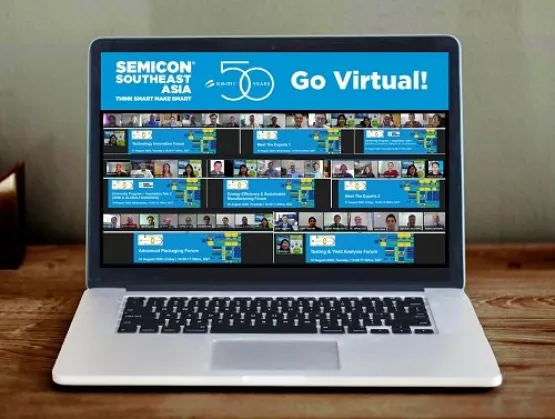
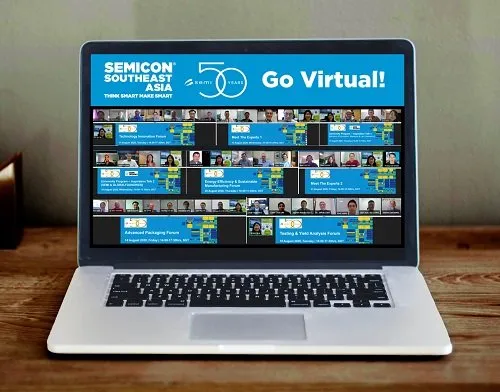
Never before had we expected that SEMICON SEA 2020 would go virtual.The COVID-19 crisis abruptly halted our ability to hold our premier Southeast Asia electronics manufacturing exposition as we typically do – in the physical realm. The pandemic tested our adaptability, challenged our willingness to experiment and, perhaps above all, accelerated not only our own but the world’s digital transformation. We had to change our way of doing business and learn to connect virtually like we had never had before. SEMI continues to believe that virtual interaction is no replacement for face-to-face engagement. But, like the rest of the world, we fast-tracked our digital education and staged the virtual event 20 July to 21 August 2020 to gather supply chain players and help fulfill the tremendous potential of our great industry. For all the suffering the COVID-19 has caused, the pandemic has underscored an important truth – that we need innovation through collaboration now more than ever to help solve the world’s greatest problems. We thank all our event sponsors as we turned what started as a grand experiment into a successful event that drew nearly 3,000 attendees to our webinars, business matching sessions and other online offerings designed to help them uncover new business opportunities. Following are other highlights. Southeast Asia Pavilion at Virtual SEMICON West 2020 In our first collaboration with SEMICON West, our Southeast Asia Pavilion at the event welcomed virtual visitors from around the globe to help them form new connections and grow their businesses. Business Matching Sessions Technical buyers from more than 15 multinational companies along with 141 pre-qualified suppliers attended more than 50 meetings across four online business matching sessions.Technical WebinarsCompany representatives from regions including Malaysia, Singapore, Vietnam, Taiwan, the United States, the UK, Israel, China and Japan shared their expertise and industry insights at SEMICON Southeast Asia 2020 webinars. In addition, experts from leading semiconductor companies such as Micron Semiconductor Asia Operations, ViTrox Corporation Berhad and A*STAR took part in our technical exchange by sharing the latest trends in the rapidly evolving semiconductor industry. Talent Development: Inspirational University Program Talks With building the talent pipeline critical to sustaining growth of Southeast Asia semiconductor manufacturing dynamics, talent champions from Lam Research and GLOBALFOUNDRIES highlighted career opportunities and pathways for young engineers while generating recruiting leads. More than 750 students from Malaysia and Singapore engaged panelists with questions during the sessions. The SEMICON Southeast Asia team extends its tremendous thanks to sponsors and attendees for their support. As we all navigate the pandemic and hope in the near future to awaken to a brighter day, we will continue to connect virtually and, whenever possible, in person as the semiconductor industry evolves and flourishes. The SEMICON SEA 2020 team In the meantime, we will all continue to pull together to support our resilient industry as it outperforms most other manufacturing sectors. Semiconductor capital equipment shipments were up 23% globally in the second quarter of 2020 versus the same period in 2019 and semiconductor chip growth remains in positive territory. Our team has already started planning for SEMICON SEA 2021, scheduled to take place at the Setia Spice Convention Centre in Penang, 18-20 May 2021.We look forward to seeing you again soon as we continue to strengthen the microelectronics ecosystem!Bee Bee Ng is president of SEMI Southeast Asia.
Read More
As the fight against COVID-19 presses ahead, many healthcare workers, especially those on the front lines, are being pushed to their limits and beyond to ensure our health and safety. To help doctors and nurses combat the virus, SEMI Taiwan mobilized six leading Taiwan semiconductor companies last month to donate personal protective equipment (PPE) designed for industrial operation to medical staff. The gear included powered air purifying respirators (PAPR), half facepiece respirators, head tops, protective coveralls, and air filter canisters.On behalf of the semiconductor industry, SEMI Taiwan worked closely with industry leaders and the government to deploy the direly needed resources to support the domestic medical community. The Taiwan Association of Medical Technologists accepted the donations in the ceremony attended by Taiwan CDC Deputy Director-General Chuang Jen-hsiang. The largesse is the result of public-private partnership to provide medical supplies to 35 hospitals and medical laboratories across Taiwan. Terry Tsao, Global Chief Marketing Officer and President of SEMI Taiwan, and six Taiwan semiconductor companies stepped up to help combat the coronavirus pandemic. TSMC Charity Foundation responded with PPE giveaways in March in a first wave of protective equipment donations to medical personnel. Before long, Vanguard International Semiconductor Corporation (VIS), ​​​​​​​​​​​Macronix, Micron, United Microelectronics Corporation (UMC), and 3M Taiwan also answered the call for more medical equipment for COVID-19 frontliners. Extending the Taiwan semiconductor industry’s rich tradition of making charitable contributions in the region, including financial assistance for emergency relief efforts, the companies donated more than 1,000 pieces of PPE after balancing the giveaway with inventory needs in their fabs. Fab workers responsible for machinery, raw materials, and other goods and gear used in semiconductor manufacturing wear the protective devices. One piece of equipment, powered air purifying respirators (PAPR), features a battery-powered that sends filtered air flowing into a hood or head top covering the wearer’s head or face to protect against respiratory hazards. In healthcare, PAPRs protect medical staff as they test blood and tissue samples for traces of COVID-19. Dr. N.S. Tsai, CEO of TSMC Charity Foundation, notes that respiratory protection equipment can offer integrated protection against multiple hazards and is comfortable for medical technologists working long shifts to wear. Medical facilities across Taiwan quickly depleted PPE supplies after the rapid response to the January outbreak by healthcare providers across the region led to quick containment. The PPE donations were critical in minimizing exposure risks to medical staff. The chip industry’s protective clothing and equipment offered another benefit: Medical technologists found the gear – designed to be worn over long periods in semiconductor manufacturing facilities – comfortable as they worked marathon shifts early in the COVID-19 outbreak. “Coronavirus testing requires a much higher level of protection than is needed in many healthcare settings,” said Chuang Jen-hsiang, the Deputy Director for the Taiwanese Centre for Disease Control (CDC) and the spokesperson of Taiwan Central Epidemic Command Center. “Medical technologists must work in a poorly ventilated labs for more than eight hours a day, causing sweating and damp heat. The high-performance PPEs provided by the industry help healthcare workers breathe more naturally without wearing a mask while greatly reducing infection risk in hot, humid environments.”For their COVID-19 response, Taiwan’s government and well-trained medical workers drew lessons from the SARS outbreak in 2003 to quickly activate emergency management structures to fend off the emerging threat – one that put the Taiwan semiconductor industry and its round-the-clock operations at risk.“Taiwan’s swift response to the COVID-19 was vital in preserving the business continuity that is the lifeblood of the semiconductor manufacturing,” said Terry Tsao, Global Chief Marketing Officer and President of SEMI Taiwan. “We are honored to do our part to support the heroes of this fight – the medical technologists on the front lines – as an expression of our great respect and gratitude for their extraordinary work.”SEMI Taiwan has long partnered with TSMC Charity Foundation to care for people in need, drive positive environmental and social changes, and support emergency aid in Taiwan. The goal our joint corporate social responsibility efforts is to warm the hearts of our people and build a better society.Irene Huang is a public relations and marketing specialist at SEMI Taiwan.
Read More
The world’s most advanced manufacturing factories are leading the way in driving efficiency and sustainability.In advance of its 2020 meeting, the World Economic Forum welcomed Micron into its Global Lighthouse Network, a group of advanced manufacturers “that are showing leadership in applying the technologies of the Fourth Industrial Revolution to drive operational and environmental impact.”For years, Micron has been helping clients integrate artificial intelligence (AI), big data analytics and the industrial internet of things (IIoT) into their factories. And now Micron’s factory is one of the first facilities in Singapore, along with Infineon, to be recognized by the Global Lighthouse Network.In a recent interview with Channel News Asia, Manish Bhatia, executive VP of Global Operations, explained how Micron has been practicing what it preaches: “Our products enable new technology trends such as IoT, 5G, cloud computing and autonomous driving. Applying these technologies in our own manufacturing facilities demonstrates the enormous potential in driving business value. Industrial IoT and artificial intelligence are part of the biggest revolution since the advent of robotic manufacturing productivity 50 years ago.”For Micron, this journey started with the need to “keep pace with the technological advancement of our semiconductor processes,” Manish said. “We wanted to provide higher-capacity, higher-performance, lower-cost and lower-power chips.”This meant embarking on the same journey they guide clients through: “We started by focusing in 2014 on simple statistical analysis to improve our production processes,” Manish said. “Following that, we developed more complex deep learning and AI capabilities to draw insights from our data. Most recently, we introduced IoT sensors — like cameras and acoustic sensors — to gather even more data that allows us to further improve our production processes.”The Singapore factory plays a critical role in developing leading-edge NAND. Micron’s Singapore presence, composed of two wafer-fabrication facilities and one assembly and test facility, serves as the base for worldwide operations. With over 500,000 square feet of cleanroom space, the location is also a designated NAND Center of Excellence, driving the implementation of the company’s leading-edge 3D NAND production for use in mobile phones, solid-state drives, digital cameras and more. Micron employs approximately 8,000 people in Singapore.The World Economic Forum says the results of the Singapore transformation have been spectacular: Micron’s “semiconductor fabrication facility has integrated big data infrastructure and IIoT to implement artificial intelligence and data science solutions, raising product quality standards and doubling the speed at which new products are ramped.”Below are notable achievements that Micron was recognized for: Automation of production and maintenance produced a 4% tool availability improvement. The IIoT-enabled smart factory led to a 22% scrap and product downgrade reduction. Advanced analytics for process optimization with OEMs reduced time to ramp new products by 50%. Deep learning optical-defect detection created a 2% yield improvement. The integrated deviation management platform reduced time to resolve quality issues by 50%. Micron was a natural choice for the Global Lighthouse Network, an organization whose creation is timely. The World Economic Forum points out that “global production industry is lagging in its adoption of Fourth Industrial Revolution manufacturing technologies, with more than 70% of companies stuck in pilot-phases … [There is] a need for a neutral learning platform to showcase top-use cases, roadmaps and organizational approaches to adopting and scaling technologies from which other companies globally could benefit.”As part of the Global Lighthouse Network, Micron will be able to share knowledge and best practices with peers, support new partnerships and help other manufacturers deploy technology, adopt sustainable practices and transform their workforces. We can all build on this community of like-minded organizations, levering technology to improve efficiencies and promote sustainability.This recognition from the World Economic Forum is a win-win. We look forward to joining the club of lighthouse factories around the world and to helping propel the entire global manufacturing industry into the Fourth Industrial Revolution. At Micron, we are at the forefront of this transformation and welcome the opportunity to serve as a lighthouse.Koen De Backer is responsible for driving Micron’s smart manufacturing initiatives and digital operations including capabilities with IoT, artificial intelligence, advanced analytics, cognitive computing and machine learning to enhance Micron’s business, global operations and product development. Prior to joining Micron, Mr. De Backer led large-scale operations projects for more than a decade to help clients reduce inefficiencies and achieve excellence in manufacturing, procurement, supply chain and support functions.Most recently, De Backer was a partner at McKinsey Company, where he steered the semiconductor consulting practice in Southeast Asia and was one of the firm’s leading experts on applying artificial intelligence and automation techniques across operations and support functions such as finance, human resources and procurement. Additionally, Mr. De Backer consulted with high-tech global clients while working at Deloitte Consulting, Altran Europe and CSC. Mr. De Backer holds a master’s degree in business administration from INSEAD and a master’s degrees in both industrial management and electromechanical engineering from Katholieke Universiteit Leuven.De Backer is also chairman of the SEMI Southeast Asia Smart Manufacturing Chapter. For information on participating in the chapter, contact Shannen Koh at [email protected].
Read More
Gursharan Singh, Micron’s senior vice president of Global Assembly and Test, spoke with us about the progress of Micron’s new facility in Penang, the company’s smart manufacturing advancements, its ongoing initiatives to hire and develop talent, and its support of the greater Malaysian community during the COVID-19 pandemic. Micron to Open Center of Excellence in PenangMicron’s 52.6-acre Center of Excellence for SSD assembly and test in Batu Kawan Industrial Park in Penang is slated to open in early 2021. Micron is investing RM1.5 billion over the next five years and has committed to adding 1,000 team members.“In parallel to the building’s construction, we have built a temporary site in Seberang Prai where nearly 1,000 of our team members have already set up the production line for SSD,” Singh said. “Once the new plant is ready, this operation will be moved to Batu Kawan, giving us the advantage to ramp up production and hit the ground running without the lag of waiting for the operationalization of a new facility.”Malaysia to Gain From Micron’s Global Manufacturing NetworkMicron’s commitment to Malaysia extends beyond business investments. As an industry powerhouse, Micron’s Malaysia operations will tap into its global expertise and best practices.“Malaysia is in a unique position to benefit due to its close proximity with our NAND Center of Excellence in Singapore,” Singh said. “We are learning from our factory in Singapore, which implements the latest advances in smart manufacturing, as we develop the facility in Batu Kawan. Those lessons will be used to ensure that new technologies are deployed cost-effectively and push the envelope to get them to the next level.”On the talent front, Micron is creating a pipeline of local Malaysian talent from a young age. This means driving multiple STEM initiatives targeting local primary and secondary schools and includes a Women in Science and Engineering Program we’re offering at 39 of Penang’s secondary schools. We’re also creating internships for engineering degree holders through the company’s Industry Student Engagement Program (ISEP) and continuing a training program for young diploma holders held in conjunction with Penang Skills Development Centre (PSDC) to give them skills that are required by the industry.Our workforce development initiative also gives Micron an opportunity to work with young talent new to the industry so they can learn and undergo in-depth industry training from more experienced peers."We use our global network of expertise to train young workers and give them the opportunity to learn and participate in this start-up-like environment,” Singh said. “We have already hired nearly 40 new college graduates from Universiti Sains Malaysia (USM). Our game plan is to continue on this path by hiring a higher percentage of local graduates and giving them access to our facilities to learn our technology and advance our Malaysia facility. More than that, we hope our collaboration with local universities can extend further into high-impact research initiatives that benefit the wider community."Micron’s Commitment to Malaysia’s Communities During the COVID-19 PandemicMicron is investing in the greater Malaysian community as the country fights the current COVID-19 pandemic. Malaysia is one of five countries prioritized to receive grants from Micron’s $35 million global relief fund. The company recently announced a RM2.6 million donation from the Micron Foundation that will help the three groups most in need – front-line workers and hospitals, children and the elderly in charitable homes, and underprivileged families in Muar and Penang near its facilities. The goal is to quickly distribute aid such as medical and personal protective equipment, food and household items, and financial assistance.In addition, Micron is supporting its Malaysian employees by making a one-time assistance payment of RM1,300 to 94% of its workforce based in Muar and Penang. This is the percentage of the workforce meeting the eligibility criteria.Designated as an essential services provider by the Malaysian government, Micron continues to maintain its local operations. Micron products built in Malaysia are critical to helping the world effectively cope with COVID-19. Our technology enables advanced medical devices for treatment, data centers and supercomputers used by scientists to find new solutions, and e-learning and videoconferencing capabilities that connect the world during this period of restricted movement.Sangeeta Rajgopal is Head of Country Communications Marketing, Singapore Malaysia Global Communications Marketing, Micron
Read More
This year, SEMI ISS covered it all – from a high-level semiconductor market and global geopolitical overview down to the neuro morphic and quantum level. Here are key takeaways from the Day 1 keynote and Economic Trends and Market Perspectives presentations.In the opening keynote, Anne Kelleher from Intel pointed to the huge growth of data, with fabs collecting more than 5 billion sensor data points each day. The challenge, Kelleher noted, is to turn massive amounts of data into valuable information. Moore’s law is not dead. New models of computing benefit still from Moore’s law and advances in Si/CMOS technologies for conventional, deep learning, neuro morphic and quantum computing.With customers expecting continual improvements in applications, the question is whether the chip industry is moving fast enough to meet these expectations, Kelleher said. A broad supply chain, equipment and materials innovations, and attracting the “best of the best” college graduates to fuel innovation is key, she said.In the economic trends session, Nicholas Burns (ambassador ret.) from Harvard University pointed out that we will see a major shift in power. The U.S. will remain the major world power over the next 10 years, but we will see a major shift in power in the next coming decades as the gap with countries like China, Russia and India continues to narrow.Duncan Meldrum from Hilltop Economics said that we are passing the peak growth of economic cycle. He warns that a more likely outlook is that a global growth recession is developing. Although semiconductor MSI growth will see a noticeable slowdown in 2019 and 2020, the semiconductor industry is still healthy over the longer term.Bob Johnson from Gartner sees demand shifting from consumer to commercial applications with higher ROIs and budgets. AI, IoT and 5D are the major enablers. He sees structural changes in the semiconductor industry especially for memory but also for Moore’s law with increasing costs and fewer players.The DRAM markets shows volatility and NAND market may be negative in 2019 but non-memory are expected to accelerate mainly because of increasing content and some price hikes.Overall Gartner expects good long-term growth with a CAGR (2017 to 2022) of 5.1%, outpacing 2011 to 2016 CAGR of 2.6%. After a strong 2018 with 13.4% revenue, he forecasts a slower 2019 with 2.6% growth followed by a 8% growth in 2020 and negative growth rate in 2021.Andrea Lati of VLSI went “Back to fundamentals” in his presentation about the industry. VLSI sees a downside bias due to slowing global economy, tariffs, and trade wars. Future drivers are data economy, cloud, AI and automotive.As memory leads the 2019 slowdown, analog, power, logic and other sectors remain in positive territory. VLSI lowered its semiconductor equipment forecast for 2018 from 20% (Jan. 2018) to 14% (Dec. 2018) but increased its sales outlook from 8% to 15% in 2018. VLSI expects revenue to slow into the first half of 2019 but increase to over 4% in the second half of the year, resulting in total 2019 drop of 2.7%. Semiconductor equipment sales are expected to drop from 14% in 2018 to -10% in 2019.Michael Corbett of Linz Consulting, covering wafer fab materials in the years of 3D scaling, sees these as good times for the industry. His outlook for wafer fab materials is bullish based on strong MSI and because wafer fab materials suppliers are getting bigger because of M As.In the Market Perspective session, Sujeet Chand of Rockwell Automation pointed out that as more and more data is generated, the problem is how to get value of all the data collected. There is a need to create the right architecture for machine learning and AI and big data is increasingly being replaced by contextual/structured data. He expects Industry 4.0 to drive foundries to become smaller, more flexible and more productive.In the Technology and Manufacturing session, Aki Sekiguchi of TEL addressed process challenges in the age of co-optimization. The semiconductor industry continues to expand, driven by massive growth of interconnected devices, with heavy demand for processing power and storage. He expects an exponential increase of data from about 40ZB in 2018 to 50ZB in 2020 to 163 ZB in 2026.Major technologies such as DRAM, 3D NAND and logic are dealing with scaling challenges. The density of DRAM (Mb/chip) is plateauing according to 2015 to 2020 trend data, with DRAM is in need of EUV. Memory capacity demand is leading to increasing layers and higher aspect ratios that is concern for 3D NAND and mainly for plasma etch. With Logic already implementing 3D structures, it appears to be in a solid position. Buddy Nicoson of Micron talked about his 50 years in the industry and looked ahead to the next 50. The anchors – quality, cost, scale and speed – won’t change. It has been a great journey so far with unprecedented opportunities and challenges ahead of us. We are getting into a convergence (specialization, integration) and solution-based phase. We will see some inflection points in the coming years, with the best yet to come.Christian G. Dieseldorff is senior principal analyst in the Industry Research and Analysis group at SEMI in Milpitas, California.
Read More
Part 1 of this article discussed the Memory Inventory Cycle Index and compared it with memory device sales and memory fab equipment investments. This article, the second of the two-part series, illustrates how the Memory Inventory Cycle Index starts to weaken before memory sales of the top three memory suppliers decline. It also shows how the Memory Inventory Cycle Index peaked in the fourth quarter of last year along with YoY growth rates for both memory sales and memory fab equipment investments.In addition to the weakening signaled by the Memory Inventory Cycle Index, memory suppliers are facing headwinds in the form of tariffs as mentioned in Micron’s most recent earnings call. The U.S.-China trade dispute could reduce Micron’s profitability; China granted a preliminary injunction to prevent Micron’s Chinese subsidiary from manufacturing and selling in China this July. However, it is very difficult to quantify the risk the tariffs pose to the future of the memory market.On the other hand, the YoY growth rate of semiconductor sales according to the World Semiconductor Trade Statistics is closely tied to China’s manufacturing sector as shown by the Purchasing Managers Index (PMI) New export orders and Orders in hand sub-indexes. Figure 3 shows that as the growth rate of new exports and order backlog slows, the YoY growth rate of semiconductor sales will be adversely impacted. As the largest consumer of semiconductors in the world, China will bear the brunt of the slowing market. Figure 3. Memory Inventory Cycle Index China manufacturing sector PMI’s sub-indices * RemarksChina PMI’s sub-indices are on the basis of the data published by NBS (National Bureau of Satistics of China). Also those data were calculated based on 12MMA (12-month moving average) to minimize seasonal fluctuation. The YoY growth rate of the 3-month moving average of semiconductor sales in China alone, China and Asia Pacific, and all regions showed additional declines in July (Figure 4). Monitoring the Orders in hand and New export orders sub-indices for China and China’s semiconductor consumption and WSTS sales revenue in China can help track the risk of trade disputes. Figure 4. YoY growth rate of semiconductor sales revenue in China and Asia Pacific * Remarks1) Regions as defined by WSTS’ Bluebook.2) Sales revenue were calculated based on 3MMA (3-month moving average value). A review of the relationship between the Memory Inventory Cycle Index, semiconductor sales, and memory fab equipment investment growth rates suggests we have passed the peak in the current cycle. However, bear in mind that the Work In Process (WIP) to Finished-goods inventory ratio has sharply increased since 2017 as shown in Figure 5. The increase in WIP inventory could be attributed to the increasing technical challenges associated with 3D NAND stacking and DRAM scaling. As a result, the proportion of finished-goods inventory in total inventory remained low until the second quarter of 2018, possibly implying that memory demand remained healthy in spite of the contraction modeled by the Memory Inventory Cycle Index. Figure 5. The proportion of finished-goods inventory in the total inventories * Remarks 1) All inventories data from 3 companies’ financial reports were calculated based on 4-quarter moving average.2) Total Inventory accounts for the sum of Finished-Goods, WIP, and Raw materials inventory.3) Company data complied by SEMI. The Memory Inventory Cycle Index has entered a period of contraction, which is supported by Micron’s weak guidance for its fiscal first quarter of 2019 (September to November). The outlook for memory sales and memory fab equipment investments reported by WSTS and SEMI, respectively, also suggests that a market correction is underway. While the low proportion of finished-goods inventory does not threaten the market yet, it should remind industry observers to view high WIP inventories with caution. Unlike past inventory cycles, the high inventory levels could burden the memory market in the absence of sustainable demand.Sungho Yoon is a senior market research analyst in Industry Research and Statistics at SEMI. SEMI China IC Ecosystem ReportLearn more about 30 new fab construction projects underway or planned in China in the newly released SEMI China IC Ecosystem Report. The research report is a comprehensive update and analysis of China's IC manufacturing ecosystem with charts, graphs, tables and maps.
Read More
Micron, one of the top three memory semiconductor companies, reported solid results for the fourth quarter of fiscal 2018 (June to August) to extend a multi-quarter string of strong growth. However, the company’s mediocre guidance for the current quarter has raised concerns that memory demand will start to slow.To shed light on this super memory cycle, which began in the second half of 2016, this article examines correlations among the top three memory suppliers’ sales revenue, quarterly inventory levels, World Semiconductor Trade Statistics (WSTS) market data, and memory fab equipment investments reported by SEMI.The Memory Inventory Cycle Index, which is based on financial data reported by Samsung, SK Hynix and Micron, is the difference between the year-over-year growth rates of sales (or shipments) and inventories. The index explains business cycle fluctuations such as expansions and contractions, trending up in expansions and declining in contractions. Figure 1 shows both historical Micron sales (blue dotted line) and the quarterly Memory Inventory Cycle Index (black solid line). To minimize seasonal fluctuations, both were calculated based on a four-quarter moving average of sales and inventories. Figure 1. Memory Inventory Cycle Index Compared to Memory Sales* Remarks1) Memory Inventory Cycle Index = YoY growth rate of memory sales revenues - YoY growth rate of memory total inventoris value on a four quarters moving average.2) Calculated memory sales and inventoris are based on Samsung, SK Hynix, and Micron public announcements.3) South Korea Won were converted to US$ based on the quaterly average value released by FRED.4) Companies’ sales data were calculated based on 4-quarter moving average.5) Company data complied by SEMI. As shown in Figure 1, the Memory Inventory Cycle Index has been declining since peaking in the fourth quarter of 2017, mirroring the previous two contractions – in 2010 and 2014 – in which memory sales slowed or stagnated after four quarters of the index decline. Accordingly, if this relationship holds between the Memory Inventory Cycle Index and sales, Micron’s sales will slow in the coming quarters and is consistent with Micron’s guidance for the current quarter. Moreover, the index suggests that the sum of three companies’ sales (the solid red line) will exhibit a similar trend of decreased growth in the coming quarters, which will impact the annual growth rate of global memory sales.WSTS recently increased its 2018 forecast for memory sales to 30.5%, up from 26.5% projected in June of this year. However, the 3-month moving average of memory sales shows that memory sales already increased by 48% YoY in the first half of the year, which means growth is expected to be lower in the second half of the year. Other signs pointing to a weaker end to the year include front-end equipment investments by the top three memory suppliers. SEMI is modeling an annual increase of only one percent for the year for these suppliers, with spending down 23% in the second half relative to the first half of the year.Figure 2 shows the historical trend of the Memory Inventory Cycle Index, the YoY growth rate of memory sales, and YoY memory fab equipment investments. The Memory Inventory Cycle Index increased faster than memory sales and fab equipment investments in the past two cycles. In the most recent memory cycle, these three indexes are moving in tandem, each peaking in the fourth quarter of 2017. Figure 2. Memory Inventory Cycle Index, Memory Sales and Memory Fab Equipment Investments* Remarks1) Both sales and memory fab equipment investments data were calculated based on 4-quarter moving average to minimize seasonal fluctuation.2) All data are from SEMI, except memory sales (WSTS) While overall memory sales continue to be strong this year, memory ASPs have shown signs of weakening right after the inventory index peak. NAND flash ASPs have been trending downward since the first quarter of 2018. With the recent inventory correction and short-term CPU shortage, DRAM ASPs are expected to soften in the fourth quarter of 2018. The looming memory market slowdown has memory makers adjusting their capacity expansion plans for the rest of this year. Some new capacity additions, especially for DRAM, have been pushed out to 2019. The memory inventory cycle index has to some extent foretold the slowdown of the memory market. In the second and final part of this article, we will discuss the correlation between the Memory Inventory Cycle Index and China’s semiconductor sales and Purchasing Managers Index. We will also look at the increasing level of memory inventory in the past few quarters and its composition including Work-in-Progress and Finished goods. Clark Tseng is director and Sungho Yoon is senior market research analyst in Industry Research and Statistics at SEMI. SEMI World Fab ForecastFor the latest worldwide memory fabs forecast including company details, please see the SEMI World Fab Forecast. The report includes quarter-to-quarter fab data from planning to production for both DRAM and NAND Flash companies.
Read More