downloadGroupGroupnoun_press release_995423_000000 copyGroupnoun_Feed_96767_000000Group 19noun_pictures_1817522_000000Member company iconResource item iconStore item iconGroup 19Group 19noun_Photo_2085192_000000 Copynoun_presentation_2096081_000000Group 19Group Copy 7noun_webinar_692730_000000Path
Skip to main content
Default Banner Image

semiconductor supply chain

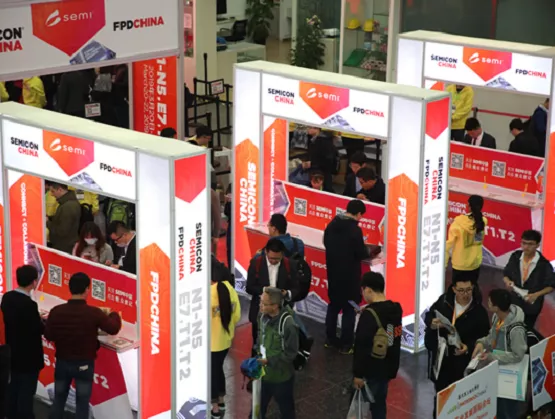
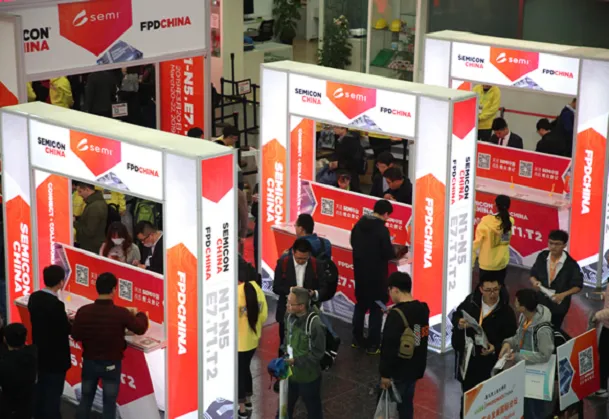
For the second straight year, SEMICON China, among the world’s largest and most influential semiconductor industry events, was the first local tradeshow of its scale held in-person, reflecting China’s rising prominence in the semiconductor industry. After securing approval from the Chinese government to hold large events, SEMI staged SEMICON China 2020 and 2021 with advanced protections against COVID-19 in place. There were no reported infections at either event. Highlights from SEMICON China 2021: Large Scale: Attendance of over 92,000, including more than 66,000 visitors and 25,000 exhibitors. Expo hall totaled 84,500 square meters with about 1,100 exhibiting companies and over 4,000 booths. World-Class Thought Leaders: Strong industry support from key foundries, OSATs, equipment and materials suppliers. Keynote speeches featured world-class industry leaders and head of China’s IC industry fund and global investment consulting agency, who explored the latest global business, technology and market trends and hot domestic investment topics. Concurrent Forums: Forums included SIIP China: SEMI Innovation Investment; Smart Manufacturing; Advanced Manufacturing; Advanced Packaging; Memory; Power Compound Semiconductor; China Display Conference; the all-new Advanced Materials Forum; and China Semiconductor Technology International Conference (CSTIC). Rich Digital Content: SEMICON China’s digital platform provided a rich array of content to attendees around the world including the Grand Opening Keynote and CSTIC, which were broadcast live online. Workforce Development: SEMI China worked closely with industry and government partners to promote SEMI Workforce Development programs to help attract and retain talent for China’s semiconductor industry. SEMICON China again featured the SEMI Workforce Pavilion and SEMI Workforce CXO Talent Forum. Outstanding COVID-19 Protective Measures: SEMICON China deployed advanced testing and monitoring equipment and implemented strict COVID-19 preventative measures to ensure a safe environment for all attendees to network and conduct business. Looking Ahead With the resounding success of SEMICON China 2021, optimism is growing that more physical events will be held with travel restrictions set to ease later this year. The more than 2,500 SEMI members around the world are eager to again network and collaborate face-to-face with customers, suppliers and partners to solve challenges in the microelectronics industry and drive semiconductor innovation that continues to transform how we work and live. That very innovation made many businesses more resilient as the virus spread and enabled people worldwide to work, learn, and shop from home. As SEMI starts to stage other events in-person, we will put in place advanced protective measures against COVID-19 to ensure the safety and well-being of all attendees. As the vaccination roll-out continues worldwide and new COVID-19 strains emerge, SEMI’s flagship SEMICON events are evolving in several ways, most notably with a larger digital presence. In this new era, we offer an international platform for SEMI members and partners across the microelectronics supply chain to collaborate, discuss industry trends, solve common challenges, network, and accelerate business growth through physical, virtual, and hybrid formats. Hybrid events – on-site exhibitions and conferences featuring a digital presence – allow the face-to-face connections so important to the semiconductor industry but also improve the attendee experience by offering an online option with the following benefits: More international accessibility to content live or on-demand Robust interactivity with live-streamed events, allowing more people to participate Greater cost effectiveness to enable companies and people under tight budgets to take advantage of world-class content, including keynote presentations, panel discussions, and technical sessions. In a recent survey of advanced manufacturing businesses, Informa Markets, a multinational publishing, business intelligence, and exhibitions group, found that 93% of respondents are likely to return to in-person events between August and December 2021, signaling a widespread eagerness for the return of live events and face-to-face connections. SEMICONs Scheduled for 2021 In a normal year, each of the seven regions where SEMI operates stages a SEMICON, with the exhibitions spread throughout the year. With the world continuing to combat COVID-19, more SEMICONs have been moved to the second half of 2021 – most of them with a hybrid format so exhibitors and attendees can take advantage of the increasing popularity of online events. After last year’s disruptions to the SEMICON schedule – and with more experience in the new normal – SEMI is excited to welcome the businesses and peers who couldn’t attend the 2020 events back to the in-person and hybrid shows. Innovation never sleeps. And SEMI will continue to evolve its events to help you form the partnerships and make the connections vital to the growth of your company and the industry. For more information about regional SEMICONs, please visit the SEMI events page. About the Author David Ghodsizadeh is the Director of Global Product Marketing at SEMI, where he develops customer-centric strategies to market SEMI Membership, Market Data, Expositions, Smart Initiatives, and Technology Communities to members, partners, and industry peers. Connect with David on LinkedIn.
Read More
In my role as lead for the Smart Mobility initiative at SEMI, I recently spoke with Automotive Logistics Magazine about the growing importance of the semiconductor supply chain’s connection with the automotive industry and the semiconductor shortage hampering global automotive production. Following are excerpts from the interview. Automotive Logistics: Why is there a bottleneck in the global supply of semiconductors at the moment and how long is it likely to last? Weiss: The current automotive chip shortage resulted from the sharp, Covid-19-induced decrease in demand for automotive semiconductors in the second quarter of last year when vehicle production came to a near standstill. The automotive market picked up significantly in the fourth quarter and this caused the supply chain constraints we are seeing today. At the same time as the automotive standstill, the pandemic spurred an increase in demand for home computing and networking equipment, and semiconductor manufacturing plants (fabs) had to pivot to these other markets in order to maximize fab utilization and successfully navigate economic headwinds. Every minute a semiconductor fab is idle or has lines down adds up quickly to missed revenue, so their capacity is booked weeks and even months in advance. With this background, I don’t believe this is a structural shortage and expect a gradual recovery over the next two quarters, barring any major shifts in geopolitics or macroeconomics. Automotive Logistics: What needs to be done to remedy the current shortfall for the automotive industry? Weiss: The automotive industry needs to continue to strengthen its connections to the semiconductor manufacturing supply chain. In past years, auto manufacturers used to rely mainly on their tier one suppliers to interface with the semiconductor supply chain. This has changed significantly. Not only are more chips being used in vehicles (roughly 10% of all devices produced globally end up in cars), but the strategic importance of the chips as enablers for ADAS [advanced driver-assistance systems], electrification, safety, connectivity and other consumer-driven features has increased considerably. With this dynamic in play, carmakers have recognized the value of interacting and collaborating more closely with the semiconductor supply chain. This provides vehicle OEMs with access to innovation, the ability to influence technology direction and pace, along with greater visibility into global supply chain developments. The SEMI Smart Mobility initiative is evidence of this transition, with the likes of Audi, BMW, Ford, Uber, Volkswagen and other vehicle OEMs, along with tier one suppliers such as Continental and Bosch, now actively involved in our automotive electronics and mobility activities to do exactly that – influence, partner, accelerate and guide the global electronics design and manufacturing supply chain that SEMI represents. Automotive Logistics: What percentage of semiconductors manufactured for use by US-based companies are for automotive applications and how has this grown in recent years? Weiss: A little over 10% of semiconductors produced worldwide are sold into the automotive segment, but this number is expected to grow at an accelerated pace in the next few years as electrification, connectivity and autonomous driving become more prevalent. Automotive Logistics: How is SEMI working to help the automotive industry get a clearer view of sub-component supply and better manage supply chain risk? Weiss: The SEMI Smart Mobility initiative is designed to engage automotive OEMs, tier ones, semiconductor device makers, design houses, and equipment and materials companies to drive alignment across the supply chain and address shared challenges collectively. To facilitate this engagement, we created the Global Automotive Advisory Council (GAAC), which has active chapters in Europe, US, China, Japan and Taiwan. The GAAC provides an open platform for creating solutions, fostering collaboration and partnering with other industry bodies to accelerate and harmonize industry efforts that benefit the entire ecosystem. Volkswagen and Audi are already SEMI members – both are founding members of the GAAC Europe chapter – and have become vocal champions and critical contributors to our efforts. When all stakeholders work together, I have no doubt that the future of automotive and mobility will continue to be bright. Interested in learning more about this topic? Read the full interview in Automotive Logistics Magazine, A Fab Future for the Automotive Sector. Please contact me at [email protected] for more information about SEMI’s Smart Mobility Initiative, the Global Automotive Advisory Council, and how SEMI can help your organization navigate electronics in the automotive industry to drive innovation in the mobility space. Bettina Weiss is Chief of Staff and Global Smart Mobility Lead at SEMI.
Read More
Semiconductors play an essential role in modern society by enabling ground-breaking technological advances. The manufacture of high-volume and advanced semiconductors requires the use of fluorinated chemicals known as PFAS. Representing the voice of SEMI members, I explained the important role of these substances and their “essential use” in the semiconductor manufacturing supply chain at a Chemical Watch conference for industry and European Union decision-makers on 3rd of December 2020.In order to achieve the European Green Deal’s zero pollution ambition for a toxic-free environment, the European Commission announced in its recently published Chemicals Strategy for Sustainability its intention to restrict the use of the most harmful chemicals, except in cases where they are deemed essential for society. Per- and polyfluoroalkyl substances – known as PFAS – are the first group of chemicals facing regulatory scrutiny on this basis. This begs the question: What chemicals should be characterized as essential for society and what uses will they encompass? The key and enabling role of semiconductors in modern lifeSemiconductors are essential and ubiquitous in our lives. They are integral to enabling modern society to function – driving advancements in mobile communication technologies for the smartphones and computers that help us work more efficiently and connect us with our loved ones. These benefits have never been more evident than in 2020 with billions of people finding themselves working and studying remotely and safely from home.At the same time, technologies relying on semiconductors have been vital in the effort to combat COVID-19 – in ventilators, medical imaging devices and digital healthcare solutions. In addition, semiconductors will also enable the next leap in society to Industry 4.0 and as essential building blocks in connected and electric vehicles, artificial intelligence (AI) and quantum computing.The Commissioner for Internal Market, Thierry Breton, has highlighted the strategic importance of semiconductors in achieving European digital sovereignty (for instance, in his speech at Hannover Messe Digital Days), and the EU’s New Industrial Strategy[1] also points to the importance of semiconductors and microelectronic systems. What must also be appreciated are the cost and complexity of producing these valuable technologies. Setting up a cutting-edge fabrication plant with the hundreds of pieces of semiconductor manufacturing equipment typically required can cost around €15 billion.[2] A single semiconductor manufacturing tool typically consists of millions of articles, and a typical fab may house several hundred pieces of equipment. Furthermore, according to SEMI estimates, the fabrication of semiconductor wafers requires approximately 500 highly specialized process chemicals. In many cases, these processes, equipment and facilities rely on the unique properties offered by PFAS.“SEMI has worked diligently to highlight the strategic importance of semiconductors in achieving European digital sovereignty, and we are pleased that the critical role of microelectronics has been fully recognized by the EU and Member States. Fluorinated chemicals are essential for semiconductor manufacturing. "These specific chemicals are necessary due to their unique properties, and no alternatives are currently available that can adequately provide the functional properties required in semiconductor manufacturing. The essential use concept, therefore, must enable technological innovation, must apply across the entire supply chain, and must enable EU’s critical infrastructure and strategic objectives.” What are PFAS, and why and where are they used in semiconductor manufacturing?PFAS are a broad and highly diverse group of substances with unique properties and characteristics. The Organisation for Economic Co-operation and Development (OECD) has compiled a list of approximately 4,700 substances,[3] a handful of which are used in the semiconductor manufacturing industry. These very specific chemicals are necessary due to their unique and unparalleled properties that enable them to be used in the demanding conditions of semiconductor manufacturing.Semiconductor chemicalsAt the very core of semiconductor manufacturing is the photolithography process, where microscopic geometric patterns are transferred onto a film or substrate. Photolithography specialty formulations containing fluorinated compounds are used in various steps of this process to ensure quality and reduce the probability of defects. PFAS must be used due to their low surface tension and compatibility with other chemicals. PFAS are typically no longer present in the finished product. However, there are applications where PFAS are present in the final semiconductor device, particularly in imaging semiconductors used in cameras, displays and some medical devices, amongst others. Semiconductor manufacturing equipmentPFAS are also essential to semiconductor manufacturing equipment and factory infrastructure. The exceptional combination of their heat and chemical resistance and their chemical inertness allows fluoropolymers to be used both in equipment components (tubing, gaskets, containers, filters, etc.) and lubrication (such as various oils and greases). These same properties are also needed to ensure the functioning of the surrounding infrastructure. Finally, some fluorinated gases, which are already regulated by specific legislation,[4] are used as refrigerants and to clean the facilities.These are a handful of examples of how PFAS are used in semiconductor manufacturing. Today, there is no other way to undertake these processes or to build semiconductor manufacturing equipment without PFAS. No alternatives are currently available that can adequately provide the functional properties required. Even if alternative chemicals and technologies were discovered today, due to the extremely complex qualification process throughout the value chain, it would take another 15 years to deploy them in high-volume manufacturing. Therefore, continued access to PFAS is a prerequisite for high-volume and advanced semiconductors. Lack of continued access to PFAS could lead to an inability to produce and supply the EU with semiconductor manufacturing technology.How should we think about essential uses?Regulators have started to think about what uses of PFAS are essential and in which cases their use should be allowed. In developing this concept, there are a few aspects to keep in mind.Essential use must enable, not hinder, technological innovationFirst and foremost, the essential uses concept should enable continued technological innovation instead of acting as a hindrance. Semiconductors and manufacturing technology are constantly evolving and becoming more diverse to help meet increasing societal demands. What we see as innovative today may be commonplace in the future, while future innovations may be unimaginable today. We must therefore be careful not to accidentally limit our future potential for innovation.Essential use must apply across the entire supply chainSecondly, classifying a use as essential should apply throughout the entire supply chain. We must, for example, avoid defining semiconductors as essential while classifying the semiconductor manufacturing equipment and chemicals used to produce semiconductors as not essential. In the semiconductor manufacturing supply chain, where one manufacturer can have up to 16,000 suppliers, this risk is evident.[5]Essential use must enable critical infrastructures and the EU’s strategic objectivesFinally, we should keep Europe’s societal priorities in mind. The EU needs to be able to maintain and protect its critical infrastructures. Similarly, we should not lose sight of the EU’s strategic objectives of a green and digital Europe.Semiconductors, in conjunction with their corresponding manufacturing equipment and chemicals, are essential technologies in everyday life and the backbone of the EU’s strategic value chains. Manufacturing semiconductors is a very expensive and complex process that would not be possible without the unique properties of PFAS, making them essential to achieving the EU’s strategic objectives today – whether the European Green Deal or digital autonomy – and in the future. Therefore, we must ensure that essential uses will enable the continued use of PFAS in semiconductor manufacturing.The SEMI presentation delivered at the Chemical Watch event can be accessed here.Emir Demircan is director of Public Policy and Advocacy at SEMI Europe.[1] “The EU will also support the development of key enabling technologies that are strategically important for Europe’s industrial future. These include robotics, microelectronics, high-performance computing and data cloud infrastructure, blockchain, quantum technologies, photonics [etc.]”[2] Emerging technologies in electronic components and systems (ECS) Opportunities Ahead – A study by DECISION, 2018 for the European Commission[3] Available here[4] Regulation (EU) No 517/2014, “F-Gas Regulation”[5] SIA Nathan Associates, 2016, https://www.semiconductors.org/wp-content/uploads/2018/06/SIA-Beyond-Borders-Report-FINAL-June-7.pdf
Read More
As the world combats climate change, the chip industry continues to build momentum in becoming a better steward of the environment. In July, Taiwan chip giant TSMC became the world’s first semiconductor company to join RE100, the global initiative to move away from a widespread reliance on fossil fuels and toward 100% renewable electricity. Applied Materials soon followed with a commitment to expand its renewable energy capacity. For the past four years, ASE Group, the largest outsourced semiconductor assembly and test (OSAT) provider, was named an industry leader in the Dow Jones Sustainability Indices (DJSI), making clear its commitment to protecting the environment. For its part, TEL was selected to be part of the FTSE4Good, a series of ethical investment stock market indices, and FTSE Blossom Japan, an index that gauges the performance of Japanese companies demonstrating strong Environmental, Social and Governance (ESG) practices.SEMI bolsters commitment to green energySEMI has also strengthened its commitment to promoting renewable energy in the semiconductor industry by adding the Green Power Pavilion at this year’s SEMICON Taiwan and continues to support the green energy movement as a co-organizer of Energy Taiwan. The largest renewable energy event in Taiwan, Energy Taiwan features international exhibitions, forums, policy initiatives and business matching events. This year the event attracted more than 12,000 visitors from 50 countries to highlight renewable energy breakthroughs and new products. The SEMI events complement RE100, which works across a wide range of industries that include financial services and retail. The initiative connects more than 260 members that count among them the world’s most influential businesses such as Apple, Google and Facebook and their suppliers through educational events.In many respects, TSMC is becoming a beacon of green energy in the chip industry. In July, the company committed to 20-year agreement to buy offshore wind power gear made by energy firm Ørsted in Taiwan, the global leader in the wind power industry. According to the purchase agreement, TSMC will offtake full production from 920-megawatt wind farms off the coast of Changhua County in western Taiwan expected to start operations in 2025 or 2026. The agreement will by far mark the world’s largest corporate green energy order in the semiconductor manufacturing and renewable energy industries and demonstrates TSMC’s long-term commitment to environmental sustainability.In addition to sourcing renewable energy, TSMC has been working closely with its downstream and upstream suppliers to help drive supply chain improvements geared toward a greener industry by offering on-site coaching, energy audits and educational resources. But the company's focus on energy efficiency is nothing new. For years, its Supply Chain Management forum has promoted industry sustainability and corporate responsibility. Moreover, TSMC worked with SEMI at this year’s SEMICON Taiwan to generate greater awareness of the importance of green energy to the industry and encourage SEMI members to become more involved in the movement.Supply chains expand eco-friendly practicesThe drive toward greener semiconductor manufacturing is also expanding to encompass entire supply chains. One notable initiative is Green Supply Chain Management (GrSCM), an effort to integrate environmental thinking into every level of the supply chain, from product concept to distribution. GrSCM involves the retooling of product design, materials sourcing, manufacturing and processes to reduce the ecological footprint of factories. So far, the results are encouraging. More companies are factoring environmental sustainability into their purchasing decisions to urge suppliers to better manage their power usage and join the green energy movement – an important step in curbing the unavoidable consequences of climate change. Terry Tsao is Global Chief Marketing Officer at SEMI and President of SEMI Taiwan.
Read More
Japan’s semiconductor industry has weathered the COVID-19 pandemic to post robust growth. Far from a temporary setback, COVID-19 will lead to enduring change in how we work and live. And just as automation has been a bulwark against the devastating business impacts of the virus outbreak, increasing digitization will lead to new efficiencies in our industry.These were some of the key takeaways from three SEMI Japan Members Day webinars in June and July that offered the latest updates on COVID-19 impacts to the semiconductor industry and restart strategies for SEMI members. More than 2,000 SEMI members across Japan’s islands attended the webinars featuring the following five speakers: Hideki Kanewaka, Marketing Director, Consulting Lead, Japan, Accenture Japan Ltd. Takayuki Komori, Manager, Marketing Engineering Dept, SUMCO Corporation Taketoshi Hamaguchi, Director, Manufacturing Industry, Microsoft Corporation Akira Minamikawa, Senior Consulting Director, OMDIA (Informa Intelligence LCC) Yuichi Koshiba, Managing Director Partner, Boston Consulting Group COVID-19 Impact on Japan Semiconductor Industry is ModestThe consensus view of the five speakers from various quarters of the industry – consultant, IT service provider, materials supplier, market analyst – was that the Japan semiconductor industry withstood the heavy blows COVID-19 dealt to other industries thanks to strong demand for chips. Shelter-in-place policies and lockdowns spawned by COVID-19 has accelerated the digital transformation rippling around the world as electronics sales have soared to support everything from remote work and education to healthcare and home entertainment including gaming.The rapid growth of cloud usage for video streaming, gaming and remote work is taxing communications network capacity and placing more bandwidth demands on servers, said Akira Minamikawa of OMDIA. According to a recent report by Nokia, communications network traffic has skyrocketed 300 percent for online meetings and 400 percent for gaming, bringing the networks closer to their capacity limits. Minamikawa sees server shipments increasing at 8 percent CAGR through 2024. For the broader chip market, he expects demand for notebooks, solid state and hard disk drives, and gaming to remain strong in 2020. He also predicts rapid 5G penetration for smartphones will boost semiconductor chip industry growth.Still, not all semiconductor segments are expanding, said Yuichi Koshiba of Boston Consulting Group. Chip shipments for end products in markets such as automotive, industrial equipment and aircrafts are on the decline. Slowing demand for chips that power automotive applications in particular could pare sales for some chip companies and distributors since the segment accounts for a high proportion of their overall revenue.State of the Semiconductor IndustryFrom SUMCO’s vantagepoint as a major silicon wafer supplier, the company’s Takayuki Komori sees a number of changes unfolding in the semiconductor industry: Smartphones are driving growing demand for process technology (smaller nodes) and 300mm wafers. Komori estimates the typical high-end smartphone sports 1,700 square millimeters of silicon. 300mm wafers account for 80 percent of that total while more than 50 percent of the devices use leading edge multi-patterning technologies. Smartphones will need more RF chips to support 5G’s high-speed communications and added frequency ranges. Substrates for RF switches and tuners have been shifting from gallium arsenide (GaAs) and other compound semiconductors to silicon. 5G smartphone penetration will accelerate as the cost of integrating CPUs and modem functions into a single chip sees a swift decline. While the sensitivity and resolution of CMOS image sensors have evolved to incorporate innovative backside illumination and stacking technologies, future advances will focus more on products for machine vision applications capable of sensing invisible light bands. Rising adoption of electric vehicles and robotics applications will drive growing demand for power semiconductors that control their motors such as IGBTs and MOSFETs as the production capacity for the devices expands and shifts to 300mm wafer lines. For memory fabs, Minamikawa said utilization remains high as a result of a spending slowdown by major chip manufacturers and will stay elevated even once additional capacity ramps to support robust demand. Foundry fab utilization also remains high despite the pandemic-driven cancellation of smartphone chip orders in March. Minamikawa also sees the utilization rate of micro rising with the surge in demand for notebooks, PCs and servers in the second half of 2020.Transition to New NormalAs people around the world start to settle into new ways of living and working, there’s a growing acceptance that the transformation will be long-lasting. And no area of people’s lives is changing more than their work. Boosted by government subsidies, many small and midsize companies in Japan have started to implement work-from-home policies, an area where major electronics and IT businesses had already instituted reforms, said Hideki Kanewaka of Accenture. A few examples: Nippon Telegraph and Telephone Corporation (NTT) announced that half of its employees will continue to work from home in the future. A five-year plan Toshiba launched in 2019 to allow all employees to work from home will likely accelerate. Hitachi plans to allow all employees to work from home starting in April 2021. dwango, a major internet-based entertainment company in Japan, announced it will allow in principle any employees to work remotely. In the critical area of remote sales, Kanewaka pointed to the importance of going beyond online business meetings, paperless transactions and virtual events to devise new ways to attract customers and close deals. Creating online communities and providing rich digital content are also important measures to consider, he said.Manufacturing's Digital TransformationTravel restrictions by most countries to curb the COVID-19 outbreak have also raised barriers to chip companies sending engineers overseas sites to service state-of-art equipment and provide other technical support. Microsoft’s remote assist system deployed by ASML is one tool semiconductor makers can use to overcome this challenge, said Taketoshi Hamaguchi of Microsoft.The system connects a remote equipment service expert with an onsite worker through the internet, allowing the technical expert to provide support through a goggle display with a camera worn by the worker. Guided by the expert, the worker can perform complex services. A Natural User Interface (NUI) helps give the factory worker a clear understanding of the often highly technical instructions.Using artificial intelligence (AI) to increase automation will also help reduce the reliance of semiconductor factories on onsite workers. For example, AI deep learning can be deployed to calibrate equipment autonomously and reduce downtime after scheduled maintenances, Hamaguchi said.Corporate Restart Strategies Beyond factory considerations tied to COVID-19, semiconductor companies will need to adapt their business strategies to new ways of operating. For example, global supply chains will shift to domestic sources and increase redundancy to ensure a steady supply, a change leading to higher overall costs, Koshiba said. Trade routes among regions will also be redrawn as the trade rift between the United States and China and other geopolitical tensions intensify. The total value of those routes is expected to recover by 2023.Koshiba advised companies to evaluate the supply chain trade-offs between stability and cost and factor in potential risks to improve their short-term resilience and drive mid- to long-term supply chain restructuring.After past recessions, 14 percent of companies restored sales growth, Koshiba said. He recommended investing aggressively in growth and seizing M A opportunities during the downturn. Chip companies must also adapt to supply chain changes faster than competitors.Become a SEMI MemberWebinars like the recent SEMI Japan Members Day series have become increasingly important in the mix of programs and services SEMI offers members to help them connect, collaborate and innovate in the microelectronics community. To become a SEMI member, please visit the SEMI website or contact your nearest SEMI office.Jim Hamajima is president of SEMI Japan.
Read More
On June 20, President Trump signed an executive order (EO) suspending the issuance of H-1B, H-2B, J-1 and L visas for applicants residing outside of the United States without an active work permit. The order took effect today and will be in force through the end of 2020. The suspension of H-1B and L-1 visas, in particular, likely will impact negatively the ability of U.S. companies in the semiconductor manufacturing supply chain and the broader technology community to recruit and retain global talent and to temporarily transfer international engineers and executives to support critical operations in the U.S.According to the administration, the issuance of visas for skilled temporary workers into the U.S. poses a “significant threat to employment opportunities for Americans affected by the extraordinary economic disruptions caused by the COVID-19 outbreak.” Although SEMI fully supports administration efforts to address economic disruptions and job losses caused by the pandemic, we believe blanket restrictions on high-skilled immigration will be counterproductive to government and industry initiatives supporting a broad-based economic recovery. Semiconductors are the foundation of all electronics and information technology (IT), enabling innovation and growth in countless other industries including medical devices and the IT solutions that enable remote work and the connectivity desperately needed in current economic times. Access to global engineering talent and the worldwide mobility of technology executives are central to supporting the industry’s efforts to contribute to economic recovery in fields ranging from healthcare and telecommunications to transportation infrastructure.The EO authorizes the Secretaries of State, Homeland Security and Labor to establish criteria for exceptions to the blanket ban, including employment categories that: are critical to the defense, law enforcement, diplomacy, or national security in the U.S. provide medical care to currently hospitalized COVID-19 patients provide medical research at facilities to help the U.S. combat COVID-19 are necessary to facilitate the immediate and continued U.S. economic recovery The Department of Homeland Security’s Cybersecurity and Infrastructure Security Agency (CISA) has classified workers in the semiconductor supply chain as essential to the effective operation of critical economic activity as the nation addresses the economic fallout of COVID-19. In lieu of rescinding the total ban on visa applications, SEMI urges the Secretaries to incorporate the CISA guidelines for semiconductor supply chain workers as they assess categories for application exceptions. SEMI will continue to advocate for programs and policies that enhance U.S. economic competitiveness, including immigration rules that ensure the U.S. can attract and retain the highest skilled talent from around the world without compromising employment opportunities for U.S. workers. As Senate Judiciary Chairman Lindsey Graham noted following the issuance of the EO, “Legal immigration is a positive for the American economy, and visa programs allowing American companies to secure qualified, legal labor throughout the world have benefitted economic growth in the United States.”Karl Kailing is manager of Public Policy and Advocacy at SEMI.
Read More
Olivier Corvez, senior manager of Environment, Health, Safety and Sustainability at SEMI, sat down (virtually) with Todd Patterson, vice president of global EHS for Entegris Global Operations, to discuss how Entegris has responded to the global pandemic.Corvez manages and Patterson participates in the COVID-19 EHS Task Force currently meeting weekly to discuss industry response and share best practices. SEMI: Was Entegris prepared for the COVID-19 pandemic? How did the company respond?Patterson: Entegris has a strong risk management framework and a risk assessment team of senior leaders who meet at least once a quarter. This focus gives us early visibility into events that could destabilize our organization or threaten our operations. Such a framework helps ensure we have the information necessary to act as soon as possible when the need arises. However, our business continuity plans for a pandemic of this scale were far less than with other more commonly occurring catastrophic events such as earthquakes or hurricanes. The COVID-19 crisis was clearly unprecedented and as such, the necessary systems and procedures were not in place with the depth and detail needed. Our strong governance structure made it possible for us to hold steady even as the pandemic caused increasing uncertainty and disruption around the world. For example, despite major supply chain shutdowns across many industries, to date, our supply chain and manufacturing operations have only been modestly impacted by COVID-19. Our supply chain team was assessing daily the areas of risk with our suppliers and taking appropriate action as well as preemptive steps to ensure our critical supply lines remained open.Our sales team engaged in regular communications with our customers providing them updates about our Business Continuity Plans and our actions to mitigate the risk to any of their deliveries. In addition, we maintained current information about the continuity of our supply chain on the company’s intranet for the global sales team to access as they engaged with customers. Also, a proactive communication plan was implemented immediately to send weekly video messages from senior executives directly to employees’ emails. It was an effective way to communicate with our global teams, to keep them informed about the status of the company’s operations and maintain a common sense of purpose at a time when many colleagues worked from home. In these weekly messages, we also focused significant attention on the health and safety protocols established to protect our manufacturing and lab employees from the virus.Among the health and safety protocols we implemented immediately as the virus moved across different regions were those related to facility screenings, work-from-home policies, social distancing, self-quarantine requirements, contact tracing, increased disinfecting, and travel restrictions. With approximately 5,300 employees worldwide, we had teams in every region ready to implement these comprehensive protocols. We believe we were among the first companies to implement work-from-home policies and travel restrictions.Temperature screening stations at Entegris facilities in Jangan, Korea (left) and Kulim, Malaysia (right). In addition, our CEO led a COVID-19 Steering Committee comprised of senior executives and managers from operations, human resources and communications. The committee met several times a week during March and April to evaluate and formulate responses to the issues that emerged as the virus spread from region to region. The committee’s work created a strong partnership among senior executives and divisional and functional leaders, and the initial guidelines developed by the committee have formed the backbone of a global playbook to limit the spread of the virus to our other sites around the world.Recently, the committee has changed its focus to more strategic issues such as creating a framework for transitioning remote workers back into our office locations. Meanwhile, local leadership teams at each of our global sites have been empowered to address ongoing tactical issues consistent with our thoroughly documented health and safety protocols.Looking to the future, we are using our experience in responding to COVID-19 to develop a more comprehensive pandemic response plan. We have project teams working on better ways to: measure temperatures of personnel entering our sites facilitate social distancing in the workplace redesign common use areas to reduce the number of high touch points disinfect all spaces thoroughly and regularly, and manage emergency pandemic supplies. SEMI: From the SEMI EHS survey, we noted that all members had a Business Continuity Plan. How effective has it been for deploying resources and adapting quickly and minimizing the crisis? Why or why not? Patterson: Because we have operations in China, Entegris experienced the impact of the virus immediately. We quickly formed two task force teams for our two primary facilities in the region. These teams developed the means for communicating key information to employees and started working on prevention plans to protect employees and comply with local requirements for when operations resumed. They met the challenges head on and found quick solutions. An example was finding an effective way of communicating to the employees for each location. Group chats were established through social media. It was this work that led to their success in getting approvals from local authorities to resume operations. Those plans have laid the groundwork on which our other sites around the world could build their response plans.The effective management of our global supply chain also stands out as a key success of the company’s Business Continuity Plan. Entegris has a highly complex supply chain with approximately 6,500 suppliers and a $850 million annual spend, and we ship work-in-progress and finished goods from over 90 sites globally.As I mentioned earlier, despite the virus crippling supply chains across many industries, Entegris experienced very little disruption to its supply chain. The supply chain team was able to accomplish this despite a 90% reduction in global freight capacity. A key factor in keeping goods flowing to our factories was the intensive work the team had done earlier to develop an in-depth understanding of the company’s top suppliers and to mitigate sourcing risks. They had established alternate sources, balanced the sources geographically, and placed inventory across our supply chain to buffer risk.The team also had integrated statistical modeling into reporting tools, which made it possible to reset safety stocks and logistics lead times quickly as conditions changed. And a supply chain digitalization provided one aligned and integrated view via dashboards, giving the company the ability to respond rapidly and to communicate in real time with our suppliers. We essentially had a virtual war room where we monitored the daily impact of the spread of the virus and could address bottlenecks and other issues immediately.SEMI: What lessons have been learned, so far? How do you see changes in your company’s operations in the future?Patterson: Institutionalizing what we’ve learned has already begun. Whether the measures implemented during the pandemic are temporary or become permanent is still to be determined. Regardless, the learnings need to be documented and available as a playbook for if – or when – the next pandemic occurs.Entegris is already working on a more comprehensive pandemic plan that will be based on five levels of preparedness. Level 0 will cover annual training requirements and management of emergency inventory of pandemic supplies. Level 1 will include early recognition of an outbreak, and then Levels 2-4 will include requirements for when specific response measures are implemented. Entegris also has formed the “New Normal” task force, which consists of leaders representing a number of disciplines directing the project teams previously mentioned to create a more comprehensive pandemic response plan. One of the project teams is working on improving the facility screening process that performs temperature measurement for personnel entering Entegris sites. The team is looking at the best technology to scan body temperature. As to whether this technology is employed only while COVID-19 is still active or becomes a permanent way of doing business, this is still being discussed.SEMI: EHS is involved in both providing technical support to protect individuals but also in making organizational changes to favorize social distancing. Could you explain some of the successes and challenges while tackling these two fronts?Patterson: Very early in the pandemic, Entegris established a work-from-home policy for non-essential employees. This significantly reduced the number of personnel and the potential for contact at the Entegris locations. Significant facility changes also were required. These included the design of facility screening booths and modifications to common gathering areas such as canteens, meeting rooms, prayer rooms, and smoking points. Physical markings were used to designate 2 meters distancing, and the seating in canteens and meeting rooms was reduced and staggered to minimize the risk of exposure to the virus. Entegris also has a project team focused on developing design solutions for offices and workstations when space makes it difficult to maintain 2 meters social distancing. These changes turned out to be essential for some sites in meeting mandates by local authorities. Our sites in Hangzhou, China and Kulim, Malaysia both were allowed to resume partial operations after demonstrating to government authorities the effectiveness of the preventative measures put in place. One particular challenge we are facing is the range of personal differences and awareness levels within the workforce – including those that don’t understand the importance of the new guidelines. We are working closely in advising supervisory staff to be aware of the need for employees to follow all health and safety protocols we have put in place, including social distancing. That preventative measure is the most difficult to make part of our new behavior – it is unnatural and inconsistent with our human nature, but it is critical to preventing the further spread of the virus.SEMI: How do you envision the progressive steps in deescalating to bring back “normal” operations? Patterson: I don’t know whether Entegris will ever go back to the old “normal.” As previously mentioned, we are working on the “New Normal.” Our focus now is on bringing our work-from-home employees back to the workplace without adding risk of exposure to the virus. We are still exploring options, but we expect to do it in a phased approach so that we can adequately assess the preventive measures that are in place and determine whether adjustments need to be made to any of our health and safety protocols.We are starting to see a variety of different frameworks emerge for evaluating repopulation timing and procedures. We will assess them on an office-by-office, or site-by-site basis, utilizing consistent criteria to define the potential for exposure to the virus. This also applies to our field service workforce. However, I have not yet seen any governmental guidance that offers a recommended framework for returning employees to the workplace. I think this represents an opportunity for SEMI EHS and the Standards groups to work to establish that framework for our industry.SEMI: Anything else you would like to share that you have observed throughout this crisis?We have not discussed the challenges faced in procuring and acquiring pandemic supplies. Almost immediately after the outbreak occurred in Wuhan, it became increasingly difficult to find supplies. Even when confirmation was provided by suppliers and delivery dates confirmed, the majority of the dates were pushed out or canceled. We found that what worked best was to have purchasing teams at the local site work with their local contacts on obtaining smaller quantities while a corporate point person was also managing larger orders. In preparation for any future pandemics, Entegris will be maintaining an emergency inventory for masks, sanitizer, thermometers, and disinfectants.For 18 months, Todd Patterson has held the position of VP Global EHS for Entegris Global Operations. His experience with emergency management and BCP has become invaluable in the past three months. He is grateful to his global response teams around the world for coming together to support the Entegris team in this unprecedented situation. Todd is an active participant on the SEMI EHS COVID-19 response teams led by Olivier Corvez at SEMI. Olivier Corvez is senior manager of Environment, Health, Safety and Sustainability at SEMI.
Read More