downloadGroupGroupnoun_press release_995423_000000 copyGroupnoun_Feed_96767_000000Group 19noun_pictures_1817522_000000Member company iconResource item iconStore item iconGroup 19Group 19noun_Photo_2085192_000000 Copynoun_presentation_2096081_000000Group 19Group Copy 7noun_webinar_692730_000000Path
Skip to main content
Default Banner Image

TEL

The semiconductor industry continues to push the envelope to meet demands of key applications such as advanced computing, consumer electronics, and defense, as well as environmental sustainability. There remain several critical challenges that our industry is working diligently to address, but how can these issues be tackled more effectively and at a pace that can keep up with this ever-evolving landscape?SEMI sat down with Supika Mashiro, Advisor at Tokyo Electron, where she shares her perspective on the importance of strengthening industry collaboration and what SEMI is doing through its first-ever SEMI Global Standards Summit – “Innovating Tomorrow: Standards for Future Factories” – of which she chairs the Planning Committee responsible for organizing this Summit.Trio: What is the SEMI Global Standards Summit and why is this event timely?Mashiro-san: Topics such as advanced packaging, cybersecurity, as well as supply chain and materials innovation (and their impact to the environment) are considered strategic areas requiring more industry collaboration. Many of these areas also greatly benefit from standards, and the next generation specifications and guidelines will need to be engineered to meet the technical challenges we face today and in the future. The magnitude of these standardization efforts will require engagement from all stakeholders in the design-to-manufacturing value chain as well as multiple Standards Developing Organizations (SDOs) coordinating and collaborating with each other.This is the driving force behind the Summit, and the need to bring together industry stakeholders to identify standards-critical areas and align on developing an industry standardization strategy for the next 3- and 7-year time horizons. We are excited to host this inaugural event on December 12, 2024, in conjunction with SEMICON Japan 2024. Trio: What is the focus of the Summit?Mashiro-san: The Global Standards Summit will cover three main themes: Smart Manufacturing for Future Factories, Packaging Architectures Materials, Environmental Sustainability.Factories are increasing their use of digital twins, predictive maintenance, and AI/ML to improve productivity and yield across the entire manufacturing environment. To take full advantage of these approaches, factories must reduce cybersecurity risks and secure the transfer of “smart” data across the entire supply chain while protecting IP. There is a need for standards to address these risk areas, as well as help diverse advanced analytics systems interoperate to assist personnel in increasing factory productivity. In the Smart Manufacturing for Future Factories session, we will be focusing on autonomous fabs, cybersecurity, and flow-oriented manufacturing.Similarly, packaging technologies have been progressing since the early stages of semiconductor device development more than 70 years ago. More recently, where packaging occurs in the semiconductor process has evolved, and some of the packaging processes are now done as an extension of front-end manufacturing. Moving forward, packaging architecture and materials are becoming increasingly important, driven by the adoption of heterogenous integration to address demands for more complex functionality and reduced power consumption as well as enabling chiplet integration. In the Packaging Architecture Materials session, we will discuss what kind of standardization our industry requires for copper-copper (Cu-Cu) direct interconnection, hybrid bonding, and panel-level packaging. We will also explore glass substrates as well as standards needed to enable semiconductor assembly and test automation.Our third session recognizes that the semiconductor industry is heading into an era of NetZero, in which quantification of environmental performance can have meaningful financial impact. The methods of measuring and accounting the environmental impact such as carbon emissions and the presence of substances of concern in manufacturing and products are not uniformly consistent across the industry. In order for the semiconductor industry to better navigate and make a positive impact in this arena, a consistent set of standards will be crucial. In the Environmental Sustainability session, thought leaders will present on communicating substance of concern (SOC), reporting of process emissions from factories, as well as lifecycle assessment of materials and substances used in semiconductor manufacturing, including equipment.Last but not the least, we will feature a panel session where we will explore all of these topics in a discussion with our panelists.Trio: Who should attend the Summit and why?Mashiro-san: The Summit is intended for leaders who are interested in these standardization topics to come and engage. Attendees will hear and learn about the issues critical to the future advancements of semiconductor manufacturing, what’s happening to address them, as well as new standards development. Attendee engagement is critical as we want our participants to influence and be able to contribute to the direction of standards development by providing valuable insights to help optimize future factories. To facilitate industry collaboration, we have organized networking events with other stakeholders from suppliers and solutions providers to end customers. The Summit is just one of many compelling reasons for industry stakeholders and thought leaders to come to SEMICON Japan. There are several sessions on many related topics that we are covering in the Global Standards Summit. Ultimately, at the conclusion of the Summit, we expect to have identified lists of critical standards areas, and we would like for those leaders to be able to assign and dedicate resources to these standardization efforts.For more information about the inaugural SEMI Global Standards Summit, please visit the SEMICON Japan 2024 site and register today!Supika Mashiro works as an Advisor for Strategic Planning of Industry Initiative Group at Tokyo Electron Limited.She has been involved in Factory Integration (FI) IFT of IRDS since its inauguration in 2016 and a co-chair since 2017. Her area of interest and involvement encompasses “smart” technology applications in manufacturing equipment, its co-optimization with Fab operation as well as ESH/S (Environment, Safety, and Health/ Sustainability) road-mapping and related industry standard development. For the latter, she has taken a couple of leadership roles in SEMI Standards Program as well as IEC TC/44.Paul Trio is Director of the SEMI Standards program.
Read More
SEMI spoke with Eyal Shekel, senior vice president of Service Strategy and Excellence at Tokyo Electron Limited, about the impact of artificial intelligence (AI) on smart manufacturing and how other fab solutions for smarter process tools are advancing semiconductor manufacturing.Eyal shared his views ahead of his presentation at the SEMI Fab Management Forum, 17 February, as part of the SEMI Technology Unites Global Summit, 15-19 February 2021, an online event. Join us to meet experts from Tokyo Electron and other key industry influencers. Registration is open. SEMI: AI technology is considered a key enabler for smart manufacturing. What are the latest trends? Shekel: The advent of advanced nodes and extreme complex 3D semiconductor geometry has lengthened time to market and increased costs in areas ranging from equipment development and large-scale metrology usage to monitoring yield inhibitors.AI is becoming a critical tool in the area of material informatics to determine suitable materials and processing techniques in order to meet the needs of future devices. Together with new materials and processes, the development and implementation of virtual metrology will enable accurate and almost absolute real-time monitoring of our customers’ device wafers at each stage of the manufacturing process.SEMI: What are the benefits of data analysis in the process from R D and Ramp-Up to High-Volume Manufacturing? Shekel: The new research field of materials informatics enabled by AI provides tools to guide the highly efficient discovery and optimization of production processes. For example, TEL has developed methodologies for co-optimizing processes and materials for etch rates.To monitor and manage the yield of semiconductor fabrication processes, direct metrology measurements are important. However, it is difficult to monitor all production wafers due to the time and cost involved. With deep learning AI, it is now becoming possible to predict every wafer’s metrology measurements based on production equipment data and previously processed wafer metrology variables. This enables total quality management and run-to-run control, while simultaneously reducing production costs and cycle time.SEMI: Can you tell us more about TEL Service Advantage?Shekel: TEL Service Advantage is a TEL global support organization that allows customers to select a service plan that fits their needs. Through TEL Service Advantage, we can quickly respond to customer requests and technical advancements. TEL Service Advantage provides various plans to maximize equipment maintenance efficiency for customers and productivity from equipment manufactured by TEL. TEL Service Advantage plans can be combined to meet customer needs and achieve maximum results.A key enabling element of TEL Service Advantage is TELeMetrics™. TEL analyzes equipment data from various sensors using a remote connection and, based on that analysis, provides solutions to customer-specific problems around equipment throughput and predictive maintenance.SEMI: How is AI helping during the pandemic? Can you share a success story? Shekel: The pandemic forced severe travel restrictions worldwide, making it very difficult or even impossible in many cases to visit our customers, as it is still the case today. Standard communication devices like smartphones and email helped at the beginning when TEL intensified the remote support by our Total Support Centre (TSC).TEL continued to develop its Service Advantage program quickly, and started using additional advanced tools and methodologies such as the following: Deployed AR (Augmented Reality) to remotely assist our customer and TEL engineers Secured remote connections into TEL tools to investigate parameters and logs, or to change set-up Used remote training courses that connects trainers via video conferencing systems and training tools in the factories to skill up engineers located in a different parts of the world Used AR glasses for tool start-up and troubleshooting Expanded TEL database global technology with multi-tool on languages search capabilities A key project at a customer site in Europe offers an excellent success story. Using all the approaches above, we collaborated with the local team to put a tool into production with no major delays. This was highly appreciated by the customer and very important for us.SEMI: What do you predict for the future? Shekel: Global technology infrastructure continues to develop and expand rapidly. Elements like 5G networks, IoT and advanced sensing capabilities will lead to what we call General AI, which will be based on neuro-like infrastructure. The auto learning will spread across domains and rely on internal logic and reasoning to automate many tasks that are manual today. In our industry in particular, General AI will enable workers to focus more on data analytics and future advanced R D rather than ongoing operations.SEMI: How can technology unite us? What do you expect from your participation at SEMI Technology Unites Global Summit?Shekel: Technology united us in the last 150 years. The connectivity started with telegraph and telephone and was used to exchange information over wider distances. Nowadays, video conference capabilities, AR and improving communications technology makes it much easier to unite people who are geographically dispersed. This becomes obvious and valuable especially during this pandemic period. As a fact, we are able to continue to perform all our key activities – our tool support, training and customer relationships – even if we cannot be present in person.The SEMI Technology Unites Global Summit is a great chance to stay connected to people and customers that I would normally meet at the SEMICON exhibitions.It also offers the opportunity to network with many more people who I would not be able to meet otherwise. Moreover, I can watch speeches and presentations at any time! Normally I would miss some programs since exhibitions and events took place at the same time.Eyal Shekel, senior vice president of Service Strategy and Excellence at Tokyo Electron Europe Limited, is a 27-year semiconductor industry veteran. Upon his graduation as a Mechanical Engineer from the Technion (Israel leading technical institute), he joined Applied Materials. In 1997 he moved on to Tokyo Electron (TEL) in Europe, served as the Regional Service Manager of Israel and, soon after, was appointed the company’s General Manager. Since 2005 Eyal has been part of TEL Europe senior management. He oversaw the Service and Support Operations for TEL Europe as a senior vice president until 2019. In his current role, he co-leads TEL’s Global Service Committee in Japan.The SEMI SMART Manufacturing Initiative is a global effort to promote awareness of and interest in smart manufacturing with a focus on delivering industry-recognized best-in-class programs and services to enable members to maximize product quality and productivity while reducing costs. Activities are focused on building out core capabilities to enable smart manufacturing across the microelectronics supply chain. MADEin4 is a consortium of 47 partners from 10 countries connecting the full range of supply chain – from semiconductor equipment manufacturers and system-integrating metrology companies to RTOS and key applications such as the automotive industry. The MADEin4 Project develops next generation metrology tools, machine learning methods and applications in support of Industry 4.0 high-volume manufacturing in the semiconductor manufacturing industry. Serena Brischetto is senior manager of Marketing and Communications at SEMI Europe.
Read More
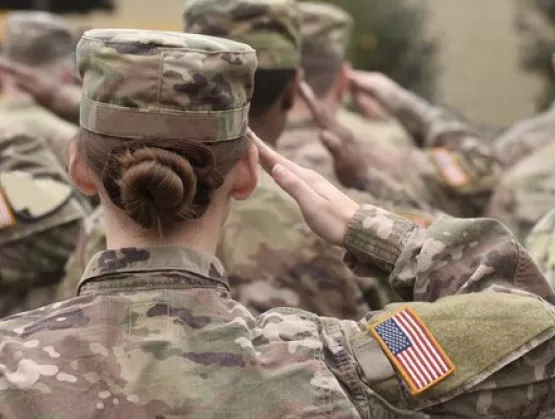
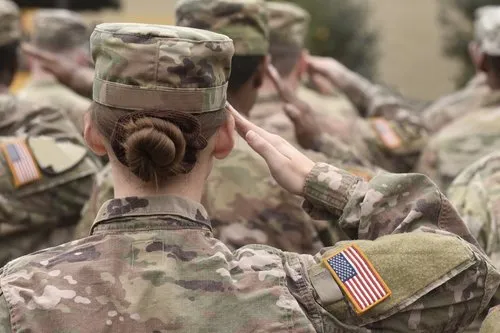
Like TEL, many SEMI member companies have a long history of hiring veterans. We all have done a good job of hiring military personnel who possess the obvious semiconductor industry-related job skills and experience (e.g., avionics, hydraulics, mechanics, and radio frequency (RF)). But as an industry, are we doing enough? Are we missing out on the next employee of the year because we aren’t thinking broadly enough about our workforce? Five years ago, I met a young soldier at a military job fair. The interaction with him was a defining moment for me personally and it inspired me to commit to do more to translate military experience to the civilian workforce. Soldier: “What does TEL do?” Me: (Industry has a bright future, chips are in essentially everything including your military gear, etc.) Soldier: With disappointment, “Well, I don’t suppose I’m qualified to work at your company – since its technology.” Me: “Please stay for another moment, tell me your MOS (Military Occupation Specialty code) and job duties.” Soldier: “Ma’am, I’m a bomb specialist. I disable bombs.” Me: “Okay, let’s see if I get this right. You work with electrical schematics. It’s a given you follow instructions and guidelines, consider safety a p-r-e-t-t-y big deal, work under pressure, and you work with a team. Right?” Soldier: With excitement, “Yes, ma’am. And we have a squadron motto: “We have NO bad days!” Me: “Well then, you have the PERFECT background!” This conversation changed this soldier’s outlook on his career possibilities after exiting the military. He never imagined that the specialized training and experience he received as a bomb specialist would lead him to a role in the high-tech industry. He honestly believed he possessed no value to a civilian employer. It was moving to experience this gap of understanding face-to-face. Yet, this is a typical conversation between recruiters and hiring managers and military members. I could have easily let him walk away. Instead, I chose to invest 10 more minutes to learn more about what this soldier had to offer TEL. What is the key challenge around hiring military veterans? Disconnect. 90% of veterans surveyed faced challenges seeking civilian employment. According to Pew Research Center, only 1% of the entire U.S. population is qualified to join the U.S. military, and .5% (yes, that’s ½ of 1%) serve. This means 99.5% of the U.S. population has no direct working experience with the military. Civilian employers (recruiters, hiring managers, or employees) do not understand what the military does, the technical nature and responsibility of each role, or the extensive training each military member receives. And, veterans do not understand the civilian workspace. We truly have a gap translating military experiences and skills to the civilian workforce and vice versa. What are the benefits hiring military veterans? There are numerous benefits to hiring military veterans. Veterans are well-versed in cutting-edge technology. Today’s military is high-tech, state-of-the-art, and computer-based. Veterans are uniquely matched to our industry. Their jobs are highly technical and soldiers are extremely safety-conscious; they appreciate guidelines, follow directions, and possess a strong sense of team. Veterans are global citizens. Many military veterans have lived and worked in more than one country and speak more than one language. They tend to be culturally astute. Veterans have a winner’s psychology. Military members receive hundreds of hours of professional and technical training. They focus on a higher purpose and win as a team. Veterans practice accountability and leadership. Personal accountability is highly promoted. There is no room for excuses or acceptable reasons for mission failure. Everyone has the opportunity for a leadership role at some level and has modeling of what good leadership looks like. Hiring veterans aid diversity program issues over time. The military is a diverse group with 16% females and 44% people of color. Military personnel come from a wide variety of experiences – from across all 50 U.S. states with a variety of cultural and economic backgrounds. How can SEMI member companies truly effect change? Considering over 200,000 men and women exit the military annually, we have a significant opportunity to effect change by offering careers to those who serve while expanding our industry’s talent pool. Here are some initial ideas to get your company moving towards a more robust military outreach: Participate in the SEMI Foundation’s VetWorks Program: The Foundation is creating a toolkit to help member companies engage, hire, train, and retain veterans. This includes support for veteran-friendly messaging and recruiting, internships, training programs, and job fairs. This work will launch in Q2 of 2021 – contact Margaret Kindling at SEMI for details ([email protected]). Have a smart plan – Determine what positions make sense to focus on for veteran hiring. Start simple and grow your efforts over time. Set metrics for what percentage of your hires will be veterans. Recruiters can use simple key word searches to pull veteran resumes. Your company can attend military job fairs (in person or virtual) either at military installations or hiring events by organizations like Hiring Our Heroes, RecruitMilitary, etc. Offer diversity training related to hiring military veterans that focus on military vs. corporate cultures. Additionally, Society for Human Resources Management (SHRM) Foundation offers a Veterans at Work Certification Program available for all interested participants. Soldier For Life – This is an official U.S. Army program created to help connect current soldiers, retired soldiers, veterans, and their families with education, employment, and health and wellness resources and opportunities. If you are near a military installation, get to know the transition assistance program (TAP) officer or the base commander. You have to be persistent – the relationship will be worth it. Ask your network, including SEMI member companies, if they would share their military installation contacts. This is not a closed talent competition amongst our industry partners. Many companies who have a robust military outreach program are eager to share their stories to help you get started. It is simply the right thing to do to help each other make a difference for those who served. Internships/Mentorships/Fellowships. Ask your local military installation if they offer direct mentorships or internships. A great way to get started with internships is partnering with NAM’S Manufacturing Institute – Heroes MAKE America. Hiring Our Heroes is another great resource for fellowships. Let’s do more for those who served. Interested in starting an industry veteran network to share best practices? Please contact [email protected]. We can do this! Kathy Garner is Manager, Talent Acquisition, Global Mobility, and Contingent Worker Management at TEL. References Bradbard, D. (Institute for Veterans and Military Families, Syracuse University) Schmeling, J. (Student Veterans of America). The Recruitment, Hiring, Retention Engagement of Military Veterans. Retrieved from https://www.shrm.org/foundation/ourwork/initiatives/engaging-and-integrating-military-veterans/pages/veteransguidebook.aspx Parker, K., Cilluffo, A., Stepler, R. 6 Facts about the U.S. Military Changing Demographics. Pew Research Center. Retrieved from https://www.pewresearch.org/fact-tank/2017/04/13/6-facts-about-the-u-s-military-and-its-changing-demographics/ Reynolds, G. Shendruk, A. (2020, July 13). Demographics of the U.S. Military. Council of Foreign Relations. Retrieved from https://www.cfr.org/backgrounder/demographics-us-military Shifting Forward Consulting. Shift to the Civilian SUIT: How Veterans Can Successfully Navigate 3 Job Interview Challenges. (10/17/18). Retrieved from https://cherriedavis.com/veterans-successfully-navigate-3-job-interview-challenges/ SHRM Veteran Panel 2018. Retrieved from https://youtu.be/rgDUAALxTRg SHRM Veteran Panel 2018 Resources Bureau of Labor Statistics https://www.bls.gov/home.htm Heroes MAKE America http://www.themanufacturinginstitute.org/Initiatives/Military-and-Veterans/Heroes-MAKE-America/Heroes-MAKE-America.aspx Hiring Our Heroes https://www.uschamberfoundation.org/hiring-our-heroes Soldier For Life https://soldierforlife.army.mil US Department of Defense https://www.defense.gov/Our-Story/Our-Forces/ USO https://www.uso.org/
Read More