downloadGroupGroupnoun_press release_995423_000000 copyGroupnoun_Feed_96767_000000Group 19noun_pictures_1817522_000000Member company iconResource item iconStore item iconGroup 19Group 19noun_Photo_2085192_000000 Copynoun_presentation_2096081_000000Group 19Group Copy 7noun_webinar_692730_000000Path
Skip to main content
Default Banner Image

healthcare

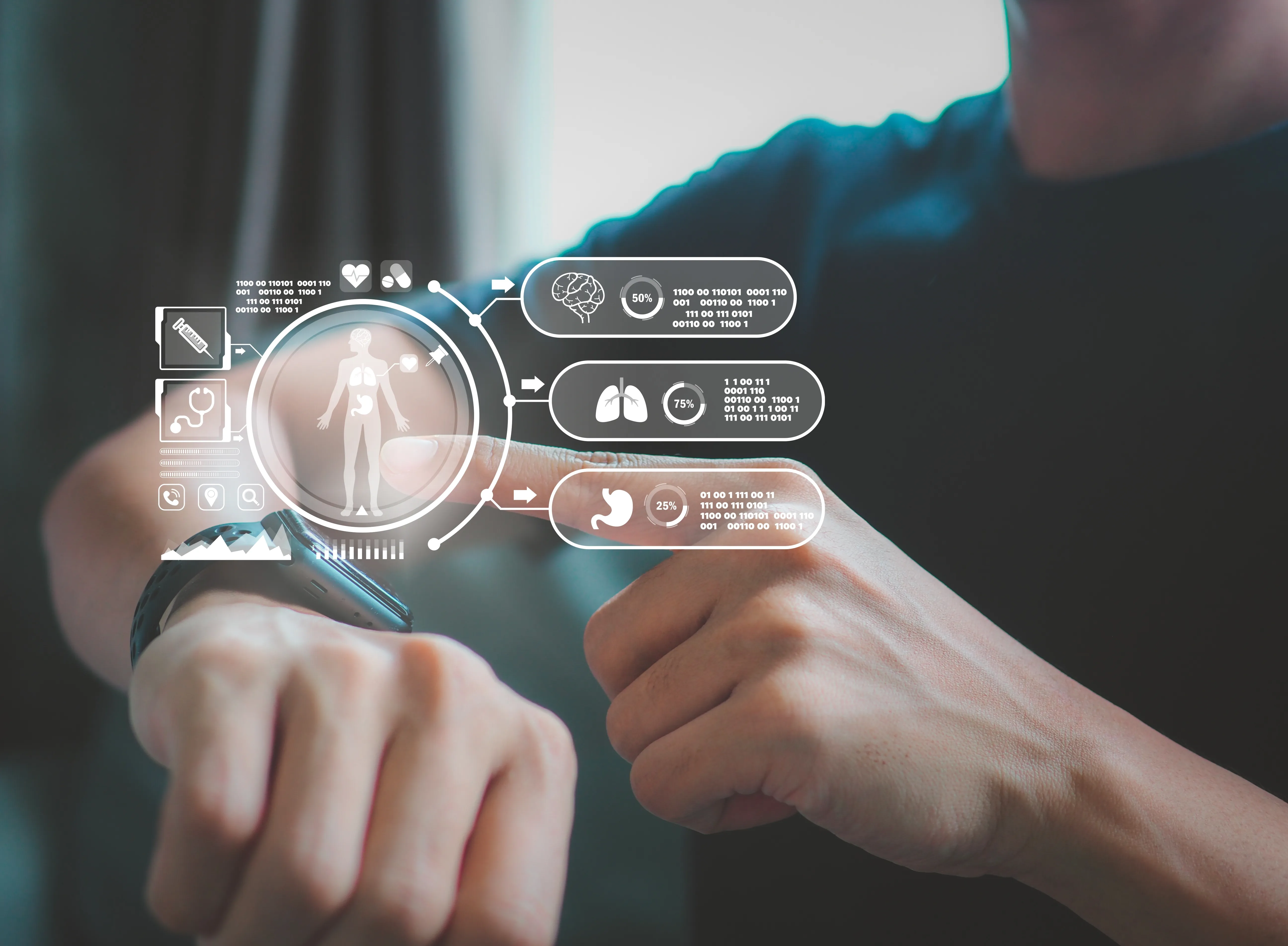
As healthcare undergoes a digital transformation, semiconductor technologies are emerging as a critical foundational enabler, making care more personalized, proactive, and accessible. At SEMI, we’re proud to highlight the leadership of STMicroelectronics (ST), a member and active participant in our Smart MedTech initiative’s governing council, for their commitment to advancing this critical frontier.With decades of experience in sensing, power management, and connectivity, ST is helping to shape a future where electronic systems seamlessly integrate with healthcare and wellness solutions, empowering both patients and providers.The Rise of Wearables and the Role of SemiconductorsST has long delivered innovation in automotive, industrial, and consumer electronics. Now, the company is applying its expertise to wearable health technologies, a rapidly growing segment that’s reshaping how we monitor, diagnose, and manage health.Today’s wearables go far beyond their predecessors. They capture vital signs and biomarkers such as heart rate variability, ECG signals, blood pressure trends, and more with medical-grade accuracy, providing real-time insights that can inform treatment and improve outcomes. This evolution represents not just a technological leap, but a shift in how we deliver and think about healthcare.A Shared Mission to Scale MedTech InnovationST’s active engagement with SEMI’s Smart MedTech initiative reflects our shared commitment to building an agile, responsive ecosystem that can bring life-changing technologies to the market faster. Through Smart MedTech, SEMI unites leaders across the electronics and healthcare value chains to identify systemic barriers, spark cross-sector dialogue, and co-create strategies for scalable success.ST brings invaluable perspective and technical depth to this mission. Their approach focusing on full solutions rather than standalone components, demonstrates how semiconductor companies can play a central role in enabling integrated healthcare systems.Meeting the Moment: Prevention, Personalization, and ReachHealthcare systems globally face mounting challenges: aging populations, chronic disease burdens, rising costs, and a projected shortfall of 18 million healthcare workers (WHO, 2019). Against this backdrop, wearables and remote health monitoring tools are poised to deliver tremendous value.As ST points out, the economic case is clear: treating chronic disease can be 100 times more expensive than prevention, wearables offer a proactive path forward. By enabling continuous, at-home health tracking, these devices empower individuals to take control of their wellness and allow providers to intervene earlier and more effectively.Accelerating the Future TogetherAt the SEMI 2025 Technology Workshop, ST joined a panel discussion exploring how semiconductors are reshaping healthcare. The session highlighted the need for earlier diagnosis, personalized care, and scalable solutions amid rising chronic disease and healthcare labor shortages.Panelists emphasized moving beyond component sales to integrated, system-level solutions. ST’s role on the Smart MedTech governing council emphasizes their commitment to cross-sector collaboration and advancing MedTech adoption.The MedTech revolution requires more than great products, it demands aligned ecosystems, shared knowledge, and coordinated strategies. As a member of SEMI and a key voice in our Smart MedTech initiative, ST exemplifies how semiconductor innovation can drive real change in healthcare.We’re proud to work alongside ST and other industry leaders who are committed to creating smarter, more sustainable healthcare through electronics. Because in today’s healthcare landscape, an ounce of prevention enabled by semiconductors isn’t just worth a pound of cure, it’s a blueprint for global health resilience.See the full ST article STMicroelectronics and Medtech: Enabling Personalized Healthcare and Wellness through the Integration of Electronics featured on Smart MedTech webpage.Gity Samadi is Senior Director of R D at SEMI.Rafael Tudela Senior Technical Marketing Manager at SEMI.Michelle Smith-Moritz is Senior Program Manager, Smart MedTech at SEMI.
Read More
COVID-19 has likely had a greater impact on healthcare than on any other industry sector, said Glenn Snyder, Principal and Lead Analyst for MedTech at Deloitte, and a featured speaker at a recent SEMI webinar that offered a glimpse into the Future of MedTech in the run-up up to the SEMI Global Smart MedTech Symposium, kicking off tomorrow and running through August 5th. Snyder said medtech growth may appear muted in its early years but is poised to begin a steep climb as innovation continues, harkening back to the super-charged growth of circuitry on a wafer (aka Moore’s Law), which also saw a seemingly slow, flat start. Medtech enjoy its own exponential growth powered by 5G implementations, consumer demand, and the development of a robust ecosystem of bio-sensors, data standards, and regulatory improvements. Consumer-Driven Future and COVID-19 Impact Snyder noted that the future of medtech will be consumer-driven – enabled by open, highly interoperable data and secure platforms geared toward end users. A case in point: Detecting disease early through sensor systems will rely on not only on-body and environmental sensors, marking a fundamental shift from the today’s today’s hospital-centric system to improve health outcomes. Telemedicine growth during the pandemic is a notable example. In one case study of a health system, Snyder noted that telehealth usage skyrocketed from 1% to 60% of all patient visits over the early months of the pandemic but has since dropped to 10% due to the lack of charting, billing and other support systems needed to sustain the high rate of telehealth visits. Even so, hospitals expect to see a steady rise in consumers’ use of telehealth in the coming years. One driver are pilot programs for healthcare-at-home services for post-surgical patients. The programs have delivered better health outcomes and are more personalized and family-friendly than medical clinic or hospital visits. They also cost less. Digital monitoring using remote biometrics sensors are one key to driving the long-term success of these programs. Health Systems Changing Their Business Model In the medtech sector, changes in health system business models lag consumer adoption. What’s more, policy changes aren’t keeping pace with new models for medtech products. For medtech products to thrive, a solid foundation of data gathering, transmission and management capabilities that tie into traditional healthcare systems must be formed. Companies considering a vertically integrated approach to the medtech market can steer clear of healthcare providers – but only at the risk of having less access to patients and their historical healthcare data. Snyder said companies that control vertically integrated healthcare products and patient data can make support systems more efficient and robust but may struggle to deepen their market penetration. Companies such as Intuitive Surgical have found success with this model by offering highly differentiated products. Supply Chain Alarmingly Thin for Medtech Devices In a recent Deloitte survey of medtech companies, 60% reported that at least half of their products are powered by semiconductors, yet 70% noted pointed to high supply chain risks with most of their products because they have only a single source. Risk management and creating a resilient supply chain will remain key for medtech providers to adapt on a global scale. Partnerships and Collaborations During the event roundtable, Snyder mentioned that bio and pharma companies have partnered successfully to grow their businesses. Doug Kiehl of Eli Lilly, the moderator of the discussion, added that traditional healthcare providers should look outside of their usual business circles for medtech innovation. COVID-19 highlighted how new multi-disciplinary healthcare partnerships risk assessment processes have opened several paths to innovation previously unexplored. Both Snyder and Kiehl expect to see more collaboration between health systems and medtech innovators as they uncover synergistic business models. SEMI Global Smart MedTech Symposium Kicks Off Today Explore the gaps in the supply chain at the Global Smart MedTech Symposium and join the conversation with medtech device companies and health systems providers. Sessions include: Realtime Continuous Diagnostics and Monitoring Decentralized DNA Sequencing and Molecular Diagnostics Data Science and Infrastructure – AI/Data Fusion Applications in Rural and Decentralized Healthcare in the Digital Age The four-day symposium features three sessions at different times each day to cater to participants in Taiwan/Asia, Europe and North America. Register today! Heidi Hoffman is senior director of Technology Communities marketing at SEMI.
Read More
Taking aim at advancing smart medtech innovation, the SEMI Nano-Bio Materials Consortium (NBMC), in collaboration with the U.S. Air Force Research Laboratory (AFRL), in March 2020 identified 12 organizations from industry and academia as recipients of $20.4 million in funding, leveraging $10.7 million of cost-share from award recipients. Unique to this round – the sixth in NBMC’s eight years – is a pilot program for NBMC and AFRL to collaborate more closely and share more resources. As part of that effort, AFRL is contributing additional funding to seven of the 12 projects to enable its researchers to work alongside industry on the projects in the new AFRL-Industry Co-Development Program. After being matched to a project during pre-RFP discussions – also known as the White Paper Stage – AFRL researchers were designated as NBMC Consortium Project Investigators before collaborating with industry on the second stage of proposal development. Once contract negotiations between NBMC and the proposing entity wrap up, the AFRL investigators will participate in the development of smart medtech innovations. “This is a new way for AFRL researchers to participate as project performers responsible for contributing to project milestones and deliverables, in addition to providing program management oversight that AFRL has employed for past NBMC projects,” said Dr. Jeremy Ward, past NBMC government lead and current participant in the AFRL Entrepreneurial Opportunity Program. “This program should enable technical risk-reduction for industry by leveraging AFRL competencies and U.S. Air Force aeromedical and airmen performance mission connectedness and ultimately help speed the development of dual-use smart medtech,” added Matt Dalton, AFRL Materials and Manufacturing Directorate program manager and NBMC Governing Council member. “We need efficient mechanisms to leverage research being done outside of AFRL,” said Sharma, who is also senior technical lead for Cognitive Neuroscience at AFRL's 711th Human Performance Wing. “If someone is developing a groundbreaking technology that can be helpful for our airmen, then let’s work with them so that we have an opportunity at an early stage to actively shape that research for Air Force-relevant use cases. Similarly, with this co-development initiative, external researchers will also get an opportunity to work alongside world-class researchers at AFRL and, through those interactions, get insights into the needs of the operational community.” “The AFRL-Industry Co-Development Program strengthens the work between AFRL and industry to better target the strategic needs of the Air Force for dual-use technologies while more closely aligning with commercial market requirements,” said Dr. Melissa Grupen-Shemansky, SEMI CTO and Executive Director of NBMC. “This new collaboration will enable the growth of the ecosystem critical to bringing the latest smart medtech innovations to market while making the technology’s supply chain more sustainable and resilient.” SEMI NBMC connects military, industry and academia for research and development into the practical use of nano-biomaterials. The 2020 RFP targeted nano-bio materials for wearables, flexible and alternative power sources for wearables, and open concepts for wearables for diagnostics and ambulatory monitoring. These technologies address the critical need to monitor, evaluate and mitigate stress experienced by workers in high-pressure occupations – such as aviation, emergency, critical care and aeromedical evacuation – to enhance their warfighter performance and help ensure their well-being. For more information on SEMI NBMC, our R D funding projects, and how you can help shape the direction of our funding programs, visit our website or contact me at [email protected]. Learn more about our projects at the 2021 Global Smart MedTech Symposium July 28-29 and August 4-5, 2021. For more information about the NBMC-AFRL collaboration, see the 2020 Smart MedTech Virtual Workshop agenda. This article borrows from a U.S. Air Force press release on May 27, 2021. Rene Krantz is program manager for SEMI NBMC Smart MedTech.
Read More
The recent global pandemic redefined well-established paradigms in healthcare. The classic model involving frequent hospital visits is no longer viable due to the risk of contagion. The focus is now on remote and pervasive vital sign monitoring solutions and automated data processing for health assessment. Social-distancing-friendly technologies, such as wearables, implantables, insertables and ingestables that enable long-term monitoring, can help detect medical abnormalities both in individuals and large populations. SEMI spoke with Carlos Agell, program manager and principal member of Technical Staff at imec, about remote vital sign monitoring using innovative form factors and methodologies. imec’s healthcare technology vison for remote care systems will be the focus of Agell’s presentation at the SEMI MedTech Forum, 19 February, as part of the SEMI Technology Unites Global Summit, 15-19 February 2021, online event. Join us to meet experts from imec and other key industry influencers. Registration is open. SEMI: What is driving innovation in diagnostics and what is the role played by the semiconductor industry? Agell: There is a clear need for remote diagnostics triggered by the COVID-19 pandemic. Two examples are respiration monitoring and SARS-CoV2 testing technologies. The fact that some of the more obvious symptoms of COVID-19 are respiratory has revealed a big gap in medtech: the need for low-friction, ambulatory, continuous and pervasive respiratory monitoring solutions. At imec we have been working on bioimpedance-based technologies (from chipsets to smartphone-enabled sensing devices) that can provide feasible solutions in that space. Hence, novel sensing modalities from the semiconductor industry can make a difference when it comes to remote ambulatory respiratory monitoring. On the other hand, SARS-CoV2 diagnostic technologies have become paramount during the health crisis. In this space there is a clear need to simplify, speed up and lower the cost of testing. Additionally, from a practical perspective society needs to prevent virus spreading. imec is spearheading an innovative semiconductor-based solution aimed at simplifying SARS-CoV2 testing by collecting aerosols from subjects’ breath using a silicon-based solution for analysis using the polymerase chain reaction (PCR) method, the gold standard in COVID-19 testing. Determining viral load in exhaled breath is a clear indicator of infectiousness, and detecting subjects with a high viral load is key when developing these rapid tests to facilitate economic recovery. A cost-effective and speedy though reliable SARS-CoV2 testing solution opens up possibilities for its use as gating mechanism (such as testing to allow access to facilities and prior to boarding a plane) to help jump-start some of the hardest-hit sectors in the economy, such as travel and hospitality (hotels and restaurants) by enabling more in-person interactions. SEMI: Please share more about imec’s commitment to improving the healthcare sector. Agell: imec R D is active in the field of remote unobtrusive respiration solutions, which are vital in treating respiratory system conditions such as asthma, chronic obstructive pulmonary disease (COPD) and COVID-19. These solutions rely on a combination of silicon chipsets, sensor integration and algorithms to interpret sensor data. As part of our effort to understand biological fundamentals, imec’s multi-electrode array (MEA) platform for heart-on-chip applications offers unparalleled capabilities to acquire high-density information (4444 electrodes/mm2) to enable extra- and intracellular recordings, electrical stimulation and impedance gauging to study patient-derived cardiomyocytes, cells that make up the heart muscle. imec is developing a rapid, low-cost SARS-COV2 test based on breath analysis (aerosol capture) aimed at a 5-minute analysis. Such tool is a key to economic recovery, and imec is planning large-scale testing of the prototype device at Brussels Airport later in 2021. imec has recently supported spinoffs and external companies that develop social distancing tools for usage during the pandemic. Healthcare is a key strategic area at imec, with multiple departments working on complementary topics, ranging from cell-sorting technologies and multi-electrode arrays, through sensors and systems for non-invasive cardiorespiratory and neurological monitoring, all the way to advanced processing of medical data and tooling for trials. SEMI: How is the pandemic impacting remote diagnostics? What’s new in that field? Agell: The pandemic has accelerated advances in remote diagnostics for healthcare – for example making remote doctor visits possible and launching telehealth into a successful sector. But in my opinion, this is just the starting point. Telehealth doctors will soon need to collect health data points such as body temperature, weight, or blood pressure remotely, the same information they collect during an office visit. Soon thereafter though, doctor’s will need more and more data, sparking the next stage of advances in remote diagnostics as algorithms are developed to analyze sizeable amounts of data. All in all, it will result in a big move from doctor-centric paradigms to more patient-centric solutions. Hopefully that jump will also drive a more proactive approach to health, enabling prevention and keeping people healthy, and leaving behind the era of curing the sick. imec research tools for respiratory monitoring will come in the form of a health patch. SEMI: Besides infectious disease diagnostics, what solutions will enable a paradigm shift? Can you name two global market trends related to the rising need for remote diagnostics? Agell: The paradigm shift in healthcare will be largely fueled by the hyperconnectivity trend. Communications are fast and far-reaching. The pandemic has proven that healthcare, similar to retail, banking, trading and business in general, can also be done partly remotely through a communications line. The need for proof of performance in the case of diagnostics has been proven challenging, due to the highly regulated medical field and the general conservativeness of this market. There is a clear trend underway in which algorithms and automated diagnostics are slowly gaining the trust of the medical community. Trials and regulatory submissions will help here, but the clear proof will be the general trust of the medical community (and general population) in solutions that have been on the market for a while. Similar to what happened with GPS navigation technologies back in the day, it would require a critical mass to reach general acceptance. As far as the healthcare market is concerned, there is a forecast bounce back from telehealth into hybrid models (a mix between in-office visits and telehealth) as a first post-pandemic scenario. Although this is perceived as the best of both worlds, its effectiveness and survival within the market is still to be proven. A clear market trend accelerated by the pandemic is the commoditization of health and wellness features in consumer electronics. A glimpse into consumer electronics venues reveals that watches, smartphones, weight scales and even your office chair or mattress will soon be collecting healthcare information. imec MultiElectrode Array (MEA) chipset SEMI: What is imec’s role in addressing the challenges and trends in healthcare? Agell: As an R D organization, imec offers expertise in the semiconductor, integration, data interpretation, data management and health-specific application domains. Thanks to our experience in horizontal technology and multiple application domain verticals (including healthcare), imec provides solutions to partners that push the boundaries of performance in health-tangential fields such as communications, consumer electronics, automotive and energy. imec is part of big European initiatives aiming to tackle the challenges of the pandemic. For example, we recently started working on the Digipredict project, which aims at early intervention in infectious diseases. We’re working with key players in the research domain within the EU such as École Polytechnique Fédérale de Lausanne, University of Twente and Eidgenössische Technische Hochschule Zürich. Additionally, imec has worked for market leaders in the healthcare sector such as Philips and Biotelemetry (recently integrated in Philips) and can help partners make the next health solution a reality. SEMI: How can technology unite us? What do you expect from your participation at SEMI Technology Unites Global Summit? Agell: I am a big optimistic on this pandemic. I believe technology has played a key role in putting boundaries around damage caused by the global health crisis. Technology does not only unite us, but it arguably saves lives! My personal expectation for the SEMI Technology Unites Global Summit is for us to get a better understanding about how the semiconductor industry reacts to a pandemic and upcoming post-pandemic scenario. I am curious to see if health-related trends emerge, and whether this is a transitory effect. During the last global pandemic, the semiconductor industry was not even existing, so there is no clear precedent for the current situation. Carlos Agell, program manager and principal member of Technical Staff at imec, where he oversees the development of projects and sets strategy directions for research topics. He has a background in wearable device development, having taken leadership roles in development of two FDA-approved medical devices in the field of wearable cardiology. He is member of the Dutch chapter of the standardization committee, which develops next-generation international standards for active medical devices. Carlos Agell holds two MSc degrees in Electronics Engineering and EECS from the Polytechnical University of Catalonia (Spain) and the University of California in Irvine (Irvine, CA, USA). Serena Brischetto is senior manager of Marketing and Communications at SEMI Europe.
Read More
While Artificial Intelligence (AI) emerged in the 1950s, only in recent years have AI applications proliferated with the explosion of data and continuing improvements in Moore’s law that have driven rising processing speeds. Voice assistants, image analysis software, search engines, and speech and facial recognition systems were among the first applications to use AI. Today, adoption has spread to sectors such as agriculture, cybersecurity, healthcare, software development, e-government and the intelligent enterprise to generate jobs and help spur economic growth. The Edge AI Opportunity and the Microelectronics IndustryAI can be embedded in hardware devices such as advanced robots, autonomous cars, drones or Internet of Things (IoT) applications. Today, according to the EU’s digital strategy, data centres and other centralized computing facilities account for the vast majority – 80% – of AI data processing and analysis, with smart connected objects such as automobiles, home appliances and manufacturing robots that bring the compute function closer to the user representing 20%. The latter, known as Edge AI applications, are powered by edge-based machine learning chipsets, not the AI chipsets designed to run cloud-based machine learning algorithms.The EU’s white paper on AI published in February 2020 anticipates that the way data are stored and processed for AI applications will change significantly over the coming five years as edge computing applications proliferate. Most AI applications need to connect with devices that collect data and manage data flows. When the applications connect with cloud infrastructures to train large volumes of data for a machine learning model, the interface devices often require hardware support. Edge AI can minimize data transport by processing data directly from local devices to accelerate data analysis and decision-making and make data transport or accelerator hardware unnecessary, critical in reducing power consumption and enhancing data security for applications such as autonomous driving. Over the past 40 years, the ICT sector has been continuously increasing greenhouse gas (GHG) emissions despite efforts to shift to renewable energy. Cloud-based AI applications require an ICT infrastructure for high-performance computing and high-speed connectivity. According to MIT Technology Review, data centres’ AI workloads could account for a tenth of the world’s electricity usage by 2025. a mass update of cloud-based AI applications may significantly increase energy consumption, unlike with Edge AI. This is why the strategy for developing Edge AI is well-aligned with the EU’s Green Deal objectives. Europe aspires to play a leadership role in Edge AI to strengthen the sector’s competitiveness and protect the European digital sovereignty. Europe’s strong industrial competencies in embedded systems and microcontrollers will help the region promote development of European domestic AI solutions for emerging high-value IoT applications in industrial processes such as Industry 4.0, Connected and Automated driving (CSA), smart cities, climate action, healthcare, and national defence and security. With this strong strategic position in technology, Europe is well-positioned to invest to become the leader in the Edge AI global market.Preparing the Workforce for the Microelectronics IndustryTo design and manufacture leading Edge AI chipsets, European education providers and industry will need to work closely together to train the current and future workforces. Within the framework of the METIS project, a four-year project co-funded by the European Commission through the Erasmus+ programme, SEMI and imec deployed experts in the field to survey and interview focus groups. The survey identified the following key focus areas for workforce development: 1. True Capability of AI and Data Science With AI’s heavy dependence on data, the workforce of the future must be trained in areas of data science including data integrity to ensure quality, unbiased sourcing, collection and accurate analysis necessary to interpret huge volumes of data. Europe also needs to train the next generation of AI chip designers in data security and privacy – key challenges to the widespread deployment of Edge AI chips. 2. Climate Change, Sustainable Development Goals (SDGs) and Social Inclusion TrainingSince the industry must be able to develop Edge AI solutions to enable the digital transformation while limiting GHG emissions, microelectronics engineers need to be schooled in climate change and understand how their work contributes to meeting the United Nation’s Sustainable Development Goals (SDGs). Workplace diversity and social inclusion are also important target areas for education since Edge AI applications should serve various groups of people with different needs.3. EthicsChip industry workers must also be educated in ethical issues of AI related to the technology’s potential societal impact in the near future[1]. With AI applications capable of monitoring Internet searches based on users’ personal preferences and biases to deliver tailored advertising, news and other information, developers must recognize how the technology can influence thinking and behaviour of individuals and groups. This awareness can help developers strike a balance between supporting commercial interests and societal good so the microelectronics industry can ensure ethical implementation of AI. 4. Cross-disciplinary Skills Required for AIAI development requires a comprehensive, cross-disciplinary skill-set to be able to integrate the work of specialists from diverse educational, cultural and professional backgrounds critical to developing non-biased AI solutions. For example, in addition to technical expertise, microelectronics AI developers must be able to communicate clearly and work in close-knit teams with non-technical experts from business, law, medicine and the social sciences.What’s Next?The microelectronics industry has a tremendous opportunity to develop new chip-based solutions for AI architectures, and apply AI techniques to improve operational efficiencies of design and manufacturing. To seize this opportunity, the industry must work closely with education providers to groom the next generation of skilled workers. This tight collaboration is critical to designing and delivering specialised courses to college and university students as well as engineers now working in the chip sector. The stakes are high. By preparing workers to develop Edge AI chipsets, the microelectronics industry can help the world confront some of the greatest challenges it faces today.For more information, see SEMI Responds to European Commission White Paper on Artificial Intelligence.METIS is a Sector Skills Alliance project co-funded by the European Commission’s Erasmus+ Program and coordinated by SEMI. The four year project, launched in November 2019, will develop a Microelectronics Skills Strategy. Based on the strategy, the METIS project will design 43 training modules for 1,100 hours learning in four key areas of the microelectronics sector.We thank Patrick Blouet (STMicroelectronics) and Jeroen Geusens (imec) for their valuable contributions to this article.[1] Ethics of Artificial Intelligence and Robotics, Stanford Encyclopedia of PhilosophyDr. Yanying Li is senior manager of Collaborative Projects at SEMI Europe.Dr. Pushkar P. Apte is the strategic technology advisor for the Smart Data AI Initiative at SEMI
Read More
The global economy has started down a gradual path to recovery from COVID-19 in recent months as the world continues to combat the virus. Yet one sector – semiconductors – has shown impressive growth powered by a transformation hastened by the pandemic across industries ranging from education and work-from-home to healthcare.Semiconductor sales increased 12% in September to mark a second consecutive month of double-digit growth, and year-to-date semiconductor receipts as of September jumped 5.5% compared to the same period in 2019, according to SIA/WSTS.While this upward trajectory is encouraging, it pales compared to 2020 semiconductor equipment billings growth, with results from SEMI showing worldwide global chip equipment billings in September soaring to a new high of $7.6 billion this year. During the first nine months of 2020, aggregate equipment billings logged a 23.6% rise compared to the same stretch in 2019, surpassing $51 billion. Better still, the total semiconductor equipment market in 2020 is on track to beat the previous high of $64.5 billion set in 2018.Investments in China, Taiwan and Korea are fueling the chipmaking equipment spending surge. With big domestic and international fab projects in the works, China this year is projected to become the world’s largest capital equipment market for the first time, surpassing Taiwan, which will follow at a close second. Korea will rank third in equipment investments. Taiwan and Korea growth will come on the strength of equipment spending for manufacturing leading-edge semiconductors.Equipment billings in North America and Europe declined year-over-year as the automotive and industrial sectors suffered the heaviest blows from COVID-19. Investment momentum in both regions is expected to pick up in 2021 after automotive production recovers to pre-pandemic levels while factory automation will boost industrial demand.For more information about monthly equipment billing trends by region and equipment segment, please see the SEMI Equipment Market Data Subscription.Clark Tseng is director of Industry Research and Statistics at SEMI.
Read More