downloadGroupGroupnoun_press release_995423_000000 copyGroupnoun_Feed_96767_000000Group 19noun_pictures_1817522_000000Member company iconResource item iconStore item iconGroup 19Group 19noun_Photo_2085192_000000 Copynoun_presentation_2096081_000000Group 19Group Copy 7noun_webinar_692730_000000Path
Skip to main content
Default Banner Image

Europe

Europe is facing an acute shortage of skilled microelectronics workers that undermines the growth potential of not only the electronics industry but the European economy as a whole. Nearly 1.1 million job advertisements for electro-engineering workers were placed in the EU between mid-2018 and the end of 2019 (CEDEFOP, 2020). The shortfall looms large as a skilled and diverse workforce that can continuously innovate is the oxygen of microelectronics. In light of the critical importance of microelectronics to Europe’s ability to fulfill its growth potential, SEMI Europe participated in the high-level roundtable hosted by Commissioner Nicolas Schmit and Commissioner Thierry Breton on October 5. The discussion’s key takeaway: The skills challenge facing the microelectronics industry is too complex for one organization to tackle, and reskilling and upskilling its workforce should be a common priority for Europe. Only with a diverse, substantial and skilled microelectronics workforce can Europe achieve its R D, design and manufacturing ambitions while ensuring its sovereignty in the digital age. The roundtable highlighted the EU Pact for Skills as a key means to narrow the industry’s skills gap.An ever-growing part of our lives, microelectronics, with their ability to run billions of computations per second and store vast quantities of data, are the brains of modern technology. The digital sovereignty of nations around the world today relies on advanced microprocessors to collect, transfer, analyze and store immense amounts of data used in key end-user sectors such as mobility, telecommunications, energy, security and healthcare. Information and communication technologies (ICT) enabled by microelectronics are helping much of the world’s population to work and study from home and remain safe during the COVID-19 pandemic.According to the Smarter2030 Report, further deployment of ICT, including electronic components in critical sectors such as transportation, manufacturing, agriculture, construction and energy, could eliminate the equivalent of 12.1 billion tons of CO2 per year globally. These are some of the reasons why nations worldwide are making large-scale investments to advance a homegrown microelectronics R D, design and manufacturing base. It is no surprise, then, that semiconductors are now at the center of the so-called global techno-trade wars.Clearly, Europe urgently needs to mobilize and pool resources to develop effective lifelong learning programs for all workers and continue investing in microelectronics innovation. We need to instill the passion for creating technology among current and future workforce, in particular women and people with challenged backgrounds, and build a highly diverse talent pool. Working together, we can better demonstrate how computing technologies, including quantum, high-performance and edge AI, provide solutions to grand societal challenges and attract talented people to the fascinating world of electronic components and systems.Against this backdrop, the microelectronics industry finds the Pact for Skills very timely and crucial to advancing the talent pool underpinning Europe’s deep digital ecosystem. The Pact will play an instrumental role in improving the scope and the quality of training partnerships at regional, national and European levels, sharing best practices and helping the microelectronics industry and workforce adapt to the effects of COVID-19.The microelectronics industry is committed to building on the momentum created by the METIS Erasmus+ collaborative project and to mobilizing our ecosystem and education partners for a successful Pact for Skills in Microelectronics starting this year.The High-Level Roundtable: Skills for Microelectronics was hosted by Commissioner Thierry Breton and Commissioner Nicolas Schmit. Participants included Paul Boudre, CEO, SOITEC; Lars Reger, CEO Germany and CTO, NXP; Frits van Hout, Executive Vice-President and Chief Strategy Officer, ASML; Françoise Chombar, CEO, Melexis; Emmanuel Sabonnadiere, CEO, CEA-Leti; Luc Van den hove, President and CEO, imec; Sabine Nietzsche, Board member, Silicon Saxony and Vice President, GlobalFoundries; Laith Altimime, President, SEMI Europe (coordinator of METIS); Yolande Berbers, President, European Society for Engineering Education (SEFI); James Calleja, President, European Forum for Technical Vocational Education and Training (EFVET); Ludovic Voet, Confederal Secretary, European Trade Union Confederation (ETUC).Emir Demircan is director of Advocacy and Public Policy at SEMI Europe. To learn more about SEMI Europe advocacy, contact Emir at [email protected].
Read More
On 21 September, SEMI and a coalition of 40 industry organisations sent a letter to European Commission President Ursula von der Leyen calling for decisive action to solve implementation issues within the European Union Waste Framework Directive, specifically the Substances of Concern in Products (SCIP) database.The signatories, who represent a very significant part of the European economy, are requesting urgent resolution of implementation issues for the SCIP database, which is designed to support the circular economy as defined in the European Green Deal. The database is required under Article 9.1 of the updated Waste Framework Directive.In the letter, the signatories ask President von der Leyen to take immediate action to: Postpone the SCIP notification deadline of 5 January 2021 to at least one year after finalization of the database; Conduct a study on the usefulness, feasibility, proportionality and impact of the database; Instruct the European Chemicals Agency (ECHA) to adapt the SCIP database according to the outcome of the proposed study. ECHA failed to complete development of the database by the January 2020 deadline required by the Waste Framework Directive, leaving companies insufficient time to develop, test and adapt their own systems to meet the January 2021 SCIP notification deadline.Over the last two years, the signatories have repeatedly shared their serious concerns regarding the viability, proportionality and value of the SCIP database with the European Commission and the ECHA, yet those concerns remain unresolved.Contrary to the EU Better Regulation principles that call for open and transparent decision making, Article 9.1 was added to the revised Waste Framework Directive during the final stage of the co-decision process without any prior stakeholder consultation or impact assessment. A proper impact study should help shape the way forward to deliver on the EU ambition of driving a circular European economy.Coalition PartnersEmir Demircan is director of Advocacy and Public Policy at SEMI Europe.
Read More
METIS, a Sector Skills Alliance project co-funded by the European Commission’s Erasmus+ Program and coordinated by SEMI, recently launched an online questionnaire aimed at gauging the skills and expertise the industry needs to drive continued growth over the next five years. The survey, which will stay online until 15 October 2020, is a part of the METIS project’s efforts to involve a broad range of stakeholders in the microelectronics industry to assess workforce, future technology and economic trends influencing talent development and the skills needed most today and in the next five years. The survey aims to highlight the skill mismatches in specific job profiles that are of increasing importance to the microelectronics industry. It elaborates on the upskilling and reskilling needs for design engineers. Given that semiconductor design is becoming increasingly crucial for Europe’s competitiveness and technological sovereignty, the new skills required from design engineers are a priority area for the METIS project. Other examples are the manufacturing and maintenance technicians, two job profiles that are currently experiencing significant shifts in their skillsets, as COVID-19 has thoroughly transformed their way of work.While the microelectronics industry has been very aware of the importance of the high level of investment in R D, it is equally crucial to ensure that the workforce of the industry is equipped with knowledge and skills for the rapid technological developments. Maintaining high levels of investment in workforce including attracting talent, updating their knowledge and skills with the latest technological development, and supporting them to lead innovations, is essential for this industry. There is a growing demand for specific requirements for this sector to support innovation in many other sectors such as automotive, energy, healthcare, and government, to foster benefits from emerging digital technologies such as Cloud Services, Internet of Things (IoT), Artificial Intelligence (AI), Digital Reality, and Blockchain.In addition to the online questionnaire, the METIS project consortium is interviewing top experts from leading microelectronics companies, education representatives from universities and training academies, and experts from government agencies and industry associations. The interview outcomes provide inputs on what kind of employee profiles are the most difficult to find, what skills this sector is looking for in a candidate, and what kind of training and policy frameworks are needed to improve employers’ skills. Those inputs are essential to develop the skill strategy and form recommendations on training modules.Furthermore, the METIS project consortium is organizing 10 focus groups. Each of the focus groups is dedicated to a key topic, such as SC design, SC materials, semiconductor manufacturing equipment, etc. For example, one of the METIS focus groups is dedicated to Edge AI, a top priority for the microelectronics industry. Strengthening the AI talent pipeline is essential to harness the potential of Edge AI in Europe and to facilitate the shift from the Cloud to the Edge when possible in order to meet specific demands (e.g. for autonomous driving), reduce energy consumption for data communications, and to increase efficiency. The EU’s White Paper “Artificial Intelligence - A European approach to excellence and trust”[1] , published this February, also emphasizes the importance of upskilling and reskilling to position Europe among the global leaders in AI. Hence, the focus group will work towards pinpointing the skills necessary for the semiconductor workforce to capture the potential of the trend.The results of the survey, interviews and focus groups will be used to form the Microelectronics Skills Strategy. Based on this strategy, the METIS project will design 43 training modules for 1,100 hours learning in four key areas of the microelectronics sector:Component designSystem designBasic of manufacturingKey competencies and innovative thinkingThe METIS project is planning to recruit 2,000 learners in companies and education and training institutes to participate in the trainings and validate the impact. The METIS project will also work with companies, education and training providers to ensure continuity of the initiative and foster cooperation.During the METIS project course (2019 – 2023), the Skills Strategy will be updated yearly to reflect the latest technology and market trends. To enable the Skills Strategy to continue serving the industry, METIS is working on forming a permanent instrument, named Observatory and Skills Council, to continue developing the skills strategy, update the training and facilitate cooperation between industry and education and training providers.Laith Altimime, president of SEMI Europe, and 50 members of the Microelectronics Training, Industry and Skills (METIS) consortium The METIS consortium invites companies and associations involved in microelectronics training and education provision, human resources and career services professionals, technology strategists and policy makers to complete the online questionnaire. Stakeholders are also welcome to subscribe to the METIS newsletter for the latest on METIS programs. For more details, please contact Yanying Li at [email protected].[1] EU’s White Paper on Artificial Intelligence available at: https://ec.europa.eu/info/sites/info/files/commission-white-paper-artificial-intelligence-feb2020_en.pdfDr. Yanying Li is senior manager of Collaborative Projects at SEMI Europe.
Read More
The COVID-19 pandemic has inflicted major impacts on manufacturing operations worldwide including in the semiconductor industry. The virus has left millions of people confined to their homes, resulting in a massive shift to virtual work and online engagement. In Singapore, where AEM is headquartered, our management team took proactive measures to protect our workers by implementing best practices ahead of the Singapore Circuit Breakers.AEM is globally deemed an essential service, requiring us to maintain operations and minimize impact to our customers. Business continuity plans that include work-from-home and safe-distancing guidelines are in place. As of the time of this writing, we are very fortunate that all of our employees are safe and that we’ve seen only minimal impacts to our customer commitments. AEM has confined this impact by spreading operational risks across our facilities in Asia, Europe, the U.S. and divisions in Singapore, Malaysia, China, North America, Central America, Finland, France and Vietnam. All told, these facilities employ more than 550 people (Figure 1).Figure 1 – AEM Global Presence As a global leader, AEM offers application-specific intelligent system-level test and handling solutions for semiconductor and electronics companies that serve the advanced computing, 5G communications and artificial intelligence (AI) markets.Leveraging our decade of experience, the latest AMPS solutions provide asynchronous, modular, massively parallel and smart system-level testing to meet the new test challenges of complex ICs. The modularity and scalability of these systems enables customers to scale their existing engineering device validation solutions into high-volume, massively parallel production solutions that increase faults coverage, reduces time to market, and decreases cost of test and ownership (Figure 2).Figure 2 – AMPS System-Level Test Solution In meeting 5G infrastructure test needs, AEM developed a field-deployable fiber optics tester. Called WideOptix SR4, the system was initially developed in collaboration with a world leader to support the 5G fiber infrastructure deployment in China and has now been adopted for some Ethernet standards testing. With our WideOptix SR4 development, we cultivated Silicon Photonics (SiPh) testing expertise that complements our AMPS system-level test capability. As part of our business continuation and risk diversifications plan, we had also set up factories in Penang (5,200m2) and Suzhou (3,600m2). Penang’s rising influence in the Southeast Asia semiconductor industry has prompted AMM (AEM Malaysia) to expand its scope to include value-added services with a Center of SSD Excellence and Center of Photonic Excellence.ASZ (AEM Suzhou) will continue to focus on the domestic market in China for further expansion and penetration with products ranging from cost-sensitive testers to state-of-the-art test measurement instruments. In Europe, AEM is focused on wafer-level test and cost-effective ATE test solutions. Finland-based AFORE specializes in MEMS and application-specific wafer testing with the ability to add physical stimulus. The company's state-of-the-art instruments enable the testing of devices such as diced IMU’s (Inertia and Motion Units) in continuous rotation on a wafer mounting ring. Our process increased test throughput by 3X compared to the traditional pick-and-place methods (Figure 3).Figure 3 – Wafer-Level Test Throughput Advantage A specialist in application-specific wafer handling, AFORE developed its latest design to support quantum computing in collaboration with its partner BLUE FORS. The company’s probing equipment features a handling solution with temperature tolerances to 2K (-270’C) to support cryogenic testing (Figure 4).Figure 4 – Cryogenic Quantum Computing Probing Solution AFORE also gained critical insights into creating total darkness, enabling us to further explore opportunities for dark matter testing. AFORE is currently in talks with a member of the LUX Photonics Consortium funded by the National Research Foundation (Singapore) to provide a dark body testing environment and handling for its IR detectors.In Europe, our acquisition of Mu-TEST in France helps diversify our product and service offerings while spreading our business continuity risks. Mu-TEST enjoys collective test-development experience of more than 320 man-years thanks to various ATE suppliers including Schlumberger and Credence. To help combat rising costs of traditional ATE, Mu-TEST developed cost-effective solutions using FPGA-based instruments supported by a full suite of test development, debug and production test software with links to EDA and standard interfaces. This provides Mu-TEST an agile platform that can be easily re-configured for different customer needs.This Mu-Test acquisition expands AEM’s system-level testing capability to include Functional Test, allowing BIST, SCAN, JTAG to test structural failures and perform other application-level test that interface directly with the DUT using the EVM (Electronics Validation) boards to increase fault coverage within the same test environment. Mu-TEST has also enabled AEM to form the recent partnership with UTAC to develop a cost-effective CIS test solution that addresses UTAC’s test needs and complements its CIS advanced packaging solutions. Our U.S. headquarters based in Chandler, Arizona has expanded its capabilities to provide application engineering.In summary, AEM has been expanding its global footprint while managing risk and has been fortunate to be positioned to manage the recent COVID-19 excursions. While each geographical location specializes in core technologies, all sites have access to one another’s manufacturing facilities in times of need and a pool of IP available to address new opportunities. We believe this risk diversification positions us well to serve the needs and interests of our customers worldwide.Lo Wee Tick is Director, Business Development, and Stuart Pearce is Senior Director, Field Marketing, at AEM Holdings Ltd.
Read More
On Monday, SEMI led a statement from a coalition of industry groups calling on governments worldwide to harmonize their policies to safely allow essential international travel by essential workers. Cross-border mobility in the semiconductor and microelectronics industry is vital to maintaining manufacturing critical to the production of semiconductor devices that are the foundation of our modern economy, countless economic sectors and each nation’s response to the COVID-19 pandemic. Uniform cross-border travel rules impacting essential businesses in the electronics supply chain are crucial for semiconductor business infrastructure and supply chains to maintain effective operations.To that end, SEMI is urging governments around the world to permit international travel by semiconductor supply chain engineers, technicians and executives with minimal disruption to ensure any fast-tracked procedures apply directly to the semiconductor industry and that any agreements negotiated among countries harmonize global travel procedures and processes. Global supply chains require cross-border travel by key technical personnel and business continuity decision-makers to ensure that essential industry manufacturing and business operations remain efficient, effective and uninterrupted. While the industry continues to implement safety protocols and minimize non-essential travel to stem the spread of COVID-19, highly sophisticated equipment sets and materials usage from multiple nations will at times require specialized expertise that is not present in-country.For example, technicians from a semiconductor manufacturing equipment company typically must travel to semiconductor factories in other countries to install or repair specialized tools in situations that are beyond the expertise of the local field office and too complicated to handle by video conference. Similarly, at times semiconductor-based solutions, such as cloud computing, must be implemented or optimized on-site for the equipment to achieve full capacity. After months of remote access to their overseas operations, it also is critical that executives are able to visit their facilities to evaluate and manage their ongoing operations. In the past month, several countries central to the global electronics supply chain have engaged in both formal and informal talks to ease travel restrictions on personnel from essential industries. China, for example, is negotiating fast-track travel protocols with countries throughout Asia and Europe. On May 1, China and South Korea formalized an agreement that has made significant accommodations for semiconductor industry personnel to travel between the two countries. Last week, China and Singapore reached a similar deal – planned to take effect in early June – prioritizing travel for both executives and technicians.Beyond China, several ad-hoc negotiations are underway involving countries as varied as Taiwan, Vietnam, South Korea, Thailand, Canada, Australia and New Zealand. Multilateral discussions are also afoot with the aim of setting up bubble travel zones featuring standard health and travel protocols within the country blocs. As these disparate agreements between individual countries or small blocs of countries take shape, however, they are likely to create divergent standards that may complicate efforts of global businesses to effectively service their operations and customers, even if such travel is and has been deemed essential.In March, when U.S. states and many governments around the world began implementing stay-at-home orders and closing non-essential business operations, SEMI immediately took a lead role advocating to ensure that that the entire microelectronics supply chain was deemed essential and able to continue operations. In the U.S., nearly every state followed SEMI’s recommendation to adhere to the Department of Homeland Security’s Cybersecurity and Infrastructure Security Agency (CISA) guidelines that included semiconductor manufacturing and its supply chain as essential, or specifically highlighted semiconductor supply chains as essential. Overseas, SEMI advocacy worked to ensure the semiconductor supply chain was deemed essential in every key jurisdiction.The mobility of essential workers is critical to essential business operations in the electronics supply chain. Just as SEMI led the effort to ensure that critical electronics supply chain operations were deemed essential as economies were closing down, SEMI will continue to advocate for uniform essential travel guidelines for critical infrastructure workers as economies reopen. Karl Kailing is manager of Public Policy and Advocacy at SEMI.
Read More
In an important step toward resuming business as usual in Japan, Prime Minister Shinzo Abe on May 14 lifted the state of emergency originally scheduled to expire at the end of May for 39 of Japan’s 47 prefectures, marking “the real beginning of our efforts toward a new normal in the era of the coronavirus” as new cases continue to decline. But with Tokyo, Osaka and six other prefectures still under the state of emergency, Abe urged citizens to remain cautious as the nation and world continue to confront the COVID-19 threat. Among criteria the remaining prefectures must meet for a state of emergency suspension is a reduction in new infections to no more than 0.5 cases weekly for every 100,000 citizens. The eight prefectures account for nearly half of Japan’s population and GDP, with Tokyo and Osaka the two largest urban areas in the island nation. Japan expects to contain its economic losses to 38 trillion yen, 15 percent less than the 45 trillion yen hit originally projected. The Japan government has planned a May 21 progress review[1] in the eight prefectures, a timeline that Abe said could lead to the lifting of the state of emergency before the original cutoff at the end of the month, a move that would help stem the drain on the domestic economy.Strict Immigration Controls Restricts International Travel to and from Japan by Supplier EngineersAs I reported on April 21, the Japan Foreign Ministry on March 31 raised its travel advisory to level 3 for 49 regions around the world including the U.S., prohibiting travel from Japan for any purpose. SEMI Japan is urging government officials to exempt Japanese supply chain engineers from the travel ban to allow visits to semiconductor manufacturing facilities in those regions in order to install, start up and service equipment.Starting May 14, Japan blocked immigration of foreign nationals and permanent residents from 100 countries and regions worldwide, a ban applying to anyone who spent time in their home region within 14 days of their planned arrival in Japan. The areas include China, Singapore, South Korea, and Taiwan in Asia; Canada and the U.S.; and Germany, France, Italy, Netherlands, Switzerland and the U.K. in Europe. For the complete list, see the Japan Ministry of Justice’s website.Japan’s immigration ban mirrors restrictions now in place in many other regions around the world. The immigration controls are well-intended – to restrict the spread of COVID-19 – but hamstring the global microelectronics supply chain. For example, the curbs bar engineers from international travel to install new tools and software in fabs. SEMI Japan has stressed the potential chip industry impacts of the ban in ongoing talks with the Ministry of Economy, Trade and Industry and is facilitating discussions between government representatives and SEMI members to help clear the way for travel by critical supply chain workers to Japan. SEMI Supports Members with COVID-19 ResourcesSEMI international headquarters and regional offices are here to help you, our members. For more information on our webinars, surveys, best practices and other information designed to help you meet the challenges of the pandemic, please visit the SEMI Coronavirus Updates Resources page.[1] The May 21 review found three prefectures in western area – Hyogo, Kyoto and Osaka – met the criteria to lift the state of the emergency. Four other prefectures – Chiba, Hokkaido, Saitama and Tokyo – remain under the emergency order that will be reviewed again as early as May 25.Jim Hamajima is president of SEMI Japan.
Read More
In much of post-lockdown China, urban life is humming. The streets of Beijing and Shanghai are bustling with traffic, smog again shrouds city skylines with the resurgence of economic activity, property sales are bouncing back and a revival in consumer confidence is taking hold. Emerging from monthslong shelter-in-place orders, the nation has seized a large measure of control in containing COVID-19 as it breaks fertile new ground in pandemic response and recovery. In Wuhan, Hubei, the fountainhead of the novel coronavirus, one company offers a striking example of China’s muscular COVID-19 containment efforts, carefully continuing to operate through January and February as the virus set root, said Karel Eloot, a Shenzhen-based senior partner and Asia leader of Transformation and Operations practices at McKinsey Company, speaking at a recent webinar presented with SEMI. Soon, COVID-19 spread to eight other provinces that suffered serious outbreaks and forced the nationwide lockdown that sent China’s GDP plunging 7 percent, its first contraction in 28 years. An impressive array of safety protocols, many designed to reduce people density as a bulwark against the virus, animates China’s fight against COVID-19, a return-to-work movement that is laying a path forward for companies around the world. It is these measures, Eloot said, that have kept the Wuhan company afloat and helped other businesses across China restore operations with unusual speed. Community and Social Distancing – The Heart of China’s COVID-19 Response In establishing safeguards, many companies started by assessing staffing requirements, identifying workers essential to sustaining on-site operations while allowing others, such as white-collar staff, to work from home, though some have since returned to their offices. Seen as non-essential, some factory maintenance workers have been instructed to stay home. To fill staffing gaps, business have turned to multi-skilling practices, such as having on-site supervisors and engineers step out of their daily roles to handle lower-level operations activities. Much of the focus has been on community distancing, with businesses quickly identifying workers suffering even minor COVID-19 symptoms and using contact tracing to prevent sick or vulnerable employees from entering offices and factories and turning them into hot zones for community spread, Eloot said. Manufacturing facilities are staggering work shifts to reduce people density, closely monitoring workers’ body temperatures with an eye toward other symptoms, and following up with medical tests and quarantines as needs dictates. QR codes, long a staple of e-commerce, have been a particularly effective weapon in combatting COVID-19. Companies are deployed the scanning technology to identify workers by color code – green, yellow or red – and assign various levels of site access depending on who they’ve been in contact with. Some factory workstations are now walled off by transparent plastic sheeting to prevent COVID-19 infection through aerosol drift. In business meetings and lunchrooms, staffers sit spaced a safe distance apart and facing the same direction to avoid crosscurrents of the microscopic respiratory droplets that can carry the virus. Others eat in isolation. Meeting room windows are opened, weather permitting, to admit fresh air. And elevators – perfect petri dishes for contagion – are shuttered to ward off human clusters, shifting all floor-to-floor movement to staircases. Companies united by the common goal to keep goods flowing through supply chains are providing masks and other personal protective devices to smaller players most vulnerable to the economic shock of COVID-19. The aim: Shield the companies from the potentially crippling effects of the virus to avoid supply chain breakdowns that can undercut the performance of the whole. Even competitors have formed unexpected alliances, sharing parts and components that are in short supply. “Some sectors have maintained steady production throughout the crisis” thanks to these practices, Eloot said. “China has been able to create safe communities where people can operate as normal.” Executive Uncertainty Reigns, Hope Springs Eternal with Innovation The objective of China’s fast, forceful response to the COVID-19 outbreak is economic: A V-shaped rebound after the 7 percent wallop to its GDP in the first quarter of the year. The trajectory is among nine economic recovery scenarios McKinsey Company presented to more than 2,000 executives worldwide in a recent survey seeking their views on the likelihood of each. The business leaders coalesced around two – a full restoration of global GDP growth that could materialize this year or extend into next, or a two- to three-year recovery following the initial economic tsunami, Sven Smit, an Amsterdam-based senior partner with McKinsey and global leader of the McKinsey Global Institute and global COVID-19 response team, said at the webinar. The executives see the multi-year recovery as the most likely. The shorter rebound ranked second on a scale of probabilities. Notably, the business leaders found the V-shaped bounceback China is attempting – returning to GDP growth in one quarter – the least likely outcome. But the biggest surprise from the survey, Smit said, was executives’ view that of the two major global interventions for restoring GDP growth – viral and economic – one will be ineffective, reflecting their deep uncertainty about what lies ahead. A growing body of knowledge about COVID-19 tempers that doubt. It’s established fact that the virus is highly contagious, more lethal than the flu, and spread by means including aerosols and touching contaminated surfaces. But only recently has more insight emerged about human immunity. Broad-based blood testing in the Netherlands has discovered that only 3 percent to 4 percent of the people screened are immune to the coronavirus, leaving the vast majority of the population without natural biological protection – a sweeping vulnerability evident in Asian countries hit early by the virus only to see fresh flare-ups after initial containment. Smit warned of the pandemic’s potential resurgence. Testing has revealed that coronavirus cases are underreported by a staggering 10- to 15-fold, a clarion call that countries “need to be very careful about how they re-open economies.” That means in order to keep COVID-19 at bay until a vaccine is developed, the best defenses will remain temperature monitoring, contact tracing, quarantining, social distancing, mask wearing, frequent hand-washing and other proven protective measures. And while the relative contribution of each safeguard to slowing COVID-19’s spread is unknown, Japan, Korea, China, Taiwan and other Asian countries have shown that “if you apply them all, you are likely to keep this virus under control,” Smit said. It remains to be seen whether protections the U.S. and European countries have put in place will stave off the virus as effectively as the rigorous measures implemented by Asian countries and, if the Western regions deploy a different cocktail of safety protocols, how well they will work. The re-opening of their economies promises to reveal the answers – and the McKinsey recovery scenario they’ll face. These and other open questions help explain the uncertainty of the executives McKinsey polled. Pandemic Supercharges, Adds New Urgency to Long-Term Trends What is known is that, far from upending the way all organizations operate, COVID-19 is supercharging secular trends and showing that people can react with dizzying velocity when confronting global mortal threats. That speed, Smit said, “is not determined by the potential of technology, but by events." For decades, doctors and technologists have teamed to develop ways to examine and treat people from afar, yet telemedicine managed to eke out only small, incremental gains in adoption. Since the COVID-19 outbreak, patients have flocked online, with virtual doctor’s visits accounting for more than 70 percent of all physician-patient interactions. “People like it, and we can reach many more patients as a result. It happened in a few weeks,” Smit said. Similarly, teachers and unions have only inched toward digital communications for years, fearing job losses in education at the hands of technology. When schools closed recently under shelter-in-place orders, teachers quickly switched to online lessons. The transition, Smit said, took one weekend. Meanwhile, as office workers holed up at home, usage of teleconferencing applications skyrocketed. “We’re collectively learning at unprecedented speed,” Smit said. “We’re sharing. We’re learning about supply chains. We’re learning about collaboration. We’re learning about masks. We’re learning about contact tracing. We’re learning how to work more efficiently. We’re learning from real-time data about the behavior of people. And we’re investing collectively enormous sums in finding cures and treatments and expanding hospital capacity.” While the coronavirus’s blistering spread caught many countries off-guard, Smit expects scientists to spare no effort to innovate. Expressing hope that new medical interventions will be available by summer, Smit said the world needs to buttress its key lines of defense against the coronavirus until a vaccine is developed – a shield that will quicken the global economic recovery. “The race is on," he said. Related blog COVID-19: Economic and Microelectronics Industry Impacts – Insights from McKinsey Company For McKinsey’s latest insights on the coronavirus pandemic, visit its website, which is updated daily. For the latest COVID-19 information and SEMI event updates SEMI is providing members, visit Coronavirus Resources. Michael Hall is a marketing communications manager at SEMI.
Read More
SEMI has urged government representatives around the U.S. and world to designate the semiconductor industry as an essential business so operations at companies across the chip supply chain can continue without interruption as the spread of COVID-19 continues. SEMI President and CEO Ajit Manocha assured the U.S. and global officials that SEMI members – the device makers and suppliers of chemicals, materials, components, design tools and equipment at the heart of chip manufacturing – “are employing all measures necessary to maintain the health and safety of their employees and local communities” to help contain the virus. Manocha last week sent letters to the governors of 16 states and the chairs of the National Governors Association, U.S. Conference of Mayors, National League of Cities, and National Association of Counties requesting consideration of the semiconductor industry as an essential business if shelter-in-place or similar orders are issued to curb the spread of COVID-19. More than half of U.S. states have imposed shelter-in-place or stay-at-home orders in the past month. The designation would allow SEMI members to maintain continuous operations to ensure that manufacturing of components for critical infrastructure equipment, the defense industrial base, and other vital technological products and services is not jeopardized. Semiconductors are the foundation of modern electronics and information technology and are critical in helping health workers effectively treat COVID-19 symptoms, Manocha told the officials. The devices also play a central role in containing its spread by enabling artificial intelligence (AI), data analytics, digital communications, telemedicine, robotics, remote health monitoring, telecommuting, online shopping and other digital services.Manocha urged state and local officials to follow guidelines issued on March 19 by the Department of Homeland Security (DHS) Cybersecurity Infrastructure Security Agency (CISA) identifying “manufacturers and supply chain vendors that provide hardware and software, and information technology equipment (to include microelectronics and semiconductors) for critical infrastructure as ‘essential critical infrastructure workers.’” Most states issuing shelter-in-place or stay-at-home orders have followed the DHS guidelines and/or separately designated the semiconductor industry an essential business. Likewise, other nations have recognized the power of technology in effectively containing COVID-19 and similarly designated the semiconductor industry an essential business.On March 27, SEMI, the Semiconductor Industry Associations in China, Europe, Japan, Korea, Singapore, Taiwan and the U.S., as well as several other trade associations in Asia issued a statement “calling on all governments to specify semiconductor industry operations as ‘essential infrastructure’ and/or ‘essential business’ to allow continuity in operations.” The global semiconductor supply chain forms a highly intricate network consisting of research, design and manufacturing operations. Operating restrictions in one region can compromise production in others, leading to inefficiencies and breakdowns that cascade across the supply chain.With semiconductors underpinning vital sectors of the global economy, the chip associations called on all global governments at all levels – central, states, provinces and localities – to help protect the uninterrupted operations of domestic semiconductor companies and their suppliers by applying the essential infrastructure or essential business designation.Joe Pasetti is Vice President of Global Public Policy and Advocacy at SEMI.
Read More
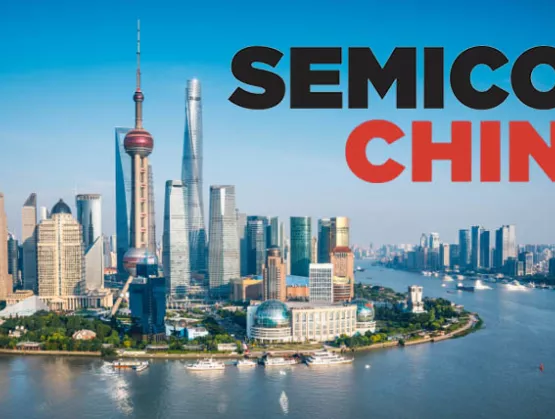
In the two months since the COVID-19 outbreak in January, the Chinese economy has shifted from shock to ongoing recovery under the guidance of the Chinese government. China has worked tirelessly to restore production at its chip manufacturing facilities, a core strategic industry in the region, and the effort is paying off. Operations at several fabs and OSATs – the domestic semiconductor industry’s chief growth engines – have begun to stabilize.As of mid-March, SMIC had restored its manufacturing lines to over 90% of production capacity and expects to be operating at full bore in the next few weeks, while the company’s R D line has returned to full operation. Huahong Grace reestablished normal supplies of various equipment parts and production raw materials. At Huahong Fab2, 12 new pieces of equipment went online to help increase production capacity, and production at Huahong Fab1 and Huahong Fab3 is now stable. JCET said the company's overall return rate has exceeded 90%. Meanwhile, IDM maker Silan Microelectronics' 6-inch and 8-inch lines maintained 90% production.Production lines at Huahong Group, SMIC, CanSemi, GTA Semiconductor, Samsung (Xi'an) and other mainland China chip manufacturers have been generally operating at normal capacity since the Spring Festival. Lines at YMTC, Tianma, CSOT, and BOE, all in the Coronavirus epicenter of Wuhan, have also returned to normal operations. China’s chip industry is finding its footing, and an impressive host of semiconductor companies are gearing up to participate at SEMICON China 2020, rescheduled to June 27-29. The list includes the major domestic wafer foundries such as Huahong, the major packaging and testing companies such as JCET, TFME, Huatian, and large domestic and foreign equipment companies, among them TEL, ASMPT, DISCO, ULVAC, VAT, ASML, KLA, NAURA, AMEC, Anji, CETC, Sinyang, SMEE, CAS, CANON and SPIROX.DigiTimes, a daily newspaper covering the semiconductor, electronics, computer and communications industries in Asia, interviewed SEMI China President Lung Chu in mid-March about what’s ahead for China’s semiconductor industry. Following is an English translation of the interview. DigiTimes InterviewAs China continues to ramp back up to normal activity, SEMI China is making every effort to hold SEMICON China 2020, a leading international semiconductor industry platform for promoting growth and innovation in China's semiconductor industry supply chain. SEMI China president Chu emphasized that the strong support of SEMICON China 2020 exhibitors and the Chinese government made rescheduling the event to June possible.Chu, a semiconductor industry veteran who has experienced numerous economic and industry upheavals over his career including the SARS shock in 2003, said current global economic uncertainty stems from two black swans – the global COVID-19 pandemic and how long it will take to contain it, and the sharp drop in oil prices triggered by the recent geopolitical dispute between Russia and Saudi Arabia. In China, the government responded with strict containment actions and promoted public awareness of self-isolation, resulting in effective domestic containment as of mid-March. As a major oil consumer, China sees the lower prices as relatively favorable to its economy. Those dynamics should allow China to recover sooner than many other regions, and it could emerge even stronger once the pandemic is contained, despite the current slump in global semiconductor demand, Chu said. Once the epidemic has passed, China is in a position of "turning crisis into opportunity," and the semiconductor industry will recover from the trough, he said. Companies in semiconductor supply-chain sectors face various challenges in restoring normal operations. IC design companies experienced relatively low impact since employees can work from home and most companies are located in major cities in China, where epidemic prevention control is strict. For most chip manufacturers, production has not stopped but is hampered by manpower shortages from restrictions on employees returning to work. IC packaging and testing companies are suffering bigger impacts because of the more labor-intensive nature of their operations. However, all companies in the supply chain will be affected by the decline in demand for electronic products and ICs in 2020. As the COVID-19 threat recedes in China, the region remains unwavering in its commitment to semiconductors as a strategic industry with its continuing efforts to evolve sustainable and reliable localized supply chains, Chu said. Investments in “new Infrastructure” for 5G, the Internet of Things (IoT), data centers, as well as public health services should help drive semiconductor demand for smart applications and devices associated with the new infrastructures as are all powered by ICs, benefiting companies in the global supply chain. The COVID-19 outbreak triggered a slowdown in new factory construction after the Chinese government implemented restrictions on the flow of people resulting in a worker shortage. SEMI has revised downward its forecast of wafer equipment spending in China to just a 3% increase this year.Market analysts revised downward forecasts for 2020 annual global semiconductor revenue growth from 7-10% to 0-5%, while some expect negative growth. The recent COVID-19 outbreaks in Europe, the United States and other regions have created more uncertainty. Declining end-user demand for electronics will drive down spending on upstream equipment for both memory and logic IC device makers. For Chu and his SEMI China staff, the postponement of SEMICON China 2020 has been a “major challenge,” he said. “It is a huge project to communicate and coordinate with the government and to reconfirm with exhibitors and industry leaders.”As a leading industry platform, SEMICON China attracts a large number of global customers and suppliers each year. The major China domestic suppliers, leading foundries and OSATs have confirmed their attendance in SEMICON China 2020. Most key foreign suppliers are planning to staff the event with local teams in case some executives are unable to enter China by June due to travel restrictions if the COVID-19 virus has not been brought under control in the United States, Europe and other regions. To assure the success of the concurrent Forums, SEMI has prepared multiple contingency plans, including live broadcast, video and slide presentations. SEMI will also hold the grand opening session at a larger venue than last year’s event to accommodate more attendees with more sitting distance apart. SEMI will follow government guidelines to implement appropriate public health and safety measures during SEMICON China. "Ensuring the welfare of all exhibitors and guests and providing a safe exhibition environment is SEMI’s top priority," Chu said.Cherry Sun is a marketing manager at SEMI China.
Read More
Skills are the key to the future. It is thanks to its skilled workforce that Europe will reap the benefits of the green and digital transitions and remain competitive. At the same time, upskilling and reskilling is a clear social policy because it ensures that workers can more easily navigate from one job to another.Microelectronics is at the crossroads of many sectors, such as the automotive industry, manufacturing, health, and energy. The European electronics industry is facing an acute shortage of skills in all tiers of its value chain, particularly in electronics design, both digital and analog, and in system and software engineering. A sustainable provision of qualified personnel is key to maintain competitiveness and innovation leadership. Yet, companies in this area suffer from a critical shortage of engineers with competence in microelectronics technology and design. The rapid evolution of the electronics industry calls for a continuous update of skills and knowhow.Vocational education and training has an important role to master these challenges. Modern, inclusive and dynamic vocational education and training programmes are a pre-requisite to remain competitive in the digital age. We must support agile partnerships to develop skills for smart industrial specialisation and the green and digital transitions. Everybody must be on board to shape the workforce transformation in Europe: industry, social partners, education and training organisations, as well as policymakers. The Blueprint for sectoral cooperation on skills launched in 2016 is an excellent model for strategic collaboration and will be extended.The Commission has recently proposed an update of our successful Skills Agenda for Europe. One key element is the new Pact for Skills, in order for all stakeholders to generate new concrete commitments to invest in upskilling and reskilling. It will help us to respond to the extent and speed of change in the economy and society. I warmly invite the microelectronics industry to participate in the Pact.I welcome the fact that SEMI and its 19 partners from 14 countries launched METIS – MicroElectronics Training, Industry and Skills Erasmus+ Project – in November 2019. METIS will receive 4 million EUR EU funding to implement a comprehensive strategy with a view to identify and fill skills shortages, to tackle skills mismatches, and to support upskilling and reskilling in order to address the challenges of the future of work and digitalisation.Nicolas Schmit is European Commissioner Jobs and Social Rights.
Read More