downloadGroupGroupnoun_press release_995423_000000 copyGroupnoun_Feed_96767_000000Group 19noun_pictures_1817522_000000Member company iconResource item iconStore item iconGroup 19Group 19noun_Photo_2085192_000000 Copynoun_presentation_2096081_000000Group 19Group Copy 7noun_webinar_692730_000000Path
Skip to main content
Default Banner Image

talent

Like TEL, many SEMI member companies have a long history of hiring veterans. We all have done a good job of hiring military personnel who possess the obvious semiconductor industry-related job skills and experience (e.g., avionics, hydraulics, mechanics, and radio frequency (RF)). But as an industry, are we doing enough? Are we missing out on the next employee of the year because we aren’t thinking broadly enough about our workforce? Five years ago, I met a young soldier at a military job fair. The interaction with him was a defining moment for me personally and it inspired me to commit to do more to translate military experience to the civilian workforce. Soldier: “What does TEL do?” Me: (Industry has a bright future, chips are in essentially everything including your military gear, etc.) Soldier: With disappointment, “Well, I don’t suppose I’m qualified to work at your company – since its technology.” Me: “Please stay for another moment, tell me your MOS (Military Occupation Specialty code) and job duties.” Soldier: “Ma’am, I’m a bomb specialist. I disable bombs.” Me: “Okay, let’s see if I get this right. You work with electrical schematics. It’s a given you follow instructions and guidelines, consider safety a p-r-e-t-t-y big deal, work under pressure, and you work with a team. Right?” Soldier: With excitement, “Yes, ma’am. And we have a squadron motto: “We have NO bad days!” Me: “Well then, you have the PERFECT background!” This conversation changed this soldier’s outlook on his career possibilities after exiting the military. He never imagined that the specialized training and experience he received as a bomb specialist would lead him to a role in the high-tech industry. He honestly believed he possessed no value to a civilian employer. It was moving to experience this gap of understanding face-to-face. Yet, this is a typical conversation between recruiters and hiring managers and military members. I could have easily let him walk away. Instead, I chose to invest 10 more minutes to learn more about what this soldier had to offer TEL. What is the key challenge around hiring military veterans? Disconnect. 90% of veterans surveyed faced challenges seeking civilian employment. According to Pew Research Center, only 1% of the entire U.S. population is qualified to join the U.S. military, and .5% (yes, that’s ½ of 1%) serve. This means 99.5% of the U.S. population has no direct working experience with the military. Civilian employers (recruiters, hiring managers, or employees) do not understand what the military does, the technical nature and responsibility of each role, or the extensive training each military member receives. And, veterans do not understand the civilian workspace. We truly have a gap translating military experiences and skills to the civilian workforce and vice versa. What are the benefits hiring military veterans? There are numerous benefits to hiring military veterans. Veterans are well-versed in cutting-edge technology. Today’s military is high-tech, state-of-the-art, and computer-based. Veterans are uniquely matched to our industry. Their jobs are highly technical and soldiers are extremely safety-conscious; they appreciate guidelines, follow directions, and possess a strong sense of team. Veterans are global citizens. Many military veterans have lived and worked in more than one country and speak more than one language. They tend to be culturally astute. Veterans have a winner’s psychology. Military members receive hundreds of hours of professional and technical training. They focus on a higher purpose and win as a team. Veterans practice accountability and leadership. Personal accountability is highly promoted. There is no room for excuses or acceptable reasons for mission failure. Everyone has the opportunity for a leadership role at some level and has modeling of what good leadership looks like. Hiring veterans aid diversity program issues over time. The military is a diverse group with 16% females and 44% people of color. Military personnel come from a wide variety of experiences – from across all 50 U.S. states with a variety of cultural and economic backgrounds. How can SEMI member companies truly effect change? Considering over 200,000 men and women exit the military annually, we have a significant opportunity to effect change by offering careers to those who serve while expanding our industry’s talent pool. Here are some initial ideas to get your company moving towards a more robust military outreach: Participate in the SEMI Foundation’s VetWorks Program: The Foundation is creating a toolkit to help member companies engage, hire, train, and retain veterans. This includes support for veteran-friendly messaging and recruiting, internships, training programs, and job fairs. This work will launch in Q2 of 2021 – contact Margaret Kindling at SEMI for details ([email protected]). Have a smart plan – Determine what positions make sense to focus on for veteran hiring. Start simple and grow your efforts over time. Set metrics for what percentage of your hires will be veterans. Recruiters can use simple key word searches to pull veteran resumes. Your company can attend military job fairs (in person or virtual) either at military installations or hiring events by organizations like Hiring Our Heroes, RecruitMilitary, etc. Offer diversity training related to hiring military veterans that focus on military vs. corporate cultures. Additionally, Society for Human Resources Management (SHRM) Foundation offers a Veterans at Work Certification Program available for all interested participants. Soldier For Life – This is an official U.S. Army program created to help connect current soldiers, retired soldiers, veterans, and their families with education, employment, and health and wellness resources and opportunities. If you are near a military installation, get to know the transition assistance program (TAP) officer or the base commander. You have to be persistent – the relationship will be worth it. Ask your network, including SEMI member companies, if they would share their military installation contacts. This is not a closed talent competition amongst our industry partners. Many companies who have a robust military outreach program are eager to share their stories to help you get started. It is simply the right thing to do to help each other make a difference for those who served. Internships/Mentorships/Fellowships. Ask your local military installation if they offer direct mentorships or internships. A great way to get started with internships is partnering with NAM’S Manufacturing Institute – Heroes MAKE America. Hiring Our Heroes is another great resource for fellowships. Let’s do more for those who served. Interested in starting an industry veteran network to share best practices? Please contact [email protected]. We can do this! Kathy Garner is Manager, Talent Acquisition, Global Mobility, and Contingent Worker Management at TEL. References Bradbard, D. (Institute for Veterans and Military Families, Syracuse University) Schmeling, J. (Student Veterans of America). The Recruitment, Hiring, Retention Engagement of Military Veterans. Retrieved from https://www.shrm.org/foundation/ourwork/initiatives/engaging-and-integrating-military-veterans/pages/veteransguidebook.aspx Parker, K., Cilluffo, A., Stepler, R. 6 Facts about the U.S. Military Changing Demographics. Pew Research Center. Retrieved from https://www.pewresearch.org/fact-tank/2017/04/13/6-facts-about-the-u-s-military-and-its-changing-demographics/ Reynolds, G. Shendruk, A. (2020, July 13). Demographics of the U.S. Military. Council of Foreign Relations. Retrieved from https://www.cfr.org/backgrounder/demographics-us-military Shifting Forward Consulting. Shift to the Civilian SUIT: How Veterans Can Successfully Navigate 3 Job Interview Challenges. (10/17/18). Retrieved from https://cherriedavis.com/veterans-successfully-navigate-3-job-interview-challenges/ SHRM Veteran Panel 2018. Retrieved from https://youtu.be/rgDUAALxTRg SHRM Veteran Panel 2018 Resources Bureau of Labor Statistics https://www.bls.gov/home.htm Heroes MAKE America http://www.themanufacturinginstitute.org/Initiatives/Military-and-Veterans/Heroes-MAKE-America/Heroes-MAKE-America.aspx Hiring Our Heroes https://www.uschamberfoundation.org/hiring-our-heroes Soldier For Life https://soldierforlife.army.mil US Department of Defense https://www.defense.gov/Our-Story/Our-Forces/ USO https://www.uso.org/
Read More
While Artificial Intelligence (AI) emerged in the 1950s, only in recent years have AI applications proliferated with the explosion of data and continuing improvements in Moore’s law that have driven rising processing speeds. Voice assistants, image analysis software, search engines, and speech and facial recognition systems were among the first applications to use AI. Today, adoption has spread to sectors such as agriculture, cybersecurity, healthcare, software development, e-government and the intelligent enterprise to generate jobs and help spur economic growth. The Edge AI Opportunity and the Microelectronics IndustryAI can be embedded in hardware devices such as advanced robots, autonomous cars, drones or Internet of Things (IoT) applications. Today, according to the EU’s digital strategy, data centres and other centralized computing facilities account for the vast majority – 80% – of AI data processing and analysis, with smart connected objects such as automobiles, home appliances and manufacturing robots that bring the compute function closer to the user representing 20%. The latter, known as Edge AI applications, are powered by edge-based machine learning chipsets, not the AI chipsets designed to run cloud-based machine learning algorithms.The EU’s white paper on AI published in February 2020 anticipates that the way data are stored and processed for AI applications will change significantly over the coming five years as edge computing applications proliferate. Most AI applications need to connect with devices that collect data and manage data flows. When the applications connect with cloud infrastructures to train large volumes of data for a machine learning model, the interface devices often require hardware support. Edge AI can minimize data transport by processing data directly from local devices to accelerate data analysis and decision-making and make data transport or accelerator hardware unnecessary, critical in reducing power consumption and enhancing data security for applications such as autonomous driving. Over the past 40 years, the ICT sector has been continuously increasing greenhouse gas (GHG) emissions despite efforts to shift to renewable energy. Cloud-based AI applications require an ICT infrastructure for high-performance computing and high-speed connectivity. According to MIT Technology Review, data centres’ AI workloads could account for a tenth of the world’s electricity usage by 2025. a mass update of cloud-based AI applications may significantly increase energy consumption, unlike with Edge AI. This is why the strategy for developing Edge AI is well-aligned with the EU’s Green Deal objectives. Europe aspires to play a leadership role in Edge AI to strengthen the sector’s competitiveness and protect the European digital sovereignty. Europe’s strong industrial competencies in embedded systems and microcontrollers will help the region promote development of European domestic AI solutions for emerging high-value IoT applications in industrial processes such as Industry 4.0, Connected and Automated driving (CSA), smart cities, climate action, healthcare, and national defence and security. With this strong strategic position in technology, Europe is well-positioned to invest to become the leader in the Edge AI global market.Preparing the Workforce for the Microelectronics IndustryTo design and manufacture leading Edge AI chipsets, European education providers and industry will need to work closely together to train the current and future workforces. Within the framework of the METIS project, a four-year project co-funded by the European Commission through the Erasmus+ programme, SEMI and imec deployed experts in the field to survey and interview focus groups. The survey identified the following key focus areas for workforce development: 1. True Capability of AI and Data Science With AI’s heavy dependence on data, the workforce of the future must be trained in areas of data science including data integrity to ensure quality, unbiased sourcing, collection and accurate analysis necessary to interpret huge volumes of data. Europe also needs to train the next generation of AI chip designers in data security and privacy – key challenges to the widespread deployment of Edge AI chips. 2. Climate Change, Sustainable Development Goals (SDGs) and Social Inclusion TrainingSince the industry must be able to develop Edge AI solutions to enable the digital transformation while limiting GHG emissions, microelectronics engineers need to be schooled in climate change and understand how their work contributes to meeting the United Nation’s Sustainable Development Goals (SDGs). Workplace diversity and social inclusion are also important target areas for education since Edge AI applications should serve various groups of people with different needs.3. EthicsChip industry workers must also be educated in ethical issues of AI related to the technology’s potential societal impact in the near future[1]. With AI applications capable of monitoring Internet searches based on users’ personal preferences and biases to deliver tailored advertising, news and other information, developers must recognize how the technology can influence thinking and behaviour of individuals and groups. This awareness can help developers strike a balance between supporting commercial interests and societal good so the microelectronics industry can ensure ethical implementation of AI. 4. Cross-disciplinary Skills Required for AIAI development requires a comprehensive, cross-disciplinary skill-set to be able to integrate the work of specialists from diverse educational, cultural and professional backgrounds critical to developing non-biased AI solutions. For example, in addition to technical expertise, microelectronics AI developers must be able to communicate clearly and work in close-knit teams with non-technical experts from business, law, medicine and the social sciences.What’s Next?The microelectronics industry has a tremendous opportunity to develop new chip-based solutions for AI architectures, and apply AI techniques to improve operational efficiencies of design and manufacturing. To seize this opportunity, the industry must work closely with education providers to groom the next generation of skilled workers. This tight collaboration is critical to designing and delivering specialised courses to college and university students as well as engineers now working in the chip sector. The stakes are high. By preparing workers to develop Edge AI chipsets, the microelectronics industry can help the world confront some of the greatest challenges it faces today.For more information, see SEMI Responds to European Commission White Paper on Artificial Intelligence.METIS is a Sector Skills Alliance project co-funded by the European Commission’s Erasmus+ Program and coordinated by SEMI. The four year project, launched in November 2019, will develop a Microelectronics Skills Strategy. Based on the strategy, the METIS project will design 43 training modules for 1,100 hours learning in four key areas of the microelectronics sector.We thank Patrick Blouet (STMicroelectronics) and Jeroen Geusens (imec) for their valuable contributions to this article.[1] Ethics of Artificial Intelligence and Robotics, Stanford Encyclopedia of PhilosophyDr. Yanying Li is senior manager of Collaborative Projects at SEMI Europe.Dr. Pushkar P. Apte is the strategic technology advisor for the Smart Data AI Initiative at SEMI
Read More
Over the next five years the Taiwan government plans to invest NT$1.546 billion to build the workforce direly needed for future semiconductor industry research and development. The largesse is a tribute to efforts by SEMI president and CEO Ajit Manocha to enhance the competitiveness of the semiconductor industry by stressing the importance of talent development during his annual visits with the Taiwan president. He has been instrumental in bringing together Taiwan government agencies and local industry representatives – two players in developing the talent pool of the future – to discuss workforce initiatives.As the talent gaps threatens to choke the long-term growth potential of the chip industry, Manocha has emerged as a passionate champion of workforce development. In a letter to more than 2,000 semiconductor companies worldwide, he urged to executives act together to build the workforce vital to industry growth. In 2018, he met with Taiwan President Tsai Ing-wen to discuss ideas for attracting and retaining skilled workers to help ensure Taiwan remains a top investment destination for high-tech multinationals.In early 2019, SEMI Taiwan established its SEMI Taiwan Workforce Development Council to promote talent and career development. Already, the group’s work is resonating in the global semiconductor industry. In September last year, Manocha joined executives from industry heavyweights ASE, MediaTek and TSMC in a visit to President Tsai to urge the government to pursue industry sustainability through talent development. President Tsai responded by instructing her staff to review government resources available for talent development, help drive public-private dialogue and partnerships, and form talent development projects involving the government, industry, academia and research institutes.To carry out comprehensive workforce initiatives, SEMI Taiwan continues to work with the National Security Council and the Executive Yuan (the cabinet). We also launched the Semiconductor Industry Development Council in partnership with leading high-tech companies in Taiwan including ASE, TSMC, MediaTek, PSMC, VIS, MXIC, Nanya, Etron and UMC. Focused on developing semiconductor talent and technology, localizing equipment sourcing, and improving cybersecurity, the council has formed the following seven initiatives: Make existing government talent development programs more flexible to better meet the industry’s workforce needs. Recruit outstanding scholars and leading experts in scientific research, and solicit world-class scientific research teams. Extend age restrictions and other requirements for the Einstein Program (established by the Taiwan MOST, Ministry of Science and Technology) to attract outstanding foreign scholars to Taiwan. Establish a domestic semiconductor research ecosystem and provide sufficient research funding to cultivate R D talent. Strengthen female education in STEM (science, technology, engineering, mathematics) and encourage women to re-join the workforce to help meet the industry’s workforce needs. Continue to promote MOST University-Industry Collaboration Projects (Large Alliance) to connect the upstream academic and research sector with downstream industries. Encourage cooperation between science and technology universities and the chip industry to develop the talent necessary for smart manufacturing to thrive. SEMI’s advocacy efforts with the Taiwan government, the industry and academia are clearly paying off. The Executive Yuan recently announced three major talent development strategies – expanding the talent development capabilities of higher education institutions, promoting industrial-academic cooperation and encouraging businesses to strengthen recruiting efforts and increase funding for semiconductor talent development.The building momentum includes plans by the Taiwan Ministry of Education plans to establish semiconductor technology research centers at several national universities. By passing the sandbox law and loosening regulations organizational personnel, finance and education, the government is freeing up more funding to support semiconductor industry talent development. The ministry also plans to gradually expand the number of students enrolled in STEM curriculum and continues to promote talent training programs and recruiting strategies to help close the workforce gaps and reduce related industry risks. A highly skilled workforce is indispensable to the development of the semiconductor industry and among the most strategic resources in any region. It’s only through long-term partnerships between the government, industry and academia that impactful and sustainable workforce development goals and initiatives can be developed to help the chip industry realize its full potential to innovate and solve some of the world’s greatest challenges. The programs are key to the ability of Taiwan’s semiconductor industry to sharpen its competitive edge. More importantly, they are also the center of gravity in the region’s pursuit of its position as the global semiconductor hub. Jo-Ann Su is senior director and Winnie Chang is marketing and public relations specialist at SEMI Taiwan.
Read More
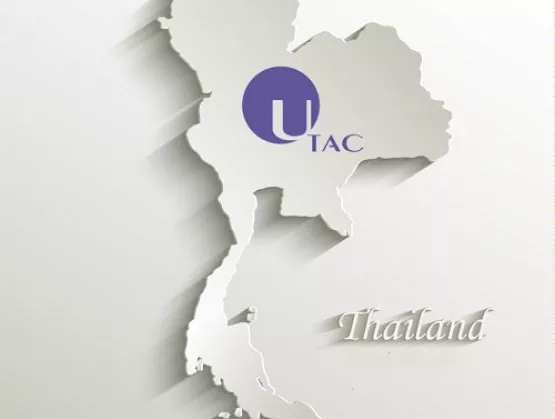
SEMI is pleased to welcome Singapore-based UTAC Holdings Ltd., formed nearly 50 years ago, as a new member. UTAC is a leading independent provider of assembly and test services for a broad range of semiconductor chips, offering a full range of semiconductor assembly and test services across analog, mixed-signal and logic, and memory. Its customers are primarily fabless companies, integrated device manufacturers and wafer foundries. The company has production facilities in Singapore, Thailand, China, Indonesia and Malaysia as well as sales offices in five regions: the United States, Japan, China, Taiwan, the rest of Asia and Europe.I recently spoke with Dr. Nathapong Suthiwongsunthorn, Vice President and General Manager of UTAC Thailand, about UTAC’s smart manufacturing advances, the company’s role in the semiconductor industry’s transformation, and the industry outlook for Thailand over the next year.Ng: How does UTAC Thailand complement your other facilities?Dr. Nathapong: As one of the world’s largest producers of quad-flat-no-leads (QFN), UTAC Thailand has significant capability in assembly and test of advanced leadframe products including power products such as Cu Clip packages as well as MEMS products. We also serve top global IDMs and have the largest share of assembly and test for the automotive market among all UTAC operations. UTAC’s other facilities have expertise in wafer-level packages and system-in-a-package and serves the communication and consumer market not only for IDMs but also for the fabless and foundry companies. The Thailand factory nicely complements the other UTAC facilities both from the standpoint of operational and marketing diversity. Ng: UTAC Holdings Ltd. announced in August this year that it has completed its sale to Wise Road Capital, a global private equity firm. Will this in any way change the operation and business strategy of UTAC Thailand?Dr. Nathapong: I don’t believe it will change the way we operate. However, the acquisition is very positive for us from a financial perspective. With the benefit of significantly reduced debt and interest expenses, we will be able to expand our business to grow with and hopefully beyond the semiconductor market. Ng: To what extent has UTAC adopted smart manufacturing?Dr. Nathapong: UTAC Thailand is leading the way in terms of automation, smart manufacturing and Industry 4.0 with our in-house automation team and unique expertise. For example, we have built our own inspection equipment that is much faster and cheaper than what is commercially available. We also working on many programs such as mobile robot, AGV, auto inspection and office automation to help drive greater production efficiency. We are replicating our manufacturing advances and fanning them out to other UTAC facilities.UTAC Thailand Ng: What are some of the challenges you face in pushing for the industrial transformation in Thailand?Dr. Nathapong: I think the key challenge is to find skilled engineers who can perform hardware- and software-related tasks critical to the industrial transformation. But frankly, we have done a good job in managing this challenge by hiring very smart people, providing them with the required in-house training, and using outside training for new recruits as necessary. We have developed partnerships with capable vendors in this regard as well.Ng: What are the key differentiating elements (e.g. talent, tax, technology, trade, EHS) in Thailand that have been instrumental in supporting the E E ecosystem?Dr. Nathapong: There are two key differentiating elements for us. Firstly, UTAC has been around for over 47 years and is very well-established in Thailand with a positive reputation as an employer. This makes hiring talented people relatively easy. Secondly, and perhaps more importantly, the nature of the Thai people and also the benefits the company provides make it relatively painless to retain key employees. I also believe that we have a significant number of engineers available in Thailand. Finally, labour costs in Thailand are still very reasonable and stable. So we are able to acquire talent at a very competitive rate compared to other countries. Ng: What is the industry outlook for E E industry in Thailand over the next year?Dr. Nathapong: Surprisingly, the current sad predicament of COVID-19 has shown no negative impact for the global semiconductor industry – people seem to be buying more electronics with the lockdown. Our outlook for the Thailand’s E E industry is similarly very positive. Most semiconductor companies including UTAC see significant growth this year and I hope it will continue.Ng: With the recent semiconductor geopolitical and trade tensions, are more customers moving their business to Thailand?Dr. Nathapong: I believe so. We do see some of our key customers move manufacturing out of China and into Thailand. The relocations help them offset or avoid any potential fallout from current geopolitical tensions.Ng: In what areas do you think SEMI Southeast Asia can play a role to help our members companies in Thailand like UTAC?Dr. Nathapong: The semiconductor industry has been in Thailand for a long time. In fact, UTAC Thailand is 47 years old this year! However, I feel that Thailand never really worked with a strong establishment organization like SEMI that can connect various companies together to help drive innovation. I think SEMI Southeast Asia can truly help Thailand to move up to the next level of providing semiconductor solutions globally. We welcome SEMI Southeast Asia’s help in this regard.About Dr. Nathapong SuthiwongsunthornDr. Nathapong Suthiwongsunthorn joined UTAC in 2009 and is currently General Manager of UTAC Thailand, UTAC’s largest operation site. Before taking over the management of Thailand operations, he was Vice President of Research and Development, running UTAC’s global R D group. Dr. Nathapong has more than 20 years of experience in the semiconductor industry. He holds more than 40 international patents and publications in wafer-level and advanced packaging.Prior to joining UTAC, Dr. Nathapong held several key leadership positions in research and development at Schott, STATS ChipPAC and Infineon. Dr. Nathapong has a Ph.D. in Electronics Engineering from Oxford Brookes University, England.Bee Bee Ng is president of SEMI Southeast Asia.
Read More
Europe is facing an acute shortage of skilled microelectronics workers that undermines the growth potential of not only the electronics industry but the European economy as a whole. Nearly 1.1 million job advertisements for electro-engineering workers were placed in the EU between mid-2018 and the end of 2019 (CEDEFOP, 2020). The shortfall looms large as a skilled and diverse workforce that can continuously innovate is the oxygen of microelectronics. In light of the critical importance of microelectronics to Europe’s ability to fulfill its growth potential, SEMI Europe participated in the high-level roundtable hosted by Commissioner Nicolas Schmit and Commissioner Thierry Breton on October 5. The discussion’s key takeaway: The skills challenge facing the microelectronics industry is too complex for one organization to tackle, and reskilling and upskilling its workforce should be a common priority for Europe. Only with a diverse, substantial and skilled microelectronics workforce can Europe achieve its R D, design and manufacturing ambitions while ensuring its sovereignty in the digital age. The roundtable highlighted the EU Pact for Skills as a key means to narrow the industry’s skills gap.An ever-growing part of our lives, microelectronics, with their ability to run billions of computations per second and store vast quantities of data, are the brains of modern technology. The digital sovereignty of nations around the world today relies on advanced microprocessors to collect, transfer, analyze and store immense amounts of data used in key end-user sectors such as mobility, telecommunications, energy, security and healthcare. Information and communication technologies (ICT) enabled by microelectronics are helping much of the world’s population to work and study from home and remain safe during the COVID-19 pandemic.According to the Smarter2030 Report, further deployment of ICT, including electronic components in critical sectors such as transportation, manufacturing, agriculture, construction and energy, could eliminate the equivalent of 12.1 billion tons of CO2 per year globally. These are some of the reasons why nations worldwide are making large-scale investments to advance a homegrown microelectronics R D, design and manufacturing base. It is no surprise, then, that semiconductors are now at the center of the so-called global techno-trade wars.Clearly, Europe urgently needs to mobilize and pool resources to develop effective lifelong learning programs for all workers and continue investing in microelectronics innovation. We need to instill the passion for creating technology among current and future workforce, in particular women and people with challenged backgrounds, and build a highly diverse talent pool. Working together, we can better demonstrate how computing technologies, including quantum, high-performance and edge AI, provide solutions to grand societal challenges and attract talented people to the fascinating world of electronic components and systems.Against this backdrop, the microelectronics industry finds the Pact for Skills very timely and crucial to advancing the talent pool underpinning Europe’s deep digital ecosystem. The Pact will play an instrumental role in improving the scope and the quality of training partnerships at regional, national and European levels, sharing best practices and helping the microelectronics industry and workforce adapt to the effects of COVID-19.The microelectronics industry is committed to building on the momentum created by the METIS Erasmus+ collaborative project and to mobilizing our ecosystem and education partners for a successful Pact for Skills in Microelectronics starting this year.The High-Level Roundtable: Skills for Microelectronics was hosted by Commissioner Thierry Breton and Commissioner Nicolas Schmit. Participants included Paul Boudre, CEO, SOITEC; Lars Reger, CEO Germany and CTO, NXP; Frits van Hout, Executive Vice-President and Chief Strategy Officer, ASML; Françoise Chombar, CEO, Melexis; Emmanuel Sabonnadiere, CEO, CEA-Leti; Luc Van den hove, President and CEO, imec; Sabine Nietzsche, Board member, Silicon Saxony and Vice President, GlobalFoundries; Laith Altimime, President, SEMI Europe (coordinator of METIS); Yolande Berbers, President, European Society for Engineering Education (SEFI); James Calleja, President, European Forum for Technical Vocational Education and Training (EFVET); Ludovic Voet, Confederal Secretary, European Trade Union Confederation (ETUC).Emir Demircan is director of Advocacy and Public Policy at SEMI Europe. To learn more about SEMI Europe advocacy, contact Emir at [email protected].
Read More
Like so much else these days, career mentoring in the semiconductor industry has gone virtual. And, among hiring managers, for good reason: Chip companies are facing a new urgency to hire skilled workers as recent SEMI forecasts spanning packaging materials and fab equipment spending show strong growth in 2021 – a trajectory that puts even more pressure on an industry confronted with a worker shortage to attract and recruit new talent.Enter SEMI Korea, which early this month gathered nearly 4,000 sheltered-in-place South Korea university students to offer tips from semiconductor industry insiders on how to kick-start their careers in the chip business. In 14 sessions over three days, industry powerhouses offered guidance across topics ranging from educational preparation and job skills to resume writing and interviewing. Like last year’s on-site event, students from Seoul accounted for the bulk of those online for Campus Outreach On-Air. But this year saw a far higher turnout of students in provincial cities thanks to the ease and convenience of virtual communications – a silver lining in the age of COVID-19.Establishing a successful career in the semiconductor industry starts with a mix of soft and hard skills, according to Changjin Kang, CEO of SEMES, one of the top 10 global semiconductor equipment companies. Keynoting the event, Kang pointed to six key attributes in particular – caring, resilience, execution, analysis, tenacity and experience – under the acronym C.R.E.A.T.E.Caring means empathy for colleagues, understanding their unique work environment and challenges, and building strong relationships. To help cope with the stress that can come with working in the industry, workers must be also be resilient by managing the emotional demands of a job and getting enough rest. Execution comes down to thorough, methodical planning. Carefully analyzing information to make data-driven decisions is a critical aspect of successful outcomes, while having the tenacity to push through difficult technical challenges helps engineers develop the right solutions. And getting out from behind the desk to learn from colleagues is important in building experience.Human resources representatives and engineers from Applied Materials, ASML, Dongjin Semichem, EO Technics, Jusung Engineering, KLA, Lam Research, Merck KGaA, Darmstadt, Germany, PSK, SEMES, SK Siltron, TEL and Wonik IPS shared with the students the key competencies needed to forge a career in the semiconductor industry. Engineers pointed to the benefits of improving their English skills through language training and continuing their education by pursuing engineering certificates. Human resources representatives stressed the importance of a global mindset since, as part of the global semiconductor ecosystem, engineers and other staff often communicate via conference calls with colleagues around the world.In a post-event survey, the students – all digital natives – awarded the event 4.3 out of 5 points for overall satisfaction and made clear that they prefer online Campus Outreach to the on-site event.“Thanks to SEMI and the companies for providing a great opportunity to meet experts and HR managers,” one student pointed out in the survey. “It was very useful because it opened up opportunities for many students to communicate with semiconductor companies.”“It was nice to know what works semiconductor engineers do,” said another, “and how as university students they prepared for employment.”SEMI Korea thanks the nine semiconductor companies that sponsored Campus Outreach On-Air to help build the industry’s talent pipeline and the students for their invaluable participation.Jaegwan Shim is a marketing specialist at SEMI Korea.
Read More
As the semiconductor industry continues to grapple with the widespread effects of the COVID pandemic, at the SEMI Foundation we continue to build programs and initiatives that inspire the next generation of STEM workers and drive new and diverse talent to all of our member companies.Our work to build out the semiconductor workforce centers on creating more diversity, equity, and inclusion within the industry. We want everyone to win. We want students and workers to benefit from these excellent jobs. We want our industry to diversify to increase our productivity, innovation, and our bottom lines. And we want to fulfill the extraordinary potential of electronics to help people around the world in the way they work and live. COVID-19 is hitting certain populations – women, veterans, and Black, Indigenous and other people of color – particularly hard, so our work has never been more timely or important for local communities and the global economy.To that end, we’re going big by generating funding and designing initiatives that will benefit the industry over the long term. The SEMI Foundation’s SEMI VetWorks Program, currently in development, will help U.S. veterans better understand our industry, the careers available to them, and how their skills will transfer to working in microelectronics. The program also provides training portals and mentorship support to smooth their transition to the industry.We’re also working to fund our Women In Industry Network, a major new initiative designed with national partners to significantly increase the representation of women, who today account for just 10-25% of the semiconductor workforce across all roles and functions. What’s more, the SEMI Foundation’s global industry image and awareness campaign is inspiring more young people to enter high-school and university STEM programs and ultimately pursue careers in microelectronics while encouraging current workers to re-skill or up-skill and join the tech workforce.Meanwhile, your High Tech U team continues to connect semiconductor companies with students all over the globe. While we’re eager to get back on the road to meet and inspire students in person, we are excited to provide updates about two of our programs:HTU in the ClassroomWith the transition to online and hybrid learning classrooms, we seized the opportunity to combine STEM activities from SEMI High Tech U with discussion sessions and other projects to help students explore and deepen their understanding of the semiconductor manufacturing process. The 16-week pilot program, called HTU in the Classroom, will launch late next year to introduce high-school students to four key areas of chip production: patterning and layering, the chemistry involved in photolithography, logic gate systems, and computational thinking. These interviews with SEMI member companies will give students a chance to share their new knowledge gained from the class and to ask questions about what life is really like as an engineer, HR professional, or manager in industry.From Sand to SiliconWith silicon the lifeblood of our industry, it is impossible to understand what makes the semiconductor/microelectronics industry tick without knowing more about the companies, processes and technologies that all make it possible. That’s why we are developing a self-guided online journey through the chip manufacturing process for students and educators. This will go beyond reading like a Wikipedia site. Instead, the learning and exploration will feature interactive elements including company videos and links to resources such as fact sheets as well as university and company websites. At each stage, students will get details about the companies and individuals who do the work and the paths the professionals followed to these roles. The big-picture look will show how all the production stages come together to build working devices that power everything from smartphones to data centers.The SEMI Foundation is grateful for your support and partnership as we all work through these unprecedented times and roll out new programs to help build the talent pipeline. To learn more about or support our workforce development programs, please contact Shari Liss, SEMI Foundation’s Executive Director, at [email protected].
Read More
METIS, a Sector Skills Alliance project co-funded by the European Commission’s Erasmus+ Program and coordinated by SEMI, recently launched an online questionnaire aimed at gauging the skills and expertise the industry needs to drive continued growth over the next five years. The survey, which will stay online until 15 October 2020, is a part of the METIS project’s efforts to involve a broad range of stakeholders in the microelectronics industry to assess workforce, future technology and economic trends influencing talent development and the skills needed most today and in the next five years. The survey aims to highlight the skill mismatches in specific job profiles that are of increasing importance to the microelectronics industry. It elaborates on the upskilling and reskilling needs for design engineers. Given that semiconductor design is becoming increasingly crucial for Europe’s competitiveness and technological sovereignty, the new skills required from design engineers are a priority area for the METIS project. Other examples are the manufacturing and maintenance technicians, two job profiles that are currently experiencing significant shifts in their skillsets, as COVID-19 has thoroughly transformed their way of work.While the microelectronics industry has been very aware of the importance of the high level of investment in R D, it is equally crucial to ensure that the workforce of the industry is equipped with knowledge and skills for the rapid technological developments. Maintaining high levels of investment in workforce including attracting talent, updating their knowledge and skills with the latest technological development, and supporting them to lead innovations, is essential for this industry. There is a growing demand for specific requirements for this sector to support innovation in many other sectors such as automotive, energy, healthcare, and government, to foster benefits from emerging digital technologies such as Cloud Services, Internet of Things (IoT), Artificial Intelligence (AI), Digital Reality, and Blockchain.In addition to the online questionnaire, the METIS project consortium is interviewing top experts from leading microelectronics companies, education representatives from universities and training academies, and experts from government agencies and industry associations. The interview outcomes provide inputs on what kind of employee profiles are the most difficult to find, what skills this sector is looking for in a candidate, and what kind of training and policy frameworks are needed to improve employers’ skills. Those inputs are essential to develop the skill strategy and form recommendations on training modules.Furthermore, the METIS project consortium is organizing 10 focus groups. Each of the focus groups is dedicated to a key topic, such as SC design, SC materials, semiconductor manufacturing equipment, etc. For example, one of the METIS focus groups is dedicated to Edge AI, a top priority for the microelectronics industry. Strengthening the AI talent pipeline is essential to harness the potential of Edge AI in Europe and to facilitate the shift from the Cloud to the Edge when possible in order to meet specific demands (e.g. for autonomous driving), reduce energy consumption for data communications, and to increase efficiency. The EU’s White Paper “Artificial Intelligence - A European approach to excellence and trust”[1] , published this February, also emphasizes the importance of upskilling and reskilling to position Europe among the global leaders in AI. Hence, the focus group will work towards pinpointing the skills necessary for the semiconductor workforce to capture the potential of the trend.The results of the survey, interviews and focus groups will be used to form the Microelectronics Skills Strategy. Based on this strategy, the METIS project will design 43 training modules for 1,100 hours learning in four key areas of the microelectronics sector:Component designSystem designBasic of manufacturingKey competencies and innovative thinkingThe METIS project is planning to recruit 2,000 learners in companies and education and training institutes to participate in the trainings and validate the impact. The METIS project will also work with companies, education and training providers to ensure continuity of the initiative and foster cooperation.During the METIS project course (2019 – 2023), the Skills Strategy will be updated yearly to reflect the latest technology and market trends. To enable the Skills Strategy to continue serving the industry, METIS is working on forming a permanent instrument, named Observatory and Skills Council, to continue developing the skills strategy, update the training and facilitate cooperation between industry and education and training providers.Laith Altimime, president of SEMI Europe, and 50 members of the Microelectronics Training, Industry and Skills (METIS) consortium The METIS consortium invites companies and associations involved in microelectronics training and education provision, human resources and career services professionals, technology strategists and policy makers to complete the online questionnaire. Stakeholders are also welcome to subscribe to the METIS newsletter for the latest on METIS programs. For more details, please contact Yanying Li at [email protected].[1] EU’s White Paper on Artificial Intelligence available at: https://ec.europa.eu/info/sites/info/files/commission-white-paper-artificial-intelligence-feb2020_en.pdfDr. Yanying Li is senior manager of Collaborative Projects at SEMI Europe.
Read More
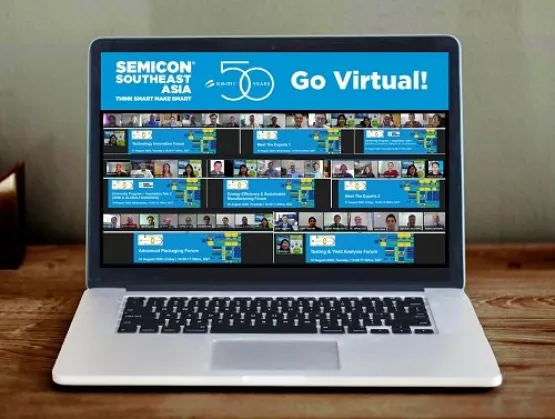
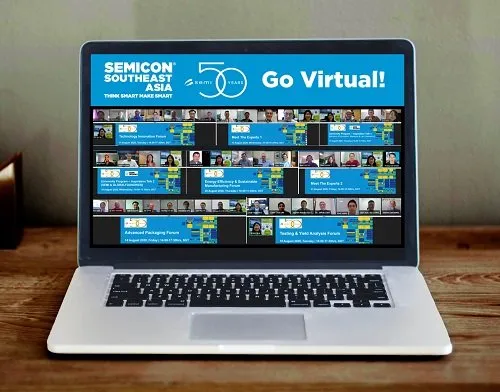
Never before had we expected that SEMICON SEA 2020 would go virtual.The COVID-19 crisis abruptly halted our ability to hold our premier Southeast Asia electronics manufacturing exposition as we typically do – in the physical realm. The pandemic tested our adaptability, challenged our willingness to experiment and, perhaps above all, accelerated not only our own but the world’s digital transformation. We had to change our way of doing business and learn to connect virtually like we had never had before. SEMI continues to believe that virtual interaction is no replacement for face-to-face engagement. But, like the rest of the world, we fast-tracked our digital education and staged the virtual event 20 July to 21 August 2020 to gather supply chain players and help fulfill the tremendous potential of our great industry. For all the suffering the COVID-19 has caused, the pandemic has underscored an important truth – that we need innovation through collaboration now more than ever to help solve the world’s greatest problems. We thank all our event sponsors as we turned what started as a grand experiment into a successful event that drew nearly 3,000 attendees to our webinars, business matching sessions and other online offerings designed to help them uncover new business opportunities. Following are other highlights. Southeast Asia Pavilion at Virtual SEMICON West 2020 In our first collaboration with SEMICON West, our Southeast Asia Pavilion at the event welcomed virtual visitors from around the globe to help them form new connections and grow their businesses. Business Matching Sessions Technical buyers from more than 15 multinational companies along with 141 pre-qualified suppliers attended more than 50 meetings across four online business matching sessions.Technical WebinarsCompany representatives from regions including Malaysia, Singapore, Vietnam, Taiwan, the United States, the UK, Israel, China and Japan shared their expertise and industry insights at SEMICON Southeast Asia 2020 webinars. In addition, experts from leading semiconductor companies such as Micron Semiconductor Asia Operations, ViTrox Corporation Berhad and A*STAR took part in our technical exchange by sharing the latest trends in the rapidly evolving semiconductor industry. Talent Development: Inspirational University Program Talks With building the talent pipeline critical to sustaining growth of Southeast Asia semiconductor manufacturing dynamics, talent champions from Lam Research and GLOBALFOUNDRIES highlighted career opportunities and pathways for young engineers while generating recruiting leads. More than 750 students from Malaysia and Singapore engaged panelists with questions during the sessions. The SEMICON Southeast Asia team extends its tremendous thanks to sponsors and attendees for their support. As we all navigate the pandemic and hope in the near future to awaken to a brighter day, we will continue to connect virtually and, whenever possible, in person as the semiconductor industry evolves and flourishes. The SEMICON SEA 2020 team In the meantime, we will all continue to pull together to support our resilient industry as it outperforms most other manufacturing sectors. Semiconductor capital equipment shipments were up 23% globally in the second quarter of 2020 versus the same period in 2019 and semiconductor chip growth remains in positive territory. Our team has already started planning for SEMICON SEA 2021, scheduled to take place at the Setia Spice Convention Centre in Penang, 18-20 May 2021.We look forward to seeing you again soon as we continue to strengthen the microelectronics ecosystem!Bee Bee Ng is president of SEMI Southeast Asia.
Read More
To attract and cultivate new talent across the microelectronics industry, virtual SEMICON West 2020 offered wide-ranging career insights for engineering students seeking that vital first job and young employees embarking on their careers. They learned about overcoming challenges at work and gained a competitive edge by connecting with industry leaders for insider knowledge. These are just some examples of how the SEMI Foundation and the SEMI Workforce Development and Diversity, Equity and Inclusion (DEI) initiatives serve as a springboard to careers in the industry and help close its talent gap.Following are experiences of aspiring engineers at SEMICON West and career lessons presented to help them shape the future of our semiconductor industry.Jump-Starting Careers at SEMICON West 2020More than 600 students from over 50 colleges and universities across the Unites States joined SEMICON West 2020 to jump-start their careers in the semiconductor industry. With free access to SEMI’s first virtual expo, they connected with recruiters and companies in the exhibit hall, and sponged up insights from speakers about digital internships, job opportunities, and key trends shaping the digital future.“It was almost overwhelming,” said Jason Wong, 20, a junior at San Jose State University working toward an advanced degree in mechanical engineering. “It was kind of like an engineering student’s dream for contacts and knowledge all on one platform.”Wong visited about 15 booths in the online exhibit hall to speak with company representatives about his field of interest – microelectromechanical systems (MEMS).“MEMS is a pretty niche area, so it was really surprising how many companies were there in this category alone,” Wong said.Through the expo’s chat tool, Wong made some solid contacts and has followed up with several engineers via email, LinkedIn and Zoom meetings, cultivating what he believes will be “some long-lasting and valuable connections.”“I’m not really looking for a job at the moment, but I hope to get an internship at some point,” Wong said. “With the current (COVID-19) outbreak, a lot of events with opportunities to interact are no longer available, so this was an enlightening and useful experience for me I plan to attend again.”On the other side of the country in Virginia, Devayani Pawar, 23, found it easy to network at SEMICON West. She especially appreciated the free pass for students and practical sessions in the Smart Workforce Pavilion tailored to help early-career job seekers find opportunities, build contacts, and polish resumes.She was drawn to the Smart Manufacturing Pavilion because of her skills and interests in toolmaking and wafers.“I understand manufacturing and it’s a hot field right now,” said Pawar, who recently earned her master’s degree in data science from George Mason University. “It’s interesting to me how such tiny components can do so much powerful work.”“A lot of people my age aren’t very aware of the microchip industry – they’re mostly focused on information technology and companies like Google, Amazon, or Facebook,” Pawar said.After landing an internship at Micron Technology analyzing wafers and working in clean rooms, she was wowed by the potential of nanotechnology. Pawar learned about the strong demand for data scientists in semiconductor manufacturing. After making connections at SEMICON West and absorbing information, she now has a better handle on career opportunities.“The recruiters and other contacts I made have been so responsive, and now I have a better understanding of use cases and what companies are seeking,” she said.A Day in the Life of an EngineerRight after college in 2017, Erika Gabrielle Hansen joined Applied Materials as an engineer. She told management she wanted to travel, learn about the “big picture” behind the company’s products, and work with customers.In her presentation A Day in the Life of an Engineer at the SEMICON West Smart Workforce Pavilion, she recalled a whirlwind of unforeseen opportunities, soul-searching challenges, and the rewards of personal, professional, and community growth. She also candidly shared lessons learned about pride, collaboration, and resilience.Her journey began when she had the opportunity to share her aspirations for her at career at Applied and landed a dual role as a process engineer and customer account technologist.In her job as a process engineer, Hansen puts her materials engineering degree from Cal Poly, San Luis Obispo to good use analyzing data, solving technical problems, developing new processes to meet customer requirements, and working with cutting-edge technologies. At one moment she might be in a clean-room laboratory wearing a bunny suit doing hands-on work with tools. In another, she could be videoconferencing with hardware, software, and systems engineers worldwide, or preparing a report for upper management.“I was very nervous at first as a process engineer,” Hansen said. “I was the only person in my group who didn’t have a Ph.D. and tried to compensate for that by doing things on my own and not asking for help.”After making a few mistakes, she began to turn to her team for their expertise and sharing the results of her work – both good and bad – with them.“Having humility to ask for help and not let pride get in the way was a huge learning point for me,” she said.As a customer account technologist, she has made a dozen trips to customer sites in four countries to implement new processes or resolve technical issues. By seeing tools in action, she now has what she calls a “whole picture” perspective on their effectiveness, while enjoying the camaraderie of colleagues and sampling local cuisines, sites, and scenes around the world.At one point, she was assigned to lead an international team to resolve an issue with a major customer – her greatest challenge yet and her first time in such a role. She struggled to overcome language barriers and eventually told her boss she might not be the best person to lead the project. He promised to provide more support, and her team went on to resolve the customer’s problem.“I picked myself up, reached out to people with international experience, and changed my communication style,” Hansen said. “I learned it’s okay to be uncomfortable, to flex my leadership style, and be resilient, which is a learned skill.”Building a Better Network: Crucial ConnectionsAndrew Carnegie, one of history’s richest industrialists and most generous philanthropists, said 85 percent of a person’s success is based on “interpersonal relationships” and “abilities to be a human being.” Professional skills account for just 15 percent of success.While advancing to her current role as Chief Marketing Officer for FormFactor, Amy Leong found this advice critical to her career trajectory. Just like the challenge of raising a strong family, building a successful career “takes a village… you can’t do it alone,” she said in her Smart Workforce Pavilion presentation Building a Better Network: Crucial Connections.Outperforming expectations might be essential early in one’s career to get promotions, raises, and the attention, but that mindset goes only so far.“As seniority levels increase, people already know you’re a phenomenal performer and expect nothing less,” Leong said. “So, the higher you go the more vital it is to spend almost a disproportionate amount of effort on building relationships.”Building your network isn’t about the quantity of one’s business cards or LinkedIn connections; it’s about building quality relationships with mutual benefits over the long run.“We need to be smart about return on investment when building our professional network,” she said. “You help me, and I help you. It’s win-win horse trading.”And the most important factor in career success? For Leong, a strong family foundation has mattered most.“Family comes first,” said Leong, who has twin teenagers. “Take care of the ones you love. Check in with your family whenever you can. Family relationships are bound by blood. Thanks to my retired parents and a helpful husband, we tough it through.”She reemphasized the importance of mutually beneficial relationships, noting “A rising tide will lift all boats.”Fostering Talent for the Industry’s FutureDeveloping young talent and future leaders in microelectronics stands as a persistent and growing need – and a critical challenge to realizing expected growth. Emerging technologies such as artificial intelligence, quantum computing, and augmented/virtual reality are expected to impact a huge range of markets, leading to projections that the semiconductor industry will double in size in the next 10 to 15 years.The opportunities for growth and technologies that promise to improve the quality of human life worldwide are breathtaking. The industry’s talent pool will need to scale accordingly, magnifying the importance of expanding industry-wide programs such as the Workforce Development and DEI initiatives that the SEMI Foundation are building. Learn more about how you and your company can get involved with these initiatives on the SEMI Foundation website.Shari Liss is executive director of the SEMI Foundation. She oversees SEMI Workforce Development programs from K-12 through re-skilling for veterans.
Read More