downloadGroupGroupnoun_press release_995423_000000 copyGroupnoun_Feed_96767_000000Group 19noun_pictures_1817522_000000Member company iconResource item iconStore item iconGroup 19Group 19noun_Photo_2085192_000000 Copynoun_presentation_2096081_000000Group 19Group Copy 7noun_webinar_692730_000000Path
Skip to main content
Default Banner Image

STMicroelectronics

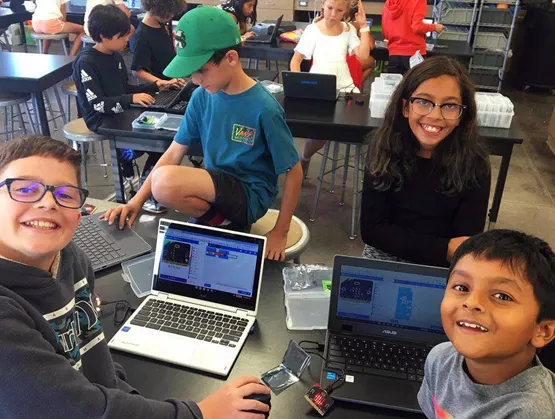
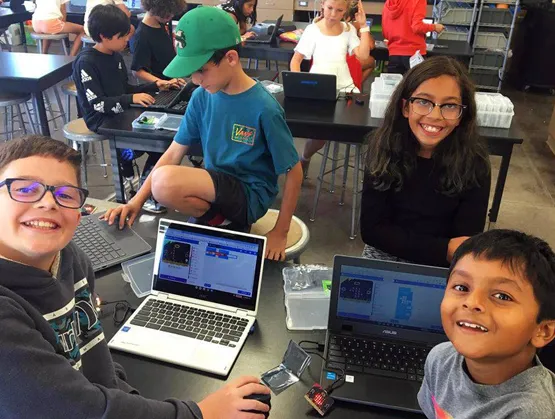
As the semiconductor industry continues to evolve, successful workforce development initiatives are becoming increasingly essential. In Malaysia, around 60,000 new engineers are needed to support the country’s plans for industry growth. However, despite the rising need for new engineering talent, student interest for STEM in Malaysia is declining. Women in particular, are even less likely to consider careers in engineering fields than their male counterparts, and this holds true worldwide. One reason is due to gender biases that form around STEM in early childhood. The Journal of Applied Developmental Psychology found that boys are more likely to consider themselves “good” at STEM, and this stereotype is later reinforced by male dominance within STEM classes. To mitigate the talent shortage, and to encourage more young women to consider STEM careers, STMicroelectronics created its "STEM your way" initiative. This program supports STEM education throughout Malaysia, as well as all other countries that STMicroelectronics operates in. Through STEM your way, STMicroelectronics shares its passion for science and electronics with today’s primary and high school students. Over the last three years, STEM your way has reached nearly 70,000 students globally. To address the STEM gender disparity in Malaysia, SEMI Southeast Asia (SEA) has been proudly collaborating with STMicroelectronics since 2023 on its ST Maur GEMS program, as part of STEM your way. The girls in engineering, mathematics, and science (GEMS) program is foundational for developing future engineering talent and sparking STEM interest among female students. One of SEMI SEA’s first GEMS program initiatives was a “train-the-trainers” session, where SEMI SEA representatives shared creative approaches for teaching STEM-focused course material. This involved the use of Circuit Scribe and Micro:bit Smart Science IoT kits to make lessons tactile, engaging, and memorable. These interactive teaching aids form the basis of a “STEM kit,” and as of today, SEMI SEA and STMicroelectronics have sponsored roughly 200 kits. These efforts culminated in December 2024 during the GEMS IoT Challenge at Universiti Technikal Malaysia Melaka, where 68 students from 17 primary schools showcased their innovative projects. Students demonstrated their technical knowledge and creativity by coupling Micro:bit IoT kits with AI cameras, Wi-Fi modules, servomotors, and more, with the intention of solving day-to-day problems. Posters of students’ solutions at the IoT ChallengeWith the collaborative success of the ST Maur GEMS program, SEMI SEA is excited to help scale the challenge to include additional countries. To partner with SEMI SEA to bring STEM education opportunities to Southeast Asia, please contact Cecelia Fong at [email protected]. SEMI Southeast Asia ContactCecelia Fong, Technology Programs ManagerEmail: [email protected]
Read More
On May 8, a group of students gathered at SEMICON Southeast Asia for a one-of-a-kind experience. These students would be the first in the region to participate in SEMI High Tech U (HTU) – diving into the deep technology at the core of our industry. They simulated the layering process used in the wafer fabs for microelectronics and solar cell fabrication, then identified uses of integrated circuits and how the process evolves from materials (silicon) to product (patterned wafers).Nearby, another group of students jumped into lessons about gates and binary logic, the language of computers and how they communicate. They played with four basic logic gates – “AND”, “OR”, “NOT” and “XOR” – by using logic boards. Then it was high time to apply what they learned about gates and the binary systems – the inner workings of a calculator – and launch into the much-anticipated Human Calculator game. During the game, students become a 2-bit adder. First, they must convert numbers into binary and then trace the digits through a series of gates. It's only with careful communication and concentration that teams get the right outputs.HTU is the SEMI program that introduces students to science, engineering, technology, and math (STEM) through hands-on activities and experiential learning led by industry volunteers. Since 2002, HTU has reached some 8,000 students in 12 states and nine countries.Southeast Asia hosts first HTUThe ‘Human Calculators’ were one of two groups of more than 80 high-school students from four schools who came to the Malaysia International Trade and Exhibition Centre (MITEC) in Kuala Lumpur for a fun day of education and workshops. The sessions were led by instructors Shafiq Shahmeen and Zafryl-Zaheidy Mustofa from Inari-Amertron and Jamaludin Johar and Huichin Chew from STMicroelectronics.Kicking off the sessions, High Tech U program manager Bryson Gauff gave an oral history of HTU with the students and their teachers and prepped them for the exciting workshops.From India to the United States – Ajit Manocha’s inspiring storySEMI president and CEO Ajit Manocha, on stage for the ribbon-cutting to celebrate the Southeast Asia’s first HTU, shared the story of how he was moved to enter high technology at a young age. Growing up in New Delhi, India, Ajit developed his passion for engineering after being inspired by a close family friend. His love of bits and bytes led him to the United States, where he started his career at Bell Labs, working with semiconductors. Reflecting on his past, he told the students that if a young boy from New Delhi can become an engineer and move to the U.S. to pursue his dream, everyone in the room can do it too – whatever their passion. Much like his friend as a youth, Ajit paid it forward by encouraging the students to follow their hearts: “The future is yours and you can be whatever you want to be.” Ajit Manocha and Professor Madya were joined onstage by Kai Fai Ng, president of SEMI Southeast Asia, and Leslie Tugman, SEMI VP of Global Workforce Development and Diversity, for the ribbon-cutting at SEMI High Tech U in Southeast Asia. The power of experiential learning YBrs. Prof. Madya Dr. Wan Zuhainis Binti Saad, Director of Academic Development Management, Ministry of Education, lit up the room with her passion for education. She quickly connected with the students as she shared her story of being a microbiologist and a professor. She encouraged the students to learn together and do what they love. A strong advocate for empowering learners, Professor Madya also offered a transformational approach to teaching students in the 21st century education – a dynamic, forward-thinking mix of passion-based learning, experiential learning, and entrepreneurial innovation.She believes the more students blend STEM studies with other curriculum like the arts and humanities, the better they can work collaboratively and develop their passion in life. Professor Madya thrilled the roomful of students with her message about what the future holds for all students, especially those participating in Southeast Asia’s first-ever High Tech U.The future of electronicsWith today’s semiconductors processing data at blurring speeds, the program ended aptly with awards for quickness. The awards ceremony, sponsored by Edwards Technology Singapore, recognized the winning team for the fastest Human Calculator in each session. And all four schools received certificates for participating in High Tech U to celebrate the work of all the students – the faces of the future of electronics.SEMI welcomes Southeast Asia to the global High Tech U community! To learn more about SEMI HTU please visit our website. The first-ever SEMI HTU Southeast Asia students with their teachers, industry volunteers and HTU staff at SEMICON Southeast Asia. Ariana Raftopoulos is a marketing communications manager at SEMI.
Read More
For medtech applications to flourish, sensors need a supporting infrastructure that translates the data they harvest into actionable insights, says Qualcomm Life director of business development Gene Dantsker, who will speak about the future of digital healthcare in the Medtech program at SEMICON West. “Rarely can one device give a complete diagnosis,” he notes. “What’s missing is the integration of all the sensor data into prescriptive information.” The maturing medtech sector has developed to the point where sensors can now capture massive amounts of data, conveniently collected from people via mobile devices. The sector now has higher compute capacity to process the data, and improving software can produce actionable insight from the information. The next challenge is to seamlessly integrate these components into legacy medical systems without disrupting existing workflow. “Doctors and nurses don’t have time for disruptive technology – a new system has to be invisible and frictionless to use, with one or fewer buttons, no training and truly automatic Bluetooth-like pairing,” he says. “So device makers need to pack all system intelligence into the circuits and software.”Getting actionable healthcare information from sensors requires integration into the existing medical infrastructure. Source: Qualcomm LifeOne interesting example is United Healthcare’s use of the Qualcomm Life infrastructure to collect data from the fitness trackers of 350,000 patients. The insurance company then pays users $4 a day, or ~$1500 a year, for standing, walking six times a day and other behaviors that clinical evidence shows will both improve patient health and reduce healthcare costs. “It’s a perfect storm of motivations for all stakeholders,” he says.Next hot MEMS topics: Piezoelectric devices, environmental sensors, near-zero power standbyWith sensor technology continuing to evolve, look for coming innovations in MEMS in piezoelectric devices, environmental sensors and near zero-power standby devices, says Alissa Fitzgerald, Founder and Managing Member of A.M. Fitzgerald and Associates, who will provide an update on emerging sensor technologies in the MEMS program at SEMICON West.Piezoelectric devices can potentially be more stable and perhaps even easier to ramp to volume than capacitive ones, with AlN devices for microphones and ultrasonic sensors finding quick success. Now the maturing infrastructure for lead zirconate titantate (PZT) is enabling the scaling of production of higher performing piezo material with thin film deposition equipment from suppliers like Ulvac Technologies and Solmates and in foundry processes at Silex and STMicroelectronics, she notes.In academic research, where most new MEMS emerge, market interest is driving development of environmental sensors and zero-power standby devices. With demand for environmental monitoring growing, much work is focusing on technologies that improve the sensitivity, selectivity and time of response of gas and particulate sensors. Research and funding is also focusing on zero or near-zero power standby sensors, using open circuits that draw no power until a physical stimulus such as vibration or heat wakes them up.MEMS, however, likely won’t find as much of a market in autonomous vehicles as once thought. “While the automotive sensor market will need many optical sensors, MEMS players are competing with other optical and mechanical solutions,” says Fitzgerald. “And here the usual MEMS advantage of small size may not matter much, and the devices will have to meet the challenging automotive requirements for extreme ruggedness.”Paula Doe, SEMI
Read More